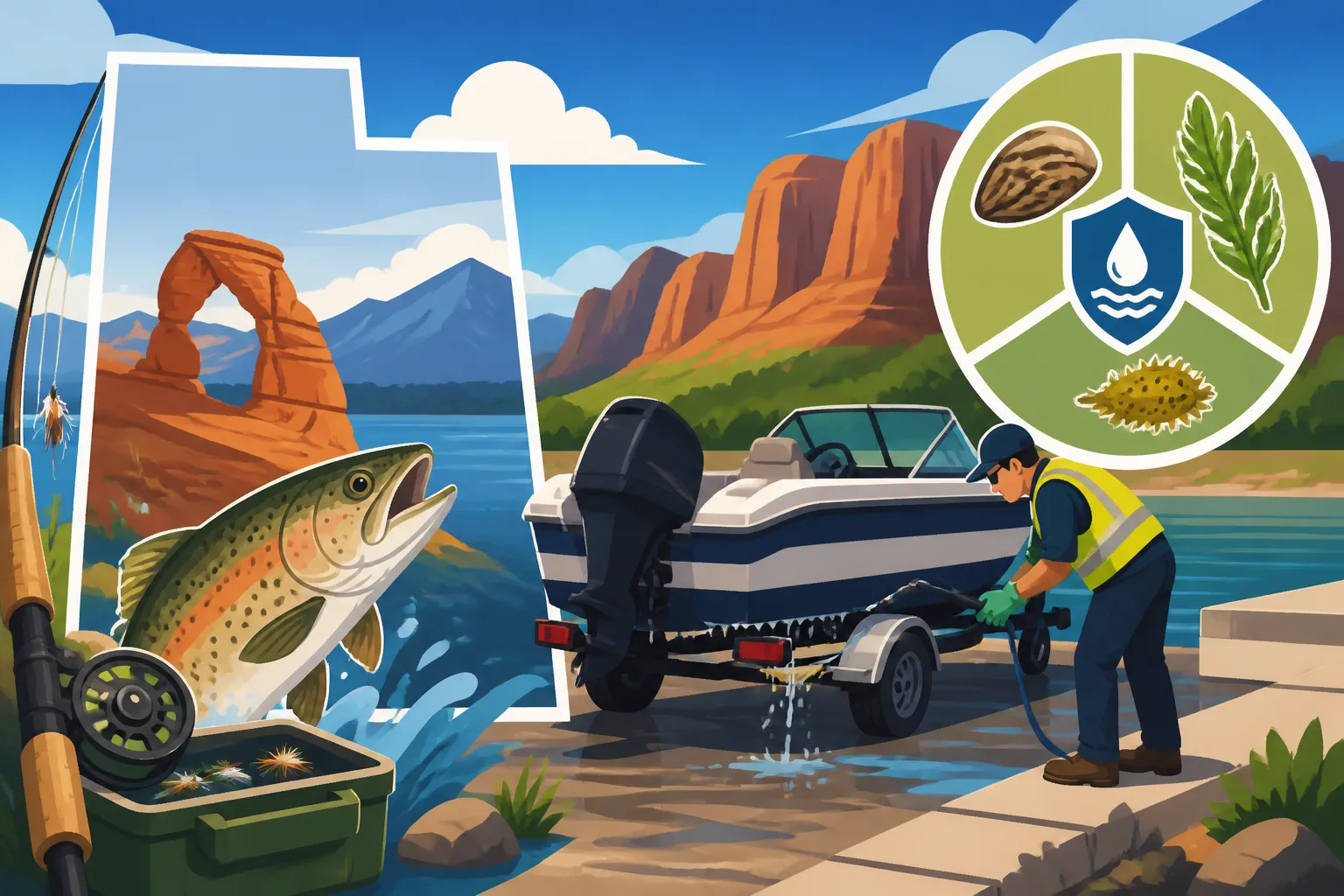
Utah Aquatic Invasive Species Inspection Stations
It’s a scenario many of us have faced: you’ve had an incredible day out on a stunning Utah reservoir, the sun is setting, and all you want to do is pack up and head home. But then you remember the dreaded Aquatic Invasive Species (AIS) inspection station. The thought of delays, complicated rules, and potentially a full decontamination can definitely put a damper on your plans. This guide is here to unravel the mysteries of Utah's AIS inspection stations, helping you understand why they exist, what to expect, and how to make your next inspection a breeze.
Understanding Utah's Aquatic Invasive Species Threat
Let's get real for a moment: nobody enjoys being delayed, especially when you're eager to get off the water. But the reason Utah has such stringent rules and dedicated inspection stations isn't to make your life harder. It's because our beautiful, pristine waters are constantly under threat from tiny invaders that could utterly devastate them if we're not vigilant.
What Are Aquatic Invasive Species (AIS)?
Aquatic Invasive Species (AIS) are, quite simply, non-native organisms that get introduced into an ecosystem where they don't naturally belong. Once they establish themselves, they can wreak absolute havoc, outcompeting native species, altering habitats, and even damaging human infrastructure. In Utah, we're particularly concerned about creatures like quagga mussels, zebra mussels, and New Zealand mudsnails. You might think, "What's the big deal about a tiny mussel?" But trust me, these critters are silent, destructive invaders.
These mussels, for example, attach themselves to any hard surface, forming dense mats. Imagine your boat hull, your engine, even the inside of water pipes at a dam or power plant, completely encrusted with sharp, filter-feeding organisms. They consume vast amounts of plankton, which is the base of the food chain, effectively starving out native fish and other aquatic life. They can clog critical water delivery systems, costing millions of dollars in maintenance and repairs. Rivers and reservoirs that were once teeming with diverse life can become biological deserts. It’s a very real and present danger that has already impacted waters in other states, and we’re fighting tooth and nail to prevent that widespread damage here.
Why Utah Takes AIS So Seriously
Utah's unique and diverse aquatic environments, from the vast stretches of Lake Powell to the cold, clear waters of Flaming Gorge and the ancient ecosystem of Bear Lake, are incredibly precious. Each of these water bodies, and countless others, has a delicate balance that could be shattered by AIS. The Bonneville cutthroat trout, our state fish, and other endemic species like the June Sucker in Utah Lake, which is already an endangered species, are especially vulnerable to changes in their food sources and habitat caused by invasives.
The reality is, boats are one of the primary vectors for spreading these species. A single quagga mussel larva, invisible to the naked eye, or a small adult mussel clinging to a crevice, can be transported from an infested lake to a clean one on a boat that hasn't been properly cleaned, drained, and dried. Once they get a foothold, eradication is often impossible, or at best, incredibly difficult and expensive. That's why Utah has implemented a robust system of inspection stations and strict regulations. It’s a proactive measure designed to protect our natural resources for future generations of anglers and boaters. We understand that these rules can feel cumbersome, but the potential damage to our fisheries and economy is far too great to ignore. Many of these specific rules are outlined in the comprehensive guide on Utah Aquatic Invasive Species Rules for Anglers.
Navigating Utah's AIS Inspection Station System
Alright, so we know why the inspections are necessary. Now, let’s talk about the practical side of navigating the system. Knowing when and where to expect these stops, and what triggers a mandatory inspection, can save you a lot of time and stress.
When and Where to Expect Inspections
You'll encounter Utah's AIS inspection stations in several key locations, strategically placed to intercept watercraft moving between different bodies of water, especially those coming from known infested areas. Think of them as checkpoints designed to protect our waterways.
You'll almost certainly find mandatory inspection stations at the major exit points when leaving high-risk waters, with Lake Powell being the prime example. It's a quagga-positive water, which means every single vessel leaving Lake Powell must stop for inspection. You'll see signs well in advance, so there's no excuse for missing it. Beyond that, stations are often located along major highway corridors, particularly I-15 and US-40, especially during peak boating seasons like summer weekends and holidays. State park entrances to popular boating destinations, such as Deer Creek Reservoir or Jordanelle Reservoir, will also often have inspection stations set up, ready to greet incoming vessels. The Utah Division of Wildlife Resources (DWR) and State Parks staff operate these stations, and their presence can be seasonal, with extended hours during spring and summer when boating activity is at its highest. You can always check the DWR website for current information on Utah Aquatic Invasive Species Inspection Station Locations.
What Triggers a Mandatory Inspection
It's not just the big bass boats or cabin cruisers that need to be concerned. The rules apply broadly to virtually any vessel that has the potential to transport AIS.
- Any motorized vessel: This is the most straightforward. If your boat has an engine, regardless of size, you are required to stop at mandatory inspection stations. This includes everything from a powerful wakeboard boat to a small fishing dinghy with an outboard.
- Any vessel that has been in a "quagga-positive" water in the last 30 days: This is a critical point. If your boat has been in Lake Powell, for instance, within the last 30 days, you must stop at the first available inspection station, regardless of whether it's clearly marked as mandatory or not. The same applies to any other water body that has been designated as "quagga-positive." These seals and declarations are crucial. Many people wonder, Are Boat Inspections Mandatory Before Leaving Lake Powell?, and the answer is a resounding yes.
- Kayaks and paddleboards: This often catches people by surprise. While they don't have engines, kayaks, paddleboards, canoes, and other non-motorized vessels can absolutely transport microscopic quagga mussel larvae or New Zealand mudsnails clinging to their hulls or trapped in small puddles. If you've launched one of these smaller craft in an infested water, you are still responsible for ensuring it's clean, drained, and dry. This often brings up questions like Do Kayaks and Paddleboards Need AIS Inspections in Utah?, and while they don't always have to stop at every station, the "Clean, Drain, Dry" principle is non-negotiable for them.
The "Clean, Drain, Dry" Protocol: Your First Line of Defense
This isn't just a catchy phrase; "Clean, Drain, Dry" is the golden rule for preventing the spread of AIS. It's your responsibility as a boater, and adhering to it rigorously will make your inspection experience much smoother and faster.
- Clean: Before you even leave the ramp, or certainly before you arrive at an inspection station, take a moment to meticulously clean your boat, trailer, and all your fishing gear. This means removing all visible plants, mud, and any debris. Pay close attention to the propeller, trailer bunks, anchor, and fishing lines. Even a small piece of vegetation could harbor invasive species. You can find excellent scrubbing brushes and tools on Amazon to help with this, making the process much more efficient.
- Drain: This step is crucial. Pull all drain plugs from your boat, including the bilge, livewells, ballast tanks, and engine cooling systems. It’s also important to drain any water from your motor’s lower unit. Standing water, even a small amount, can contain quagga mussel larvae or other microscopic invaders that can survive for days or weeks. Make sure your boat is tilted to allow for complete drainage. For those coming from high-risk waters, remember that Utah Dry Time Rules After Leaving Lake Powell are particularly strict and require ample time for thorough drying.
- Dry: Once you've cleaned and drained, the next step is to let everything dry completely. This might mean leaving your boat in the sun for several days, especially if you're coming from a known infested water. Desiccation (drying out) is one of the most effective ways to kill any remaining invasive species. If you’re trying to speed up the process, especially in cooler weather, portable fans can be helpful; you can often find decent, powerful options on Amazon that can help circulate air in bilges or livewells.
By committing to these three steps every single time you pull your boat out of the water, you become an active participant in protecting Utah's fisheries and ensuring the longevity of our angling opportunities.
The Inspection Process Step-by-Step
So, you’ve done your part with the "Clean, Drain, Dry" protocol, and you're approaching an inspection station. What exactly happens next? Knowing the routine can help alleviate any anxiety and keep things moving efficiently.
What Happens at an Inspection Station
When you arrive at an inspection station, you’ll be directed by clear signage and often by staff waving you in. This is not a time to be shy or try to bypass the station; cooperation is key.
You'll typically pull your boat into a designated inspection lane. A friendly DWR or State Parks technician will approach your vessel. The first thing they'll do is usually a quick visual check. They're looking for any obvious signs of mussels clinging to your hull, especially around the waterline, transom, and propeller. They'll also check your trailer, particularly the bunks and rollers, for any hidden debris or hitchhikers. This initial visual inspection is swift but thorough.
Following the visual check, they'll likely ask you a few questions. The most important one will be: "Where has your boat been in the last 30 days?" Be honest and transparent here. They need to know if you've been on a "quagga-positive" water like Lake Powell, or any other lake with known AIS issues. They might also ask where you plan to launch next. This information helps them assess the risk and determine if your boat needs further inspection or a full decontamination. They will also confirm that your drain plugs are pulled, demonstrating that you’ve done your part to drain any standing water. Having your Utah Boating and Fishing Rules handy can also show your preparedness and understanding of the regulations.
When Decontamination is Required
Not every boat needs decontamination, but understanding the scenarios that trigger it is vital. It’s a bit of an inconvenience, but it's a critical last line of defense.
Decontamination is typically required under a few key circumstances:
- Mussels are found: This is the most obvious trigger. If the inspection technician finds any visible quagga or zebra mussels, whether alive or dead, on your boat or trailer, decontamination is mandatory. There’s no negotiation here.
- Incomplete "Clean, Drain, Dry": If your boat arrives at the station with standing water in the bilge, livewells, or engine, or if there's significant mud and plant material still attached, you'll be directed for decontamination. This indicates you haven’t properly followed the protocol.
- Coming from a quagga-positive water without sufficient dry time: As mentioned, if your boat has been in a high-risk water like Lake Powell within the last 30 days and hasn't met the stringent dry time requirements (which vary based on temperature and humidity), a decontamination will be necessary. This is especially true if you plan to launch in another Utah water body soon after. The process involves a thorough hot-water pressure wash, specifically designed to kill any mussels or larvae. The water used is heated to a high temperature, typically over 140°F, and applied at high pressure to all surfaces, including the engine's cooling system (using a flush kit) and internal compartments. After decontamination, your boat will often be sealed with a tamper-proof tag, indicating it's clear to launch, provided the seal remains intact. Be aware that Utah Quagga Mussel Decontamination Cost can be a factor, so preventing it through diligent cleaning and drying is always the best approach.
Tips for a Smooth and Quick Inspection
Let's be honest, you want to get through the inspection as quickly and smoothly as possible. Here are some actionable tips to ensure a hassle-free experience:
- Be prepared before you arrive: The single biggest thing you can do is have your drain plugs pulled and your boat as clean and dry as possible before you even pull into the inspection station. Don't wait until you're in line to start this process. This not only speeds up your inspection but also demonstrates your commitment to protecting Utah's waters.
- Be honest and cooperative: The DWR staff are there to help, not to catch you out. Be truthful about where your boat has been. If you accidentally left a drain plug in, acknowledge it. Trying to hide information or being uncooperative will only lead to further scrutiny and delays, potentially resulting in fines. Remember, Utah Fishing License Penalties for Violations can extend to AIS rules, so it's always best to be above board.
- Keep a checklist: Consider making a laminated checklist of the "Clean, Drain, Dry" steps and other inspection requirements. You can even find waterproof notepads or checklists on Amazon. Running through this before you leave the ramp can ensure you haven't missed anything crucial.
- Anticipate lines: During peak seasons, especially holidays or busy weekends, expect there might be a line. Plan for this extra time in your travel schedule, rather than rushing and getting frustrated. A little patience goes a long way.
Common Misconceptions and Crucial Regulations
The world of regulations can be confusing, and AIS rules are no exception. Let's clear up some common misunderstandings and highlight some truly crucial regulations that every boater and angler in Utah needs to know.
Kayaks, Paddleboards, and Other Non-Motorized Vessels
One of the biggest misconceptions we hear is that only motorized boats need to worry about AIS. This simply isn't true. While motorboats are certainly high-risk due to their size and complex internal systems, even the smallest paddlecraft can pose a threat.
Think about it: a kayak or paddleboard can easily pick up microscopic mussel larvae or plant fragments with attached mud and snails from one water body. If you then launch that same kayak, uncleaned, into another lake, you could be unknowingly introducing an invasive species. These tiny invaders can cling to the hull, get trapped in scupper holes, or even hide in the folds of your life jacket or the mesh pockets of your fishing bag. That's why the fundamental "Clean, Drain, Dry" principle applies to all watercraft, regardless of whether they have a motor. If your paddleboard or kayak has been in an infested water like Lake Powell, it's highly recommended you stop at an inspection station for a check, and certainly ensure it's thoroughly cleaned and dried. The DWR has made it very clear that Do Kayaks and Paddleboards Need AIS Inspections in Utah? is a common question, and while mandatory inspection stops are primarily for motorized vessels, the responsibility for prevention lies with every water user.
The Consequences of Skipping an Inspection
This is a serious matter, and avoiding an inspection station when required is simply not worth the risk, for both legal and environmental reasons.
If you are caught bypassing a mandatory AIS inspection station or launching a contaminated vessel, the consequences can be severe. Legally, you could face significant fines, ranging from several hundred to over a thousand dollars, depending on the severity of the violation. Citations are issued, and in some egregious cases, your boat and equipment could even be impounded. These penalties are not just theoretical; DWR officers are vigilant, and they do enforce these rules. The financial hit is one thing, but the environmental damage is far worse. By skipping an inspection, you're directly contributing to the risk of irreversible harm to Utah's fisheries and water infrastructure. It's an issue that impacts every angler and taxpayer in the state. Remember, Utah Fishing License Penalties for Violations applies broadly, and AIS infractions are considered serious offenses. Beyond the legal ramifications, consider the long-term impact: if quagga mussels spread unchecked, the places you love to fish could be permanently altered, making fishing less enjoyable and potentially leading to species loss.
Pre-Inspection Checklist for Anglers
To help you ensure a smooth inspection every time, here’s a handy checklist. Keeping this in mind, or even having a physical copy, can be a game-changer.
| Action | Description | Why It's Important |
|---|---|---|
| Clean | Remove all plants, mud, and visible debris from the boat hull, trailer, anchor, and fishing gear. | Mussels and larvae often cling to debris; early removal prevents spread. |
| Drain | Pull all bilge plugs, open livewells, bait wells, ballast tanks, and drain engine cooling water. | Standing water is a prime breeding ground for microscopic larvae; complete drainage is key. |
| Dry | Allow your boat and all gear to dry completely. Follow Utah Dry Time Rules After Leaving Lake Powell if applicable. | Desiccation effectively kills invasive mussels and other aquatic organisms. |
| Inspect | Visually check every accessible part of your boat, trailer, and gear for any signs of mussels. | A quick self-inspection can catch what you might have missed during cleaning. |
| Know Your History | Be prepared to accurately state which water bodies your boat has been in during the last 30 days. | This information helps DWR assess risk and apply appropriate protocols. |
| Plugs Out | Ensure all drain plugs are pulled before you reach the inspection station. | Shows preparedness and allows for a quicker, more efficient inspection. |
| Check for Seals | If your boat was previously decontaminated and sealed, ensure the seal is intact. | A broken or tampered seal will require a full re-inspection and potentially decontamination. |
| Locate Stations | Know the route and where mandatory inspection stations are located on your travel path. | Prevents accidentally bypassing a required stop and incurring penalties. |
This checklist isn't just about avoiding fines; it's about being a responsible steward of Utah's incredible natural resources. By taking these steps, you’re playing a vital role in protecting our waters from the devastating impact of aquatic invasive species.
Disclaimer
The information provided in this guide is for general informational purposes only and does not constitute legal advice. While we strive to keep the information accurate and up-to-date, regulations can change. Always consult the official Utah Division of Wildlife Resources (DWR) website or contact them directly for the most current and specific regulations regarding aquatic invasive species and boating in Utah. Compliance with all state laws and regulations is the responsibility of the individual angler or boater.