How to Identify Utah Trout Species
There’s nothing quite like the thrill of feeling that tug on your line and reeling in a beautiful trout from one of Utah’s stunning waters. But then it happens: you get a good look at your catch, and you’re left scratching your head. Is it a rainbow? A cutthroat? Or something else entirely? Many anglers, from seasoned veterans to excited beginners, struggle with accurately identifying the specific species of trout they’ve landed. This guide is here to help you solve that puzzle, diving deep into the distinctive characteristics of Utah's trout species so you can confidently name your next catch and understand the regulations that apply to it.
Why Knowing Your Trout Species is Crucial for Utah Anglers
You might think, "A trout is a trout, right?" Not so fast! In Utah, knowing the exact species of trout you've caught isn't just about showing off your angling prowess to your buddies (though that's certainly a perk!). It's a critical skill for several important reasons, impacting everything from conservation to compliance with fishing regulations. Without this knowledge, you could inadvertently break a rule or miss out on understanding the unique biology of the fish you're targeting.
Navigating Utah's Diverse Fishing Regulations
Utah has a rich and varied fishery, and with that diversity comes a complex set of regulations designed to protect specific species and manage populations. What you can keep, and how many, often depends entirely on the type of trout it is and the water you're fishing. For example, some waters have special limits for Utah Trout Limits by Water or even require the mandatory harvest of certain invasive species. Catching a cutthroat trout in a specific stream might have a different slot limit or even be catch-and-release only, while a rainbow trout in a community pond could be fair game for dinner. Imagine the frustration of reeling in a beautiful fish, only to realize you can't keep it because you misidentified it and are over the limit for that particular species. It's a real bummer, and more importantly, it can lead to hefty fines if you're caught breaking the rules. Getting a Utah Fishing License Guide is the first step, but understanding what you've caught is just as important as having that license in hand.
Contributing to Conservation Efforts
Beyond the regulations, accurate identification plays a vital role in conservation. Utah is home to several native trout species, like the Bonneville cutthroat trout, which are often subject to special protections and recovery efforts. When anglers can correctly identify these fish, they become active participants in monitoring and protecting these precious populations. Unintentional harvest of a native or endangered species can set back years of conservation work. By knowing what's on your line, you can practice responsible catch-and-release, minimizing stress and harm to vulnerable fish. It’s about being a good steward of the resource, ensuring that future generations can enjoy the same incredible fishing experiences we do today.
Enhancing Your Fishing Experience
Let's be honest, there's a certain satisfaction that comes with truly knowing your quarry. When you can identify a fish, you begin to understand its preferred habitat, its feeding patterns, and how it interacts with its environment. This deeper knowledge makes you a more effective and adaptable angler. You'll start to recognize why certain lures work better for a brown trout in a river versus a lake trout in a deep reservoir. It transforms fishing from a simple act of casting and reeling into a more intricate and engaging puzzle. Plus, when you share stories of your fishing adventures, being able to confidently say, "I landed a gorgeous tiger trout at Scofield today!" adds a whole new level of credibility and enjoyment to your tales.
Essential Features for Trout Identification
When you're trying to figure out exactly what kind of trout you've just brought to hand, you need to become a detective. There are several key features that, when observed closely, will give you all the clues you need. Don't just glance at the fish; take a moment to really look at its overall shape, its color patterns, and specific anatomical details. It's these subtle differences that will help you distinguish between species that, at first glance, might look quite similar.
Spot Patterns and Coloration
Perhaps the most obvious clues are the spots and overall color of the fish. These can vary widely, even within the same species, depending on the water body, diet, and even the fish's age. However, there are general patterns to look for. Are the spots large and irregular, or small and numerous? Are they concentrated on one part of the body, or spread evenly? What color are the spots – black, red, or even a yellowish hue? The background color of the fish itself can range from silvery to olive green, golden, or dark brown. For example, some trout have distinct red or pink lateral stripes, while others are more uniformly colored. Pay attention to the intensity and distribution of these colors and spots, as they are often the first giveaways.
Fin Characteristics
Don't overlook the fins! The shape, size, and even the color of a trout's fins can be highly diagnostic. Look at the dorsal fin (on the back), the caudal fin (tail), and the pectoral and pelvic fins (on the sides and belly). Some trout have square tails, while others have noticeably forked tails. The presence or absence of a adipose fin (a small, fleshy fin between the dorsal and tail fins) is also important, though all trout do have one. The edges of fins might be white or orange, or they might blend into the body color. The tail fin, in particular, can offer a strong clue. A deeply forked tail, for instance, is a hallmark of certain species that spend their lives in deeper, colder waters.
Mouth and Jaw Structure
The mouth and jaw of a trout can tell you a lot about its species and even its feeding habits. Observe the size of the mouth, whether it extends past the eye, and if there are any distinct markings inside the mouth. For instance, some trout have a small, almost insignificant-looking mouth, while others have a large, gaping maw filled with sharp teeth. The presence of a "cut" mark under the jaw, often a red or orange slash, is a tell-tale sign for a particular species, hence its name! You might also notice subtle differences in how the upper and lower jaws meet, or the presence of a "kype" (a hooked jaw) on mature males during spawning season. These details, though sometimes hard to see on a lively fish, are invaluable for identification.
Common Utah Trout Species and Their Distinguishing Marks
Now let's get down to the nitty-gritty: meeting the individual trout species you're most likely to encounter in Utah. Each one has its own unique charm and identifying features. We’ll break down the most common ones, giving you the specific clues you need to confidently tell them apart.
Rainbow Trout ( Oncorhynchus mykiss )
The rainbow trout is arguably the most recognized and widely distributed trout species in Utah, thanks to extensive stocking programs. They are often the bread and butter for many anglers, especially in community ponds and larger reservoirs.
Classic Appearance and Pink Stripe
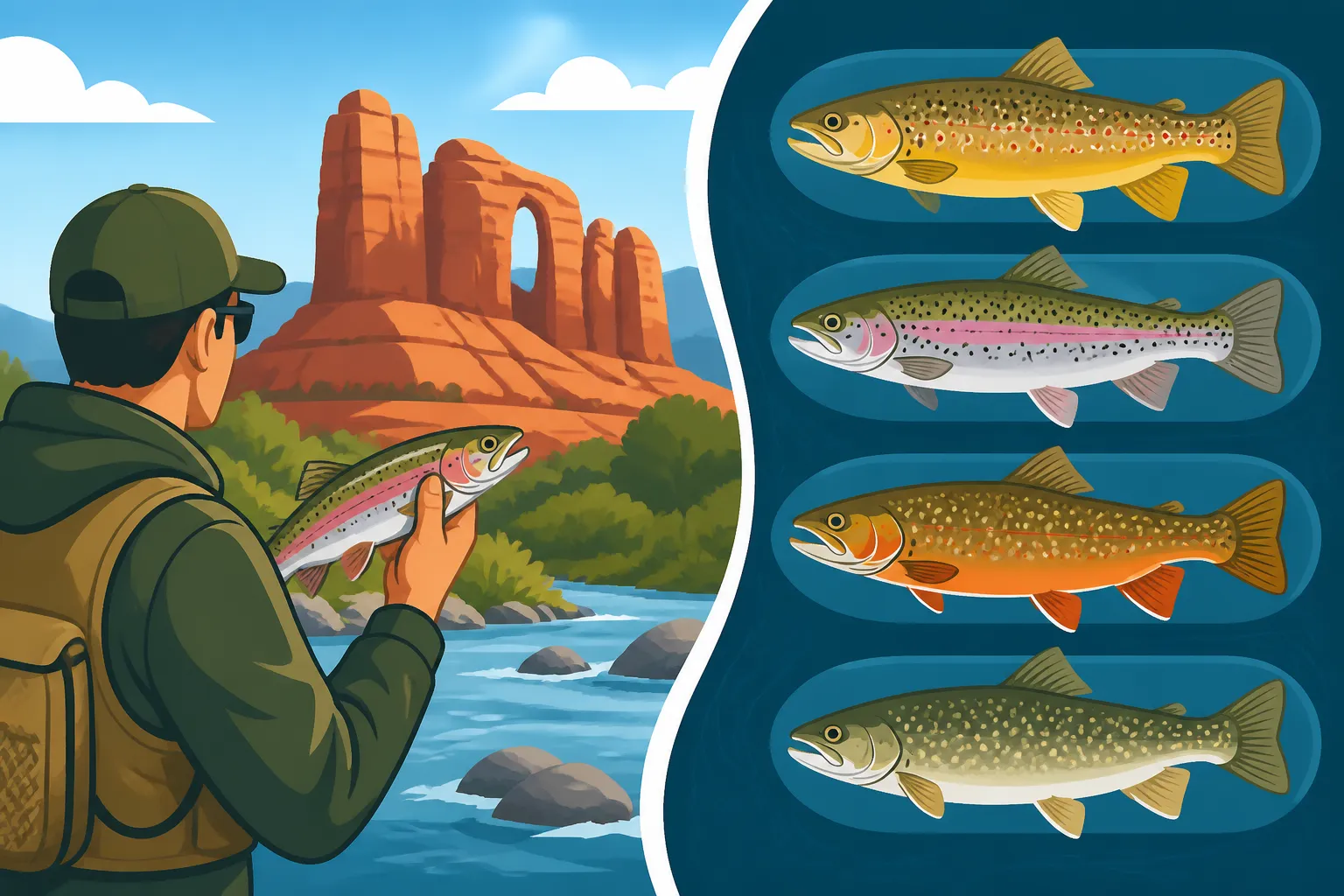
Rainbow trout are known for their beautiful, iridescent coloration, which gives them their name. Their bodies are typically silvery to greenish-blue on top, fading to silver on the sides and white on the belly. The most defining characteristic is a prominent, often brilliant, pink or red stripe running horizontally along the lateral line, from the gill plate to the tail. This stripe can be very vibrant, especially in spawning fish, but might be subtle in others. Their bodies are covered in small, distinct black spots that extend onto the dorsal fin and the tail fin. The tail fin is usually only slightly forked or nearly square. Many of the fish you'll catch in urban ponds and stocked reservoirs will be rainbow trout, often identifiable by their somewhat uniform size from recent stocking reports. Check out How to Identify a Stocked Rainbow Trout in Utah for more specific tips on telling these apart from wild fish.
Habitat and Diet in Utah
You'll find rainbow trout in almost every type of water in Utah, from high-mountain lakes and streams to large reservoirs like Jordanelle Reservoir and Deer Creek Reservoir, and countless community ponds. They're quite adaptable, tolerating a wider range of water temperatures than some other trout species. Their diet is varied, including insects, crustaceans, small fish, and even aquatic vegetation. This adaptability makes them a popular target for many different fishing techniques. If you're using PowerBait in a local pond, chances are good you're going after rainbows.
Brown Trout ( Salmo trutta )
Brown trout are the elusive, wily residents of many of Utah's rivers and streams, though they can also grow to impressive sizes in some reservoirs. They are often sought after for their challenging fight and beautiful, distinctive markings.
Golden Hues and Haloed Spots
Brown trout typically have a rich, golden-brown to olive-green body color, fading to a yellowish belly. What truly sets them apart are their dark spots, often surrounded by a lighter "halo," and a scattering of red or orange spots, sometimes also haloed, along their sides. These spots are usually larger and less numerous than those on a rainbow trout and are rarely found on the tail fin, which is typically square or slightly emarginate. The adipose fin often has an orange tint. Their mouth is relatively large, extending past the eye, and mature males can develop a distinct kype during spawning season. If you're fishing the Middle Provo River, you'll be seeing plenty of these magnificent fish.
Stealthy Habits and Preferred Waters
Brown trout prefer colder, well-oxygenated water with plenty of cover, making them prevalent in many of Utah's premier rivers and streams, such as the Provo River, Weber River, and the Green River below Flaming Gorge Dam. They are known for their nocturnal feeding habits and can be quite aggressive, often preying on smaller fish. They are also notoriously wary, making them a favorite challenge for experienced fly anglers. Catching a large brown trout often means you've outsmarted a truly cunning fish.
Cutthroat Trout ( Oncorhynchus clarkii )
The cutthroat trout holds a special place in the hearts of Utah anglers, not only because it’s Utah's state fish (the Bonneville cutthroat trout, specifically) but also because of its unique markings and conservation importance.
The Signature "Cut" Mark
The most definitive feature of a cutthroat trout is the bright red, orange, or yellow "cut" mark found in the skin fold beneath each side of the lower jaw. This marking is almost always present, though its intensity can vary. Their body coloration ranges from silvery to golden-brown or olive, often with a reddish tint along the sides, especially during spawning. They are covered in black spots, but unlike rainbows, these spots are often more concentrated towards the tail, head, and dorsal fin, and they are typically smaller and more irregular. The tail fin is usually square or slightly emarginate. The specific subspecies, such as the Bonneville cutthroat trout, can have slight variations in spotting and color, often making identification a local affair. Strawberry Reservoir is famous for its abundant cutthroat populations. Learn more about their unique traits in Bear Lake Cutthroat Trout Facts.
Native Heritage and Sensitive Habitats
Cutthroat trout are native to the western United States and historically dominated Utah's cold-water fisheries. While some populations are stocked, many anglers seek out wild, native strains. They thrive in cold, clear streams and high-mountain lakes, as well as some of Utah's larger reservoirs. Because of their native status, specific regulations often apply to their harvest to aid in conservation and recovery efforts. It's crucial to identify them correctly to comply with Utah Daily Bag and Possession Limits and help protect these iconic fish.
Lake Trout ( Salvelinus namaycush ), also known as Mackinaw
Lake trout, often called Mackinaw in Utah, are the giants of the deep. If you're looking for a true trophy fish in Utah, these are often the target. They require specialized techniques but offer immense rewards.
Pale Spots on a Dark Body
Lake trout have a distinct appearance characterized by a dark gray, olive, or brownish body covered in numerous light-colored, irregular, worm-like spots (vermiculations) that extend onto the dorsal and caudal fins. Unlike other trout, their spots are lighter than their body color, giving them a mottled, almost camouflaged look. Their tail is deeply forked, a feature that helps them navigate the open waters of large reservoirs. They also have a large mouth with strong teeth, indicative of their predatory nature. These fish can grow to enormous sizes, with The Utah Record Lake Trout Catch at Flaming Gorge being a testament to their potential.
Deepwater Dwellers and Apex Predators
As their name suggests, lake trout inhabit large, deep, cold-water lakes and reservoirs. Flaming Gorge Reservoir is renowned for its trophy lake trout fishery, where they prey on smaller fish like kokanee salmon and ciscos. They are typically found in the deepest parts of the water column, especially during warmer months, making them a challenge to target with traditional angling methods. Techniques like downrigging and jigging are often employed to reach these deepwater predators. For more on their impressive growth, check out Flaming Gorge Lake Trout Growth Rates.
Tiger Trout ( Salmo trutta x Salvelinus fontinalis )
Tiger trout are one of the most striking and unique fish you can catch in Utah. They are a sterile hybrid, a cross between a brown trout and a brook trout, and are stocked in various Utah waters.
Unique Vermiculated Patterns
The tiger trout gets its name from its distinctive, maze-like, or "vermiculated" pattern of dark wavy lines over a lighter, often yellowish-brown to olive-green body. This pattern is truly unique to each fish, resembling the stripes of a tiger. They typically have a square tail, and their body shape is often a blend of both parent species. They lack the distinct red spots of a brown trout or the prominent lateral stripe of a rainbow. The mouth is often large, similar to a brown trout. They are highly sought after by anglers for their aggressive fighting style and their stunning appearance. Tiger Trout Explained gives even more detail on these fascinating fish.
Stocked Fighters in Specific Waters
Since tiger trout are sterile, they are stocked by wildlife agencies to control populations of unwanted small fish and to provide a unique angling experience. You'll find them in specific reservoirs and lakes known for their populations, such as Scofield Reservoir, where they can grow to impressive sizes. They are known for being aggressive eaters and strong fighters, making them a thrilling catch.
Splake ( Salvelinus namaycush x Salvelinus fontinalis )
Splake are another fascinating hybrid trout species found in Utah, a cross between a lake trout and a brook trout. Like tiger trout, they are sterile and stocked to achieve specific fishery management goals.
Combining Lake and Brook Trout Traits
Splake exhibit characteristics of both parent species. They generally have a slender, torpedo-shaped body. Their coloration is typically olive-green to dark brown, with numerous light spots that are often more oblong or worm-like, similar to a lake trout, but they also show some red or orange spots, particularly along the lateral line, reminiscent of a brook trout. Their tail fin is usually only slightly forked, less so than a pure lake trout but more so than a brook trout. The leading edges of their fins (pectoral, pelvic, and anal) often have a white trim. They don't have the distinct "cut" mark of a cutthroat or the prominent pink stripe of a rainbow. Splake in Utah Reservoirs provides more information on where these unique fish reside.
Aggressive Feeders in Deeper Lakes
Splake are stocked in various Utah reservoirs and lakes to provide a sport fishery and to help manage populations of forage fish. They tend to prefer colder, deeper waters but can be found in a wider range of depths than pure lake trout. They are known for their aggressive nature and willingness to strike at a variety of lures and baits, making them a popular target for anglers looking for a good fight. Because they are a hybrid, they don't reproduce naturally, meaning their populations are entirely dependent on stocking efforts.
Quick Reference: Key Identification Features
Sometimes, a quick visual comparison is all you need. This table summarizes the primary identifying features of the most common trout species you'll encounter in Utah, making it easier to pinpoint your catch. Remember, natural variations occur, but these are the best general guidelines.
| Feature | Rainbow Trout | Brown Trout | Cutthroat Trout | Lake Trout (Mackinaw) | Tiger Trout | Splake |
|---|---|---|---|---|---|---|
| Coloration | Silvery to greenish-blue, pink/red lateral stripe | Golden-brown to olive, yellowish belly | Silvery to olive/golden, often reddish tinge | Dark gray/olive/brown | Yellowish-brown to olive, tiger-stripe pattern | Olive-green to dark brown |
| Spot Pattern | Numerous small black spots (body & tail) | Large, dark spots (often haloed) & red/orange spots (body only, rarely on tail) | Numerous small black spots (more on tail & head) | Light, irregular, worm-like spots (body & fins) | Dark, maze-like vermiculations (body & fins) | Light spots, some red/orange, occasionally worm-like |
| Tail Fin | Slightly forked to square | Square to slightly emarginate | Square to slightly emarginate | Deeply forked | Square | Slightly forked |
| Jaw Mark | Absent | Absent | Red/orange/yellow "cut" mark under jaw | Absent | Absent | Absent |
| Mouth Size | Moderate | Large, extends past eye | Moderate | Large, strong teeth | Large, extends past eye | Moderate to large |
| Other Distinctions | Iridescent sheen | Often elusive, territorial | Utah State Fish, native | Deepwater dwellers, huge size potential | Steril hybrid, aggressive | Sterile hybrid, white fin edges |
Having a small, waterproof field guide can be incredibly helpful for quick identification checks on the water. Many excellent options are available for purchase on Amazon that can fit right in your tackle box or vest pocket.
Distinguishing Native vs. Stocked Trout in Utah
Utah's waters hold a mix of wild, naturally reproducing trout and fish that are raised in hatcheries and then stocked. Knowing the difference is important for both your understanding of the ecosystem and, occasionally, for specific regulations. While some wild fish may look "stocky" and some stocked fish may be quite vibrant, there are usually tell-tale signs.
Physical Indicators of Hatchery-Raised Fish
Hatchery-raised trout, especially rainbows, often have several characteristics that distinguish them from their wild counterparts. They might have fins that are slightly worn or frayed, particularly the dorsal and caudal fins, due to rubbing against concrete raceways or other fish in crowded hatchery tanks. Their coloration can sometimes be duller or more uniform compared to the vibrant hues of wild fish that have adapted to their specific natural environment. Furthermore, many stocked trout have been "fin-clipped" as part of scientific studies or management programs. This involves removing a small portion of a fin (e.g., adipose fin clip, pectoral fin clip). If you catch a trout with a missing fin or a distinctive clip, it's almost certainly a stocked fish. These physical indicators, while not always definitive on their own, collectively point towards a hatchery origin.
Why It Matters for Anglers
Distinguishing between native, wild trout and stocked trout has implications for conservation and angling ethics. For example, some blue-ribbon streams might have special catch-and-release rules for native cutthroat trout, while a stocked rainbow in a community pond is typically intended for harvest. Understanding these differences helps you adhere to Utah Fishing Regulations Explained and contributes to the health of the fishery. When you know you've caught a truly wild fish, it's often a moment to be cherished, emphasizing careful handling and a quick, healthy release. If you're required to keep certain fish, like invasive species, accurate identification is even more paramount.
The Importance of Responsible Identification and Handling
So, you've successfully identified your catch! That's fantastic. But the journey doesn't end there. How you handle that fish after it comes out of the water is just as important as knowing what it is. Responsible angling practices ensure the well-being of the fish, whether you plan to release it or keep it for dinner, and uphold the integrity of Utah's fisheries.
Minimizing Stress During Catch and Release
If you're planning to release a fish, which is often the case with native species, undersized fish, or simply personal preference, minimizing stress and injury is paramount. Try to land the fish quickly to reduce exhaustion. Keep the fish in the water as much as possible; prolonged exposure to air can be detrimental. Wet your hands before touching the fish to protect its delicate slime coat, which acts as a barrier against disease. Avoid squeezing the fish, especially around its internal organs. Use a pair of needle-nose pliers or a de-hooking tool to remove the hook gently and quickly. If the hook is deeply set and can't be removed without causing excessive damage, it's sometimes better to cut the line as close to the hook as possible. When releasing, hold the fish gently facing into the current until it swims away under its own power. These practices, detailed further in How to Release a Fish Without Hurting It in Utah, dramatically increase the fish's chances of survival.
Proper Handling for Harvest
When you decide to keep a fish within the legal limits, proper handling ensures the best quality meat and respects the life of the animal. Dispatch the fish quickly and humanely. A swift blow to the head is often recommended. Bleeding the fish immediately after dispatching helps to improve the flavor and texture of the meat. Place your catch on ice or in a cooler as soon as possible to keep it fresh. Rapid cooling slows down spoilage and bacterial growth. If you're out on a hot day, having a well-insulated cooler is essential. For those who want to process their catch quickly and efficiently, a good fillet knife, easily found on Amazon, can make all the difference back at camp or at a designated cleaning station. Remember to familiarize yourself with Utah Fish Cleaning Station Locations and any rules regarding offal disposal.
Understanding and Respecting Regulations
Ultimately, knowing how to identify Utah trout species empowers you to be a more informed and responsible angler. You'll be able to quickly determine if your catch falls within the legal slot limits, if it's a species you must release, or if it's an invasive species that you're required to harvest. Utah’s regulations, such as those found in Utah Fishing Regulations Explained, are designed to manage fish populations sustainably. By doing your part and understanding the fish you encounter, you contribute directly to the health and future of Utah's incredible fishing opportunities. It's about more than just catching fish; it's about connecting with nature and ensuring its bounty for generations to come.
Disclaimer
This article is for general informational purposes only and does not constitute professional advice. Laws, prices and regulations vary by location and change over time. Consult a qualified professional for guidance on your specific situation.