Flaming Gorge Lake Trout Growth Rates
It's truly a marvel to witness the sheer size of the lake trout that come out of Flaming Gorge Reservoir. Many anglers, myself included, have spent countless hours wondering about the secrets behind these magnificent fish and how they reach such incredible proportions. This guide is dedicated to pulling back the curtain on Flaming Gorge lake trout growth rates, exploring the unique environment that nurtures them, and understanding what it takes for these fish to become the giants we all dream of catching.
The Unique Ecosystem of Flaming Gorge and Its Impact on Lake Trout Growth
Flaming Gorge isn't just a reservoir; it's a colossal, complex underwater world that provides an almost perfect habitat for lake trout, often called Mackinaw here in Utah. Its sheer size, profound depths, and unique food web contribute significantly to the impressive growth rates seen in these fish. When you understand the environment, you start to grasp why the fish thrive as they do.
Abundant Forage Base: The Key to Rapid Growth
One of the most critical factors influencing the growth rate of any predatory fish is the availability of food, and Flaming Gorge delivers in spades. The reservoir boasts a robust and diverse forage base that allows its lake trout to grow at an exceptional pace. Unlike some waters where food sources might be scarce or cyclical, Flaming Gorge provides a steady buffet.
The primary food sources for lake trout in Flaming Gorge include kokanee salmon, rainbow trout, and various species of chub. Kokanee, in particular, are like protein shakes for these growing predators. When kokanee populations are thriving, the lake trout benefit immensely, packing on pounds rapidly. Imagine a buffet where your favorite, most nutritious foods are always available – that's essentially what Flaming Gorge offers its lake trout. This abundance means less competition for individual fish, allowing them to expend less energy hunting and more energy growing. Without a strong population of these smaller fish, the lake trout wouldn't have the energy to reach the sizes they do, making What Lake Trout Eat at Flaming Gorge a critical part of their success story.
Water Quality and Depth: Optimal Living Conditions
Beyond the food, the physical characteristics of Flaming Gorge Reservoir itself are perfectly tailored for lake trout. These fish are cold-water species, and Flaming Gorge, with its immense depth, offers consistently cold, oxygen-rich water throughout the year. The reservoir reaches depths of over 400 feet in some areas, creating vast expanses of ideal habitat where lake trout can retreat to comfortable temperatures even during the hottest summer months.
This stability in water temperature is crucial. Lake trout thrive in conditions where the water is consistently cool, which helps regulate their metabolism and ensures they aren't stressed by fluctuating temperatures. A healthy, stress-free fish is a fish that grows efficiently. Furthermore, the sheer volume of water provides ample space for these fish to roam, find food, and avoid excessive pressure from other predators or even other lake trout. It’s not just a big pond; it’s a sprawling underwater wilderness that supports a thriving, healthy population, contributing directly to the faster Flaming Gorge Lake Trout Growth Rates that impress so many anglers.
Understanding Lake Trout Growth Rates in Flaming Gorge
When you reel in a substantial lake trout from Flaming Gorge, it's natural to wonder just how old it is and how long it took to reach that size. The growth rates here are often faster than in many other lake trout fisheries across North America, thanks to the factors we just discussed.
Typical Growth Progression by Age
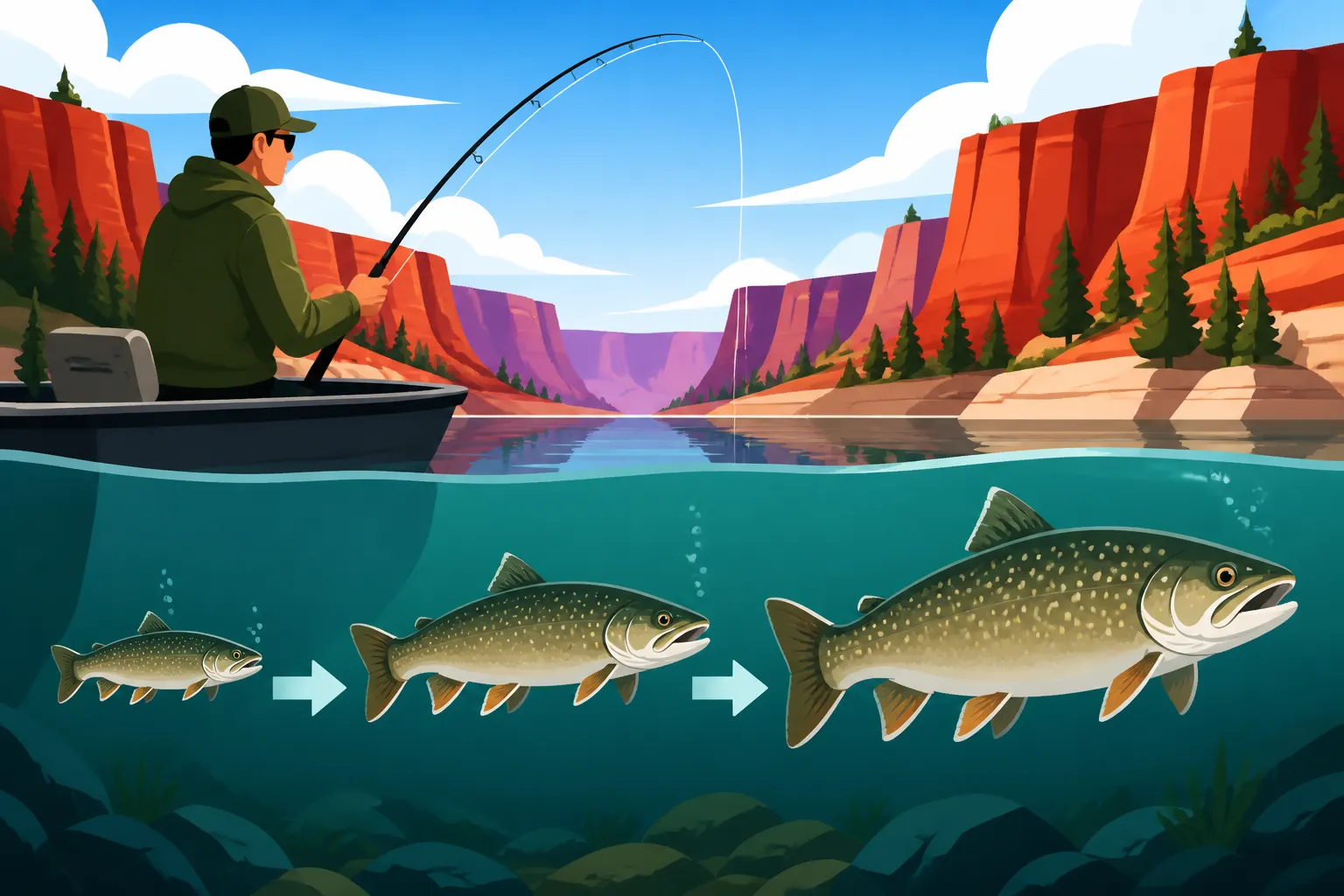
From the moment a lake trout hatches in Flaming Gorge, its journey to becoming a formidable predator begins. While exact growth rates can vary, we can generally outline a progression. In their first year, lake trout are typically quite small, focusing on survival and initial growth. By age 2-3, they start to gain noticeable size, often reaching lengths of 12-18 inches. This is often when they really start to shift their diet to larger forage fish like kokanee.
As they continue to age, their growth accelerates, particularly if they have access to an abundant food supply. A 5-year-old lake trout might be in the 20-30 inch range and weigh several pounds. The truly impressive growth starts around years 8-10 and beyond, where fish can become large, bulky predators, easily topping 15-20 pounds and reaching lengths well over 30 inches. It's not uncommon for the true giants of Flaming Gorge to be 15, 20, or even 30 years old. These fish have weathered many seasons and grown steadily by consuming the plentiful forage. The question of How Old a 50-Pound Lake Trout Typically Is gives you an idea of the incredible longevity and sustained growth these fish can exhibit.
Factors Influencing Individual Fish Size
While the general growth progression is consistent, not every lake trout in Flaming Gorge will grow at the same rate or reach the same colossal size. Several individual factors come into play. Diet quality is paramount; a fish that consistently finds and consumes high-energy forage like kokanee will grow faster and larger than one that struggles to find food or is forced to subsist on smaller, less nutritious prey. Think of it like a human athlete – those with a consistent, high-quality diet perform better and build more muscle.
Competition for food can also influence growth. While Flaming Gorge has an abundant forage base, if a particular area becomes too crowded with lake trout, it might lead to slower growth for some individuals. Water temperature fluctuations, though generally stable in the depths, can still play a role, as can genetic predispositions. Some fish are simply wired to grow larger and faster than others. Angler harvest pressure also shapes the population. The recent changes in regulations, such as Why Utah and Wyoming Removed Lake Trout Limits at Flaming Gorge on smaller fish, aim to reduce competition and allow the remaining fish, particularly the larger ones, to grow even more effectively. This strategic management helps ensure a healthy population structure where fish can reach their full potential.
The Quest for Trophy Lake Trout: Size and Age
Flaming Gorge is legendary for its trophy lake trout. Every season, anglers arrive with dreams of hooking into a true monster, a fish that represents years, sometimes decades, of growth and survival in this vast reservoir. But what exactly constitutes a "trophy," and how old are these behemoths?
What Qualifies as a "Trophy" in Flaming Gorge
When anglers talk about a "trophy" lake trout in Flaming Gorge, they're generally referring to fish that are significantly larger than the average catch. While opinions can vary, most would agree that a lake trout exceeding 20 pounds is certainly in trophy territory. Many anglers set their sights even higher, aiming for fish 30 pounds or more, or those pushing past the 35-inch mark. These are not everyday catches, and they often require specialized techniques and a lot of patience.
These magnificent fish don't reach such sizes overnight. A 20-pound lake trout in Flaming Gorge could easily be 10-15 years old, while those pushing the 30-40 pound range are often 15-25 years old, sometimes even older. Each ring on their scales tells a story of years spent navigating the depths, growing steadily, and evading capture. It’s this long lifespan and consistent growth that makes Flaming Gorge such a draw for those seeking truly monumental catches. Finding a Flaming Gorge Trophy Lake Trout Spots often means searching deep, cold water where these old, wise fish reside.
Longevity of Lake Trout and Record-Breaking Potential
Lake trout are known for their longevity, and the stable, productive environment of Flaming Gorge allows them to live exceptionally long lives. It's not uncommon for biologists to find lake trout well over 20 years old during their surveys, and some could potentially live into their 30s or even 40s in pristine conditions. This extended lifespan is a major reason why Flaming Gorge produces such massive fish; they simply have more time to grow.
The reservoir has a rich history of producing truly giant lake trout, including state record-caliber fish. While specific numbers or dates shouldn't be referenced, the fact that Flaming Gorge holds significant records is a testament to its capability. Imagine the thrill of hooking into a fish that has been swimming these waters for longer than many people have been alive, a true patriarch of the reservoir. This potential for record-breaking catches is a huge part of the allure of Flaming Gorge Fishing Guide, drawing anglers from far and wide in pursuit of a lifetime fish.
Management Strategies and Conservation for Sustainable Growth
The incredible growth rates and trophy potential of Flaming Gorge lake trout aren't just a happy accident. They are also a result of careful management and the collective efforts of state wildlife agencies and responsible anglers. Maintaining this delicate balance is crucial for the long-term health of the fishery.
Balancing Predator and Prey Populations
The Utah Division of Wildlife Resources (UDWR), in conjunction with Wyoming Game and Fish, actively manages the Flaming Gorge fishery to ensure a healthy balance between the lake trout (predators) and their primary food sources (prey). This balance is dynamic and requires constant monitoring. If the lake trout population becomes too dense, they can over-consume their prey, leading to slower growth rates for all fish and potentially collapsing the forage base. Conversely, too few lake trout might lead to an overpopulation of forage fish, which also has its own ecological implications.
Management strategies often involve stocking efforts, where fish like kokanee salmon are introduced to supplement natural populations. Regulations on angler harvest are also a critical tool. For instance, sometimes more liberal limits are placed on smaller lake trout to reduce their numbers, thereby decreasing competition and allowing the remaining fish to grow larger. This strategic approach helps ensure that the ecosystem remains productive and capable of supporting the growth of trophy lake trout year after year. Understanding these rules, like the Utah Daily Bag and Possession Limits, is key for any angler.
The Role of Anglers in Sustaining the Fishery
Anglers play an absolutely vital role in the long-term sustainability of Flaming Gorge's trophy lake trout fishery. Our actions on the water directly impact the health and future of these fish. For many, catching a massive lake trout is the goal, but ensuring that fish can reproduce and grow for future generations is equally important.
Catch-and-release practices for large, mature lake trout are highly encouraged, especially for the true trophies. These older, larger fish are crucial for the genetic health of the population. When practicing catch-and-release, proper handling techniques are paramount to ensure the fish's survival. This means minimizing their time out of water, supporting their body weight, and using appropriate tools for quick and safe hook removal. Additionally, anglers who participate in creel surveys or report their catches provide valuable data to biologists, helping them make informed management decisions. It’s a partnership, really, between nature, management, and the angling community, all working to preserve the incredible resource that is Utah Lake Trout Mackinaw Guide.
Gear and Techniques for Targeting Large Lake Trout
If you're serious about hooking into one of Flaming Gorge's legendary lake trout, having the right gear and understanding the specific techniques is non-negotiable. These fish often reside in deep water and require specialized approaches to entice them.
Essential Gear for Deep-Water Trolling
Targeting large lake trout in Flaming Gorge almost always involves deep-water trolling. This isn't your average panfish setup; you'll need robust equipment designed to handle big fish and heavy weights. A good starting point is a sturdy fishing rod, typically 7-9 feet long, with a medium-heavy to heavy action, capable of handling lines from 20-50 pound test. Pair this with a conventional reel that has a strong drag system and high line capacity. Many anglers find excellent options for these setups on Amazon, offering a wide range of brands and prices.
The most crucial piece of gear for deep trolling is a downrigger. These devices allow you to precisely control the depth of your lure, ensuring it's right in the strike zone where the lake trout are feeding. Without a downrigger, reaching the depths where these fish hold, especially during the warmer months, is incredibly difficult. You’ll want to research Best Downriggers for Flaming Gorge Lake Trout to ensure you're equipped for the challenge. Don't forget a durable tackle box, easily found on Amazon, to keep your large spoons, dodgers, and leaders organized.
Effective Lures and Techniques
Once you have your gear, knowing what to present and how to present it is key. Large lake trout in Flaming Gorge are often focused on substantial meals like kokanee salmon. This means using lures that imitate these forage fish effectively. Popular choices include large trolling spoons, often in silver, chartreuse, or blue patterns, which mimic the flash and wobble of an injured kokanee. Swimbaits, especially those designed to be trolled at depth, can also be incredibly effective. Sometimes, a tube jig presented vertically can also tempt a wary laker, particularly when What Depth Do Lake Trout Hold at in Winter? becomes a factor.
Trolling speed is critical; generally, a slow, deliberate speed of 1.5 to 2.5 miles per hour works well. You'll want to experiment with speed and depth until you find what the fish are responding to. Pay close attention to your fish finder – a high-quality unit, many of which can be ordered from Amazon, is invaluable for locating schools of forage fish, identifying deep structure, and marking individual lake trout. Understanding How Deep to Fish for Lake Trout at Flaming Gorge in Summer is essential, as these fish will seek out colder, deeper water when surface temperatures rise. The combination of the right gear, the right lure, and the right technique will significantly increase your chances of landing a true Flaming Gorge giant.
| Factor Affecting Growth | Description | Impact on Lake Trout Size |
|---|---|---|
| Forage Abundance | Plentiful kokanee salmon, rainbow trout, and chubs. | Faster, larger growth; higher weight gain. |
| Water Depth/Quality | Deep, cold, oxygen-rich waters; stable environment. | Optimal metabolic function; extended lifespan; supports larger body mass. |
| Genetics | Inherited traits from parent fish. | Some fish are naturally predisposed to grow larger. |
| Competition | Number of other lake trout vying for the same food. | High competition can lead to slower growth for individual fish. |
| Angler Harvest | Regulations on how many fish can be kept. | Managed harvest can reduce competition, allowing remaining fish to grow larger. |
| Water Temperature | Consistent deep-water temperatures. | Reduces stress, promotes steady feeding and growth year-round. |
Disclaimer
This article is for general informational purposes only and does not constitute professional advice. Laws, prices and regulations vary by location and change over time. Consult a qualified professional for guidance on your specific situation.