Striped Bass Size at Lake Powell
It's incredibly exciting to think about battling a powerful striped bass at Lake Powell, isn't it? But for many anglers, especially those new to this massive reservoir, there's often a bit of mystery around just how big these hard-fighting fish actually get. You've heard the stories, seen the photos, but you want to know what's realistic for your next trip and what separates a good catch from a true trophy. This guide is here to unravel that mystery, offering you a deep dive into the typical sizes of striped bass at Lake Powell, what makes them grow so large, and how you might just land one of those giants yourself.
The Lake Powell Striper: A Unique Fishery
Lake Powell is a truly iconic fishing destination, and its striped bass fishery is a huge part of that allure. These aren't just any stripers; they're a unique population thriving in a vast, deep desert reservoir. Understanding their background helps paint a clearer picture of their size and behavior.
Why Striped Bass Call Lake Powell Home
Striped bass aren't native to Utah, or even to landlocked waters in general. They're originally a saltwater fish, but they've been successfully introduced to many freshwater impoundments across the country, Lake Powell being one of the most famous examples. The idea behind introducing them to Lake Powell was to create a new, exciting sport fishery that could also help manage other fish populations. They're voracious predators, and a robust population of Striped Bass at Lake Powell helps keep the ecosystem in balance.
The introduction of these fish was a calculated move, aiming to utilize the vast forage base in the lake, primarily shad. When these stripers were first stocked, the lake offered an almost unlimited food supply, leading to explosive growth rates in the early years. Imagine a massive buffet every day – that's what Lake Powell was for them! The subsequent years have seen the population fluctuate, but the fundamental reason they thrive here is the abundance of prey. Why Striped Bass Were Introduced to Lake Powell delves deeper into this historical context, explaining the ecological decisions behind their presence.
Reproduction and Population Dynamics
One fascinating aspect of the Lake Powell striped bass fishery is their ability to reproduce naturally in a freshwater environment. Unlike some other landlocked striped bass populations that require continuous stocking, Lake Powell stripers have found a way to complete their full life cycle here. The inflows from the Colorado and San Juan Rivers provide the necessary current for their eggs to remain suspended until hatching, mimicking the conditions they'd find in a coastal river system.
This natural reproduction means the population can be self-sustaining, but it also means their numbers can boom and bust depending on annual spawning success and, crucially, the availability of food. Periods of high water and strong river flows often lead to better spawns, meaning more fish in the system a few years down the line. However, a massive population requires a massive food source, and that's where the size equation comes in. If there are too many stripers for the available shad, growth rates can slow down considerably, and individual fish might not reach their full size potential. You can learn more about this incredible adaptation in Do Striped Bass Reproduce Naturally in Lake Powell?.
Typical Sizes and What Makes a Trophy Striper
When you hit the waters of Lake Powell, what kind of striped bass can you realistically expect to encounter? And what separates those everyday catches from the fish of a lifetime?
Average Size and Growth Factors
Most of the striped bass you'll encounter at Lake Powell will fall into what we call the "schoolie" category – fish that are actively feeding in schools. These typically range from 2 to 5 pounds, and are often around 18 to 24 inches long. These are fantastic fighting fish on appropriate tackle and make for excellent table fare. They're energetic, aggressive, and often caught in large numbers when you find a feeding school.
However, Lake Powell is also known for producing much larger fish, thanks to its vastness and the incredible growth potential of stripers. Several factors play a huge role in how big a particular striped bass will get:
- Food Availability: This is arguably the biggest factor. A consistent and abundant supply of shad means stripers can pack on pounds quickly. Periods of high shad populations correlate directly with larger average striper sizes.
- Age: Like most fish, stripers grow throughout their lives, so older fish tend to be larger. However, their growth rate can slow down significantly after a certain age if food becomes scarce.
- Genetics: Some fish are just predisposed to grow larger and faster than others.
- Population Density: When the striper population is extremely high, there's more competition for food. This can lead to a phenomenon called "stunting," where fish don't grow as large due to limited resources. The lake management often tries to balance this through regulations or encouraging harvest to keep the population healthy and individual fish growing.
Defining a Trophy Striped Bass
So, what constitutes a "trophy" striped bass at Lake Powell? While personal bests vary wildly, most anglers would agree that a striper weighing 15 pounds or more is definitely in trophy territory. Fish pushing 20 pounds are considered exceptional, and anything above that is truly a fish of a lifetime. Length-wise, these giants will often be 34 inches or longer, with broad shoulders and a deep body.
The Utah state record for striped bass is a testament to the lake's potential, though I cannot share the exact weight or dimensions. Just know that the lake has produced fish that would make any angler's jaw drop. Catching a striper of that caliber often requires dedication, specialized techniques, and a bit of luck. It means finding those older, smarter fish that have survived multiple seasons and found ample food sources. You can look up The Utah State Record Striped Bass for more specifics about that legendary catch.
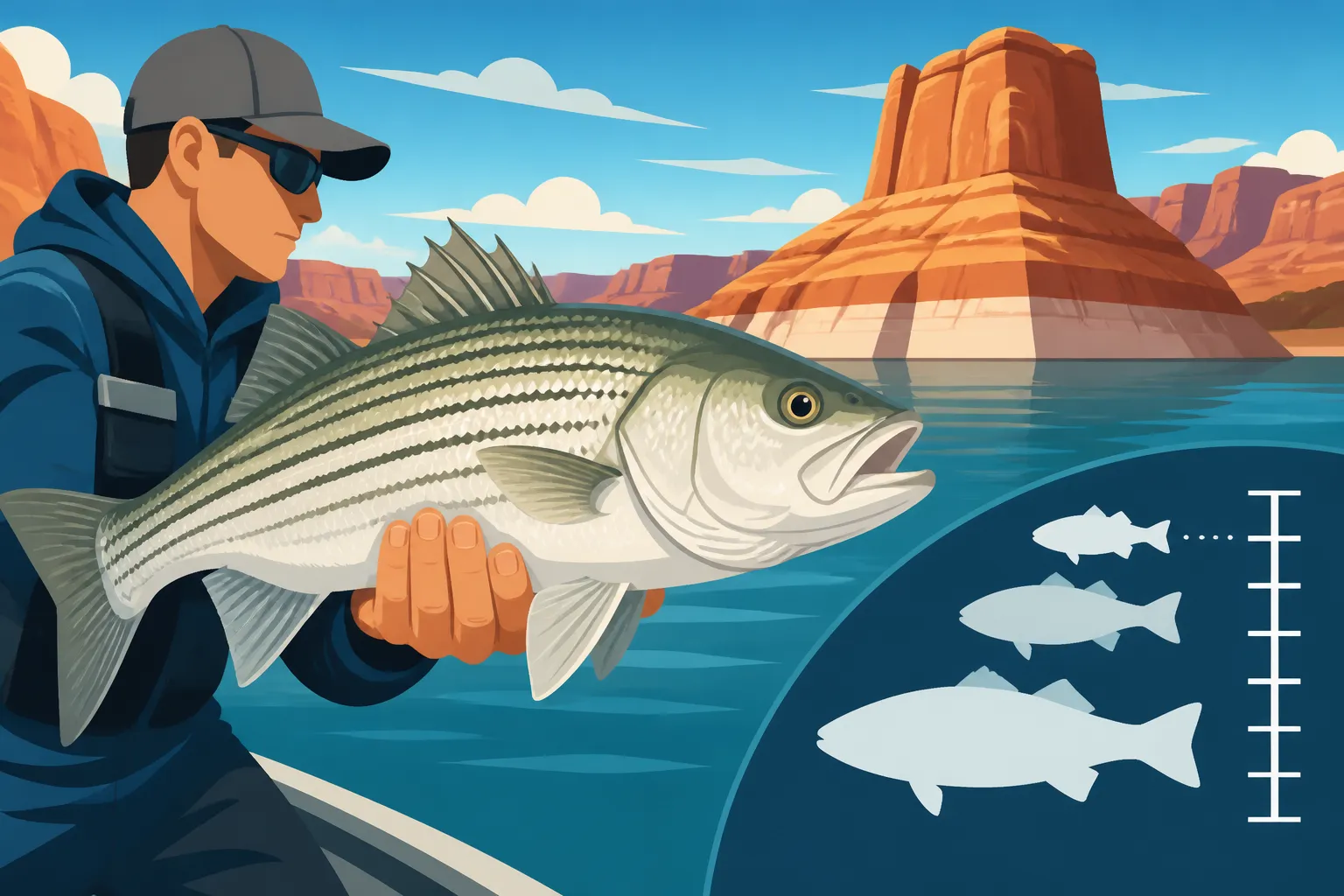
Here's a quick look at how sizes generally break down:
| Size Category | Approximate Weight Range (lbs) | Approximate Length Range (inches) | Typical Age Range (years) | Notes |
|---|---|---|---|---|
| Small "Schoolie" | 1-3 | 15-20 | 2-3 | Abundant, great for action, often found in large schools. |
| Medium "Keeper" | 4-8 | 21-28 | 4-6 | Good fighting fish, common target for many anglers. |
| Large "Respectable" | 9-14 | 29-33 | 6-9 | A solid catch, starting to show good girth. |
| Trophy "Giant" | 15+ | 34+ | 10+ | Rare, but possible; these are the true monsters of Lake Powell. |
Note: These are general ranges and can vary based on the specific year's forage conditions and individual fish growth.
Strategies for Targeting Larger Stripers
You've heard about the potential for massive striped bass at Lake Powell, and now you want to know how to target them. It's not always about sheer numbers; sometimes, it's about refining your approach to focus on those bigger fish.
Locating the Giants
Big fish are often solitary, or they might hang out in smaller groups, rather than the massive schools of smaller stripers. They also tend to favor deeper water, especially during the hotter months.
- Structure: Look for submerged canyon walls, ledges, humps, and old creek channels. These provide ambush points and cover for larger predators. A good fish finder is invaluable here. Many anglers find reliable units on Amazon with side-imaging capabilities that help scout these underwater features.
- Baitfish Concentrations: Even big stripers follow the food. Locate large schools of shad, and you'll often find bigger stripers lurking nearby or below, waiting for an easy meal. This is where those famous When Do Striped Bass Boil on the Surface at Lake Powell? events come into play, though the biggest fish might be deeper, picking off the stragglers. Learning How to Find Shad Boils at Lake Powell is a critical skill.
- Time of Day/Year: While schoolies can bite all day, trophy stripers often feed more actively during low-light conditions, such as dawn, dusk, or even at night. The spring and fall offer some of the best opportunities for larger fish as water temperatures are more favorable for their feeding habits.
Anglers often use a combination of techniques, from trolling to jigging to casting, depending on the conditions and where the fish are holding. Those with a Lake Powell Houseboat Fishing Access can spend extended periods exploring remote areas where big fish might feel less pressured.
Baits and Lures for Big Stripers
To catch big stripers, you often need to use bigger baits and lures. They're not afraid to gulp down a substantial meal.
- Cut Bait: This is a classic method for big stripers. Large pieces of anchovy, sardine, or even fresh shad can be incredibly effective. How to Rig Cut Bait for Striped Bass at Lake Powell will give you the specifics on setting up this presentation for success. The scent trail from cut bait can draw in larger, less aggressive fish from a distance.
- Large Swimbaits: When stripers are actively feeding, big swimbaits can mimic their natural prey perfectly. Soft plastic swimbaits, often rigged with heavy jig heads, are a go-to. You can find a huge variety of effective options by searching for Best Swimbait for Striped Bass at Lake Powell or just general swimbaits on Amazon.
- Heavy Jigs and Spoons: When fish are holding deep, heavy metal jigs or spoons dropped directly into schools can trigger aggressive strikes. Vertical jigging is especially effective when you mark fish on your electronics.
- Topwater Lures: During those epic striper boils, large topwater lures can create incredible explosions. While often associated with schoolies, a big topwater plug can definitely attract a hungry trophy striper amidst the chaos.
Remember, bigger baits often deter smaller fish, increasing your chances of hooking into that truly impressive catch. Don't be afraid to experiment with different presentations and retrieve speeds.
Essential Gear for Battling Big Stripers
Fighting a large striped bass requires robust gear. You don't want to lose that trophy because your equipment couldn't handle the strain.
- Rods and Reels: A medium-heavy to heavy-action spinning or baitcasting rod, paired with a reel capable of holding a good amount of heavy line and delivering strong drag pressure, is ideal. Think about a setup that can handle 15-30 lb test line.
- Strong Line: Monofilament, fluorocarbon, or braided line, depending on your preference and technique. Many anglers prefer braided line for its strength and sensitivity, often with a fluorocarbon leader.
- Measuring and Weighing Tools: Once you land that dream fish, you'll want to accurately record its size. A good quality measuring board or tape is crucial for length, and a reliable digital fish scale, readily available on Amazon, will help you get an accurate weight. Always remember to handle these big fish with care, especially if you plan to release them.
Ultimately, catching a trophy striped bass at Lake Powell is about persistence, understanding the fish's behavior, and having the right tools for the job. Keep learning, keep exploring, and your chances of landing a true giant will only increase!
Disclaimer
This article is for general informational purposes only and does not constitute professional advice. Laws, prices and regulations vary by location and change over time. Consult a qualified professional for guidance on your specific situation.