The Utah State Record Striped Bass
You've heard the whispers, seen the photos of truly massive fish, and perhaps even dreamed of it yourself: landing a state record. For many Utah anglers, especially those with a passion for hard-fighting, powerful fish, the idea of hooking into the biggest striped bass ever caught in the state is a compelling quest. This guide will take a deep dive into the legendary Utah state record striped bass, exploring where it was caught, what it took to land it, and how you might just go after your own personal best in the sprawling waters where these giants lurk.
The Thrill of the Chase: Understanding Utah's State Record Striped Bass
There's something uniquely captivating about a state record fish. It represents a pinnacle of angling achievement, a testament to skill, persistence, and often, a good dose of luck. For striped bass in Utah, this title belongs to a truly impressive specimen, a fish that embodies the potential of one of the state's most dynamic fisheries.
What is the Current Record?
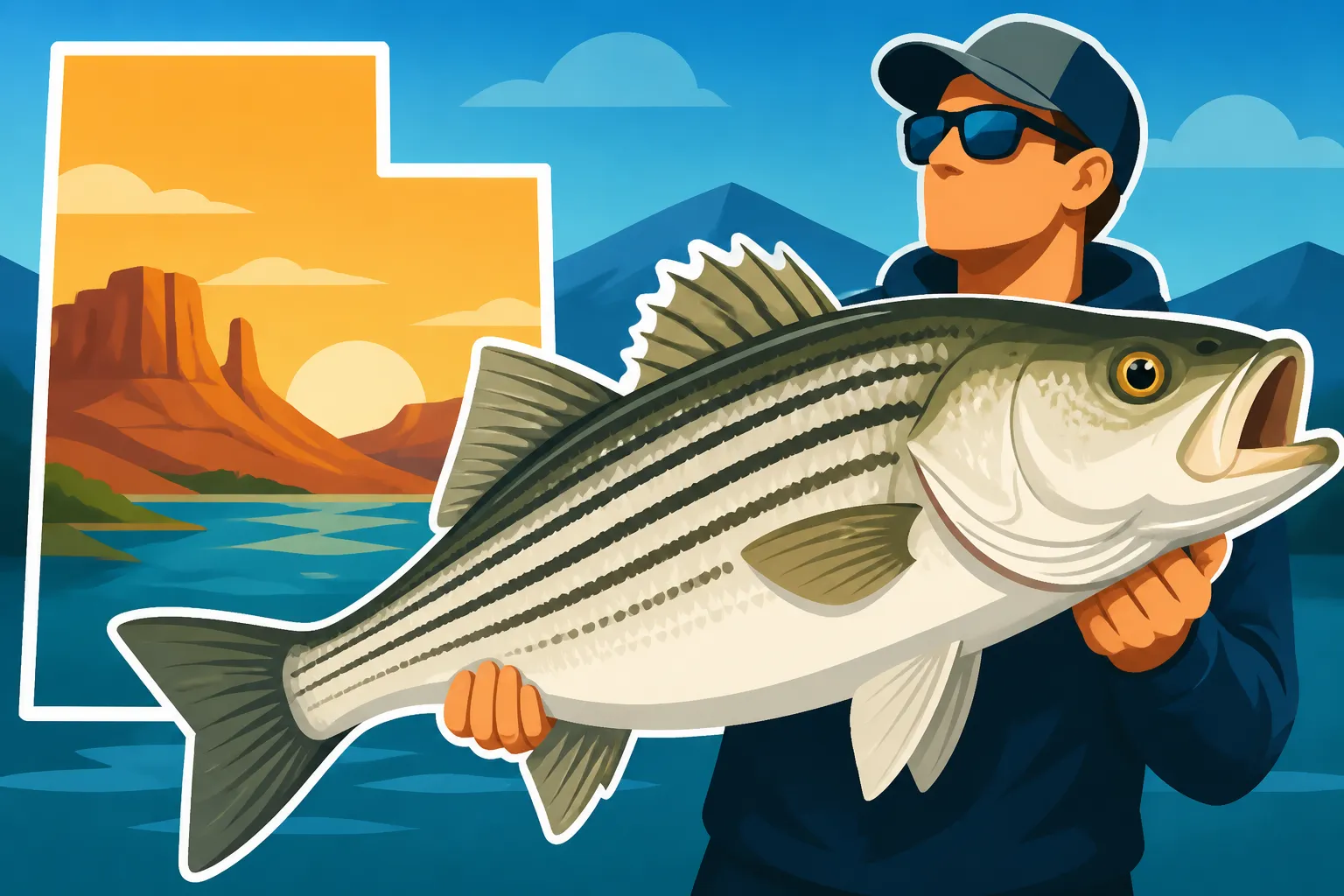
The Utah state record striped bass stands as a testament to the incredible fish that swim within Lake Powell. Caught by Wally Johnson back in 1993, this colossal striper weighed a staggering 48 pounds, 11 ounces. Imagine the fight, the sheer power of a fish nearly fifty pounds on the end of your line! It’s the kind of catch that becomes legendary, inspiring generations of anglers to head to Lake Powell with dreams of their own record-breaking encounter. Wally's accomplishment serves as a benchmark, a reminder of what's possible when conditions align and a monster fish decides to bite. It highlights the rich history and potential of Lake Powell as a world-class striped bass destination, proving that giants truly do exist in these waters.
Why Lake Powell is the Striped Bass Hotspot
When you think of trophy striped bass in Utah, one name immediately comes to mind: Lake Powell. This vast, intricate reservoir, straddling the Utah-Arizona border, is not just a beautiful place; it's an ecological powerhouse that provides the perfect environment for striped bass to thrive and grow to incredible sizes. The lake’s immense volume, intricate canyon system, and abundant forage base create ideal conditions for stripers, allowing them to gorge and pack on weight.
The primary reason for Lake Powell’s dominance in striper fishing is its enormous population of threadfin and gizzard shad. These small baitfish are the caloric engine behind Powell's fishery, providing an endless buffet for predatory stripers. When shad populations boom, so do the stripers, growing fat and strong. The deep, cooler waters of the main channel and vast coves offer these fish plenty of room to roam and ambush prey, allowing them to reach sizes rarely seen in other landlocked fisheries. The sheer scale of Lake Powell also means less pressure on individual fish, giving more stripers the chance to grow old and large, increasing the odds of encountering a truly magnificent specimen.
The Makings of a Monster: What It Takes to Catch a State Record Striper
Catching a fish that approaches state record size isn't just about luck; it's a combination of understanding the fish, employing advanced techniques, and having the right gear to handle such a powerful opponent. For striped bass, especially the giants of Lake Powell, this means being prepared for a serious battle.
Key Techniques and Tactics for Giant Stripers
When targeting trophy striped bass in Lake Powell, anglers often employ a mix of techniques designed to seek out and subdue these large, hard-fighting fish. One of the most common and effective methods is trolling. This involves slowly moving your boat while dragging lures or bait behind it, covering vast expanses of water and presenting your offering to fish that might be suspended at various depths. Large crankbaits, swimbaits, and umbrella rigs are popular choices for trolling, often miming the abundant shad. Deep-diving lures can reach stripers holding in cooler, deeper waters, while shallower presentations work well when fish are higher in the water column or busting bait on the surface during what anglers affectionately call "boils."
Another highly effective strategy, particularly for bigger fish, involves using bait. Live gizzard shad, if available and legal, are perhaps the ultimate offering, as they are precisely what the stripers naturally prey upon. Cut bait, such as chunks of shad or anchovies, can also be deadly, especially when fished on the bottom in known striper haunts. These methods require patience and often the use of a good fish finder to locate schools of baitfish and the stripers lurking beneath them. For an even deeper dive into these strategies, check out How to Catch Striped Bass at Lake Powell. Remember, presenting your bait or lure naturally and effectively is paramount when aiming for that elusive record-breaker.
The Importance of Gear: Rods, Reels, and Line for Big Fish
You simply cannot go after a nearly 50-pound fish with ultralight tackle. Landing a state record striped bass requires a serious investment in robust, reliable gear capable of withstanding immense pressure. Think heavy-duty everything. For rods, you'll want something with a medium-heavy to heavy action, typically between 7 to 8 feet long, offering enough backbone to control a powerful fish while still having enough flex to absorb violent head shakes. A quality boat rod or a sturdy surf-casting rod can be excellent choices. Many of the best options can be found and reviewed on online retailers like Amazon.
Paired with a strong rod, you need a high-capacity reel, either a conventional (baitcasting) reel or a large spinning reel, built with durable components that can handle heavy drag settings and retrieve massive amounts of line. The drag system is particularly crucial; it needs to be smooth and consistent to prevent break-offs during a striper's powerful runs. As for line, braided line in the 50-80 pound test range is often favored for its strength, sensitivity, and minimal stretch, allowing for solid hooksets and better feel of subtle bites. Some anglers might opt for heavy monofilament for its shock-absorbing qualities. Don't forget heavy-duty leaders, swivels, and hooks to match the size of your bait and the potential size of your catch. Investing in reliable gear is non-negotiable when targeting state record fish. For a broader look at suitable gear, consider browsing Best Fishing Rods for Utah Anglers and Best Lures for a Utah Tackle Box. And if you're planning to fish from a boat, exploring options like those highlighted in Best Boats for Utah Reservoir Fishing can also make a huge difference in your success.
Beyond the Record: Respecting Striped Bass and the Fishery
While the dream of a state record is thrilling, it's also vital to understand the role striped bass play in Lake Powell's ecosystem and to practice responsible angling. These fish are a cornerstone of the reservoir's immense popularity, providing incredible recreation, but their presence also has ecological implications.
Understanding Striped Bass Behavior and Biology in Utah
Striped bass, while not native to Utah, have found a veritable paradise in Lake Powell, where they thrive due to the abundant shad population. They are highly predatory, schooling fish known for their aggressive feeding habits. In Lake Powell, stripers tend to follow the baitfish, moving throughout the lake's vast canyons and open water. Their behavior can change dramatically with the seasons. In warmer months, they might be found busting on the surface in "boils" as they aggressively chase shad, offering some of the most exciting fishing opportunities. In cooler months, they tend to move deeper, holding near submerged structures or in the main channel, becoming more challenging to locate and catch.
Their life cycle in Lake Powell is interesting because while they can successfully spawn in the riverine sections that feed the lake, their survival rates are largely dependent on the lake's water levels and the health of the shad population. When forage is abundant, stripers grow quickly and can reach impressive sizes. Understanding their patterns—when they spawn, where they feed, and how they react to changes in water temperature and clarity—is crucial for consistent success, especially when targeting larger specimens. Knowing their biology helps anglers appreciate the fishery more and make informed decisions on the water.
Conservation and Responsible Angling
Because striped bass are an introduced species in Lake Powell and can exert significant predatory pressure on other fish populations, management strategies often encourage their harvest. Unlike some native species with strict catch limits, striped bass in Lake Powell typically have very liberal or even no possession limits, particularly for smaller "schoolie" stripers. This is a deliberate management tool to help control their population and maintain balance within the ecosystem, especially to protect species like the smallmouth bass and walleye, and to allow the shad population to rebound.
Even with liberal limits, responsible angling practices are always important. If you're targeting trophy fish and plan to release them, minimize their time out of water, handle them gently with wet hands or gloves, and support their body weight horizontally. Use appropriate de-hooking tools, and ensure the fish is revived before release. For those fish you intend to keep, having a good cooler, perhaps one purchased from Amazon, on board is essential for maintaining freshness. Always be aware of the current Utah Fishing Regulations Explained, even when targeting species with liberal limits, as rules can change. Understanding the "why" behind these regulations helps ensure the long-term health and enjoyment of the Lake Powell fishery for everyone. For detailed information on the specific fish you're targeting, refer to Striped Bass at Lake Powell.
Practical Pointers for Your Own Trophy Striper Hunt
The pursuit of a trophy striped bass, especially one that might challenge the state record, is an endeavor that requires patience, preparation, and a keen understanding of Lake Powell’s unique dynamics. Here are some practical tips to help you on your quest.
Best Times and Conditions for Big Stripers
Timing is everything when it comes to trophy striped bass. While you can catch stripers year-round in Lake Powell, certain seasons and conditions offer better chances for truly massive fish. Spring (April-May) and fall (September-October) are often considered prime times. During these transitional periods, water temperatures are more stable and comfortable for stripers, leading to increased feeding activity. In the spring, stripers are coming out of colder water and are hungry, often congregating near spawning areas or major creek channels. In the fall, they are aggressively feeding to put on weight for winter, and this is when the famous "boils" can be at their most spectacular, though often these boils consist of smaller, schooling fish. Larger, solitary stripers might be found deeper or lurking on the edges of these frenzies.
The best time of day often involves the low-light periods of dawn and dusk. Early morning offers cooler temperatures and less boat traffic, and stripers are often more active near the surface. Overcast days can extend these prime feeding windows. Keep a close eye on weather patterns; stable weather often leads to more predictable fish behavior. Wind, while sometimes challenging, can also create current and oxygenation that stimulate feeding, especially if it concentrates baitfish. Don't be afraid to fish after dark, as some of the biggest stripers are caught by anglers who brave the night.
Locating the Giants: Where to Focus Your Efforts
Finding a state record striped bass in a lake as immense as Lake Powell can feel like searching for a needle in a haystack, but there are definitely strategies to narrow your focus. Big stripers are typically found in areas with ample deep water access, significant structure, and, crucially, a consistent supply of large baitfish. Start by studying a detailed map of Lake Powell, focusing on the main channels, deep canyon walls, and large submerged points or humps. These areas provide ambush points and cover for larger predators.
Using a good quality fish finder or sonar, ideally one capable of showing detailed bottom structure and schools of baitfish, is absolutely essential. Spend time idling through potential areas, looking for suspended schools of shad and the tell-tale arches of stripers below them. Pay particular attention to the mouths of major canyons like Padre Bay, San Juan Canyon, and Navajo Canyon, as these are known hotspots for both baitfish and the large stripers that follow them. Don't overlook submerged islands or changes in bottom contour in deeper water. Some anglers also find success by targeting areas where currents might concentrate bait. For a comprehensive overview of prime locations, dive into our Lake Powell Fishing Guide and specifically look for Lake Powell Striped Bass Spots. Understanding how to interpret your electronics, as detailed in How to Read a Fish Finder for Utah Reservoirs, will significantly increase your odds of locating these elusive giants.
| Factor | Targeting Smaller Stripers (Schoolies) | Targeting Trophy Stripers (Potential Record) |
|---|---|---|
| Location | Surface boils, open water, near main channels, often in large schools | Deeper channels, submerged structure, isolated humps, areas with larger bait |
| Technique | Casting topwater lures, spoons into boils; light trolling | Deep trolling with large lures; live bait/cut bait on heavy tackle |
| Lures/Bait | Smaller spoons, topwater poppers, white grubs, 2-3 inch swimbaits | Large crankbaits (6-10 inches), big swimbaits, live gizzard shad, cut bait |
| Gear | Medium action spinning/casting rods, 10-20 lb line | Heavy action rods (7-8 ft), conventional reels, 50-80 lb braided line |
| Time of Day | Anytime during active boils, often daytime | Low light (dawn/dusk), night fishing, mid-day in deep water |
| Strategy | Find the schools, cast, and retrieve quickly | Patiently work prime structure, target individual fish on sonar, slow presentations |
| Mindset | Action-packed, quantity-focused | Patient, persistent, quality-focused |
| Goal | Catch many fish, fill the cooler | Catch one exceptional fish |
| Boating Type | Any boat, including smaller models for quick runs | Larger, stable boat with reliable sonar/GPS and rod holders |
| Freshness | Essential for smaller stripers for eating; use Best Coolers for Keeping Utah Fish Fresh | Critical for both consumption and potential record verification |
Disclaimer
This article is for general informational purposes only and does not constitute professional advice. Laws, prices and regulations vary by location and change over time. Consult a qualified professional for guidance on your specific situation.