Are Tiger Muskie Dangerous to Swimmers?
It's completely understandable to wonder about the safety of swimming in waters where powerful, toothy predators like tiger muskie live. When you hear about fish that can grow several feet long with a mouth full of razor-sharp teeth, it’s natural for a little anxiety to creep in, especially if you’re planning a dip in a lake like Pineview. This guide will dive deep into the reality of tiger muskie, their behavior, and whether they pose a real threat to human swimmers in Utah.
Understanding the Tiger Muskie: Nature and Behavior
Let's start by getting to know these fascinating fish a bit better. The more you understand about a species, the less the unknown can lead to apprehension. Tiger muskie are indeed impressive, but their reputation can sometimes outpace their actual behavior towards humans.
What is a Tiger Muskie?
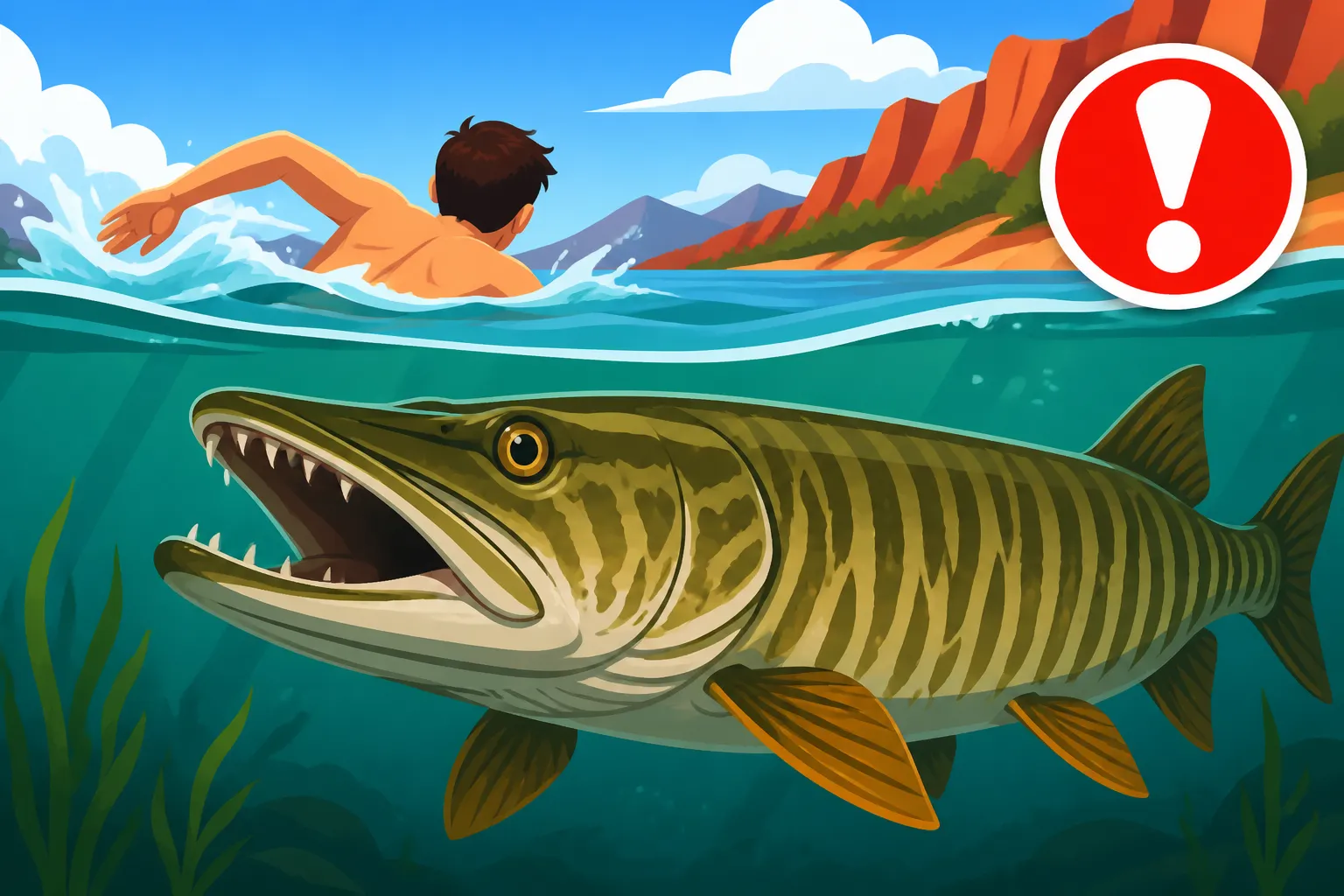
A tiger muskie isn't actually a distinct natural species, but rather a hybrid fish, a cross between a northern pike and a muskellunge. Think of it as a super-fish, intentionally bred for specific purposes, often related to fisheries management and sport fishing. They inherit the best (or most formidable!) traits from both parents: the aggressive feeding nature of a northern pike and the impressive size potential of a muskellunge. Their appearance is striking, too—they typically have a beautiful, barred pattern on their sides, hence the "tiger" in their name. These fish can grow quite large, sometimes exceeding 40 inches in length and weighing over 20 pounds in Utah waters, making them true apex predators in their habitat. Tiger Muskie Size in Utah can be truly impressive.
They are built for speed and ambush. Their long, torpedo-shaped bodies and large tail fins allow for explosive bursts of speed. Their most notable feature, however, is their mouth. It’s wide and filled with numerous sharp, backward-pointing teeth designed to grip and hold onto slippery prey. These aren't teeth meant for chewing or tearing, but rather for ensuring anything they grab doesn't escape.
Where Do They Live in Utah?
In Utah, tiger muskie are primarily stocked in specific reservoirs, most notably Pineview Reservoir near Ogden. They were introduced for a few key reasons, primarily as a biological control to help manage populations of less desirable fish species, and also to provide an exciting trophy fishery for anglers. They thrive in these larger impoundments, finding plenty of cover in submerged vegetation, old timber, or rocky drop-offs where they can lie in wait for their next meal.
While Pineview is the most famous spot for them, it's always a good idea to check current stocking reports from the Utah Division of Wildlife Resources to know exactly where these powerful fish might be found. They are ambush predators who prefer areas with structure, where they can hide and dart out quickly. This means they're often found along weed lines, submerged points, or near other underwater features that provide good cover.
What Do They Eat?
This is where the "dangerous" perception often comes from. Tiger muskie are voracious carnivores. Their diet consists almost exclusively of other fish. They are true apex predators, meaning they sit at the top of the food chain in their environment. In Pineview, for example, they primarily feast on species like carp, suckers, and sometimes even smaller trout. They're excellent at reducing overpopulated forage fish, which helps keep the ecosystem balanced.
Their hunting strategy is textbook ambush predation. They'll patiently wait, often perfectly still, until an unsuspecting fish swims too close. Then, with an incredibly fast burst of speed, they strike, engulfing their prey headfirst. The numerous sharp teeth are perfect for holding onto that struggling fish. Their predatory instincts are strong, and they're highly efficient hunters within their underwater world. It's this efficient predatory nature that sometimes leads people to assume they might be a threat to anything that enters their water.
Assessing the Risk to Swimmers in Utah Waters
So, with all that talk of sharp teeth and ambush predation, does that mean you should be genuinely concerned about swimming with tiger muskie? Let's get real about the actual risks.
Are Attacks on Humans Common?
The short answer is no, absolutely not. Attacks on humans by tiger muskie, or any muskie or northern pike for that matter, are incredibly rare, bordering on unheard of. When incidents are reported (and they are usually isolated and sensationalized), they almost always involve specific circumstances that are easily avoided. These fish are predators of fish, not people. A human swimmer, with their size and noisy movements, simply isn't recognized as prey.
Most reported incidents, if they can even be called attacks, are typically cases of mistaken identity or defensive bites. For example, a muskie might strike at a flashy piece of jewelry or a dangling finger that looks like a small fish, especially if the water is murky or if they are startled. Anglers who are carelessly handling a muskie can also get bitten, which is why proper tools for How to Land a Tiger Muskie Without Losing It and release are so important. But a muskie actively hunting and pursuing a human swimmer? That's firmly in the realm of fiction.
The "Dangerous" Perception vs. Reality
The perception of danger often comes from their impressive size and formidable teeth, coupled with their powerful, aggressive strikes on their natural prey. It's easy to project that ferocity onto humans. However, their reality is quite different. They are solitary creatures, generally shy of human activity, and would much rather avoid you than confront you.
Consider the sheer volume of people who swim, kayak, paddleboard, and fish in waters like Pineview Reservoir every single year. If tiger muskie were truly a threat to humans, we would see far more incidents. Instead, it's a testament to their true nature – they want to eat fish, not people. Their "danger" is primarily to the fish populations they prey upon, not recreational water users. They are an important part of the ecosystem, helping to control populations of overabundant species.
Key Differences from Other Apex Predators
It's helpful to distinguish tiger muskie from other animals often perceived as dangerous in water, such as sharks or alligators.
- Sharks: Sharks are oceanic predators with a different biology and hunting strategy. While shark attacks are also rare, some species are indeed capable of inflicting serious harm on humans if they mistake them for prey or are provoked.
- Alligators/Crocodiles: These reptiles are territorial and can be aggressive, especially when protecting nests or if habituated to human feeding. Their hunting style is often an explosive, close-quarters ambush that is specifically adapted to larger land animals or birds at the water's edge.
Tiger muskie simply don't fit this profile. They lack the jaw strength and predatory drive to pursue and consume anything as large as a human. Their bodies are designed for quick bursts to snatch fish, not for a prolonged battle with a large mammal. They are built to swallow their prey whole or in large chunks, and a human is far too big for that. You could compare it to a house cat and a lion; both are felines, both have teeth and claws, but their predatory capabilities and target prey are vastly different.
Here’s a quick comparison of what a muskie targets versus typical human concerns:
| Feature | Tiger Muskie (Natural Predation) | Human Concerns (Hypothetical) |
|---|---|---|
| Primary Prey | Fish (carp, suckers, smaller trout, perch) | Large mammals, anything bigger than a typical meal size |
| Hunting Style | Ambush predator, quick strike, hold with teeth, swallow whole | Pursuit, sustained attack, tearing flesh |
| Teeth Function | Gripping, holding slippery fish | Cutting, tearing, crushing (in other dangerous predators) |
| Size Match | Prey typically less than 1/3 their own body length | Humans are vastly larger than their typical prey |
| Motivation | Hunger for fish, territorial defense (very rare) | Intentional harm, self-defense (human-perceived threat), mistaken identity (rare) |
Minimizing Potential Encounters and Staying Safe
While the risk is incredibly low, it's always wise to exercise good judgment and practice smart water safety, regardless of what aquatic life might be present. These tips aren't just for muskie waters but are generally good practice for any natural environment.
Best Practices for Swimmers in Tiger Muskie Waters
Even though these fish aren't out to get you, a startled fish or a case of mistaken identity is theoretically possible, however rare. Here are some common-sense practices that can help minimize any chance of an unwanted interaction:
- Avoid Murky or Weed-Choked Water: Muskie love cover. If the water is particularly murky, or if you're swimming in thick aquatic vegetation where visibility is low, it might be harder for a muskie to distinguish you from potential prey, and harder for you to see them. Stick to clearer, open swimming areas.
- Don't Wear Flashy Jewelry: Shiny objects can reflect light in a way that mimics the flash of a baitfish, especially in lower light conditions or murky water. It's a simple step to remove rings, watches, or necklaces before you swim.
- Avoid Swimming During Peak Fishing Times or Near Active Fishing: Anglers often target muskie at dawn and dusk, or by casting lures that mimic their natural prey. Swimming close to where people are actively fishing for muskie, especially with large, flashy lures, could put you in an unusual situation where a fish might be more agitated or confused. Also, avoid swimming where fish are being cleaned or where bait is being used.
- Supervise Children: This is crucial in any body of water. Keep an eye on kids, not just for potential fish encounters, but for all general water safety reasons. Teach them not to splash excessively around docks or dense vegetation, which could attract curious fish.
- Swim in Designated Areas: Public beaches and swimming areas are typically chosen for their safety, often featuring clearer water and fewer obstacles. These areas are generally less likely to be prime muskie hunting grounds compared to remote, heavily vegetated coves.
What to Do If You See a Large Fish
Imagine you’re swimming in Pineview and you spot a large shadow, perhaps a muskie. Your heart might skip a beat, and that’s a completely natural reaction. But here's the best approach:
- Stay Calm: Panicking will only make you splash more, which can sometimes attract curiosity from fish, or worse, exhaust yourself.
- Observe, Don't Provoke: Most likely, the fish is just passing through or ignoring you. Give it space. Avoid trying to touch it, chase it, or splash at it.
- Slowly Move Away: Without making sudden, jerky movements, calmly and slowly swim away from the area. Head towards shallower water or shore. The muskie will almost certainly do the same, wanting to avoid interaction.
- Consider a Whistle or Horn: For added peace of mind, especially if you're out on the water in a kayak or paddleboard, carrying a loud whistle, easily found on Amazon, can be a good safety measure to alert others if you feel uncomfortable or need assistance.
Fishing and Releasing Tiger Muskie Safely
For anglers, interacting with a tiger muskie is part of the thrill, but it comes with responsibilities for both angler and fish. If you plan to fish for these incredible creatures, understanding safe handling is paramount. They are powerful, and those teeth are indeed sharp, which is why specialized gear is so important.
- Proper Gear for Handling: When targeting muskie, anglers should always have heavy-duty pliers, a large landing net, and sometimes even a jaw spreader or hook removers, all of which are easily available on Amazon or at your local tackle shop. This isn't just about protecting the angler; it's about minimizing harm to the fish during release.
- Minimize Time Out of Water: Muskie are hardy, but any fish struggles when removed from its aquatic environment. Get a quick photo if you must, but prioritize getting the fish back into the water as quickly and gently as possible.
- Wet Hands, Horizontal Hold: If you handle the fish directly, always wet your hands first to protect its slime coat. Support the fish horizontally, never vertically by the jaw or gills, which can cause internal damage.
- Revive the Fish: Hold the fish gently in the water, facing into any current or moving it back and forth to push water over its gills, until it regains strength and swims away on its own.
- Conservation Role: Tiger muskie are a valued sport fish and play an important role in Utah's fisheries management. Responsible angling and catch-and-release practices ensure these magnificent fish can continue to thrive. For more specific guidance, resources like How to Tie a Basic Fishing Knot for Trout Fishing might be a good starting point for beginners, though muskie fishing requires much heavier tackle. Anglers looking for specific gear might check out a Utah Fishing Gear Guide to ensure they are well-equipped.
Tiger muskie are an exciting addition to Utah's aquatic environments, offering a unique challenge to anglers and helping maintain ecological balance. While their size and predatory nature can seem intimidating, the reality is that they pose virtually no threat to human swimmers. By understanding their behavior and practicing simple water safety, you can enjoy Utah's beautiful waters, even in the presence of these impressive fish. If you're looking for prime muskie action, a Pineview Reservoir fishing guide can help you find the best spots.
Disclaimer
This article is for general informational purposes only and does not constitute professional advice. Laws, prices and regulations vary by location and change over time. Consult a qualified professional for guidance on your specific situation.