Largemouth vs Smallmouth Bass Differences
It's a common experience for Utah anglers, especially those new to bass fishing, to pull in a feisty fish and wonder, "Is this a largemouth or a smallmouth?" While both are fantastic sport fish that put up incredible fights, they have distinct differences in appearance, behavior, and the places they like to hang out. This guide is here to clear up that confusion, helping you confidently identify, locate, and ultimately catch more of these exciting bass species across Utah's diverse waters.
Unpacking the Physical Distinctions
Let's face it, at first glance, a bass is a bass, right? They're both olive-green, have big mouths, and fight like crazy. But when you get them up close, there are some undeniable tell-tale signs that scream either "largemouth" or "smallmouth." Knowing these isn't just for showing off to your fishing buddies; it genuinely helps you understand their world and, in turn, how to target them effectively.
The Jawline: A Dead Giveaway
Perhaps the most definitive characteristic to distinguish between a largemouth and a smallmouth bass is the size of their mouth, specifically how far back the jaw extends. It’s the first thing many experienced anglers look for.
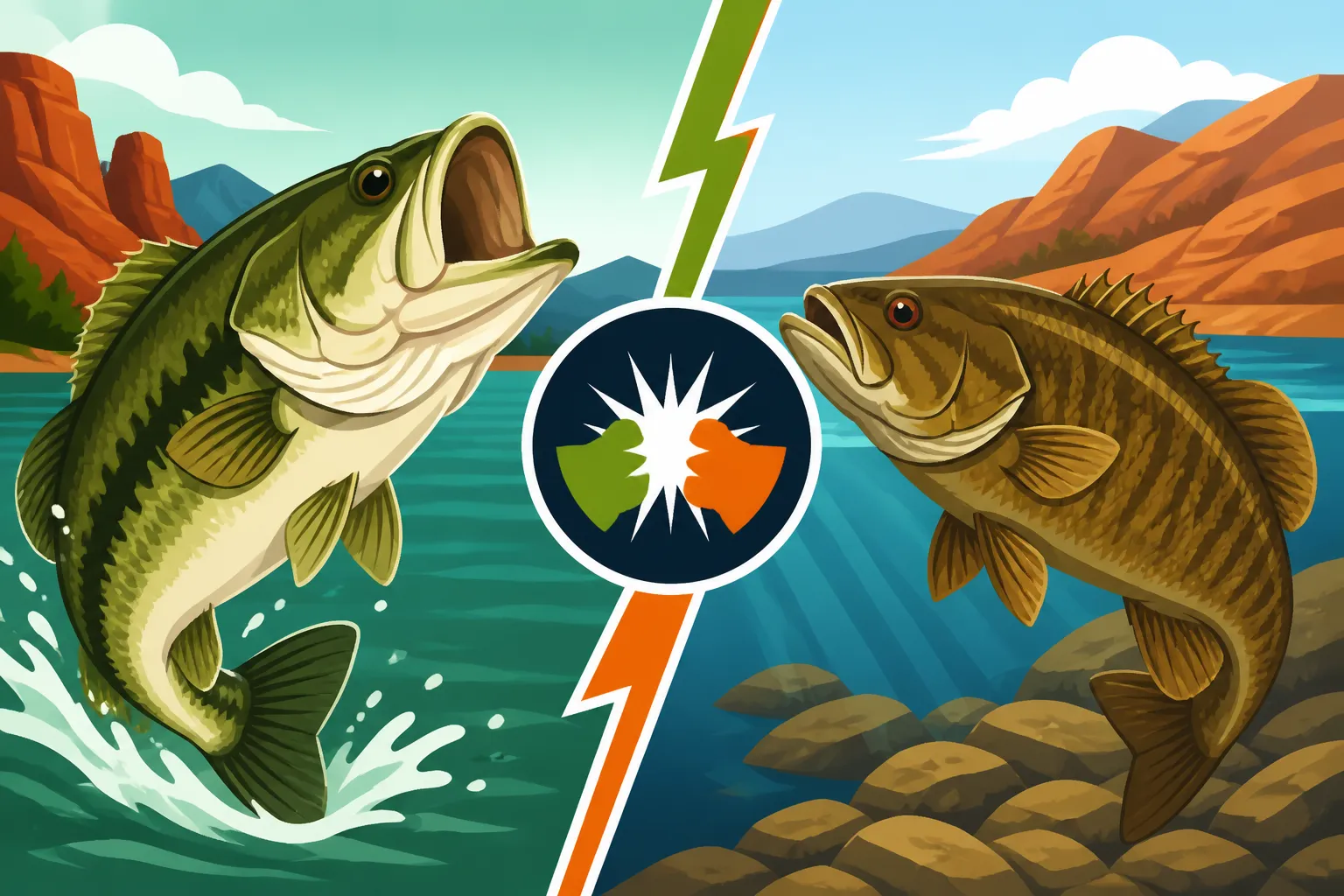
A largemouth bass, as its name cleverly suggests, has a significantly larger mouth. If you close its mouth, the hinge of the jaw will extend noticeably beyond the back of its eye. Think of it like a perpetually surprised look, with a jaw that just keeps going. This wide gape is perfect for ambushing prey in thick cover, allowing them to engulf frogs, mice, and even small birds whole. They are truly opportunistic eaters, and that big mouth is their primary tool. When you're trying to figure out what you've caught, gently closing its mouth and checking that jawline is your quickest, most reliable identifier.
In contrast, the smallmouth bass has a more modest mouth. When its mouth is closed, the hinge of its jaw will typically not extend beyond the center of its eye, and often it stops before reaching the eye at all. It's a much more proportionate, almost streamlined jawline compared to its largemouth cousin. While still formidable predators, their smaller mouth is geared more towards chasing down baitfish in open water or picking off crayfish from rocky bottoms. This difference in jaw size tells a lot about their preferred hunting grounds and what they typically eat, which directly impacts the lures and techniques you might use.
Coloration and Pattern Cues
Beyond the jaw, the color and markings on a bass can provide further clues. While these can vary depending on the water clarity, bottom composition, and even the fish's mood, there are general patterns that hold true.
Largemouth bass typically have a distinct, often irregular, dark horizontal stripe or blotchy pattern running along the sides of their body. This stripe can sometimes break into a series of dark blotches rather than a solid line, but it’s always present in some form. Their overall body color tends to be a darker green, sometimes almost black on the back, fading to a lighter green or white belly. They often have a somewhat "chunkier" or "stockier" build compared to smallmouths. This camouflage helps them blend into the dense aquatic vegetation and woody cover they prefer, allowing them to ambush unsuspecting prey from the shadows.
Smallmouth bass, on the other hand, are often called "bronzebacks" for a reason. Their coloration typically leans more towards a bronze, golden, or brownish hue, with vertical bars or blotches along their sides. These bars are usually more defined than the largemouth's horizontal stripe and are often quite striking. Their eyes also tend to be a reddish-brown color, which can be another subtle identifier. They also have a more torpedo-shaped, streamlined body, built for speed and agility in open water. This bronze-barred pattern helps them disappear against rocky lake beds and river currents, mimicking the shadows and textures of their preferred habitats. Understanding these color differences can help you quickly distinguish between the two when you've got a fish in the net.
Dorsal Fin Division
Another key anatomical difference lies in their dorsal fin – the fin on top of their back. This might seem like a small detail, but it's a consistent characteristic that can help seal the identification.
The largemouth bass has a dorsal fin that appears deeply notched, almost to the point of looking like two separate fins. The spiny front section is clearly separated from the softer-rayed back section by a pronounced dip. It’s like two distinct triangular fins fused at the very base. This deeply divided dorsal fin is a classic characteristic that helps differentiate it from its smaller-mouthed cousin. When you're holding a fish, gently run your finger along the top fin (carefully, those spines can be sharp!), and you'll feel that significant separation.
Conversely, the smallmouth bass has a dorsal fin that is less deeply notched, appearing more continuous. While there's still a division between the spiny and soft-rayed parts, it's not as dramatic. It looks more like one long fin with a shallow dip rather than two distinct fins. The profile of the fin is much smoother and more unified. This subtle but consistent difference, combined with the jawline and coloration, paints a complete picture for accurate identification. Checking the dorsal fin provides one more piece of the puzzle, especially if you're still uncertain after looking at the mouth and body color.
Here's a quick comparison table to help you keep these distinctions straight:
| Feature | Largemouth Bass | Smallmouth Bass |
|---|---|---|
| Jaw Extent | Extends beyond the back of the eye | Does not extend beyond the center of the eye |
| Body Color | Darker green to olive, sometimes black back | Bronze, golden, or brownish, often with red eyes |
| Body Pattern | Distinct, often irregular, horizontal dark stripe/blotches | Vertical bars or blotches along sides |
| Dorsal Fin | Deeply notched, appears almost like two separate fins | Shallower notch, appears more continuous |
| Body Shape | Generally stockier, chunkier build | More streamlined, torpedo-shaped build |
Habitat Preferences and Behavior
Knowing what a bass looks like is just half the battle. To truly understand and target them, you need to know where they live and how they act. Largemouth and smallmouth bass, while both formidable predators, have very different preferences when it comes to their living arrangements and daily routines. These differences are rooted in their evolutionary history and their adaptations to specific aquatic environments.
Largemouth: Masters of the Cover
Largemouth bass are the undisputed champions of structure and cover. They are ambush predators through and through, meaning they prefer to hide and wait for their prey to come to them. This preference dictates where you'll find them.
You'll almost always find largemouths in areas with abundant submerged vegetation, like lily pads, cattails, hydrilla, or coontail moss. They love to lurk in the thick stuff, using the weeds as both camouflage and a pantry for baitfish, frogs, and insects. Beyond vegetation, they're drawn to woody cover: fallen trees, submerged stumps, brush piles, and even old dock pilings. These provide shade, protection, and prime ambush points. In Utah, this often means targeting the warmer, shallower bays of reservoirs, or slow-moving river backwaters where reeds and submerged timber are plentiful. Think of them as the recluse hunters, patiently waiting for the perfect moment to strike. Understanding their need for cover is paramount to Utah Bass Fishing Techniques that will lead to success. If you're not casting into or around dense cover, you're likely missing the largemouth bite.
Their behavior reflects this ambush strategy. Largemouths are less likely to chase prey across open water for long distances. Instead, they'll burst out from cover with incredible speed to engulf a passing meal, then retreat back to their hiding spot. They are highly territorial, especially around prime pieces of cover, and will often hold their ground. Their feeding times can be more spread out throughout the day, especially if they are well-hidden, though dawn and dusk remain prime hunting hours when light conditions favor their ambush tactics. They also tend to be less tolerant of cold water than smallmouths, seeking out the warmest available water, often in the shallower reaches of a lake or pond.
Smallmouth: Kings of the Rocks and Currents
Smallmouth bass, by contrast, are more active hunters that prefer cleaner, cooler water with rocky bottoms and current. They are built for speed and endurance, perfectly adapted to chasing down prey in more open environments.
You'll typically find smallmouth bass patrolling rocky points, submerged humps, rip-rap shorelines, gravel beds, and areas with strong current in rivers. They are drawn to structure created by rocks, boulders, and ledges, using these features to hide, ambush, and corral baitfish. Unlike largemouths, they don't rely as heavily on thick vegetation. In Utah, this means focusing your efforts on larger, deeper reservoirs like Flaming Gorge or rocky sections of rivers where they can thrive in cooler, oxygen-rich waters. The Flaming Gorge Smallmouth Bass Coves are a perfect example of their preferred habitat, offering plenty of rocky real estate.
Their behavior is much more active and predatory. Smallmouths are renowned for their aggressive strikes and acrobatic fights, often leaping clear of the water when hooked. They will actively hunt and chase down baitfish, crawfish, and insects in open water, often schooling up to herd their prey. While they appreciate current breaks, they aren't afraid to hold in moving water, using it to their advantage to ambush prey swept downstream. Smallmouths are more sensitive to bright light and often feed heavily during low-light conditions at dawn and dusk, or on overcast days. During the heat of summer, they'll retreat to deeper, cooler water, but remain active, ready to chase down a meal. Their preference for clean, cool, rocky environments means they have a different diet and respond to different presentations than their largemouth cousins.
Tailoring Your Approach: Fishing for Each Species
Understanding the physical differences and habitat preferences of largemouth and smallmouth bass isn't just academic; it directly translates into how you should fish for them. Trying to catch a smallmouth in thick weeds with a heavy jig might be frustrating, just as casting a light finesse worm into deep, open water for a largemouth might leave you empty-handed. Successful angling means matching your gear and technique to the target species.
Lures and Baits for Largemouth Bass
Since largemouth bass are ambush predators that live in and around dense cover, your lure selection should reflect this. You want baits that can penetrate vegetation, deflect off wood, and create a disturbance that triggers a strike from a hidden fish.
Soft plastics are a staple for largemouths. Think Texas-rigged or Carolina-rigged worms, creature baits, and senkos. These can be pitched right into heavy cover, allowing you to work through weeds and wood without snagging. Jigs, especially those with weed guards, are also incredibly effective, mimicking crawfish or baitfish. Spinnerbaits and chatterbaits are excellent for covering water and pulling fish out of scattered cover, their flash and vibration irresistible. For topwater action, buzzbaits and hollow-bodied frogs are phenomenal when fished over lily pads or matted vegetation; the explosive strikes are pure adrenaline! When fishing around heavy cover, you might want a stronger line and a stiffer rod to pull these fish out. For a comprehensive look, exploring options on Amazon can give you a good idea of the vast array of options available for these tactics.
Here's a breakdown of common lure types and why they work:
- Soft Plastics (Worms, Creatures, Senkos): These can be rigged weedless, allowing you to penetrate the densest cover where largemouth hide. Their subtle action and lifelike appearance are perfect for triggering instinctual bites.
- Jigs (Skirted Jigs, Flipping Jigs): Mimic crawfish or small baitfish. With a weed guard, they can be punched through heavy grass or dropped into brush piles, offering a bulkier, more substantial meal.
- Spinnerbaits and Chatterbaits: Excellent for covering water quickly and generating reaction strikes. The flash and vibration can draw fish out of slightly less dense cover.
- Topwater Lures (Frogs, Buzzbaits, Poppers): Irresistible over matted vegetation or during low-light conditions. The commotion on the surface mimics distressed prey, leading to explosive strikes.
Lures and Baits for Smallmouth Bass
Smallmouth bass are more nomadic and often chase their prey in open water or along rocky structures. Your lure choices should therefore focus on baits that can be cast long distances, worked along the bottom, or retrieved through the water column to imitate their preferred forage.
Hard baits are a smallmouth angler's best friend. Crankbaits, especially those with a tight wobble, are fantastic for bumping off rocks and imitating fleeing baitfish. Jerkbaits and topwater poppers can trigger aggressive reaction strikes when retrieved erratically. Tube jigs and grub-style baits rigged on a jig head are lethal for working rocky bottoms, mimicking crawfish, which are a smallmouth favorite. Smallmouths are often less line-shy than largemouths in some situations, but a stealthier approach with lighter line can still be advantageous, especially in clear water. Look for finesse fishing gear on Amazon if you're targeting pressured smallmouths. Best Lures for Utah Smallmouth Bass will go into even more detail on specific lure choices.
Consider these options for smallmouths:
- Crankbaits: Medium-diving crankbaits that mimic baitfish and deflect off rocks are incredibly effective, triggering reaction bites from aggressive smallmouths.
- Tube Jigs and Grubs: These soft plastics rigged on a jig head are perfect for imitating crawfish, a primary food source for smallmouths. They can be dragged, hopped, or even skipped along rocky bottoms.
- Jerkbaits: Suspended jerkbaits, worked with a twitch-pause retrieve, are deadly. They imitate wounded baitfish and can draw strikes from fish that might not commit to a faster retrieve.
- Topwater Lures (Poppers, Walking Baits): When smallmouths are active and feeding on the surface, topwater baits can provide incredible action, especially around rocky points or submerged humps.
- Drop Shot Rigs: For deeper, clear water, a drop shot rig with a small soft plastic can be incredibly effective for presenting a bait naturally right in the fish's face without a lot of weight.
Where to Find Them in Utah
Utah boasts some fantastic bass fishing opportunities, and knowing which waters hold which species, or even both, is key to planning a successful trip. The diverse landscapes of the state offer a variety of habitats, making it a great place to experience both largemouth and smallmouth angling.
Utah's Largemouth Hotspots
While not as widespread as smallmouths, Utah has some excellent largemouth fisheries, particularly in the warmer, shallower impoundments. These are the places where you can expect to find those thick weed lines and submerged timber that largemouths adore.
Utah Lake is probably the most prominent largemouth fishery in the state. Its shallow, fertile waters with abundant vegetation, especially in the bays and around marinas, provide ideal habitat for big largemouths. You'll find them holding tight to weed beds, especially in areas like Provo Bay or Lincoln Beach. The Utah Lake Smallmouth Bass article, while focused on smallmouths, can also give you an idea of the lake's overall layout and accessible spots. However, for largemouths, think reeds, docks, and submerged brush. Other excellent largemouth waters include Pineview Reservoir, particularly its shallower arms where lily pads and grass beds can be found, and Willard Bay, which, despite being a mostly open water fishery, has areas of submerged vegetation and rip-rap that hold good numbers of largemouths alongside its famous wipers. The warmer, shallower depths of Panguitch Lake can also surprise anglers with some chunky bucketmouths, especially in the early season or during the heat of summer when they move into weedier cover.
When you're at these locations, concentrate your efforts on areas with visible cover. Look for docks, fallen trees, beaver lodges, thick weed beds, and even submerged brush piles. These are the "apartments" where largemouth bass live. Don't be afraid to cast right into the thickest stuff; that's often where the biggest fish are hiding. Early mornings and late evenings, or overcast days, are often the best times to target these fish, as they'll move into shallower water to feed.
Utah's Smallmouth Strongholds
Smallmouth bass are much more widespread throughout Utah's waters, thriving in many of the state's larger, deeper reservoirs and clearer rivers. These bronze warriors love rocky environments and cooler, well-oxygenated water, making them a target for many anglers.
Without a doubt, Flaming Gorge Reservoir is the crown jewel of Utah smallmouth fishing. Its vast expanse of rocky shorelines, deep points, and submerged humps are absolutely teeming with smallmouth bass. You can literally spend days exploring the endless coves and canyons, catching smallmouth after smallmouth. Many anglers even consider it a world-class smallmouth destination. The Flaming Gorge Smallmouth Bass Coves are particularly productive. Other fantastic smallmouth fisheries include Deer Creek Reservoir, known for its rocky points and clear waters, and Jordanelle Reservoir, which also offers excellent smallmouth opportunities along its steep, rocky banks. Even Lake Powell, famous for its striped bass, has incredible smallmouth fishing in its countless rocky canyons and side arms, offering a truly unique experience. The Green River below Flaming Gorge Dam, while primarily known for trout, also holds some impressive smallmouth in its slower, rockier sections.
When fishing for smallmouths in these areas, focus on transitions in structure. Look for rocky points that drop into deeper water, submerged humps that top out near the surface, and areas where rock meets gravel. These are highways and ambush points for smallmouths. They often relate to changes in depth or current. Unlike largemouths, smallmouths will often school, so if you catch one, there are likely more nearby. Pay attention to your fish finder to locate schools over submerged structure. Smallmouths are often active throughout the day, especially in deeper, cooler water, but they can be particularly aggressive during low-light periods.
By understanding these key differences between largemouth and smallmouth bass, you'll not only be able to identify your catch with confidence but also refine your fishing strategies to target each species more effectively, making your next Utah fishing adventure even more rewarding.
Disclaimer
This article is for general informational purposes only and does not constitute professional advice. Laws, prices and regulations vary by location and change over time. Consult a qualified professional for guidance on your specific situation.