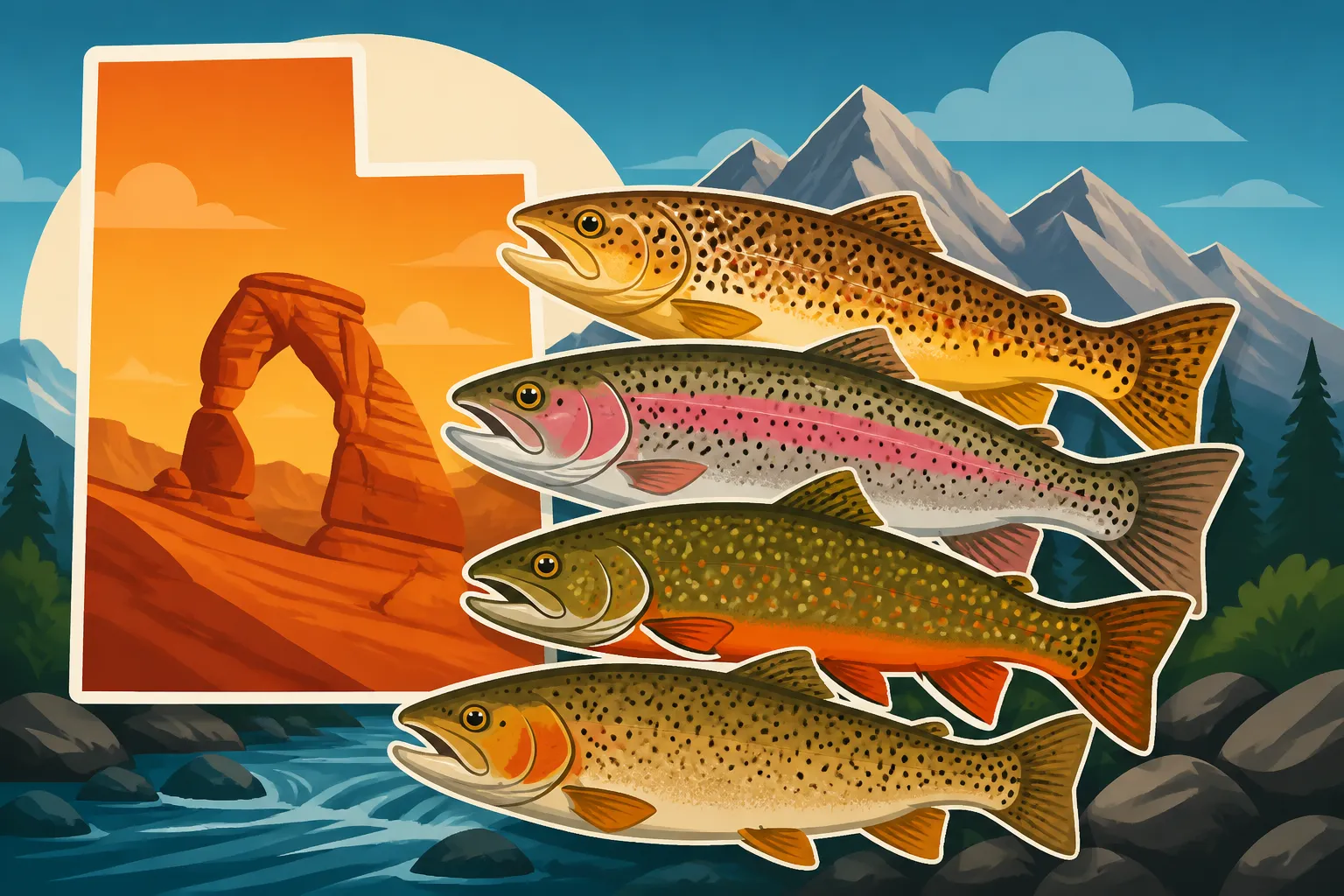
Trout Species Native to Utah
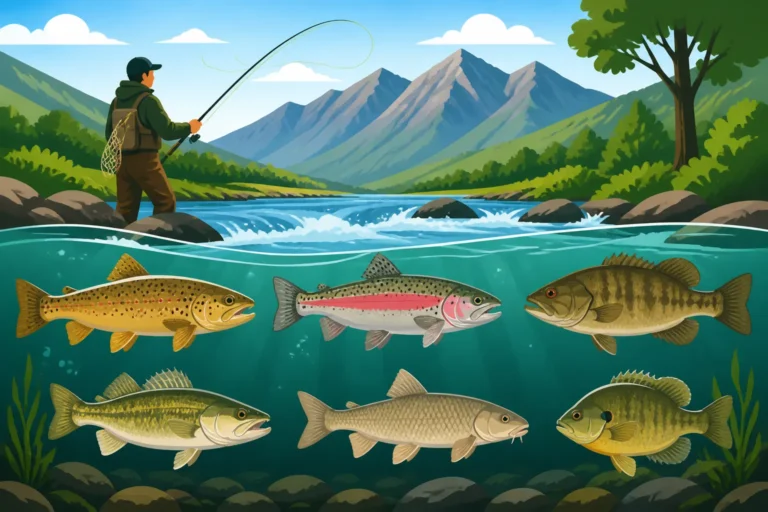
It can be incredibly confusing to figure out which trout swimming in Utah's beautiful waters are truly native to this state and which are "immigrants." Many anglers, myself included, have spent countless hours wondering if that beautiful cutthroat we just landed has always called these mountains home or if it was stocked there last year. This guide is going to clear up that mystery, helping you understand Utah's true native trout heritage and how you, as an angler, can help protect these special fish.
Understanding Utah's Native Trout Landscape
When we talk about "native" fish, it's easy to assume it means any fish that thrives in a certain area. But for trout, especially in a state like Utah with such diverse and often isolated drainages, the term "native" carries a very specific and important meaning. It refers to species that evolved in these specific waters, adapting over millennia to the unique conditions, before human intervention began moving fish around like chess pieces.
What "Native" Really Means in Utah Fishing
Think about it: before roads, before hatcheries, before people intentionally moved fish from one watershed to another, certain trout species thrived in particular river systems. These are the truly native fish. In Utah, this largely centers around the various subspecies of cutthroat trout. These fish have adapted to the elevation, water temperatures, food sources, and even the geological makeup of their specific river basins for thousands of years. They are part of the original, intricate ecological tapestry of Utah's wild places.
The challenge today is that so many waters have been stocked with non-native species like rainbow trout, brown trout, or even other cutthroat subspecies from different regions. This can make it incredibly difficult for the average angler to tell the difference. Sometimes, these non-native fish even hybridize with native populations, further complicating identification and diluting the genetics of the original fish. That's why understanding what "native" truly means is crucial – it's about preserving a unique, irreplaceable piece of Utah's natural history.
The Historical Significance of Native Trout
Utah's native trout aren't just fish; they're living historical artifacts. They represent a connection to a time when Utah's waterways were pristine and untouched by modern human activity. The presence of healthy native trout populations is often a strong indicator of a healthy ecosystem. For example, the decline of specific native cutthroat populations in certain areas has often mirrored the degradation of their habitat due to development, pollution, or poor land management practices.
Early explorers and settlers often documented the abundance of these native trout, painting a picture of rivers and streams teeming with life. Unfortunately, many of these populations faced severe pressure from overfishing, habitat destruction, and the introduction of competing or predatory non-native species. For decades, the focus was often on providing fishing opportunities through stocking, sometimes at the expense of native species. Thankfully, in more recent times, there's been a significant shift towards conservation and restoration of these precious native fish, recognizing their ecological and cultural value. It’s a huge undertaking, but one that many passionate anglers and conservationists are dedicated to.
The Star of the Show: Bonneville Cutthroat Trout
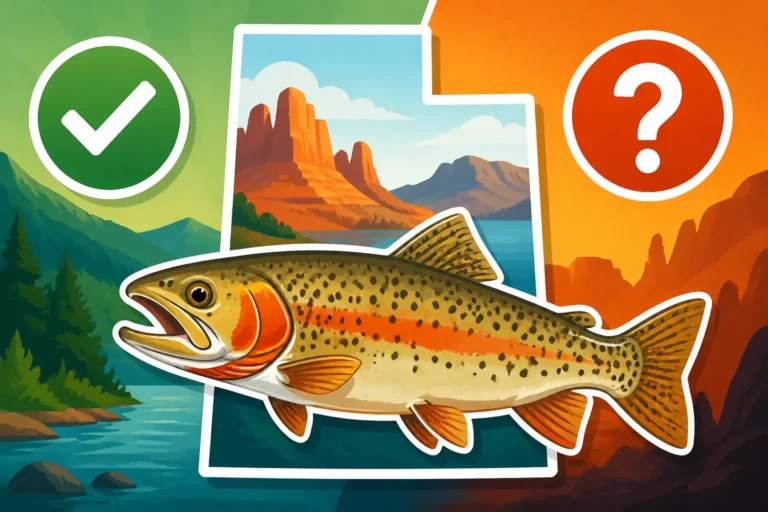
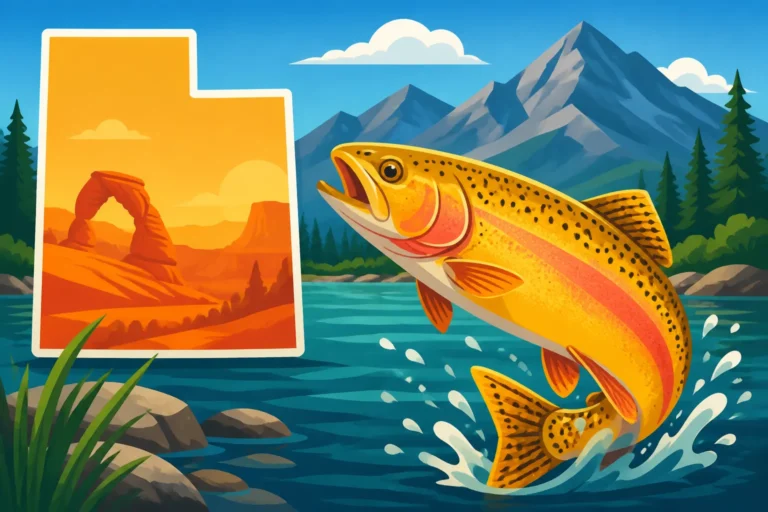
When you talk about native trout in Utah, the Bonneville Cutthroat Trout (Oncorhynchus clarkii utah) is usually the first one that comes to mind. This is our state's official state fish, and for good reason! It's an iconic species with a fascinating history, and it's a testament to incredible conservation efforts that we still have thriving populations today. If you're looking for a truly "Utah" fishing experience, seeking out the Bonneville Cutthroat is a must.
Identifying the Bonneville Cutthroat
Identifying a Bonneville Cutthroat can be a bit tricky, especially if you're not used to telling them apart from other trout species. The key characteristics often include a deep, robust body shape compared to the sleeker rainbow trout. Their coloration can vary wildly depending on the water they live in, ranging from silvery to olive green to even a beautiful golden bronze, often with rosy red flanks, especially during spawning season.
The most defining features, however, are the spots and the "cutthroat" mark. Bonneville Cutthroats typically have spots that are concentrated towards the tail, often larger and more irregularly shaped than the fine, even spots of a rainbow trout. And of course, the eponymous "cutthroat" mark – a vibrant orange, red, or even yellow slash beneath the jaw on either side – is the absolute giveaway. This mark is usually quite distinct, though it can fade on some fish or in certain water conditions. It's often easier to spot these marks if the fish is wet and healthy, making careful handling crucial for identification before release. Bonneville Cutthroat Trout Identification provides even more detail on this.
Where to Find Bonneville Cutthroat Today
Back in the day, Bonneville Cutthroat were widespread throughout the Bonneville Basin, inhabiting tributaries that fed into the ancient Lake Bonneville. This included major drainages like the Bear River, Provo River, Weber River, and various streams in central and western Utah. Today, due to extensive habitat loss, competition from non-native species, and historical overfishing, their range is much more restricted.
However, thanks to decades of dedicated conservation and restoration efforts by the Utah Division of Wildlife Resources (UDWR) and partners, you can still find thriving populations. Many of these are in higher elevation streams and remote mountain lakes in the Uinta Mountains, Wasatch Range, and mountains of central Utah where they've been protected and re-established. Some of the most exciting places to seek them out are the headwater streams where pure genetic strains have been preserved. You'll often find these fish in stunningly beautiful, pristine environments. For specific locations, you might want to check out resources like Where to Catch Bonneville Cutthroat Trout in Utah before planning your trip. Remember, these are often wild fish, so they can be a bit more challenging and rewarding to catch than their hatchery-raised cousins.
Conservation Efforts and Angler's Role
The story of the Bonneville Cutthroat is a true conservation success story, but the work is far from over. Efforts have included removing barriers to fish passage, improving riparian habitats, and actively suppressing non-native species in critical native trout waters. Scientists conduct genetic testing to ensure the fish being stocked into restoration waters are genetically pure Bonneville Cutthroat.
As anglers, we play a vital role in continuing this success. First and foremost, learn to identify these fish. It's truly amazing how a little knowledge can change your entire perspective on a catch. You can find excellent waterproof fish identification guides on Amazon that you can keep in your tackle box. If you're fishing in a designated native trout restoration water, strict catch-and-release regulations for Bonneville Cutthroat are common. Understanding and adhering to these rules is non-negotiable. Always handle these fish with extreme care, minimizing their time out of water and using wet hands. Using knotless rubber nets, also widely available on Amazon, can significantly reduce harm to the fish's protective slime coat and fins. For more on this, check out How to Release a Fish Without Hurting It in Utah. Every angler who respects and participates in these efforts contributes directly to the future of this magnificent native species.
Beyond the Bonneville: Other Potentially Native or Historically Significant Species
While the Bonneville Cutthroat gets most of the spotlight, Utah's aquatic history hints at other native trout. The state's geography, with its diverse river systems flowing into different major basins, suggests a more complex picture than just one dominant native species. These other trout, primarily other subspecies of cutthroat, represent the unique evolutionary paths shaped by Utah's varied landscapes.
The Enigma of Colorado River Cutthroat Trout
Another cutthroat subspecies, the Colorado River Cutthroat Trout (Oncorhynchus clarkii pleuriticus), is native to the Colorado River drainage, which includes eastern Utah's Green and Colorado River systems. Unlike the Bonneville Cutthroat which developed in an enclosed basin, the Colorado River Cutthroat adapted to the larger, more interconnected river systems that eventually flow into the Gulf of California. Historically, these fish would have inhabited many of the streams and rivers in eastern Utah, particularly in the Uinta Basin and areas feeding into the Green River.
Identifying Colorado River Cutthroat can also be challenging. They share the characteristic cutthroat slash under the jaw, but their spotting pattern tends to be finer and more evenly distributed over the body, often extending onto the belly, rather than being concentrated on the tail as with the Bonneville. Their colors are also quite variable, but often lean towards golden-browns and olive-greens. Like the Bonneville, their populations suffered greatly due to habitat degradation and the introduction of non-native trout. Today, significant efforts are underway to restore these fish to their native ranges, particularly in the high-elevation streams of the Uinta Mountains. Utah Cutthroat Trout Guide can provide more details on these and other cutthroat subspecies.
Are Redband Trout Truly Native to Utah?
This is where it gets a little more complex and sometimes contentious! Redband trout (Oncorhynchus mykiss gairdneri and other subspecies) are a distinct group of rainbow trout subspecies that are native to various drainages in western North America, including parts of the Columbia River and Sacramento River basins. The question of whether true Redband trout were historically native to any part of Utah is often debated among ichthyologists and anglers alike.
Some believe that certain populations of rainbow-like trout in the extreme northwestern corner of Utah, specifically in streams flowing into the Columbia River basin (like parts of the Bear River drainage, though this is primarily Bonneville Cutthroat territory), might have had Redband affinities. However, definitive proof of a genetically pure, historically native Redband population within Utah's modern political boundaries is elusive, largely due to extensive stocking of hatchery rainbow trout which have interbred with any existing native rainbow-like fish. It's a fascinating area of study, and it highlights how much historical context and genetic research goes into defining "native" status. For now, most of the rainbow trout you encounter in Utah are either stocked or descended from stocked fish. If you're interested in the broader picture of Utah's trout, Utah Trout Species Guide is a great resource.
How Anglers Can Support Native Trout Populations
Being an ethical and informed angler is perhaps the most impactful way to support Utah's native trout species. Your actions on the water, from how you handle fish to how you clean your gear, make a real difference in the health and future of these irreplaceable wild populations.
Practicing Responsible Catch-and-Release
For native trout, especially those in fragile restoration waters, catch-and-release is often the prescribed method. But it's not enough to simply let the fish go. How you release it matters immensely. Here are some key practices:
- Minimize Handling: The less you touch a fish, the better. Try to unhook it in the water if possible.
- Wet Hands Only: Always wet your hands before touching a fish. Dry hands can remove the fish's protective slime coat, making it vulnerable to disease.
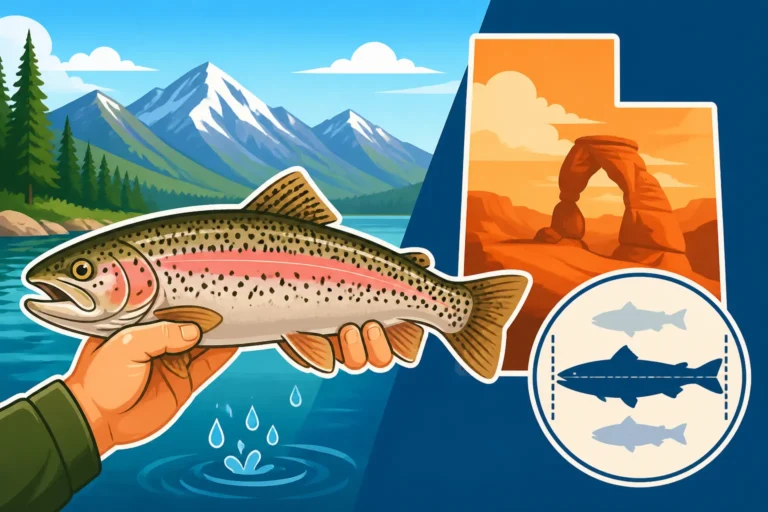
- Support the Fish: If you must lift a fish for a photo, support its body horizontally with two hands. Never hold a large fish by its jaw vertically, as this can damage its internal organs.
- Quick Release: Keep the fish in the water as much as possible, especially during warm weather. Limit its air exposure to just a few seconds for a quick photo, if at all.
- Barbless Hooks: Crimp down the barbs on your hooks. Barbless hooks make removal much easier and faster, reducing stress and injury to the fish. You can buy barbless hooks, or a pair of pliers from Amazon to modify your existing barbed hooks.
- Proper Revitalization: If a fish seems sluggish, hold it gently in the water, facing upstream, allowing water to flow over its gills. Don't pump it back and forth; this can actually harm it. Release it only when it swims away strongly on its own.
These practices, especially critical for species like the Bonneville Cutthroat and Colorado River Cutthroat, are fundamental to ensuring that fish you release have the best chance of survival. Remember, the goal isn't just to catch a fish; it's to ensure that fish can continue to thrive and reproduce. When you see someone else struggling with these practices, a polite suggestion can go a long way.
Preventing the Spread of Aquatic Invasive Species
Another huge threat to native trout populations is the introduction and spread of aquatic invasive species (AIS). These can range from microscopic organisms to invasive plants and fish, and they can outcompete native fish for food, introduce diseases, or dramatically alter habitats. Quagga and zebra mussels are particularly notorious in Utah, causing severe ecological and economic damage.
Every time you move your boat, kayak, float tube, or even your waders and fishing gear from one body of water to another, you run the risk of inadvertently transporting AIS. This is why the "Clean, Drain, Dry" protocol is so incredibly important in Utah.
- Clean: Inspect all your gear – boat hull, trailer, anchor, ropes, waders, boots, nets – and remove any visible mud, plants, or debris.
- Drain: Pull your drain plugs and completely drain all water from your bilge, livewells, bait buckets, and motor. Many reservoirs, like Lake Powell, have specific dry time rules or mandatory inspections.
- Dry: Allow all your equipment to dry completely before launching in a new water body. A good long dry time, ideally several days in hot, dry weather, is often the best defense against microscopic invaders.
The UDWR takes AIS seriously, with mandatory inspection stations at many popular boat ramps, especially those leaving infested waters. Taking the time to properly clean your gear is not just a rule; it's a critical act of environmental stewardship that directly protects native fish habitats. You can find more comprehensive information on this topic in articles like Utah Aquatic Invasive Species Rules for Anglers and Utah Quagga Mussel Decontamination Rules. By being vigilant, you're helping secure the future for our treasured native trout.
Native Trout Species Identification Table
To help you quickly distinguish between the primary native cutthroat species in Utah and common stocked trout, here's a handy comparison table.
| Feature | Bonneville Cutthroat Trout (Native) | Colorado River Cutthroat Trout (Native) | Rainbow Trout (Non-Native, Common) | Brown Trout (Non-Native, Common) |
|---|---|---|---|---|
| Native Range | Bonneville Basin (Western/Central Utah) | Colorado River Basin (Eastern Utah) | Pacific drainages (Widely stocked in Utah) | Europe (Widely stocked in Utah) |
| Cutthroat Slash | Distinct orange/red/yellow slash under jaw | Distinct orange/red/yellow slash under jaw | Absent | Absent |
| Spotting Pattern | Spots concentrated towards tail, often larger | Finer spots, more evenly distributed over body | Fine, even spots over body, tail, and dorsal fin | Large, dark spots with halos, often red spots |
| Body Coloration | Highly variable: silver, olive, golden, rosy flanks | Golden-browns, olive-greens, sometimes reddish | Silvery, iridescent, pink/red lateral band | Golden-brown to yellowish, dark spots, red spots |
| Jaw | Typically extends beyond the eye | Typically extends beyond the eye | Typically does not extend beyond the eye | Typically extends beyond the eye |
| Fin Edges | Often pale or white leading edges on fins | Often pale or white leading edges on fins | Often pale or white leading edges on fins | Generally no distinct pale fin edges |
Understanding the subtle differences, and knowing which waters are managed specifically for native trout, will greatly enhance your fishing experience and your contribution to conservation. For a broader overview of all the different trout you might encounter, consider reading How Many Trout Species Live in Utah.
Disclaimer
This article is for general informational purposes only and does not constitute professional advice. Laws, prices and regulations vary by location and change over time. Consult a qualified professional for guidance on your specific situation.