Trout Species Stocked Most Often in Utah
It can be incredibly exciting to cast your line into one of Utah's many beautiful lakes or rivers, only to wonder what kind of trout you've actually hooked. Sometimes, they all look a bit similar, especially if you're relatively new to fishing or just accustomed to seeing pictures in a book! This comprehensive guide is here to clear up that confusion, diving deep into the trout species you'll most commonly encounter, thanks to the Utah Division of Wildlife Resources (DWR) stocking programs, helping you identify your catch and understand where they thrive.
The Workhorse of Utah's Stocking Program: Rainbow Trout
When you think of a "stocked trout," chances are the image in your mind is a rainbow trout. These vibrant, willing biters are the backbone of Utah's extensive stocking efforts, providing countless hours of enjoyment for anglers across the state. They're everywhere, from small community ponds to vast reservoirs, making them an accessible and fun target for everyone.
Why Rainbows Are So Popular
Rainbow trout are like the friendly golden retrievers of the fishing world – they're generally eager to please and relatively easy to catch. This makes them absolutely ideal for stocking programs. They grow quickly in a hatchery environment, adapt well to a wide variety of waters once released, and perhaps most importantly for anglers, they have a reputation for hitting a wide range of baits and lures. The DWR can raise and release a large number of rainbows efficiently, ensuring that there are plenty of fish for everyone, especially in heavily fished areas or spots designed for family outings. Think about a local community pond bustling with kids and their parents; those happy squeals almost always mean a rainbow has taken the bait. Their resilience and consistent growth contribute significantly to maintaining healthy fish populations throughout many of Utah's waterways.
Identifying Stocked Rainbows
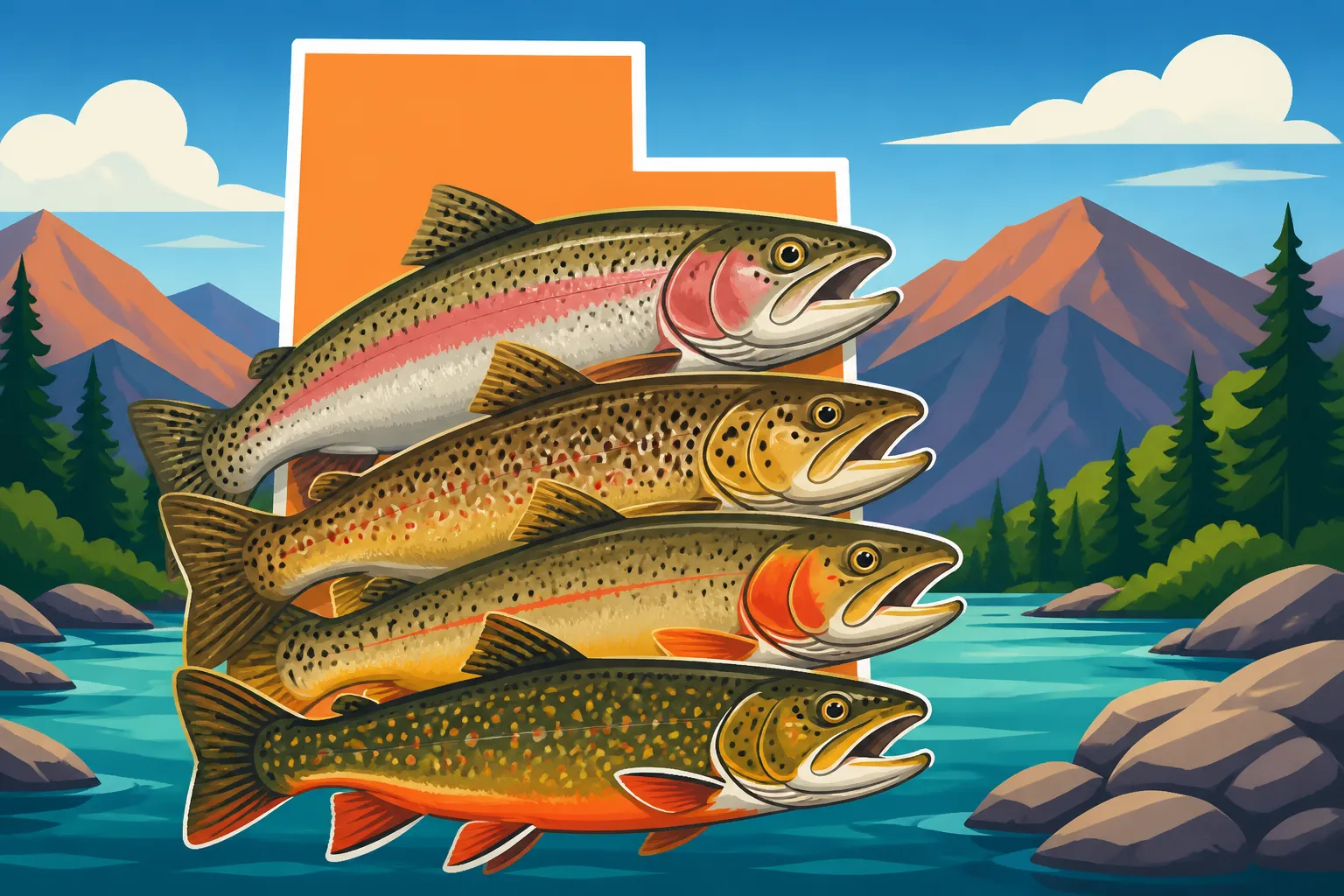
Distinguishing a stocked rainbow trout usually isn't too difficult once you know what to look for. Their bodies tend to be quite streamlined, often with a silvery-green or brassy tone, though this can vary depending on the water they're in. The most iconic feature is the distinct pink or reddish stripe that runs horizontally along their sides, from gill plate to tail, shimmering like a faint rainbow in the sunlight – hence their name! You'll also notice small, dark spots scattered across their back, sides, and typically on their caudal (tail) fin. Often, stocked rainbows, especially those recently released, might have slightly worn fins from their time in hatchery raceways, which can be another subtle clue. They don't typically grow to monstrous sizes right after stocking, often falling into the 10-16 inch range, making them a perfect size for a good fight and a delicious meal. For more general identification, you can check out How to Identify Utah Trout Species.
Where You'll Find Them
You'd be hard-pressed to find a body of water in Utah that doesn't get some rainbow trout love. They are the primary species stocked in almost every community fishing pond, urban fishery, and many of the state's popular reservoirs. If you're fishing close to Salt Lake City, chances are high you'll encounter rainbows. Waters like Deer Creek Reservoir Fishing Spots and Jordanelle Reservoir Fishing Access are prime examples where rainbows are regularly stocked to provide consistent angling opportunities. They are highly adaptable and can thrive in various temperatures and water conditions, which allows them to be successfully introduced into a vast array of fisheries, ensuring that anglers across the state have access to good fishing, year-round. They'll often cruise along shorelines and congregate around structure or where fresh water flows in, always on the lookout for an easy meal.
The Elusive Fighter: Brown Trout
While rainbows might be the friendly faces of Utah's stocked waters, brown trout offer a different kind of thrill. These fish are known for their cunning, their powerful fights, and their impressive size potential, making them a prized catch for many dedicated anglers. You'll find them in different habitats than rainbows, often preferring moving water and a bit more challenge.
Why Brown Trout are Valued by Anglers
Brown trout are often considered the "wise old souls" of the trout family. They're typically much warier than rainbows, requiring a more subtle approach and a good deal more patience to entice a bite. This inherent challenge is precisely why so many anglers specifically target them. When you hook a brown, especially a larger one, you know you're in for a serious battle. They'll surge, dive, and often try to wrap your line around submerged structure, pushing your gear and skills to their limits. Beyond the fight, brown trout are also highly valued for their potential to grow quite large, often reaching trophy sizes in fertile waters. They are also highly predatory, making them an effective tool in some fisheries to manage populations of smaller, less desirable fish, adding another layer of ecological benefit to their presence.
Identifying Brown Trout
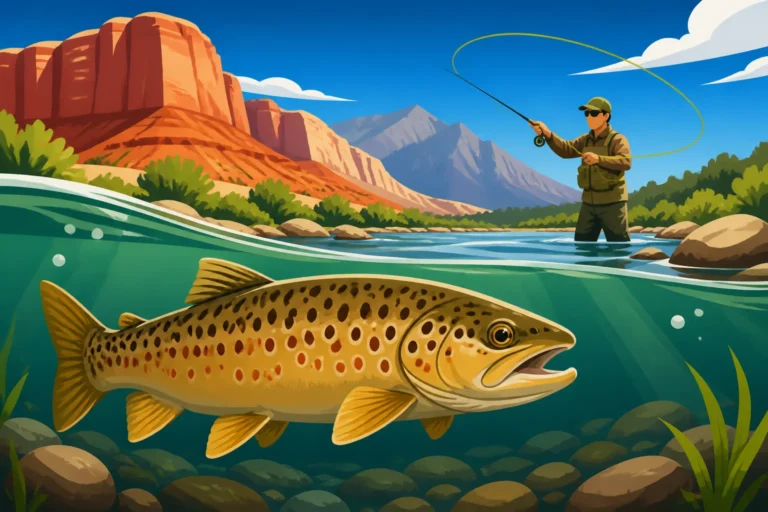
Identifying a brown trout involves looking for a distinct set of characteristics that set them apart from their rainbow cousins. Their bodies tend to be a beautiful golden-brown or olive-brown, often fading to a yellowish belly. The most striking feature is their spotting pattern: they have dark spots, usually surrounded by a lighter halo, scattered on their sides, often extending onto their dorsal (top) fin. Crucially, many brown trout also have distinct red or orange spots, sometimes with halos, mixed in with the dark ones. Their tails are usually square or only slightly forked, unlike the more deeply forked tails of some other trout species. If you're ever in doubt, look for that combination of golden-brown color, the haloed spots (especially the red ones), and a generally more robust, almost brick-like build compared to a sleek rainbow.
Where Brown Trout Are Stocked or Thrive Naturally
While some reservoirs do receive brown trout stockings to create diverse fisheries and trophy opportunities, you'll most frequently find healthy, thriving populations of brown trout in Utah's rivers and larger streams. These waters provide the cooler temperatures, abundant insect life, and complex structure that brown trout adore. Famous waters like the Provo River Fishing Guide, the Green River Below Flaming Gorge Dam, and the Weber River Fly Fishing Spots are legendary for their brown trout populations, which can often be primarily wild, reproducing fish. In these riverine environments, brown trout are masters of camouflage, often hiding under cut banks, behind large rocks, or in deep pools, ambushing unsuspecting prey. When they are stocked in reservoirs, it's often to introduce a larger, more challenging fish that can grow into a true lunker.
The Native Icon: Cutthroat Trout
The cutthroat trout holds a special place in the hearts of Utah anglers, not just because they're beautiful fish, but because they are Utah's official state fish and a crucial part of the state's natural heritage. These are the truly native trout species, and their conservation is a top priority for the DWR.
The Importance of Cutthroat Trout in Utah
Cutthroat trout are more than just a fish to catch; they're a living symbol of Utah's wild waters. There are several subspecies of cutthroat found across the West, and here in Utah, we're particularly focused on the Bonneville Cutthroat Trout, which is native to the Bonneville Basin, and the Bear Lake Cutthroat Trout, unique to Bear Lake. The DWR actively works to restore and manage these native populations, often stocking them into waters where they historically belonged or where their populations need a boost. This isn't just about providing fishing opportunities; it's about preserving biodiversity and restoring ecological balance. Catching a native cutthroat feels different; it's a connection to Utah's past and a testament to ongoing conservation efforts. For a deeper dive into these remarkable fish, check out the Utah Cutthroat Trout Guide.
Identifying Cutthroat Trout
The most definitive characteristic of a cutthroat trout, and the feature that gives them their name, is the distinctive red or orange slash marks found under their lower jaw. These "cuts" can range from a faint orange blush to a vibrant, fiery red, and they are almost always present, though their intensity can vary. Beyond that, cutthroat trout typically have smaller, more concentrated spots, often clustered towards their tail. Their body coloration can be highly variable, ranging from silvery-green to olive or even rosy hues, depending on the specific subspecies and the water they inhabit. For instance, the Bonneville Cutthroat Trout found in the western parts of the state might look a little different from a Bear Lake Cutthroat Trout found in the deep, clear waters of Bear Lake. Their overall appearance tends to be more delicate than a rainbow or brown trout, with a somewhat more slender body.
Stocking vs. Wild Populations and Management
Unlike rainbows, which are stocked primarily for put-and-take fishing, cutthroat trout are often stocked for conservation and restoration purposes. The DWR actively stocks native cutthroat into streams and high-mountain lakes to re-establish or enhance wild populations. This means that many of the cutthroat you encounter, especially in remote or pristine waters, might be wild, naturally reproducing fish. Management efforts often include specific regulations like catch-and-release only sections or reduced bag limits to protect these valuable populations. For example, some high-altitude lakes in the Uinta Mountains are managed specifically for their cutthroat populations, providing incredible backcountry angling experiences. It's a testament to the DWR's commitment to both native species and angling opportunities that these fish continue to thrive.
Other Notable Stocked Trout Species
While rainbows, browns, and cutthroats make up the bulk of Utah's trout fisheries, the DWR also introduces a couple of other fascinating trout species that offer unique angling experiences. These hybrids are stocked for specific purposes, often to manage invasive species or to create trophy fishing opportunities.
Tiger Trout: The Sterile Hybrid
Imagine a trout with the stripes of a tiger – that's essentially what a tiger trout looks like! This striking fish is a sterile hybrid, a cross between a brown trout and a brook trout. They are easily recognizable by their distinctive, maze-like vermiculation pattern of dark worm-like markings on a lighter, often greenish-yellow or gray background. These patterns are truly unique to each fish, making every catch a visual treat.
Tiger trout are stocked for several compelling reasons. Because they are sterile, they can be introduced into waters without the risk of interbreeding with native trout populations, which is a significant conservation advantage. More importantly, they are highly predatory. The DWR often stocks tiger trout into waters where there's an overabundance of nuisance or invasive fish species, like minnows or suckers, to help control their populations naturally. They grow quickly and fight hard, providing a thrilling challenge for anglers looking for something a little different. You'll find them in waters like Pineview Reservoir Fishing Spots and Scofield Reservoir Fishing Access, where they provide a unique angling experience and play an ecological role.
Splake: Another Hybrid Option
Splake are another interesting hybrid trout that you might encounter in Utah's waters. These fish are a cross between a lake trout (mackinaw) and a brook trout, combining characteristics of both parents. Visually, they often have a body shape similar to a brook trout but with a more deeply forked tail, a trait inherited from the lake trout. Their coloration can vary, but they usually have light spots on a darker background, with some worm-like markings on their back, similar to a brook trout, but often less pronounced.
Splake are typically stocked for their fast growth rates and their ability to reach respectable sizes, offering another trophy fish option for anglers. They are also quite hardy and can tolerate a range of water conditions. The DWR might use splake to fill a specific niche in a reservoir's ecosystem, providing a mid-to-large predator that can thrive where other trout species might struggle. While not as widespread as rainbows, splake are found in various Utah reservoirs, often alongside other trout species, adding to the diversity of the catch.
What to Do When You Catch These Trout
Now that you know what to look for, the next step is understanding how to interact with these different species responsibly. Fishing is more than just catching; it's about respecting the fish and the regulations that protect them.
Regulations and Identification
One of the most crucial aspects of fishing in Utah is knowing and adhering to the specific regulations for the water you're fishing. Different species often have different bag limits, size restrictions, and sometimes even specific harvest rules, especially for native or sensitive populations. For example, while you might be able to keep a limit of rainbows from a community pond, certain river sections might be catch-and-release only for brown trout, or have very specific limits for cutthroat.
It's absolutely essential to be able to identify your catch quickly and accurately. Misidentifying a fish could lead to unintentional violations of the Utah Daily Bag and Possession Limits or specific Utah Trout Limits by Water. Always carry a copy of the current Utah Fishing Guidebook (available digitally on your phone or a printed version) and consult it often. When in doubt, it's always best to release the fish unharmed, especially if you can't confidently identify it.
| Trout Species | Key Identification Features | Common Stocking Purpose | Typical Habitat in Utah |
|---|---|---|---|
| Rainbow Trout | Silvery-green to brassy, distinct pink/red lateral stripe, small dark spots. | Provide abundant, easy-to-catch angling opportunities | Community ponds, urban fisheries, most reservoirs |
| Brown Trout | Golden-brown to olive, dark spots with halos, red/orange spots, square tail. | Trophy potential, challenging angling, predator control | Rivers, larger streams, some reservoirs |
| Cutthroat Trout | Red/orange slash under lower jaw, small spots concentrated towards tail. | Native species restoration, conservation, unique angling | Rivers, high-mountain lakes, some native-stocked reservoirs |
| Tiger Trout | Unique maze-like vermiculation patterns (worm-like stripes), sterile hybrid. | Predator control (nuisance fish), trophy angling | Specific reservoirs with invasive prey fish |
| Splake | Forked tail, light spots on darker background, some worm-like markings. | Trophy potential, fill ecological niche | Various reservoirs |
Gear and Tactics for Stocked Trout
Regardless of the specific trout species, one thing is universally true: you need the right gear. For a beginner, a simple spinning rod and reel combo with light line is usually all you need to get started with stocked rainbows. You can find excellent, affordable options on Amazon that will get you out on the water quickly. Baits like PowerBait, worms, or corn are often irresistible to freshly stocked trout. For more discerning browns or wild cutthroats in rivers, fly fishing gear with specific nymph or streamer patterns becomes more effective.
The key is to observe and adapt. Are the fish rising to the surface (indicating an insect hatch)? Try a dry fly or a small popper. Are they hugging the bottom in a reservoir? A jig or a weighted bait rig might be the ticket. A good starting point for any angler looking to cast into Utah's waters is to familiarize themselves with Utah Fishing Techniques for Beginners. No matter your target, having a basic tackle box stocked with a variety of lures, hooks, and weights will serve you well. Don't forget a pair of pliers for hook removal and a good net for landing your catch gently!
Disclaimer
This article is for general informational purposes only and does not constitute professional advice. Laws, prices and regulations vary by location and change over time. Consult a qualified professional for guidance on your specific situation.