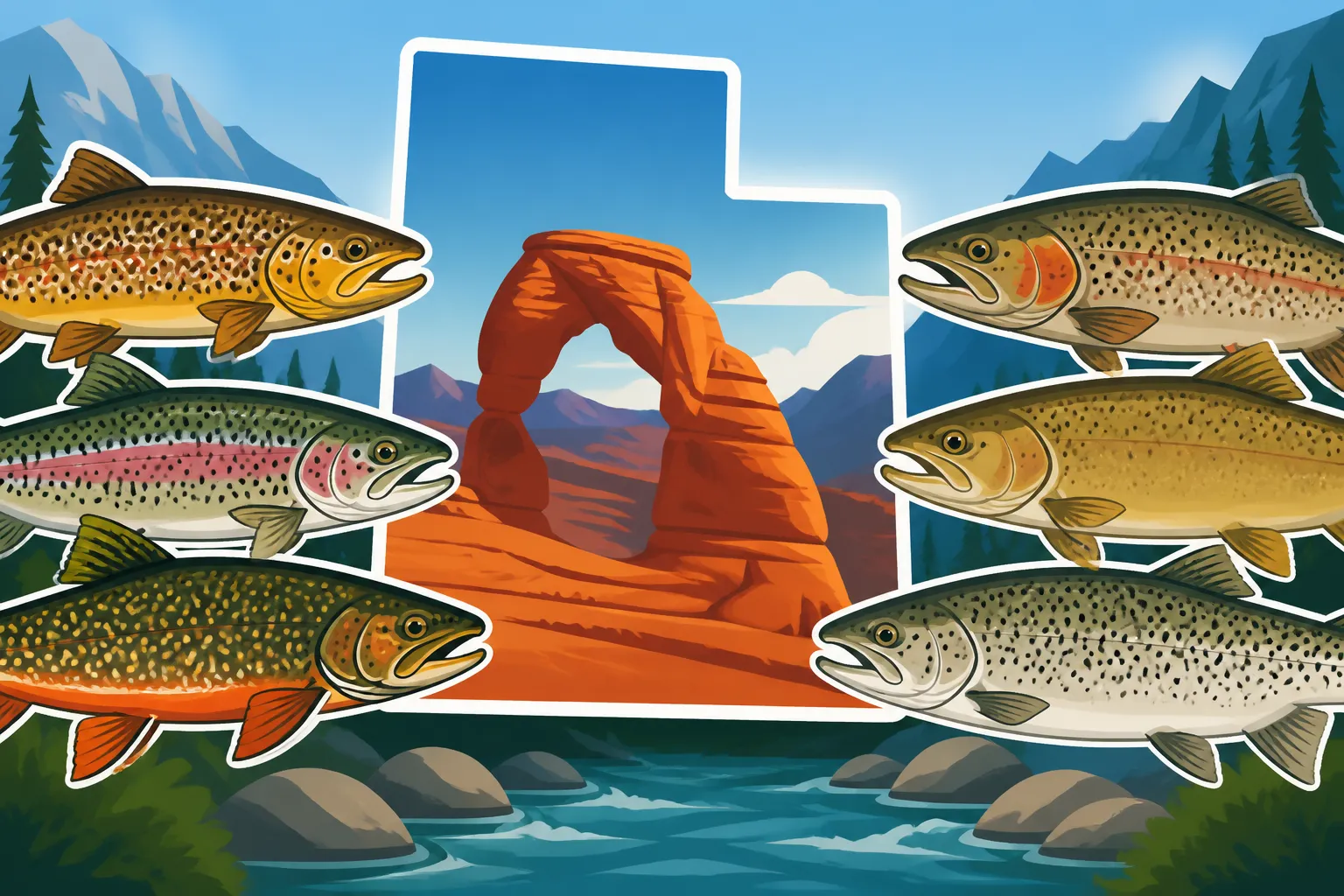
How Many Trout Species Live in Utah
Many an angler, especially those new to exploring the vast and varied waters of the Beehive State, finds themselves a little bewildered by the sheer number of trout species mentioned in fishing reports and regulations. It's a common frustration to wonder, "Just how many different kinds of trout are there in Utah, and what does it all mean for my fishing trip?" This guide is here to untangle that question, delving into the native and introduced trout species that call Utah home, helping you understand their unique characteristics, and preparing you for a more informed and successful angling adventure.
The Core Distinction: Native vs. Introduced Trout in Utah
When we talk about trout in Utah, it's really important to distinguish between those species that have been here for millennia – the true natives – and those that were brought in by humans to enhance fishing opportunities. This isn't just a historical footnote; it deeply impacts where you'll find them, how they're managed, and sometimes even the regulations surrounding their harvest. Understanding this fundamental difference is the first step to truly appreciating Utah's trout fishery.
Utah's True Natives: The Cutthroat Legacy
Utah's original trout story revolves almost entirely around the cutthroat trout. Before European settlement and the subsequent widespread stocking of other species, various subspecies of cutthroat trout were the dominant game fish across the state. They are truly the indigenous royalty of Utah's waterways. Among these, the Bonneville Cutthroat Trout holds a special place, being native to the historic Bonneville Basin, which includes large portions of modern-day Utah. These fish evolved over countless generations to thrive in Utah's unique aquatic environments, adapting to everything from high-alpine lakes to desert streams.
Beyond the Bonneville, other cutthroat subspecies like the Colorado River Cutthroat Trout and the Yellowstone Cutthroat Trout are also considered native to specific drainages within Utah, primarily in the eastern and northeastern parts of the state. These fish are more than just a target for anglers; they are a critical part of Utah's natural heritage, and their conservation is a high priority. Anglers often feel a profound connection to these native species, understanding that they are fishing a piece of living history. If you're looking to learn more about our state fish, you'll definitely want to check out our Utah Cutthroat Trout Guide.
The Welcome Immigrants: Stocked Trout Species
While our native cutthroat are cherished, the truth is that many of Utah's most popular fishing destinations are teeming with trout species that were introduced from other regions. These "immigrant" trout, primarily rainbow, brown, and lake trout, were brought in starting in the late 19th and early 20th centuries. The primary motivations for these introductions were clear: to provide more abundant sport fishing opportunities, especially in waters that might not have supported robust native populations, or where native populations had declined due to habitat changes.
These introduced species have adapted incredibly well to many of Utah's diverse aquatic environments, from large, cold reservoirs to countless rivers and streams. They form the backbone of much of Utah's recreational trout fishery today. The Utah Division of Wildlife Resources (DWR) actively manages these populations through extensive stocking programs, ensuring that anglers have plenty of fish to pursue year after year. It's a testament to the success of these programs that a tackle box purchased from Amazon can be filled with lures that effectively target both native and introduced species.
A Closer Look at Utah's Trout Species
Now that we understand the native versus introduced distinction, let's dive into the individual trout species you're most likely to encounter in Utah. Each one has its own charm, preferred habitat, and unique fighting style, making every catch a distinct experience.
Cutthroat Trout: The Gem of Utah's Waters
The cutthroat trout, named for the distinctive red or orange "slash" mark found under its lower jaw, is Utah's only truly native trout species group. In Utah, the Bonneville Cutthroat is the most prominent native sub-species, and they are incredibly resilient. They often exhibit a beautiful array of colors, from olive-green to bronze on their backs, fading to lighter sides and a white belly, adorned with varying numbers of black spots. Their appearance can change quite a bit depending on the specific water they inhabit, from the clear waters of high-mountain streams to the larger, more turbid reservoirs.
You'll typically find cutthroat trout thriving in cold, clear waters, often at higher elevations in pristine mountain streams and lakes, though they have been restored to many lower elevation waters as well. They are opportunistic feeders, readily taking a variety of insects, small fish, and even rodents. Anglers often find success using flies that imitate local insect hatches, small spinners, or bait in these clear-water environments. Catching a native cutthroat is often considered a special accomplishment, not just for the fight, but for the connection to Utah's natural history. Conservation efforts are ongoing to ensure their continued presence. Many anglers consider a good pair of polarized sunglasses from Amazon essential for spotting these wary fish in their clear-water homes.
Rainbow Trout: The Angler's Favorite
The rainbow trout is perhaps the most widely recognized and frequently caught trout species in Utah, and for good reason. They are not native to Utah but have been extensively stocked across the state for decades, becoming a true angler's favorite. Their name comes from the beautiful, iridescent pink or red band that runs along their sides, although the vibrancy of this band can vary. They typically have a silvery body with numerous small black spots on their backs, sides, and fins.
Rainbows are incredibly adaptable and can be found in almost every type of trout-holding water in Utah, from large, deep reservoirs to smaller rivers, community ponds, and high-mountain lakes. They are the workhorse of Utah's fishing program, providing consistent action for anglers of all skill levels. They respond well to a wide array of presentations, including PowerBait, worms, corn, spoons, spinners, and various flies. Their spirited fight, often involving acrobatic jumps, makes them a thrill to catch. For anyone looking to target these abundant fish, our guide to Rainbow Trout in Utah Reservoirs offers invaluable tips.
Brown Trout: The Wily Predator
Introduced from Europe, the brown trout has earned a reputation in Utah as a truly wily and challenging fish to catch, often growing to impressive sizes. Their appearance is distinct, typically featuring a golden-brown or olive-brown body with large, dark spots that often have pale halos, sometimes interspersed with red spots on their sides. Their bellies are usually yellowish or cream-colored, making them quite striking.
Brown trout prefer cold-water rivers and streams with plenty of cover, like submerged logs, undercut banks, and rocky structures, where they can ambush prey. They are highly predatory, feeding on smaller fish, large insects, and crayfish. This predatory nature means they often respond well to lures that imitate baitfish, like stickbaits and spoons, as well as streamers and nymphs for fly anglers. In rivers like the Provo and Green, brown trout can be quite abundant. They are known for their powerful, stubborn fights, often hugging the bottom and making strong runs. If you want to dive deeper into techniques for these elusive fish, be sure to check out our Brown Trout in Utah Rivers article.
Lake Trout (Mackinaw): The Deep-Water Giant
The lake trout, often referred to as "Mackinaw" in Utah, is another non-native species that has found a thriving home in some of Utah's deepest and coldest reservoirs. These fish are built for the depths, typically having a dark gray to brownish-green body with distinct pale, worm-like spots all over, including on their head and fins. Their tail is noticeably deeply forked, a key identification feature. They can grow to truly enormous sizes, making them a trophy species for many anglers.
In Utah, Flaming Gorge Reservoir and Bear Lake are the premier destinations for targeting lake trout. They inhabit the deep, cold waters, often staying near the bottom, especially in warmer months. Fishing for Mackinaw usually involves specialized techniques like deep-water jigging, bait fishing with cut bait, or trolling with downriggers to get lures down to their depths. Their sheer size and incredible power when hooked make them an unforgettable challenge. Our Utah Lake Trout (Mackinaw) Guide provides extensive information on how to tackle these behemoths.
Hybrids and Unique Trout Varieties
Beyond the well-known pure species, Utah's fisheries also benefit from a couple of fascinating hybrid trout. These unique fish offer different angling experiences and are often stocked to fill specific ecological niches or provide a novel challenge for anglers.
Tiger Trout: The Striking Hybrid
Tiger trout are one of the most visually distinctive fish you'll find in Utah's waters, earning their name from the striking, dark, worm-like (vermiform) patterns that stretch across their yellowish-brown to olive-green bodies. They are a sterile hybrid, meaning they cannot reproduce, created by crossing a brown trout with a brook trout (which, despite its name, is actually a char, not a true trout). This unique parentage results in their incredible patterns.
The Utah Division of Wildlife Resources stocks tiger trout in various lakes and reservoirs, particularly in high-alpine environments and waters where they can help manage populations of less desirable fish species, as they are aggressive predators. Scofield Reservoir and many high Uinta Mountain lakes are known spots to find them. Anglers target them with similar methods used for brown trout, including spinners, spoons, and various flies. Their aggressive nature and beautiful markings make them a highly sought-after catch. If you're curious about where to find these beauties, our Tiger Trout in Utah article can point you in the right direction.
Splake: Another Stocked Hybrid
Splake are another interesting hybrid trout found in Utah, a cross between a lake trout and a brook trout. They represent a blend of characteristics from both parents, typically having a slightly forked tail (less so than a lake trout, more so than a brook trout) and pale, often irregular, spots on a dark background. They tend to grow faster than brook trout and often inhabit waters that are too warm for brook trout but perhaps not deep enough for large lake trout.
Splake are primarily stocked in cold, deep reservoirs where they can thrive, offering another exciting target for anglers. They are good fighters and can be caught using a variety of methods, including jigging, trolling, and bait fishing. Identifying splake can sometimes be tricky as they can be mistaken for other species, but their unique blend of features gives them away. These hybrids are another example of how Utah's fisheries management continually adapts to provide diverse and robust angling opportunities.
Understanding Trout Management and Identification for Anglers
Having a solid grasp of the different trout species in Utah isn't just an academic exercise; it has real-world implications for your fishing trips. It can influence everything from your gear choices to how you interpret fishing regulations.
Why Species Diversity Matters
The presence of both native and introduced trout species creates a rich tapestry of fishing experiences in Utah. This diversity isn't just about having more fish; it contributes to ecological balance and provides varied opportunities for anglers. Native species often face conservation challenges, and understanding their plight can encourage responsible angling practices. Introduced species, while sometimes competing with natives, also provide robust sport fisheries that support tourism and local economies.
For instance, the widespread stocking of species like rainbow trout ensures that there are ample opportunities for beginners and families to enjoy a day of fishing at community ponds or popular reservoirs. Meanwhile, the pursuit of a native Bonneville Cutthroat in a remote mountain stream offers a vastly different, often more challenging, and deeply rewarding experience. A wide range of fishing tackle and apparel can be found on Amazon to suit any of these diverse fishing endeavors.
Essential Identification Tips
Knowing how to accurately identify the trout you catch is crucial in Utah. Many waters have specific regulations that vary by species, including different Utah Trout Limits by Water or even mandatory catch-and-release rules for certain protected native fish. Misidentification can lead to unintentional violations. Key features to look for include:
- Cutthroat Slash: The red/orange mark under the jaw is the most reliable indicator for cutthroat trout.
- Spots: Rainbows have small, numerous spots. Brown trout have larger, distinct spots often with halos. Lake trout have worm-like markings and a deeply forked tail.
- Tail Shape: Pay attention to whether the tail is square, slightly forked, or deeply forked.
- Overall Coloration: While variable, patterns and general hues can offer clues.
It's a great idea to carry a fish identification guide, either a physical book from Amazon or a digital one on your phone, especially when exploring new waters. Our How to Identify Utah Trout Species guide can also be a fantastic resource when you're on the water.
Regulations and Conservation
Utah's fishing regulations are designed to protect and manage all fish species, with particular attention paid to native populations. The Utah Division of Wildlife Resources continually monitors fish health and populations, adjusting regulations as needed. This means that rules can vary significantly from one body of water to another, and even for different species within the same lake or river.
For example, a specific river might have catch-and-release-only regulations for brown trout, while a nearby reservoir allows anglers to keep several rainbow trout. Always consult the current Utah Fishing Regulations Explained booklet or the DWR website before heading out. Anglers play a vital role in conservation by adhering to these rules, practicing ethical catch-and-release when required, and reporting any concerns to the DWR. By being informed and responsible, we all contribute to the health and abundance of Utah's incredible trout fishery for generations to come.
Here's a quick reference table for the main trout species found in Utah:
| Species | Native/Introduced | Key Identifying Feature | Common Habitat Type |
|---|---|---|---|
| Bonneville Cutthroat Trout | Native | Red "slash" under jaw, small spots | High-elevation lakes, mountain streams, some larger reservoirs |
| Rainbow Trout | Introduced | Pink/red band along side, small dark spots | Widely stocked in reservoirs, community ponds, some rivers |
| Brown Trout | Introduced | Large dark spots, often with pale halos; yellowish belly | Cold rivers, stream sections with structure, some reservoirs |
| Lake Trout (Mackinaw) | Introduced | Pale spots on dark body, deeply forked tail | Deep, cold reservoirs (Flaming Gorge, Bear Lake) |
| Tiger Trout | Hybrid (Introduced) | Distinctive worm-like patterns (vermiform) | Mountain lakes, some reservoirs (Scofield, High Uintas) |
| Splake | Hybrid (Introduced) | Slightly forked tail, lighter spots, often orange lower fins | Cold, deep reservoirs |
So, how many trout species live in Utah? If we count the main distinct species and significant hybrids commonly targeted by anglers, you're looking at a fantastic six: Bonneville Cutthroat, Rainbow, Brown, Lake Trout (Mackinaw), Tiger Trout, and Splake. This doesn't even delve into the various native cutthroat subspecies or the less common brook trout (a char) that you might encounter in very specific, cold-water streams. Each offers a unique challenge and reward, making Utah a truly diverse and exciting place for trout fishing. Whether you're chasing a native cutthroat in a remote stream or a trophy lake trout in a vast reservoir, understanding the fish you seek will undoubtedly enhance your experience.
Disclaimer
This article is for general informational purposes only and does not constitute professional advice. Laws, prices and regulations vary by location and change over time. Consult a qualified professional for guidance on your specific situation.