How to Identify a Stocked Rainbow Trout in Utah
It can be incredibly exciting to reel in a beautiful rainbow trout here in Utah, whether it's from a high-mountain lake or a bustling community pond. But have you ever wondered if that vibrant fish on the end of your line is a wild, stream-born warrior or a carefully raised, recently stocked hatchery fish? It's a question many anglers ponder, and distinguishing between the two can sometimes feel like a real puzzle. This guide will walk you through the tell-tale signs to help you confidently identify a stocked rainbow trout in Utah.
The Basics of Rainbow Trout in Utah's Waters
Rainbow trout are a cornerstone of Utah's fishing scene, offering fantastic opportunities for anglers of all skill levels. They're a favorite for a reason – they're beautiful, often willing to bite, and put up a fun fight. But their widespread presence in our waters isn't always a purely natural phenomenon.
Why Rainbow Trout are So Common
One of the main reasons you'll find rainbow trout in so many of Utah's lakes, reservoirs, and rivers is extensive stocking programs by the Utah Division of Wildlife Resources (UDWR). These programs are absolutely vital for maintaining healthy fisheries, especially in waters that can't support natural reproduction or that see heavy fishing pressure. Think about your local community pond or a popular state park reservoir – many of the fish you catch there are likely the result of these efforts.
The purpose of stocking is multi-faceted. First, it boosts fish populations for recreational angling, ensuring there's always something for people to catch, which is especially important for new anglers or families fishing together. Second, stocked fish tend to grow quickly in these environments, providing a satisfying catch. These fish are essentially raised in a somewhat controlled environment, fed a consistent diet of pellets, and protected from predators until they're released into public waters. This upbringing, while beneficial for providing fishing opportunities, leaves distinct marks on the fish, which we'll explore in detail. If you want to dive deeper into why certain fish are in our waters, check out our Utah Trout Species Guide.
General Characteristics of Rainbow Trout
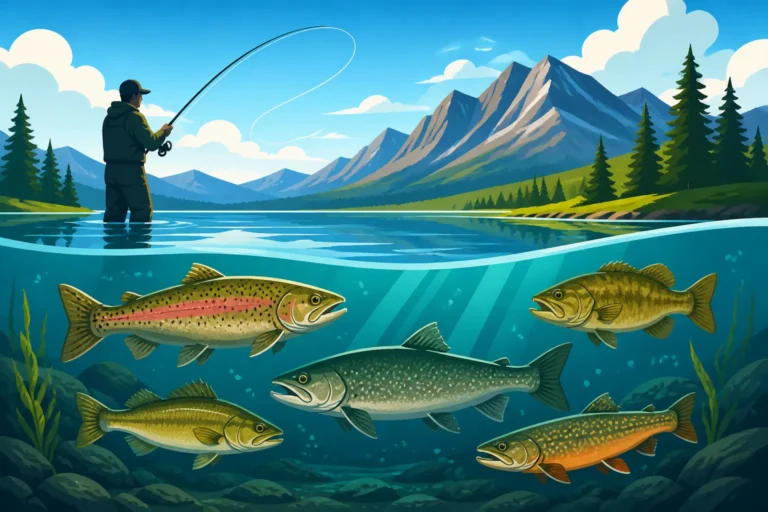
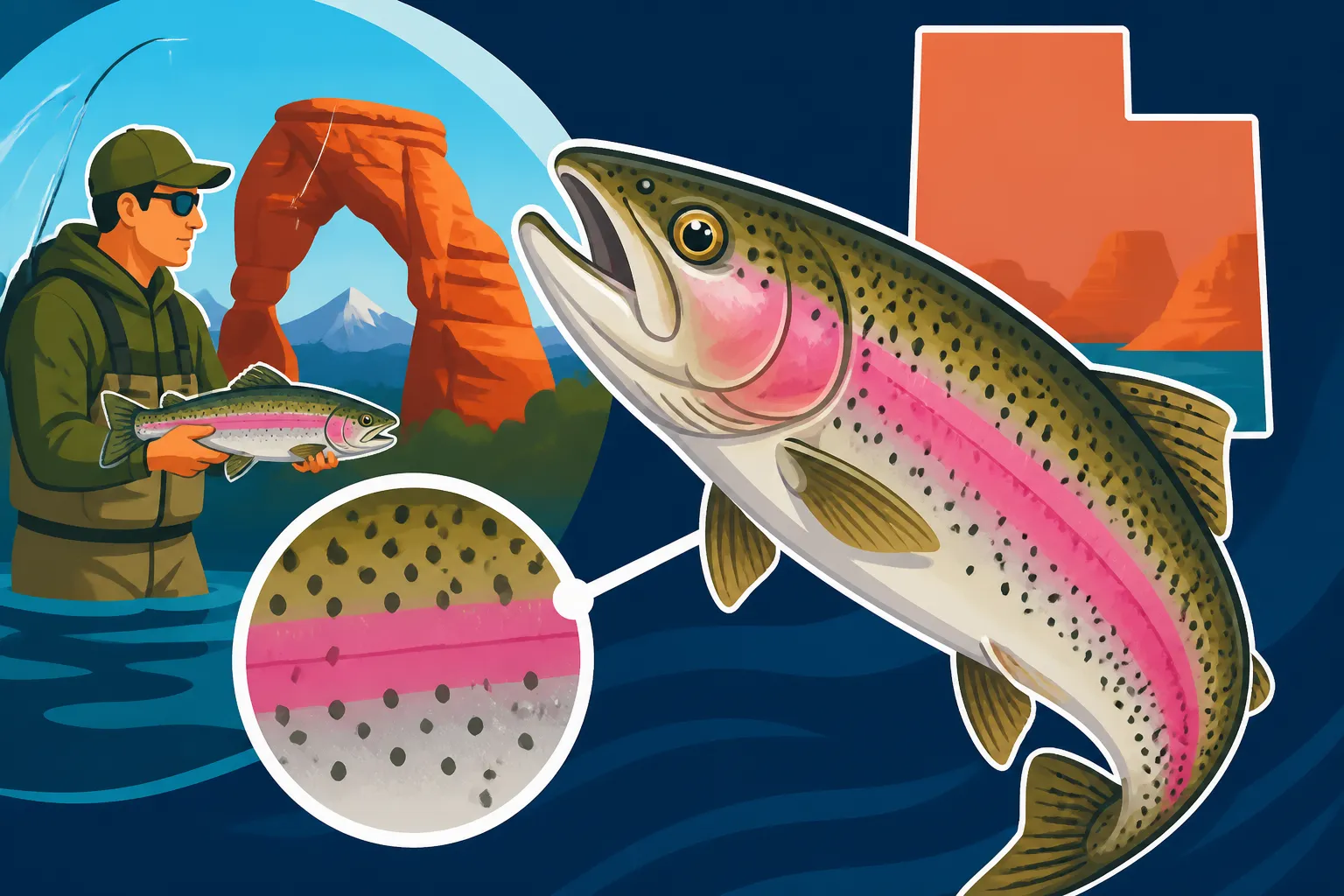
Before we get into the specifics of identifying a stocked rainbow, let's refresh our memory on what a typical rainbow trout looks like. They are truly stunning fish, known for their iridescent sheen that often reflects a rainbow of colors, especially when caught in good light. The most distinctive feature is usually a broad, reddish-pink stripe running horizontally along their lateral line, from their gill plate to their tail. This stripe can vary in intensity, sometimes being a faint blush and other times a vibrant band.
Their bodies are generally sleek and torpedo-shaped, perfectly designed for swimming in currents or open water. They are typically covered in small, dark spots, which can be found on their back, sides, and fins, including the dorsal, adipose, and caudal (tail) fins. The background color of their back can range from an olive green to a steely blue, fading into silvery sides and a white belly. Their mouth is usually relatively small, extending back to about the middle of the eye. Knowing these general characteristics gives us a baseline against which to compare the specific markers of a stocked fish.
Key Indicators of a Stocked Rainbow Trout
Now, let's get down to the nitty-gritty. Stocked rainbow trout, particularly those recently released, often carry several physical "tells" that set them apart from their wild counterparts. These differences stem directly from their hatchery environment compared to the rugged, natural world.
Fin Condition: The Most Obvious Clue
Without a doubt, the condition of a trout's fins is often the most revealing characteristic when trying to determine if it's stocked or wild. In a hatchery, fish are raised in crowded tanks or raceways. While caretakers do their best, this environment can lead to wear and tear on their fins.
You'll often see fins that look:
- Worn or frayed: The edges might be ragged or rounded, rather than sharp and clean.
- Stunted or short: Hatchery fins often appear disproportionately small compared to the fish's body size. They haven't had to develop the same musculature or resilience as fins used for navigating strong currents or escaping predators.
- Deformed or missing: Sometimes, especially the pectoral (side) or pelvic (belly) fins, can be partially missing or scarred from constant rubbing against tank walls or other fish. The adipose fin, a small fleshy fin on the back between the dorsal and tail, might also be clipped by hatcheries for identification purposes, though this isn't universally done for all stocked rainbows.
Compare this to a truly wild rainbow trout, whose fins will typically be pristine, perfectly formed, and often larger and more robust, with sharp, undamaged edges. They are a testament to a life spent battling currents and evading danger. It's truly a striking difference once you know what to look for. When you're fishing, especially in places known for stocking, this is the first thing to inspect if you're curious about your catch's origin.
Body Shape and Proportions
Another significant indicator lies in the fish's overall body shape and proportions. Stocked fish tend to have a different build, often a reflection of their easier life and consistent feeding schedule.
Many recently stocked rainbows have what anglers often affectionately call a "football" shape. They can appear somewhat plump, with a deep body and a belly that looks well-fed, almost distended, from a diet of high-protein pellets. This is in contrast to wild trout, which are typically more streamlined, lean, and athletic in appearance. Wild fish expend a lot more energy hunting for food and fighting currents, leading to a more tapered, muscular physique.
Their heads might also appear slightly larger in proportion to their bodies compared to wild fish, whose heads are usually more integrated into their sleek, hydrodynamic form. The overall impression is one of a fish that hasn't had to "work" as hard for its existence. While a well-fed wild trout can also be plump, the combination of a robust body and the fin condition often points strongly toward a hatchery upbringing.
Coloration and Spotting Patterns
While rainbow trout are known for their vibrant colors, stocked fish often exhibit a somewhat muted or less defined palette compared to their wild brethren. This isn't always a hard and fast rule, but it's another piece of the puzzle.
Stocked rainbows might appear paler overall, with their iridescent "rainbow" stripe being less intense or sometimes almost faded. Their back might be a duller olive or grey, and their sides less silvery. The spots, while present, can sometimes be less distinct, more uniformly scattered, or less boldly contrasted against their body color. In contrast, wild rainbow trout typically boast richer, deeper, and more vibrant colors – a testament to their diverse, natural diet and the varied aquatic environments they inhabit. Their spots are often sharper, darker, and more pronounced, sometimes appearing almost like intricate patterns.
The vibrancy of a wild fish's coloration is often a direct result of its diet, which includes a wide array of insects, crustaceans, and smaller fish, all contributing to a richer pigmentation. Hatchery diets, while nutritious, don't always replicate this natural complexity, leading to subtler hues. Keep in mind that coloration can also be influenced by water clarity, diet in a natural setting (even if stocked), and even the fish's stress levels, so it's best to consider this clue in conjunction with others.
Mouth and Jaw Condition
Take a moment to observe the mouth and jaw of your catch. This can sometimes offer another subtle clue. In hatchery environments, fish frequently rub against the concrete or plastic sides of tanks, and compete aggressively for pellet food. This can sometimes lead to slight deformities, abrasions, or a general "worn" look around their mouths and jawlines.
You might notice mouths that are slightly blunter, or even a bit crooked, compared to the perfectly formed, often delicate mouths of wild trout. Wild fish typically have well-defined, undamaged mouthparts, designed by nature for precise feeding on various insects and prey in their natural habitat. While not as universally obvious as fin condition, a closer look at the mouth can sometimes confirm what other signs are suggesting. This can be especially true for fish that have spent a significant amount of time in crowded rearing conditions before being released.
Behavioral Clues and Environment
Beyond physical appearance, where and how you catch a fish can also provide strong hints about whether it's a stocked rainbow trout. Their behavior and preferred habitats are often quite different from wild fish.
Where You Catch Them Matters
One of the biggest indicators of a stocked fish is simply where you catch it. The Utah Division of Wildlife Resources strategically stocks fish in specific locations to provide angling opportunities.
You'll most commonly find recently stocked rainbow trout in:
- Community ponds: These urban or suburban ponds are regularly stocked and are often the easiest places to catch a fish, especially for kids or beginners. Places like those listed in Utah Community Pond Fishing Spots are prime examples.
- Easily accessible state park reservoirs: Many of our larger, popular reservoirs, especially those with boat ramps and developed shorelines, receive frequent stockings. They're designed for high public use.
- "Put-and-take" sections of rivers: Certain stretches of rivers, particularly those close to population centers, are stocked specifically for anglers to catch and keep, supplementing the natural population.
Wild trout, on the other hand, typically prefer more remote, pristine, and often harder-to-reach habitats. They thrive in colder, clearer water with ample cover, complex river bottom structures, and a natural food source. If you're deep in the Uinta Mountains, miles from the nearest road, and you catch a trout, there's a much higher probability it's a wild fish that hatched and grew up in that very stream or lake. Knowing the stocking schedule for your local waters can be incredibly helpful; you can often find this information by looking for How to Find Recent Stocking Reports for Utah Waters.
Fight and Vigor
The "fight" a fish puts up can also be a subtle indicator, though it's important to note this isn't always definitive and can vary greatly depending on the individual fish and water conditions. Generally, recently stocked rainbow trout, having lived a relatively sheltered life with little exposure to predators or strong currents, might offer a less spirited fight than a wild fish of comparable size.
They might tire more quickly or lack the powerful, acrobatic leaps and runs that a wild trout, accustomed to battling currents and evading danger, might display. A wild fish has developed stronger muscles and instincts for survival. This isn't to say a stocked fish won't give you a good tug – they certainly can, especially if they've been in the wild for a little while and started to adapt. But if you've caught a few fish and one feels noticeably weaker or less aggressive on the line, it could be a clue. For those just getting into fishing, understanding the basics of handling your catch and different fighting styles is part of the fun. Try exploring Utah Fishing Techniques for Beginners to hone your skills.
The Transition: When Stocked Fish Go Wild
It's not always a black-and-white distinction. Nature has a way of helping things adapt, and stocked fish are no exception.
Stocked Fish Adapting to the Wild
Here's where it gets a little more complicated: a stocked rainbow trout doesn't always retain its hatchery characteristics forever. Given enough time, the right environment, and a diet of natural forage, a stocked fish can begin to "wild up." This means they start to develop more robust fins, their coloration deepens, and their body shape can become more streamlined and muscular as they adapt to hunting for food and navigating currents.
This process can take months, or even a year or two, depending on the individual fish and the specific water body. A rainbow trout stocked in a rich, diverse river system with abundant food and cover will likely wild up much faster than one released into a less hospitable environment. So, if you catch a fish with some but not all of the typical stocked characteristics, it could be a hatchery fish that has successfully adapted to its new wild home. These fish are often some of the most satisfying to catch, as they've embraced a new challenge. Knowing how to differentiate these "wilded-up" fish from truly native or naturally reproduced fish becomes a subtle art. You might find more details on this in How to Identify Utah Trout Species.
Why Identification Matters
Beyond the simple curiosity of knowing what kind of fish you've caught, understanding how to identify stocked rainbow trout actually serves a few important purposes for anglers and conservationists alike.
For personal satisfaction, there's a unique thrill in knowing you've outsmarted a truly wild trout – a fish that has survived purely on its instincts in a natural environment. It adds another layer of appreciation to the catch. From a conservation standpoint, being able to identify stocked versus wild fish helps anglers understand the health and dynamics of a fishery. In some waters, protecting native or wild populations is paramount, and regulations might even differ for them. For instance, some areas may have specific rules regarding Utah Trout Limits by Water or even be designated Utah Catch-and-Release Waters to protect fragile populations. By understanding the origins of your catch, you become a more informed and responsible angler, contributing to the broader conservation effort in Utah. It fosters a deeper connection to the natural resources we all cherish.
Here's a quick comparison of the common distinctions between stocked and wild rainbow trout:
| Feature | Stocked Rainbow Trout (Recently) | Wild Rainbow Trout |
|---|---|---|
| Fin Condition | Worn, frayed, stunted, sometimes missing (e.g., pectoral) | Pristine, well-formed, larger, sharp edges |
| Body Shape | "Football" or plump, deep-bodied, less streamlined | Streamlined, muscular, athletic, more tapered |
| Coloration | Often paler, less vibrant, duller iridescence | Richer, deeper, more vibrant hues, distinct spots |
| Spots | Less defined, uniformly scattered | Sharper, darker, more pronounced, intricate |
| Mouth/Jaw | Can be slightly blunted or worn from tank friction | Perfectly formed, delicate, designed for natural prey |
| Fight Vigor | Potentially less spirited, may tire faster | Powerful, acrobatic, strong runs and leaps |
| Habitat | Community ponds, accessible reservoirs, "put-and-take" rivers | Remote streams, clear cold rivers, pristine lakes |
| Diet (Stomach) | Pellets, sometimes mixed with natural forage | Insects, crustaceans, smaller fish, natural prey |
Remember, these are general guidelines, and individual fish can vary. Over time, stocked fish can begin to take on more wild characteristics, making identification a bit more challenging. But by paying attention to these details, you'll gain a much richer understanding of the fish you're catching in Utah's diverse waters. And if you're ever looking for some gear to help you observe these details better, a good pair of polarized sunglasses or a clear, soft landing net from a place like Amazon can make a huge difference in appreciating your catch before release. Just make sure whatever gear you get helps protect the fish! For example, rubberized nets are far gentler on delicate fins and scales.
Disclaimer
This article is for general informational purposes only and does not constitute professional advice. Laws, prices and regulations vary by location and change over time. Consult a qualified professional for guidance on your specific situation.