Utah Lake Catfish Species
It's easy to feel overwhelmed when you're targeting catfish at Utah Lake. With its vast, shallow waters and diverse fish populations, knowing which catfish species you're even trying to catch, let alone how to tell them apart, can feel like trying to find a needle in a haystack. But don't worry, this guide is here to shed light on the incredible catfish species that call Utah Lake home, helping you identify them, understand their habits, and ultimately, put more whiskered fighters in your net.
The Catfish Craze at Utah Lake: Why Anglers Love It
Utah Lake often gets a bad rap, but for those in the know, it's a genuine treasure trove, especially when it comes to catfish. There's something truly special about the experience of fishing its nutrient-rich waters for these hard-fighting bottom dwellers. It’s not just about the catch; it’s about understanding the unique environment and the rewarding challenge these fish present.
Utah Lake's Unique Ecosystem for Catfish
This massive, shallow freshwater lake provides an ideal habitat for catfish. Unlike some of Utah's deeper, colder reservoirs that cater more to trout and kokanee, Utah Lake’s warmer temperatures and abundant forage create a thriving ecosystem perfectly suited for channel catfish and bullheads. The lake's vast expanses of soft, silty bottom, punctuated by rocky areas and extensive weed beds, are exactly what catfish are looking for. They love to cruise these areas, rooting around for their next meal. The lake's constant inflow of nutrients from rivers like the Provo and Spanish Fork also contributes to a rich food web, ensuring catfish have plenty to eat, which in turn leads to healthy, robust populations. This environment allows them to grow to impressive sizes, offering a fantastic opportunity for anglers seeking a real challenge. You can learn more about the overall fishing experience in our Utah Lake Fishing Guide.
The Thrill of the Fight and Culinary Appeal
If you've ever hooked into a large channel catfish, you know exactly what I'm talking about. These fish don't give up easily! They are powerful fighters, often making strong runs and putting a serious bend in your rod. The anticipation of that bite, the sudden jolt, and the subsequent battle make for an exhilarating experience that keeps anglers coming back for more. It’s a primal tug-of-war that tests your tackle and your resolve. Beyond the fight, catfish from Utah Lake are highly regarded for their delicious white, flaky meat. Prepared correctly, they can be a fantastic meal, whether you're frying them up fresh by the shore or taking them home for a family dinner. Many anglers specifically target catfish for their table fare, making responsible harvesting an important part of the sport.
Unmasking Utah Lake's Primary Catfish Species
While Utah Lake is home to a variety of fish, when we talk about "catfish," we're primarily focusing on two species that dominate the discussion. Knowing which one you're after can help you refine your techniques and increase your success. It's often assumed all catfish are the same, but there are distinct differences that become apparent once you know what to look for.
The Channel Catfish: King of Utah Lake
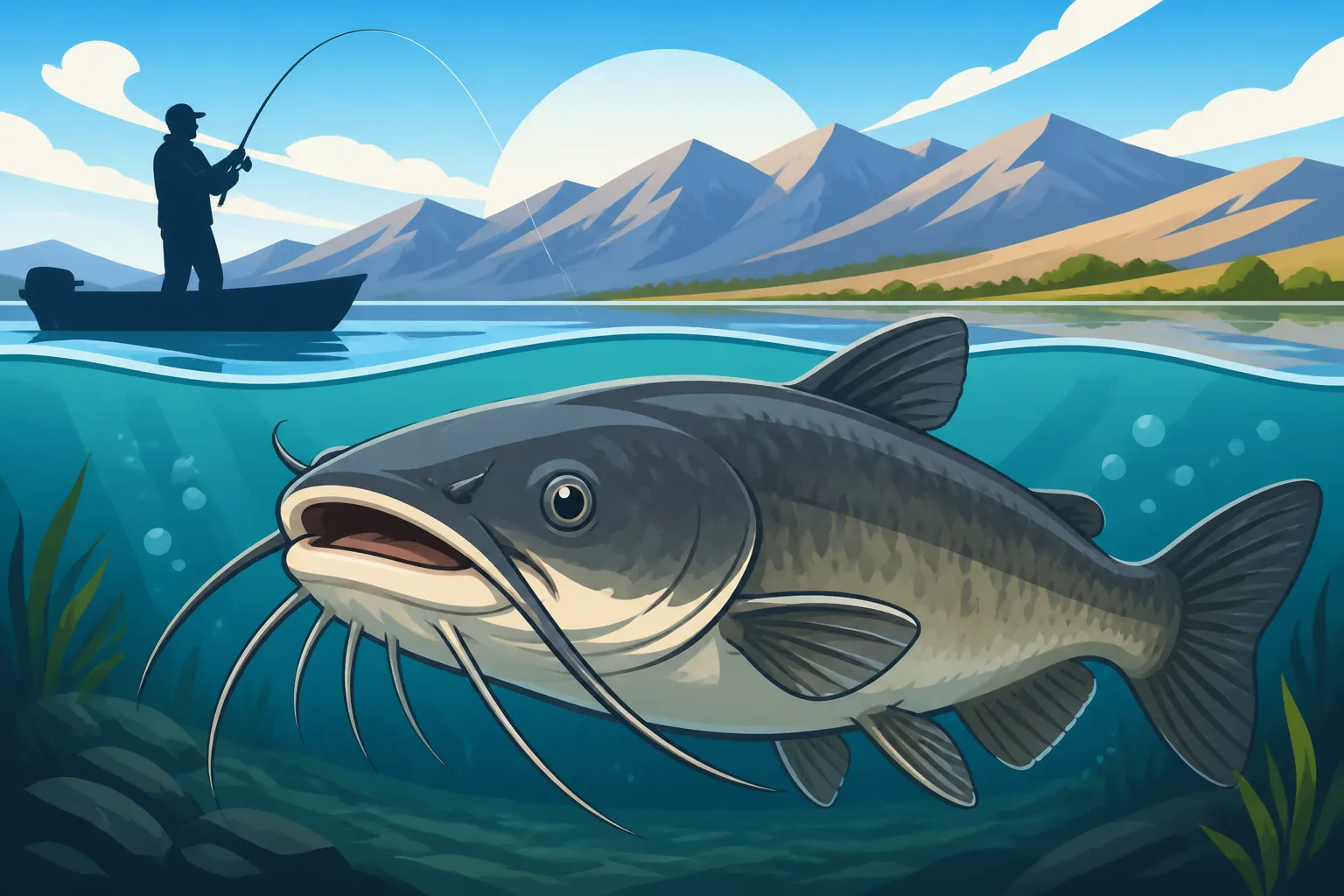
The undisputed heavyweight champion of Utah Lake's catfish population is the channel catfish (Ictalurus punctatus). These are the fish that most anglers dream of catching when they hit the lake, known for their incredible fighting prowess and impressive size. Channel cats are characterized by their smooth, scaleless skin, deeply forked tail, and barbels (whiskers) around their mouths, which they use to taste and feel in the murky waters. Their coloration can vary, from olive-green to blue-gray on their backs, fading to silvery-white on their bellies, often with scattered dark spots on their sides when they're younger. As they get older, these spots can fade. They are opportunistic feeders, eating just about anything from insects and crustaceans to smaller fish and even dead bait. This adaptability is part of what makes them so successful in a diverse environment like Utah Lake. Finding out what they're biting on is key, so check out What Catfish Eat at Utah Lake.
The channel catfish is a powerful and popular sport fish, and Utah Lake boasts a robust population, with many fish reaching significant sizes. While smaller channels are plentiful, fish in the 5-10 pound range are common, and true trophy fish can push upwards of 20 pounds or more. There's a reason they hold the reputation they do; they truly are the "king" when it comes to a thrilling catch on Utah Lake. If you're wondering about the big ones, you might be interested in The Utah State Record Channel Catfish.
Bullheads: The Smaller, More Abundant Relatives
While channel catfish get most of the glory, bullheads are also very common in Utah Lake, often surprising anglers who are targeting larger fish. There are a few species of bullheads, but the brown bullhead (Ameiurus nebulosus) and black bullhead (Ameiurus melas) are the most prevalent. These smaller cousins of the channel cat are easily distinguishable once you know what to look for. Bullheads are generally much smaller than channel catfish, rarely exceeding a few pounds, though larger specimens are certainly possible. They have a more rounded, less-forked tail, and their bodies are stockier. Their barbels are typically darker, often black, and they lack the distinct spots seen on younger channel catfish.
Bullheads are incredibly hardy and can tolerate a wider range of water conditions, including lower oxygen levels and higher turbidity, which allows them to thrive in many areas of Utah Lake where other species might struggle. They're often found in shallower, weedier sections of the lake. While they don't offer the same kind of trophy fight as a channel cat, bullheads are abundant, fun to catch, and can provide continuous action, especially for beginners or younger anglers. They're also quite tasty, though cleaning a smaller fish can be more work. If you're just starting out or taking kids fishing, bullheads are a fantastic target.
Identifying Your Catch: Key Differences Between Utah Lake Catfish
Distinguishing between a channel catfish and a bullhead is crucial for both understanding your catch and adhering to any potential regulations. While they share the general "catfish" appearance, there are several clear visual cues that will help you identify them correctly every time. It's a common frustration to pull in a fish and not be entirely sure what it is, so let's clear up that confusion.
Fin Shapes, Barbels, and Tail Comparisons
One of the most immediate and reliable ways to tell these species apart is by looking at their fins and tails. The channel catfish has a distinctive, deeply forked tail, almost like that of a salmon or trout, but broad. This forked tail is a hallmark feature and is rarely seen on bullheads. Their pectoral fins also possess sharp spines, so be careful when handling! As for barbels, channel cats have eight, with two on the nose, two on the upper jaw, and four on the chin, and these are typically lighter in color, often grayish or whitish.
Bullheads, on the other hand, have a much straighter, rounded, or slightly emarginate (not deeply notched) tail. It's never deeply forked. This alone is often enough to make a positive identification. Their barbels are usually black or dark brown, blending in more with their body coloration. Both species have smooth, scaleless skin, but the overall body shape differs.
Size, Weight, and Coloration Clues
While not always definitive, size and coloration can offer strong clues, especially when combined with fin and tail characteristics. Channel catfish are generally larger, with Catfish Size at Utah Lake being quite impressive, often growing well beyond 5 pounds, and can reach trophy sizes. Their body color tends to be sleeker, often a silver-gray to olive-green on top, with a lighter belly. Younger channel cats often have distinct dark spots along their sides, which usually fade as they mature.
Bullheads are typically much smaller, usually under 2-3 pounds, with a stockier, chunkier build. Their coloration is usually darker and more mottled, ranging from brown to dark olive or black on their backs and sides, with a yellowish or whitish belly. They rarely have the distinct spots seen on young channel catfish. If you catch a small catfish with a rounded tail and dark barbels, it's almost certainly a bullhead. If it's larger with a deeply forked tail and lighter barbels, you've got a channel cat on your hands.
Where and When to Find Catfish in Utah Lake
Utah Lake is a massive body of water, and while catfish are widespread, knowing their preferred haunts and when they're most active can significantly improve your chances of a successful outing. It's not enough to simply cast a line anywhere; understanding their behavior is key.
Prime Habitats and Structural Hotspots
Catfish are bottom-oriented fish, and in Utah Lake, this means they often relate to subtle changes in depth, structure, and cover. Look for areas with a soft, muddy bottom, which they can root through for food. Drop-offs, submerged channels, and the edges of weed beds are prime locations. Areas where incoming rivers like the Provo River or Spanish Fork River enter the lake can also be hotspots, as these inflows bring in nutrients and cooler, oxygenated water, especially during warmer months. Utah Lake Walleye Fishing Spots are often different than catfish spots, but sometimes these species share deeper structure.
Don't overlook the causeways and bridge pilings found along the lake, such as those near Provo or Saratoga Springs. These man-made structures provide cover and ambush points for catfish. Rock piles, old submerged timber, and even deeper holes (though Utah Lake is relatively shallow overall) can hold concentrations of fish. During the day, they might retreat to these deeper, shadier spots, emerging to feed more actively at dusk and dawn. Many anglers find success fishing from shore at popular access points or from a boat, anchoring up near promising structure.
Seasonal Patterns and Best Times to Fish
Catfish activity is heavily influenced by water temperature. In Utah Lake, the spring (April-May) and fall (September-October) offer some of the best fishing. During these seasons, water temperatures are moderate, and catfish are actively feeding without the extreme heat of summer or the cold lethargy of winter. They will move into shallower waters during these periods to feed.
Summer (June-August) can also be excellent, particularly How to Catch Catfish at Utah Lake in Summer. Catfish are very active in the warm water, but they might shift their feeding patterns to dawn, dusk, and even night hours to avoid the brightest sun and heat. Night fishing for catfish on Utah Lake is a popular and often very productive strategy, as these fish are largely nocturnal feeders. During the peak heat of the day, they'll often retreat to deeper, cooler water or dense cover. Winter fishing for catfish is possible, especially during milder periods or through the ice, but their activity levels significantly drop. Your best bet for consistently active catfish will be from late spring through early fall.
Essential Gear and Techniques for Utah Lake Catfish
To consistently catch catfish on Utah Lake, you need the right tools and a solid understanding of effective techniques. While catfish aren't typically picky eaters, using appropriate gear will make a huge difference in your success and ability to land larger fish. Nobody wants to lose a trophy because of inadequate tackle.
Rods, Reels, and Line for Landing Lake Monsters
For Utah Lake catfish, you'll want a rod and reel setup that can handle powerful fish. A medium-heavy to heavy action spinning or baitcasting rod, typically 6 to 8 feet long, is ideal. This will give you the backbone to cast heavy baits and battle strong catfish. Paired with a sturdy reel, capable of holding a good amount of line, you'll be well-equipped. Many anglers prefer baitcasting reels for their power and casting accuracy with heavier weights, but a strong spinning reel works perfectly fine.
When it comes to fishing line, durability is key. Monofilament line in the 15-25 pound test range is a popular choice for its shock absorption and abrasion resistance, which is important when fishing around structure. Braided line, in a similar breaking strength, is also a great option, offering superior sensitivity and strength for its diameter. Some anglers even use a combination, with braided main line and a fluorocarbon or monofilament leader. For specific recommendations, check out Best Pound Test Line for Utah Lake Catfish. You can find a wide range of suitable rods, reels, and lines on platforms like Amazon, offering competitive prices and a vast selection to meet your needs.
Bait and Rigging Strategies That Deliver
Catfish are scavengers and have an excellent sense of smell, so pungent baits are often the most effective. Popular choices for Utah Lake include:
- Cut Bait: Freshly cut pieces of carp, sucker, or even perch are excellent. The oils and scent released into the water are irresistible to catfish.
- Worms: Nightcrawlers or large pieces of earthworm are always a classic and effective bait.
- Stink Baits/Prepared Baits: There's a huge variety of commercially available stink baits, dough balls, and pre-formed concoctions designed specifically for catfish. Many anglers have their favorites.
- Chicken Liver: This is a classic for a reason – it's incredibly smelly and effective, though it can be a bit messy to work with.
For rigging, a simple bottom rig is usually best. A Carolina rig or a slip sinker rig are excellent choices. This involves a weight (often an egg sinker or pyramid sinker) that slides freely on your main line, followed by a swivel, and then a leader (usually 1-2 feet of monofilament or fluorocarbon) tied to a hook. This allows the fish to pick up the bait without feeling the resistance of the sinker. A 1/0 to 5/0 circle hook or J-hook, depending on the size of your bait and target fish, is appropriate. Circle hooks are often preferred because they typically hook the fish in the corner of the mouth, making for easier release and less harm to the fish. For sinker specifics, see Best Sinker Weight for Bottom Fishing at Utah Lake. You can easily stock up on these essential terminal tackle items like hooks, swivels, and sinkers through online retailers such as Amazon.
| Catfish Species | Key Identifier | Average Size (Utah Lake) | Preferred Habitat | Best Bait |
|---|---|---|---|---|
| Channel Catfish | Deeply forked tail, often spots (when young), lighter barbels | 3-10 lbs (up to 20+ lbs) | Deeper channels, structure, river mouths | Cut bait, stink bait, chicken liver |
| Bullhead | Rounded or straight tail, dark barbels, stockier body, no spots | 0.5-2 lbs | Shallow, weedy areas, muddy bottoms | Worms, small cut bait, stink bait |
Protecting the Fishery: Regulations and Responsible Angling
Enjoying the fantastic catfish opportunities at Utah Lake comes with the responsibility of understanding and following regulations to ensure this resource remains healthy for future generations. While Utah Lake often has more liberal limits for certain species due to management goals, it's still vital to be informed.
Understanding Bag Limits and Other Rules
The Utah Division of Wildlife Resources (DWR) sets specific regulations for all fish species, including catfish, to manage populations and maintain ecological balance. For channel catfish and bullheads at Utah Lake, regulations can sometimes involve generous bag limits, reflecting the DWR's efforts to utilize the abundant populations while still promoting healthy fish sizes. However, these limits can change, so it's absolutely crucial to consult the current Utah Fishing Regulations Explained booklet or the official DWR website before you head out. Don't rely on old information or what someone told you last year.
General statewide rules about line limits (typically two lines per angler), bait restrictions (what can and cannot be used, especially live bait), and legal fishing hours also apply. Failing to adhere to these rules can result in penalties, which nobody wants. Being informed about Utah Daily Bag and Possession Limits is not just about avoiding a fine; it's about being a conscientious angler and contributing to the sustainability of the fishery.
Best Practices for Catch-and-Release and Handling
Even when bag limits are generous, practicing good catch-and-release, especially for larger channel catfish you might not intend to keep, is a sign of a responsible angler. If you plan to release a fish:
- Minimize handling: Try to keep the fish in the water as much as possible.
- Wet hands: Always wet your hands before touching a fish to protect its slime coat, which is vital for disease prevention.
- Use appropriate tools: A pair of pliers for hook removal is essential. If a fish is deeply hooked, it may be better to cut the line as close to the hook as possible rather than tearing the fish's insides.
- Support the fish: If you must lift it for a photo, support its body horizontally, especially heavier fish, to avoid damaging internal organs or its jaw.
- Revive gently: If the fish seems sluggish, hold it gently upright in the water, facing into the current, until it can swim away under its own power.
For those fish you intend to keep for the dinner table, ensure you dispatch them humanely and keep them fresh on ice, especially on hot Utah Lake days. A good cooler, easily available from retailers like Amazon, is indispensable for this. By understanding the species, respecting the rules, and practicing responsible angling, you'll not only enjoy your time on Utah Lake more but also help preserve its fantastic catfish fishery for years to come.
Disclaimer
This article is for general informational purposes only and does not constitute professional advice. Laws, prices and regulations vary by location and change over time. Consult a qualified professional for guidance on your specific situation.