Best Fishing Rods for Utah Anglers
Navigating the overwhelming world of fishing rods can feel like trying to choose a single fly out of a tackle shop's entire inventory – where do you even begin? So many anglers, especially those just starting out or looking to upgrade for Utah's incredibly diverse waters, grapple with questions about rod length, power, action, and what each actually means for their success on the water. This comprehensive guide is here to untangle that confusion, helping you understand the nuances of fishing rods so you can confidently select the perfect gear for your next Utah fishing adventure, whether you're targeting trophy trout in a high mountain lake or battling bass in a warm reservoir.
Understanding the Basics of Fishing Rods
Before you can pick the best rod for a specific type of fishing, it's really helpful to get a handle on the fundamental characteristics that define every fishing rod out there. Think of it like learning the basic rules of the road before you get behind the wheel. These core concepts – length, power, and action – are the building blocks that rod manufacturers use to design their products, and understanding them will empower you to make informed decisions that directly impact your casting, fighting, and overall fishing experience. It's not just jargon; it's the language of effective angling.
Rod Length and Its Impact on Casting and Control
When you pick up a rod, one of the first things you notice is its length. Rods can range from as short as four feet to well over ten feet, and this isn't just a random measurement; it significantly affects how you cast and how much control you have over your lure and a hooked fish. Longer rods generally allow for longer casts, which can be a huge advantage when you're trying to reach distant feeding fish from shore on a wide-open reservoir like Deer Creek or need to cover more water on a large river. They also provide more leverage when fighting a fish, acting like a longer lever to absorb runs and keep the fish's head up.
However, longer isn't always better. Shorter rods offer superior accuracy for pinpoint casts, which is absolutely crucial when you're trying to drop a lure into a tight pocket along the banks of the Provo River or navigate through brush and overhanging trees on smaller streams. They also provide more control for working lures, allowing for subtle twitches and precise movements that can entice finicky fish. Imagine trying to precisely skip a jig under a dock with a ten-foot rod – it's a frustrating endeavor! So, your fishing environment and target species will heavily influence the ideal rod length.
For instance, if you're planning a trip to the Uinta Mountains to hike into high-altitude lakes, a medium-length rod (say, 6 to 7 feet) might be a great compromise, offering decent casting distance for open water but still manageable in tighter backcountry spots. Conversely, for trolling on a vast lake like Flaming Gorge, you might want longer rods that can spread out your lines and absorb the shock of a big lake trout strike. It's all about finding that sweet spot for your specific application.
Rod Power (Weight) and What It Means for Utah Fish
Rod power, often called rod weight or taper, refers to how much force it takes to bend the rod. This isn't about the physical weight of the rod in your hand, but rather its lifting strength and backbone. Rod power classifications range from Ultra-Light (UL) to Heavy (H) or even Extra-Heavy (XH), with various steps in between like Light (L), Medium-Light (ML), Medium (M), and Medium-Heavy (MH). This characteristic is absolutely critical because it dictates the size of line you can comfortably use, the weight of the lure you can cast effectively, and ultimately, the size of fish the rod is designed to handle without risking breakage.
Using a rod with too little power for the fish you're targeting means you'll struggle to set the hook firmly and have very little control over a strong fish, potentially leading to long, exhausting fights that can be detrimental to the fish if you plan to release it. On the flip side, using an overly powerful rod for small trout or panfish will make it difficult to feel subtle bites and can result in hooks being ripped out of delicate mouths. It's a balance of sensitivity and brute force.
For typical Utah trout fishing in community ponds or small streams where stocked rainbow trout are common, a Light or Medium-Light power rod is often ideal. It provides enough backbone to cast small lures and handle 1-3 pound fish, while still offering the sensitivity to feel those gentle nibbles. If you're chasing larger species like hefty walleye in Utah Lake or big stripers at Lake Powell, you'll definitely want to step up to a Medium-Heavy or Heavy power rod to ensure you have the muscle to turn those powerful fish away from snags and bring them to the net. Understanding power is key to having the right tool for the job.
Rod Action (Flex) and Its Role in Hooksets and Feel
Rod action describes where the rod bends when pressure is applied to the tip. This is different from power, which is about how much it bends; action is about where the bend occurs. Common actions include Fast, Moderate-Fast, Moderate, and Slow. A "Fast" action rod bends mostly in the top third of the blank, providing maximum sensitivity and quick, powerful hooksets. This is incredibly beneficial for techniques that require direct feel, like jigging for walleye or working soft plastics for bass, where you need to react instantly to a subtle strike.
"Moderate-Fast" action rods bend through the upper half of the blank, offering a good balance of sensitivity and casting performance. They're often considered excellent all-around choices for many types of fishing because they cast well, absorb some of the shock from a fighting fish, and still provide decent feel. "Moderate" action rods bend through the middle section, giving you a smoother, parabolic bend that's great for casting crankbaits or topwater lures, as the slower action helps prevent you from pulling the lure away from a striking fish too quickly. They also excel at protecting light lines from powerful runs.
Finally, "Slow" action rods bend almost all the way down to the handle. These are less common for general purpose fishing but are prized for specific applications, often with ultra-light tackle for small panfish or specialized fly fishing rods where the deep bend is part of the casting motion. For most Utah anglers, you'll be looking at fast to moderate-fast actions for versatility, allowing you to quickly set the hook on a trout or bass.
Matching Your Rod to Utah's Diverse Waters and Species
Utah is a truly incredible place to fish because of the sheer variety of environments and the species that thrive in them. From the chilly depths of Flaming Gorge Reservoir to the warm, fertile waters of Utah Lake, and everything in between, each unique body of water and its resident fish populations call for a specific approach when it comes to rod selection. You wouldn't use a sledgehammer to drive a nail, and similarly, you shouldn't use a heavy catfish rod for delicate stream trout. Tailoring your rod choice to the exact conditions and species you're targeting is paramount for an enjoyable and successful outing.
Rods for Stillwater Trout (Reservoirs, Lakes, Ponds)
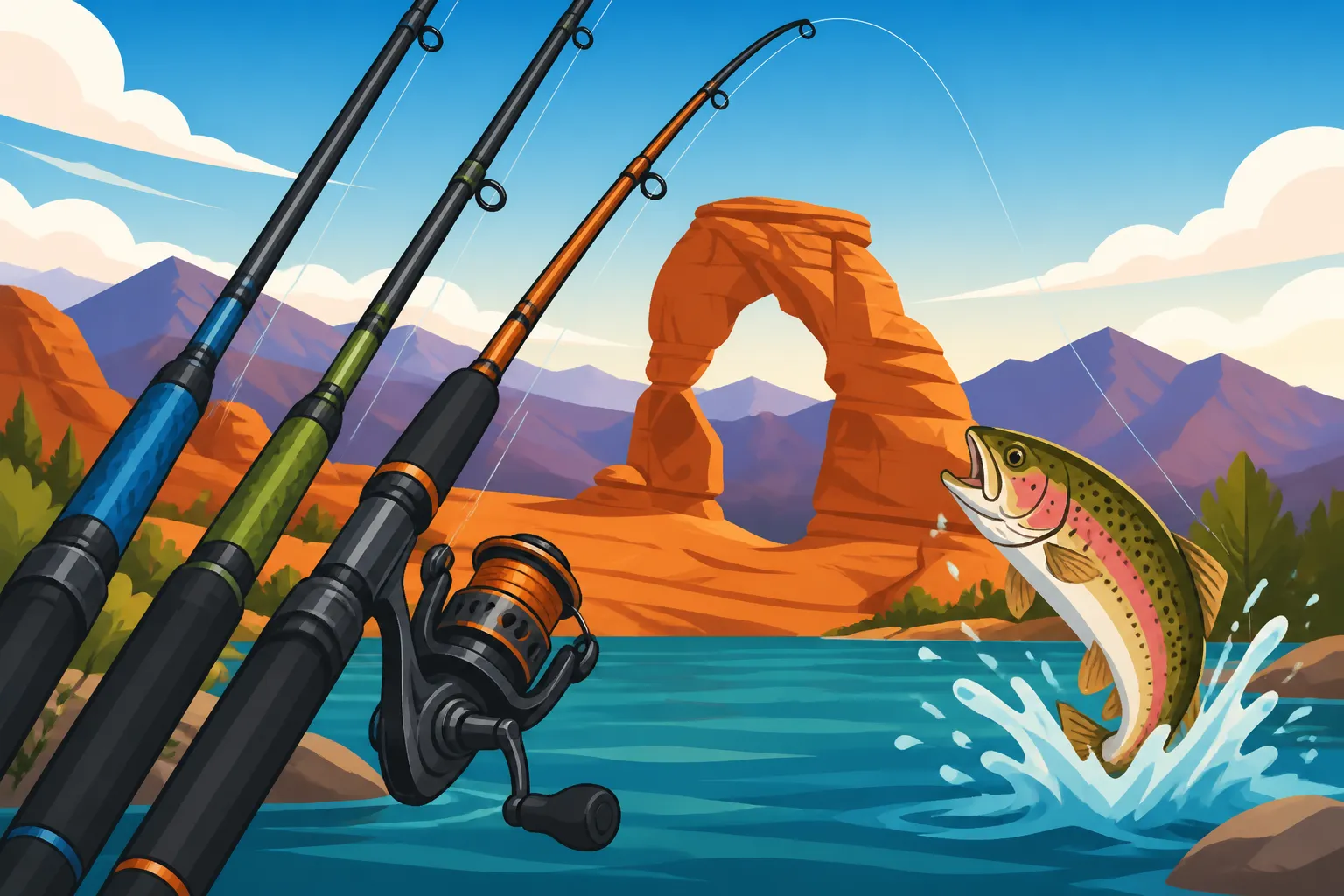
Stillwater trout fishing in Utah covers a huge spectrum, from casting PowerBait at community ponds packed with recently stocked rainbows, to chasing larger, wilder trout in our scenic reservoirs like Strawberry, Scofield, or Fish Lake. For these situations, versatility is often key, but slight adjustments can make a big difference. Many anglers start with a spinning rod in the 6-foot to 7-foot range with a light to medium-light power and a fast or moderate-fast action. This combination is a fantastic all-rounder.
A 6'6" medium-light, fast-action spinning rod, for instance, offers enough backbone to cast lighter spoons, spinners, or bait rigs a good distance, which is important for covering water from the shore or a float tube. The fast action provides the sensitivity to detect subtle bites from trout and the quick hookset needed to connect, especially if they're just mouthing the bait. If you're specifically targeting larger, deeper-holding trout or even splake in reservoirs, you might bump up to a 7-foot medium power rod, which gives you a bit more leverage for fighting bigger fish and casting heavier spoons or small crankbaits. For kids fishing urban ponds, a shorter 5'6" to 6' light action rod is perfect, making it easier for them to handle and cast. For more ideas on getting started, check out Utah Fishing Gear for Beginners.
When it comes to tackle for trout, you'll find that a slightly softer tip can sometimes be an advantage, particularly when using light line and small hooks. A moderate-fast action rod will absorb those headshakes and prevent break-offs better than an ultra-fast tip. Many popular trout rod brands offer specific "trout series" rods designed with these considerations in mind, often featuring lighter powers and sensitive tips. Remember, on sunny days at places like Jordanelle or East Canyon, those trout can be shy, so feeling every tap is crucial.
Rods for River and Stream Trout (Provo, Green, Weber Rivers)
River and stream fishing for trout in Utah presents a completely different set of challenges and, therefore, demands different rod characteristics. You're often dealing with currents, obstacles like rocks and overhanging branches, and highly pressured, wilder fish. Accuracy and presentation become paramount, especially on blue ribbon fisheries like the Green River below Flaming Gorge Dam or the famed Provo River. Fly fishing is very popular here, but spin anglers can also be highly successful with the right gear.
For spin fishing rivers and streams, a shorter rod in the 5' to 6'6" range is generally preferred. This shorter length provides superior accuracy for casting into tight pockets, under brush, and around boulders. A light to ultra-light power with a fast or extra-fast action allows you to cast tiny spinners, small spoons, or miniature soft plastics with precision. The fast action is essential for quick, decisive hooksets, as river trout often strike aggressively and need to be turned quickly before they can dive into structure. If you’re interested in specific techniques, How to Fly Fish the Provo River is a great resource.
Imagine wading into the middle Provo River. You're trying to cast a tiny Panther Martin spinner just upstream of a submerged log where you suspect a brown trout is holding. A long, floppy rod would make this an exercise in frustration. Instead, a crisp, fast-action 5'6" light power rod allows you to make a flick-of-the-wrist cast that drops the lure exactly where you want it. Furthermore, the sensitivity of such a rod lets you feel every bump and tick as your lure drifts, helping you distinguish between a rock and a subtle take.
Rods for Warmwater Species (Bass, Walleye, Catfish)
Shifting gears to Utah's warmwater fisheries, such as Utah Lake, Willard Bay, or Lake Powell, requires a significant change in rod selection. These waters are home to hard-fighting species like bass, walleye, catfish, and even wiper, which demand more robust gear. A universal "warmwater rod" doesn't quite exist, as each species often benefits from specialized tackle, but there are some commonalities.
For bass fishing (both largemouth and smallmouth), you'll typically be looking at medium to medium-heavy power rods, often in the 6'6" to 7'6" length range, with fast or extra-fast actions. The extra power is needed to effectively cast heavier lures like spinnerbaits, crankbaits, jigs, or Texas-rigged plastics. A fast action provides the sensitivity to feel strikes and the backbone to drive hooks through the tougher mouths of bass. For example, a 7' medium-heavy, fast-action baitcasting rod is a workhorse for flipping and pitching jigs into heavy cover for largemouth or throwing big crankbaits for smallmouth at Flaming Gorge. Utah Bass Fishing Techniques can provide more detail on specific methods.
Walleye anglers, particularly at Utah Lake, often favor medium to medium-heavy rods with a sensitive tip but a strong backbone, ranging from 6'6" to 7'6". Whether you're jigging, trolling, or casting stickbaits, the sensitive tip allows you to detect the often-subtle walleye bite, while the powerful mid-section provides the leverage for a strong hookset and fighting a fish known for headshakes. Catfish, on the other hand, are less about sensitivity and more about brute strength. Heavy or medium-heavy power rods, often 7' to 9' long, are preferred. These rods need to handle heavy weights, big baits, and the powerful, bulldogging fight of a large channel catfish, especially after dark at Utah Lake. A moderate action can be beneficial here, allowing for longer casts with heavy weights and absorbing the shock of a hard run.
Specialty Rods for Unique Utah Fishing (Ice Fishing, Trolling)
Beyond the general purpose rods, Utah offers several unique fishing opportunities that really benefit from specialized rod designs. Ice fishing and trolling are two prime examples where a purpose-built rod can dramatically improve your experience and success. Trying to use a standard open-water spinning rod for these techniques can be cumbersome and ineffective.
For ice fishing, a completely different breed of rod is needed. These rods are much shorter, typically ranging from 24 inches to 36 inches, though some longer "dead stick" rods exist. Ice fishing rods have incredibly sensitive tips, often made of fiberglass or carbon fiber, to detect the slightest tap from a fish under the ice. Their short length makes them easy to handle inside an ice shelter or while kneeling over a hole. The power can vary from ultra-light for perch and small trout to medium-heavy for larger lake trout or walleye. A stiff backbone combined with a sensitive tip is crucial for both detecting light bites and having the leverage to pull a fish up through a small hole. Want to learn more about this exciting winter activity? Check out our Utah Ice Fishing Guide.
Trolling, especially for species like kokanee salmon or lake trout in large reservoirs such as Flaming Gorge or Bear Lake, also calls for specialized rods. Trolling rods are often longer, ranging from 7 feet to 10 feet or more, and are designed to absorb the constant pressure of pulling lures and downriggers. They typically have a moderate to moderate-fast action, which allows the rod to flex deeply and smoothly. This deep flex acts as a shock absorber, preventing hooks from tearing out when a fish strikes at speed and protecting your line from the strain of a heavy fish. Different rod holders like those found at Bass Pro Shops are also essential for this style of fishing. Look for rods with durable blanks and guides that can withstand constant stress.
Spinning vs. Baitcasting: Which System is Right for You?
One of the fundamental decisions you'll face when choosing a fishing rod is whether to go with a spinning setup or a baitcasting setup. These two systems operate very differently and each has its distinct advantages and disadvantages. There's no single "better" option; the ideal choice truly depends on your skill level, the type of fishing you're doing, the lures you're casting, and the species you're targeting. Understanding these differences is crucial for maximizing your efficiency and enjoyment on the water.
The Versatility of Spinning Rods for Utah Beginners and Beyond
Spinning rods are perhaps the most popular and versatile choice for anglers of all skill levels, and for very good reason. They are generally much easier to learn to cast, making them the go-to recommendation for beginners, children, and anyone looking for a forgiving and reliable fishing experience in Utah's diverse waters. A spinning rod works in conjunction with a spinning reel, which hangs below the rod, allowing gravity to assist in line flow during the cast. This design makes it incredibly easy to cast lighter lures and baits, which is a huge advantage for trout fishing in particular.
The open-face design of a spinning reel, where the line comes off a fixed spool, means less friction and less chance of dreaded backlashes – those tangled messes of line that can quickly ruin a fishing trip. This makes them ideal for throwing small spinners, lightweight jigs, or bait rigs for trout in community ponds, streams, or reservoirs like Strawberry. Best Spinning Reels for Utah Trout Fishing delves deeper into pairing the right reel with your spinning rod. A good 6-7 foot medium-light spinning rod with a fast action is arguably the most versatile setup an angler can own in Utah, capable of handling everything from panfish to decent-sized trout and even small bass. Many anglers even continue to use spinning gear for their entire lives due to its ease of use and ability to handle a wide range of fishing situations.
Spinning gear also excels in situations where you need precise control over lighter presentations, such as drifting a small nymph under an indicator on a river or delicately dropping a worm into a tight spot. Their simplicity and ability to handle various line types, from monofilament to braided lines, further add to their widespread appeal. When you're standing on the shore of a beautiful Utah lake, a reliable spinning setup is often your best friend.
The Power and Precision of Baitcasting Rods for Advanced Techniques
Baitcasting rods and reels represent a step up in terms of complexity and skill, but they offer unparalleled power, casting accuracy, and control once mastered. Unlike spinning reels, a baitcasting reel sits on top of the rod, and the spool revolves during the cast. This direct drive system means better sensitivity and more raw power for fighting larger, stronger fish, as well as the ability to cast heavier lures with incredible precision and distance. However, they are notorious for "backlashing" or "bird's nesting" if not cast correctly, requiring a delicate touch with your thumb to control the spool.
Baitcasting setups truly shine when targeting larger warmwater species like bass, walleye, northern pike (which must be killed at Utah Lake), and big stripers at Lake Powell. They excel at techniques that involve heavy lines, big lures, and accurate presentations into heavy cover. Imagine trying to pitch a heavy jig into dense cattails for a trophy largemouth bass – a baitcaster allows for the powerful, accurate flip-casts needed for this. The direct contact with the line also transmits more vibration, allowing experienced anglers to feel even the most subtle bites when working lures along the bottom. For more on matching your reel, consider Best Baitcasting Reels for Utah Bass Fishing.
If you're serious about targeting big fish with artificial lures, whether it's chucking swimbaits for tiger muskie at Pineview Reservoir or deep jigging for lake trout at Flaming Gorge, a baitcasting setup is often the preferred choice. The ability to quickly and smoothly present heavy baits, coupled with the immense cranking power to pull big fish out of cover, makes them indispensable for the more advanced and demanding aspects of fishing. They require practice, but the rewards in terms of performance are substantial.
When to Choose One Over the Other
Deciding between a spinning and baitcasting setup really comes down to your personal fishing style, the specific species you're pursuing, and the types of lures you'll be using. For most general-purpose fishing in Utah, especially if you're a beginner or primarily targeting smaller fish with lighter presentations (like trout and panfish), a spinning rod is usually the more practical and forgiving choice. It's incredibly versatile for casting live bait, light lures, and smaller artificials, and it's easy to use all day without much fatigue.
However, if your primary goal is to chase larger, hard-fighting fish in heavy cover, or if you plan on throwing heavier, wind-resistant lures with precision, then a baitcasting setup becomes the superior tool. It offers greater line capacity for heavier lines, more powerful retrieves, and enhanced casting accuracy once you've mastered the technique. Many experienced anglers in Utah will carry both types of setups, choosing the appropriate rod and reel combination for the specific technique or species they are targeting at that moment.
Consider the environment: open water with light lures? Spinning. Dense vegetation with heavy jigs? Baitcasting. Ultimately, a good tackle box might contain both, allowing you to adapt to whatever Utah's waters throw your way. If you're planning to focus heavily on certain species or techniques, investing in the appropriate rod type will make your fishing experience much more effective and enjoyable.
Key Rod Components and What to Look For
Beyond the overarching characteristics of length, power, and action, a fishing rod is a sum of its individual parts. Each component plays a vital role in the rod's performance, durability, and how it feels in your hand. Understanding these key elements – the rod blank, guides, reel seat, and handle – will help you appreciate the craftsmanship behind a quality rod and guide you in making a selection that not only performs well but also lasts for many seasons of Utah fishing.
Rod Blanks: Material Matters (Graphite, Fiberglass, Composites)
The "blank" is the main body of the rod, the long, tapered shaft that gives the rod its fundamental characteristics. The material used to construct the blank is perhaps the most significant factor influencing a rod's sensitivity, weight, strength, and overall action. Historically, fiberglass was the dominant material, and it still has a place today. Fiberglass rods are known for their incredible durability, flexibility, and parabolic bend (moderate to slow action). They are less sensitive than graphite but are excellent for casting crankbaits or absorbing the shock of a hard-fighting fish on a trolling setup. You'll often find fiberglass in trolling rods or those designed for heavy bait fishing, where sensitivity isn't the top priority but toughness is.
Graphite, on the other hand, revolutionized rod design. It is much lighter and significantly more sensitive than fiberglass, allowing anglers to feel even the most subtle bites. Graphite rods typically have faster actions and are the preferred choice for techniques requiring high sensitivity, such as jigging, worm fishing, or anytime you need to feel what your lure is doing on the bottom. Different grades of graphite (e.g., IM6, IM7, IM8) indicate varying levels of stiffness and weight, with higher grades generally resulting in lighter, more sensitive, and more expensive rods. The downside is that graphite can be more brittle than fiberglass, making it more susceptible to damage from impacts.
Many modern rods utilize composite materials, blending graphite and fiberglass (or other fibers) to create blanks that offer a balance of properties. These composites can provide the strength and durability of fiberglass with some of the sensitivity and lighter weight of graphite. This hybrid approach allows manufacturers to fine-tune a rod's performance for specific applications, such as a rod that needs to be strong enough for heavy cover bass fishing but still sensitive enough to detect light strikes. When you're browsing the aisles at a Bass Pro Shops or online at Amazon, pay attention to the blank material listed in the rod's specifications, as it's a huge indicator of how the rod will perform.
Guides: Material, Number, and Placement
The guides are the small rings along the rod blank through which your fishing line passes. They are absolutely critical to a rod's performance, as they control the line's path, distribute stress evenly along the blank when fighting a fish, and reduce friction during casting and retrieving. Cheap, poorly made guides can quickly wear out your line, create excessive friction, and even fail under pressure.
Guide materials vary, with common options including stainless steel, ceramic (like aluminum oxide or silicon carbide), and even titanium. Ceramic inserts are highly valued because they are incredibly smooth, reducing friction and allowing for longer casts, and they are very hard, meaning they stand up well to the abrasive nature of braided lines. Silicon carbide (SiC) guides, for example, are considered top-tier for their hardness, heat dissipation, and slickness. The frames holding the inserts are usually stainless steel, sometimes coated for corrosion resistance or made from titanium for lightness and strength. When fishing Utah waters, especially those with sandy bottoms or high mineral content, durable guides are important to prevent wear on your line.
The number and placement of guides also matter. More guides, properly spaced, distribute the stress more evenly along the blank, preventing flat spots or extreme bending during a fight and allowing the rod to flex naturally. Generally, longer rods will have more guides. Good quality guides, often double-footed for strength on heavier rods, are a sign of a well-engineered fishing rod. They ensure that when you're battling a stubborn trout or a powerful walleye, the rod blank bears the load, not just a few stress points on your line.
Reel Seats and Handles: Comfort and Durability
While the blank and guides are crucial for performance, the reel seat and handle are equally important for the angler's comfort, grip, and overall fishing experience. After all, this is the part of the rod you'll be holding all day! A well-designed reel seat securely locks your reel in place, ensuring there's no wobble or play that could detract from sensitivity or lead to an accidental loss of your reel. Most reel seats are made from graphite or aluminum, with screw-down rings to tighten the reel foot. Some higher-end rods feature skeletonized reel seats that expose more of the blank, enhancing sensitivity by allowing you to feel vibrations directly through your hand.
Handles are typically made from cork, EVA foam, or a combination of both. Cork is a classic choice, known for its light weight, sensitivity, and comfortable feel, especially in cold weather. High-grade cork is visually appealing and durable, but cheaper cork can crumble over time. EVA foam is generally more durable, easier to clean, and often found on rods designed for heavier use or saltwater environments, though it's also common on many freshwater rods. Some handles feature split-grip designs, where sections of the handle material are removed to reduce weight and expose more of the blank, again enhancing sensitivity.
Choosing the right handle length and material is a personal preference, but it significantly impacts comfort and casting efficiency. A longer handle can aid in two-handed casting for distance, while a shorter handle is better for one-handed casting and close-quarters work. When you're standing on the bank of the Bear River or fishing from a boat at Lake Powell for hours, a comfortable and secure grip can make all the difference in preventing hand fatigue and maintaining control over your gear.
Considering Budget and Brand for Your Utah Fishing Rods
Once you've wrapped your head around the technical aspects of rod design, the next natural step is to consider how your budget and brand preferences fit into the picture. Fishing rods, like most gear, come in a vast range of price points, from very affordable entry-level options to highly specialized, premium models that can cost a pretty penny. It's easy to get caught up in the allure of high-end gear, but the truth is, you don't always need the most expensive rod to have a successful and enjoyable fishing experience in Utah. The key is finding the sweet spot between quality, performance, and what you're comfortable spending.
Entry-Level Options for Getting Started
For beginners, or those looking to expand into a new type of fishing without a huge upfront investment, entry-level rods are an excellent starting point. These rods are designed to be affordable, durable, and generally forgiving, making them perfect for learning the ropes. Often, you'll find these rods sold as combos, paired with a matching spinning reel, which takes the guesswork out of matching components. Brands widely available at retailers like Bass Pro Shops or even general stores will have many options in this category.
An entry-level rod might feature a fiberglass or composite blank, which provides good durability even if it lacks the ultimate sensitivity of high-grade graphite. The guides might be stainless steel with basic ceramic inserts, perfectly adequate for monofilament or fluorocarbon lines. While they may not offer the feather-light feel or hyper-sensitive tip of a more expensive rod, they are more than capable of catching fish in Utah's community ponds, stocked reservoirs, and many small streams. They're built to withstand the bumps and scrapes that often come with learning, and they represent a fantastic way to get out on the water without breaking the bank. Don't let a modest budget deter you from enjoying fishing – there are plenty of great rods to start with. If you're looking for more general starter advice, check out Utah Fishing License Guide and How to Buy a Utah Fishing License.
These rods are ideal for someone trying fishing for the first time, a parent buying a rod for their child, or an experienced angler wanting a spare rod for casual outings. You can often find decent quality entry-level rods for a surprisingly reasonable cost, especially during sales. Focus on getting the right length, power, and action for your target species and fishing style, and you'll be well on your way.
Mid-Range Rods for Improved Performance
Stepping up to the mid-range price point opens up a world of significantly improved performance. These rods offer a noticeable upgrade in terms of blank materials, components, and overall craftsmanship. You'll typically find mid-range rods made from higher-modulus graphite, resulting in lighter, more sensitive blanks that transmit bites more clearly. The guides will often feature better quality ceramic inserts (like aluminum oxide or even some SiC) in more durable frames, which enhances casting distance and reduces line wear, especially important if you're venturing into braided lines.
Mid-range rods are where anglers often discover their "workhorse" rods – the ones that they rely on day in and day out for various fishing situations. For instance, a 7-foot medium-fast graphite spinning rod in this category might become your go-to for targeting trout in Strawberry Reservoir or for throwing light jigs for smallmouth bass at Flaming Gorge. They strike an excellent balance between performance and affordability, providing many of the benefits of higher-end rods without the premium price tag. You'll feel more subtle bites, cast further with less effort, and enjoy a more comfortable fishing experience overall.
Many reputable brands offer fantastic mid-range rods, and this is where you start to see more specialized designs for particular species or techniques. If you're an angler who has moved beyond the basics and is looking to refine your technique and increase your success rate, investing in a good mid-range rod is often a very smart decision. These rods are built to last longer and perform more consistently than their entry-level counterparts, offering a significant return on your investment in terms of angling enjoyment.
High-End Rods for Serious Anglers
For the truly dedicated and serious angler, or those who simply demand the absolute best performance, high-end rods represent the pinnacle of fishing rod technology and design. These rods are crafted from the finest materials, often employing cutting-edge high-modulus graphite (sometimes multi-directional layups), aerospace-grade resins, and ultra-lightweight components. Every detail, from the ergonomic handle design to the super-slick, titanium-framed guides, is optimized for maximum sensitivity, strength, and minimal weight.
The primary advantages of high-end rods are extreme sensitivity, incredible lightness, and exceptional power-to-weight ratios. You can literally feel the bottom composition, every twitch of your lure, and the faintest bite that might go unnoticed on a lesser rod. This level of feedback is invaluable for advanced techniques, especially when fishing for finicky species in challenging conditions. However, this superior performance comes at a premium price, and sometimes with a trade-off in ultimate durability, as the materials can be more fragile than those found in heavier-duty rods.
While not necessary for every angler, a high-end rod can be a game-changer for someone who fishes frequently, competes in tournaments, or simply enjoys the luxury of fishing with the very best gear. If you're consistently hitting the Green River for technical fly fishing, or chasing trophy lake trout at Flaming Gorge, the added sensitivity and lighter swing weight of a premium rod can make a noticeable difference in your fatigue levels and overall success. When researching these rods, detailed reviews on specialized forums or fishing sites, and of course, trusted online retailers like Amazon, can provide invaluable insights.
Where to Shop for Fishing Rods in Utah and Online
When it comes to actually purchasing your fishing rod, Utah anglers have several excellent options, both locally and online. Each avenue offers its own set of advantages, catering to different preferences and shopping styles.
Local sporting goods stores and dedicated fishing shops are a fantastic place to start. Walking into a store like Bass Pro Shops allows you to physically handle a wide array of rods, feel their weight, test their action, and get a sense of the balance with a reel attached. This hands-on experience is invaluable, as a rod's "feel" is very personal. You can also chat with knowledgeable staff who often have firsthand experience fishing Utah's waters and can offer tailored advice. Plus, supporting local businesses is always a win-win.
On the other hand, online retailers provide an unparalleled selection and often competitive pricing. Websites like Amazon, or specialized fishing tackle sites, offer access to brands and models that might not be available in local stores. This is particularly useful if you're looking for a very specific rod with unique specifications. When shopping online, it's crucial to read detailed product descriptions, customer reviews, and watch video demonstrations if available. Be mindful of shipping costs and return policies, especially for oversized items like fishing rods. While you miss out on the physical touch, the convenience and vast selection often make online shopping a popular choice for many anglers. Ultimately, a combination of both – trying rods in person and then comparing prices and models online – can often lead to the best decision.
Maintaining Your Fishing Rod for Longevity
You've invested time and money into finding the perfect fishing rod for your Utah adventures, so it only makes sense to take good care of it! Proper maintenance isn't just about keeping your gear looking good; it significantly extends its lifespan, preserves its performance characteristics, and ultimately saves you money in the long run. Neglecting your rod can lead to premature wear, reduced sensitivity, and even catastrophic failures when you're battling a fish of a lifetime. A little effort after each trip goes a long way.
Proper Cleaning and Storage Practices
After a day of fishing, especially in Utah's often dusty or salty (like Willard Bay) environments, your rod needs a little TLC. The first step is a simple cleaning. Use a soft cloth or sponge with mild soap and water to wipe down the entire rod, from the handle to the tip. Pay extra attention to the reel seat, where grime and dirt can accumulate, and the guides, ensuring they are free of any dirt, grit, or dried line lubricant. Rinse thoroughly with fresh water, making sure to get rid of all soap residue, and then dry the rod completely with a clean towel. Never store a wet rod, as moisture can lead to corrosion of metal components like guide frames and reel seats, and can even damage cork handles over time.
Once clean and dry, proper storage is crucial. Store your rods in a cool, dry place, away from direct sunlight and extreme temperatures. Sunlight's UV rays can degrade rod blanks and line over time, while extreme heat can potentially weaken resins or cause blanks to warp. Rods should ideally be stored vertically or horizontally without any pressure points that could cause a permanent bend in the blank. Rod sleeves or bags are excellent for protecting individual rods from dings and scratches when stored or transported. Never leave a rod lying loose in the bed of a truck or jammed in a garage corner where it can be stepped on or crushed – this is how many good rods meet an untimely end. Taking these simple steps ensures your rod is ready for action whenever Utah's waters call.
Inspecting for Wear and Tear
Beyond routine cleaning, it's a good practice to periodically inspect your fishing rod for any signs of wear and tear. This proactive approach can help you identify minor issues before they turn into major problems. Start by running a cotton swab or a piece of an old nylon stocking through each guide. If the cotton or stocking snags, it indicates a crack or groove in the guide's ceramic insert. Damaged guide inserts are a common culprit for frayed line and unexpected break-offs, so identifying and replacing them is critical.
Next, check the guide frames for any bends or signs of corrosion, especially where they connect to the blank. Ensure the guide wraps (the thread that holds the guides to the blank) are intact and not fraying. Inspect the rod blank itself for any deep scratches, gouges, or hairline cracks, particularly near the ferrules (the joints where multi-piece rods connect). These can be weak points that may lead to breakage under stress. Pay attention to the reel seat to ensure it's still securely attached and not loose, and check the handle for any deterioration or loss of grip.
A thorough inspection before the start of each fishing season, and after any particularly rough outing, can save you a lot of heartache on the water. Catching small problems early means you can often fix them yourself or take them to a professional for repair, extending the life of your beloved rod.
Repairing Minor Damage
The good news is that many common types of minor rod damage can be repaired, often without needing to replace the entire rod. Learning some basic rod repair skills can be incredibly empowering and cost-effective. The most frequent repair needed is replacing a damaged guide. You can purchase replacement guides at most fishing tackle shops or online retailers. The process typically involves carefully removing the old guide and its wraps, then using specialized thread (guide-wrapping thread) and a two-part epoxy or rod finish to secure the new guide in place. It requires a steady hand and a bit of patience, but there are numerous tutorials available to guide you through the process.
Minor chips or scratches on the rod blank itself might not require immediate repair unless they are deep enough to compromise the blank's integrity. For aesthetic purposes, or to seal a superficial scratch, a light coat of rod finish can sometimes be applied. If a ferrule on a multi-piece rod becomes loose or worn, there are also specialized epoxies designed to rebuild the connection, ensuring a snug fit.
More extensive damage, such as a broken rod tip (where the tip section snaps off) or a significant crack in the blank's mid-section, may be beyond a simple DIY fix. In such cases, it's often best to consult a professional rod repair shop. They have the expertise and tools to assess the damage and, if feasible, perform more complex repairs that can restore your rod to near-original condition. Sometimes, however, depending on the severity and location of the break, replacing the rod might be the more practical and economical option.
Disclaimer
This article is for general informational purposes only and does not constitute professional advice. Laws, prices and regulations vary by location and change over time. Consult a qualified professional for guidance on your specific situation.