How to Buy a Utah Fishing License
Navigating the world of fishing regulations can feel like trying to untangle a particularly stubborn bird's nest of fishing line – confusing, frustrating, and often leaving you wondering if it's even worth the effort. Many anglers, especially those new to the Beehive State or just getting back into the sport, find themselves scratching their heads over where, when, and how to get that all-important piece of paper: a Utah fishing license. This comprehensive guide is here to untangle that mess, making the process clear, straightforward, and stress-free so you can get out on the water faster.
Why You Absolutely Need a Utah Fishing License
Before we dive into the nitty-gritty of purchasing, let's talk about why this little card is so crucial. It's not just a formality; it's a legal requirement with real consequences if ignored, and it plays a vital role in sustaining the very fisheries we all love to enjoy. Think of it as your official passport to Utah's incredible waterways.
The Legal Mandate and Avoiding Penalties
First and foremost, fishing without a valid Utah fishing license is illegal. The Utah Division of Wildlife Resources (DWR) enforces these regulations strictly, and conservation officers are regularly patrolling rivers, lakes, and reservoirs across the state. It's a common misconception that you might get a pass if you're "just trying it out" or "only fishing for an hour." The truth is, if your line is in the water and you're not exempt (more on exemptions later), you need a license.
The penalties for fishing without a license can be pretty steep. You're generally looking at fines that can range from a couple of hundred dollars to much more, depending on the circumstances, and you could even face court appearances. On top of that, you might lose your fishing privileges for a certain period. Imagine planning a relaxing weekend trip to Strawberry Reservoir, getting all your gear ready, casting your line, only to have a DWR officer check your license and find you don't have one. That dream trip quickly turns into a costly headache, potentially derailing your entire weekend and putting a serious dent in your wallet. It's simply not worth the risk, especially when purchasing a license is so easy.
Funding Conservation Efforts
Beyond the legal implications, your fishing license fee is an investment in the future of Utah's fisheries. The money collected from license sales goes directly back into the state's wildlife and habitat management programs. This isn't just some abstract concept; it directly impacts your fishing experience. These funds are used for critical initiatives such as:
- Fish Stocking: The DWR actively stocks millions of fish each year into waters across the state, ensuring healthy populations of trout, kokanee salmon, walleye, and many other species. Without these efforts, many of our favorite fishing holes would be significantly less productive.
- Habitat Restoration: Protecting and improving aquatic habitats is crucial for wild fish populations. License fees help fund projects that restore riverbanks, improve water quality, and create spawning grounds, benefiting everything from the smallest insect to the largest lake trout.
- Research and Monitoring: Understanding fish populations, their health, and their needs requires ongoing scientific research. Your license helps fund studies that inform management decisions, ensuring sustainable fishing for generations to come.
- Enforcement: Conservation officers, funded by license sales, are essential for preventing poaching and ensuring everyone adheres to regulations, which protects fish populations from overharvest and illegal activities.
When you purchase a Utah fishing license, you're not just buying a piece of paper; you're contributing to a legacy of conservation that ensures the beautiful landscapes and abundant fisheries of Utah remain vibrant for you, your family, and future anglers.
Understanding Utah's Residency Requirements
One of the first questions many people have when looking to buy a fishing license is whether they qualify as a resident or a non-resident. This distinction is incredibly important, as it directly impacts the cost of your license and the types of licenses available to you. Misrepresenting your residency status can lead to serious legal trouble, so it's essential to understand the rules clearly.
Defining "Resident" for Fishing Licenses
The Utah Division of Wildlife Resources has very specific criteria for determining who qualifies as a resident. Generally, to be considered a Utah resident for fishing license purposes, you must have:
- Maintained a continuous physical presence in Utah for at least six consecutive months immediately preceding your application for a license. This isn't just about having an address; it's about actually living here.
- Established a bona fide domicile in Utah. This means your primary residence, the place you intend to return to, is in Utah.
- Possessed a valid Utah driver's license or state identification card for at least six consecutive months. If you drive, this is a key indicator.
- Registered your vehicles in Utah.
- Registered to vote in Utah (if you're a voter).
There are, of course, some specific scenarios that often cause confusion. For example, if you're a student attending a Utah college or university, you might qualify for resident rates under certain conditions, even if your permanent home is elsewhere. Active-duty military personnel stationed in Utah and their dependents also have specific provisions that often allow them to purchase resident licenses. However, these situations usually require additional proof. It's always best to check the DWR's official website or contact them directly if you have unique circumstances. If you're trying to figure out if you meet the requirements, our guide on Utah Fishing License Residency Proof Requirements can provide even more detail.
Non-Resident vs. Resident Privileges
The most significant difference between non-resident and resident fishing licenses in Utah is the cost. Non-resident licenses are considerably more expensive than resident licenses, reflecting the fact that residents contribute to the state's tax base and conservation efforts in other ways throughout the year.
Beyond cost, the available license types are generally the same, offering annual, short-term (like a Utah 3-Day and 7-Day Fishing License Options), and combination options. However, the price difference can be substantial. For instance, a resident annual fishing license is a fraction of the cost of a non-resident annual license. This pricing structure is common across most states and helps ensure that those who live in and regularly benefit from Utah's resources contribute appropriately.
It's crucial to be completely accurate when declaring your residency status. Providing false information on a license application is a serious offense and can result in fines, license revocation, and other legal penalties. If you're unsure, err on the side of caution and either declare as a non-resident or contact the DWR for clarification. The DWR has made it quite easy to compare specific costs; you can find more information on Utah Resident Fishing License Cost and Utah Nonresident Fishing License Cost through their official resources. Always make sure your documentation aligns with your declared residency to avoid any issues down the line.
Exploring the Different Types of Utah Fishing Licenses
Once you've sorted out your residency, the next step is to understand the various types of fishing licenses available in Utah. The DWR offers a range of options designed to fit different needs, from dedicated year-round anglers to those just looking for a quick weekend trip.
Annual, Short-Term, and Combination Licenses
The most common license for regular anglers is the Annual Fishing License. This license is valid from January 1st through December 31st of the calendar year it's purchased for. So, if you buy it in July, it's still good until December 31st. For many, this offers the best value, especially if you plan to fish more than a handful of days throughout the year. It provides continuous access to Utah's public fishing waters for a full year, assuming you follow all other regulations.
For those who only visit Utah for a short vacation or don't fish frequently, Short-Term Fishing Licenses are an excellent option. The DWR typically offers 3-day and 7-day licenses. These are perfect if you're planning a specific fishing trip to Flaming Gorge or Lake Powell and don't need a full annual commitment. They become valid on the date you specify at the time of purchase and expire after the chosen number of consecutive days. While more expensive per day than an annual license, they save you money compared to buying an annual license for a very brief trip. You can learn more about these flexible options in our detailed article, Utah 3-Day and 7-Day Fishing License Options.
Additionally, for individuals who enjoy both hunting and fishing, the DWR offers a Combination Hunting and Fishing License. This bundled license is often more cost-effective than purchasing separate annual hunting and fishing licenses. It's a great choice for outdoors enthusiasts who split their time between chasing trout and pursuing big game. If you're an avid outdoorsperson, exploring the benefits of a Utah Combination Hunting and Fishing License could be a smart financial decision, as it simplifies your licensing needs into one convenient package.
Special Licenses and Exemptions
Utah also provides special licensing options and exemptions for various demographics, recognizing different needs and situations within the angling community.
- Youth Fishing Licenses: Children between the ages of 12 and 17 are required to have a youth fishing license. These licenses are significantly discounted compared to adult licenses, encouraging younger generations to get involved in fishing. Importantly, children under the age of 12 do not need a fishing license at all, making it incredibly easy to introduce very young kids to the sport without any bureaucratic hurdles. For a deeper dive into the age requirements, check out Utah Youth Fishing License Rules.
- Senior Fishing Discounts: Utah values its senior anglers, offering discounted annual fishing licenses for residents aged 65 and older. This makes it more affordable for seasoned anglers to continue enjoying their favorite pastime. Details on eligibility and pricing for seniors can be found in our guide on the Utah Senior Fishing License Discount.
- Disabled Veteran Fishing License: The DWR offers a special discounted license for Utah resident disabled veterans. This is a small token of gratitude for their service and a way to ensure they can continue to find peace and recreation on Utah's waters. Our article on the Utah Disabled Veteran Fishing License provides all the necessary information for qualifying veterans.
Beyond these special categories, there are also some specific exemptions where a fishing license might not be required:
- Private Ponds: Generally, you do not need a state fishing license to fish in a private pond that is completely enclosed within private land and does not have any connections to public waters. However, you must have permission from the landowner.
- Free Fishing Day: Each year, Utah designates one day, typically in June, as Utah Free Fishing Day. On this day, anyone can fish in most public waters without a license. It's a fantastic opportunity for beginners to try fishing for the first time or for families to enjoy a day out without the upfront cost of a license.
It's vital to remember that even if you're exempt from needing a license, all other fishing regulations, such as bag limits, tackle restrictions, and species-specific rules, still apply. Always consult the current Utah Fishing Guidebook for the most up-to-date information on all Utah Fishing License Exemptions and Discounts.
Where to Purchase Your Utah Fishing License
Gone are the days when you had to trek to a specific government office during limited hours. Today, buying a Utah fishing license is incredibly convenient, with multiple options available to suit your preference and schedule.
The Convenience of Online Purchase
For most people, purchasing a Utah fishing license online is by far the easiest and quickest method. The Utah Division of Wildlife Resources (DWR) has a robust online licensing system that is accessible 24/7 from anywhere with an internet connection.
Here's a general step-by-step guide to purchasing your license online:
- Visit the DWR Website: Head to the official Utah DWR licensing portal. You can usually find it with a quick search for "Utah DWR fishing license."
- Create an Account or Log In: If you've never purchased a license before, you'll need to create a customer account. This involves providing personal details like your name, date of birth, address, and residency information. If you're a returning angler, simply log in with your existing credentials.
- Select Your License: Browse the available license types (annual, 3-day, 7-day, combination, youth, etc.) and select the one that fits your needs. The system will guide you through the process, prompting you for any necessary information, such as your veteran status or age for discounts.
- Confirm Details and Pay: Double-check all the information you've entered to ensure accuracy. Then proceed to the payment section. You'll need a valid credit or debit card. There might be a small processing fee for online transactions, as detailed in our guide on Utah Fishing License Processing Fee for Credit Cards.
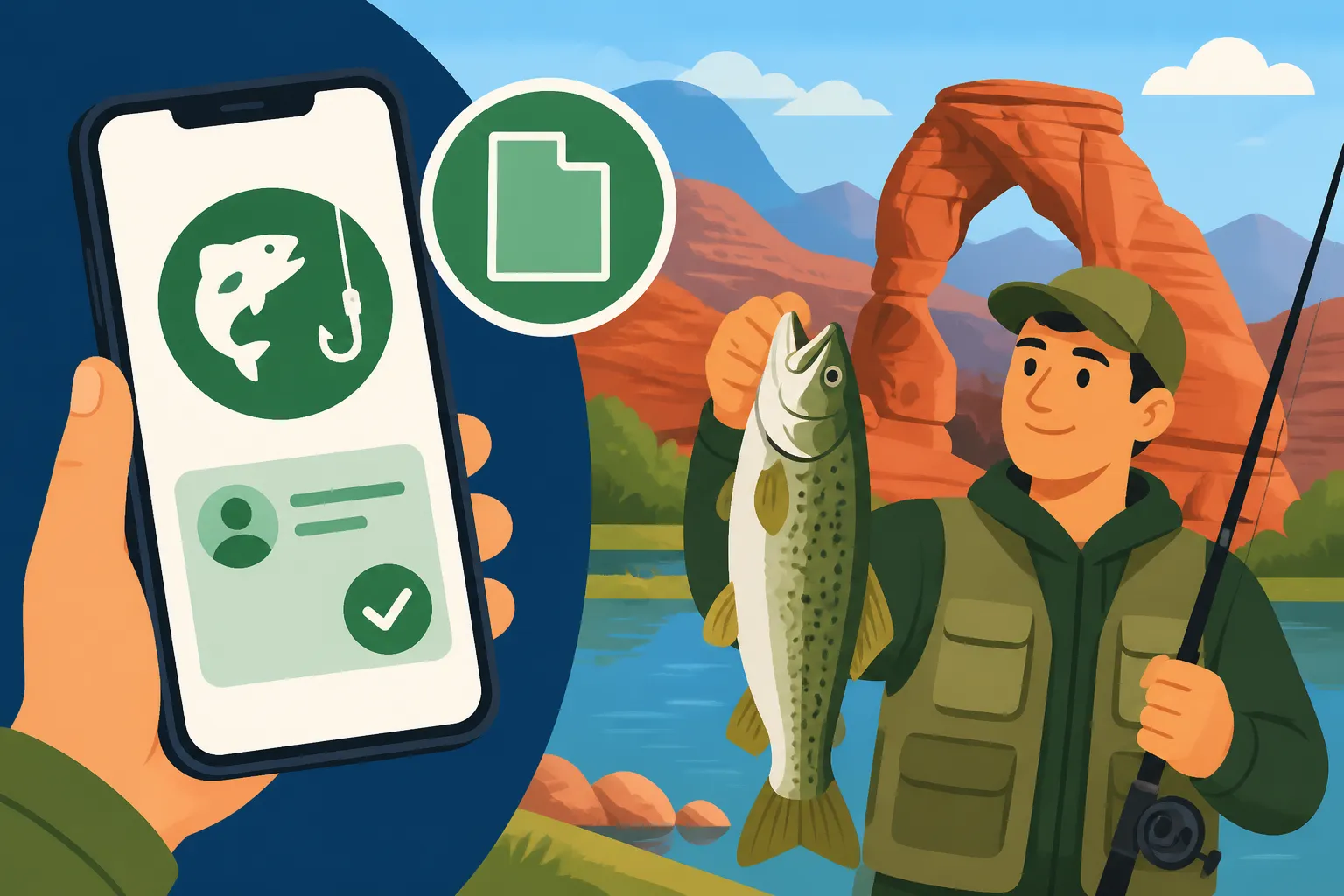
- Print or Save: After successful payment, you'll receive a confirmation email, and your license will be available for immediate printing. You can print a physical copy right then and there. Even better, you can often save a digital copy to your smartphone. Many anglers find it incredibly convenient to simply show their digital license on their phone to a DWR officer. For tips on how to keep your license handy, refer to How to Store a Utah Fishing License on Your Phone.
The online system is user-friendly and usually only takes a few minutes, getting you ready to fish almost instantly. It's especially handy if you decide on a spontaneous fishing trip and realize you need a license right before heading out. Our article on the Utah Fishing License Online Purchase Process provides even more detailed steps for navigating the system.
In-Person Retailers and DWR Offices
While online is popular, some people prefer the traditional route or need assistance. You can still purchase a Utah fishing license in person at various locations throughout the state.
- DWR Offices: The Utah Division of Wildlife Resources has several regional offices across Utah. Visiting one of these offices allows you to speak directly with DWR staff who can answer questions, help you choose the right license, and ensure all your paperwork is in order. It's an excellent option if you have complex residency questions or need clarification on specific regulations.
- Sporting Goods Stores: Many sporting goods retailers are authorized license agents for the DWR. Major chains like Cabela's, Sportsman's Warehouse, and even many smaller local tackle shops sell fishing licenses. These stores are often convenient, located in various towns, and their staff can usually process your license quickly. They are also great places to pick up any last-minute tackle or bait you might need. Sometimes, you can even find cool fishing gadgets or waterproof cases for your license on Amazon, though you'll be buying the license directly from the store.
Purchasing in person can be beneficial if you prefer a physical transaction, need immediate printing assistance, or just like the interaction with knowledgeable staff. Make sure to bring a valid form of identification (like a driver's license) and any proof of residency if you're a new resident or applying for a special discount. Our post, Where to Buy a Utah Fishing License in Person, lists common types of vendors.
Purchasing by Phone
While less common than online or in-person methods, you can also purchase a Utah fishing license over the phone. This option is particularly useful if you don't have internet access or prefer to speak with someone directly but can't make it to a physical location.
You can call the Utah DWR's main licensing number during business hours. A DWR representative will guide you through the process, ask for the necessary personal and payment information, and help you select the correct license type. After the purchase is complete, you'll typically receive a confirmation number, and your license will be available digitally or can be mailed to you. Remember, even if you purchase by phone, you'll still need to have your license readily available when fishing, whether that's a printed copy or a digital version on your device. For the most up-to-date contact information, including the exact phone number to call, refer to our article on the Utah Fishing License Phone Order Number.
Step-by-Step Guide to Completing Your Purchase
Regardless of whether you choose to buy your Utah fishing license online, in person, or by phone, having a clear understanding of the steps involved can make the process smooth and stress-free. Let's break down what you'll need and how to complete your purchase efficiently.
Gathering Necessary Information
Before you even start the purchase process, it's a good idea to have all your ducks in a row. Having the right information readily available will prevent delays and ensure accuracy.
You'll definitely need:
- Valid Identification: A current driver's license or state-issued ID card is typically required. This helps verify your identity and age.
- Residency Proof (if applicable): If you're a new resident or there's any ambiguity about your residency, be prepared to provide documentation. This could include your Utah driver's license (which usually suffices if it's been active for six months), voter registration card, or utility bills in your name at a Utah address.
- Payment Method: A credit or debit card is necessary for online and phone purchases, and most retailers accept cards as well as cash.
If you're buying a license for a specific category, such as a disabled veteran or senior, you'll also need to have the appropriate documentation ready to prove your eligibility. For example, disabled veterans will need official documentation verifying their service-connected disability. Taking a moment to gather these items beforehand will save you a lot of time and potential frustration during the actual purchase.
Navigating the Online Portal (DWR Licensing System)
If you're going the online route, the Utah DWR's licensing portal is designed to be user-friendly, but a quick walkthrough can still be helpful. This is often the preferred method for its speed and convenience.
- Access the DWR Website: Open your web browser and go to the official Utah DWR licensing portal.
- Login or Create Profile: If you have an existing DWR account, log in using your Customer ID or other credentials. If you're a new customer, click on "Create a new customer profile." You'll be prompted to enter your personal details. It's crucial to enter this information accurately, as it links your identity to your license.
- Choose "Buy Licenses": Once logged in or after creating your profile, look for an option like "Buy Licenses" or "Purchase Fishing License."
- Select License Type: The system will present you with various license options. Carefully select the one that applies to you (e.g., Annual Fishing, 3-Day Non-Resident Fishing, Youth Fishing). The system will automatically calculate the price based on your residency and age (if already in your profile).
- Review and Add to Cart: Before proceeding, review your selection and ensure it's correct. Add the license to your shopping cart. You might also have the option to add other permits or conservation permits at this stage.
- Checkout and Payment: Proceed to checkout. You'll be asked to confirm your personal information one last time. Enter your credit or debit card details. Remember, a small processing fee is typical for online transactions.
- Confirmation and Printing: Once the payment is processed, you'll receive a confirmation page and usually an email. This page will display your temporary license, which you can print immediately. You'll also have the option to download a digital copy to your phone. It's a good idea to do both – having a physical copy as a backup, perhaps laminated if you have a laminator or a pouch from Amazon, is never a bad idea, but the digital copy is often sufficient. Our comprehensive Utah Fishing License Guide delves into all the aspects of licenses, including how to efficiently navigate the online portal.
What to Do After Purchase
Congratulations, you've successfully purchased your Utah fishing license! But what next?
- Keep it Accessible: Whether you have a physical printout or a digital copy on your phone, ensure your license is easily accessible while you are fishing. DWR officers can and will ask to see it. A small waterproof wallet or a phone case with a clear window can be a great way to protect a printed license. You can even find these kinds of practical fishing accessories on Amazon to help keep your license safe.
- Understand the Regulations: Your license grants you permission to fish, but it doesn't exempt you from following the rules. Immediately after getting your license, take some time to review the current Utah Fishing Guidebook. This guide details bag limits, length restrictions, bait restrictions, seasonal closures, and special rules for specific waters. Regulations can change annually, so always use the most current version. Ignorance of the law is not an excuse for violations.
- Plan Your Trip: With your license in hand and regulations understood, you're ready to plan your next fishing adventure! Think about where you want to go, what species you're targeting, and what gear you'll need. Enjoy the waters of Utah responsibly!
Understanding License Validity and Renewal
It's one thing to get your license; it's another to understand how long it's good for and how to keep it current. Misunderstanding validity periods is a common reason anglers inadvertently fish without a valid license, leading to unnecessary complications.
Annual License Periods and Expiration
The most common Utah fishing license is the annual license, and it operates on a calendar year basis. This means that regardless of when you purchase it, an annual fishing license is valid from January 1st through December 31st of the year it was issued for.
This particular structure often catches people by surprise. If you buy your annual license in, say, August, it will still expire on December 31st of that same year, not one year from your purchase date. This is an important distinction to remember. For anglers who fish heavily in the latter half of the year, it might feel like you're getting less than a "full year" of fishing. However, for those who fish year-round, especially enjoying prime spring and summer fishing, buying it early in the year maximizes its value. This calendar-year system simplifies enforcement and tracking for the DWR. Make sure you're always aware of the expiration date to avoid any issues. For comprehensive details, our guide on When Does a Utah Annual Fishing License Expire? provides a clear breakdown.
Renewal Process and Reminders
Renewing your Utah fishing license is just as straightforward as purchasing a new one, thanks to the DWR's efficient systems. The good news is that if you've purchased a license before, your information is already in the DWR system, making renewal even faster.
- Online Renewal: This is the most popular method. Simply log back into your DWR online account as you would for an initial purchase. The system will usually show you your expired or soon-to-expire licenses and offer a renewal option. You select the license type for the upcoming year, confirm your details, and process your payment. It's a matter of minutes.
- In-Person Renewal: You can also renew your license at any authorized DWR vendor or DWR office. Just provide your existing customer ID or a previous license, and the staff can quickly process your renewal.
- Renewal Reminders: The DWR understands that life gets busy, and license expiration dates can slip your mind. They offer options for Utah Fishing License Renewal Reminder Options. You can usually opt-in to receive email or text message notifications when your license is approaching its expiration date. This is an incredibly helpful service that can prevent you from inadvertently fishing without a current license. Make sure your contact information in your DWR profile is up-to-date to receive these timely alerts.
Renewing your license promptly ensures continuous access to Utah's fisheries and avoids any last-minute scrambling or, worse, being caught without a valid license. Our detailed Utah Fishing License Renewal Guide offers even more insights into optimizing your renewal process.
Lost Licenses and Replacement
It happens to the best of us: you're out on the water, reach for your fishing license, and it's simply not there. Maybe it blew out of your vest pocket, fell out of your wallet, or went through the wash. Whatever the reason, losing your physical fishing license can be a moment of panic. Fortunately, replacing a lost Utah fishing license is usually quite simple.
- Digital Access: If you saved a digital copy to your phone or took a photo of it, you're likely covered. A digital image is generally accepted by DWR officers as proof of a valid license. This is why having a digital backup is always a smart move.
- Online Re-printing: Log back into your DWR online account. Your purchase history and active licenses are stored there. You can usually access and re-print your license at any time. This means you don't need to purchase a completely new license if you lose the physical copy; you just need to print another one. You can even print multiple copies if you want to keep one in your tackle box, one in your wallet, and one in your vehicle. For those without immediate access to a printer, even finding a local print shop or using a friend's printer can solve the problem quickly. Need some blank paper or ink? Amazon probably has you covered!
- In-Person Replacement: If you prefer, you can visit a DWR office or an authorized license agent, and they can look up your record and print you a replacement license for a small fee.
The key takeaway here is that your license information is tied to your customer profile, not just a physical card. So, while losing the paper copy can be inconvenient, it's rarely a major problem. For more detailed instructions, consult our guide on How to Replace a Lost Utah Fishing License.
Common Questions and Troubleshooting
Even with all the information at your fingertips, specific scenarios or unexpected issues can arise when dealing with fishing licenses. Let's tackle some of the most common questions and troubleshooting tips to ensure your experience is as smooth as possible.
Special Circumstances
Fishing rules sometimes have unique twists depending on who you are or where you're fishing.
- Kids Under 12: This is a common question! No, children under the age of 12 do not need a fishing license in Utah. This is fantastic news for families, making it easy and free to introduce very young kids to the joy of fishing. They can fish for free, but they still must abide by all other fishing regulations, such as bag limits and tackle restrictions. Our article, Do Kids Under 12 Need a Fishing License in Utah?, provides more clarity on this.
- Fishing Tribal Waters: This is a critical point of clarification. A Utah state fishing license is generally not valid on tribal lands or waters within Utah. For instance, if you plan to fish on the Ute Indian Reservation, you will need to purchase a separate fishing permit issued by the Ute Tribe Fish and Wildlife Department. These tribal permits are distinct from state licenses and have their own set of regulations. Always research the specific requirements for any tribal lands you plan to visit, as attempting to fish with only a state license on tribal waters could lead to severe penalties. Learn more about this distinction in our post: Is a Utah Fishing License Valid on Tribal Waters?.
- Fishing Private Ponds: As mentioned earlier, if you're fishing in a completely enclosed private pond with no public water connections, you typically don't need a state fishing license. However, you must have explicit permission from the landowner to be there. Trespassing is illegal, license or no license. If the private pond is stocked with fish from a state or federal hatchery, or if it has an inlet/outlet connected to public waters, then a state license may still be required. It's always best to clarify with the DWR if there's any doubt about a specific private water body.
What if You Make a Mistake?
Sometimes, you might realize you selected the wrong license type or made an error in your personal information after completing a purchase. Don't panic; there are often ways to rectify the situation.
- Refund/Cancellation Policy: The Utah DWR does have a refund and cancellation policy, but it's important to understand its limitations. Generally, refunds are not given for licenses that have already become valid or for licenses that have expired. There might be a small window for cancellation or refund shortly after purchase if the license hasn't yet been activated or used. However, it's not a guaranteed process, and a processing fee might be retained. Your best bet is to double-check everything before finalizing your purchase. If you do realize you made an error, contact the DWR licensing division as soon as possible to discuss your options. More details can be found in Utah Fishing License Refund and Cancellation Policy.
- Correcting Information: If you've made a minor error in your personal information (e.g., misspelled name, wrong address), you can usually log into your DWR online account and update your profile. For more significant errors or if you're unable to change it yourself, contacting the DWR directly is the quickest way to get it corrected. Keeping your profile accurate is important for future license purchases and for receiving any official communications.
Understanding Age Requirements and Pricing
Utah has a tiered pricing system for fishing licenses based on age and residency, making fishing more accessible for certain groups. This table provides a quick overview, but remember that specific costs can vary slightly year to year, so always check the DWR website for current pricing.
| License Type | Age Range | Residency | General Description |
|---|---|---|---|
| No License Required | Under 12 years | N/A | Free to fish, must follow regulations |
| Youth Annual | 12-17 years | Resident | Discounted annual license for young anglers |
| Annual Fishing | 18-64 years | Resident | Standard annual license for adult residents |
| Senior Annual | 65+ years | Resident | Discounted annual license for senior residents |
| Disabled Veteran | Any | Resident | Highly discounted for qualifying disabled veterans |
| Annual Fishing | 18+ years | Non-Resident | Standard annual license for adult non-residents (higher cost) |
| Non-Resident Youth | 12-17 years | Non-Resident | Discounted annual license for non-resident youth (higher than resident youth) |
| 3-Day Fishing | Any | Resident/Non-Resident | Short-term option, valid for 3 consecutive days |
| 7-Day Fishing | Any | Resident/Non-Resident | Short-term option, valid for 7 consecutive days |
| Combination License | Varies by age/residency | Resident/Non-Resident | Bundled fishing and hunting license, often more cost-effective |
This table highlights the DWR's commitment to making fishing accessible across different life stages. For instance, the Utah Fishing License Age Requirements and Utah Fishing License Age Cutoff for Adult Pricing are clearly defined to ensure everyone knows what applies to them. Always refer to the official DWR website or current guidebooks for the most precise and up-to-date pricing information for your specific age and residency.
Disclaimer
The information provided in this guide is intended for general informational purposes only and is subject to change. While we strive to offer accurate and current advice, fishing regulations, license costs, and purchasing procedures are ultimately set and enforced by the Utah Division of Wildlife Resources (DWR). It is always the angler's responsibility to consult the official Utah Fishing Guidebook and the DWR's official website or contact them directly for the most current and authoritative information before engaging in any fishing activities. Compliance with all state and local laws is mandatory.