Best Pliers for Removing Deep-Set Hooks
There’s almost nothing more frustrating for an angler than hooking a fish only to find the barb buried deep in its throat or gills. It's a moment that can quickly turn excitement into panic, not just for the fish's well-being but also for the struggle you know you're in for. This guide will walk you through everything you need to know about choosing the very best pliers designed specifically for removing those tricky, deep-set hooks, ensuring a safer and more humane release for your catch and less headache for you.
The Universal Frustration of Deep-Set Hooks
We’ve all been there, right? You feel that tell-tale tug, set the hook, and reel in a beautiful trout or a feisty bass. But as you get it to hand, your heart sinks a little. Instead of a nice, clean lip-hook, the hook is nowhere to be seen, or barely visible deep inside the fish's mouth. It's a common scenario that can ruin a perfectly good fishing moment and, more importantly, jeopardize the fish's survival if not handled correctly.
Why Hooks Go Deep in the First Place
Deep hooking isn't usually a sign of bad angling; it often comes down to the aggressive nature of the bite and sometimes the gear you're using. Many fish, especially species like trout, walleye, and even panfish, will engulf their prey whole and quickly. If you’re using bait or a slow-moving lure, they have more time to swallow it before you even feel the strike. Sometimes, it's just the angle of the hook-set or the size of the hook in relation to the fish's mouth. A small hook on a larger fish, or a sharp hook that easily slides past the lip, can just keep going. This is particularly common when using live bait or soft plastics that feel more natural to the fish, prompting them to hold on longer.
Imagine you're fishing for aggressive rainbow trout in a place like the Provo River, and they're hitting hard. If you're momentarily distracted or just a split second late on the hookset, that small jig or PowerBait can be swallowed deep before you react. Or perhaps you're trolling for kokanee salmon, and they hit with such force that the treble hook from your dodger-and-hoochie setup ends up in their gullet. These scenarios highlight why deep hooks are an unfortunate but frequent part of fishing, even for the most experienced among us.
The Dangers of Ineffective Hook Removal
Trying to remove a deeply embedded hook without the proper tools is a recipe for disaster. First and foremost, it significantly increases stress and potential injury to the fish. Yanking at a hook with your fingers or inadequate pliers can tear delicate tissues, damage gills, or even break the fish’s jaw. These injuries drastically reduce its chances of survival once released. For those of us who practice catch and release, this outcome is the exact opposite of our intention. The goal is always to send the fish back healthy and ready to fight another day, which is why How to Release a Fish Without Hurting It in Utah is such an important topic.
Beyond the harm to the fish, there's a very real danger to the angler. Sharp hooks, especially treble hooks, can easily embed themselves in your fingers or hand if you're fumbling around in a fish's mouth. Anyone who’s had to endure a trip to the emergency room to have a fishing hook removed knows this pain and inconvenience firsthand. It can turn a relaxing day on the water into a painful memory. Plus, the sheer frustration of struggling with a deep-set hook, knowing you're causing harm and risking injury, can sour an entire fishing trip. That's why having the right tool for the job is not just convenient; it's absolutely essential for both fish welfare and your own safety.
Essential Features of Top-Tier Hook Removal Pliers
When you're staring down a hook that's almost swallowed, your regular household pliers just won't cut it. You need something specifically designed for this delicate, yet often urgent, task. The best pliers for deep-set hooks combine precision, reach, and durability to make a tough job much easier.
Length and Jaw Design: Reaching Where Fingers Can't
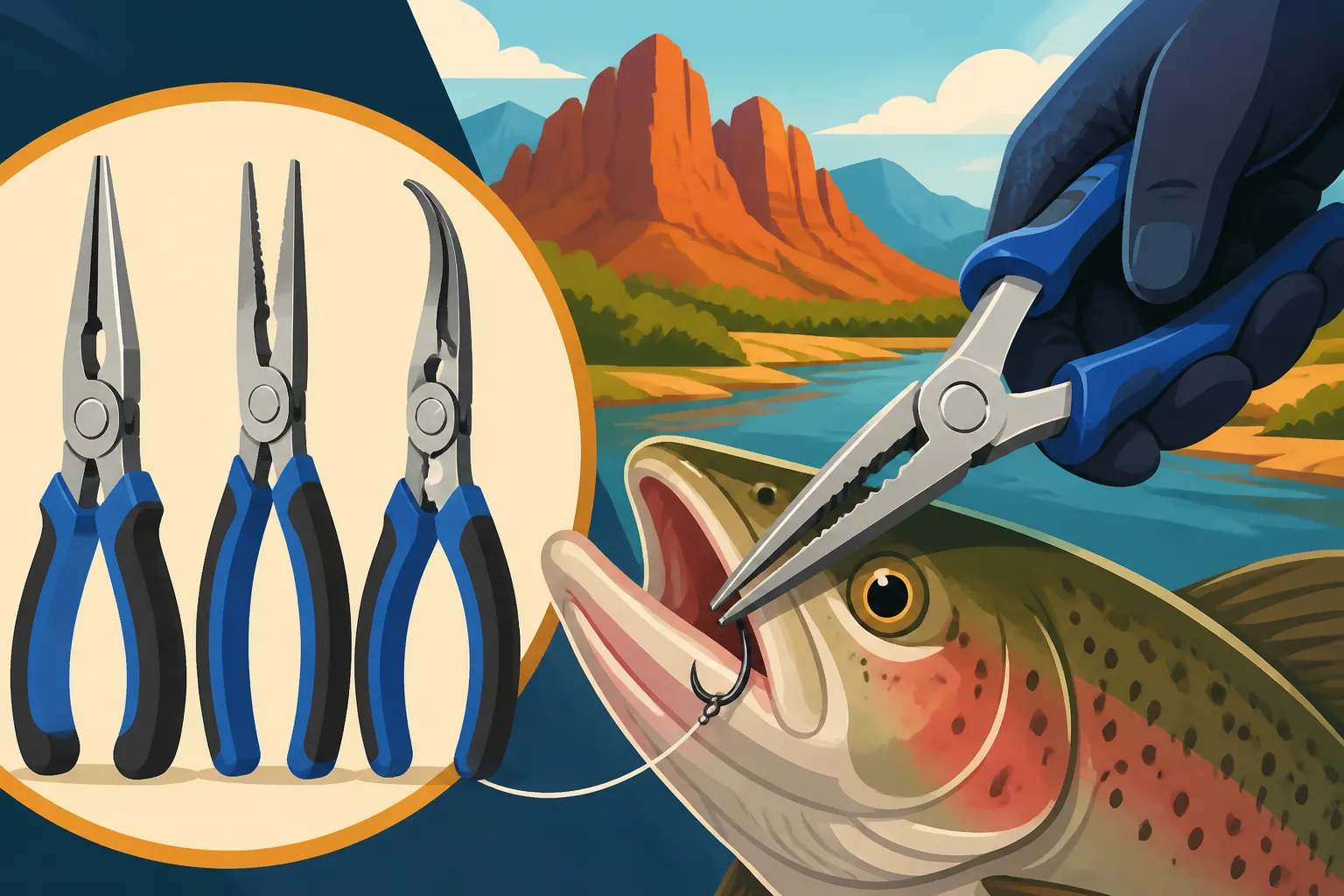
The absolute cornerstone of effective deep-hook removal pliers is their length and the design of their jaws. Standard pliers are too short, making it impossible to reach hooks beyond the lip. You need pliers with a long, slender nose that can comfortably extend into the fish's mouth without forcing it open excessively or causing unnecessary strain. Look for options that are at least 6-8 inches long, with some specialty tools stretching even longer.
The jaw design is equally crucial. Straight jaws are versatile, great for larger fish or hooks that aren’t too deep. However, for those really buried hooks, or when you need to maneuver around teeth or gills, a bent-nose design can be a game-changer. A slight curve or angle at the tip allows you to grip the hook from an awkward angle and apply pressure to back it out. Materials for the jaws themselves often include hardened steel or stainless steel, sometimes with serrated tips for a better grip on slick hooks. You'll often find these features in high-quality fishing pliers you might browse at places like Bass Pro Shops or even online at Amazon.
Grip, Durability, and Corrosion Resistance
Imagine trying to remove a hook from a slippery fish, with wet hands, and your pliers keep slipping. Not fun, right? That's why the handle design and grip material are critical. Ergonomic handles with non-slip rubber or textured grips provide comfort and control, even when your hands are cold, wet, or covered in fish slime. A secure grip prevents accidental slips that could harm you or the fish.
Durability is another non-negotiable feature. Fishing pliers take a beating; they're exposed to water, sun, and constant use. Look for construction from robust materials like aircraft-grade aluminum, stainless steel, or high-carbon steel. Aluminum is lightweight and highly corrosion-resistant, making it a favorite for many anglers, especially if you venture into environments like Bear Lake where the water has a higher mineral content. Stainless steel is also excellent but can be heavier. Regardless of the material, a good pair of pliers should resist rust and corrosion, maintaining its functionality over many seasons. Regular rinsing with fresh water and light oiling can prolong the life of any pair of pliers, but starting with corrosion-resistant materials is a huge advantage.
Additional Features That Make a Difference
While the primary job is hook removal, many top-tier fishing pliers come equipped with extra features that elevate them from simple tools to multi-purpose essentials in your Utah Fishing Gear Guide.
- Split Ring Pliers: Many lures, especially those with treble hooks, use split rings to attach hooks. Integrated split ring jaws on your pliers mean you don't need a separate tool to change out hooks or rings.
- Line Cutters: Sharp, replaceable carbide cutters are a fantastic addition. They can cleanly snip through mono, fluorocarbon, and even braided line with ease, saving you from fumbling for a separate pair of scissors or a knife. This is especially handy when you need to quickly re-tie a leader or if a snag forces you to cut your line.
- Lanyard and Sheath: A coiled lanyard allows you to tether your pliers to your belt, vest, or tackle box, preventing them from falling overboard or getting lost in the weeds. A durable sheath, often made of nylon or Kydex, protects the pliers when not in use and keeps them readily accessible. Having them close at hand is crucial when a fish is on the deck and time is of the essence.
- Spring-Loaded Jaws: This feature keeps the jaws open, ready for action, and reduces hand fatigue during repetitive tasks. It also allows for one-handed operation, which can be invaluable when you're trying to hold a wriggling fish with your other hand.
These thoughtful additions can make your fishing experience smoother and more efficient, making a good pair of pliers an invaluable part of your Best Tackle Boxes for Utah Anglers.
Types of Pliers Best Suited for Deep-Set Hooks
When it comes to extracting those stubborn, deep-seated hooks, not all pliers are created equal. The market offers a range of tools, each with its strengths. Understanding these differences will help you pick the perfect ally for your fishing adventures, whether you're targeting cutthroat in a mountain stream or walleye in Utah Lake.
Long-Nose Fishing Pliers
These are likely what most anglers picture when they think of fishing pliers, and for good reason. Long-nose pliers are the workhorses of the fishing world, and their extended reach makes them excellent for getting at hooks that are a bit further back than a typical pair of forceps. They come in various lengths, typically from 6 to 11 inches, offering a good balance of reach and leverage.
The jaws of long-nose pliers are generally robust, designed to withstand the torque required to twist out a stubborn hook. They often feature serrated tips for a better grip on the hook shank, preventing slippage, which is critical when a fish is thrashing. You can find them with both straight and bent jaws, giving you options depending on your preference and the typical scenarios you face. For general Utah fishing, whether it's for the trout that are commonly stocked in community ponds or the smallmouth bass at Flaming Gorge, a quality pair of long-nose pliers is incredibly versatile. Many anglers consider a good pair of these an absolute must-have in their What Gear Does a First-Time Utah Angler Need?. The main advantage is their strength and versatility, often incorporating those handy line cutters and split-ring features we discussed earlier. The only real drawback is that for extremely deep or tiny hooks, their jaws might still be a bit too thick, or their length just shy of what you need.
Hemostats (Forceps)
Ah, hemostats – the surgical instruments adopted by anglers! These slender, locking pliers are indispensable for those truly tiny or deeply swallowed hooks, especially when dealing with delicate fish or situations where minimal intrusion is paramount. Hemostats come in various lengths, often ranging from 5 to 10 inches, and their fine, needle-like tips can reach into the tightest spaces that bulkier long-nose pliers simply can't access.
The defining feature of hemostats is their locking mechanism, which allows you to clamp down on the hook and keep a secure grip, freeing up your hands to manage the fish. This is a huge advantage when you're trying to carefully rotate a hook out. They are fantastic for fly fishing on rivers like the Green River below Flaming Gorge, where you might be using tiny dry flies or nymphs that a trout gulps down. They are also perfect for smaller species like panfish or smaller trout. The downside? They generally aren't built for heavy-duty prying or leverage. Trying to remove a large, deep-set treble hook from a big walleye with hemostats might damage the tool or simply not provide enough strength. They're specialized tools, brilliant for precision but less suited for brute force.
Specialty Fishing Pliers and Tools
Beyond the common long-nose and hemostats, there's a world of specialized hook removal tools designed to tackle specific challenges. These often incorporate ergonomic designs or unique jaw configurations.
- Pistol-Grip Hook Removers: These tools, often brightly colored and made of plastic or anodized aluminum, offer a pistol-grip handle and a long, rigid shaft with a hook-gripping mechanism at the end. They're designed for one-handed operation, allowing you to quickly snag the hook and push it out. They excel at quickly dislodging hooks from toothy fish, like northern pike in Utah Lake, where you want to keep your fingers as far away from those sharp teeth as possible. Their ease of use can significantly reduce handling time, which is excellent for catch and release.
- Dedicated Hook Extractors: Some tools are designed with specific angles or plunger mechanisms to push a hook out. They typically require you to thread your line through a loop on the tool, slide it down to the hook, and then push. These are particularly effective for single hooks that are swallowed deep and don't require much twisting, aiming for a quick, clean release.
These specialty tools might not be as versatile as a good pair of long-nose pliers, but for the specific deep-hook scenarios they address, they can be exceptionally efficient and safe. They represent the cutting edge in humane hook removal and are worth considering if you frequently encounter specific types of deep-hooking challenges.
Choosing the Right Pliers for Your Utah Fishing Adventures
Selecting the perfect pair of pliers for deep-set hooks isn't a one-size-fits-all decision. Your choice should be guided by the type of fish you typically target, where you fish, and your budget. Thinking through these factors will help you make an informed decision and get the most out of your Utah Fishing Gear Guide.
Matching Pliers to Fish Species and Hook Size
The fish you're after dictates a lot about the pliers you'll need. If your passion is primarily chasing trout in Utah's high-mountain lakes or streams, where you might be using smaller hooks or flies, a pair of fine-tipped hemostats or long-nose pliers (6-7 inches) with slender jaws will be your best friend. They offer the precision needed to delicately remove hooks from smaller, more sensitive mouths. Utah Trout Species Guide details the various trout you might encounter, and each species, from a small brook trout to a larger cutthroat, benefits from careful handling.
However, if you're a fan of Utah Bass Fishing Techniques at larger reservoirs or going after walleye at Utah Lake, where fish often hit harder and deeper, you'll want something more robust. Larger, 8-10 inch long-nose pliers with sturdy jaws are better suited for handling larger fish and stronger hooks. For walleye, which often swallow lures aggressively, especially when jigging or trolling, Utah Walleye Fishing Guide will tell you they have rough mouths that can make hook removal tricky. Pliers with a strong grip and corrosion resistance become even more critical here, especially if you're pulling out treble hooks from crankbaits. And if you're venturing into waters where toothy critters like northern pike reside (like at Utah Lake, where mandatory harvest rules apply), specialized pistol-grip removers keep your fingers safe from their formidable teeth.
Considering Your Fishing Environment
Where you fish in Utah significantly impacts the type of pliers that will serve you best.
- Freshwater Lakes and Rivers: For most of Utah's pristine freshwater lakes and rivers, aluminum or stainless steel pliers with good corrosion resistance are excellent. The main concern here is regular exposure to water and general wear and tear. If you're wading rivers, you'll appreciate lightweight pliers that clip easily to a vest or pack.
- Boat Fishing: If you spend most of your time on a boat, whether it's on Strawberry Reservoir or Flaming Gorge, slightly larger, more feature-rich pliers might be preferred. You have more space to carry them, and the added leverage of longer pliers can be a blessing when trying to handle a large fish while the boat is rocking. A coiled lanyard is almost mandatory to prevent them from becoming an unfortunate offering to the fish gods.
- Shore Fishing & Urban Ponds: When fishing from shore or at community ponds, portability and simplicity are key. A compact, versatile pair of long-nose pliers that fits easily in a pocket or a small tackle bag is ideal. For these scenarios, you're often targeting stocked trout or panfish, so precision is still important, but extreme length might be less critical than when reaching into the maw of a trophy lake trout.
- Unique Waters (like Bear Lake): While most of Utah's fishing is freshwater, a unique spot like Bear Lake, known for its Bonneville cisco and cutthroat, has water with a higher mineral content. While not "saltwater," choosing pliers with excellent corrosion resistance is still a wise move to ensure longevity, especially if you plan on visiting regularly. Our Bear Lake Fishing Guide can tell you more about this unique fishery.
Budget and Brand Considerations
Fishing gear, including pliers, ranges widely in price. You can find basic pliers for a modest sum, and high-end, feature-packed models that represent a significant investment. My advice? This is one area where you generally get what you pay for. A cheap pair of pliers might get you by for a few trips, but they'll likely rust, break, or simply be ineffective when you need them most. Investing in a quality pair from a reputable brand will save you frustration and money in the long run.
Brands like KastKing, Piscifun, and Dr. Slick (especially for hemostats) are well-regarded in the fishing community for offering durable, functional pliers. While I can't give you exact prices, you can find a wide range of options at different price points by checking out retailers like Bass Pro Shops or browsing the extensive selections on Amazon. Consider what features are most important to you based on your fishing style, and then look for the best quality within your budget. Remember, a reliable tool that ensures the humane release of fish is worth the investment.
Comparison of Pliers Types for Deep-Set Hooks
To help you visualize the differences, here's a quick comparison of the main types of pliers we've discussed, highlighting their strengths and ideal uses for deep-set hook removal.
| Pliers Type | Primary Strength | Ideal Hook Size | Ideal Fish Species | Key Feature / Best Use | Potential Drawback |
|---|---|---|---|---|---|
| Long-Nose Pliers | Versatility, good reach, leverage | Small to Medium | Trout, Bass, Walleye, Panfish | General purpose, often includes cutters | Can be too bulky for very tiny or deep hooks |
| Hemostats (Forceps) | Precision, fine tips, locking grip | Very Small to Small | Trout, Panfish, delicate species | Delicate work, small hooks, minimal intrusion | Limited leverage, not for heavy-duty tasks |
| Pistol-Grip Removers | Safety, quick release, keeps hands away from teeth | Medium to Large | Pike, Walleye, aggressive species | One-handed operation, excellent for toothy fish | Less versatile, less precise for small hooks |
| Dedicated Extractors | Efficient for single, swallowed hooks | Small to Medium | Trout, Bass, Panfish | Minimizes handling, quick push-out action | Specific design for certain hook types only |
Best Practices for Humane Hook Removal
Having the right pliers is only half the battle; knowing how to use them effectively and humanely is just as important. Our shared goal as anglers is to enjoy our sport while also respecting the fish and the environment.
The "Catch and Release" Ethic and Pliers
For many of us, fishing isn't just about the harvest; it's about the experience, the challenge, and the connection to nature. The catch and release ethic is central to preserving fish populations and ensuring future generations can enjoy the same opportunities we do. When you decide to release a fish, every action you take matters. Minimizing stress and injury to the fish is paramount. This means keeping the fish in the water as much as possible, handling it gently with wet hands, and, crucially, removing the hook as quickly and cleanly as possible. Your choice of pliers directly contributes to this. Fine-tipped pliers or hemostats allow for precise manipulation, reducing the time the fish is out of water or being handled, thus improving its chances of survival. This proactive approach is a cornerstone of responsible angling and something we encourage every angler to embrace. It truly makes a difference.
Step-by-Step Deep-Set Hook Removal
Even with the best pliers, a deep-set hook can be intimidating. Here's a step-by-step guide to help you remove it efficiently and humanely:
- Prepare for the Release: Before you even bring the fish in, have your pliers ready and easily accessible. Wet your hands thoroughly to protect the fish's slime coat. If possible, keep the fish in the water, or in a net partially submerged, throughout the process.
- Secure the Fish: Gently but firmly hold the fish. For most species, a gentle grip around the base of the tail and another under the chin (avoiding the gills) works well. For toothy species, consider a lip-gripping tool if you have one, or secure its head firmly to prevent sudden thrashing.
- Locate the Hook: Carefully open the fish's mouth to get a clear view of the hook. If it's very deep, you might need to use a flashlight or tilt the fish to get enough light. Assess the hook's angle and how it's embedded.
- Grip the Hook Shank: Insert your long-nose pliers or hemostats carefully into the fish's mouth. Aim to grip the bend or shank of the hook, as close to the point as possible, not the line. Make sure you have a firm, secure grip.
- Rotate and Back Out: Once you have a firm grip, gently but deliberately rotate the hook to dislodge the barb. Often, this means turning the hook so the point faces downwards, then pushing it backward along the path it entered. Avoid pulling directly outwards with force, as this can tear tissue. Instead, use a controlled twisting and backing-out motion. If you're using hemostats, the locking mechanism allows you to maintain pressure while you maneuver.
- Check for Damage: After the hook is removed, quickly inspect the fish's mouth and gills for any significant bleeding or damage. A small amount of blood is sometimes unavoidable, but excessive bleeding indicates a more serious injury.
- Release with Care: Gently place the fish back into the water, supporting it until it swims away on its own. If the fish seems sluggish, hold it upright in the current or move it gently back and forth to push water over its gills until it regains strength.
Practicing these steps, combined with the right tools, will make a world of difference for both you and the fish, aligning perfectly with the principles of How to Release a Fish Without Hurting It in Utah.
Conclusion
Dealing with a deep-set hook doesn't have to be a frustrating or damaging experience. With the right set of pliers – whether it's a versatile pair of long-nose pliers, precise hemostats, or a specialized pistol-grip remover – you can confidently and humanely extract those stubborn hooks. It's an essential part of responsible angling, ensuring the well-being of the fish and preventing unnecessary injury to yourself. Investing in quality hook removal pliers isn't just about having another tool in your tackle box; it's about being prepared for anything Utah's waters throw at you, and upholding the catch and release ethic that makes our sport so fulfilling.
Disclaimer
This article is for general informational purposes only and does not constitute professional advice. Laws, prices and regulations vary by location and change over time. Consult a qualified professional for guidance on your specific situation.