Best Downrigger Setup for Flaming Gorge Lake Trout
Trying to target those elusive, monster lake trout in the deep, cold waters of Flaming Gorge Reservoir can be incredibly frustrating if you don't have the right equipment. They often hold in very specific depth ranges, making conventional casting a futile effort. This guide will walk you through everything you need to know about setting up and using downriggers effectively to get your lures right in front of those trophy Mackinaw, drastically increasing your chances of a successful outing.
Understanding Lake Trout Behavior and Downrigger Basics at Flaming Gorge
Flaming Gorge is renowned for its trophy lake trout, often called Mackinaw, which can grow to immense sizes. But these giants don't just hang out near the surface waiting for a casual angler. They prefer the cold, oxygen-rich waters of the deeper parts of the reservoir, often congregating around submerged structures, deep points, and temperature breaks. Getting your lure down to these depths – sometimes 50, 100, or even 200 feet deep – and keeping it there consistently is the biggest challenge, and it's precisely where downriggers become absolutely indispensable. Without them, you're mostly just guessing and hoping, which isn't a strategy for consistent success on a body of water as vast and deep as Flaming Gorge.
Why Downriggers Are Essential for Deep-Water Lake Trout
When you’re fishing for lake trout at Flaming Gorge, especially during the warmer months, these fish will retreat to the deepest, coolest parts of the reservoir. They're often found hugging the bottom or suspended over deep water, sometimes in tight schools. Standard trolling methods, even with heavy lead core line or snap weights, struggle to reach and maintain these precise depths consistently. Your lure might dive somewhat, but it will wander significantly with boat speed changes, currents, and even turns. This inconsistency means your bait is only in the strike zone for fleeting moments, if at all.
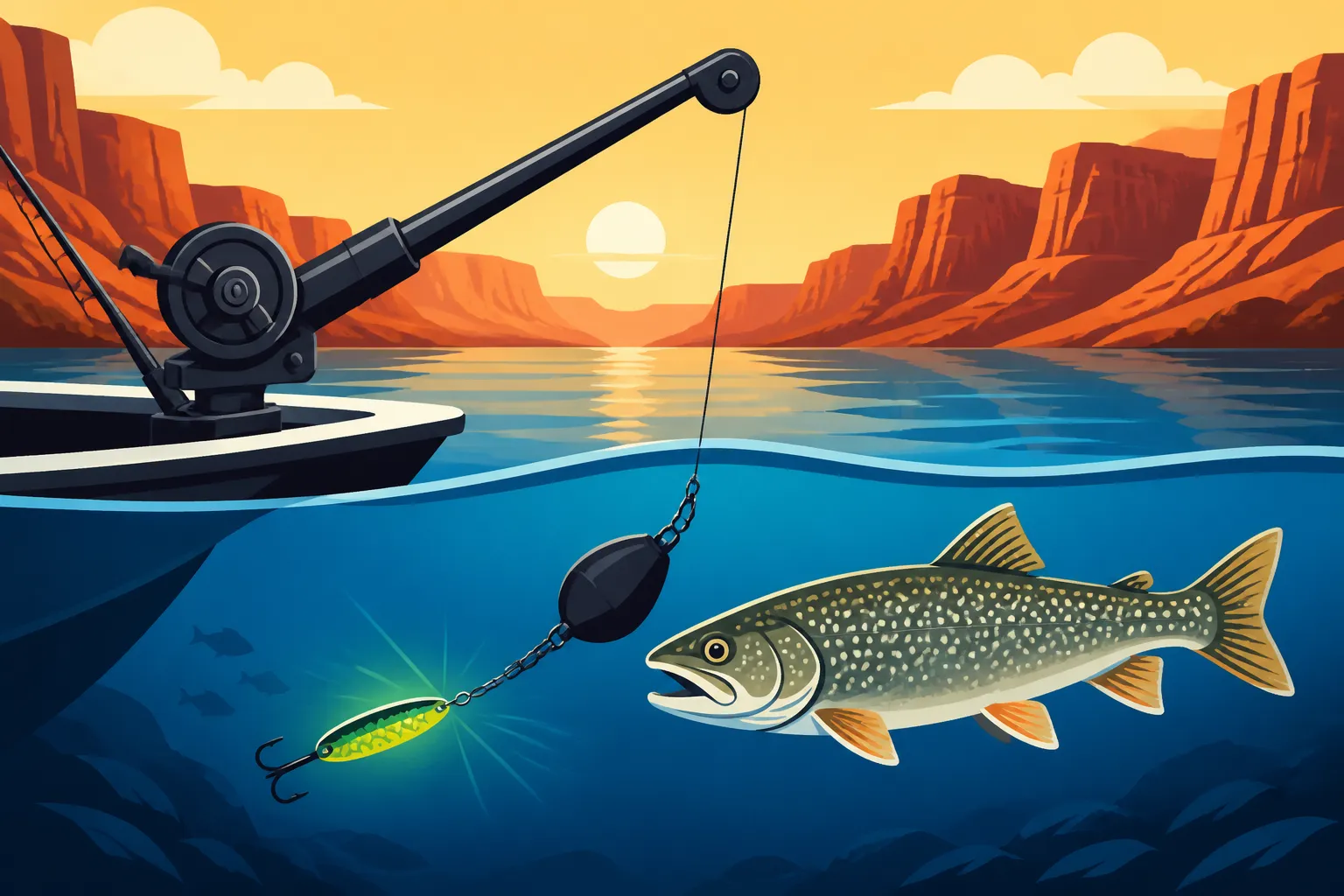
Downriggers solve this problem by providing a direct, controlled method to present your lure at an exact depth. They utilize a heavy lead ball, often referred to as a "downrigger ball" or "cannonball," attached to a cable, which pulls your fishing line and lure down to a predetermined depth. Your fishing line is then clipped to the downrigger cable with a special release clip, allowing your lure to swim freely a set distance behind the ball. This precise depth control is paramount when lake trout are holding tight to specific contours or thermoclines, enabling you to put your presentation right in their face without guesswork. You can read more about How to Fish Deep Water for Summer Lake Trout to understand why this depth control is so critical.
Key Components of a Downrigger System
To really understand how to best set up your downrigger for Flaming Gorge, it's helpful to break down the system into its core components. Each piece plays a vital role in getting your lure to the desired depth and presenting it effectively. Missing or mismatching any of these parts can lead to frustration and lost fish.
First, you have the downrigger unit itself. This is the main piece of equipment, typically mounted to your boat, which houses the spool of cable, the cranking mechanism (manual or electric), and the boom arm. The unit's boom arm extends out from the boat, keeping the downrigger ball and your fishing line away from the prop wash and other lines. The strength and length of this boom can be important, especially if you're running multiple downriggers or need to clear a wide boat transom.
Next is the downrigger cable, usually made of stainless steel wire or heavy-duty braided line. This cable is spooled onto the downrigger unit and is responsible for lowering and raising the downrigger ball. You'll also need the downrigger ball itself. These heavy lead weights come in various sizes, typically ranging from 8 to 15 pounds, with heavier balls being necessary for deeper depths, faster trolling speeds, or when using larger, more resistant lures. The shape of the ball, whether a round cannonball, a finned "pancake," or a torpedo, can also influence how well it tracks in the water and resists blowback.
Finally, and crucially, you'll need release clips. These small but mighty devices attach your fishing line to the downrigger cable. When a fish strikes your lure, the tension causes the release clip to open, "releasing" your fishing line from the downrigger cable, allowing you to fight the fish directly on your rod and reel. There are various types of release clips, from simple pinch clips to adjustable tension models, and choosing the right one can make a big difference in detecting subtle bites and preventing false releases.
Choosing the Right Downrigger System for Flaming Gorge
Selecting the right downrigger system involves several considerations, from how much effort you want to expend to the specific depths you plan to target. Flaming Gorge's immense depths and potentially windy conditions mean that robust, reliable equipment is always a wise investment. Don't skimp on quality here; it will pay off in the long run.
Manual vs. Electric Downriggers
When it comes to downriggers, the most fundamental choice you'll make is between manual and electric models. Each has its pros and cons, and your decision will likely depend on your budget, fishing style, and how often you plan to adjust depths.
Manual downriggers are typically more affordable and require you to crank a handle to raise and lower the downrigger ball. For anglers who only use one or two downriggers occasionally, or who primarily fish shallower depths, a manual system can be perfectly adequate. They are simpler mechanically, meaning less can go wrong, and they don't require any electrical rigging. However, repeatedly cranking a heavy downrigger ball from 100+ feet down, especially when running multiple lines, can become quite a workout. It can also be challenging to precisely hit and hold depths while simultaneously steering the boat and managing other lines, especially when you're hitting specific structure found on your fish finder.
Electric downriggers, on the other hand, offer unparalleled convenience and precision. With the push of a button, you can raise or lower your downrigger ball, and many models feature digital depth counters and even auto-stop functions. This allows you to quickly adjust to changing fish depths, retrieve lines for checking bait, or bring them up when moving to a new spot, all with minimal effort. For serious lake trout anglers at Flaming Gorge, especially those running multiple downriggers or frequently changing depths to chase fish on the graph, electric downriggers are often the preferred choice. Brands like Cannon and Scotty are popular and widely available at stores like Bass Pro Shops or online at Amazon, offering a range of electric models from entry-level to advanced. Their ease of use allows you to focus more on boat control and fish finding, which is crucial when deep trolling.
Considerations for Cable Length and Weight of Downrigger Balls
Flaming Gorge is deep, very deep. Some areas drop to hundreds of feet. While lake trout might be found shallower in spring and fall, during the peak summer months, they can easily be holding at 80, 100, 150 feet, or even deeper. This means your downrigger setup needs to be equipped to handle these extreme depths.
When choosing your downrigger cable, ensure it's rated for at least 200-300 feet of usable length. While you might not always fish that deep, it's better to have more than you need. The standard cable is stainless steel wire, known for its strength and minimal stretch. However, some anglers prefer braided line for its ease of handling and reduced hum in the water, although it can be more prone to tangles if not managed carefully. Whichever you choose, check it regularly for frays or damage, as a lost downrigger ball can be a real headache.
For downrigger balls, you'll want to lean towards the heavier side for Flaming Gorge. While 8-pound balls might suffice for shallower applications or very slow trolling, a 10-pound or even 12-pound ball is often a better choice for maintaining depth and minimizing "blowback" (where the cable trails significantly behind the boat due to water resistance) at typical lake trout trolling speeds. Some anglers even opt for 15-pound balls when targeting extreme depths or during faster trolling runs for other species like kokanee salmon, though for lake trout, precision is usually more important than speed. A heavier ball will track more vertically, giving you a truer depth reading and more consistent lure presentation. You can find a good selection of these at outdoor retailers, or browse options for various weights and shapes online at Amazon.
Selecting Release Clips and Terminal Tackle
The release clip is the crucial connection between your downrigger cable and your fishing line. Its job is to hold your line securely until a fish bites, then release it cleanly so you can fight the fish unencumbered. The right choice depends on the type of fishing line you're using, the size of your lure, and the target species. For Flaming Gorge lake trout, you're often dealing with larger fish and sometimes heavier tackle.
There are several types of release clips. Stacker releases allow you to run multiple lines off a single downrigger cable, which can be advantageous for covering more of the water column, but make sure your local regulations on the number of rods allowed are followed. Adjustable tension clips are very popular, allowing you to fine-tune how much pressure is needed to release the line. For small lures and subtle bites, you might set a lighter tension, while for large spoons or stickbaits that create more drag, you'd increase the tension to prevent false releases. You want enough tension to keep the line from releasing prematurely from the lure's action or boat movement, but not so much that a smaller fish can't pull it free.
Beyond the release clip, your terminal tackle – the leader, swivels, and snaps – needs to be robust enough for powerful lake trout. Many anglers opt for fluorocarbon leaders of 15-30 pound test, which are virtually invisible underwater and offer good abrasion resistance against the trout's sharp teeth or rough bottom structures. Quality ball-bearing swivels are essential to prevent line twist from rotating lures, and strong snaps make changing lures quick and easy. Don't skimp on these small components; a trophy fish can easily exploit a weak link in your setup.
Setting Up Your Downrigger for Success
Once you have your downrigger system, proper installation and rigging are key to making it work efficiently on the water. A well-set-up downrigger will be easy to operate, reduce tangles, and ultimately help you catch more fish at Flaming Gorge.
Mounting and Installation Tips
Properly mounting your downrigger unit to your boat is the first and perhaps most critical step. Downriggers, especially with heavy balls and the force exerted by trolling, put a significant strain on the mounting point. You'll want a sturdy, reinforced transom mount, gunwale clamp, or track system that can handle the stress. If you're drilling into your boat, ensure you use backing plates and sealant to prevent leaks and distribute the load. Many boats, especially those designed for trolling, come with factory-installed downrigger bases or track systems that make installation much easier.
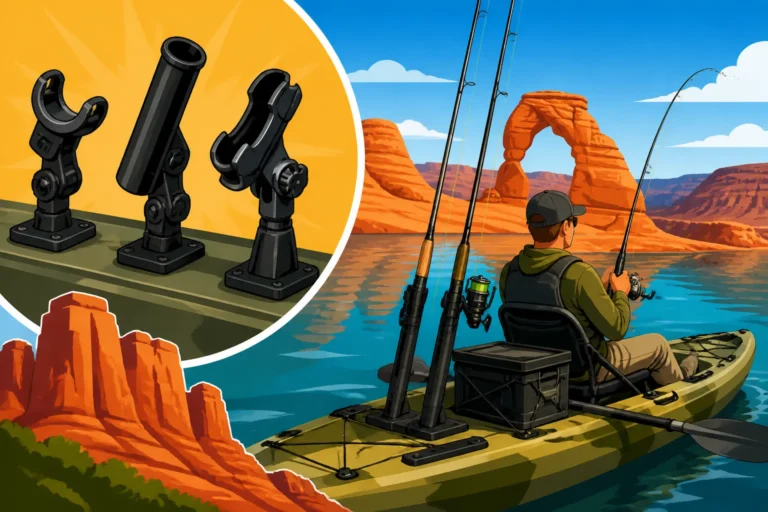
Consider the placement carefully. You want the downrigger to be accessible for easy operation and line clipping, but also far enough away from the transom to prevent the downrigger ball or fishing line from tangling with your motor or prop. Many anglers prefer to mount downriggers on each side of the boat, near the stern, with boom arms extending out. If you're running multiple downriggers, consider how they will interact with each other and with your fishing rods. Some anglers use longer booms on their outer downriggers to create more spread, preventing lines from crossing. A popular choice is a universal mount that can quickly attach and detach, which can be found at Bass Pro Shops or other marine retailers.
Rigging Your Fishing Rod and Lure for Downrigger Use
While the downrigger handles the depth, your fishing rod and reel are still essential for the fight. For Flaming Gorge lake trout, you'll want a medium-heavy to heavy action trolling rod, typically 7 to 9 feet long, with a moderate flex. This allows the rod to absorb the shock of the strike when the line releases from the clip and provides enough backbone to fight large fish. A good quality baitcasting reel spooled with 20-30 pound monofilament or braid is standard, allowing for strong hooksets and sufficient line capacity for long runs. When choosing your line, remember that Best Fishing Line for Utah Trout often means something robust enough to handle these powerful fish.
Your lure choice for Flaming Gorge lake trout is also critical. Popular options include large spoons (like Northern King, Doctor Spoon, or Gibbs spoons), stickbaits (like Rapala deep divers), tube jigs, and plastic swimbaits. Match your lure size to the size of the forage base in Flaming Gorge, which often includes kokanee salmon, chub, and minnows. Use a strong leader, usually fluorocarbon, tied to your main line with a robust knot (like a blood knot or double uni knot) and then a quality snap swivel to attach your lure. The leader length should be sufficient to allow your lure to swim naturally away from the downrigger ball, typically 6-15 feet, depending on the lure type and water clarity.
Mastering Depth Control and Trolling Speed
Precise depth control is the whole point of a downrigger, and it's something you'll continually adjust based on your fish finder readings and fishing conditions at Flaming Gorge. Modern electric downriggers often have digital counters, making it easy to know your exact depth. With manual downriggers, you'll rely on counting cranks or watching a mechanical counter. Remember that blowback will cause your downrigger ball to be shallower than the amount of cable you have out, especially at faster speeds. Heavier balls and slower speeds reduce blowback.
Your trolling speed is another critical factor. Lake trout in Flaming Gorge often prefer slower speeds, typically 1.5 to 2.5 miles per hour, but this can vary. Watch your fish finder for schools of baitfish or marks of larger fish, and try to present your lure slightly above or directly through them. Varying your speed slightly can sometimes trigger a strike, making your lure appear more erratic and appealing. Pay close attention to how your lure is performing at different speeds; some lures have a specific action that works best within a narrow speed range. Adjusting speed is part of what makes Utah Trolling Techniques for Lake Trout so effective.
Advanced Downrigger Techniques and Troubleshooting
Once you've got the basics down, there are several advanced techniques and troubleshooting tips that can further improve your downrigger fishing success at Flaming Gorge. These focus on integrating technology, problem-solving, and maximizing your presentation.
Reading Your Fish Finder with Downriggers
Your fish finder isn't just for locating fish; it's an indispensable tool for effectively using downriggers. A good fish finder will show you not only the depth of the bottom but also baitfish schools, individual large fish (including lake trout), and even the thermocline (the layer where water temperature changes rapidly, often a key holding area for fish). Many modern fish finders are powerful enough to even detect your downrigger ball, allowing you to visually confirm your lure's depth in relation to the fish or structure you're targeting. For more details, refer to How to Read a Fish Finder for Utah Reservoirs.
Use your fish finder to identify key depths where fish are present. If you see a school of lake trout at 120 feet, you can quickly adjust your downrigger to put your lure right there. Pay attention to how the bottom contours change; lake trout often relate to underwater points, humps, and ledges. Your fish finder can also help you identify submerged timber or rock piles that might snag your downrigger ball, allowing you to raise it temporarily or steer clear. Having a GPS integrated with your fish finder is a huge advantage for marking productive spots and navigating back to them. Knowing Best Fish Finders for Utah Reservoirs can significantly improve your success.
Dealing with Snags and Common Downrigger Issues
Snags are an inevitable part of deep-water trolling, especially when fishing near structure. If your downrigger ball gets snagged, immediately stop the boat, if safe to do so. Often, reversing course slowly can free the ball. If that doesn't work, try letting out a little more cable and then pulling it sharply. If all else fails, you may have to cut your cable and sacrifice the downrigger ball, which is why having spares is a good idea. To minimize snags, familiarize yourself with the underwater topography of Flaming Gorge, using your map plotter and fish finder.
Other common downrigger issues include tangled lines, especially when turning, or false releases. To prevent tangles, ensure your boom arms are extended adequately and that your rod tips are spread out. When making turns, slow down slightly and try to keep an eye on your lines. False releases usually indicate that your release clip tension is too light for your lure's action or trolling speed. Adjust the tension gradually until it holds reliably but still releases with a fish strike. It's a delicate balance that often requires some on-the-water experimentation.
Multi-Rod Downrigger Spreads
For anglers serious about maximizing their chances at Flaming Gorge, running a multi-rod downrigger spread is a common and effective strategy. This allows you to cover more of the water column and present different lure types or colors simultaneously, helping you determine what the fish are keying in on that day. However, running multiple lines requires careful planning and execution to avoid tangles.
A typical spread might involve two downriggers, one on each side of the boat, set at different depths. For example, one might be at 100 feet and the other at 120 feet, targeting fish that are spread out vertically. You can also use stacker releases to run a second lure higher up off each downrigger cable, effectively putting four lures in the water with just two downriggers. Beyond downriggers, some anglers will run additional rods off planer boards or simply flat-line troll directly behind the boat with lead core or diving planners to cover shallower water, especially in low-light conditions. Just be sure to check Utah Daily Bag and Possession Limits and how many rods are permitted per angler. Understanding Best Boat Setup for Trolling at Flaming Gorge can help you visualize and implement these multi-rod setups effectively.
Downrigger Ball and Cable Maintenance
Your downrigger system is an investment, and proper maintenance will ensure it performs reliably season after season, especially in the demanding environment of Flaming Gorge. Neglecting simple care steps can lead to equipment failure, lost gear, and missed fishing opportunities.
Routine Cleaning and Inspection
After every outing on Flaming Gorge, especially if you've been in dusty or windy conditions, take a few minutes to clean your downrigger units. A simple rinse with fresh water, followed by wiping them down, will remove any grime, salt, or debris that can cause corrosion or wear. Pay particular attention to the moving parts, such as the reel spool, boom arm hinges, and the cable guide. Keeping these areas clean and free of grit will ensure smooth operation and extend the life of your unit.
Beyond cleaning, a thorough visual inspection is crucial. Check the downrigger cable for any signs of fraying, kinks, or rust. Stainless steel cable can develop small burrs over time, which can weaken it. If you notice significant damage, it's always best to replace the cable rather than risk losing a downrigger ball or, worse, a trophy fish. Inspect your release clips for wear and tear, ensuring they still hold tension properly and aren't corroded. Also, check all mounting bolts to make sure they are tight and secure. Address any issues promptly; a small problem can quickly escalate into a major headache on the water.
Lubrication and Storage Tips
Just like any mechanical equipment with moving parts, your downriggers will benefit from regular lubrication. Consult your downrigger's manual for specific lubrication points and recommended products. Typically, you'll want to apply a marine-grade grease or oil to gears, pivots, and any other friction points. This helps prevent corrosion, reduces wear, and ensures smooth operation, especially important for manual downriggers that rely on consistent cranking. Proper lubrication is key to extending the lifespan of internal components, especially if you're battling the elements on a large body of water like Flaming Gorge.
When storing your downriggers, whether for a short period between trips or for the off-season, take steps to protect them. If your downriggers are detachable, removing them from the boat and storing them indoors in a dry, temperate environment is ideal. If they remain on the boat, consider using protective covers to shield them from UV rays, dust, and moisture. Store downrigger balls separately or secured so they don't swing around and damage other equipment. Ensure the downrigger cables are spooled neatly and free of tangles. Proper storage not only preserves your equipment but also means less prep time for your next fishing adventure.
| Downrigger Component | Purpose | Key Considerations for Flaming Gorge | Maintenance Tip |
|---|---|---|---|
| Unit (Electric/Manual) | Lowers/raises downrigger ball | Electric preferred for deep water & convenience | Rinse, inspect mounts, lubricate gears |
| Cable | Connects unit to downrigger ball | 200-300+ ft stainless steel or strong braid needed | Inspect for frays, replace if damaged |
| Downrigger Ball | Provides weight to reach depth | 10-12+ lbs for deep water, faster trolling, less blowback | Check attachment points, have spares |
| Release Clip | Attaches fishing line to cable, releases on strike | Adjustable tension for varied lure/fish size; stackers for multiple lines | Test tension, clean, ensure smooth release |
| Rod & Reel | Fights the fish after release | Medium-heavy to heavy action rod, baitcasting reel, 20-30lb line | Keep drag set properly, inspect guides and line |
| Lures | Attracts fish | Large spoons, stickbaits, tube jigs matching forage fish | Check hooks for sharpness, store cleanly |
| Terminal Tackle | Leaders, swivels, snaps | Strong fluorocarbon leaders (15-30lb), quality swivels/snaps | Inspect for wear, replace weak components |
Disclaimer
This article is for general informational purposes only and does not constitute professional advice. Laws, prices and regulations vary by location and change over time. Consult a qualified professional for guidance on your specific situation.