Best Rod Length for Ice Fishing in Utah
Stepping onto the hardwater for a day of ice fishing in Utah is an experience unlike any other. The crisp air, the vast, frozen landscape, and the anticipation of a tug on your line are simply magical. But if you've ever found yourself staring at a wall of ice fishing rods, wondering which one is actually going to make a difference in your success, you're not alone. Choosing the right rod length for Utah's diverse ice fishing opportunities, from chasing panfish in a community pond to battling giant lake trout at Flaming Gorge, can feel like a riddle. This guide is here to untangle that knot, helping you understand why rod length matters and how to pick the perfect one for your next frozen adventure.
The Crucial Role of Ice Fishing Rod Length
It might seem like a minor detail, but the length of your ice fishing rod plays a monumental role in everything from your casting (or rather, jigging) accuracy to your ability to fight a fish, especially in the unique environment of an ice shanty. Unlike open-water fishing, where you often have a wide-open casting arc, ice fishing typically confines you to a relatively small hole in the ice, often within the tight quarters of a portable shelter. This drastically changes the game when it comes to rod selection.
A longer rod, for instance, gives you more leverage and a smoother, more forgiving fight when a big fish is on the line. It also allows you to spread out your lines more effectively if you're using multiple holes, preventing tangles. However, that same long rod can be a real headache in a cramped ice shelter, constantly bumping the roof or walls, making it awkward to handle and set the hook. Conversely, a shorter rod offers exceptional sensitivity and maneuverability, perfect for subtly jigging small lures or detecting those incredibly light bites from finicky fish. But try to land a hefty lake trout on a tiny 24-inch ultralight, and you'll quickly understand the limitations. It's a balance, and finding that sweet spot means considering your target species, fishing style, and the conditions you'll be facing on the ice. Best Rods for Ice Fishing in Utah delves deeper into the overall rod choices.
Matching Rod Length to Utah's Diverse Ice Fisheries and Target Species
Utah is a dream come true for ice anglers, offering everything from abundant panfish to monstrous trophy trout. Because of this variety, a "one-size-fits-all" rod simply doesn't cut it. What works for a feisty perch at Pineview will be woefully inadequate for a deep-water Mackinaw at Flaming Gorge. Let's break down the typical scenarios and what rod lengths shine in each.
Shorter Rods 24-30 Inches: Precision for Panfish and Smaller Trout
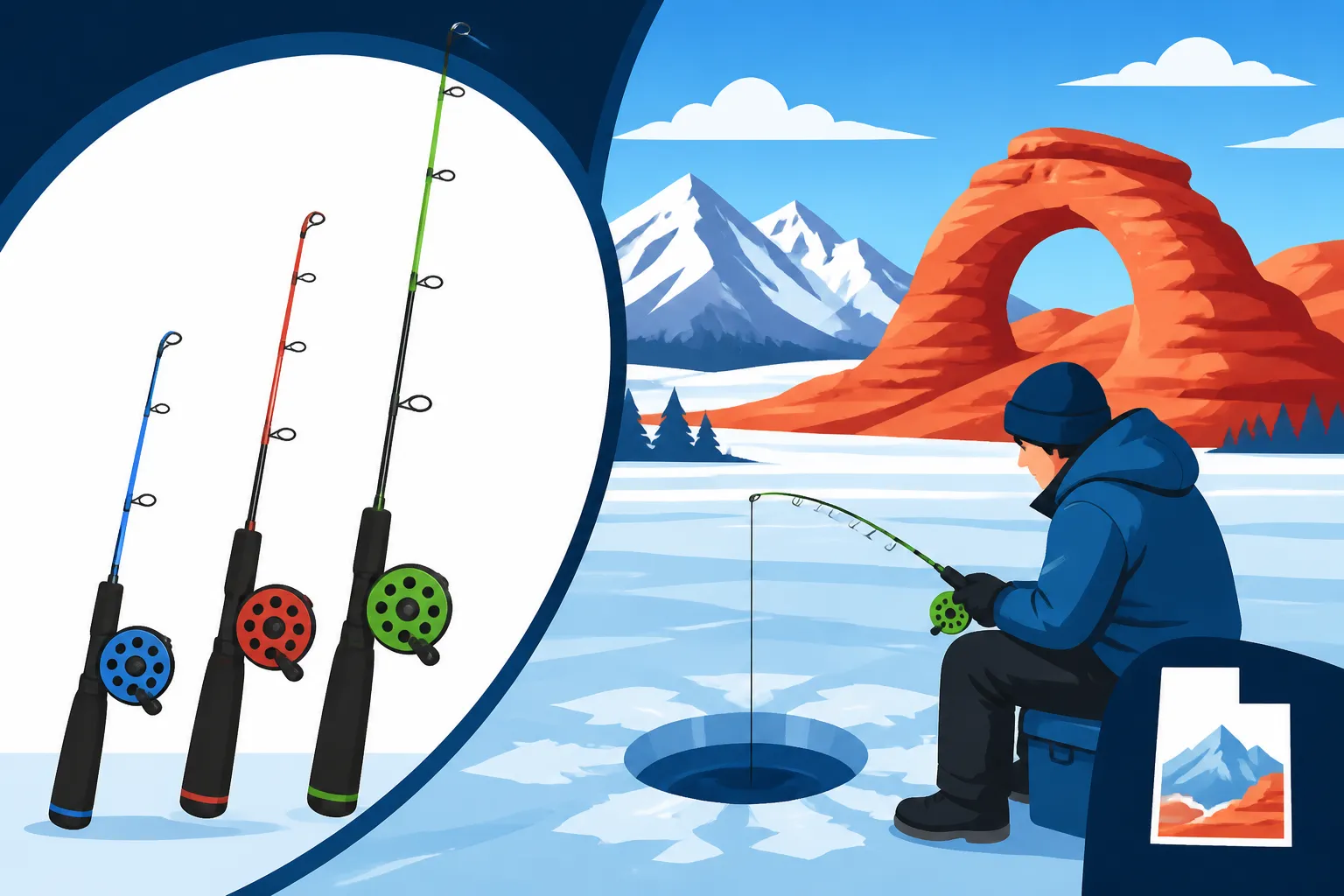
When you're targeting those smaller, often more delicate biters like yellow perch, bluegill, or stocked rainbow trout, a shorter rod in the 24 to 30-inch range is often your best friend. These rods offer incredible sensitivity, allowing you to feel even the slightest "tick" that might signal a perch inhaling your tiny jig. The compact length also makes them super easy to handle inside a small ice fishing shelter or when fishing from a bucket, minimizing tangles with your buddy's line or the shelter walls.
Imagine you're at a community pond like Layton Commons, trying to coax a stocked rainbow trout or a few bluegill. You're using tiny tungsten jigs tipped with a maggot or a small piece of PowerBait. A short, ultralight rod allows you to make those precise, subtle jigging motions that entice these fish. The quick tip action often found in shorter rods is also fantastic for transmitting those subtle bites directly to your hand, giving you precious seconds to set the hook. They're also great for deadsticking a bait in one hole while you actively jig another, as they are less prone to being knocked around. This is a common setup if you're exploring Utah Community Pond Fishing Spots.
Medium Rods 30-36 Inches: The All-Around Workhorse for Trout and Walleye
For many of Utah's most popular ice fishing destinations, like Strawberry Reservoir for its renowned trout and kokanee, or Utah Lake for its impressive walleye and channel catfish, a medium-length rod of 30 to 36 inches is often the perfect compromise. These rods offer a fantastic balance of sensitivity, backbone, and manageability. They're long enough to provide good leverage for fighting larger fish and absorb head shakes, but still short enough to handle comfortably in most shelters without feeling unwieldy.
When you're jigging for cutthroat or rainbow trout at Strawberry, you might be using slightly heavier spoons or tungsten jigs. A 32-inch medium-light or medium-action rod gives you the power to effectively work these lures and the backbone to turn a decent-sized fish away from the edge of the ice hole. Similarly, if you're after walleye at Utah Lake, especially when they're hitting larger jigs or spoons, a 34-inch medium-action rod provides the necessary power for a solid hookset and the resilience to bring up a hefty fish. Strawberry Reservoir Ice Fishing Spots and Utah Lake Walleye Fishing Spots are prime locations where these rods shine. You can find a good selection of these versatile rods at Bass Pro Shops or browse options online at Amazon.
Longer Rods 36-48+ Inches: Power for Lake Trout and Heavier Applications
Now, if your sights are set on the giants of the deep – the massive lake trout (Mackinaw) that call Flaming Gorge home, or the robust cutthroat trout in Bear Lake – you'll want to size up to a longer ice rod, typically ranging from 36 inches all the way up to 48 inches or even longer. These rods are built for power, leverage, and the sheer brute strength needed to haul a potentially 20-pound-plus fish from the depths.
A longer rod provides a wider arc to fight a strong fish, distributing the stress more evenly and reducing the chance of your line breaking or the hook pulling free. This extra length is especially critical when you're battling a big lake trout that wants to dive back down the hole repeatedly. It gives you that precious extra few inches of line to work with, wearing the fish out more effectively. While they can be a bit more challenging to handle in a small shelter, many anglers fishing for these trophy species will opt for larger portable shelters or even hard-sided ice shanties that accommodate the rod length more comfortably. When you're dropping heavy tube jigs or spoons for those deep-dwelling lake trout at Flaming Gorge, the added leverage of a 40-inch medium-heavy rod is indispensable. You'll thank yourself when that Utah record-class fish hits! For tips on catching these giants, check out How to Downrig for Lake Trout or Flaming Gorge Trophy Lake Trout Spots.
Understanding Rod Action, Power, and Material for Ice Fishing
While length is a crucial starting point, it's really only one piece of the puzzle. To truly dial in your ice fishing setup, you also need to understand rod action, power, and the materials they're made from. These elements work in concert with length to determine how a rod performs on the ice.
Rod Action: The Bend and the Feel
Rod action refers to where a rod bends when pressure is applied. It's often described as:
- Fast Action: These rods bend mostly in the upper third or quarter of the blank. They offer maximum sensitivity, allowing you to feel the most subtle bites. They also provide quick, powerful hooksets, which is crucial for species with bony mouths like walleye. However, their stiffness means they offer less forgiveness during a fight, potentially leading to pulled hooks if you're not careful. Great for jigging small lures or when precise control is needed.
- Medium Action: Bends in the upper half of the rod. This is a versatile action, offering a good balance of sensitivity and forgiveness. It's often favored for all-around trout and walleye fishing, providing enough sensitivity to detect bites and enough flex to absorb surges from a fighting fish.
- Slow (or Moderate) Action: Bends throughout the entire length of the rod. These rods are much more forgiving, acting like a shock absorber. They excel with treble-hooked baits (like small crankbaits) to prevent tearing the hook out of a fish's mouth and are good for deadsticking, where a fish can take the bait and run without immediate resistance. However, they offer less sensitivity and slower hooksets.
Choosing the right action depends heavily on your technique and target species. For sensitive panfish bites or aggressive walleye, a fast action might be best. For general trout fishing, a medium action is a solid bet.
Rod Power: The Strength to Lift
Rod power, also known as rod weight, refers to the rod's lifting strength or resistance to bending. This is typically categorized as ultralight, light, medium-light, medium, medium-heavy, and heavy.
- Ultralight/Light: Ideal for tiny jigs, light lines (2-4 lb test), and small fish like perch, bluegill, or small stocked trout. Maximizes fight with smaller fish.
- Medium-Light/Medium: The most popular choices for general ice fishing in Utah. Suitable for 4-8 lb test line, small spoons, jigs, and small to medium-sized trout, walleye, or bass.
- Medium-Heavy/Heavy: Designed for larger lures, heavier lines (8-20+ lb test), and big fish like trophy lake trout or larger catfish. Provides the backbone needed to control powerful fish.
It's critical to match your rod power to the size of fish you expect to catch and the breaking strength of your fishing line. Using a heavy rod with ultralight line is a recipe for disaster, as the rod won't flex enough to protect the line from snapping. Likewise, an ultralight rod with heavy line will leave you underpowered for a serious battle.
Rod Material: Sensitivity and Durability
The material a rod is constructed from largely dictates its sensitivity, weight, and durability:
- Graphite (or Carbon Fiber): Known for being incredibly lightweight and sensitive. You'll feel almost everything that happens at the end of your line. Graphite rods are often preferred for active jigging and when detecting subtle bites is paramount. However, they can be more brittle and prone to snapping if mishandled or exposed to extreme cold.
- Fiberglass: More durable and flexible than graphite, making them very forgiving when fighting fish. Fiberglass rods are generally less sensitive and heavier, but they are often more affordable and can withstand more abuse. They're a good choice for deadsticking or when targeting hard-fighting fish where sensitivity isn't the absolute top priority.
- Composites: These rods blend graphite and fiberglass, aiming to combine the best attributes of both – a good balance of sensitivity, strength, and durability. Many modern ice rods are composites, offering a fantastic all-around performance.
Consider also the quality of the guides and the handle material. In cold conditions, comfortable EVA foam or cork handles can make a big difference in keeping your hands warm and maintaining a good grip.
Practical Considerations and Tips for Utah Ice Anglers
With all this talk about length, action, power, and materials, it's easy to get overwhelmed. But really, it boils down to a few practical considerations when you're gearing up for a day on Utah's hardwater.
Evaluate Your Primary Fishing Style and Target
Before you buy a new rod, think about where you fish most often and what you're usually trying to catch. Are you primarily spending your time at small local ponds with the family, targeting panfish? A shorter, light-action rod will be perfect. Or are you planning multi-day trips to Flaming Gorge, intent on a trophy lake trout? Then a longer, heavier power rod is a must. If you're somewhere in the middle, say targeting trout and kokanee at Strawberry, a versatile medium-light to medium power rod around 30-34 inches will serve you well. Many anglers find themselves with a quiver of ice rods, each specialized for a different situation, and this is perfectly normal for Utah's diverse fishing opportunities. Utah Ice Fishing Guide offers more insight into different techniques.
Consider Your Ice Shelter Setup
Your shelter size is a practical constraint. If you're fishing in a small, one-person pop-up shelter, a 48-inch rod might be too cumbersome. For larger hub shelters or hard-sided shanties, you'll have more room to maneuver longer rods. Always test out how a rod feels in your actual shelter or simulate the space before making a purchase. Remember that even a slightly longer rod can help you spread out lines if you're using multiple holes, as permitted by How Many Ice Fishing Rods Can You Use at Once in Utah?.
Don't Skimp on Quality (Within Reason)
While there are budget-friendly options that will certainly catch fish, investing a little more in a quality ice rod often pays dividends in sensitivity, durability, and overall enjoyment. A more sensitive rod means you'll detect more bites, especially the light ones, leading to more fish on the ice. Look for reputable brands and read reviews. You can often find great deals on a wide range of ice fishing rods at sporting goods stores like Bass Pro Shops or through online retailers like Amazon.
Key Rod Length Recommendations for Utah Ice Fishing
To help summarize, here's a quick reference table based on typical Utah ice fishing scenarios:
| Rod Length (Inches) | Rod Power/Action | Primary Target Species | Typical Utah Locations | Best For… |
|---|---|---|---|---|
| 24-30 | Ultralight/Light | Perch, Bluegill, Small Trout | Community Ponds, Scofield, Rockport | High sensitivity, precise jigging, tight spaces |
| 30-36 | Medium-Light/Medium | Trout, Walleye, Smallmouth Bass | Strawberry, Deer Creek, Utah Lake, Willard Bay | All-around versatility, balanced feel, good leverage |
| 36-48+ | Medium-Heavy/Heavy | Lake Trout, Large Catfish | Flaming Gorge, Bear Lake, Fish Lake | Fighting trophy fish, deep water, heavier baits |
Ultimately, the "best" rod length for ice fishing in Utah is the one that feels right in your hands and instills confidence for the specific fish you're pursuing. Don't be afraid to try out a few different setups, experiment with lengths and actions, and find what makes your time on the ice the most enjoyable and productive. Happy freezing, I mean, fishing!
Disclaimer
This article is for general informational purposes only and does not constitute professional advice. Laws, prices and regulations vary by location and change over time. Consult a qualified professional for guidance on your specific situation.