How Many Downriggers You Need for Trolling Kokanee
Trolling for kokanee salmon on Utah waters like Flaming Gorge or Strawberry Reservoir can feel like solving a complex puzzle where the target depth changes by the minute. If you are tired of guessing where the fish are holding or constantly wrestling with tangled trolling lines, figuring out how many downriggers you actually need is the fastest way to turn a frustrating morning into a full cooler.
Understanding Downrigger Setups for Utah Kokanee Trolling
When you head out to chase silver salmon on deep mountain reservoirs, downriggers are easily the most reliable tools for keeping lightweight dodgers and small spinners in the strike zone. Unlike target species that feed near the surface, kokanee are heavily temperature-sensitive. They hover in precise thermal bands—often anywhere from 20 feet deep during cool spring mornings to well below 60 feet once summer heat sets in. Without a downrigger, getting a featherweight kokanee lure down to those depths without adding heavy lead weights that ruin the action of your lure is nearly impossible.
The question of how many downriggers to mount on your boat usually comes down to finding the sweet spot between efficiency and chaos. While it might be tempting to deck out your gunnels with as many steel cables as possible, kokanee trolling demands precision over brute force. Understanding how downriggers function on stillwater reservoirs like those detailed in our Flaming Gorge Fishing Guide is the first step toward building a smooth, stress-free setup.
The Ideal Downrigger Count for Most Anglers
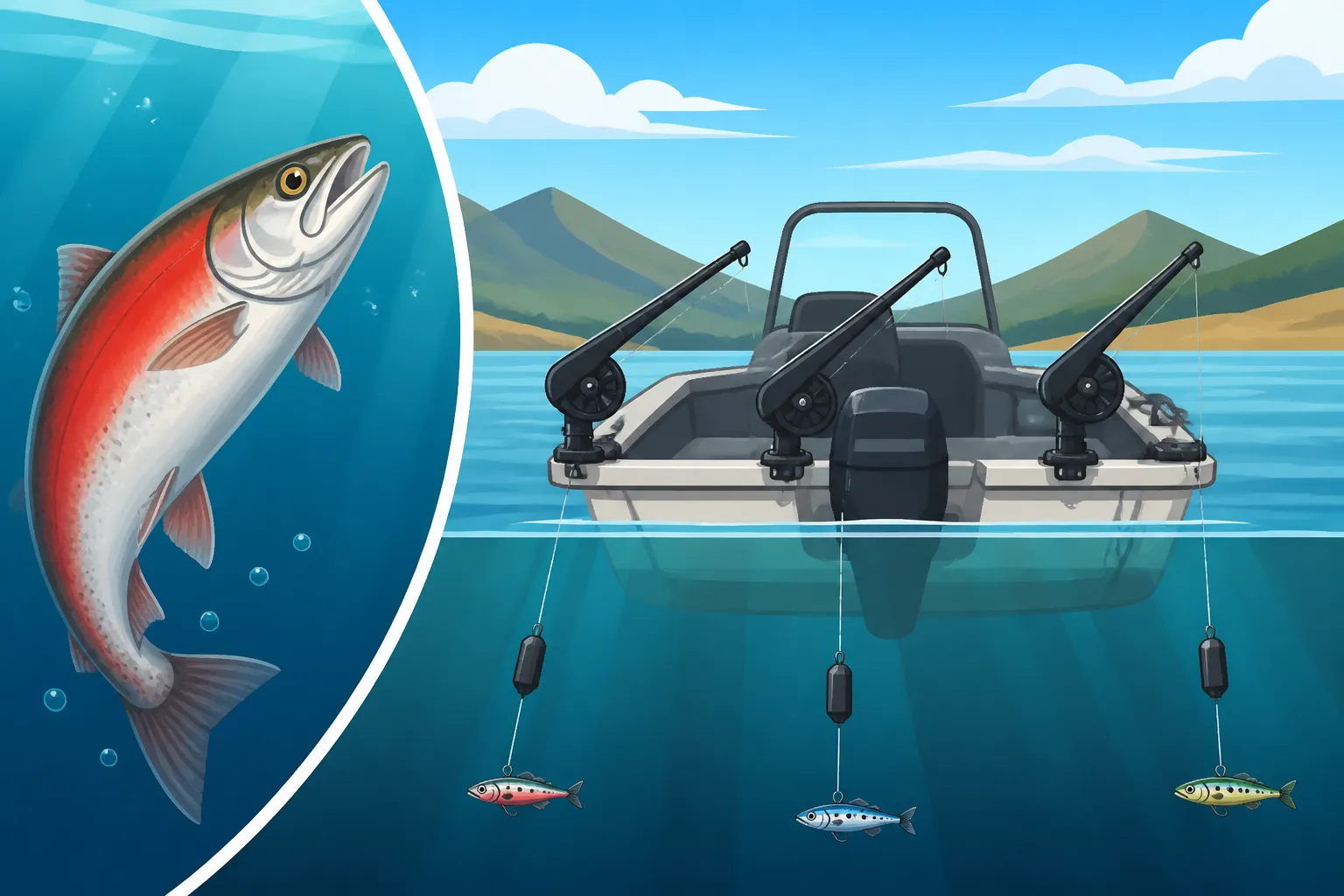
For the vast majority of kokanee anglers, running two downriggers is the absolute sweet spot. A dual-downrigger setup gives you the ability to fish two distinct depths simultaneously, allowing you to hunt for the school without cluttering the back deck of your boat. When kokanee are scattered across a ten-foot band in the water column, setting one downrigger at 35 feet and the second at 42 feet lets you systematically pattern what depth is actively producing strikes.
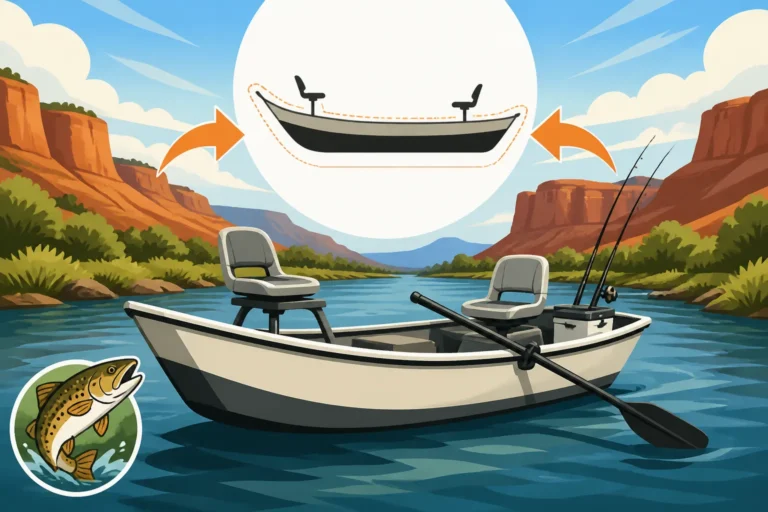
Two downriggers also fit naturally on almost any modern fishing boat, from a modest aluminum deep-v to a larger center console. You can easily mount one unit on the port corner and one on the starboard corner, keeping your cables separated by the entire width of your transom. This spacing drastically reduces the chance of dangerous cable entanglements during sharp turns or when trolling into a stiff reservoir breeze.
Single vs. Dual Downrigger Configurations
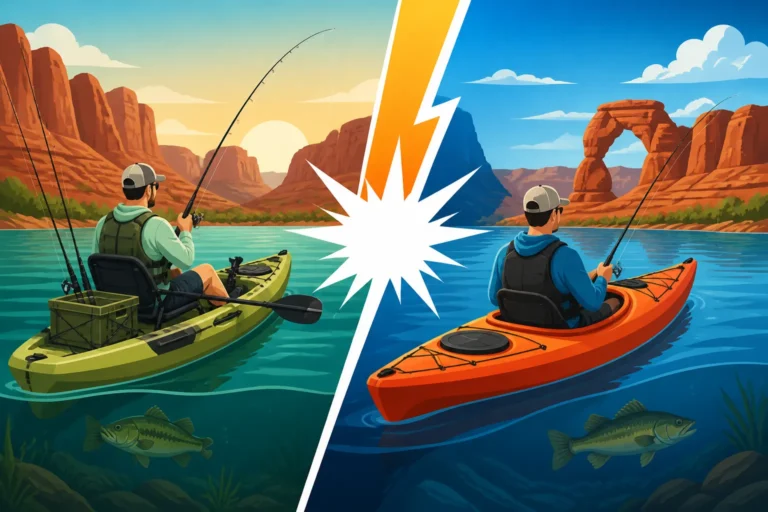
If you are just getting started or fish primarily out of a small utility boat or kayak, a single downriggers setup can certainly get the job done. Operating one downrigger forces you to be hyper-focused on your sonar readings. When you mark a school on your fish finder, you adjust that single weight directly into the mark. The downside, of course, is that you are operating on a trial-and-error basis with only one depth targeted at a time.
Stepping up to dual downriggers doubles your coverage and allows you to test two different lure styles or color combinations at different depths. For example, when fishing Strawberry Reservoir Fishing Guide waters during mid-summer, you might run a pink dodger rig on your shallow downrigger and a bright orange or chartreuse rig on your deeper line. Once a specific depth and color combination starts taking hits, you can quickly bring the second downrigger up or down to match the hot pattern.
| Setup Type | Best Used For | Typical Line Capacity | Complexity Level |
|---|---|---|---|
| :— | :— | :— | :— |
| Single Downrigger | Solo anglers, small boats, kayaks | 1 to 2 rods (stacked) | Low |
| Dual Downriggers | 2-3 anglers, standard fishing boats | 2 to 4 rods (stacked) | Moderate |
| Four Downriggers | Full boats, tournament rigs, wide transoms | 4 to 8 rods (stacked) | High |
Maximizing Your Spread: Running Multiple Lines per Downrigger
You do not necessarily need four downriggers to run four rods. One of the most useful tricks in kokanee fishing is learning how to stack multiple lines onto a single downrigger cable using specialized release clips. By stacking lines, a boat with two downriggers can easily run four rods without adding a single extra piece of heavy hardware to the gunnels.
Stacking requires a bit of patience and a steady hand, but once you master the routine, it completely changes your trolling strategy. Before buying extra gear, many anglers browse local retailers or online hubs like Amazon to pick up extra stacker releases and line stoppers so they can expand their coverage using the downriggers they already own.
Using Stacker Clips and Release Clips
To stack two rods on one downrigger, you begin by lowering your primary bottom line to its desired depth—say, 50 feet. You then attach a stacker release clip directly to the downrigger cable about 5 to 10 feet above the bottom weight or lower clip. Next, you clip the line from your second rod into this upper release and lower the entire assembly another 10 feet down into the water.
When done correctly, your bottom lure sits at 50 feet and your top lure sits at 40 feet, both pulled by the same downrigger weight. When a kokanee hits the upper lure, the line pops free from the stacker clip without disturbing the lower rod. If you want to dive deeper into rigging strategies and tackle selection, our detailed guide on How to Troll for Kokanee in Utah covers release clip tension and leader lengths in depth.
Managing Line Tangles and Boat Layout
While stacking lines doubles your trolling spread, it also introduces more opportunities for line tangles if your boat control dips. Kokanee are notorious for making erratic, thrashing runs when hooked, and a panicked fish on an upper stacker line can easily swim down and wrap itself around the lower rod line.
To avoid these frustrating tangles, always keep your setback distances—the distance between your release clip and your lure—staggered. A good rule of thumb is the “50/20 rule” or similar staggered spacing:
* Keep your deeper line closer to the downrigger ball (around 10 to 15 feet back).
* Set your upper stacked line further behind the cable (around 25 to 30 feet back).
This offset creates a staggered diagonal footprint in the water, ensuring that when the upper line pops free, it floats behind and above the lower running rig.
Factors Influencing How Many Downriggers You Truly Need
Deciding whether to stick with one downrigger, invest in two, or mount four on your vessel depends heavily on how you fish, who you fish with, and the specific rules governing the waters you frequent. Blindly adding downriggers without accounting for deck space or local regulations usually leads to head-aches on the water.
Before drilling holes into your boat’s gunnels, step back and evaluate your typical fishing trip. Are you usually fishing alone on quiet weekday mornings, or are you packing the boat with family and friends every weekend?
Boat Size and Deck Space Considerations
Physical room on your boat’s transom and stern sides is the ultimate deciding factor. Small aluminum v-hulls or narrow sport boats under 16 feet rarely have the gunnel width to manage more than two downriggers safely. Trying to squeeze four downriggers onto a narrow boat leaves virtually no room for netting fish, operating the outboard motor, or moving around the stern.
Larger aluminum boat packages and fiberglass cabin cruisers over 18 feet, however, often feature broad transoms and wide side rails. These boats can easily support two downriggers mounted on the side gunnels pointing outward, plus two additional downriggers mounted straight off the stern corners. If you are evaluating vessel space and rig options, review our breakdown on the Best Boat Setup for Trolling at Flaming Gorge for structural and mounting layout ideas.
Fishing Partner Dynamics and Rod Limits
Another key element is how many legal rods you can run at once based on your state’s fishing laws and angler count. You must always stay compliant with state guidelines, which are thoroughly detailed in our guide to Utah Fishing Regulations Explained. If you frequently fish with a full boat of four licensed anglers, you may want the capacity to run four to eight rods depending on two-rod permit rules.
- Single Angler: A single downrigger or a dual downrigger setup without stacking is more than enough to manage safely alone.
- Two Anglers: A dual downrigger setup running two stacked lines (4 rods total) provides maximum coverage without overwhelming the deck.
- Three or Four Anglers: Two downriggers running dual-stacked lines (4 rods total) combined with two side-planer boards running shallow lines allows everyone to keep a lure in the water.
Choosing and Mounting Your Kokanee Downriggers
Once you decide on the ideal number of downriggers for your boat, selecting the right type of downrigger becomes the next priority. Kokanee have soft mouths and require thin, sensitive rod tips, meaning your entire downrigger setup must work smoothly to prevent pulling hooks out of delicate fish lips.
From basic hand-crank manual units to high-tech electric models that auto-retrieve at the press of a button, downrigger choices vary widely in price and features. Major sporting retailers like Bass Pro Shops carry a broad range of options, allowing you to compare manual boom lengths against fully automated electric models before mounting them to your boat’s track system.
Manual vs. Electric Downriggers for Kokanee Depth Control
Manual downriggers are budget-friendly, highly reliable, and easy to transfer between boats. They feature a hand crank and a mechanical depth counter. While manual units work fine in shallow water down to 30 feet, cranking an 8-pound lead weight up from 70 feet deep by hand every time a small kokanee strikes gets exhausting quickly.
Electric downriggers eliminate this physical strain entirely. With electric models, hitting a switch automatically raises the weight at high speed while you focus entirely on fighting the fish on light gear. Electric models are especially valuable when fishing deep reservoirs like those found around Deer Creek Reservoir Fishing Spots, where target kokanee schools frequently drop into deep water channels during late July and August.
| Feature | Manual Downriggers | Electric Downriggers |
|---|---|---|
| :— | :— | :— |
| Power Source | Physical hand crank | 12V marine battery connection |
| Speed | Depends on arm strength | Rapid automatic retrieve |
| Best Depth Range | Shallow to medium (0 – 40 feet) | Medium to deep (40 – 100+ feet) |
| Price Point | Entry-level / Budget-friendly | Mid-range to premium investment |
| Cable Management | Manual brake control | Auto-stop sensors and presets |
Essential Accessories and Gear Recommendations
Buying the downrigger itself is only part of the equation. To build an effective kokanee trolling system, you need to pair your downriggers with the proper supporting gear:
- Downrigger Weights: Pancake-style or finned lead weights weighing between 8 and 12 pounds work best for kokanee. The fin keeps the weight tracking straight in the water column, preventing spin and cable twists.
- Lightweight Rods: Use specialized, soft-action trolling rods designed specifically for kokanee. These fiberglass or composite rods load into a deep bend when locked into the downrigger clip, acting as a giant rubber band to cushion the strike and keep tension on the barbless hooks kokanee require.
- Quality Line: Spool your trolling reels with thin-diameter monofilament or braided mainlines. Check out our recommendations on the Best Pound Test Line for Utah Stocked Trout to match your line strain to light-action release clips.
- Snubbers: Always attach a rubber trolling snubber between your main line release clip and your dodger. Kokanee thrash violently when hooked, and a rubber snubber absorbs those sudden head shakes so the hook does not tear out of their mouth.
For anglers looking to gear up, selecting equipment specifically tailored for deep trolling will save hours of trial and error. If you want to explore dedicated gear choices built for heavy-duty reservoir trolling, check out our guide on the Best Downriggers for Flaming Gorge Lake Trout.
By carefully assessing your boat’s layout, matching your setup to the number of anglers you usually host, and mastering basic line-stacking techniques, you will find that two downriggers are almost always the perfect number for trolling kokanee effectively. Mounted properly and paired with soft-action rods and reliable release clips, a dual-downrigger spread keeps your lures continuously in front of hungry fish without turning your boat’s back deck into a tangle of steel cable and fishing line.
Disclaimer
This article is for general informational purposes only and does not constitute professional advice. Laws, prices and regulations vary by location and change over time. Consult a qualified professional for guidance on your specific situation.