Sit-On-Top vs Sit-In Kayak for Utah Fishing
Choosing the right fishing kayak can feel like trying to pick a favorite child – they both have their merits, but one is probably a better fit for your unique situation. Many anglers in Utah struggle with the initial decision of whether a sit-on-top (SOT) or a sit-in (SIT) kayak is best for their local waters, given our diverse lakes, reservoirs, and rivers. This guide is here to walk you through the key differences, helping you understand which design will truly enhance your Utah fishing adventures and make those long days on the water more enjoyable and productive.
Understanding the Core Differences: Sit-On-Top vs. Sit-In Kayak Design
When you first start looking at fishing kayaks, the distinction between sit-on-top and sit-in might seem simple, but it actually boils down to fundamental design philosophies that profoundly impact your experience on the water. It's not just about where you sit, but how the kayak handles, how you interact with your gear, and how well it suits the specific conditions you'll encounter in Utah's varied fishing environments. Both have their dedicated fan bases, and for good reason!
Design and Construction
Let's dive into the basic architecture of each. A sit-on-top kayak, as the name suggests, features an open deck where you sit directly on top of the hull. These kayaks are usually wider and often have a flatter hull design, contributing to their renowned stability. They are essentially sealed units, meaning water that splashes over the side or through the scupper holes (self-draining holes) simply drains out, keeping the cockpit area free of standing water. This makes them incredibly user-friendly, especially for beginners or those who anticipate getting wet, which is pretty common when you're wrestling with a feisty Utah Trout Species Guide or a hard-fighting bass.
Sit-in kayaks, on the other hand, have an enclosed cockpit where the paddler sits inside the hull. Your legs and lower body are protected by the kayak's deck. While some recreational sit-ins have larger, open cockpits, traditional touring or whitewater kayaks feature much smaller openings that can be sealed with a spray skirt. For fishing, you'll typically find recreational sit-ins with generous cockpits, offering a degree of protection from the elements. The hull design is often narrower and more V-shaped, allowing them to cut through the water with greater efficiency. This design choice has significant implications for speed and tracking, which can be a real game-changer when you're trying to cover a lot of water on a big reservoir or navigate currents on a river.
Stability and Mobility
This is often the first thing anglers consider, and for good reason. Sit-on-top kayaks are generally much more stable than sit-in kayaks, especially initial stability (how stable it feels when you first get in) and secondary stability (how stable it feels when tilted on its side). Their wider profiles and often tri-hull or pontoon-style bottoms are specifically engineered for this. This superior stability means you can often stand up to cast, stretch your legs, or get a better view of the water and those elusive fish. Being able to stand is a huge advantage for sight fishing or simply getting a better angle on your casts, particularly useful when chasing Utah Bass Fishing Techniques in rocky coves or throwing topwater lures. This ability to move around freely is a major selling point for many anglers, reducing fatigue on longer trips and making the act of fishing itself more comfortable.
Sit-in kayaks, while not as inherently stable as SOTs, often compensate with superior tracking and speed. Their narrower, more streamlined hulls glide through the water with less effort, making them excellent for covering long distances or paddling against wind and current. While standing is usually out of the question in a sit-in (unless it's a very specific, wide recreational model), their enhanced maneuverability can be a huge asset in tight river bends or when you need to quickly reposition to follow a school of fish. Think of it this way: SOTs are like stable pickup trucks designed for hauling and comfort, while SITs are more like nimble sports cars, prioritizing efficiency and speed. Each has its place, depending on the fishing application.
Storage and Gear Access
When you're out on the water, having your gear organized and easily accessible is paramount. Sit-on-top kayaks typically offer ample open-deck storage space. You'll often find large bow and stern storage wells, sometimes with bungee cords or hatches, perfect for securing coolers, tackle boxes, or dry bags. Many SOTs also come with integrated track systems or pre-molded areas specifically designed for mounting rod holders, fish finders, or camera equipment. The sheer accessibility of your gear on a sit-on-top is a massive benefit; everything is right there, within arm's reach, without having to awkwardly reach into a confined cockpit. This ease of customization and immediate access makes them a favorite for anglers who like to bring a lot of tackle or rely on electronic accessories like a fish finder.
For sit-in kayaks, storage is usually more confined. While they often have dry storage compartments (bulkheads) in the bow and stern, accessing them usually requires opening a hatch. The cockpit area itself might have some small mesh pockets or bungee systems, but the overall capacity for bulky gear is less. The main benefit here is that your gear inside the hull stays drier and more protected from the elements. However, retrieving a specific lure or tool often means a bit more effort and sometimes breaking your fishing rhythm. For minimalists or those fishing in challenging weather where keeping gear absolutely dry is critical, a sit-in's protected storage can be advantageous. However, for the average Utah angler who carries multiple rods, a tackle bag, and a cooler, the open-deck versatility of a sit-on-top often wins out. You can find a vast array of kayak fishing accessories, from rod holders to anchor trolleys, at places like Bass Pro Shops or even through online vendors like Amazon, to maximize your storage and rigging options.
Pros and Cons for Utah Fishing Scenarios: Where Each Shines (and Struggles)
Utah's fishing landscape is incredibly diverse, ranging from the vast, often windy expanses of Flaming Gorge and Lake Powell to the swift, cold currents of the Provo River, and the quiet community ponds. This variety means that what works perfectly in one setting might be a significant hindrance in another. Understanding where sit-on-top and sit-in kayaks truly excel, and where they fall short, is key to making an informed decision for your specific angling pursuits.
Open Water and Reservoir Fishing
For many Utah anglers, fishing means heading to one of our beautiful reservoirs like Strawberry, Deer Creek, or the aforementioned giants, Flaming Gorge and Lake Powell. These waters can be vast, and often unpredictable, with winds whipping up waves quickly. In these scenarios, sit-on-top kayaks often prove to be the more popular choice. Their superior stability is a huge advantage when navigating choppy water or dealing with boat wakes. Imagine trying to land a twenty-inch rainbow trout while bobbing around; the added stability of an SOT makes the process much less precarious. Their self-draining scupper holes are also fantastic; any water that comes over the bow or splashes in from a wave simply drains away, keeping your fishing deck relatively dry. This means you don't have to worry about bailing water, which is a common concern in a sit-in on rougher water.
However, the wider, more stable design of an SOT can also mean they are slower and require more effort to paddle over long distances, especially if you're trying to cover several miles on a large reservoir. If you're planning on doing a lot of trolling or chasing schools of Utah Striped Bass Guide at Lake Powell across vast sections of the lake, that added effort can become tiresome. Sit-in kayaks, with their more efficient hulls, can cover ground much faster and with less energy expenditure. While they might feel tippier, a skilled paddler can maintain good control, and their speed can be a huge asset in getting to those prime fishing spots quickly. The trade-off is often comfort and gear capacity for speed and efficiency. Consider the typical conditions of your favorite fishing spots. Are they mostly calm, or do they regularly get windy and wavy? Best Kayaks for Utah Lake Fishing often prioritizes stability due to the lake's open nature and tendency for sudden winds.
River and Stream Fishing
When it comes to Utah's rivers and streams, the choice between SOT and SIT becomes a bit more nuanced. For slower, wider rivers, or even sections of medium-flow rivers where you might want to stand and cast, a sit-on-top kayak can still be a great option. Its stability is useful for navigating minor rapids or eddy lines, and the open deck allows for quick access to your fly box or lures when you're trying to match the hatch for Utah Trout Species Guide. However, in swifter, more technical rivers with tighter turns, rapids, or submerged obstacles, the bulkier nature of a sit-on-top can become a liability. Their wider profile makes them less agile, and they can be harder to turn quickly to avoid hazards. Plus, if you flip an SOT in a river, while it's easy to re-enter, all your unsecured gear could float away.
Sit-in kayaks, especially those designed with a narrower profile and better maneuverability, often excel in river fishing. Their ability to track straight and turn on a dime gives anglers more control in current. While getting wet is more likely in a sit-in on a river, and re-entry after a capsize can be more challenging, their performance in dynamic water is often superior. For fly fishing on renowned waters like the Green River below Flaming Gorge Dam or the Provo River, where precise boat control is crucial for drifting nymphs or swinging streamers, a sit-in kayak or a specialized drift boat is often preferred. They allow you to hold your line better, navigate eddies with more grace, and generally present your flies with greater finesse. However, you'll need to be diligent about securing your gear inside the boat, as an unplanned swim could mean losing precious tackle. Think about the specific rivers you plan to fish: are they gentle floats or more adventurous paddles?
Cold Weather and Water Comfort
Utah's fishing season extends well into the colder months, especially with our fantastic ice fishing opportunities and tailwater fisheries that stay open year-round. When the air and water temperatures drop, staying dry and warm becomes critical, and this is where sit-in kayaks really shine. Sitting inside the hull provides a significant amount of protection from wind, spray, and cold water. Your lower body is enclosed, which helps retain warmth and prevents exposure to chilling gusts or splashes. For anglers brave enough to fish during early spring run-off or late fall, this can make a world of difference in comfort and safety. You can also more easily integrate a spray skirt to completely seal off the cockpit, offering maximum protection from the elements.
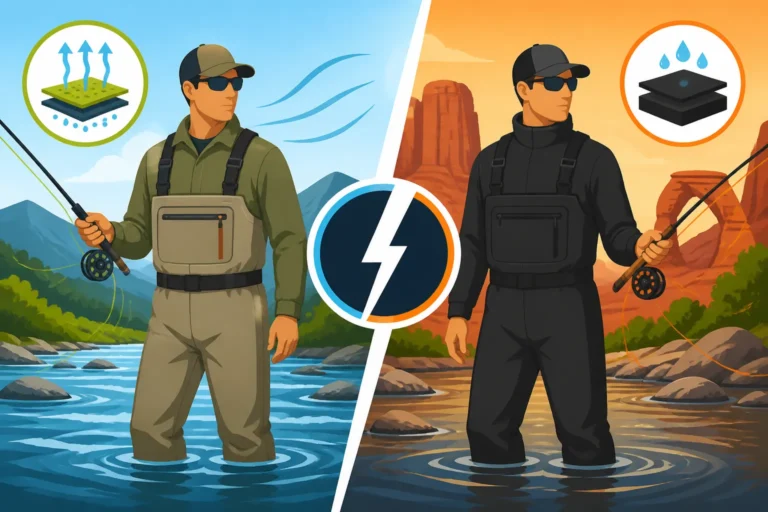
Sit-on-top kayaks, by their very nature, offer less protection from the elements. Your entire lower body is exposed, making you more susceptible to wind chill and splashes. While scupper holes drain water, any water that comes over the deck will inevitably get your legs and feet wet. This means heavier, waterproof clothing like Best Waders for Cold Provo River Water and insulated boots are absolutely essential for cold-weather SOT fishing, and even then, staying truly warm can be a challenge. While SOTs are fine for warm summer days, if you anticipate fishing in Utah's shoulder seasons or year-round, the added warmth and dryness of a sit-in kayak are definite advantages. This isn't to say you can't fish an SOT in cold weather, but it requires much more careful layering and consideration of your personal comfort and safety.
Making Your Decision: Factors to Consider for Your Utah Kayak Fishing Adventures
Deciding between a sit-on-top and a sit-in kayak isn't just about understanding their basic differences; it's about matching those features to your personal fishing style, the waters you frequent, and your practical needs off the water. No single kayak is perfect for every situation, so a little self-reflection can go a long way in making the right choice for your Utah fishing adventures.
Your Fishing Style and Target Species
Consider how you primarily fish. Are you an aggressive caster, constantly moving and standing to sight fish for Utah Bass Daily Limit and Minimum Length in shallow coves? If so, the stability and open deck of a sit-on-top kayak will likely be your best friend. The ability to stand up and cast over submerged structure, or simply stretch your legs, greatly enhances the experience. If you primarily fish with bait, drop-shot rigs, or troll for species like Utah Walleye Harvest Rules or kokanee salmon, where you're often sitting and letting the rod do the work, either kayak type could work. However, the open storage of an SOT still offers easier access to bait containers and multiple rod holders.
If your passion lies in fly fishing Utah's blue-ribbon rivers, or you prefer a more subtle approach, drifting nymphs and streamers, the control and maneuverability of a sit-in kayak might be more appealing. Their sleeker profile allows for more precise boat positioning, which is critical when presenting flies in specific current seams or avoiding snags. For anglers who enjoy exploring the high-mountain lakes in the Uintas (once they thaw, of course!), a lighter, more efficient sit-in might be easier to portage and paddle long distances. Think about the specific species you target most often and the techniques you employ. Do you need to stand? Do you cover vast distances? Do you value speed over stability? Answering these questions will quickly narrow down your options.
| Feature | Sit-On-Top Kayak | Sit-In Kayak |
|---|---|---|
| Stability | High (initial and secondary), often allows standing | Moderate (can feel tippy), rarely allows standing |
| Speed/Efficiency | Moderate, often slower due to wider hull | High, cuts through water efficiently |
| Comfort | Open feel, easy to stretch, can get wet/cold | Enclosed, protected from elements, restricted legroom |
| Gear Access | Excellent (open deck, easy customization) | Good (internal hatches), more protected gear |
| Self-Rescue | Very easy to re-enter from water | More challenging, may require assisted rescue |
| Water Drainage | Self-draining scupper holes | Requires bailing, susceptible to cockpit pooling |
| Ideal Use | Lakes, reservoirs, calm rivers, warm weather | Rivers, touring, cold weather, efficiency-focused |
Transport and Storage Considerations
Don't forget about what happens when you're not on the water. Kayaks, regardless of type, require careful consideration for transport and storage. Sit-on-top kayaks, especially those designed for fishing, tend to be heavier and bulkier than their sit-in counterparts. This is due to their wider, more stable hulls and often thicker plastic construction. Lifting a 70+ pound fishing SOT onto a car roof rack by yourself can be a real workout, and storing it might require more space in your garage or shed. If you have a small car or limited storage, this could be a significant factor. Investing in a good kayak cart or a trailer can ease the burden of transport to the water's edge. You might find options for these accessories at stores like Bass Pro Shops or online through Amazon.
Sit-in kayaks, particularly recreational or touring models, are often lighter and more slender. This makes them easier to car-top, especially for solo anglers. Their narrower profile also means they might take up less space when stored vertically. However, if they have a large open cockpit, you might need a cockpit cover to keep critters and rain out during storage. Consider the logistics of getting your kayak from home to your favorite Utah Fishing Spots by Region, and then back again. Do you have a truck, a trailer, or will you be relying on a roof rack? Will you typically fish alone or with a partner who can help load and unload? These practical aspects can sometimes be the deciding factor, even if a certain kayak type feels ideal on the water. Remember to also check Do Kayaks Need to Be Registered in Utah? to ensure you're compliant with state regulations before heading out.
Budget and Long-Term Value
Finally, let's talk about the cost and long-term value. Generally speaking, fishing-specific sit-on-top kayaks tend to be more expensive than basic recreational sit-in kayaks. This is because SOT fishing kayaks often come packed with features tailored for angling: reinforced deck areas for standing, multiple rod holders, gear tracks, dedicated transducer mounts for fish finders, and more robust construction. You're paying for the specialized design and integrated features that make them excellent fishing platforms. While you can find budget-friendly SOTs, the more feature-rich models will naturally command a higher price.
Sit-in kayaks, particularly simpler recreational models, can be more budget-friendly. You might get a good entry-level sit-in for significantly less than a comparable sit-on-top. However, if you plan to rig a sit-in for fishing, you'll need to factor in the cost of aftermarket accessories like rod holders, anchor systems, and storage solutions, which can quickly add up. Consider your initial investment, but also think about the potential upgrades and modifications you might want to make down the line. A more expensive SOT might save you money on aftermarket rigging, while a cheaper SIT might become more costly once you add all your desired fishing features. Ultimately, the "value" comes down to how well the kayak serves your specific needs and how much enjoyment you get out of it over the years. Look for durable construction and a design that you know you'll be happy with for many seasons to come.
Disclaimer
This article is for general informational purposes only and does not constitute professional advice. Laws, prices and regulations vary by location and change over time. Consult a qualified professional for guidance on your specific situation.