Best Drift Boat Size for Two Anglers
Choosing the right drift boat for fishing with a buddy can feel like a maze, especially when you're dreaming of floating Utah's incredible rivers like the Green or the Provo. You want enough space to comfortably cast, move around, and store your gear without feeling like you're playing bumper boats, but you also need something manageable to row and trailer. This guide is going to walk you through everything you need to know about picking the best drift boat size when it's typically just you and one other angler heading out.
Why Drift Boat Size Matters for Two Anglers in Utah
When you're out on the water, the size of your drift boat impacts everything from your comfort to your safety and how easy it is to actually catch fish. It’s not just about fitting two bodies in the boat; it’s about creating an effective and enjoyable fishing platform that works with the unique challenges of Utah’s diverse waterways. A boat that's too small can lead to tangled lines, cramped casting, and even safety concerns, while one that's too large might be overkill for the conditions you typically encounter.
Navigating Different Waterways with Ease
Utah is blessed with a variety of rivers, from the wider, more forgiving stretches of the Green River below Flaming Gorge Dam to the tighter, more technical sections of the Provo. The ideal boat size for two anglers can vary significantly depending on where you plan to spend most of your time. A smaller, more nimble boat might be a dream on a tight, winding stream where precise maneuvering is key, letting you slip into those small eddies and around tricky bends with grace.
However, if your adventures often take you to broader rivers with stronger currents or larger waves, a slightly longer and wider boat offers a more stable and forgiving ride. This added stability can be a real game-changer when you're both casting simultaneously or navigating through choppier sections. It also provides a greater margin of error for the rower, which is a huge plus when the fishing is hot and distractions are high. Having a boat that matches the water helps you focus on the fish, not just staying afloat.
Comfort, Safety, and Gear Storage
Let's be real, a day of fishing involves a lot more than just a rod and a reel. You've got tackle boxes, multiple rods (because who takes just one?), coolers for lunch and drinks, maybe a small dry bag for extra layers, and all the miscellaneous bits that accumulate over a day on the water. For two anglers, this gear can quickly add up, and a cramped boat means a frustrating experience. Imagine constantly tripping over your buddy's tackle box or having to hold your rod out of the way every time they cast.
Adequate space is crucial for both comfort and safety. Two anglers need room to cast freely, change positions, and manage fish without feeling like they're performing acrobatics. A boat with sufficient interior space also means you can distribute weight more effectively, which contributes to stability and predictability on the water. Beyond the day's essentials, consider if you ever do multi-day trips. That means more dry bags, a tent, sleeping bags, and cooking gear. Running out of space halfway through a float trip is a problem no one wants.
Understanding Drift Boat Length and Width
When you're talking about drift boat size, two dimensions are paramount: length and width (often called beam). These aren't just numbers on a spec sheet; they directly translate to how the boat feels on the water, how much usable space you have, and how easy it is to handle. Finding the sweet spot here is key to a happy fishing experience for you and your angling partner.
Ideal Length for Two Anglers
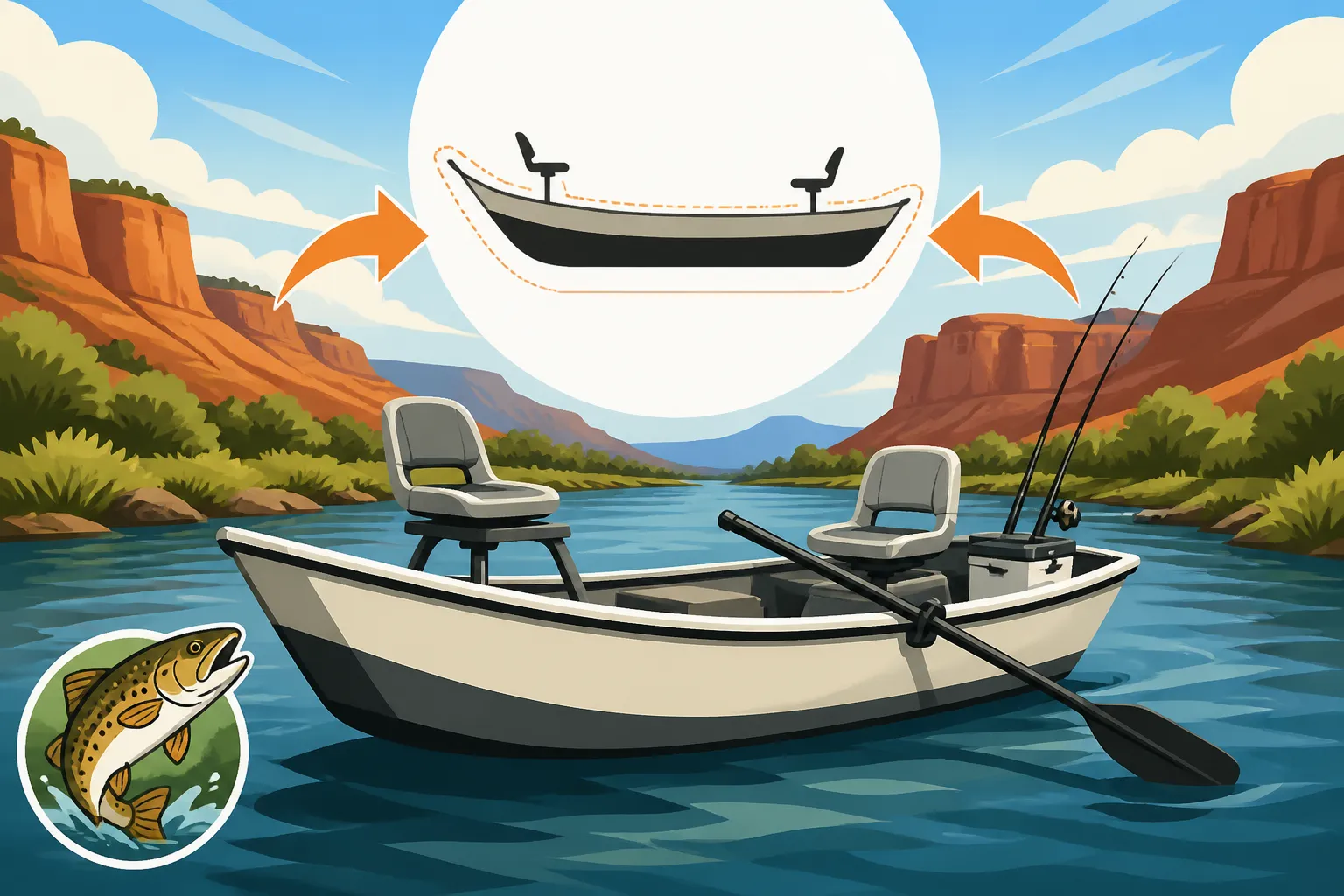
For two anglers, most seasoned drift boat owners will tell you that a boat in the 16 to 18-foot range often hits the mark. A 16-foot boat is incredibly popular because it offers a fantastic balance. It’s long enough to provide decent casting decks and storage compartments for two people, yet it remains relatively nimble and responsive for the rower. This size is often a great choice for various Utah rivers, allowing you to navigate both wider and slightly narrower stretches without too much hassle. It's a true workhorse for many anglers.
Stepping up to a 17 or 18-foot boat grants you even more room. This additional length translates into more generous casting platforms, greater stability, and usually more storage capacity for gear. If you or your fishing partner are larger individuals, or if you simply prefer ample space for casting long fly lines without fear of hitting your buddy, this extra length can be a huge benefit. However, the trade-off is often a heavier boat that might be a bit more challenging to row in very tight, technical water or when dealing with strong headwinds. It also means a slightly larger footprint for storage and trailering.
The Importance of Beam (Width) and Interior Space
Beyond length, the boat's beam, or width, plays a critical role in its stability and the amount of usable interior space. A wider boat generally means greater stability, which is a significant advantage when two anglers are standing, moving, or fighting a fish simultaneously. This stability can make a huge difference in how comfortable and confident you feel on the water, especially in choppy conditions or when dealing with rambunctious fish. Wider boats also tend to have more generous interior space, allowing for wider casting platforms, more comfortable seating, and better access to gear.
However, a boat that's too wide can become cumbersome to row, particularly in strong currents or when trying to navigate narrow channels. The additional surface area against the water can make it harder to hold your line or make quick adjustments. When evaluating width, pay close attention to the floor plan – not just the maximum beam. Look at the width of the casting decks and the general layout. Some boats are designed with a wider footprint in the middle but taper more aggressively at the ends, which can impact usable space. Others maintain a more consistent width throughout, offering a roomier feel. It’s all about finding that sweet spot where stability doesn’t compromise maneuverability.
Key Factors to Consider When Sizing Your Drift Boat
Choosing a drift boat isn't just about the numbers; it's about matching the vessel to your specific angling lifestyle and the waters you intend to explore. There are several practical considerations that should heavily influence your decision, ensuring that your investment pays off in countless memorable days on the water rather than headaches at the ramp or in your garage.
Primary Rivers and Fishing Styles
Think about the rivers you frequent most often in Utah. Are you primarily spending your time on the Green River Below Flaming Gorge Dam, known for its wider sections and consistent flows? Or do you gravitate towards the more intimate and technical bends of the Provo River Fishing Guide? Rivers with more swift, technical rapids or narrower channels often favor a boat that's a bit more agile and easier to maneuver, typically on the shorter end of the 16-18 foot spectrum. A longer boat can feel like a handful when you need to make quick, precise moves.
Your fishing style also dictates space requirements. If you and your partner primarily fly fish, you'll likely appreciate more open deck space for backcasting without snagging each other or gear. Longer boats or those with well-designed casting platforms provide this luxury. On the other hand, if you mostly spin fish or troll, the need for wide-open casting room might be less critical, and you could potentially get by with a slightly smaller interior. Consider how much gear you bring for each style too – fly fishing often means multiple rod tubes, stripping baskets, and fly boxes, which demand more storage.
Transport and Storage Considerations
Let’s be honest, the fishing trip begins long before you hit the water. How easy is your boat to trailer, launch, and retrieve? A heavier, longer boat will require a more substantial tow vehicle and can be more cumbersome to maneuver at crowded boat ramps. If you often fish solo with a buddy who isn't experienced in launching, a smaller, lighter boat can significantly reduce stress. You also need to think about where you’ll keep your boat. Does it fit in your garage? Do you have space in your driveway, or will you need to rent storage? Larger boats mean larger trailers and more storage headaches.
The overall weight of the boat, especially when wet and loaded with gear, is another factor for both trailering and launching. Even with two people, muscling a heavy boat off a trailer or maneuvering it into a tight spot can be a real workout. Furthermore, keep in mind local regulations, as these can impact your choices. Always double-check Utah Boat Registration Requirements and remember that heavier boats often require more robust safety equipment as per Utah Boating and Fishing Rules. These practicalities are often overlooked in the excitement of boat shopping but can make or break your overall satisfaction.
Future-Proofing Your Investment
While you might be primarily focused on fishing with one other angler now, it’s worth thinking about the future. Will you ever want to take a third person, like a child or another friend, out on the water? While a boat optimized for two might feel cramped with three, opting for a slightly larger 17 or 18-foot model often provides a bit more flexibility without becoming overly burdensome for two. It creates a "just in case" buffer that could extend the life and utility of your investment.
Beyond capacity, consider the boat's longevity and resale value. Popular sizes and reputable brands tend to hold their value better. While I can't recommend specific models, a quick look at various fishing gear retailers, perhaps even browsing accessories on Bass Pro Shops or Amazon, can give you a sense of what's common and well-regarded in the market. Investing in quality from the start often means less maintenance down the road and an easier sale when it’s time to upgrade or change. Remember that proper maintenance, including understanding things like How to Winterize a Boat After the Utah Fishing Season, will also help protect your investment.
Common Drift Boat Sizes and Their Best Fit for Two Anglers
Navigating the world of drift boat sizes can seem daunting, but thankfully, there are a few tried-and-true categories that consistently perform well for two anglers. Each size offers a distinct set of advantages and compromises, so let's break down what each typically brings to your Utah fishing adventures.
The 16-Foot Drift Boat: A Versatile Choice
For many two-person angling teams, the 16-foot drift boat represents the sweet spot in terms of versatility and performance. This length is often hailed as a golden standard, offering an excellent balance between interior space, maneuverability, and ease of handling. It provides ample room for two anglers to cast comfortably, whether you're both fly fishing on the Provo River Fishing Guide or spin casting on a larger reservoir. You'll find sufficient space for your tackle, a cooler, and dry bags without feeling overly cramped, ensuring a pleasant experience even on longer float trips.
What makes the 16-footer so popular is its adaptability across various river conditions in Utah. It's responsive enough for a single rower to navigate technical stretches with precision, yet stable enough to inspire confidence in moderately choppy waters. It's also generally lighter and easier to launch and retrieve than its larger counterparts, making it a favorite for those who value independence at the boat ramp. If you're looking for a do-it-all boat that excels with two anglers, a 16-foot model should definitely be at the top of your list.
Stepping Up to 17 or 18 Feet: More Room, More Stability
When you step up to a 17 or 18-foot drift boat, you’re primarily gaining additional interior space and enhanced stability. This extra length can be a game-changer if you or your fishing partner are on the taller or broader side, or if you simply crave more elbow room for aggressive casting. The increased deck space means less chance of tangled lines or accidental collisions during hooksets, which can significantly reduce on-the-water frustrations. Plus, the added length often translates to more dedicated storage compartments, allowing you to keep your gear organized and easily accessible.
The enhanced stability of a longer boat is another major benefit, particularly on larger rivers or in windy conditions that can create a chop. It provides a more solid platform for standing and casting, reducing fatigue and increasing confidence. However, this extra size does come with trade-offs. These boats are heavier, requiring more effort from the rower, especially in strong currents or when battling a headwind. They also demand more space for trailering and storage. While fantastic for comfort and stability, be honest about whether your typical fishing grounds truly necessitate this increased footprint, or if the nimbler 16-footer might serve you better.
When a Smaller (14-15 ft) or Larger (19+ ft) Boat Makes Sense
While the 16-18 foot range is standard for two anglers, there are specific scenarios where a boat outside this window might be a better fit. A smaller 14 or 15-foot drift boat can be an excellent choice if you primarily fish solo but occasionally bring one friend along. These boats are incredibly light, easy to row, and highly maneuverable, making them perfect for technical, intimate streams or if you prioritize ease of transport and storage above all else. However, with two anglers and a rower, they can quickly feel cramped, especially if you're both actively casting. Storage will also be at a premium.
On the other end of the spectrum, a drift boat of 19 feet or longer is typically designed for three anglers plus a rower, or for very specific big-water applications. For two anglers, a boat of this size would provide an almost luxurious amount of space and unparalleled stability. However, it would also be significantly heavier, much harder to row, and much more challenging to transport and launch with just two people. Unless you have specific plans for very long, gear-intensive expeditions with consistent extra company or on exceptionally large bodies of water, a boat this size is likely overkill for just two anglers and could detract from the overall experience due to its unwieldiness.
Here's a quick comparison to help visualize the typical trade-offs:
| Feature | 14-15 Foot Boat | 16 Foot Boat | 17-18 Foot Boat | 19+ Foot Boat |
|---|---|---|---|---|
| Best For | Solo + occasional guest, small, technical rivers | Most 2-angler trips, balanced versatility | 2 anglers seeking maximum comfort/stability, more gear | 3+ anglers, large rivers, heavy gear, commercial ops |
| Maneuverability | Excellent, very nimble | Very Good, responsive | Good, stable but less agile | Fair, often unwieldy with only 2 anglers |
| Interior Space | Can be cramped with 2 anglers + rower | Good for 2 anglers, adequate gear storage | Excellent for 2 anglers, generous gear storage | Abundant, often too much for just 2 anglers |
| Stability | Adequate, can feel less secure when standing | Good, solid platform | Very Good, highly stable | Excellent, very robust |
| Weight/Portability | Lightest, easiest to launch/trailer solo | Moderate, manageable for 2 people | Heavier, requires more effort for launching/trailering | Heaviest, challenging for 2 people to manage |
| Cost (typically) | Lower | Mid-range | Higher | Highest |
| Utah River Suitability | Small mountain streams, some Provo sections | Most Green, Provo, Weber, Bear River stretches | Wider Green River sections, larger reservoirs | Very large rivers or specific big-water uses |
Ultimately, the "best" size is a personal decision based on your priorities and the specific conditions you'll face most often in Utah. Think about your average trip, the gear you bring, and the comfort level you desire for both yourself and your fishing partner.
Disclaimer
This article is for general informational purposes only and does not constitute professional advice. Laws, prices and regulations vary by location and change over time. Consult a qualified professional for guidance on your specific situation.