Best Net Size for Catching Utah Trout
There's nothing quite like the thrill of feeling a strong tug on your line, the bend in your rod, and the frantic dance of a beautiful Utah trout fighting for its freedom. You play it perfectly, reel it in close, and then… splash! It's gone. That heartbreak of losing a fish right at the net, perhaps because your net was too small, too shallow, or just plain unwieldy, is a frustration every angler knows. This guide is here to help you pick the absolute best net size for catching Utah trout, ensuring your next encounter ends with a successful landing.
Why Net Size Matters More Than You Think for Utah Trout
Landing a fish isn't just about the fight; it's about the finish. And in Utah, where we have everything from feisty stocked rainbows in community ponds to massive wild brown trout in renowned rivers and big lake trout in our deep reservoirs, one size definitely does not fit all when it comes to nets. The wrong net can lead to missed opportunities, stressed fish, and even damaged gear.
The Heartbreak of a Lost Fish at the Net
Imagine you've been working that stretch of the Provo River all morning, casting perfectly, and finally, a solid brown trout rises to your fly. The fight is epic, a true test of skill and patience. You guide it close, reach for your net, and as the fish makes one last surge, its tail flicks over the shallow hoop, sending it spiraling back into the current, free. The sting of that loss, especially after such a battle, is profound. Or perhaps you're targeting cutthroat at Strawberry Reservoir, and a plump 20-incher comes to the boat. Your net, designed for smaller panfish, simply can't contain its length, and with a powerful headshake, it throws the hook, leaving you with just a lingering memory of its silver flash. These aren't just hypotheticals; they're common scenarios when anglers underestimate the importance of a properly sized net for the species and water they're fishing.
Using an undersized or improperly designed net creates unnecessary stress during the final moments of the fight. The fish thrashes more violently, increasing the chance of it throwing the hook, breaking your line, or injuring itself by slamming against the net frame. Even for smaller fish, struggling in a cramped net can prolong the landing process, adding to exhaustion, which is particularly concerning if you plan on releasing it. Investing in the right net isn't just about making your life easier; it's about respecting the fish and ensuring a clean, efficient landing every time.
Protecting the Fish and Your Tackle
Beyond preventing escapes, the right net plays a crucial role in fish conservation and protecting your fishing gear. For anglers practicing catch and release – which is a vital part of maintaining healthy fisheries in many Utah waters, especially those with special regulations like Utah Catch-and-Release Waters – the type and size of your net are paramount. Nets with large, coarse nylon mesh can strip off a fish's protective slime coat, which is their primary defense against disease and infection. They can also damage delicate fins, gills, and eyes, significantly reducing the fish's chances of survival after release.
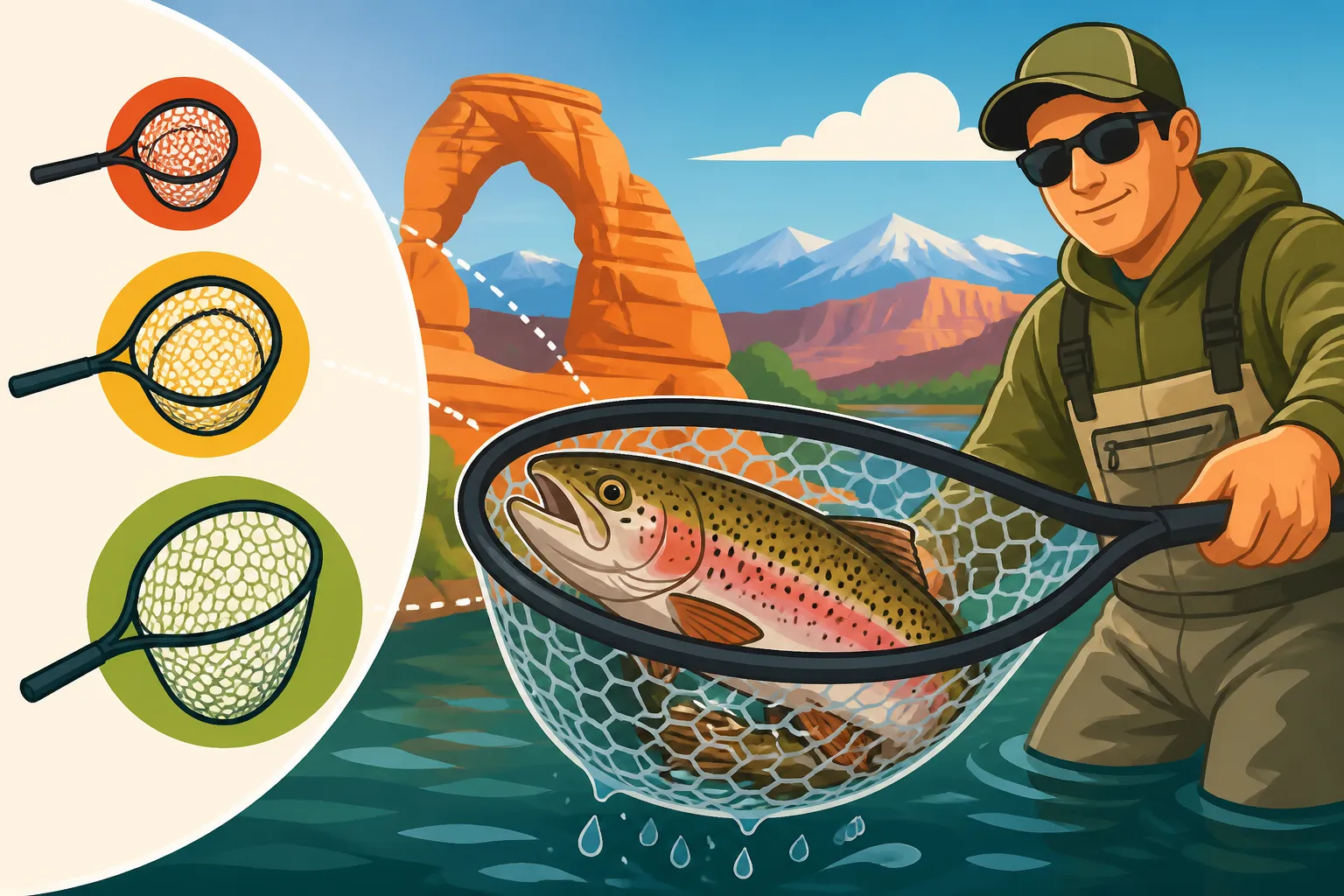
This is where nets with knotless, rubberized mesh truly shine. These nets are much gentler on fish, preserving their slime coat and minimizing fin damage. The soft, flexible rubber cradles the fish, reducing stress and allowing for easier handling and quick release. As an added bonus, rubberized nets are far less prone to tangling hooks. There's nothing worse than finally getting a fish in the net, only to have a treble hook hopelessly snagged in the mesh, prolonging the unhooking process and stressing the fish even further. With a rubberized net, hooks glide right out, making for a much smoother and quicker release. This means less time struggling with tangled gear and more time fishing.
Decoding Net Dimensions: What to Look For
When you're browsing the aisles at Bass Pro Shops or scrolling through options on Amazon, you'll notice a lot of different numbers associated with nets. Understanding these dimensions is key to making an informed choice for your specific Utah fishing adventures. It's not just about "small" or "large"; it's about understanding the nuances of hoop size, net depth, and handle length.
Hoop Size: Matching the Trout's Potential
The "hoop size" refers to the dimensions of the net's opening. This is arguably the most critical factor, as it determines whether the fish can actually fit into the net. For the average stocked rainbow trout you might find in a Utah community pond or a smaller stream, a hoop size of around 12-14 inches (across the widest part) is often sufficient. These fish typically range from 10-16 inches, and a net just slightly larger than their length gives you a good margin of error.
However, once you start targeting larger species or waters known for bigger fish, you need to scale up. If you're chasing the robust brown trout in the Green River or the larger cutthroat in lakes like Bear Lake, which can easily exceed 20 inches and often push past 24, a net with a hoop of 18-24 inches or more is a much safer bet. Consider the potential for a true trophy. While most fish won't reach those sizes, being prepared for that exceptional catch means having a net that can handle a fish pushing 30 inches or more. A net that's too small for a big fish can result in the fish bending or damaging the hoop as it struggles, potentially leading to its escape or injury.
Net Depth: Keeping Them Securely Contained
The "net depth," or bag depth, refers to how deep the mesh extends from the hoop. This dimension is crucial for preventing fish from flopping or jumping out once they're in the net. A shallow net might get the fish half-in, but a powerful tail kick can send it right back into the water, often with the hook still in its mouth or, worse, having thrown the hook. For most trout species, a net depth of at least 12-18 inches is a good starting point. This depth allows the fish to be fully submerged and contained, reducing its ability to thrash and escape.
For larger trout, particularly those found in deeper waters like lake trout in Flaming Gorge or the big cutthroat in Strawberry Reservoir, a deeper net bag (20-30 inches or more) offers even better security. These larger fish have more powerful muscles and can easily propel themselves out of a shallow net. A deeper bag acts as a cradle, allowing you to quickly scoop the fish and keep it submerged and calm while you unhook it. This is especially important for catch-and-release, as keeping the fish in the water as much as possible minimizes air exposure and stress. Think of it as a temporary aquatic holding tank, giving you the time needed for a careful release.
Handle Length: Reaching Out (or Staying Compact)
The handle length of your net impacts its usability in different fishing scenarios. There are generally three categories:
- Short-Handled Nets: These typically have handles under 12 inches and are perfect for wade fishing smaller rivers like the Middle Provo River Access Points or fishing from a float tube or kayak where the fish is usually brought directly to your side. They are lightweight, compact, and easy to maneuver in tight spaces or when you're on the move. Their portability makes them ideal for hiking into remote high-altitude lakes in the Uinta Mountains.
- Medium-Handled Nets: With handles ranging from 12-30 inches, these offer a versatile middle ground. They're excellent for shore fishing, smaller boats, or when you need a bit more reach than a short handle provides. If you find yourself fishing from various platforms, a medium-handled net might be a good all-around choice.
- Long-Handled/Telescoping Nets: These nets feature handles that can extend several feet, making them invaluable for boat fishing (especially larger boats), fishing from high banks, or reaching out to land a fish when you're limited by obstructions. A telescoping handle gives you the flexibility to shorten it for compact storage or extend it for maximum reach, making it incredibly versatile for diverse Utah waters, from the vast expanse of Lake Powell to the shores of Deer Creek Reservoir. When fishing from a boat, particularly for species like the hard-fighting wipers at Willard Bay or larger walleye, having that extra reach can make all the difference in a quick, clean scoop.
Choosing the Right Net for Your Utah Trout Adventure
With so many variables, selecting the "best" net isn't about finding a universal answer, but rather the best net for your specific fishing style and target species in Utah. Consider where you typically fish, what you hope to catch, and how you plan to release them.
Nets for Stocked & Smaller River Trout
If your primary focus is on the abundant stocked rainbow trout found in Utah's community fishing ponds, local lakes, and accessible sections of smaller rivers, a compact, lightweight net is usually ideal. These fish typically range from 10 to 16 inches, making a net with a hoop size of 12-16 inches and a bag depth of 12-18 inches more than adequate. A shorter handle (6-12 inches) works perfectly for easy one-handed operation from shore or a small watercraft.
Look for nets with rubberized or knotless mesh to protect these eager eaters, especially since many community ponds encourage catch-and-release for children or those simply enjoying the sport. Brands like Frabill or Fishpond offer great options you can find at sporting goods stores or online retailers like Amazon. These nets are easy to carry, fit into a backpack, and are ready for action when the stocking truck has just visited a local pond, as discussed in How Soon After Stocking Should You Fish a Utah Pond?. They're also less cumbersome for teaching kids how to fish, as covered in How to Teach a Kid to Fish in Utah.
Nets for Larger Wild Trout & Stillwater Species
When you graduate to chasing Utah's larger, wilder trout—like the trophy brown trout in the Green River below Flaming Gorge Dam, the robust cutthroat and splake in Fish Lake, or the massive lake trout (mackinaw) that lurk in the depths of Flaming Gorge—you absolutely need a bigger, more robust net. For these formidable fish, which can often push 20-30 inches or more, a net with a hoop size of 18-30 inches and a bag depth of 24-36 inches is highly recommended.
A longer handle (24 inches or more, often telescoping) becomes essential when fishing from a boat on large reservoirs like Flaming Gorge or Strawberry. This extra reach is critical for bringing a hard-fighting fish alongside the boat and netting it cleanly without excessive leaning or struggling. Durability is also a key factor here; these nets need sturdy frames to withstand the weight and power of larger fish. Consider the ultimate goal of landing a true trophy, like those found in Flaming Gorge Trophy Lake Trout Spots—you don't want your net to be the weak link. A heavy-duty, large rubberized net will not only secure your prize but also ensure its safety if you're planning a quick photo and release.
Specialized Nets for Specific Techniques or Waters
Beyond general-purpose nets, there are specialized designs for particular fishing styles:
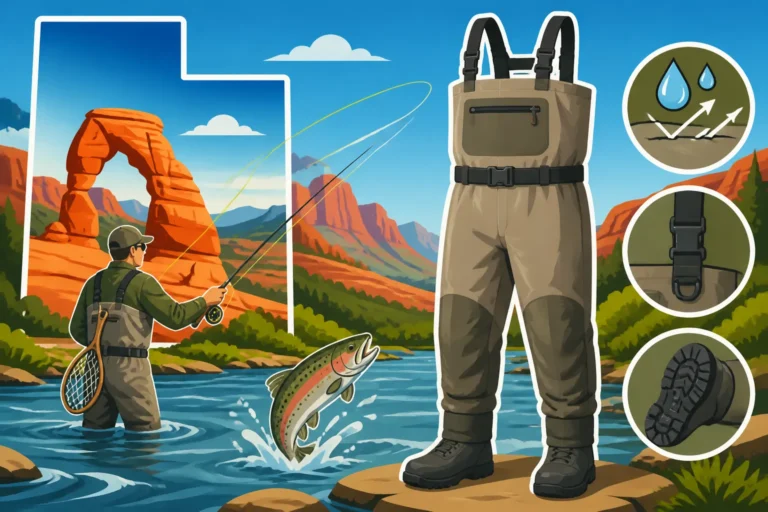
- Fly Fishing Nets: Often called "landing nets" or "creel nets," these are typically smaller, often teardrop-shaped, with short wooden or composite handles. They are designed to be light, easily carried (often with a magnetic release or clip to your vest), and used for quick, gentle landings in rivers and streams. Many fly anglers prefer a deeper, rubberized bag to protect the trout's delicate scales and fins. For wading the Provo River Fly Fishing Sections, a compact net that clips to your back is ideal, keeping it out of the way until you need it.
- Boat Nets: These are generally larger, with longer, often telescoping handles, built for managing fish boatside. They come in various sizes to handle everything from kokanee salmon to large lake trout. Having a designated boat net is a must for any serious boat angler on Utah's large reservoirs. They often feature larger hoops and deeper bags to accommodate powerful fish that might make one last run under the boat.
- Float Tube/Kayak Nets: Similar to short-handled nets, these are designed for compact use from a float tube or kayak. They often have a flat bottom to prevent the fish from flopping out while you're managing your craft. Look for models that are easy to secure to your vessel but quick to deploy when a fish strikes. Kayak fishing on Utah Lake, for example, requires a net that can be easily handled from a seated position.
Net Material Matters: Rubber vs. Nylon
The material of your net's mesh is just as important as its size, especially given Utah's emphasis on healthy fish populations and catch-and-release practices.
The Benefits of Rubberized Mesh
For any angler concerned with fish health and efficient unhooking, rubberized mesh is the superior choice. Here’s why:
- Fish Protection: The soft, pliable nature of rubber mesh minimizes the removal of a fish's protective slime coat (mucus layer), which is crucial for fighting off infections and diseases. It also prevents fin rays from bending or breaking, and eyes from being scratched, all common injuries with abrasive nylon nets. This is incredibly important for species like the native Bonneville Cutthroat Trout Identification that we work hard to conserve.
- Hook Snag Prevention: This is a game-changer! Traditional nylon nets are notorious for snagging hooks, especially treble hooks from lures. Trying to untangle a deeply embedded hook from a nylon net while a fish is thrashing around is a recipe for frustration, lost fishing time, and increased stress on the fish. Rubberized nets significantly reduce this issue, allowing hooks to slide out easily, making for a much quicker and smoother unhooking process. Many anglers find their fishing experience much more enjoyable after switching to a rubber net.
- Reduced Odor and Easy Cleaning: Rubberized mesh doesn't absorb fish odors or mucus like nylon does, making it much easier to clean. A quick rinse is often all it takes to keep it fresh and ready for your next trip. This also helps prevent the spread of aquatic invasive species, as debris is less likely to cling to the smooth surface.
- Weight: While rubber nets can sometimes be a touch heavier than their nylon counterparts, the benefits for fish welfare and convenience often outweigh this slight difference, especially when you consider the overall durability.
When Traditional Nylon Might Still Be Okay
While rubberized nets are generally recommended, traditional nylon mesh nets still have their place, primarily due to their lower cost and lighter weight.
- Budget-Friendly: If you're just starting out or on a very tight budget, a nylon net can be a more accessible entry point into fishing. You can find very affordable options at stores like Bass Pro Shops or on Amazon.
- Durability (Specific Types): Some heavy-duty nylon nets, particularly those with a thicker knotless design, can be quite durable for larger, toothier species that might be hard on rubber mesh (though this is less of a concern for most Utah trout). They can also be lighter for long hikes into remote fishing spots where every ounce counts, like the Uinta Mountains High Lakes Fishing.
- Situational Use: If you're primarily fishing for consumption and aren't focused on catch-and-release, the fish welfare aspect of a rubber net becomes less critical. However, even then, the reduced hook tangles and easier cleaning of a rubber net still offer benefits.
When selecting a nylon net, always prioritize "knotless" mesh to minimize damage to fish. While not as gentle as rubber, knotless designs are a significant improvement over knotted mesh.
Here’s a quick overview to help you decide:
| Trout Type / Location | Recommended Hoop Size (inches) | Recommended Bag Depth (inches) | Recommended Handle Length | Ideal Mesh Type | Notes |
|---|---|---|---|---|---|
| Stocked Rainbows (Ponds, Small Rivers) | 12-16 | 12-18 | Short (6-12"), Medium (12-24") | Rubberized, Knotless Nylon | Lightweight, portable. Great for kids. |
| Wild Browns (Provo, Green River) | 16-24 | 18-26 | Short (wading), Medium | Rubberized | Prioritize fish safety for these prized fighters. |
| Cutthroat/Splake (Strawberry, Fish Lake) | 18-26 | 20-30 | Medium, Long/Telescoping | Rubberized | Need to contain strong, often larger fish. |
| Lake Trout (Flaming Gorge) | 24-36+ | 30-40+ | Long/Telescoping (Boat) | Rubberized | For truly large specimens, big and strong is key. |
| Kokanee Salmon (Flaming Gorge, Jordanelle) | 16-22 | 18-24 | Medium, Long/Telescoping | Rubberized | Deeper bag helps contain these energetic, often spawning fish. |
The right net is an invaluable tool in your fishing arsenal, turning potential disappointment into successful landings. It’s an investment in both your angling success and the well-being of the fish you encounter. So, take a moment to consider the type of Utah trout you're pursuing and the waters you frequent, and choose a net that's up to the task. Happy fishing!
Disclaimer
This article is for general informational purposes only and does not constitute professional advice. Laws, prices and regulations vary by location and change over time. Consult a qualified professional for guidance on your specific situation.