How Deep Should You Set a Downrigger for Flaming Gorge Lake Trout?
Oh, the elusive Flaming Gorge lake trout! If you’ve spent any time on that magnificent reservoir, you know the frustration of seeing those massive fish on your sonar, yet having them completely ignore your offerings. It’s like they’re taunting you from the depths! The truth is, trophy lake trout at Flaming Gorge often hold in very specific depth ranges, and getting your lure right in their strike zone is absolutely critical. This guide is all about demystifying downrigger depth, helping you pinpoint exactly where those big mackinaw are lurking and how to get your bait in front of them.
Understanding Lake Trout Behavior and Preferred Depths at Flaming Gorge
Catching those big lake trout at Flaming Gorge isn't just about dropping a line in deep water; it's about understanding why they're there and what makes them tick. These fish are creatures of habit, heavily influenced by temperature, light, and, most importantly, where their next meal is swimming.
Seasonal Movements of Flaming Gorge Lake Trout
Lake trout, often called mackinaw here in Utah, are cold-water fish, and their movements throughout the year are largely dictated by water temperature. This means your ideal downrigger depth will change significantly from spring to summer to fall.
- Spring (Ice-Off to Early Summer): As the ice melts and the water column begins to warm, lake trout often move shallower. They're recovering from the long winter and might be found in depths ranging from 20 to 60 feet. They're actively feeding on baitfish that are also moving into warmer, more accessible water. This is a great time to target points, coves, and submerged humps where baitfish congregate. Don't be surprised to find them shallower than you'd expect, especially during overcast days or early mornings.
- Summer (Late June to Early September): This is when Flaming Gorge truly earns its reputation for deep-water lakers. As surface temperatures soar, the lake develops a distinct thermocline – a layer of rapidly changing water temperature. Lake trout will retreat below this thermocline, seeking out the cooler, oxygen-rich waters. During the peak of summer, you'll be looking at downrigger depths from 60 to 120 feet, sometimes even deeper, depending on the day and the specific area of the lake. They're chasing schools of kokanee salmon and cisco that also prefer these cooler temperatures. If you're struggling, check out this guide on How Deep Lake Trout Live in Summer for more insights.
- Fall (Late September to Ice-Up): As the water begins to cool again, especially towards late fall, lake trout start to become more active and can once again be found in a broader range of depths. They’re fattening up for winter and their upcoming spawn. You might find them cruising shallower humps and ledges in the 40-80 foot range, but they can still be found deep, especially on sunny days. Post-spawn, they might move even shallower for a recovery period before winter truly sets in.
- Winter (Ice Fishing): While this guide focuses on downrigging, it's worth noting that even under the ice, lake trout relate to structure. Ice anglers often target them in similar depth ranges to fall, but they can also suspend over very deep water if baitfish are present.
Identifying Baitfish Locations
You know the old saying: "Find the bait, find the fish." This couldn't be truer for lake trout at Flaming Gorge. These predatory fish are constantly on the hunt for their primary food sources: kokanee salmon and Bonneville cisco.
- Kokanee Salmon: These landlocked sockeye salmon are a staple for Flaming Gorge lake trout. Kokanee are pelagic, meaning they roam the open water column, often in large schools. They're also temperature-sensitive, preferring cooler water, typically in the 40-60 foot range in spring and fall, but diving much deeper, often 60-100+ feet, in summer. A good fish finder will show you dense "clouds" or "balls" of baitfish. When you see these, chances are the lake trout are nearby, either just below, above, or even right in the middle of the school. Learning How to Troll for Kokanee in Utah can indirectly help you find lake trout.
- Bonneville Cisco: While not as abundant as kokanee in Flaming Gorge, cisco are another important forage fish. Like kokanee, they are often found in schools in the open water. Identifying these baitfish schools on your sonar is your biggest clue as to where to set your downriggers. Lake trout aren't going to expend energy chasing down a single small fish; they're looking for an easy meal within a dense school.
Factors Influencing Downrigger Depth for Lake Trout
So, you've got a general idea of where the lake trout might be based on the season and baitfish. But narrowing it down to that precise depth for your downrigger takes a bit more finesse. Several environmental factors play a crucial role in dictating exactly where those lunkers will be holding.
Water Temperature and Thermocline
This is arguably the most critical factor, especially during the warmer months. Lake trout are stenothermal, meaning they thrive within a narrow range of cold water temperatures, typically between 45-55°F (7-12°C).
- The Thermocline Explained: In summer, as the surface water warms, a distinct layer forms called the thermocline. Above it is warm water (epilimnion), below it is cold water (hypolimnion), and the thermocline itself is where the temperature changes rapidly. Lake trout will almost always be found below or within the thermocline, avoiding the warmer surface waters.
- Using a Fish Finder: Many modern fish finders, especially those with advanced sonar and temperature graphs, can actually show you the thermocline as a distinct band on the screen. Look for the densest concentrations of baitfish and often the lake trout just below or within that layer. If your fish finder doesn't show temperature layers, you can still infer the thermocline by looking for where the baitfish schools dramatically drop off in depth. This is usually your target zone. Understanding How to Read a Fish Finder for Utah Reservoirs is invaluable here.
Light Penetration and Time of Day
Lake trout are known to be light-sensitive, often preferring dimmer conditions. This sensitivity directly impacts their depth.
- Bright Sunny Days: On clear, sunny days, light penetrates deeper into the water column. To avoid this intense light, lake trout will often retreat to deeper, darker water, requiring you to set your downriggers accordingly. It's not uncommon for them to be 10-20 feet deeper on a bright noon than they might be at dawn or dusk.
- Overcast Days/Low Light: During cloudy days, early mornings, late evenings, or even stormy conditions, light penetration is reduced. This can embolden lake trout to move slightly shallower, or at least remain active at shallower depths than they would during peak sunlight. You might find success running your downriggers 10-20 feet higher in the water column during these times.
- Dawn and Dusk: These "golden hours" are often prime fishing times. The low light conditions allow lake trout to move more freely, potentially cruising slightly shallower edges or actively feeding on baitfish that are also moving. Always be prepared to adjust your downrigger depth during these transitions.
Structure and Bottom Contours
While lake trout are often found suspended in open water, especially when chasing bait, they also strongly relate to underwater structure. Flaming Gorge is riddled with incredible underwater topography: submerged islands, long points, deep canyons, and ledges.
- Relating to Structure: Lake trout use structure for ambush points, resting areas, and as navigation highways. They might be found just off a deep point, cruising a ledge, or suspended over a deep basin adjacent to a major drop-off.
- Sonar and GPS: Your fish finder with GPS is your best friend for mapping this out. Mark prominent points, humps, and drop-offs. When trolling, try to keep your downrigger ball just above the known structure. If you're marking fish around a specific depth on a hump, that's where your downrigger should be. Avoiding snags is key when fishing close to the bottom.
- Downriggers for Precision: This is where downriggers truly shine. They allow you to precisely position your lure at a specific depth, hugging the contours of a submerged island or running just above a rocky ledge without constantly snagging your expensive gear. When you find a good Flaming Gorge Trophy Lake Trout Spots area, downriggers are essential for working it effectively.
Practical Application of Downrigger Depth
Alright, enough with the science, let's talk about putting it into practice on the water! You've got your boat, your gear, and your enthusiasm. Now, how do you translate all this information into catching more lake trout with your downriggers?
Using Your Fish Finder Effectively
Your fish finder isn't just a pretty screen; it's your window into the underwater world. Learning to interpret its signals is vital for setting the correct downrigger depth.
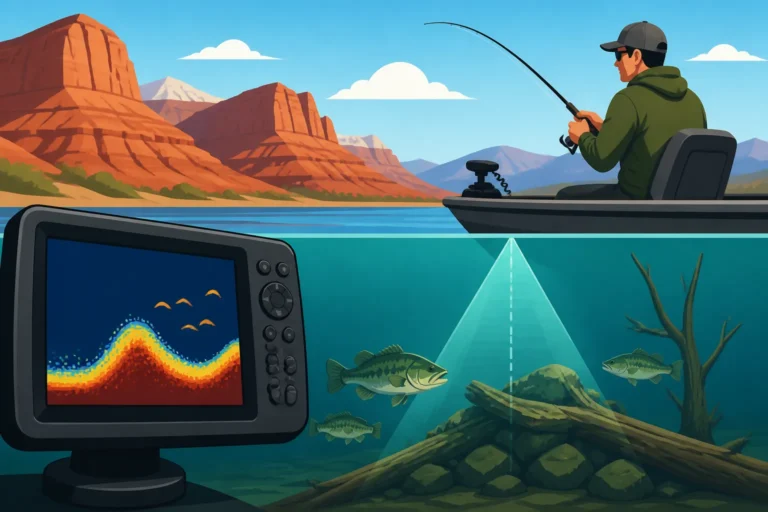
- Interpreting the Display: Look for those distinct arches that indicate individual fish. Larger, thicker arches often mean bigger fish. More importantly, look for schools of baitfish, which often appear as dense clouds or even solid lines on your screen. If you see big arches near these bait balls, you're in the right neighborhood.
- The Thermocline on Sonar: As mentioned, the thermocline can appear as a distinct horizontal line or band where the density of suspended particles or baitfish changes abruptly. This is your target depth range for summer lake trout.
- Bottom Zoom: Use the bottom zoom feature on your fish finder to get a more detailed view of the last few feet above the bottom. This is crucial when fishing over structure, allowing you to keep your downrigger ball just a few feet off the bottom to avoid snags while staying in the strike zone.
- Marking Waypoints: Don't forget your GPS! When you mark fish or get a bite, immediately mark a waypoint. This helps you identify productive depths and specific pieces of structure. Over time, you'll build a map of where and at what depth fish are consistently found. If you're looking for an upgrade, check out some of the Best Fish Finders for Utah Reservoirs available.
Setting and Adjusting Your Downriggers
This is the hands-on part. Don't be afraid to experiment!
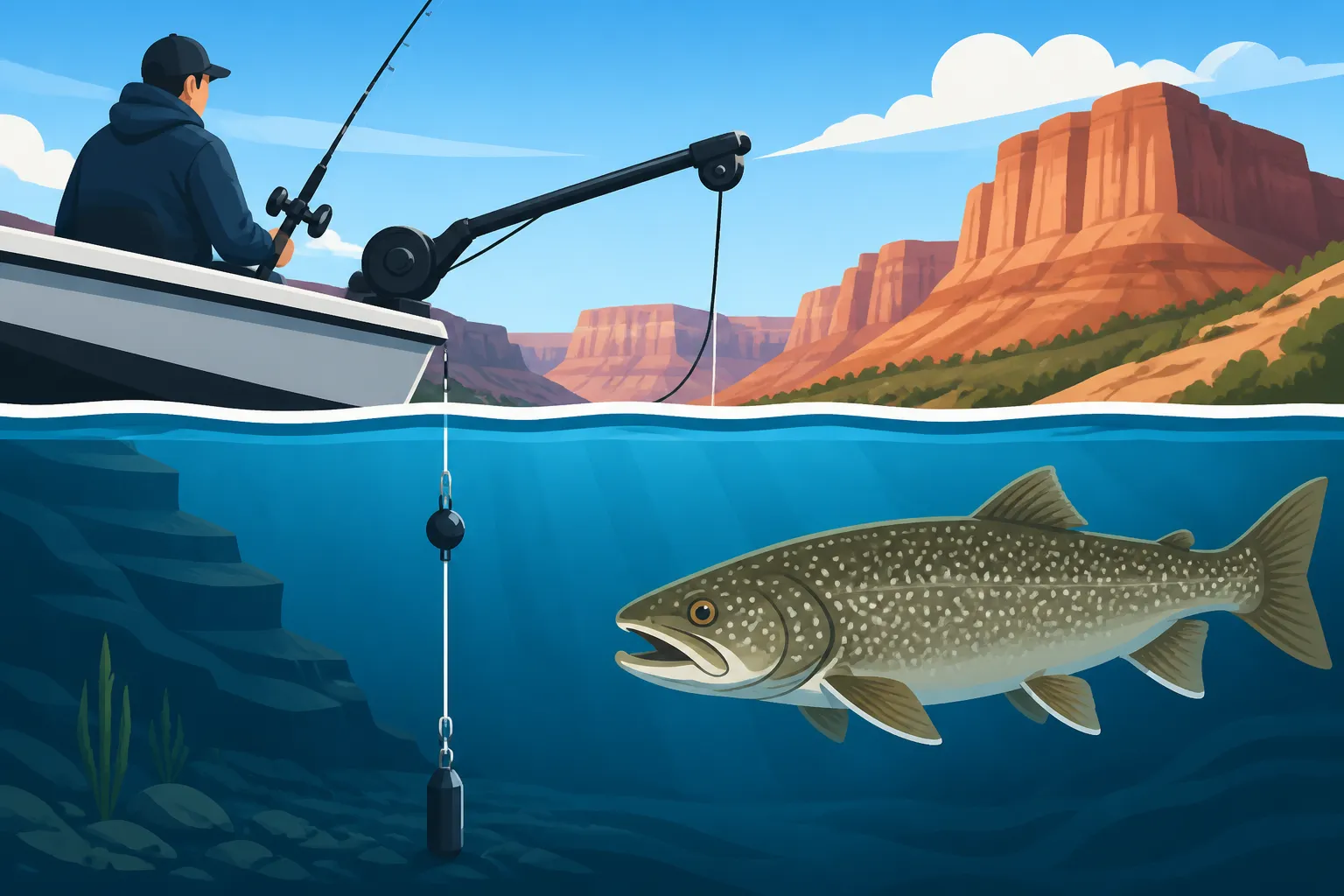
- Initial Setup: A common starting point, especially in summer, is to set one downrigger a few feet above the main bait ball you're seeing on your sonar, and another a few feet below it. Lake trout will often cruise just outside or underneath the bait schools, looking for stragglers. If you're fishing near the bottom, set your downrigger ball just 5-10 feet off the bottom.
- Monitoring Depth: Most modern downriggers have a depth counter, and many integrated fish finders will show the depth of your downrigger ball. Keep a close eye on these. Remember that line blowback (the angle of your line behind the boat) can cause your lure to run shallower than your downrigger ball, especially at faster trolling speeds or with lighter weights. Some anglers use heavier downrigger balls (10-12 lbs) to minimize blowback and keep their lure closer to the indicated depth.
- Trial and Error (The "Search Pattern"): If you're not getting bites after 15-20 minutes, don't be afraid to adjust. Move your downriggers up or down by 5-10 feet. Try changing a lure color. Vary your trolling speed slightly. Remember, the fish are telling you what they want. It’s all part of the Utah Trolling Techniques for Lake Trout game.
- Track Your Success: When you get a bite, immediately note the depth, lure, speed, and location. This data is gold! Over time, you'll start to see patterns emerge for different conditions.
Specific Depth Ranges by Season
While every day is different, here’s a general guideline for downrigger depths at Flaming Gorge, which you can use as a starting point. Always consult your fish finder for the most accurate, real-time information.
| Season | Typical Downrigger Depth Range (feet) | Key Factors to Consider |
|---|---|---|
| Early Spring | 20-50 feet | Pre-spawn, baitfish in shallower bays/points. |
| Late Spring | 40-70 feet | Water warming, baitfish starting to suspend deeper. |
| Early Summer | 50-80 feet | Thermocline forming, fish moving deeper. |
| Mid-Summer | 60-120 feet (or deeper) | Peak thermocline, lake trout deep, chasing suspended bait. |
| Early Fall | 50-90 feet | Water cooling, pre-spawn activity, fish can be variable. |
| Late Fall | 30-70 feet | Post-spawn, shallower feeding before ice-up. |
Important Note: These are starting points. Always let your electronics and the fish dictate your final downrigger depth. On a super bright day in mid-summer, you might need to go 130+ feet. On a cloudy spring morning, you might hit them at 30 feet. The lake changes daily!
Gear and Techniques for Downrigger Success
Having the right equipment and knowing how to use it effectively is just as important as knowing the ideal depth. Downrigging for lake trout at Flaming Gorge is a specialized technique that benefits from purpose-built gear.
Essential Downrigger Equipment Considerations
You wouldn't bring a butter knife to a steak dinner, and you shouldn't bring light tackle to tangle with a Flaming Gorge mackinaw on a downrigger.
- Rods and Reels: Look for medium-heavy to heavy action trolling rods, often 7 to 9 feet in length, with a softer tip to absorb the shock of the downrigger release and a powerful backbone for fighting large fish. A good line counter reel is practically a necessity. Brands like Okuma, Daiwa, and Penn make excellent trolling reels. Being able to accurately repeat the depth you were at when a fish hit is crucial, and a line counter helps immensely. You can find a great selection of these on Amazon.
- Fishing Line: Many anglers prefer braided line as their main line (30-50 lb test) for its incredible sensitivity and lack of stretch, which helps detect subtle bites even at great depths. However, you'll want to use a fluorocarbon or monofilament leader (10-20 lb test, 15-30 feet long) attached to your braid. The leader provides invisibility in clear Flaming Gorge waters and some stretch for shock absorption during the fight.
- Downriggers Themselves: For serious lake trout fishing at Flaming Gorge, you'll want electric downriggers. They make deploying and retrieving your heavy downrigger balls effortless, which is a huge advantage when constantly adjusting depths. Manual downriggers can work, but for fishing at 100+ feet all day, electrics are a game-changer. Cannon and Scotty are two of the most popular brands for downriggers, and you can compare different models and read reviews on Amazon. To learn more about setting up your boat, check out our guide on the Best Boat Setup for Trolling at Flaming Gorge.
- Terminal Tackle: You'll need release clips that attach your fishing line to the downrigger cable, allowing your line to "release" when a fish strikes. Quality swivels and snaps are also important to prevent line twist.
Lure Selection and Presentation at Depth
Once you've got your downriggers humming, what do you put on the end of your line? Lake trout are big predators with big appetites.
- Spoons: Large trolling spoons are classic lake trout producers. Colors like chartreuse, blue/silver, chrome/orange, or even natural trout patterns work well. Brands like Dodger, Little Cleo, and Luhr-Jensen make effective spoons. Vary the size from 3 to 6 inches.
- Plugs/Stickbaits: Deep-diving crankbaits or large stickbaits can also be very effective, especially those mimicking kokanee salmon or cisco. Jointed models can have an enticing action. Rapala Down Deep Husky Jerks and AC Shiners are popular choices.
- Flashers/Dodgers: Many anglers use flashers or dodgers in front of their lure. These create an enticing flash and vibration in the water that attracts lake trout from a distance. The dodger's thumping action also imparts an irresistible movement to your trailing lure. Experiment with different sizes and colors. Attach your lure about 18-36 inches behind the flasher.
- Trolling Speed: Generally, a slower trolling speed of 1.5 to 2.5 mph works best for lake trout. This allows your lures to have a natural, enticing action without appearing too frantic. However, experiment! Sometimes a slight speed increase or decrease can trigger a bite.
- Leader Length: A common practice is to run your lure 15 to 30 feet behind the downrigger release clip. This allows the lure to swim naturally, away from the disturbance of the downrigger ball and cable.
- Color Choice: For deep-water trolling, sometimes brighter, more reflective colors (like chrome, chartreuse, or glow-in-the-dark) are more visible in low light conditions. Other times, natural baitfish patterns are key. Always have a variety!
Tips for Identifying Active Fish and Making Adjustments
Finding the fish is one thing; getting them to bite is another. Be vigilant and willing to adapt.
- Observe Your Sonar Constantly: Don't just set it and forget it. Watch for new bait balls, larger fish arches, or changes in the thermocline. If the fish move, your downriggers need to move too.
- "Stacking" Your Lures: If allowed by regulations (always check Utah Fishing Regulations Explained), you can often "stack" two lines off one downrigger, using a second release clip attached higher on the downrigger cable. This allows you to cover two different depths with one downrigger.
- The Power of Subtle Adjustments: Often, it's not a radical change, but a slight tweak that makes the difference. A 5-foot change in depth, a minor speed adjustment, or even a different leader length can turn a slow day into a successful one.
- Vary Your Turns: When making turns with your boat, the outside line will speed up and lift, while the inside line will slow down and sink. These changes in speed and depth can sometimes trigger strikes from hesitant fish.
- When to Change Lures: If you're marking fish at the correct depth but not getting bites, it's time to change your lure. Switch colors, sizes, or types. Sometimes, a subtle change in action is all it takes.
- Don't Give Up on a Hot Spot: If you get a bite or mark a lot of fish in a specific area, make another pass through that spot. Trophy lake trout often travel in loose schools, and where there's one, there are often more. Mark it on your GPS and circle back.
Fishing for lake trout at Flaming Gorge with downriggers is a rewarding challenge. It takes patience, observation, and a willingness to adapt, but when that rod snaps out of the release clip and you feel the weight of a powerful mackinaw, all that effort will be worth it.
Disclaimer
Always remember that fishing regulations, including limits and species-specific rules, can change. It is your responsibility to check the most current Utah Division of Wildlife Resources (UDWR) guide before heading out on the water. This information is for general guidance and educational purposes only.