Utah Jigging Techniques for Walleye
There’s a unique challenge that comes with pursuing walleye in Utah, isn't there? These elusive fish, often called "pickerel" by some, have a knack for being incredibly finicky, especially when they’re holding deep or spread out in our vast reservoirs. It's easy to get frustrated when you're casting everything in your tackle box and coming up empty-handed. But don't despair! Mastering jigging techniques can be the game-changer you need to consistently put these delicious fish in your cooler. This guide is all about diving deep into the art and science of jigging for walleye in Utah, giving you the practical strategies to turn those tough days into triumphant ones.
Understanding Walleye Behavior and Habitat for Effective Jigging
Before you even think about dropping a jig, you've got to get inside the head of a walleye. They're not just random swimmers; their movements and preferred hangouts are dictated by a few key factors. Knowing these helps you predict where they'll be and how they might react to your presentation. It’s about being a detective on the water, not just a caster.
Seasonal Movements and Preferred Depths
Walleye are incredibly sensitive to light and water temperature, which means their behavior shifts dramatically with the seasons. In the spring, after the ice-off, they're often found shallower as they move to spawning grounds. This can be a prime time for jigging in relatively shallow water, targeting rocky points or gravel bottoms where they lay eggs. As the water warms in late spring and early summer, they'll gradually move deeper, seeking out cooler, more oxygenated water. This is when they start to relate more to deeper structures and often become less active during the bright daylight hours.
During the scorching Utah summer, walleye usually descend to the coolest, deepest parts of the reservoir where baitfish are also seeking refuge. You might find them suspended over old river channels, off deep points, or near submerged humps. This is where vertical jigging becomes absolutely essential. Come fall, as water temperatures begin to drop again, they can spread out and feed aggressively, often moving back into shallower feeding flats during low-light conditions before winter sets in and they return to deeper, stable areas beneath the ice. Understanding these seasonal migrations is the first step in knowing where to even begin your jigging efforts.
Structure and Cover Walleye Seek
Walleye are ambush predators, and they absolutely love structure. They’re not usually out in the middle of nowhere; they're almost always relating to something. This could be anything from a subtle depth change, a submerged rock pile, a sunken tree, or even a sharp break in the bottom contour. Think about how many times you've been on a lake and seen everyone fishing a specific point or hump—chances are, that's because there's some kind of structure holding fish. In Utah's reservoirs, old creek beds, submerged roadbeds, and vast flats with scattered rock are all prime walleye real estate.
They use these structures for both ambush points and protection from bright light. A walleye will often sit on the deep side of a break, waiting for unsuspecting baitfish to swim by, or tuck into the shade of a rock pile. When you're out jigging, you're trying to replicate that quick, darting movement of a baitfish struggling or injured near this structure. That's why pinpointing these areas with your electronics is so crucial. If you're not on structure, or at least near it, your chances of catching walleye with a jig diminish significantly.
Forage and Feeding Habits
What walleye eat directly influences where you’ll find them and what kind of jigs will tempt them. In many Utah waters, their primary diet consists of smaller forage fish like shad, perch, or various minnow species. Sometimes, they'll even key in on juvenile trout or kokanee salmon. When walleye are actively feeding, they're often following these baitfish schools. This is where your fish finder really shines, helping you locate the bait balls, because where there's bait, there are usually predators like walleye nearby.
Their feeding windows are often short and intense, usually during low-light periods like dawn, dusk, or under heavy cloud cover, or even right in the middle of the night. This is when they move shallower to actively hunt. During brighter periods, they'll retreat to deeper, darker water and may become more lethargic, only striking at a jig that presents a very easy meal. Your jigging technique needs to match their mood and their preferred prey. A quick, aggressive jig might work during a feeding frenzy, while a slow, subtle presentation might be required for those finicky, deep-water fish.
Essential Jigging Gear for Utah Walleye
Having the right tools for the job can make all the difference, especially when you're trying to coax a bite from a notoriously shy walleye. This isn't about buying the most expensive gear, but rather investing in equipment that performs reliably and gives you the sensitivity needed to detect those subtle walleye "thumps."
Rods, Reels, and Line for Jigging
For walleye jigging, sensitivity is paramount. You need to feel every tap, every change in bottom composition, and every subtle take. That means your rod is arguably the most important piece of equipment. Look for a fast to extra-fast action rod, typically in the 6'6" to 7'6" range, with a medium-light to medium power rating. Graphite rods are excellent for this as they transmit vibrations incredibly well. Brands like St. Croix, G. Loomis, or even more affordable options from Fenwick offer great choices that provide that critical feel. A good rod will feel like an extension of your arm, allowing you to interpret what's happening at the end of your line.
Pair your sensitive rod with a smooth spinning reel in the 1000 to 2500 size range. A quality drag system is important for fighting bigger fish, but smoothness and balance with the rod are key for comfort during long jigging sessions. For line, many seasoned walleye anglers swear by braided line for its zero stretch and incredible sensitivity. A 6 to 10 lb test braid is usually sufficient, and because it's so thin, it cuts through the water better, helping your jig get down faster and stay vertical in deeper water. However, braid can be highly visible, so it's almost always paired with a 4 to 8 lb fluorocarbon leader (3-6 feet long) tied with a knot like the Albright or FG knot. Fluorocarbon is nearly invisible underwater and offers a bit of abrasion resistance, which is handy around rocky structure.
The Best Jigs and Lure Types
The world of walleye jigs is vast, but a few types consistently perform well in Utah's waters. The classic lead-head jig is a staple. These come in various shapes and weights, from 1/8 oz for shallower work to 3/4 oz or even heavier for deep water and strong current. The key is to have a jig heavy enough to reach the bottom quickly and stay there, but not so heavy that it hinders the natural presentation. Color can be important too; natural colors like greens, browns, and blacks often work well in clear water, while brighter colors like chartreuse, orange, or white can be effective in stained or low-light conditions.
Beyond traditional jigs, consider:
- Paddle Tail Swimbaits: These are often fished on jig heads and imitate baitfish with a lifelike swimming action. Brands like Keitech or Kalin's Grub tails are popular choices, and you can find a wide variety of these on Amazon.
- Grubs and Curly Tail Plastics: Versatile and effective, these plastics offer a subtle action that walleye can’t resist, especially when they're a bit lethargic.
- Blade Baits: Lures like the Heddon Sonar or the Berkley Vibe are excellent for vertical jigging. Their unique vibration and flash can trigger aggressive strikes.
- Spoon Jigs: Often used for ice fishing, but also effective in open water for vertical jigging, especially for attracting fish from a distance. Their fluttering action on the drop can be irresistible.
- Hair Jigs: Sometimes, the natural pulsation of deer hair or bucktail can outperform plastics, especially for finicky fish.
Experiment with different sizes and colors until you find what the walleye are keying in on that particular day. Having a diverse selection in your tackle box is vital for adapting to changing conditions. You might want to check out a comprehensive list of What Lures Work Best for Utah Lake Walleye After Dark? if you're planning a nighttime trip.
Sonar and Electronics: Your Underwater Eyes
In walleye fishing, especially when jigging, your electronics are not just a luxury; they're an absolute necessity. You are essentially blind without them, casting into the unknown. A good fish finder allows you to do several critical things:
- Locate Structure: It helps you identify those crucial humps, drop-offs, rock piles, and old creek beds where walleye hide.
- Mark Fish: You can see individual fish or schools of baitfish, giving you precise targets for your jig.
- Monitor Depth and Bottom Composition: Knowing the exact depth and whether you’re over rock, mud, or gravel helps you adjust your presentation.
- Track Your Jig: Many modern units are sensitive enough to show your jig going up and down, allowing you to fine-tune your presentation and see how fish react to it.
Brands like Humminbird, Lowrance, and Garmin offer excellent units with features like CHIRP sonar, Down Imaging, and Side Imaging. For vertical jigging, a unit with a good 2D sonar or even Livescope/ActiveTarget technology can be a game-changer, showing you fish in real-time and how they're reacting to your lure. Learning How to Read a Fish Finder for Utah Reservoirs is an investment of time that will pay dividends in your catch rates. Don't just look for arches; learn to interpret what those arches mean in terms of fish species, size, and activity level. If you're serious about your walleye jigging, make sure you have reliable electronics.
Fundamental Jigging Techniques for Walleye
Now that you've got the gear and an understanding of walleye behavior, it's time to talk about putting that jig in the water and making it dance. There's more to jigging than just dropping a lure; it's about a nuanced presentation that triggers a strike.
The Lift-and-Drop Method
This is perhaps the most fundamental and widely used jigging technique for walleye, and for good reason—it's incredibly effective when executed properly. The basic idea is to gently lift your jig off the bottom, then let it fall back down. The "gentle" part is key. You're not trying to yank it sky-high; you're just lifting it enough to get it off the bottom a few inches to a foot, then allowing it to freefall or slowly descend back down.
Here's how to do it:
- Drop and Feel: Cast your jig out, or drop it directly below the boat if vertical jigging, and let it sink until you feel it hit the bottom. Take up any slack in your line.
- Lift: With a subtle wrist snap or a slight upward movement of your rod tip, lift the jig gently. This creates a puff of sediment if it's a soft bottom, mimicking a feeding baitfish, or gives a quick, darting motion.
- Fall (Crucial Part): Immediately follow the jig down with your rod tip, keeping just enough tension to feel the weight of the jig but not so much that you hinder its natural fall. Most walleye strikes happen on the fall, so you need to be hyper-attentive during this phase. If your line goes slack prematurely, twitches, or you feel a subtle "thump," set the hook immediately!
- Repeat: Once the jig hits bottom again, pause for a second or two, then repeat the lift-and-drop. Vary the height of your lift and the speed of your fall until you find what the fish prefer. Sometimes a rapid fall is best, other times a slow, fluttering descent.
This technique is incredibly versatile and can be used with various jig types and trailers. It's often most effective when walleye are holding tight to the bottom or are in a neutral to negative feeding mood.
Snap Jigging and Rip Jigging
When walleye are more aggressive, or you need to cover water faster and elicit a reaction strike, snap jigging or rip jigging can be incredibly productive. These techniques are more forceful than the gentle lift-and-drop and are designed to create a more erratic, attention-grabbing action.
Snap Jigging:
This involves a sharper, quicker snap of the rod tip, often lifting the jig anywhere from one to three feet off the bottom. Immediately after the snap, you let the jig fall back down on a semi-slack line, again, feeling for those tell-tale strikes on the descent. The key here is the sudden, short burst of speed, followed by the lure's natural, enticing fall. This method is great for covering water and targeting active fish on points, humps, or flats. It can also be excellent when you're trying to draw fish out of thicker cover.
Rip Jigging:
This is the most aggressive of the three main jigging styles. As the name suggests, it involves a powerful, long rip of the rod, sometimes pulling the jig several feet off the bottom. This creates a chaotic, fleeing baitfish presentation. Like snap jigging, the strike nearly always comes on the fall. This technique is often used with larger jigs, blade baits, or heavy spoons. It’s particularly effective when walleye are actively chasing bait or when you're trying to trigger a reaction strike from a fish that's not quite committed. It also helps stir up sediment, drawing attention from a distance. Both snap and rip jigging are demanding on your gear, so make sure your knots are solid!
Vertical Jigging in Open Water
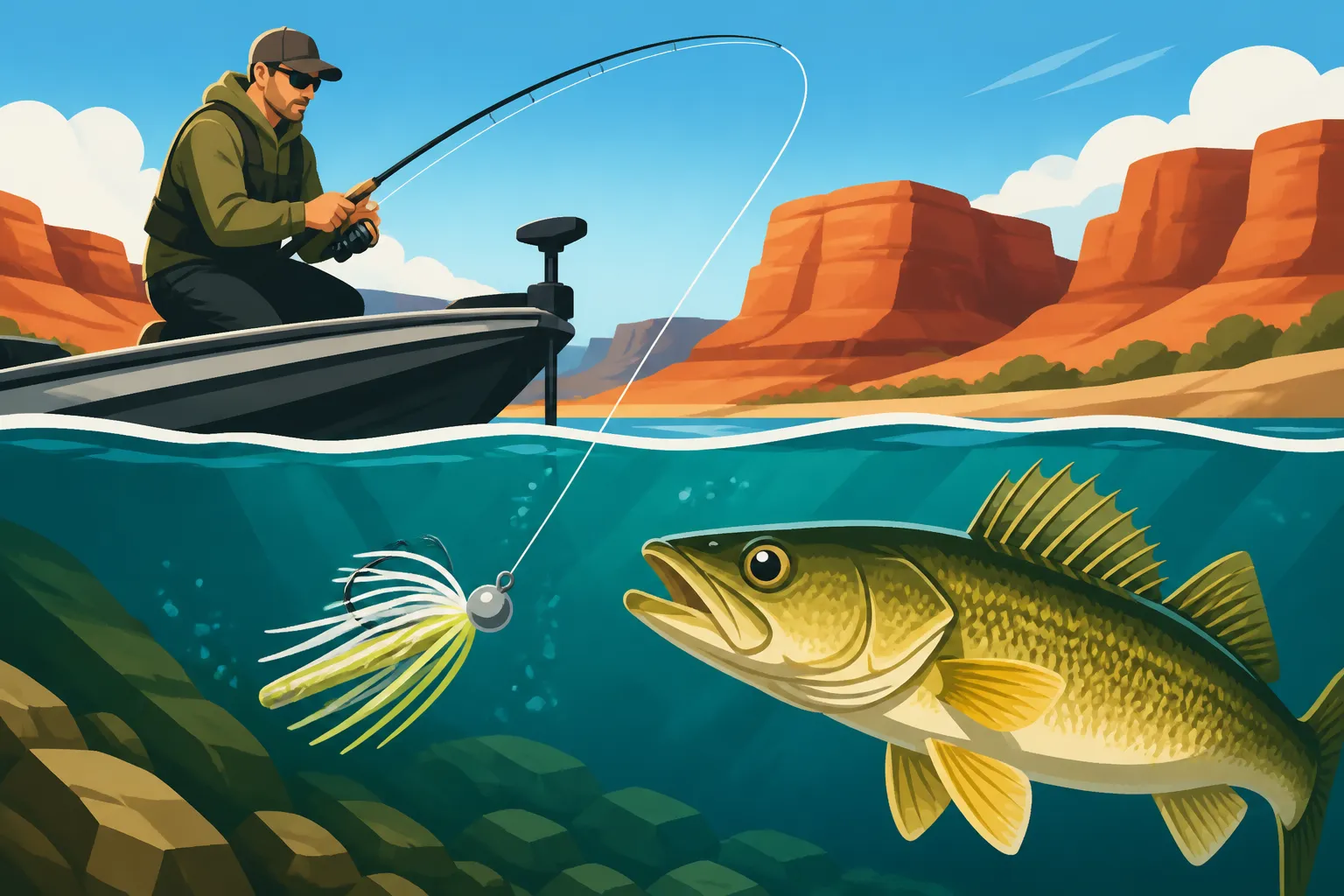
Vertical jigging, sometimes called "pitching" or "dropping," is a precision technique where you fish directly beneath the boat. It's especially deadly when walleye are concentrated in a specific area, perhaps relating to a deep structure, or when they're suspended over open water baitfish schools. The advantage of vertical jigging is unparalleled control and direct contact with your lure. You can see your jig on your electronics and watch how fish react to it.
Here’s the breakdown:
- Positioning: Use your trolling motor to position your boat directly over the fish or structure you've identified on your fish finder. Boat control is paramount here. A good trolling motor like a Minn Kota Ulterra or a Garmin Force, especially ones with GPS anchoring features, makes this much easier.
- Drop and Monitor: Drop your jig straight down. Watch your sonar screen; you should see your jig descending.
- Target Depth: Bring the jig to the desired depth, whether that's right on the bottom, a few feet off, or in the middle of a suspended baitball.
- Work the Jig: Employ a subtle lift-and-drop, a gentle quiver, or a short snap, depending on the fish's mood. Because you're directly overhead, you don't need exaggerated movements. Small twitches and pauses can be incredibly effective.
- Watch Your Electronics: Observe how fish react. Do they move towards your jig? Do they shy away? This real-time feedback allows you to adjust your technique instantly. If you see a fish rise to your jig but not strike, a slight pause or a subtle shimmy might be all it takes.
Vertical jigging is incredibly effective in deeper sections of reservoirs like Utah Lake or Deer Creek, especially during the summer months when walleye retreat to cooler depths. This technique allows for pinpoint accuracy and is excellent for really dissecting a specific piece of structure or a small school of fish. It's also a go-to method for Utah Ice Fishing Guide scenarios where precision is everything.
Advanced Jigging Strategies for Tricky Walleye
Sometimes, the standard approaches just don't cut it. Walleye can be notoriously moody, and when they're being particularly stubborn, you need to pull out some finesse. These advanced strategies can make the difference between a tough day and a successful one.
Dead-Sticking and Finesse Jigging
When walleye are in a negative or neutral feeding mood, an aggressive jig can actually spook them. This is when dead-sticking and finesse jigging become invaluable. Instead of rapid movements, you're focusing on minimal action and maximum realism.
Dead-Sticking: This technique is exactly what it sounds like: barely moving the rod. You drop your jig down, let it hit the bottom, then lift it just a few inches and hold it absolutely still. Imagine an injured baitfish barely clinging to life. Any movement comes from natural boat drift, current, or your jig’s inherent design. Often, a tiny twitch of your wrist every 10-20 seconds is all you do, just enough to make the tail of a plastic quiver or a piece of live bait twitch. The strike usually feels like added weight or a very soft tap. This is incredibly effective during cold water periods, like in late fall or early spring, or when fish are highly pressured. This is often done when ice fishing, where an angler will use a second rod for dead-sticking while actively jigging with another.
Finesse Jigging: This is a step up from dead-sticking but still prioritizes subtle movements. Instead of aggressive snaps, think tiny shimmies, slow lifts, and long pauses. You might just barely twitch your rod tip, or slowly lift the jig a few inches and hold it, then slowly lower it back down. The goal is to make your jig look like an easy, almost effortless meal. Small jigs, slender plastics, or hair jigs are perfect for finesse applications. Adding a small minnow or a piece of nightcrawler to your jig can also enhance the appeal. The patience required for finesse jigging can be immense, but the rewards are often big, especially for those hard-to-catch, trophy-sized walleye.
Jigging with Live Bait and Scent
There are days when walleye simply prefer the real thing. While artificial jigs can be highly effective, combining them with live bait or scent can often seal the deal, especially on tough bites.
Live Bait Jigging: This involves tipping your jig with a live minnow, a piece of nightcrawler, or even a leeches (where legal and available).
- Minnows: Hook a minnow through the lips or lightly through the dorsal fin so it stays lively. The minnow's natural struggles combined with your jigging motion can be incredibly enticing. The minnow adds natural scent, movement, and a profile that walleye instinctively recognize as food. This technique is often deadly when vertically jigging, allowing the live bait to do most of the work with just subtle lifts from you.
- Nightcrawlers: A piece of nightcrawler threaded onto a jig can provide both scent and wriggling action. This is particularly effective when walleye are feeding on worms or other invertebrates.
- Leeches: Where permitted, leeches are a walleye favorite. Their undulating movement on a jig can be irresistible.
Scent Applications: Even when using artificial plastics, adding commercial scents can make a significant difference. Products like Smelly Jelly, Berkley Gulp! Alive, or Pro-Cure scents can be applied directly to your jig or plastic trailer. These scents replicate natural prey odors and can mask human scent, encouraging a walleye to hold onto your lure longer, giving you more time to set the hook. This is particularly valuable in stained water where a walleye relies more on scent than sight to locate prey. Remember that using live bait comes with specific regulations, so always check the current Utah Fishing Regulations Explained before heading out.
Mastering Drift and Boat Control
Effective jigging, especially in open water or over expansive flats, relies heavily on precise boat control. You can have the best jig and technique in the world, but if you're not presenting it in the strike zone, it won't matter.
Controlled Drifting: This involves using the wind or a trolling motor to move your boat slowly over a productive area. The goal is to keep your jig near vertical or at a very slight angle, allowing it to maintain bottom contact while covering ground.
- Wind Drifting: Let the wind push your boat. Use a drift sock or two to slow your drift down and control your direction. Deploying a drift sock off the bow will help keep your boat straight, while one off the stern will slow you down without affecting your bow.
- Trolling Motor Control: A bow-mounted electric trolling motor is invaluable for maintaining a slow, controlled drift or for precise maneuvering. Modern GPS-enabled motors can even hold you on a specific course or spot, making it easy to hit the same productive lane repeatedly.
Reading the Bottom: As you drift, constantly monitor your fish finder. Look for changes in depth, subtle humps, rock piles, or schools of baitfish. These are your target zones. As you identify structure, mark it on your GPS. This allows you to re-drift the same successful path later.
Line Angle Management: When drifting, try to keep your line as vertical as possible, typically at no more than a 45-degree angle. If your line is trailing too far behind the boat, your jig isn't in proper contact with the bottom, and you're missing out on vital feedback. Adjust jig weight or boat speed to maintain that ideal angle. This is where a good understanding of How Wind Affects Fishing on Utah Reservoirs truly comes into play.
Top Utah Walleye Waters and Their Jigging Nuances
Utah is home to several fantastic walleye fisheries, each with its own unique characteristics and challenges. What works in one lake might need a slight adjustment in another. Understanding these nuances can significantly boost your success.
Utah Lake: A Walleye Jigging Hotspot
Utah Lake is arguably Utah's premier walleye fishery, and jigging here is a fundamental technique for success. The lake is vast, relatively shallow, and prone to turbidity, which means walleye often relate to subtle structure and thrive in low-light conditions. The Utah Lake Walleye Population thrives here, offering ample opportunity.
- Structure: Focus your jigging efforts around the numerous rock piles, submerged humps, and old river channels that crisscross the lake bottom. Use your electronics to find these features, which can be hard to spot on such a large, often featureless body of water.
- Depth: While the lake is shallow overall, walleye will still seek out the deepest parts, especially during bright summer days. However, they also move onto shallow flats to feed aggressively during dawn, dusk, and cloudy periods.
- Colors: Due to the often stained or turbid water, brighter colors like chartreuse, orange, and white jigs frequently outperform natural colors. Glow-in-the-dark jigs can also be deadly, especially for How to Catch Walleye at Utah Lake in Summer after the sun goes down.
- Technique: A mix of lift-and-drop and snap jigging can be effective. Don't be afraid to experiment with more aggressive presentations, as the walleye here often respond well to a bait that's trying to escape. Vertical jigging is excellent when you've pinpointed a school of fish. Don't forget to check the Utah Walleye Daily Limit before you head out.
Deer Creek and Willard Bay: Unique Jigging Challenges
While Utah Lake is the king, Deer Creek Reservoir and Willard Bay offer fantastic, albeit different, walleye jigging experiences.
Deer Creek Reservoir: This is a much clearer, deeper, and colder reservoir than Utah Lake. Walleye here often suspend more or relate to steep drop-offs and main lake points.
- Structure: Focus on the main channel edges, submerged islands, and areas where the Provo River feeds into the lake. Walleye will use these areas as travel corridors and ambush points.
- Depth: Expect to find walleye deeper here, often in the 20-40 foot range, or even deeper in summer. They might also suspend over the main basin, following baitfish.
- Colors & Baits: Given the clearer water, more natural colors like greens, browns, and black can be very effective. Minnow-imitating plastics and small spoons are great choices. Tipping jigs with minnows can be particularly productive.
- Technique: Vertical jigging is paramount here, especially when targeting suspended fish. Slow, methodical lift-and-drop presentations often outshine aggressive snaps in the clearer water. Watch your electronics closely for fish suspending.
Willard Bay Reservoir: This is a warm, shallow, and often murky reservoir known for its wipers and excellent walleye fishing.
- Structure: While it lacks the dramatic depth changes of Deer Creek, Willard Bay has subtle humps, old fence lines, and scattered rock/rubble that hold walleye. The causeway areas can also be productive.
- Depth: Being shallow, walleye in Willard Bay don't have many deep refuges. They'll often relate to any slight depth change or cover available, and light penetration plays a big role.
- Colors & Baits: Like Utah Lake, brighter colors are often the ticket here, especially in the turbid water. Chartreuse, firetiger, and orange plastics on jig heads are excellent. Swimbaits are also a good choice to imitate baitfish.
- Technique: Drifting and casting jigs are highly effective here, covering the expansive shallow flats. The lift-and-drop and snap jigging can both work well. Don't overlook the potential for a strong night bite, which often requires slower, more subtle jigging.
Less-Known Walleye Fisheries
While the big three often get the spotlight, Utah has other waters that hold populations of walleye, offering a chance to escape the crowds. Places like Starvation Reservoir in the Uinta Basin, or even certain stretches of the Bear River, might surprise you with their walleye potential.
- Starvation Reservoir: This reservoir is known for its diverse fishery, including a decent walleye population. It has clearer water than Utah Lake but can still get stained. Focus on main lake points, rocky humps, and the dam area. Depths can vary, so adjust your jig weight accordingly. Natural colors with some flash, or classic chartreuse, are good starting points. Vertical jigging near structure and drifting flats can both be productive.
- Bear River: While primarily known for trout, some stretches of the lower Bear River and its impoundments can hold walleye. Current becomes a major factor here, so heavier jigs might be required to maintain bottom contact. Look for slower eddies, deeper holes, and areas with submerged timber. Natural baitfish colors will likely be the best bet here.
The key to these lesser-known spots is reconnaissance. Use satellite maps to identify potential structure, then verify with your fish finder. Don't be afraid to experiment with different jigging techniques until you crack the code for that particular body of water. Every lake has its own rhythm, and a good angler learns to dance to it.
Adapting Your Jigging for Different Conditions
Walleye don't behave the same way every day. Water temperature, clarity, time of day, and even the season dictate their activity levels and where they'll be found. A successful walleye jigger is a master of adaptation, constantly fine-tuning their approach.
Jigging in Cold Water and Ice Fishing Scenarios
Cold water, whether it's late fall, early spring, or full-blown winter ice fishing, profoundly affects walleye metabolism. They become slower, less aggressive, and often hold tighter to structure. Your jigging technique needs to reflect this decreased activity.
- Slow it Down: Forget aggressive rips. Think ultra-finesse. Your lifts should be minimal – just a few inches off the bottom – followed by a prolonged pause. Sometimes a dead-stick presentation with minimal movement is the only thing that will trigger a bite.
- Smaller Baits: Walleye in cold water often prefer smaller, less intrusive presentations. Downsize your jigs to 1/8 oz or 1/4 oz, and use smaller plastic trailers or minnow heads for tipping.
- Scent is Key: With their metabolism slowed, walleye rely more on scent. Tipping your jig with a piece of live bait (minnow head, wax worm, or a small piece of nightcrawler) or applying a good commercial scent becomes even more critical.
- Depth: During cold periods, walleye will often stack up in deeper basins, along channel edges, or on main lake points, seeking stable temperatures. Use your electronics to find these concentrated schools. For dedicated insights, check out Utah Ice Fishing Guide for more specifics on winter techniques.
- Ice Fishing Specifics: When ice fishing, you have the ultimate vertical presentation. Use your flasher or graph to monitor your jig and any fish that approach it. Often, a subtle quiver or a barely perceptible lift-and-drop is all it takes. Keep your jig in the fish's face for extended periods.
Adjusting for Water Clarity and Current
Water clarity and current flow are two significant environmental factors that dictate how you should present your jig. Ignoring them can lead to a frustrating day.
- Clear Water: In very clear waters like Deer Creek, walleye are more wary and rely heavily on sight.
- Colors: Opt for natural, subtle colors like greens, browns, and black. Silver or gold accents can work if they mimic baitfish flash. Avoid overly bright or unnatural colors.
- Technique: Finesse jigging and dead-sticking are often more effective. Longer fluorocarbon leaders are a must to reduce line visibility. Keep your movements subtle and lifelike.
- Stealth: Be mindful of boat noise and shadows. Walleye in clear water are easily spooked.
- Stained/Turbid Water: In murkier waters, like parts of Utah Lake or Willard Bay, walleye rely more on their lateral line and sense of smell.
- Colors: Brighter, high-contrast colors like chartreuse, orange, firetiger, or white often stand out better. Glow-in-the-dark jigs can be phenomenal.
- Technique: More aggressive snap jigging or rip jigging can help create vibration and displace water, allowing fish to locate your lure.
- Scent: This is where commercial scents or live bait really shine, providing an olfactory signal for fish that can't see your lure clearly.
- Current: When fishing in areas with current, such as river sections or bottlenecks in reservoirs, you need to adjust your jig weight and presentation.
- Heavier Jigs: Use a jig heavy enough to maintain bottom contact without being swept away. You want to feel that "tick-tick-tick" of your jig occasionally hitting the bottom.
- Controlled Drifts: Angle your boat or use your trolling motor to control your drift speed, allowing your jig to present naturally with the current.
- Upstream Casts: Sometimes, casting slightly upstream and allowing your jig to drift down with the current, while keeping tension, can be highly effective, especially when targeting fish positioned to ambush prey.
Night Fishing for Walleye with Jigs
Nighttime can be prime time for walleye, especially in the summer when they move shallower to feed aggressively under the cover of darkness. Many anglers consider night fishing to be the best time to target larger walleye.
- Light Sensitivity: Walleye are known for their exceptional low-light vision, giving them an advantage over baitfish at night. They’ll often move onto shallower flats, points, and humps where they wouldn’t dare go during the day.
- Location, Location, Location: Focus on areas adjacent to deeper water, such as shallow breaks, rock piles, or weed lines. These are their feeding grounds at night.
- Glow and Dark Colors: Glow-in-the-dark jigs are incredibly popular for night fishing. Charge them with a flashlight periodically. Darker colors like black or purple can also create a strong silhouette against the moonlit water, making them visible.
- Slower Presentations: While walleye can be aggressive at night, often a slower, more deliberate jigging action is best. They may not be chasing as much as they are ambushing. A slow lift-and-drop with pauses, or even dead-sticking, can be very effective.
- Sensory Focus: Consider using jigs with rattles or soft plastics with a lot of movement to provide both auditory and tactile signals in the darkness.
- Safety First: Always prioritize safety when fishing at night. Have good lighting on your boat, wear a headlamp, and let someone know your plans. If you're looking for more specific tactics, check out How to Catch Walleye at Night. It’s a completely different ballgame under the stars, but incredibly rewarding.
| Condition | Jig Weight | Jig Color | Jigging Style | Tips |
|---|---|---|---|---|
| Cold Water / Ice | Light (1/8-1/4 oz) | Natural, Glow | Finesse, Dead-stick | Slow, subtle movements. Use live bait or scent. Focus on deeper, stable areas. Keep jig in strike zone longer. |
| Clear Water | Light-Medium | Natural, Subtle | Finesse, Lift-Drop | Long fluorocarbon leader. Mimic natural prey. Minimize boat noise. |
| Stained/Turbid Water | Medium-Heavy | Bright, High-Contrast, Glow | Snap, Rip, Aggressive Lift | Create vibration. Use strong scents. Fish cover and structure more aggressively. |
| Current | Heavy | Any, often Bright | Upstream Cast, Controlled Drift | Maintain bottom contact. Use boat control to keep vertical. Find eddies. |
| Night Fishing | Medium | Glow, Dark | Slow Lift-Drop, Dead-stick | Charge glow jigs. Focus on shallow feeding flats. Use scent. Be extra careful with safety. |
Common Jigging Mistakes and How to Avoid Them
Even seasoned anglers can fall into bad habits or make common mistakes that cost them walleye. Being aware of these pitfalls and actively working to avoid them will make you a more consistent and successful jigger.
Overworking the Lure
This is perhaps the most common mistake, especially for anglers new to jigging or those who are used to more active presentations for other species. There's a natural tendency to want to constantly move the lure, to "make it do something." However, walleye often prefer a more subtle, almost lifeless presentation, especially when they are less aggressive.
- The Problem: When you overwork your jig – lifting it too high, snapping it too frequently, or moving it too fast – you can make it appear unnatural or too difficult for a walleye to catch. It looks like a healthy, fleeing baitfish that's too much effort to pursue.
- The Solution: Embrace the pause. Many experienced walleye anglers will tell you that the pause is the most critical part of the retrieve. After a lift or a snap, let your jig fall and then pause for a few seconds on the bottom (or where you expect the fish to be suspended). This dead-stick period often gives the walleye the window of opportunity it needs to strike. It looks like an easy meal. When you feel a strike, it's often a very subtle "thump" or just added weight, so stay focused during those pauses. Vary the length of your pauses; sometimes they want a short pause, other times a long one.
Ignoring Your Electronics
Your fish finder is your window into the underwater world. Many anglers treat it as a passive tool, glancing at it occasionally. For walleye jigging, it needs to be an active, integral part of your strategy.
- The Problem: If you're not constantly monitoring your screen, you're missing crucial information. You might be jigging in an area devoid of fish, presenting your lure at the wrong depth, or failing to react to fish that are moving in or out of the strike zone. You also won't know how the fish are reacting to your presentation – are they coming up to look at it, then turning away?
- The Solution: Treat your fish finder like a video game. Actively watch your jig on the screen as it descends and as you work it. Look for fish arches or marks, and adjust your jig's depth to place it directly in front of their faces. If you see a fish rise to your jig but not strike, try a different presentation – a slower fall, a longer pause, or a subtle twitch. Your electronics tell you the story of what's happening below. Learning to interpret those signals allows you to adjust in real-time and often leads to more hookups. Remember that a great unit, perhaps one you got from Amazon, is only as good as your ability to use it. If you're new to using one, make sure to review resources on Best Fish Finders for Utah Reservoirs and their effective use.
Not Varying Your Approach
Walleye are notorious for changing their preferences from day to day, and sometimes even hour to hour. What worked yesterday, or even this morning, might not work now.
- The Problem: Sticking to one jig color, one jig weight, or one retrieve speed when the fish aren't biting is a recipe for frustration. Anglers often fall into the trap of doing what "always works" even when it's clearly not working in the current conditions.
- The Solution: Be an experimenter. Start with a tried-and-true method, but if you're not getting bites within 15-20 minutes, change something.
- Change Jig Weight: Go heavier to get down faster, or lighter for a slower, more subtle fall.
- Change Jig Color: Switch from natural to bright, or vice-versa.
- Change Trailer: Try a different plastic shape, size, or add live bait/scent.
- Change Retrieve: Go from aggressive snap jigging to a gentle lift-and-drop, or try dead-sticking. Vary the height of your lift and the length of your pauses.
- Change Depth: Walleye might be holding a foot off the bottom, or five feet off the bottom, or suspended higher.
- Change Location: If you've tried everything in one spot, move to another piece of structure or a different depth range.
The most successful walleye anglers are the ones who are constantly adapting and trying new things until they crack the code. Pay attention to what's happening around you, what other anglers might be catching on, and don't be afraid to break from tradition when the fish aren't cooperating. This continuous adjustment is key to consistent walleye success in Utah.
Disclaimer
Fishing conditions and regulations can change rapidly. Always consult the latest Utah Division of Wildlife Resources (DWR) fishing proclamations before heading out on the water. This article is intended for informational purposes only and does not supersede official DWR regulations. Fish responsibly and safely.