How to Fish a Drop Shot Rig for Utah Bass
Have you ever been out on the water, seeing those telltale signs of bass on your fish finder – maybe a big arch or two hugging the bottom – but no matter what you throw at them, they just won't bite? It's a scenario that every Utah angler knows all too well, especially when those smallmouth and largemouth get finicky or hold tight to deep structure. This guide is here to unravel that mystery, showing you how to effectively fish a drop shot rig for Utah bass, turning those frustrating days into successful ones.
What Exactly Is a Drop Shot Rig and Why It's a Game-Changer for Utah Bass
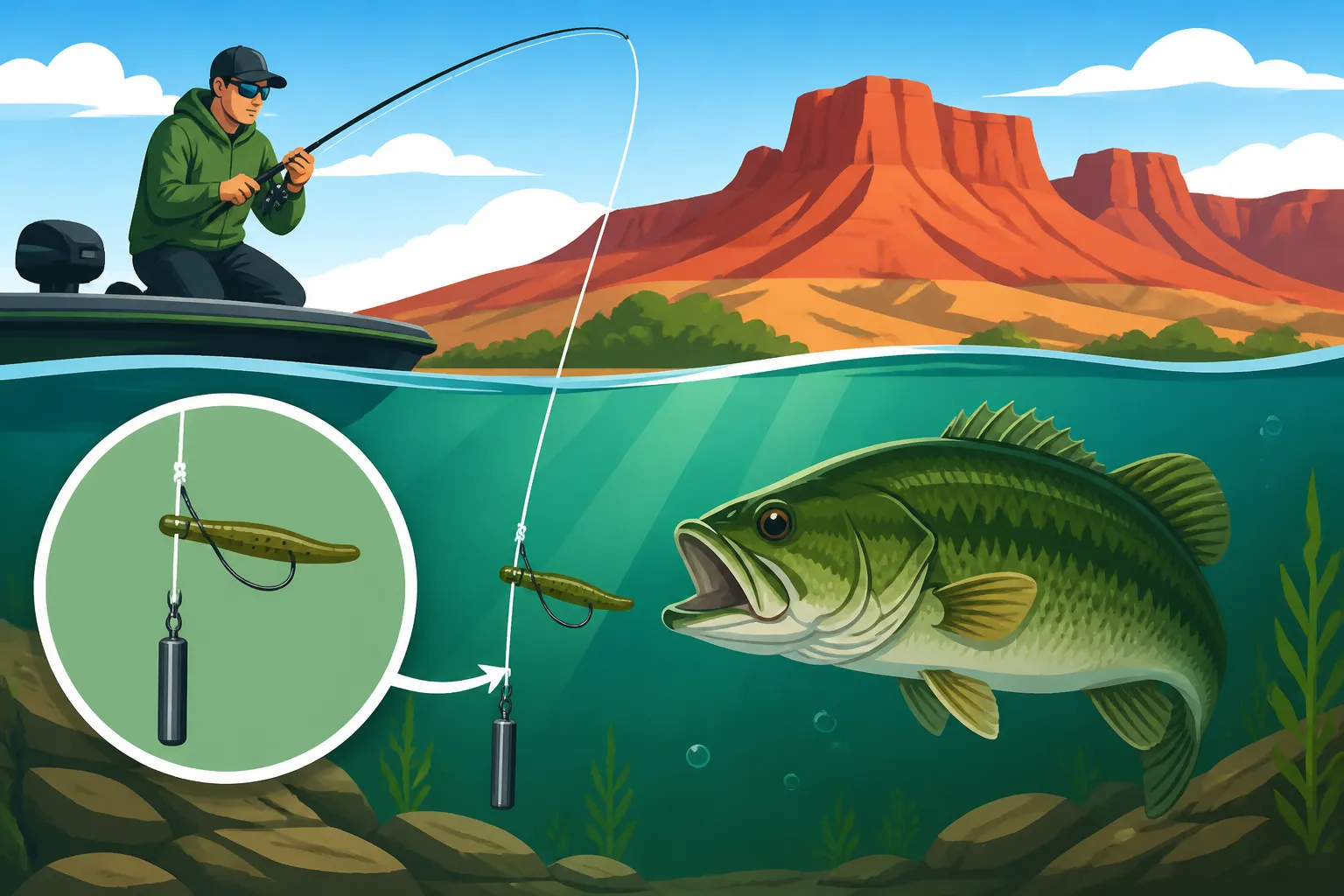
The drop shot rig is one of those techniques that, once you "get" it, feels like you've unlocked a secret weapon. It's designed to present your lure in a subtle, natural way, suspending it horizontally at a specific depth above a weight. This might sound simple, but its effectiveness comes from its ability to keep your bait right in the strike zone, fluttering enticingly, even when the bass are hesitant. For Utah's often clear waters and deep, rocky reservoirs, this presentation can be absolutely deadly.
The Anatomy of a Drop Shot Rig
Unlike traditional rigs where the weight is at the end of the line, pulling your bait down, a drop shot flips the script. The hook is tied directly to the main line, and then a lead or tungsten weight is tied to the very end of the line, below the hook. This setup allows your bait to hover off the bottom, unencumbered by the weight. It's crucial for those days when bass are suspended or are just lazily picking at baits.
Imagine a school of smallmouth bass holding at 20 feet over a rocky ledge at Flaming Gorge. With a traditional Texas rig or a jig, your bait would either be on the bottom or quickly sinking past them. But with a drop shot, you can drop your weight right to that 20-foot mark, and your bait will sit right there, waving in their faces without touching the lakebed. This prolonged exposure and subtle action are what often trigger strikes from even the most pressured fish. It's a finesse technique, pure and simple, and it's essential for anyone serious about catching bass in Utah.
Why It Excels in Utah's Diverse Waters
Utah's lakes and reservoirs present a unique set of challenges and opportunities for bass anglers. We have everything from the vast, deep expanses of Lake Powell to the shallower, more structured waters of Utah Lake, and the rocky, clear depths of places like Deer Creek Reservoir. What makes the drop shot so powerful here?
First, the ability to fish deep water effectively is paramount. Many of our best bass fisheries have deep pockets, ledges, and submerged points where bass retreat during hot summer months or simply when they're not actively feeding near the surface. The drop shot allows you to precisely target these depths. You can literally feel the weight hitting the bottom, knowing exactly how far off the bottom your bait is suspended.
Second, the clear water found in many Utah reservoirs can make bass incredibly skittish. Heavy lines, bulky lures, and unnatural presentations often spook them. The drop shot, when rigged correctly with lighter line and smaller, natural-looking baits, mimics prey without alarming the fish. It's a finesse approach that often fools wary bass, especially when you're targeting those bigger, more experienced fish that have seen every other lure in the tackle box. When you're trying to figure out how to catch smallmouth bass in rocky coves, the drop shot is often the answer.
Assembling Your Perfect Utah Drop Shot Rig
Getting your gear dialed in is key to success with the drop shot. While it's a finesse technique, that doesn't mean you can just throw it on any old rod and reel. Precision, sensitivity, and the right components make all the difference, especially when you're battling a hard-fighting smallmouth against unforgiving Utah rock.
Rod, Reel, and Line for Optimal Sensitivity
For a drop shot, sensitivity is king. You need to feel those subtle "ticks" and pressure changes that signal a bite.
- Rod: A spinning rod is almost always preferred for drop shot fishing due to its lighter line capabilities and ease of casting lighter weights. Look for a rod in the 6'6" to 7'6" range with a fast or extra-fast action. This action means the tip is very flexible, allowing for subtle lure manipulation and excellent bite detection, while the backbone of the rod provides enough power to drive the hook home and fight a strong fish. A medium-light or medium power rod is generally ideal. A good quality graphite rod will transmit vibrations much better than fiberglass, giving you that crucial feel. If you're looking for Best Fishing Rods for Utah Anglers, a dedicated drop shot rod will be a fantastic addition.
- Reel: Pair your sensitive rod with a high-quality spinning reel in the 1000 to 2500 size range. Smooth drag is non-negotiable, as you'll be fighting fish on lighter lines. A fast retrieve ratio can be helpful for quickly taking up slack line, but smoothness is paramount.
- Line: This is where things get a little nuanced. Most anglers run a braided main line with a fluorocarbon leader.
- Braided Main Line: 8 to 15 lb test braid is common. Braid has virtually no stretch, which maximizes sensitivity and allows for excellent hook sets, even in deep water. It also floats, which can be advantageous.
- Fluorocarbon Leader: A 6 to 10 lb test fluorocarbon leader is tied to the braid using a knot like an FG knot or a Double Uni knot. Fluorocarbon is nearly invisible underwater, which is crucial in clear Utah waters, and it's much more abrasion-resistant than mono, helping when fishing around rocky structure. The stretch in fluorocarbon also provides a little shock absorption, preventing break-offs on sharp head shakes. Choosing the Best Fishing Line for Utah Bass often comes down to this fluorocarbon leader for finesse techniques.
Hooks, Weights, and Baits that Entice
The business end of your drop shot rig needs careful consideration to maximize its effectiveness.
- Hooks: The most common drop shot hook is an octopus hook or a specialized drop shot hook, usually in sizes #1 to #2/0. These hooks are designed with a wide gap to allow your soft plastic bait to move freely and an upward-pointing eye, which helps the bait sit horizontally when tied correctly. You'll want to tie the hook with a Palomar knot, passing the tag end back through the eye from the top, ensuring the hook point stands out perfectly.
- Weights: Drop shot weights are often pencil-shaped or cylindrical, designed to slip through rocks and cover without snagging. They come in various sizes, typically 1/8 oz to 1/2 oz, with 1/4 oz being a versatile starting point. Tungsten weights are increasingly popular over lead because they are denser (smaller profile for the same weight) and transmit bottom feel much better. Many anglers purchase these weights on Amazon for convenience. The most critical feature is the line clip or swivel at the top, allowing you to quickly adjust the depth of your bait without retying. When you're fishing different depths throughout the day, this quick adjustment feature is invaluable. You can find a wide array of drop shot weights on Amazon, including various materials and styles.
- Baits: The beauty of a drop shot is its versatility with soft plastics. The key is to use baits that have a lot of natural action with very little movement from your rod.
- Small Worms & Senkos: Think 3-5 inch straight-tail worms (like Roboworms or Yamamoto Senkos), finesse worms, or even trick worms. These baits have an incredible quivering action underwater.
- Creature Baits & Leeches: Smaller creature baits or imitations of leeches can also be very effective, especially when bass are feeding on bottom-dwelling organisms.
- Minnow Imitations: Soft plastic minnows (flukes) or shad imitations in natural colors (green pumpkin, watermelon, ghost minnow) are excellent choices, especially when bass are keying in on baitfish.
When selecting, consider the water clarity and available forage in your chosen Utah lake. Many anglers find their preferred soft plastics for drop shot rigs through retailers like Amazon, often buying in bulk.
| Component | Description | Typical Size/Type | Why it matters for Utah Bass |
|---|---|---|---|
| Rod | Spinning rod, fast/extra-fast action, light/medium-light power | 6'6" – 7'6" | Max sensitivity, subtle lure movement, strong hookset for deep fish |
| Reel | High-quality spinning reel with smooth drag | 1000 – 2500 series | Fights fish on light line, handles braid/fluoro combo |
| Main Line | Braided line, low stretch, high sensitivity | 8-15 lb test | Feel subtle bites, strong hook penetration, floats |
| Leader | Fluorocarbon, low visibility, abrasion resistant, some stretch | 6-10 lb test | Nearly invisible in clear water, protects against rocks, shock absorption |
| Hook | Specialized drop shot or octopus hook, wide gap, upward eye | #1 – #2/0 | Ensures bait sits horizontally, good hook-up ratio |
| Weight | Pencil/cylindrical, clip-on, tungsten preferred | 1/8 oz – 1/2 oz (1/4 oz common) | Reduces snags, good bottom feel, quick depth adjustment |
| Bait | Small soft plastics: straight-tail worms, finesse worms, minnow imitations | 3-5 inches, natural colors | Subtle, natural action, doesn't spook wary bass in clear water |
Mastering the Drop Shot Technique for Finicky Utah Bass
The real magic of the drop shot isn't just in the rig itself, but in how you present it. It's a dance of subtle movements, feel, and patience that often rewards you with bites when other techniques fail.
Presenting Your Bait with Finesse
The goal is to make your bait look as natural and irresistible as possible without overworking it. Here's a step-by-step approach:
- Casting: Make a gentle cast to your target. You don't need to bomb it a mile. Accuracy is more important. Let the weight sink straight down to the bottom. As it sinks, keep a slight bow in your line and watch your line carefully for any pauses or twitches – sometimes a fish will hit it on the fall.
- Feeling the Bottom: Once your weight hits the bottom, you'll feel a distinct "thump" on your sensitive rod. Now, reel in any slack until your line is taut, but don't move the weight. This is where your bait begins its work, hovering above the bottom.
- Lure Manipulation: This is the most crucial part. The beauty of the drop shot is that you can impart action to your bait without moving the weight. Gently shake your rod tip, causing the bait to quiver, dance, and twitch in place. Imagine a small baitfish struggling or a worm wiggling. Sometimes, a completely dead stick (holding it perfectly still) after a few twitches is what triggers a bite. Experiment with the cadence – a few shakes, a pause, a few more shakes, a longer pause.
- Moving the Rig: After a minute or so of working an area, subtly move your weight a foot or two by reeling in a small amount of line or gently pulling your rod tip. You want to drag the weight, not lift it entirely. This keeps your bait in the strike zone and allows you to cover more ground.
Detecting Bites and Setting the Hook
Because the drop shot is a finesse technique, bites are often very subtle. You won't always get that rod-ripping strike you might expect from a crankbait.
- Subtle Pressure: Often, a bite will feel like a slight increase in pressure on your line, as if your weight has become momentarily heavier or snagged. It might also feel like a faint "tick" or a mushy sensation.
- Line Movement: Sometimes, you won't feel anything at all on the rod, but you'll notice your line twitch or start to move horizontally when it should be stationary. This is a dead giveaway.
- The Hook Set: Unlike traditional heavy-cover bass fishing where you rear back with a massive hook set, a drop shot requires a gentler approach. When you feel a bite, don't slack off. Instead, apply steady, firm pressure by simply reeling into the fish and lifting your rod tip smoothly. The small, sharp hook will usually do the work for you. A hard, sweeping hook set can actually pull the small hook out of the fish's mouth or break your lighter line. Reel down, lean into the fish, and keep that pressure on.
When you're actively fishing deep structure, being able to read your fish finder is also a huge advantage. Knowing How to Read a Fish Finder for Utah Reservoirs can help you pinpoint exactly where to drop your rig for suspended fish or bass holding tight to the bottom. And once you find that structure, understanding How to Fish Structure With a Fish Finder in Utah becomes invaluable for precise drop shot placement.
Prime Utah Waters for Drop Shot Bass Fishing
While the drop shot can technically work anywhere bass swim, some Utah waters truly shine when employing this technique. These lakes offer the depth, clarity, and bass populations that make the drop shot a go-to method.
Deep, Clear Reservoirs
Utah is blessed with several deep, clear reservoirs that are perfectly suited for drop shot fishing, particularly for smallmouth bass.
- Flaming Gorge Reservoir: This iconic reservoir, straddling the Utah-Wyoming border, is a smallmouth bass mecca. Its deep, clear water, rocky ledges, and submerged timber create ideal drop shot conditions. Smallmouth here often suspend over deep water or hug contours at depths of 15-40 feet. Using a drop shot with small minnow imitations or finesse worms in natural colors like green pumpkin or shad is incredibly effective. Focus on rocky points, cliff faces, and transition areas where the bottom changes drastically. The Flaming Gorge Smallmouth Bass Coves are particularly prime real estate for this technique, as bass relate to the rocky cover and baitfish concentrations.
- Deer Creek Reservoir: Closer to the Wasatch Front, Deer Creek offers excellent smallmouth fishing. Its waters are generally clear, and the smallmouth population thrives around the rocky points, submerged humps, and old river channel. Depths can range from 10 to 30 feet depending on the season and fish activity. The drop shot allows you to systematically work these areas, keeping your bait in the strike zone longer than a faster-moving lure.
- Jordanelle Reservoir: Another popular option near Park City, Jordanelle also holds a healthy population of smallmouth bass. Similar to Deer Creek, its clear waters and submerged rock fields make it an excellent candidate for drop shotting. Look for bass holding around the dam face, rocky points, and submerged roadbeds.
Structurally Rich Lakes
While some of Utah's lakes might not be as deep or clear as Flaming Gorge, their abundant structure makes them ideal for drop shotting, especially for largemouth bass or larger smallmouth.
- Lake Powell: The vastness of Lake Powell and its endless coves and canyons make it a unique challenge, but a rewarding one for drop shot anglers. Striped bass get a lot of attention here, but the largemouth and smallmouth fishing can be fantastic. Bass at Lake Powell often relate to submerged timber, rock piles, ledges, and flooded brush. The drop shot allows you to pick apart these structure elements with precision. Instead of constantly snagging with a Texas rig, the vertically presented drop shot can be worked right over the top of snags, keeping your bait visible to bass holding within. Look for Lake Powell bass coves that offer a mix of rock and timber.
- Utah Lake: Often overlooked for its bass potential due to its murky reputation and focus on walleye, Utah Lake actually holds a strong population of largemouth and smallmouth bass. The drop shot can be surprisingly effective here, especially when targeting bass holding to rocky reefs, jetties, or submerged vegetation lines. While the water isn't as clear, the finesse presentation can still coax bites from pressured fish. When you're specifically targeting Utah Lake Walleye Fishing Spots, remember that bass often lurk in similar structural areas, and a drop shot can be a great incidental catch.
Remember that bass fishing techniques, especially finesse ones like the drop shot, often require patience and observation. What works one day might not work the next, so be prepared to adjust your bait size, color, and retrieve cadence. The drop shot is a versatile tool in any Utah angler's arsenal, allowing you to catch bass when they're at their most challenging.
Disclaimer
The information provided in this guide is for general informational purposes only and is not a substitute for official regulations. Fishing regulations in Utah can change frequently. Always consult the latest Utah Division of Wildlife Resources (UDWR) fishing proclamation before heading out on the water to ensure compliance with all current laws regarding licenses, catch limits, and specific water body rules.