Best Cooler Size to Keep a Trout Limit Fresh
You've just had an incredible day on the water, perhaps landing some beautiful trout from Strawberry Reservoir or enjoying a peaceful morning on the Provo River, and you've hit your limit. Now, the crucial next step: keeping that hard-earned catch fresh until you get home. It’s a common frustration for anglers in Utah – nobody wants their prized fish to spoil after all that effort. This guide will walk you through everything you need to know to select the best cooler size and employ the right techniques to ensure your Utah trout limit stays perfectly fresh.
The Critical Race Against Time: Why Trout Freshness Matters So Much
Keeping your trout fresh isn't just about avoiding waste; it's about preserving the quality, taste, and texture of your catch. Trout, like most fish, are highly perishable, and their delicate flesh can degrade rapidly if not handled correctly from the moment they leave the water. The beautiful pink or orange meat you admire on a freshly caught cutthroat or rainbow can quickly turn soft and mushy, and the distinct, clean flavor can be replaced by an unpleasant "fishy" taste.
What Happens When Trout Aren't Kept Cold Enough?
The moment a fish is caught, enzymatic and bacterial processes begin to break down its tissues. This is a natural occurrence, but cold temperatures dramatically slow these processes. If your trout aren't kept in an ice bath or a very cold environment, you'll start to notice several undesirable changes:
- Texture Degradation: The firm, flaky texture of fresh trout will become soft, mealy, or even slimy. This is one of the quickest indicators that your fish is losing its quality.
- Flavor Loss and Off-Flavors: The delicate, sweet flavor of trout will diminish, replaced by stronger, often unpleasant "fishy" odors and tastes. Compounds that contribute to spoilage, like trimethylamine (TMA), begin to accumulate.
- Bacterial Growth: Warm temperatures provide an ideal environment for bacteria to multiply rapidly, leading to spoilage and potential health risks if consumed. This is particularly concerning during Utah's warmer months.
How Quickly Does Trout Spoil?
Without proper chilling, trout can begin to show signs of significant quality loss within just a few hours, especially on a hot day. In warmer conditions, spoilage accelerates rapidly. If left in a warm stringer in the water or simply in a dry bucket on the boat, trout can become unpalatable within half a day. Even on a cool spring day, un-iced trout will likely be noticeably degraded by the time you're ready to cook dinner if you haven't taken immediate steps. Trout that have been bled and gutted immediately after catch will generally keep better and longer than whole fish, but cold is still the most critical factor.
The Science of Keeping Fish Cold: More Than Just Ice
Maintaining the ideal temperature for fish freshness means getting them as close to freezing as possible without actually freezing the flesh solid. This is typically around 32-35°F (0-2°C).
- Ice is King: Refrigeration is good, but ice is even better because it provides direct, consistent contact with the fish, rapidly lowering its core temperature. A mixture of ice and water (an ice slurry) is often considered the best method as it fully surrounds the fish and transfers cold more efficiently than just ice cubes.
- Chilling Quickly: The faster you can drop the fish's temperature after it's caught, the more you slow down those spoilage enzymes and bacteria. Think of it as hitting the pause button on the freshness clock.
- Insulation Matters: The quality of your cooler's insulation directly impacts how long your ice lasts and, by extension, how long your fish stays in that critical cold zone. This is where investing in a good cooler really pays off.
Factors Influencing Cooler Size for Your Utah Trout Limit
Choosing the right cooler size isn't a one-size-fits-all decision. It depends on several variables specific to your fishing trip in Utah. You want a cooler big enough to hold your fish and ample ice, but not so large that it's cumbersome or inefficient for smaller catches.
What Constitutes a "Trout Limit" in Utah?
First, you need to know what your target "limit" actually is. Utah's fishing regulations can vary significantly depending on the water body, species, and even time of year. For many general regulation waters, the daily limit for trout might be four or six fish. However, specific waters like Strawberry Reservoir Fishing Guide or certain streams might have different regulations. Always double-check the Utah Fishing Regulations Explained before you head out.
Let's consider a common scenario for a single angler:
- General Regulation Water: A limit of 4 trout.
- Average Trout Size: Stocked trout often range from 10-16 inches. Wild trout can be smaller or significantly larger, especially if you're targeting trophy fish in specific waters. For estimation, let's assume an average length of 14 inches for a standard limit.
Key Factors for Cooler Sizing
- Number of Anglers & Limits: Are you fishing solo, or is it a family trip where multiple anglers are trying for their limits? A single angler's limit requires a much smaller cooler than a group of four.
- Average Fish Size: Are you typically catching smaller stocked rainbows from a community pond, or are you hoping for some larger brown trout from the Green River? Larger fish require more space.
- Trip Duration: A quick half-day trip to a local pond needs less ice and therefore a smaller cooler than a full-day adventure to Flaming Gorge or an overnight camping and fishing trip in the Uinta Mountains.
- Ambient Temperatures: This is huge in Utah! A spring or fall trip when temperatures are mild is far less demanding on your cooler than a scorching summer day on Lake Powell. The hotter it is, the more ice you'll need, and the better your cooler's insulation needs to be.
- Type of Cooler: A high-end rotomolded cooler will retain ice much longer than a budget-friendly conventional cooler, potentially allowing you to use a slightly smaller cooler for the same amount of fish and ice.
The Great Ice Debate: Cubes, Blocks, or Slurry?
The type and quantity of ice you use are just as important as the cooler itself.
- Ice Cubes: Readily available and good for quickly chilling fish when combined with water to create a slurry. However, they melt faster than larger blocks.
- Block Ice: Melts much slower than cubes, making it excellent for longer trips or extremely hot weather. A combination of block ice on the bottom (for longevity) and cube ice for a slurry (for rapid chilling) is often ideal.
- Ice Slurry: This is arguably the best method for rapidly chilling fish. By mixing ice cubes with a little water in your cooler, you create a super-cold bath that surrounds the entire fish, drawing heat away much more efficiently than just dry ice.
- Dry Ice: While incredibly cold, dry ice is generally not recommended for direct contact with fish you intend to eat, as it can freezer-burn the flesh. It's better for keeping other items cold in a separate compartment or on top of a layer of regular ice to extend its life.
For most trout fishing scenarios, aiming for a 2:1 ratio of ice to fish (by weight or volume) is a good starting point, especially if you're gutting the fish. If you plan to keep them whole, you might need even more ice to ensure thorough chilling.
Recommending Cooler Sizes for Different Utah Trout Fishing Scenarios
Let's get down to the specifics. Based on typical Utah trout limits and fishing conditions, here are some cooler size recommendations. Remember, these are general guidelines, and it's always better to err on the side of slightly larger rather than too small, especially if ice retention is a priority.
Scenario 1: Quick Solo Day Trip (1-2 Anglers, Standard Limit)
- Catch: 1-4 trout (e.g., a standard limit for a single angler). Average size 10-16 inches.
- Trip Duration: 4-8 hours.
- Temperature: Moderate (spring/fall) to warm (summer).
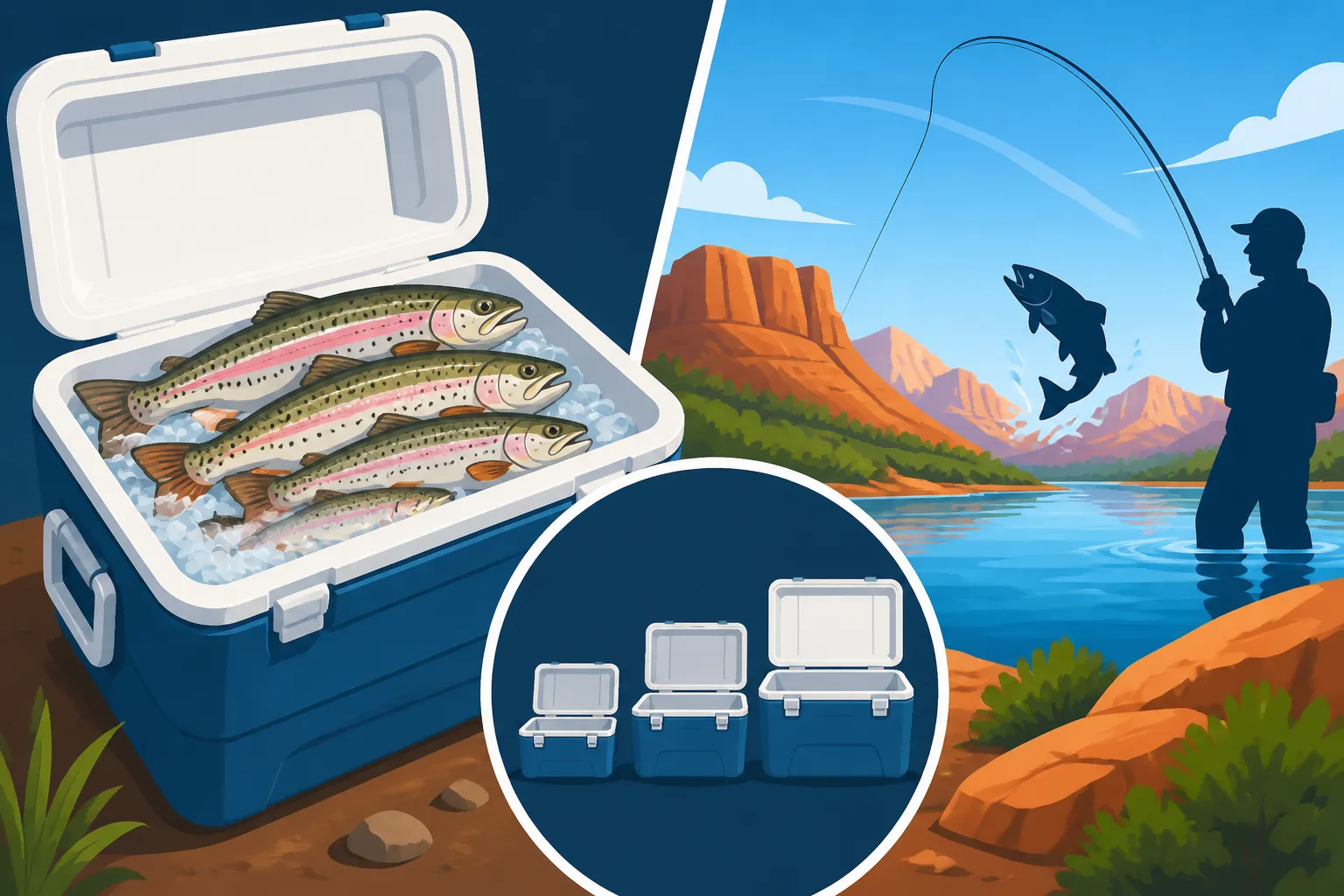
For this scenario, you're looking for something compact but efficient. A 20-35 quart cooler is usually perfect. This size allows for enough ice to create a good slurry for 2-4 trout and will keep everything cold for a typical day out. Many anglers find convenient models at Bass Pro Shops or browse various options on Amazon.
Scenario 2: Family Outing or Longer Day Trip (Multiple Limits)
- Catch: 4-8+ trout (e.g., two anglers' limits, or larger fish).
- Trip Duration: Full day (8-12+ hours).
- Temperature: Moderate to hot.
If you have multiple anglers or anticipate larger trout, or if you're simply planning a longer day at a popular spot like Deer Creek Reservoir or Jordanelle, you'll need more capacity. A 45-65 quart cooler is a solid choice. This range gives you ample room for a larger quantity of fish, plenty of ice, and perhaps even some drinks or snacks separate from your catch.
Scenario 3: Overnight or Multi-Day Adventure (Extended Ice Retention)
- Catch: Multiple limits, potentially over several days.
- Trip Duration: 1-3+ days.
- Temperature: Varies, but sustained ice retention is key.
For multi-day excursions, perhaps to the high Uinta Lakes or a long weekend at Lake Powell, ice retention becomes paramount. Here, a 70-100+ quart cooler is advisable. These larger coolers, especially high-quality rotomolded models, are designed to hold ice for several days, ensuring your catch from day one is just as fresh as your catch on day three. You might even consider a dedicated "fish cooler" and a separate "food and drink cooler" for these trips.
Here's a quick reference table:
| Cooler Capacity (Quarts) | Estimated Trout Capacity (14" Fish) | Trip Duration | Typical Scenario | Notes |
|---|---|---|---|---|
| 20-35 | 2-4 | Day Trip | Solo angler, quick trip, moderate temps | Good for a single limit, easy to carry. |
| 45-65 | 4-8 | Full Day | Family outing, two anglers, warmer temps, larger fish | Versatile, good balance of capacity and portability. |
| 70-100+ | 8-15+ | Multi-Day | Group fishing, extended trips, trophy fishing | Excellent ice retention, heavier when full, often wheeled. |
Cooler Features That Make a Difference
Beyond size, certain features enhance a cooler's performance and usability:
- Insulation Quality: This is probably the most important feature. Rotomolded coolers, while a bigger investment, offer superior insulation, often with pressure-injected foam, which means ice lasts significantly longer. For typical day trips, a good quality conventional cooler can suffice, but for longer trips or hot weather, a rotomolded model is a game-changer.
- Drain Plugs: A good, leak-proof drain plug makes it easy to drain meltwater (if you're keeping the plug closed) or to let it run out (if you prefer an open-drain system for certain fish).
- Latches: Heavy-duty, durable latches ensure a tight seal, crucial for ice retention, and can withstand the rigors of fishing trips.
- Durability: Your cooler will take a beating. Look for robust construction that can handle being tossed in the back of a truck, bumped on a boat, or dragged across rocky shores in Utah's diverse landscapes.
- Portability: For smaller coolers, a comfortable handle is important. For larger coolers, wheels can be a lifesaver, especially when fully loaded with ice and fish.
Pre-Chilling and Packing Your Cooler for Success
Even the best cooler needs a little help to perform at its peak.
- Pre-Chill Your Cooler: The night before your trip, put a bag of sacrificial ice or a frozen gallon jug of water into your empty cooler. This cools down the cooler's internal temperature and insulation, so your fresh ice doesn't have to work as hard (or melt as quickly) once you add it.
- Layer with Ice: When packing for your trip, start with a layer of ice at the bottom. Then, as you catch fish, layer them with more ice, ensuring fish are completely surrounded. If you're using an ice slurry, make sure there's enough water to cover the fish.
- Keep the Drain Plug Closed (Usually): For trout, you generally want to keep them in an ice slurry. This means keeping the drain plug closed to allow meltwater to accumulate. The icy water rapidly chills the fish. However, some anglers prefer to drain water if they are not gutting fish immediately, believing it keeps the fish cleaner. It’s a matter of preference and immediate post-catch handling.
- Minimize Opening: Every time you open the cooler, warm air rushes in. Try to keep it closed as much as possible to maintain that cold environment.
Beyond the Cooler: Maximizing Freshness On and Off the Water
While the cooler is central to keeping your trout fresh, what you do before and after the fish goes into the cooler makes a huge difference.
Immediate Post-Catch Care: Bleeding and Gutting
This is probably the most impactful step you can take to preserve fish quality, especially for trout.
- Dispatching Humanely: Quickly and humanely dispatching the fish reduces stress, which in turn can improve the quality of the meat. A sharp rap to the head or a quick knife to the brain is effective.
- Bleeding: Immediately after dispatching, bleed the fish. You can do this by cutting the gills or severing the artery behind the pectoral fins. This removes blood from the flesh, which is a major contributor to "fishy" taste and spoilage. A fish that is properly bled and then immediately placed in an ice slurry will be noticeably better tasting.
- Gutting: While not always feasible right on the water, gutting your fish as soon as possible removes the digestive organs which contain enzymes and bacteria that accelerate spoilage. If you're on a multi-day trip or anticipate a long drive home, gutting on the water is highly recommended. Just be sure to dispose of entrails properly and ethically, away from public areas and water sources, or pack them out.
Gentle Handling and Transporting Home
Even after bleeding and gutting, handle your fish gently. Avoid tossing them around or bruising the flesh. When transporting, ensure your cooler is secured so it doesn't tip over. If you have a long drive home, consider adding more ice if your original supply is dwindling. We have an entire article dedicated to How to Store Fish on a Hot Day in Utah, which has some excellent tips for those scorching summer drives.
Processing at Home: Filleting, Freezing, and Cooking
Once home, the clock starts ticking again, albeit slower thanks to your great cooler work.
- Clean Quickly: Get your fish cleaned and processed as soon as you can. This might mean filleting, skinning, or preparing them whole. Our guide on How to Fillet a Trout After Keeping Your Limit can help you with this step.
- Storage: If you're not eating them immediately, fresh trout can be stored in the refrigerator for a day or two. For longer storage, proper freezing is essential. Vacuum sealing is the best method to prevent freezer burn and keep fish fresh for several months.
- Cooking: Enjoy your delicious, fresh Utah trout!
Cooler Maintenance and Hygiene
Your cooler is an investment in fresh fish, so take care of it!
- Clean After Every Trip: As soon as you unload your fish, thoroughly clean your cooler. Use warm, soapy water and a scrub brush to remove any fish slime, blood, or odors. A diluted bleach solution or a specialized cooler cleaner can help with stubborn odors and sanitize the interior.
- Air Dry: Leave the lid open and let your cooler air dry completely before storing it. This prevents mold, mildew, and lingering odors from developing.
- Store Properly: Store your cooler in a cool, dry place, ideally with the lid slightly ajar to allow for air circulation.
By combining the right cooler size with diligent handling techniques, you'll ensure that every trout you bring home from the waters of Utah is as fresh and delicious as possible.
Disclaimer
This article is for general informational purposes only and does not constitute professional advice. Laws, prices and regulations vary by location and change over time. Consult a qualified professional for guidance on your specific situation.