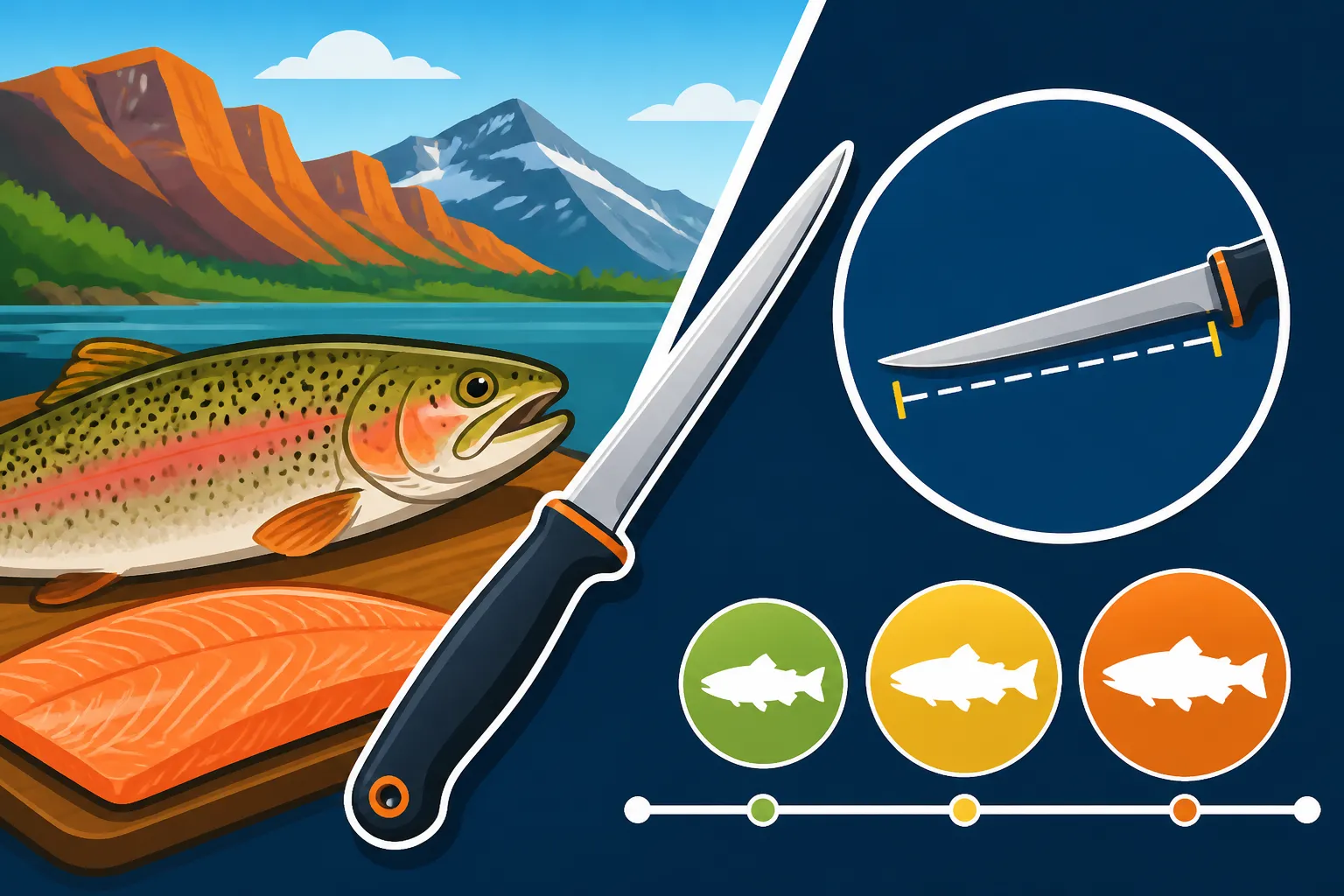
Best Fillet Knife Length for Trout
There’s nothing quite like a successful day on the water in Utah, reeling in beautiful trout. But let's be honest, the excitement can quickly turn to frustration when you get home and realize your fillet knife isn't quite up to the task. Struggling with a blade that's too long, too short, or simply not right for the size of your catch can lead to mangled fillets, wasted meat, and a whole lot of unnecessary mess. This guide is here to cut through the confusion and help you pinpoint the ideal fillet knife length for the trout you'll encounter across Utah's diverse waters, ensuring cleaner cuts and more delicious meals.
The Critical Link Between Fillet Knife Length and Trout Species
You've probably been there: trying to gracefully remove a fillet from a feisty rainbow trout with a knife designed for a much larger, tougher fish, or conversely, attempting to work around the bones of a big lake trout with a small, flimsy blade. The truth is, the length of your fillet knife isn't just a preference; it's a critical factor that directly impacts the ease, safety, and success of your filleting process.
Why the Right Blade Length Prevents Fillet Frustration
Imagine trying to paint a detailed miniature with a house painting brush. Or trying to paint a mural with a tiny artist's brush. It's simply not efficient or effective. The same principle applies to fillet knives. If your knife is too long, it can be unwieldy and difficult to maneuver around the delicate bone structure of smaller trout, leading to jagged cuts and potential injury. You end up fighting the blade more than you're working with it. It’s particularly frustrating when you're trying to get a clean cut along the backbone, and the tip of your extra-long knife keeps bumping into the cutting board, preventing a smooth, continuous motion. This often results in leaving a lot of meat on the bone, which is a cardinal sin for any angler dedicated to utilizing their catch fully.
Conversely, a knife that's too short can make filleting larger fish like a hefty brown or a massive lake trout an absolute chore. You'll find yourself making multiple passes, struggling to reach the full length of the fillet, and likely sawing rather than slicing. This not only dulls your blade faster but also creates ragged, unappealing fillets that aren't nearly as satisfying to cook or eat. It’s an exercise in patience that most of us don't have after a long day of fishing, especially when you're just eager to get that fresh catch onto the dinner table. Having the right tool, in this case, the right length of blade, makes all the difference in turning a chore into a quick, satisfying task.
Maximizing Meat Yield with the Ideal Knife
The ultimate goal of filleting is to get as much clean, boneless meat as possible from your catch. The right fillet knife length plays a pivotal role in achieving this. A blade that matches the general size of your trout allows for precise, uninterrupted cuts along the backbone and ribs. When the blade can make a single, sweeping pass from head to tail, you minimize the chances of leaving precious meat attached to the carcass. This efficiency not only honors the fish but also ensures you get the most out of your hard-earned catch.
Consider a delicate cutthroat trout from one of Utah's pristine high-mountain lakes. Its slender body requires a blade that can navigate its contours with finesse. A blade that's too stout or too long won't allow you to follow the rib cage tightly, leading to meat scraps left behind. On the other hand, for a thick-bodied lake trout from Flaming Gorge, a longer, more robust blade provides the leverage and reach needed to separate the large fillets without having to stop and restart, which often creates uneven cuts and reduces the overall yield. When you're consistently getting clean, high-yield fillets, you truly appreciate the value of a well-matched knife.
Understanding Utah's Trout Landscape: Sizes You'll Encounter
Utah is a paradise for trout fishing, offering a remarkable diversity of species and sizes. From the smallest stocked pan-sized rainbows to monstrous lake trout, the variety demands an understanding of what you're likely to encounter. This context is crucial when selecting the ideal fillet knife length for your adventures.
The Range of Trout in Utah's Rivers and Reservoirs
When you're out fishing in Utah, you'll find trout of all shapes and sizes. Many of our popular community ponds and frequently stocked reservoirs, like those along the Wasatch Front, receive regular deliveries of rainbow trout. These "stocker" rainbows typically range from a modest 8 to 14 inches. They're perfect for a quick family outing, and while not huge, they provide a tasty meal. Then you have the wild trout in our rivers and larger reservoirs – brown trout in the Provo River can easily hit 16-20 inches, and healthy cutthroat trout from Strawberry Reservoir might be 18-24 inches. Utah Trout Species Guide can give you a deeper dive into all the different varieties you might hook into.
Beyond these, some of Utah's most iconic fisheries boast truly large specimens. Flaming Gorge Reservoir is famous for its trophy lake trout, often exceeding 30 inches and weighing many pounds. While you'll need a Utah Fishing License Guide to ensure you're compliant with regulations, landing one of these giants is an unforgettable experience. Even though the Utah Trout Daily Limit Explained can vary by water, you might still find yourself with a handful of different-sized fish after a successful day, underscoring the need for versatility or specific tools.
How Your Target Trout's Size Guides Your Knife Choice
A good rule of thumb for choosing a fillet knife is to aim for a blade length that is roughly equal to or slightly longer than the length of the fish's body cavity. This allows you to make long, continuous strokes, minimizing the number of times you have to reposition the blade or saw through the meat. For those smaller, 8-14 inch stocked trout, a shorter blade gives you the precision you need without feeling cumbersome. It's like having a surgeon's scalpel for a delicate operation.
As the fish size increases, so should your blade length. For a 20-inch brown trout, a longer blade provides the reach to separate the entire fillet in one smooth motion, from just behind the gill plate all the way to the tail. This prevents those frustrating half-cuts that leave sinewy connections and make the filleting process messier. When you're dealing with those enormous lake trout, a long, sturdy blade is not just helpful, it's essential for breaking down the fish efficiently. Trying to fillet a 30-inch lake trout with a 6-inch knife would be an exercise in futility, akin to trying to cut a steak with a butter knife. The blade needs to be long enough to get past the backbone and along the ribs with minimal effort, allowing you to maximize your yield from these impressive catches.
Recommended Fillet Knife Lengths for Specific Utah Trout Catches
Alright, let's get down to the brass tacks: what specific knife length should you be looking for based on the size of the trout you typically catch here in Utah? The answer isn't one-size-fits-all, but rather a spectrum that caters to different fish and angling styles.
For Smaller Stocked Trout (8-14 inches)
For the bread-and-butter stocked rainbow trout you'll find in community ponds, or smaller wild browns and cutthroats in streams, a shorter, more agile blade is your best friend. We're talking about blades in the 6- to 7-inch range. These fish are often slender, and their bone structure is relatively delicate. A shorter blade provides superior control, allowing you to easily navigate the contours of the fish and achieve clean, precise cuts. You can effortlessly separate the fillet from the backbone and then cleanly remove the rib cage with minimal waste.
Think about processing a limit of 10-inch rainbows from Bountiful Lake; a 6-inch blade allows for quick, efficient work without feeling like you're wielding a broadsword. It’s perfect for those quick, nimble movements required to get around the smaller bones. Many anglers find these shorter blades also feel safer in their hands, particularly if they're still honing their filleting skills. You'll find excellent options in this size from brands available at Bass Pro Shops or online retailers like Amazon, which are perfect for a wide range of Utah's frequently stocked waters.
For Medium to Large Wild Trout (15-22 inches)
When you step up to larger wild trout – the kind you might pull from the Green River below Flaming Gorge or the lower Provo, or impressive cutthroats from Strawberry Reservoir – you'll want a bit more blade length to make those longer, smoother passes. For fish in the 17- to 22-inch range, a fillet knife with an 8-inch blade is often considered the sweet spot. This length offers enough reach to make continuous cuts along the spine and ribs without being overly cumbersome.
An 8-inch blade provides a good balance between control and reach. It allows you to tackle the thicker body of a 20-inch brown trout while still maintaining the dexterity needed for a clean separation. You can typically make one long stroke from the head to the tail, yielding a beautiful, unbroken fillet. If you frequently target these mid-sized beauties, an 8-inch blade will be your workhorse. It's a versatile choice that handles a significant portion of the trout you might keep, especially if you're following local regulations on Utah Catch-and-Release Waters and only keeping fish within slot limits. Remember to check Utah Daily Bag and Possession Limits before you head out, as limits can vary considerably from one waterbody to another.
Tackling Trophy Lake Trout and Larger Species (22+ inches)
Now, for the heavy hitters – those impressive lake trout (often called Mackinaw) from Flaming Gorge, or truly exceptional brown trout. When you're looking at fish that are 22 inches and up, you'll want to reach for a longer, more robust fillet knife. Blades in the 9- to 10-inch range, and sometimes even longer for truly massive fish, are ideal here. These longer blades provide the necessary reach and leverage to make those long, powerful cuts through thicker flesh and bone.
Trying to fillet a 30-inch lake trout with a 7-inch blade would be an exercise in frustration, requiring many short, choppy cuts that leave a lot of meat on the bone. A 9- or 10-inch blade allows you to make those confident, sweeping strokes needed to efficiently remove large, thick fillets. While flexibility in the blade is still important, for these larger fish, a slightly stiffer blade can sometimes be an advantage, offering more control when separating dense tissue. This is where dedicated fish cleaning stations, sometimes found at boat ramps, become incredibly useful, and having the right tools like Best Fish Cleaning Table for a Boat Ramp can make the process much smoother.
Here's a quick reference table to help visualize the recommendations:
| Trout Size Range (Approximate) | Recommended Fillet Knife Length | Best For | Why This Length? |
|---|---|---|---|
| 8-14 inches | 6-7 inches | Stocked Rainbows, smaller wild trout, panfish | Optimal control for delicate bone structure; precise cuts. |
| 15-22 inches | 8 inches | Medium wild Browns, Cutthroat, larger Rainbows | Balanced reach and control for full, clean fillets. |
| 22+ inches | 9-10+ inches | Trophy Lake Trout (Mackinaw), large Browns | Necessary reach and leverage for thick bodies and larger bones. |
Beyond Length: Key Features of a Great Trout Fillet Knife
While blade length is crucial, it's just one piece of the puzzle when choosing the best fillet knife for trout. Several other features contribute significantly to a knife's performance, safety, and overall user experience. Investing in a quality knife, part of your essential Utah Fishing Gear Guide, means looking at the whole package.
Blade Flex, Material, and Edge Retention
A good fillet knife needs a certain amount of flexibility in its blade. This flex allows the knife to bend and conform to the contours of the fish's rib cage and backbone, giving you the ability to get closer to the bones and maximize your meat yield. For trout, especially the more delicate species, you generally want a blade with a moderate to high degree of flexibility. Too stiff, and you'll find it difficult to follow the curves, leaving meat behind. Too flexible, and it might lack the stability needed for larger cuts.
When it comes to blade material, stainless steel is the most common and practical choice for fishing knives. It's highly resistant to corrosion, which is vital when constantly exposed to fish guts and water. Look for high-carbon stainless steel, as this offers a good balance of corrosion resistance and edge retention. A knife that holds its edge well means less time sharpening and more time filleting cleanly. While some custom knives might use exotic steels, for the average angler, a good quality stainless steel from a reputable brand like those found at Bass Pro Shops will perform exceptionally.
Handle Ergonomics for Safety and Control
You could have the perfect blade, but if the handle isn't comfortable and secure, your filleting experience will be miserable and potentially dangerous. A good fillet knife handle should fit well in your hand, offering a firm, non-slip grip even when wet or slimy. Materials like textured rubber, composite, or even certain treated woods provide excellent traction. Avoid smooth, polished handles that can become slick.
Ergonomics are key here. The handle should feel balanced with the blade, preventing hand fatigue during prolonged filleting sessions. A finger guard or a flared end on the handle can also add an extra layer of safety, preventing your hand from slipping forward onto the sharp blade. Remember, you'll often be handling slippery fish and working on a wet surface, so safety features are paramount. A comfortable and secure handle gives you the confidence and control needed to make those precise cuts, whether you're breaking down a single trout or processing your Utah Trout Daily Limit Explained after a successful day.
The Importance of a Razor-Sharp Edge and Proper Care
This might sound obvious, but a razor-sharp edge is the single most important feature of any fillet knife, regardless of its length. A sharp knife glides through flesh with minimal effort, providing clean cuts and reducing the risk of slippage and injury. A dull knife, on the other hand, requires more force, tears the meat, and is far more dangerous. If you want to know How to Fillet a Trout After Keeping Your Limit, a sharp knife is step one.
Even the best blades will dull over time, so owning a good sharpener and knowing how to use it is essential. Regular honing and occasional sharpening will keep your knife performing at its peak. After each use, always clean your knife thoroughly with soap and water, dry it completely to prevent rust, and store it in a sheath or block to protect the blade and prevent accidents. Proper care ensures your investment lasts for many seasons of successful Utah fishing. A dull blade can turn the simple task of filleting into an arduous battle, so don't underestimate the power of a consistently sharp edge.
Finding Your Perfect Fillet Knife for Utah Trout
So, you're ready to upgrade your filleting game and get the right knife. The good news is there are plenty of excellent options out there, whether you prefer to see and feel the knife in person or browse a vast online selection.
Navigating Your Shopping Options: In-Store vs. Online
When it comes to buying a fillet knife, you essentially have two main avenues: shopping in a physical store or purchasing online. Both have their advantages.
In-Store Shopping: Places like Bass Pro Shops or local sporting goods stores are fantastic for getting a hands-on feel for different knives. You can hold the handle, test the balance, and even get a sense of the blade's flexibility. This tactile experience is invaluable, especially for something as personal as a knife, where ergonomics and comfort are paramount. You can ask staff for recommendations specific to the type of fishing you do in Utah, and you might even discover some local brands or specialized tools you hadn't considered. The downside is that the selection might be more limited, and prices can sometimes be a bit higher than online. However, for a crucial piece of gear that directly impacts your ability to properly How to Fillet a Trout After Keeping Your Limit, seeing it in person is often worth it.
Online Shopping: Retailers like Amazon offer an unparalleled selection of fillet knives from countless brands, often at competitive prices. You can read user reviews, compare specifications side-by-side, and explore a wider range of blade lengths, materials, and handle designs than you might find in any single store. This is especially helpful if you're looking for something very specific, like a 9-inch blade with a particular type of grip. The challenge, of course, is that you can't physically hold the knife before buying. To mitigate this, pay close attention to detailed product descriptions, customer photos, and reviews that discuss the knife's feel and balance. While browsing online, you might also look for reviews that compare different models, helping you narrow down your choices for a versatile Utah Fishing Gear Guide.
Balancing Cost and Quality for Long-Term Value
Fillet knives come in a wide range of price points, from budget-friendly options under twenty dollars to high-end, professional-grade tools costing a hundred or more. It's natural to wonder how much you should spend.
For casual anglers who only fillet a few fish a year, a moderately priced knife will likely suffice. You can find perfectly capable 6- to 8-inch fillet knives that hold a decent edge and have a comfortable handle without breaking the bank. These are great starter knives and can be an excellent choice if you're just learning the ropes of filleting or only catch smaller trout. Pairing a good fillet knife with other basic essentials, as outlined in What Gear Does a First-Time Utah Angler Need?, creates a solid foundation for your fishing adventures.
However, if you're a serious angler who regularly keeps limits of trout, or if you plan to tackle larger species like lake trout, investing in a higher-quality knife is often worth it in the long run. More expensive knives typically feature superior blade steel that holds an edge longer, better-designed ergonomic handles, and a more precise balance. This translates to less effort, cleaner fillets, and greater durability over many seasons. A premium knife isn't just a purchase; it's an investment in efficiency, safety, and the satisfaction of expertly processing your catch. Just like choosing the right fishing rod for Best Fishing Rods for Utah Anglers makes a difference in your casting, choosing a quality fillet knife impacts your post-fishing routine significantly. Think about how long you want the knife to last and how frequently you'll use it when deciding on your budget.
Ultimately, the best fillet knife length for you will depend on the size of the trout you typically target in Utah's incredible waters. By considering blade length, flexibility, material, and handle ergonomics, you'll be well-equipped to make clean, efficient cuts that maximize your yield and turn your fresh catch into a truly rewarding meal.
Disclaimer
This article is for general informational purposes only and does not constitute professional advice. Laws, prices and regulations vary by location and change over time. Consult a qualified professional for guidance on your specific situation.