Best Landing Nets for Utah Trout
There's nothing quite as frustrating as landing a beautiful Utah trout, only to have it slip off the hook right at your feet or, worse, thrash around on the bank causing it undue stress. A good landing net isn't just a convenience; it's a vital tool for both angler success and fish conservation, ensuring you can safely bring your catch to hand and, if desired, release it unharmed. This guide will walk you through everything you need to know about choosing the best landing nets for Utah trout, from materials to sizes and effective netting techniques, so you can land every fish with confidence.
Why a Good Landing Net Matters for Utah Trout Anglers
Many anglers, especially beginners, might view a landing net as an optional accessory, something you can get by without. But when you're targeting trout in Utah's diverse waters, from the swift currents of the Provo River to the expansive reservoirs like Strawberry, a well-chosen net quickly proves its worth. It’s not just about getting the fish into your possession; it's about minimizing harm, protecting your gear, and making the entire experience smoother and more enjoyable.
Reducing Stress and Mortality for Released Fish
For many of us, trout fishing in Utah is about the thrill of the catch and the beauty of the fish, often followed by a respectful release. This is especially true on many of our blue-ribbon fisheries or catch-and-release-only waters. The moments a fish spends out of water or struggling against a hook are incredibly stressful for it. A poorly designed net, or no net at all, can exacerbate this. Imagine a feisty brown trout flopping on sharp rocks or rough gravel as you try to unhook it—the chances of injury to its delicate fins, scales, or even eyes are high.
A proper landing net, particularly one with a rubberized or knotless mesh, acts as a safe cradle. It keeps the fish submerged or at least contained in a soft, non-abrasive environment, reducing physical damage and slime coat disruption. This significantly increases its chances of survival once released. We all want our released fish to swim away strong, ready to fight another day, and a good net is perhaps the most important tool for achieving that. For more on this, check out our guide on How to Release a Fish Without Hurting It in Utah.
Securing Your Catch Safely and Efficiently
Beyond conservation, a good net simply makes the act of landing a fish much easier and more reliable. How many times have you had a fish throw the hook right at the last second, just as you were reaching for it? That sickening feeling of loss is often preventable. A net provides a wide target and a swift way to secure the fish once it's close.
Think about battling a particularly strong rainbow trout in a fast-moving river. Trying to grab it with your hands while simultaneously managing your rod and avoiding a slip on slick riverbed rocks is a recipe for disaster. A net allows you to guide the fish into a secure, enclosed space quickly, giving you control. This efficiency is especially crucial when you're fishing solo, or when you've hooked a legitimate trophy fish that you don't want to lose. It converts a chaotic moment into a controlled, successful conclusion to the fight.
Protecting Your Tackle and Yourself
It might not be the first thing you think of, but a good net also protects your expensive fishing tackle and, believe it or not, your own skin! A struggling fish can easily snap a fragile rod tip, especially if it's thrashing wildly against the line near the bank. Hooks can also get buried deep in your fingers if a fish slips from your grasp or leaps unexpectedly.
A net minimizes these risks. Once the fish is safely in the net, it's contained. You can then carefully manage your rod, keep the line taut, and use a pair of pliers or forceps to remove the hook without undue stress on your equipment or risk to your hands. This is particularly important with toothy fish, or species that tend to thrash, even if trout aren't typically considered dangerous, a treble hook on a lure can still do a lot of damage if a fish gets out of control. It’s an investment that pays off in avoided repairs and emergency room visits!
Key Features to Look for in a Utah Trout Landing Net
When you're sifting through the options at a place like Bass Pro Shops or browsing online at Amazon, the sheer variety of landing nets can be a bit overwhelming. But for Utah trout fishing, certain features stand out as crucial. Focusing on these will help you narrow down your choices and select a net that truly meets your needs and stands up to our local conditions.
Net Material: Rubber vs. Nylon Mesh
The material of the net bag itself is arguably the most critical feature, especially for catch-and-release angling.
- Rubber (or Rubberized) Mesh Nets: These are the gold standard for trout fishing, particularly if you plan to release most of your catches. The soft, pliable rubber is incredibly gentle on a fish's delicate slime coat, which is its primary defense against disease and infection. Unlike traditional knotted nylon, rubber mesh doesn't abrade scales or cause fin damage. Hooks are also far less likely to tangle in rubber, making for quick and easy unhooking. This means less time out of the water for the fish and less frustration for you. While often a bit heavier and sometimes more expensive, the benefits for fish health and ease of use are undeniable. They also don't absorb water or fish odors as much, making them easier to clean.
- Knotless Nylon Mesh Nets: These are a step up from older, knotted nylon nets. The knotless design still reduces some of the abrasion found in knotted versions, but they can still be harder on a fish's slime coat than rubber. The main advantage is that they are usually lighter and more compact, making them a good budget-friendly option if rubber is out of reach, or if you prioritize extreme portability for high mountain hikes. However, hooks can still get tangled, which means more handling time and potentially more stress on the fish.
- Knotted Nylon Mesh Nets: These are generally discouraged for trout fishing, especially if you intend to release your catch. The knots can severely abrade a fish's slime coat, remove scales, and cause fin damage, significantly reducing post-release survival rates. They are typically the cheapest option but come at a cost to fish welfare.
For the health of Utah's beautiful trout, a rubberized net is always the superior choice.
Hoop Size and Depth: Matching the Trout You Target
The dimensions of your net's hoop and bag depth need to align with the size of the trout you anticipate catching.
- Hoop Size: For most stream-dwelling trout (rainbows, browns, cutthroat) in places like the Provo River, a hoop size of 10-14 inches wide is usually sufficient. This provides enough area to scoop a typical 12-20 inch trout without being overly cumbersome. If you're targeting larger trophy trout in reservoirs like Flaming Gorge or Strawberry, or the bigger cutthroat in Bear Lake, you'll want a larger hoop, perhaps 16-20 inches, to accommodate fish that might be 24 inches or more. A hoop that's too small makes landing a larger fish incredibly difficult and risks injury to the fish as it struggles to fit.
- Net Depth: The bag depth is also crucial. You want it deep enough to fully encompass the fish once it's in the net, preventing it from flopping out. For most trout, a bag depth of 10-15 inches is adequate. For truly large fish, or if you're holding a fish in the net in the water for a moment before release or a photo, a deeper bag (18+ inches) can be beneficial. It allows the fish to remain more upright and comfortable, reducing stress. Conversely, a net that's too shallow means a fish can easily escape.
Consider the average size of fish in your target waters. If you frequently fish diverse waters, a mid-sized net (e.g., 12-16 inch hoop, 12-15 inch depth) offers good versatility.
Handle Design: Length, Grip, and Portability
The handle of your landing net impacts its usability, reach, and how easily you can carry it.
- Handle Length:
- Short Handles (6-12 inches): These are ideal for wading in streams and rivers where you're often close to the fish. They're compact, lightweight, and easy to maneuver in tight spaces. Many fly fishing nets fall into this category, often with a lanyard or magnetic release for attachment to a vest or pack.
- Medium Handles (18-36 inches): A good all-around length for shore fishing, float tubing, or smaller boat fishing. It provides extra reach without being overly bulky. You might use this on a community pond or from a small craft on Deer Creek Reservoir.
- Long/Telescoping Handles (36+ inches, often extending): Essential for boat fishing on larger reservoirs like Lake Powell or Flaming Gorge, or when fishing from high banks. These handles give you the leverage and reach to land fish that are further away from your position. Telescoping handles offer the best of both worlds, collapsing for storage and extending when needed.
- Grip: Look for a comfortable, non-slip grip, especially if your hands might be wet. Cork, rubber, or textured plastic are common and effective.
- Portability: For wading or backpacking, weight and how the net carries are paramount. Many wading nets have a magnetic release system or a D-ring for attaching to a vest or belt. Some even have a built-in clip. For boat nets, while portability is less of a concern during use, consider how easily it stores when not in use. Some nets, especially larger boat nets, are designed with folding hoops or collapsible handles to save space.
Think about how and where you'll be fishing most often. A fly angler on the Provo River Fishing Guide will need a very different handle setup than someone trolling for lake trout on Flaming Gorge.
Net Shape: Teardrop, Round, or Square
The shape of the net hoop might seem like a minor detail, but it can influence maneuverability and the ease of landing a fish.
- Teardrop Shape: This is a very common and versatile shape for trout nets. The narrower top allows for easier movement through the water, while the wider bottom provides ample space for the fish. It's often favored by wading anglers for its balance of efficiency and fish capacity. Many compact, packable nets come in a teardrop design.
- Round Shape: Round nets offer a consistent opening all the way around, which can be useful for scooping fish from various angles. They are generally robust and good for a wide range of species and fishing situations. You'll find many general-purpose boat nets in a round shape, providing a generous landing area.
- Square/Rectangular Shape: While less common for dedicated trout nets, these larger, often deeper nets are typically found in situations where very large fish are targeted or where a wider, shallower scoop is needed. For most trout applications, a teardrop or round net offers better maneuverability and is less likely to snag on brush or rocks when wading.
The best shape often comes down to personal preference and the specific fishing situation, but the teardrop and round shapes are typically most practical for Utah trout.
Types of Landing Nets for Different Utah Trout Scenarios
Utah offers such a diverse range of fishing experiences, from tiny high-mountain creeks to massive, deep reservoirs. It makes sense that one net might not perfectly suit every scenario. Understanding the specialized designs available can help you pick the right tool for your preferred style of trout fishing.
Wading Nets: The Compact and Convenient Choice
If you're an angler who loves to get wet, wading into the currents of the Weber or Green River, or exploring smaller mountain streams, a wading net is your best friend. These nets are designed with portability and quick access in mind.
Typically, wading nets feature shorter handles, usually between 6 to 12 inches, allowing them to be easily carried on your back or hip without getting in the way of your casting or movement. Many come with a built-in magnetic release or a strong D-ring, which allows them to be securely attached to a vest, pack, or wading belt, yet quickly detached with one hand when a fish is on. The hoops are generally smaller, in the 10-14 inch range, perfect for the average trout found in these waters. The net bag itself will almost always be rubber or rubberized to protect the fish you intend to release. When you're constantly on the move, scrambling over river rocks, or pushing through brush, a lightweight and snag-free design is paramount. Brands like Fishpond, often found at specialty fly shops or on Amazon, excel in this category, offering nets made for serious wading anglers who value both performance and fish conservation.
Boat Nets: Reach and Power for Bigger Waters
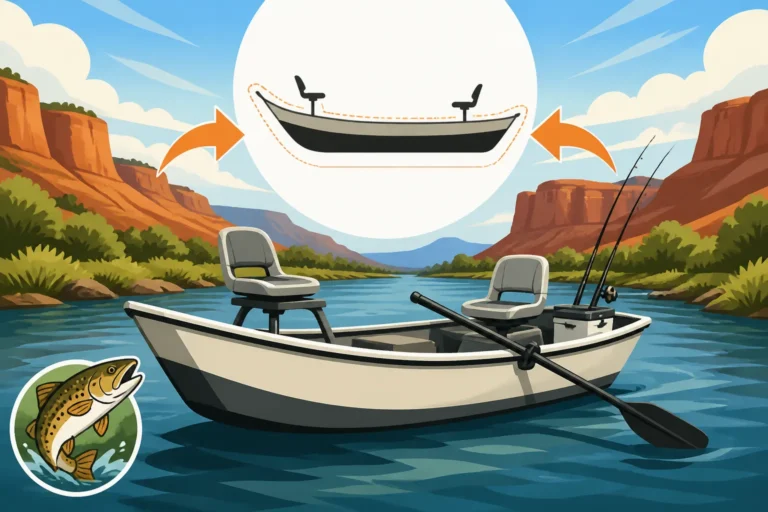
When you're fishing from a boat, whether it's a bass boat on Utah Lake, a drift boat on the Green River, or a pontoon on Strawberry Reservoir, your needs shift dramatically. Here, reach, strength, and overall size become much more important.
Boat nets typically feature longer handles, often telescoping, ranging from 2 to 6 feet or more when extended. This extended reach is crucial for landing fish boatside, especially if you're fishing solo or have a larger vessel. The hoops are generally larger and deeper (16-24 inches or more) to accommodate the bigger, stronger fish often found in reservoirs and larger rivers, such as trophy lake trout or a large brown trout. The frames are built more robustly to handle the weight and power of larger fish and the inevitable bumps and scrapes of boat life. While rubber nets are still preferred for catch and release, many larger boat nets might opt for sturdy, knotless nylon, especially if they're used for species that are typically kept, like walleye. Look for features like comfortable, grippy handles that won't slip when wet, and robust construction that can withstand the rigors of boat storage and use. You'll find a wide selection of these at retailers like Bass Pro Shops, designed for serious angling on big water.
Backpacking Nets: Lightweight for High-Altitude Adventures
Utah's Uinta Mountains are famous for their pristine high-altitude lakes and streams, offering incredible trout fishing for those willing to hike. For these adventures, every ounce of gear counts, making specialized backpacking nets a must.
These nets prioritize lightweight construction and packability above almost all else. They often feature foldable hoops, collapsible handles, or extremely compact designs that can be stowed inside or strapped to a backpack without adding significant bulk or weight. The handle length is usually on the shorter side, similar to wading nets, but the overall construction is designed to be as minimalist as possible while still being functional. Many will utilize carbon fiber or lightweight aluminum frames to shave off ounces. While some may compromise slightly on hoop size or net depth to save weight, a good backpacking net will still incorporate a fish-friendly, rubberized mesh. The goal is to have a net that's there when you need it for a small brook trout or a hefty high-country cutthroat, but virtually unnoticeable when you're traversing miles of mountain trails. When packing for a high-Uinta trip, every piece of gear has to earn its spot, and a specialized backpacking net does just that. You can find excellent, lightweight options suitable for these remote trips on Amazon or through specialized outdoor gear retailers. Consider reading our guide Best Backpacks for Hiking to Uinta Lakes for more packing tips.
| Net Type | Typical Handle Length | Hoop Size (Approx.) | Net Material Preference | Best Use Case | Key Feature Highlight |
|---|---|---|---|---|---|
| Wading Net | Short (6-12 inches) | Small (10-14 inches) | Rubber/Rubberized | Stream/River wading, close-quarters fishing | Compact, quick-release attachment, highly portable |
| Boat Net | Long (2-6+ feet, often telescoping) | Large (16-24+ inches) | Rubber/Knotless Nylon | Boat fishing on large rivers/reservoirs, shore fishing | Extended reach, strong frame, handles larger fish |
| Backpacking Net | Short (6-18 inches) | Small-Medium (10-16 inches) | Rubber/Rubberized | High-altitude lakes, remote streams, ultralight trips | Ultra-lightweight, foldable/collapsible, packable |
Netting Techniques: Bringing Your Trout to Hand Successfully
Having the right net is only half the battle; knowing how to use it effectively is the other. Many anglers make critical mistakes in the heat of the moment, either spooking the fish or losing it right at the net. Master these techniques, and you'll increase your landing success significantly, ensuring a clean and safe capture every time you hook into a Utah trout.
Approaching the Fish: Patience is Key
The most common mistake anglers make when netting a fish is rushing the process. Your goal should be to bring the fish to the net, not chase the fish with the net. As you fight the fish, continue to play it out, letting your rod and reel do the work. Don't lift the fish's head out of the water prematurely; keep it submerged if possible, as this helps to calm it and prevents it from thrashing wildly.
Once the fish is close, guide it towards the net in a controlled manner. If you're wading, try to position yourself downstream of the fish, allowing the current to help bring it towards you. From a boat, try to position the boat so the fish comes alongside. Keep the net submerged and still, presenting it as a wide, dark opening that the fish can swim into. Avoid sudden, jerky movements with the net, as these can spook a fish, causing it to bolt and potentially break your line or throw the hook. Patience in this final stage is paramount; wait until the fish is tired and cooperative, ideally with its head near or in the net opening.
Scooping, Not Chasing: The Gentle Art of Landing
Once the fish is in position, the actual scooping motion is critical. Again, think gentle and efficient, not aggressive.
With the net submerged, guide the fish headfirst into the net opening. Once its head is past the hoop, make a smooth, upward scooping motion. Don't try to net a fish from behind or chase it with the net, as this often results in failed attempts and a spooked fish. The upward motion helps to lift the fish and its weight, securing it deep within the bag. If you're using a short-handled wading net, you'll want to extend the rod out to the side or behind you as you scoop with the net hand, keeping tension on the line until the fish is fully in the net. For boat nets with longer handles, you'll have more leverage, but the principle remains the same: smooth, deliberate, and upward. Once the fish is in the net, lift it quickly but gently, ensuring the net bag is deep enough to cradle the fish and prevent it from flopping out.
Handling Your Catch in the Net: Keep 'Em Wet
After the fish is in the net, your work isn't quite done, especially if you plan to release it. The best practice, particularly for trout, is to keep the fish in the water as much as possible while it's in the net.
If you're wading in a stream, keep the net submerged in the current. If you're on a boat, either keep the net partially submerged alongside the boat or quickly bring it aboard and keep the fish wet within the net bag by pouring water over it. This minimizes its air exposure, which is stressful and can damage its gills. With the fish contained and calm in the net, you can then safely remove the hook using forceps or pliers. If you plan to take a quick photo, prepare your camera beforehand, lift the fish briefly, get your shot, and then return it immediately to the water within the net for revival. The net acts as a gentle holding tank, allowing you to manage the situation calmly and efficiently, increasing the likelihood of a successful, healthy release. For techniques on effective revival and release, refer to How to Release a Fish Without Hurting It in Utah.
Maintenance and Care for Your Trout Landing Net
Your landing net is an investment in your fishing success and in the health of the fish you pursue. Just like your rods, reels, and waders, it deserves proper care and maintenance to ensure its longevity and effectiveness. Neglecting your net can lead to odors, damage, and even the spread of aquatic invasive species, so a little effort goes a long way.
Cleaning Your Net: Preventing Disease and Odor
After every fishing trip, especially if you've been in different waterways or caught multiple fish, it's crucial to clean your net. This isn't just about aesthetics; it's about preventing the spread of aquatic invasive species (like quagga mussels, which are a major concern in some Utah waters) and disease.
Rinse your net thoroughly with fresh, clean water. A garden hose works perfectly. Pay close attention to the mesh, making sure to flush out any debris, fish slime, or vegetation that might be clinging to it. If your net is rubberized, this usually takes minimal effort, as gunk tends not to stick. For nylon nets, you might need to gently scrub them. If your net starts to develop a "fishy" odor, a mild soap solution (like dish soap) can be used, followed by another thorough rinse. Make sure to let the net air dry completely in a well-ventilated area before storing it. Hanging it up can help. Never store a wet net in a confined space, as this can lead to mildew and degradation of the material, not to mention a seriously foul smell the next time you open your tackle box. This simple step is vital for keeping Utah's waters healthy.
Storage Tips for Longevity
Proper storage ensures your net remains in good condition and ready for your next adventure.
Once clean and dry, store your net in a place where it won't be exposed to extreme temperatures, direct sunlight, or physical damage. For smaller wading nets, a gear closet or a corner of your garage is ideal. Many anglers hang their nets on a hook to keep them off the floor and away from potential hazards. If your net has a telescoping or folding handle, make sure it's fully collapsed or folded to reduce its footprint and prevent accidental damage to the locking mechanisms. Larger boat nets might be stored in a boat's rod locker or a dedicated storage compartment, but ensure they aren't crammed in where the hoop or handle could bend or snap. Keeping your net out of the elements and away from heavy tools or sharp objects will significantly extend its lifespan. For tips on other gear, consider reading Utah Fishing Gear Guide.
Repairing Minor Damage
Even with the best care, nets can suffer minor damage from time to time. A torn mesh or a loose handle can often be repaired, saving you the cost of a full replacement.
- Mesh Tears: For small tears in rubberized mesh, marine-grade adhesive or rubber repair kits can often provide a strong, flexible patch. For nylon nets, dedicated net repair kits with matching twine and needles are available. It's often easier to make these repairs if you catch them early, before a small tear becomes a major rip.
- Handle Issues: If a telescoping handle becomes stiff, a little silicone spray lubricant can often restore its smooth operation. For loose screws or rivets, a dab of threadlocker (like Loctite) can keep them secure. Always check the integrity of your handle connections, especially on boat nets that see heavy use.
Regular inspection of your net for signs of wear and tear will allow you to address minor issues before they become major problems. A well-maintained net is a reliable net, and reliability is priceless when you're about to land the fish of a lifetime.
Choosing Your Net Based on Specific Utah Waters
Utah's fishing opportunities are incredibly diverse, from vast open reservoirs to tight, brush-lined mountain streams. The "best" landing net isn't a one-size-fits-all solution; it truly depends on where and how you typically fish. Matching your net to your primary fishing environment will greatly enhance your effectiveness and enjoyment.
River and Stream Nets: For Wading Anglers
If your passion lies in fly fishing or spin fishing Utah's picturesque rivers and streams, such as the storied Provo River Fishing Guide, the Green River, or various high-country tributaries, a specific type of net is ideal. For these environments, portability and quick, single-handed deployment are paramount.
You'll want a net with a relatively short handle, typically between 6 to 12 inches, that can be easily attached to your wading belt, vest, or backpack via a magnetic release or a strong D-ring and carabiner. This allows it to ride comfortably out of the way until needed, then be grabbed and used in an instant. The hoop size for river nets is generally smaller (10-14 inches), perfect for the average size of trout you'll encounter in these flowing waters. Crucially, the net bag must be rubberized or made of knotless material to protect the fish, especially since many river sections are catch-and-release focused. Imagine navigating slippery river rocks and swift currents; a bulky, long-handled net would be a hindrance, while a compact, lightweight wading net becomes an extension of your body, ready to secure that beautiful brown trout you've been working so hard for. Fly anglers, in particular, will find that a shorter net integrates seamlessly with their casting motion and vest setup.
Reservoir Nets: For Boat and Shore Anglers
For those who prefer the wide-open spaces of Utah's large reservoirs like Strawberry, Deer Creek, or the mighty Flaming Gorge, whether fishing from a boat or off the shore, a different set of net requirements comes into play. Here, reach, strength, and the ability to handle larger fish take precedence.
Boat anglers will benefit immensely from a net with a long or telescoping handle, extending anywhere from 2 to 6 feet or more. This extra reach is essential for landing fish over the side of a boat, especially if you're trolling or have a high gunwale. The hoop and bag size should be larger and deeper (16-24 inches or more) to accommodate the potential for bigger trout, like the trophy lake trout in Flaming Gorge or the beefy rainbow and cutthroat trout found in Strawberry. A sturdy, robust frame is also important to withstand the weight of larger fish and the knocks that inevitably happen in a boat. Shore anglers on reservoirs will also appreciate a longer-handled net to reach fish that are often just beyond arm's length, especially if fishing from elevated banks or jetties. While rubberized nets are still preferred for fish health, the sheer size of some boat nets may lead to options with heavy-duty, knotless nylon mesh, particularly if targeting larger species that are often kept. Strawberry Reservoir Fishing Guide provides insight into the potential for larger trout that would benefit from a more substantial net.
High Mountain Lake Nets: Balancing Weight and Function
Utah's high Uinta Mountains offer incredible solitude and fishing for hardy brook trout, cutthroat, and tiger trout in countless alpine lakes. For these backcountry excursions, your net needs to strike a delicate balance between being ultra-lightweight and still highly functional.
Backpacking nets for high mountain lakes often feature collapsible handles and/or foldable hoops, allowing them to pack down into a compact, easily storable size. Materials like lightweight aluminum or carbon fiber are common for the frame to minimize weight, as every ounce counts when you're hiking for miles. Despite the emphasis on weight, a rubberized or knotless mesh is still highly recommended to protect the often wild and pristine fish populations in these sensitive ecosystems. The hoop size will typically be in the medium range (10-16 inches) to handle a variety of trout sizes without being overly bulky. Think of a net that can be easily strapped to the outside of your Best Backpacks for Hiking to Uinta Lakes or even stowed inside, forgotten until that moment a beautiful fish strikes in a remote alpine tarn. It's about having a functional tool without adding unnecessary burden to your journey.
Remember, choosing the best landing net isn't just about the purchase; it's about making an informed decision that enhances your fishing experience and contributes to the health of Utah's amazing fisheries.
Disclaimer
This article is for general informational purposes only and does not constitute professional advice. Laws, prices and regulations vary by location and change over time. Consult a qualified professional for guidance on your specific situation.