Do You Need Side Imaging to Find Fish at Flaming Gorge?
It's easy to feel overwhelmed when you're preparing for a fishing trip to a massive, intricate reservoir like Flaming Gorge. With its vast depths, submerged canyons, and countless coves, anglers often wonder if they need the latest high-tech gear, specifically side imaging sonar, just to stand a chance. This guide will help you understand what side imaging offers, whether it's truly essential for success at Flaming Gorge, and how you can still find fish without it.
Understanding Sonar Technologies for Flaming Gorge
Before we dive into side imaging specifically, let's take a moment to understand the different types of sonar out there. Fishing Flaming Gorge can be incredibly rewarding, but it's also a serious challenge due to its sheer size and diverse underwater topography. Knowing your sonar options helps you make informed decisions about your gear, whether you're chasing trophy lake trout in deep water or looking for smallmouth bass in rocky areas.
Traditional 2D Sonar: Your Foundation
Traditional 2D sonar, often called broadband or CHIRP sonar, is the workhorse of most fish finders. It sends a conical or fan-shaped beam straight down from your transducer, then displays returns as arches (fish), lines (structure), or changes in bottom composition. Think of it like a flashlight beam pointing straight down, showing you what's directly beneath your boat. This has been the standard for decades, and for good reason – it's effective for identifying fish and structure in the water column directly below you.
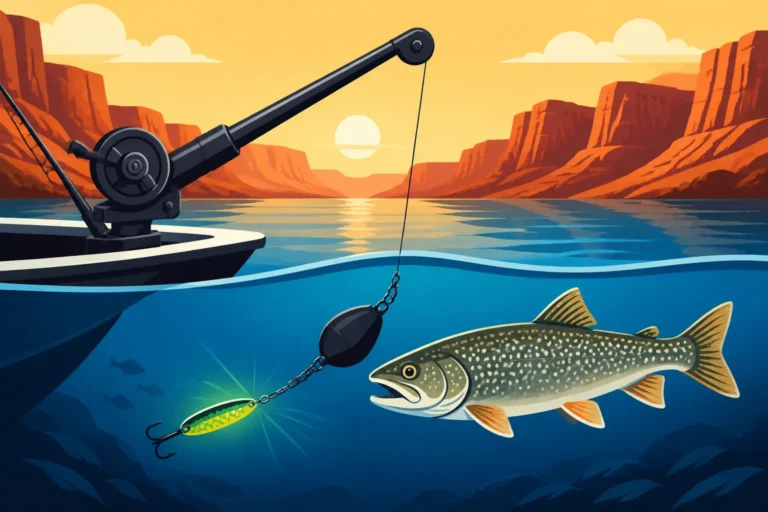
At Flaming Gorge, traditional 2D sonar is excellent for seeing your downrigger balls, identifying schools of kokanee salmon suspended in the middle of the water column, or marking the bottom structure where lake trout might be holding. It gives you a clear picture of depth and what's directly below. Many anglers, myself included, have found great success at the Gorge relying solely on good 2D sonar for years. It's fantastic for finding those deep-dwelling lake trout or tracking schools of prey fish.
Down Imaging: A Photo-Like View Directly Below
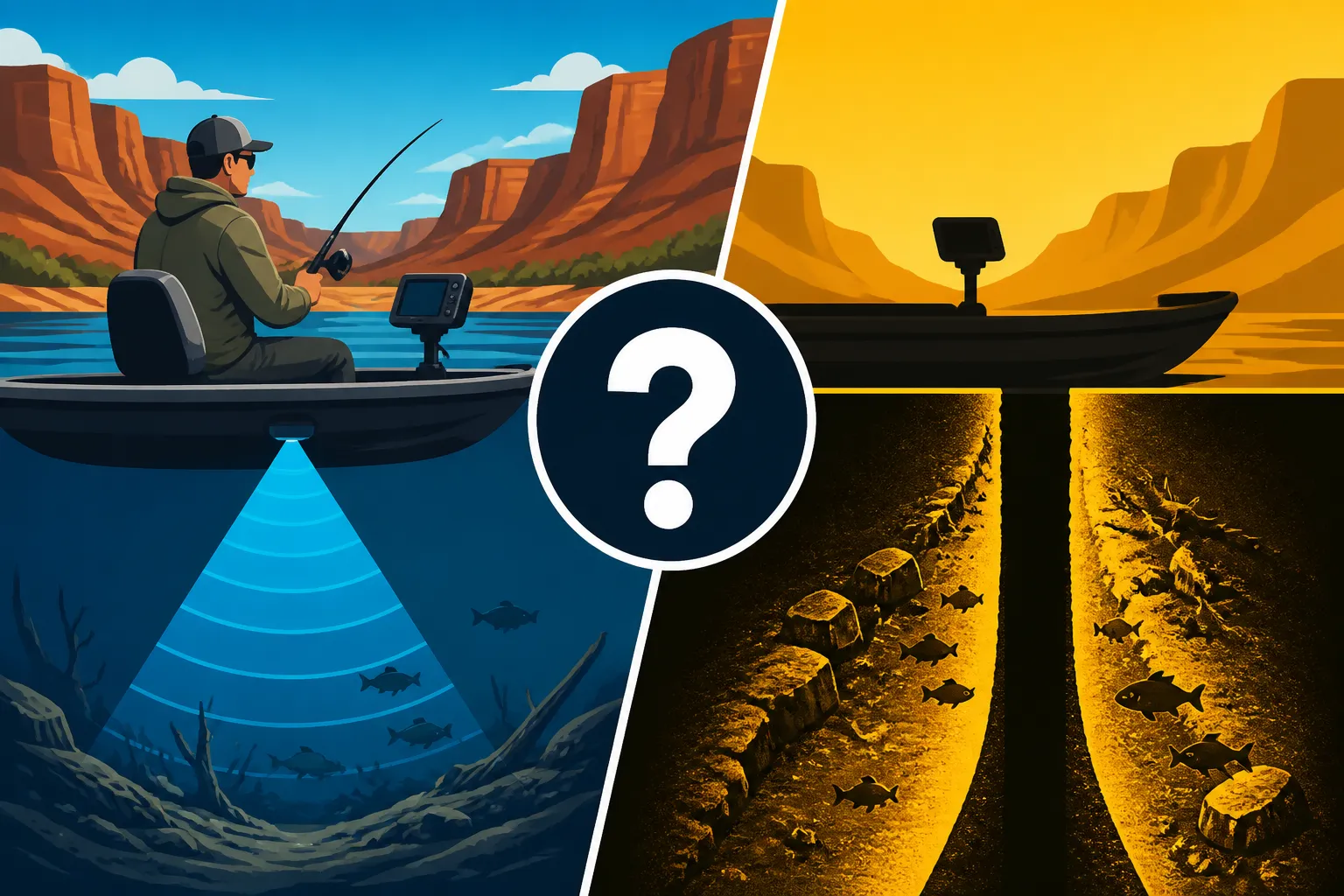
Down imaging, sometimes called DownVu or StructureScan Down, takes traditional 2D sonar a step further by providing a much more photographic, detailed view of what's directly underneath your boat. Instead of arches, fish appear more like distinct shapes, and submerged timber, rock piles, or ledges show up with incredible clarity, almost like an X-ray vision of the lakebed directly below. It uses a very thin, high-frequency beam that essentially "slices" through the water, creating a picture composed of these slices.
For Flaming Gorge, down imaging is incredibly useful for distinguishing between different types of submerged structure. Are those really fish, or just a cluster of rocks? Down imaging can help you tell the difference. If you're targeting smallmouth bass that often hide amongst boulders or near sharp drop-offs, down imaging helps you pinpoint those specific hiding spots with remarkable precision. It's also great for inspecting potential feeding lanes or subtle changes in the bottom contour that might hold a monster lake trout.
The Advantages Side Imaging Brings to Flaming Gorge Fishing
Now, let's get to the star of the show: side imaging. This technology has revolutionized how many anglers approach vast waters, and Flaming Gorge is definitely a place where it can shine. Side imaging dramatically expands your underwater view, allowing you to "see" far out to the sides of your boat, rather than just directly below.
Expanding Your Search Horizon
The primary benefit of side imaging is its ability to scan wide areas of water. Imagine your boat is moving forward, and instead of just looking straight down, you now have a high-resolution sonar beam extending out dozens, sometimes even hundreds, of feet to both the port and starboard sides. This creates a detailed, panoramic view of the bottom and the water column, revealing structure, contours, and fish that would be completely missed by traditional or down imaging alone. When you're fishing a place like Flaming Gorge, which covers over 42,000 acres, being able to scan a wider swath of water is a game-changer. You're not just fishing where you're going; you're scouting huge areas as you move.
This is particularly helpful for covering water efficiently, especially in areas with scattered structure or subtle features that are hard to find with only a downward-looking beam. Instead of making pass after pass directly over a suspected area, you can sweep wide and locate promising spots much faster. This efficiency alone can save you hours of searching.
Locating Hidden Structure and Cover
Flaming Gorge is famous for its intricate underwater landscape, including submerged cliffs, massive rockslides, old river channels, and scattered timber. These features are prime hiding spots for fish, but they can be incredibly difficult to locate and interpret using only traditional sonar. Side imaging excels at rendering these features with stunning clarity. You can literally see a sunken tree laying on its side, a distinct boulder field, or a subtle ledge that's just out of reach of your down-looking sonar.
For species like smallmouth bass, which are often oriented to specific pieces of cover or rock formations, side imaging makes it much easier to find these key areas. You can see how a point drops off, where boulders gather, or where the bottom composition changes from mud to rock, all without driving directly over it. This allows for a stealthier approach and more targeted presentations once you identify a promising spot. It’s a huge advantage when you’re trying to understand the nuances of the lakebed.
Identifying Fish and Bait Schools Away From Your Boat
While its structure-finding capabilities are paramount, side imaging also helps you spot individual fish or schools of baitfish that are off to the sides of your boat. For example, if you're trolling for lake trout or kokanee, you might see a school of baitfish suspended 50 feet to your left, or a large predator lurking near a drop-off 70 feet to your right. This information allows you to adjust your boat's course, alter your trolling pattern, or even cast to specific targets you've identified, rather than just hoping fish are directly beneath you.
This scouting ability is particularly valuable in a vast lake like Flaming Gorge where fish can be widely dispersed. If you notice consistent fish returns on one side, you can pivot your boat to work that area more thoroughly. It provides a level of awareness about the immediate underwater environment that no other sonar technology can match, giving you a comprehensive picture of what's happening around your vessel.
Can You Successfully Fish Flaming Gorge Without Side Imaging?
Absolutely! While side imaging is a fantastic tool that offers undeniable advantages, it is by no means a mandatory piece of equipment for successful fishing at Flaming Gorge. Many anglers, including seasoned veterans, consistently catch fish and have incredible experiences without it.
Relying on Traditional Sonar and Down Imaging
The vast majority of successful anglers at Flaming Gorge have spent years, even decades, honing their skills with traditional 2D sonar and, more recently, down imaging. These technologies are powerful in their own right. A good quality 2D sonar with a wide cone angle can still show you the fish and key structures directly beneath you. Pair that with down imaging for clearer interpretations of bottom composition and tighter fish arches, and you have a formidable setup.
With these tools, you learn to interpret the subtleties of the screen – subtle changes in depth, the shape of the bottom, and the behavior of fish arches. Many experienced anglers can tell the difference between a school of kokanee and a lone lake trout just by how the returns appear on their traditional sonar. You simply adjust your approach; instead of scanning wide, you focus on meticulously working areas you believe hold fish, making multiple passes to ensure you've covered the zone directly below your boat. Best Fish Finders for Utah Reservoirs delves into these options more.
Leveraging Maps and Local Knowledge
One of the most powerful tools in an angler's arsenal, regardless of their electronics package, is a detailed lake map and a solid understanding of the fishery. Navionics, C-MAP, and other mapping systems provide incredibly detailed contour maps of Flaming Gorge, showing drop-offs, points, humps, and old river channels. By studying these maps, you can identify potential fish-holding structures and areas even before you launch your boat.
Combine this with local knowledge – either from online forums, fishing reports, or by simply asking friendly folks at the boat ramp – and you can pinpoint high-percentage areas. Knowing that lake trout often hold near certain depths during specific times of the year, or that smallmouth bass prefer rocky shorelines in particular coves, is often more valuable than any piece of technology. Many anglers use resources like these to get a head start before they ever turn on their sonar. Flaming Gorge Fishing Guide is a great place to start learning.
Strategic Fishing Techniques and Patience
Fishing without side imaging often means a slightly different approach, one that emphasizes strategy and patience. Instead of quickly scanning vast areas, you might focus on thoroughly working smaller, more defined zones. This could involve:
- Trolling Patterns: Employing wide S-turns while trolling for lake trout or kokanee to cover a broader area with your lures, even if your sonar is only looking straight down. Utah Trolling Techniques for Lake Trout are crucial here.
- Targeting Visible Structure: Focusing on points, visible rock formations, and shorelines where fish are known to congregate.
- Fan Casting: Making multiple casts in a fan-like pattern from a fixed position to cover a wide arc around your boat, especially when targeting bass or trout near shore.
- "Reading" the Water: Paying close attention to subtle clues like baitfish jumping, birds diving, or changes in water clarity that indicate fish activity.
Patience is also key. Without the instant gratification of seeing fish on a wide side scan, you might spend more time working a promising area, trusting your knowledge of the lake and the fish's habits. This focused effort can often lead to just as many, if not more, fish in the cooler.
Is Side Imaging Right for Your Flaming Gorge Adventures?
The decision of whether to invest in side imaging for your Flaming Gorge fishing truly comes down to your personal fishing style, budget, and goals. There's no single right answer, but here's how to think through it.
When Side Imaging is a Game-Changer
If you're someone who loves to actively scout, cover a lot of water, and pick apart structure with precision, then side imaging can dramatically enhance your experience at Flaming Gorge. It's particularly useful if you:
- Target multiple species: Being able to quickly scan for suspended kokanee, deep lake trout, or smallmouth bass tucked into rocky coves gives you incredible versatility.
- Enjoy exploring new water: If you frequently visit different parts of the Gorge or are always looking for new spots, side imaging helps you learn the underwater landscape much faster.
- Want to maximize efficiency: When fishing time is limited, the ability to rapidly identify productive areas and avoid barren water is invaluable.
- Are a serious tournament angler: In competitive fishing, every advantage counts, and side imaging offers a significant edge in locating fish quickly.
For these anglers, the investment often feels worthwhile because it directly contributes to their fishing goals and enjoyment. You'll spend less time guessing and more time fishing in high-potential areas. It's hard to put a price on that kind of confidence on the water.
Weighing the Investment Against Your Needs
The reality is that side imaging, especially when bundled with down imaging and traditional sonar in a modern fish finder unit, represents a significant investment. These units can range from moderately priced options to high-end systems that can cost as much as a small used boat. You'll find a wide array of choices from leading manufacturers that often appear on sites like Amazon or in stores like Bass Pro Shops. Consider not just the initial purchase price, but also installation costs if you're not doing it yourself, and any additional transducers you might need.
Ask yourself these questions:
- How often do I fish Flaming Gorge (or similar large reservoirs)? If it's a once-a-year trip, the cost might be harder to justify than if you're there every other weekend.
- What are my primary target species? If you only troll for suspended kokanee, your traditional 2D sonar might be perfectly adequate. If you're constantly looking for smallmouth around obscure rock piles, side imaging will be more beneficial.
- Am I comfortable with new technology? Modern fish finders have a learning curve. Are you willing to put in the time to learn how to effectively use and interpret side imaging displays?
- What's my budget for fishing gear? There's no shame in sticking to what you can afford and what works for you. How Much a Beginner Should Budget for Utah Fishing Gear highlights how you can start small.
Ultimately, side imaging is a powerful tool, but it's just that – a tool. It doesn't replace angling skill, local knowledge, or patience. If you decide to go without it, rest assured that countless anglers have had, and continue to have, phenomenal success at Flaming Gorge using more traditional sonar setups and a solid understanding of the fishery. You can find incredible fishing opportunities and Flaming Gorge Trophy Lake Trout Spots without the latest tech.
Enhancing Your Setup Over Time
One smart approach is to start with a solid traditional/down imaging unit and then, if you feel the need, upgrade or add side imaging capabilities later. Many manufacturers offer modular systems where you can add different transducers or network compatible units over time. This allows you to spread out the cost and learn the basics before jumping into the deep end of advanced electronics.
When researching, look at features, screen size, ease of use, and compatibility with other accessories like GPS mapping. Reading reviews from other anglers who frequent large reservoirs can also give you a practical perspective on what works best. Whether you're exploring options at Bass Pro Shops or comparing features online, take your time to make an informed decision that aligns with your fishing aspirations for Flaming Gorge.
| Sonar Type | Primary Function | Best Use at Flaming Gorge | Learning Curve | Cost (Relative) |
|---|---|---|---|---|
| Traditional 2D | Shows depth, fish arches, and structure directly below. | Locating suspended kokanee, seeing your downrigger balls, tracking deep lake trout. | Low-Moderate | Low-Moderate |
| Down Imaging | Photo-like detail of structure directly below. | Distinguishing specific submerged features (trees, rocks), pinpointing bass cover. | Moderate | Moderate |
| Side Imaging | Wide-area scanning of structure and fish to the sides. | Efficiently scouting large areas, finding hidden structure far from the boat, covering vast coves. | Moderate-High | High |
In the end, the most important gear you bring to Flaming Gorge is your passion for fishing and your willingness to adapt. Side imaging can absolutely give you an edge, helping you uncover secrets hidden beneath the surface. But a well-placed cast, the right lure presentation, and a keen eye for reading the water will always be your most valuable assets, no matter what electronics are on your boat. How to Fish Deep Water for Summer Lake Trout or Flaming Gorge Smallmouth Bass Coves are equally important to master.
Disclaimer
This article is for general informational purposes only and does not constitute professional advice. Laws, prices and regulations vary by location and change over time. Consult a qualified professional for guidance on your specific situation.