Best Sunglasses Lens Color for Sight Fishing in Utah
We've all been there: standing at the edge of a crystal-clear mountain lake or a meandering river, squinting into the sun, absolutely certain there's a fish lurking just beyond that submerged log or rock pile. You know they're there, but the persistent glare and the tricky reflections on the water's surface make it impossible to get a clear visual. It’s incredibly frustrating when you can’t see what you’re casting to, effectively turning sight fishing into blind luck. This guide will walk you through how choosing the right sunglasses lens color can dramatically improve your ability to spot fish and structure in Utah's diverse waters, turning those frustrating squints into confident casts.
Why Lens Color Matters More Than You Think for Utah Sight Fishing
When you're out on the water, whether it's the shimmering expanse of Strawberry Reservoir or the subtle currents of the Provo River, your eyes are your most important tool, especially if you're trying to spot fish before they spot you. It's not just about protecting your eyes from UV rays, though that's crucial too. The color of your sunglasses lens plays a massive role in how you perceive the underwater world, directly impacting your success when sight fishing.
Cutting Through Glare on Bright Utah Waters
Glare is the nemesis of every angler. It's that intense, blinding reflection of sunlight off the water's surface that makes everything underneath disappear into a milky sheen. Different lens colors are engineered to filter specific wavelengths of light, and some are far more effective at neutralizing glare than others. Imagine a bright, cloudless day at Lake Powell. The sun beats down, creating a mirror-like surface that bounces light directly into your eyes. Without the right lens color, that glare isn't just uncomfortable; it completely obscures your view of any striped bass or smallmouth bass cruising beneath the surface. The right lens doesn't just dim the light; it actively "cuts" through the glare, allowing your vision to penetrate the water.
This glare-cutting ability is paramount. If you're on a smaller stream, a sunny afternoon might mean glare reflecting off ripples, making it difficult to spot a subtle nymph take or the shadow of a lurking brown trout. The frustration of knowing fish are present but being unable to locate them can really take the fun out of a trip. A good lens color, combined with effective polarization, will transform that shimmering surface into a transparent window, revealing the hidden world beneath.
Enhancing Contrast to Spot Fish and Structure
Beyond just reducing glare, the magic of specific lens colors lies in their ability to enhance contrast. Think about trying to pick out a camouflaged cutthroat trout against a mottled, rocky riverbed, or distinguishing a subtle weed line from open water in a reservoir. It's like having a built-in filter that makes the important details pop. Some lens colors are particularly adept at separating greens from browns, or enhancing the natural blues and grays of underwater features.
For instance, if you're targeting walleye at Utah Lake, where the water can have a bit more turbidity, a lens that boosts contrast can help you see subtle changes in depth or bottom composition that might indicate a productive feeding area. These aren't just minor improvements; they can be the difference between casting blindly and accurately presenting your bait or lure to a fish you've actually seen. It transforms your fishing experience from guessing games to strategic engagement.
Adapting to Utah's Diverse Fishing Environments
Utah is a state of incredible topographical and aquatic diversity. We have everything from high-altitude, gin-clear Uinta Lakes where you can literally see fish at astonishing depths, to the silty, nutrient-rich waters of Utah Lake, and the vast, often sun-baked expanses of Flaming Gorge and Lake Powell. Expecting one single lens color to perform optimally across all these varied conditions is simply unrealistic. Each environment presents its own unique lighting challenges and underwater characteristics.
A lens color that might be fantastic for spotting brook trout in a shady mountain stream might be completely inadequate for piercing the intense glare on a wide-open reservoir. Conversely, a lens designed for bright, open water might make a dark, tannin-stained stream seem even darker. Understanding this variability is the first step towards making an informed choice. You might even find yourself wanting a couple of different pairs of sunglasses, or at least a highly versatile option, to cover the full spectrum of Utah's fantastic fishing opportunities. This adaptability is key to maximizing your sight fishing potential, no matter where your next adventure takes you.
Top Lens Colors and When to Use Them for Utah Anglers
Choosing the right lens color isn't about finding a "best" option, but rather finding the best option for specific conditions and personal preferences. Different colors excel in different light levels and environments, making some choices more appropriate for the bright, open waters of a reservoir, while others shine in the dappled light of a river canyon.
Amber, Copper, and Brown: The All-Around Workhorses
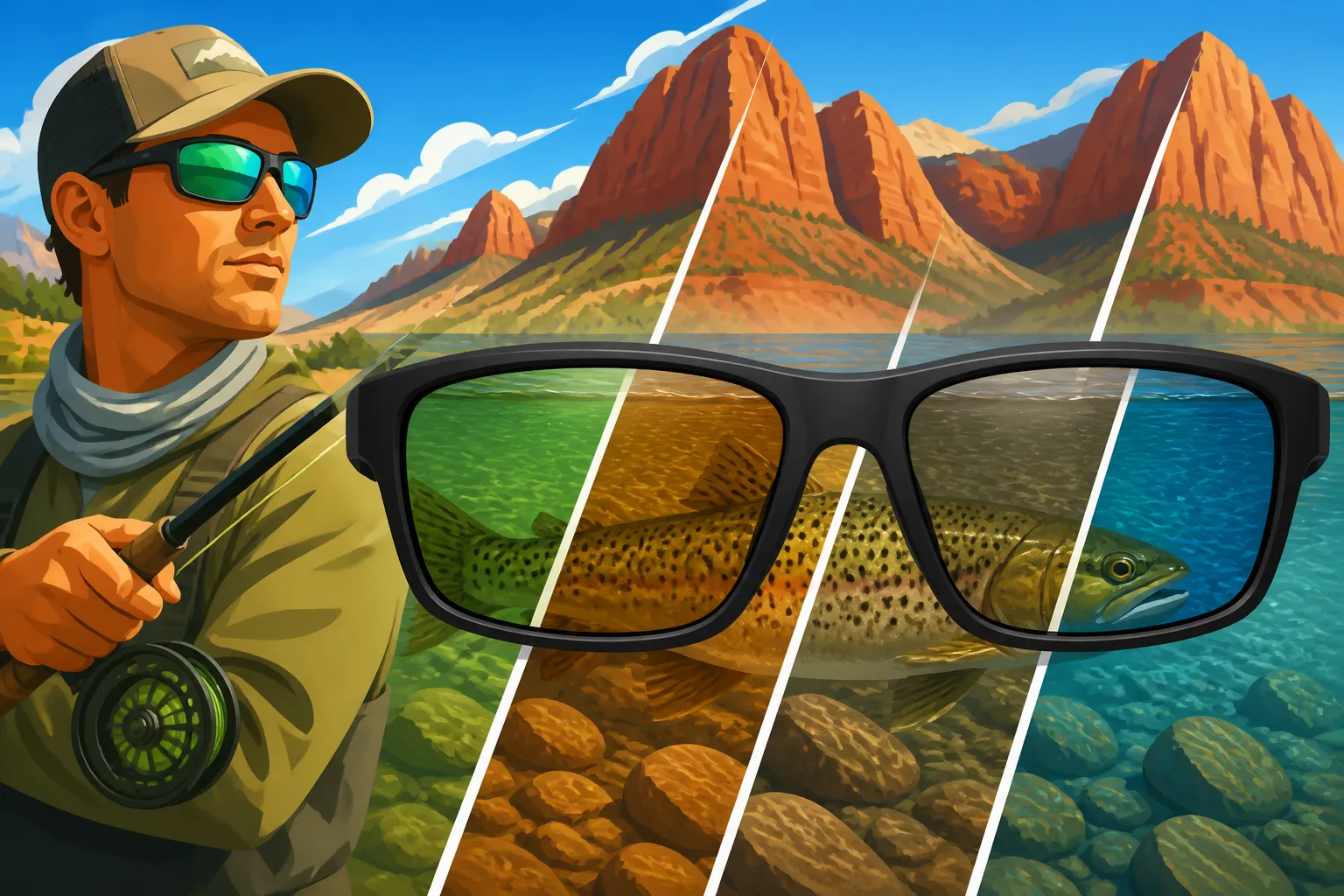
These warm-toned lenses are arguably the most popular and versatile choices for anglers, and for good reason. Amber, copper, and brown lenses excel at enhancing contrast, making it much easier to discern fish, rocks, logs, and changes in bottom contours. They are particularly effective in variable light conditions, from bright, sunny days with a few clouds to partly cloudy or slightly overcast skies.
Imagine you're wading the middle section of the Provo River Fishing Guide, trying to spot a wary brown trout holding behind a boulder. An amber or copper lens will cut through the surface glare and make that dark shape against the riverbed really stand out. These colors are also fantastic for river fishing because they tend to make natural browns, greens, and grays appear sharper and more defined. For lake fishing, especially when you're targeting areas with visible structure like submerged brush piles or rocky points, they help you pick out those subtle details that hold fish. If you only have one pair of fishing sunglasses, a quality amber or copper lens is often your best bet for Utah's diverse waters. Many anglers find a great selection of these versatile lens colors available at retailers like Bass Pro Shops or through online stores like Amazon.
Gray and Green: For Bright, Open Water and Overcast Days
While amber tones boost contrast, gray and green lenses offer different advantages, primarily in very bright conditions or when a more natural color perception is desired.
-
Gray lenses are the ultimate choice for extremely bright, open-water conditions, such as those found on the expansive Lake Powell Fishing Guide or when battling the intense sun at Flaming Gorge Fishing Guide. Gray provides the most neutral color perception, meaning it doesn't distort colors. This is beneficial when you want to see everything as naturally as possible. While it might not enhance contrast as dramatically as amber, it's superb at reducing overall brightness and glare without causing eye fatigue over long days under a scorching sun. If you're spending hours trolling for lake trout or chasing striped bass boils on a vast reservoir, gray lenses will be your best friend.
-
Green lenses are often considered a hybrid, offering a good balance between the color-neutrality of gray and the contrast-enhancing properties of amber. They are excellent for a variety of conditions, including bright sun and partly cloudy days. Green lenses are particularly good at reducing glare while still boosting contrast, making them a solid choice for anglers who want a versatile option that performs well in many Utah fishing scenarios. They are especially effective in environments with lots of green foliage or when fishing for species where natural color perception helps distinguish them from surrounding weeds. You'll often see green lenses touted for their ability to brighten shadows while keeping glare at bay, making them great for sight fishing in varied light.
Yellow and Rose: Boosting Visibility in Low Light
Sometimes, you find yourself fishing in less-than-ideal light conditions – maybe it's a heavily overcast morning, the golden hour just before sunset, or you're deep in a canyon where sunlight struggles to penetrate. This is where yellow and rose-tinted lenses truly shine.
These lighter tints are specifically designed to brighten your field of vision and enhance detail when ambient light is scarce. A yellow lens, for example, is fantastic for cutting through haze and fog, and it significantly improves contrast in low-light situations. If you're an early bird angler hitting the water just as dawn breaks, or you're stalking fish on a notoriously cloudy day, yellow lenses can make a significant difference in your ability to spot subtle movements underwater.
Rose-tinted lenses offer similar benefits, enhancing contrast and brightening your view, often with a slightly softer effect than yellow. They are also known for reducing eye strain. While neither yellow nor rose lenses are suitable for extremely bright, sunny days (they'll likely be too light and cause discomfort), having a pair dedicated to low-light conditions can be a game-changer for those tricky mornings, evenings, or when fishing in heavily shaded areas. It’s about leveraging every bit of available light to your advantage, giving you that critical edge when other anglers are still struggling to see.
| Lens Color | Primary Benefit | Ideal Conditions | Best for Spotting | Not Ideal For |
|---|---|---|---|---|
| Amber/Copper/Brown | High contrast, depth perception | Variable light, partly cloudy, river/lake edges | Fish, structure, subtle bottom changes | Very low light (too dark) |
| Gray | Natural color, glare reduction | Extremely bright, open water, sunny days | Open water fish, distant targets | Low light (too dark), high contrast needs |
| Green | Balanced contrast & glare reduction | Varied bright conditions, sun/partly cloudy | Fish in weeds, general structure, good all-around | Very low light, specific high contrast needs |
| Yellow/Rose | Low light enhancement, haze reduction | Overcast, dawn/dusk, shady canyons, fog | Subtle movements, enhanced detail in dim light | Bright sun (too light) |
Beyond Color: Other Sunglasses Features Critical for Utah Sight Fishing
While lens color is a crucial element for sight fishing, it's far from the only factor to consider when choosing your next pair of fishing sunglasses for Utah's diverse waters. Several other features directly impact their performance, comfort, and durability. Overlooking these can lead to disappointment, even if you nail the perfect lens color.
Polarization: Non-Negotiable for Cutting Surface Glare
Let me be absolutely clear: for sight fishing in Utah, polarization is non-negotiable. You can have the most expensive, perfectly colored lenses in the world, but if they aren't polarized, you're missing the single most important feature for seeing into the water. Polarization works by filtering out horizontal light waves, which are the primary cause of surface glare. This is the difference between simply dimming the world and actually being able to see through the water's surface.
Without polarized lenses, that blinding reflection on the surface of Strawberry Reservoir will still be there, obscuring every fish and every piece of structure below. With them, it's like a switch is flipped, and suddenly, you can penetrate the water, spotting fish, submerged logs, and subtle drop-offs with ease. This isn't a luxury; it's a fundamental requirement for anyone serious about sight fishing. Brands like Costa Del Mar, Smith Optics, and Maui Jim are renowned for their polarization technology, and you'll find an array of options with excellent polarization through retailers like Bass Pro Shops and Amazon. Don't skimp here; it's the foundation of effective sight fishing optics.
Lens Material and Durability for Rugged Utah Adventures
Utah's landscapes are rugged, and so are the demands placed on your fishing gear. Your sunglasses are no exception. Lens material directly affects clarity, scratch resistance, and impact resistance.
- Polycarbonate lenses are popular because they are lightweight, shatter-resistant, and more affordable. They offer excellent impact resistance, which is great if you're prone to dropping your glasses on rocky riverbanks or if they get knocked around in a boat. However, they can be more susceptible to scratching than glass if not cared for properly.
- Glass lenses offer superior optical clarity and are significantly more scratch-resistant. Many anglers swear by the crispness of glass lenses, especially for long days on the water. The downside is that they are heavier and can shatter upon impact, which might be a concern if you're active or fishing in situations where dropping them is a real possibility.
Consider your personal fishing style and the environments you frequent. If you're backpacking into remote Uinta Mountains High Lakes Fishing, where every ounce matters and falls are a risk, polycarbonate might be a sensible choice. If you're fly fishing the Provo River Fishing Guide and prioritize absolute clarity for spotting delicate nymph takes, a quality glass lens might be worth the investment. Either way, look for lenses with good scratch-resistant coatings, as nothing ruins a fishing trip faster than scratched lenses hindering your vision.
Frame Style and Fit: Comfort and Coverage
The best lenses in the world won't do you much good if your sunglasses are uncomfortable, fall off constantly, or let light leak in around the edges. Frame style and fit are critical for both performance and long-term wearability.
- Wrap-around styles are highly recommended for fishing because they provide excellent peripheral coverage, blocking out light that can sneak in from the sides. This minimizes glare and distractions, keeping your focus on the water.
- Side shields or wider temples can offer even more protection from ambient light and wind, which is a bonus on windy reservoir days or when you're moving fast in a boat.
- A snug, comfortable fit is essential. Sunglasses that are too loose will slide down your nose or fall off when you bend over, while those that are too tight can cause headaches. Look for lightweight frames with rubberized nose pads and temple tips that help them stay in place, even when wet or sweaty. This not only enhances comfort but also ensures your lenses are always properly positioned to do their job. Consider trying on different styles to find what feels best on your face.
Remember, you'll likely be wearing these for hours on end, often in direct sunlight or active situations. Comfort and security are key to keeping your vision clear and your focus sharp, allowing you to concentrate on the fish rather than constantly adjusting your eyewear.
Tailoring Your Choice to Specific Utah Fishing Scenarios
Utah's fishing opportunities are incredibly diverse, from vast, sun-drenched reservoirs to intimate, shaded mountain streams. The "best" sunglasses lens color isn't a one-size-fits-all answer; it depends heavily on where you're casting your line. Understanding the specific challenges and light conditions of different Utah waters will help you make the most informed choice.
River and Stream Fishing: Where Clarity and Contrast are King
When you're wading Utah's renowned rivers like the Provo River, Weber River, or the Green River below Flaming Gorge Dam, sight fishing is often the most effective way to target trout. Here, clarity and contrast are paramount. You're typically looking for subtle movements, a flash of a fin, the outline of a fish holding in current, or a change in the riverbed.
In these environments, which often feature varied depths, shaded banks, and dappled sunlight filtering through trees, amber, copper, or brown lenses truly excel. They boost contrast incredibly well, making it easier to distinguish a fish from the gravelly or rocky bottom. Imagine standing on the banks of a blue ribbon fishery, trying to spot a cutthroat trout feeding in a riffle; a good copper lens will make that fish pop out against its surroundings. Green lenses can also be a strong contender, offering good contrast without being overly aggressive on color shift. The key here is to have lenses that can cut through surface ripple glare, penetrate a few feet of water, and enhance the details of a naturally camouflaged fish. Don't forget, Utah Fly Fishing Guide often emphasizes the importance of good vision for spotting rising fish and subtle takes. For more tips on finding these fish, check out Utah Trout Fishing Tips.
Large Reservoirs: Battling Intense Sun and Vast Waters
Utah's large reservoirs, like Lake Powell, Flaming Gorge, and Strawberry Reservoir, present a different set of challenges. These are often wide-open expanses of water, subject to intense sunlight and widespread glare, especially on clear, summer days. You might be targeting anything from trophy lake trout in deep water to schooling kokanee salmon or aggressive striped bass.
For these conditions, where overall brightness reduction and neutral color perception are often prioritized, gray lenses are an excellent choice. They reduce eye strain over long periods of exposure to harsh sun and provide a true representation of colors, which can be important when identifying distant targets or subtle changes in water color that indicate baitfish schools. However, if you're working coves, shorelines, or areas with more structure, amber or green lenses can still be highly effective for their contrast-enhancing properties. For instance, when searching for smallmouth bass around rocky points at Flaming Gorge, a copper lens might help you pick out the fish more easily against the submerged boulders. When fishing these vast waters, understanding How to Read a Fish Finder for Utah Reservoirs can complement your visual search significantly.
High Mountain Lakes and Ponds: Dealing with Bright Sun and Clear Water
Utah's high mountain lakes, nestled in the Uinta Mountains, offer some of the most stunning, and often clearest, fishing opportunities. The water can be incredibly transparent, but the high altitude means more intense UV radiation and often blinding glare bouncing off the surface. You'll often be sight fishing for brook trout, cutthroat, or rainbow trout in relatively shallow, clear conditions.
For these environments, a versatile amber, copper, or green lens can work wonders. The clarity of the water means you don't need maximum penetration, but the high sun demands excellent glare reduction. These lens colors provide the necessary contrast to spot fish against varying bottom compositions, from sandy patches to submerged logs, even in bright conditions. They also help differentiate the subtle colors of fish in very clear water. If you're hiking into these pristine spots, consider also looking for Best Backpacks for Hiking to Uinta Lakes to carry your gear effectively. Sometimes, even simple techniques like How to Fish From Shore in Utah can be greatly enhanced by seeing what's directly in front of you in these clear waters.
Disclaimer
This article is for general informational purposes only and does not constitute professional advice. Laws, prices and regulations vary by location and change over time. Consult a qualified professional for guidance on your specific situation.