Wiper Size at Willard Bay
Typical wiper size ranges at Willard Bay help anglers prepare gear, while stocking programs and abundant shad drive their growth.
Know what’s on the line.
Gamefish and panfish profiles — identification, behavior, feeding habits, and species-specific strategies for every catch.
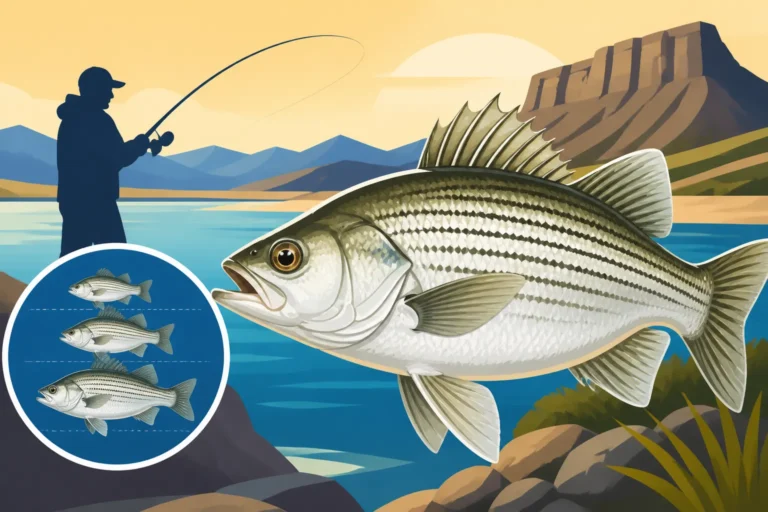
Typical wiper size ranges at Willard Bay help anglers prepare gear, while stocking programs and abundant shad drive their growth.

A wiper is a hybrid of a female white bass and a male striped bass, combining the striper’s fighting spirit with the white bass’s schooling and growth.

Striped bass reproduction in Lake Powell fails because semi-buoyant eggs need sustained river currents lasting up to seventy-two hours to hatch.
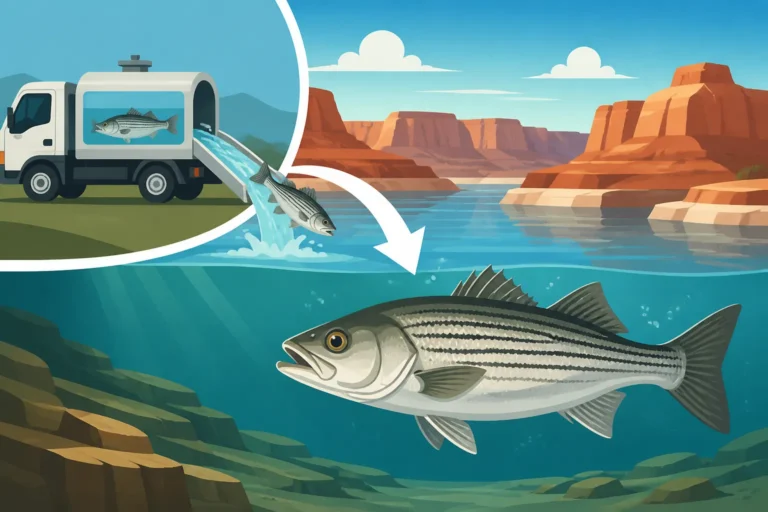
Wildlife managers introduced striped bass to Lake Powell to balance the ecosystem, control threadfin shad, and build a world-class fishery.

Striped bass at Lake Powell typically weigh two to five pounds and measure eighteen to twenty-four inches, with river inflows aiding natural reproduction.

Wally Johnson caught the 48 pound and 11 ounce Utah state record striped bass at Lake Powell in 1993 using shad.

Blue catfish populations do not exist in Utah public waters, but channel catfish and bullhead species offer abundant fishing.

Utah Lake channel catfish eat common carp fry, crayfish, aquatic insects, and benthic invertebrates depending on the season.

Utah Lake channel catfish commonly range from one to four pounds for typical catches, while impressive larger giants also swim here.

The Utah state record channel catfish, weighing 32 pounds and 8 ounces, was caught by Mike Gardner at Utah Lake in 2004.