Utah Disability Fishing License Exemptions
It can feel incredibly frustrating when you're passionate about the outdoors, specifically fishing, but worry that a disability might complicate or even prevent you from enjoying the waters of Utah. Many anglers with disabilities often face confusion about their rights and available accommodations when it comes to fishing licenses. This guide aims to clear up all those questions, providing a comprehensive overview of Utah's disability fishing license exemptions, who qualifies, and how to navigate the process so you can get back to casting a line without unnecessary hassle.
Understanding Utah's Approach to Disability and Fishing
Utah, like many states, recognizes that fishing should be an accessible pastime for everyone, regardless of physical challenges. The Division of Wildlife Resources (DWR) has specific provisions in place to ensure that individuals with qualifying disabilities can enjoy Utah's beautiful lakes and rivers. It’s not just about getting a piece of paper; it’s about fostering inclusion and recognizing the therapeutic and recreational benefits that fishing offers.
The Spirit Behind the Exemption
The intent behind Utah's disability fishing license exemption isn't to create a loophole, but to genuinely support and encourage participation from all segments of the community. For many, fishing isn't just a hobby; it's a vital connection to nature, a stress reliever, and a way to spend quality time with family and friends. When faced with physical limitations, the thought of jumping through bureaucratic hoops can be daunting, adding another layer of challenge to an already complex situation. The DWR aims to mitigate this by offering exemptions that simplify access, acknowledging the unique circumstances that disabled anglers face. This commitment ensures that the joy of a tug on the line or the peace of a sunrise over Strawberry Reservoir isn't out of reach for anyone. It's about leveling the playing field so that everyone has an equal opportunity to experience the richness of Utah's aquatic environments.
Defining "Disability" in Utah's Regulations
When we talk about a "disability" in the context of a Utah fishing license, it’s not a broad, all-encompassing term. The state has specific criteria that an individual must meet to qualify for an exemption. Generally, a qualifying disability for a fishing license exemption refers to a permanent physical or mental impairment that substantially limits one or more major life activities. This isn't just about temporary conditions or minor inconveniences; it delves into chronic, long-term conditions that genuinely impact an individual's ability to engage in activities like independent mobility, self-care, or vocational tasks. The DWR looks for documentation from licensed medical professionals or state agencies that clearly outlines the nature and permanency of the disability. This helps ensure that the exemptions are provided to those who truly need and qualify for them, maintaining fairness and integrity in the system.
For instance, a person who uses a wheelchair permanently due to a spinal cord injury would likely qualify, as their mobility is substantially limited. Similarly, an individual with a severe visual impairment that prevents them from safely navigating fishing environments could also be eligible. The key is the substantial limitation of a major life activity that is permanent in nature. It’s important not to assume; reviewing the exact legal definitions provided by the DWR or consulting with them directly is always the best approach to confirm eligibility. You can find more detailed information on specific requirements by reviewing the official Utah Fishing Regulations Explained document.
Who Qualifies for a Disability Fishing License Exemption?
Understanding the precise criteria for a disability fishing license exemption is crucial. It's not a blanket policy, and specific conditions must be met, often requiring detailed documentation. Utah's DWR focuses on individuals whose disabilities create significant barriers to their participation in fishing activities under normal licensing requirements.
Specific Disability Criteria and Documentation
Utah offers fishing license exemptions to individuals who meet certain criteria for "disabled persons." The primary qualification often revolves around receiving specific forms of state or federal disability benefits. For example, individuals receiving disability compensation from the U.S. Department of Veterans Affairs (VA) due to a service-connected disability rating of 50% or more are typically eligible. This is a common pathway for many veterans to obtain a reduced-cost or free license, a small token of gratitude for their service. Similarly, those who are permanently and totally disabled as determined by the Social Security Administration (SSA) and are receiving benefits might also qualify. The exact percentage of disability or the type of benefit received is paramount.
To prove eligibility, you'll need official documentation. For veterans, this means a letter from the VA clearly stating your service-connected disability rating. For those qualifying through SSA, an official award letter indicating permanent and total disability status is required. These documents serve as definitive proof of your condition as recognized by federal agencies. It’s not enough to simply state you have a disability; the DWR requires official verification to ensure compliance and prevent misuse. Always make sure your documentation is current and clearly states the nature of your disability and benefit status. This is a critical step in the process, as without proper paperwork, your application cannot proceed.
Age and Residency Requirements for Exemption
While the focus is often on the disability itself, it's easy to overlook that general residency and, in some cases, age requirements still apply to these exemptions. For most disability exemptions, you must be a bona fide resident of Utah. This means you must have lived in Utah for at least six consecutive months immediately preceding your application, and maintain your primary domicile in the state. Simply owning property or having a mailing address in Utah usually doesn't qualify you as a resident if your main home is elsewhere. The DWR is quite strict on residency rules to ensure that state resources are primarily benefiting state residents.
Age requirements also play a role, though perhaps less directly than for standard licenses. While Utah does not require a fishing license for children under 12, the disability exemption primarily applies to individuals who would otherwise be required to purchase an adult license. So, if a 10-year-old has a disability, they wouldn't need a disability exemption because they don't need a license at all. However, a 16-year-old with a disability would need to meet the exemption criteria, as individuals aged 12 to 17 typically need a youth fishing license. For specific details on youth licenses, you can check out the Utah Youth Fishing License Rules. It's about fitting into the existing framework of Utah Fishing License Age Requirements while accommodating the disability.
Applying for Your Utah Disability Fishing License Exemption
Once you've determined you meet the eligibility criteria, the next step is to actually apply for the exemption. This process, while not overly complex, requires attention to detail to ensure everything goes smoothly. Gathering the right paperwork and understanding the submission channels are key to a successful application.
Gathering Necessary Paperwork
The old adage "preparation is key" certainly applies here. Before you even think about filling out forms, compile all the required documentation. As mentioned, for veterans, this will be your official letter from the Department of Veterans Affairs detailing your service-connected disability rating of 50% or more. Make sure the letter is recent and clearly shows the current rating. For non-veterans qualifying through the Social Security Administration, you'll need the official SSA award letter confirming your permanent and total disability status. This letter must explicitly state "permanent and total disability" or similar language; a general disability benefit letter might not be sufficient.
In addition to disability proof, you'll also need to demonstrate your Utah residency. This can typically be done with a valid Utah driver's license or state ID card. If you don't have one, other documents like utility bills, voter registration, or property tax statements showing six consecutive months of residency in Utah might be accepted, but it's always best to contact the DWR directly for a definitive list if you're unsure. Having clear, legible copies of all these documents will prevent delays and frustration down the line. It's a good idea to make a checklist and ensure every item is accounted for before moving to the next step.
The Application Submission Process
With your paperwork in hand, you're ready to submit your application. Utah offers several ways to apply, though for disability exemptions, an in-person or mail-in application is often preferred due to the need for physical documentation review. You can visit any DWR office located throughout the state. The staff there are usually very helpful and can review your documents on the spot, ensuring everything is correct before processing your exemption. This is often the quickest and most reassuring method, as you can ask questions and resolve any issues immediately.
Alternatively, you can mail your completed application and copies of your supporting documents to the DWR headquarters. Make sure to use certified mail for important documents so you have proof of delivery. While the DWR's online portal is excellent for a standard Utah Fishing License Online Purchase Process, complex applications like disability exemptions often require a more hands-on approach due to the sensitive nature of the documentation. There is no specific "disability license" to purchase; rather, you are applying for an exemption from the typical license requirement or for a reduced-fee license. The DWR will process your documentation and, if approved, will provide you with a card or endorsement indicating your exempt status. This is not a fishing license in the traditional sense, but proof that you are authorized to fish under the exemption. For a general overview of licenses, consult the Utah Fishing License Guide.
Navigating Fishing with a Disability Exemption
Receiving your disability fishing license exemption is a significant step, but it's equally important to understand what it entails in terms of privileges and responsibilities. This isn't just a free pass; it comes with specific rules and the potential for assistance, known as proxy fishing, which is particularly beneficial for those with severe mobility challenges.
Understanding the Privileges and Responsibilities
When you have a Utah disability fishing license exemption, you are granted the privilege to fish without purchasing a regular annual fishing license. However, this exemption does not exempt you from other critical regulations. You are still required to adhere to all statewide and specific water body fishing regulations, including daily bag and possession limits, size restrictions, seasonal closures, and specific gear restrictions. For example, if you're fishing at Strawberry Reservoir, you still need to know the Strawberry Reservoir Trout and Kokanee Limit. Ignorance of the rules is never an excuse, and game wardens treat all anglers equally when it comes to regulation compliance. This means you must still consult the current Utah Fishing Regulations Explained booklet before each outing.
Your responsibility also includes carrying proof of your exemption whenever you are fishing. This could be the card or document issued by the DWR or, if available, displaying it through the Utah Hunting and Fishing App Features on your phone. Just like any other angler, you must be able to present valid identification and proof of your legal right to fish if requested by a conservation officer. Failing to do so can lead to a citation for fishing without a license, even if you are legitimately exempt. So, keep that documentation safe and readily accessible! The exemption is a privilege, and with it comes the responsibility to be a knowledgeable and compliant angler, setting a good example for others on the water.
Proxy Fishing: When Assistance is Allowed
For some anglers with disabilities, casting, retrieving, or even holding a rod for an extended period can be incredibly difficult, if not impossible. This is where Utah's proxy fishing rules come into play, offering a truly empathetic solution. Proxy fishing allows another licensed individual to fish on behalf of a disabled angler who possesses a specific "Proxy Fishing Permit." This isn't just about someone else reeling in your catch; it’s a detailed system designed to help those with severe physical limitations actively participate in the fishing experience.
To qualify for proxy fishing, the disabled angler must have a permanent physical disability that prevents them from casting or retrieving a line independently. The proxy angler, who must hold a valid Utah fishing license, can then cast out, set the hook, and even reel in a fish on behalf of the disabled angler. However, there are strict rules: only one proxy angler can assist the disabled individual at a time, and the disabled person must be physically present and actively involved in some capacity, such as baiting the hook, supervising, or simply enjoying the outing. The fish caught by the proxy angler counts towards the disabled angler's daily bag limit, not the proxy's. This is a fantastic way for families and friends to share the joy of fishing, ensuring that a physical barrier doesn't completely isolate someone from the sport. For comprehensive details, be sure to look up the Utah Proxy Fishing Rules for Anglers With Disabilities.
Maintaining and Verifying Your Exemption
Securing your disability fishing license exemption is a great achievement, but it's not always a "one and done" process. Depending on the nature of your disability and the specific DWR policies, there might be ongoing requirements to ensure your exemption remains valid. Staying informed about these procedures is essential to avoid any unexpected issues when you're out on the water.
Renewal and Re-verification Procedures
Unlike a standard annual fishing license that has a clear expiration date and renewal process, disability exemptions can vary. Some exemptions, especially those based on permanent and unchanging conditions (like certain service-connected veteran disabilities), might be granted for an extended period or even indefinitely, requiring only periodic re-verification of residency or status. However, other exemptions, or those where the DWR requires more frequent checks, might necessitate annual or multi-year renewal. This means you might need to resubmit updated documentation from the VA or SSA, or a new physician's statement, to confirm that your qualifying disability status remains unchanged.
It's crucial to understand the specific terms of your exemption. When you receive your initial approval, pay close attention to any dates, conditions, or instructions regarding re-verification. The DWR may send renewal reminders, but it's ultimately your responsibility to ensure your exemption doesn't lapse. Keep your contact information updated with the DWR, and don't hesitate to proactively reach out if you're approaching an expiration date and haven't received any notification. A lapse in your exemption could mean you're technically fishing without proper authorization, leading to penalties. A quick call to a DWR office or a look at the Utah Fishing License Renewal Guide can provide clarity.
What to Do If Your Status Changes
Life circumstances can change, and sometimes, a disability status might evolve. While many qualifying disabilities are permanent, there are situations where an individual's condition might improve to the point where they no longer meet the "permanently and totally disabled" criteria, or a veteran's disability rating could be adjusted. If your disability status changes in a way that would negate your eligibility for the exemption, it is your responsibility to inform the Utah DWR.
Failing to report a change in status and continuing to use an exemption you no longer qualify for can lead to serious legal consequences, including fines and potential revocation of future fishing privileges. While it might seem counterintuitive to report a change that could cost you a benefit, maintaining honesty and compliance with state regulations is paramount. The DWR operates on a system of trust, and upholding that trust is important for the integrity of the program. Should your status change, contact the DWR immediately to understand the next steps, which might include purchasing a regular Utah Fishing License going forward. It's always better to be proactive and transparent than to risk legal trouble down the line.
Beyond the License: Ensuring an Enjoyable Experience
Getting the license exemption is a huge win, but the true goal is to enjoy your time fishing. For anglers with disabilities, this often means considering factors beyond just the legal requirements, such as finding accessible locations and utilizing adaptive gear to enhance comfort and success.
Accessible Fishing Locations and Resources
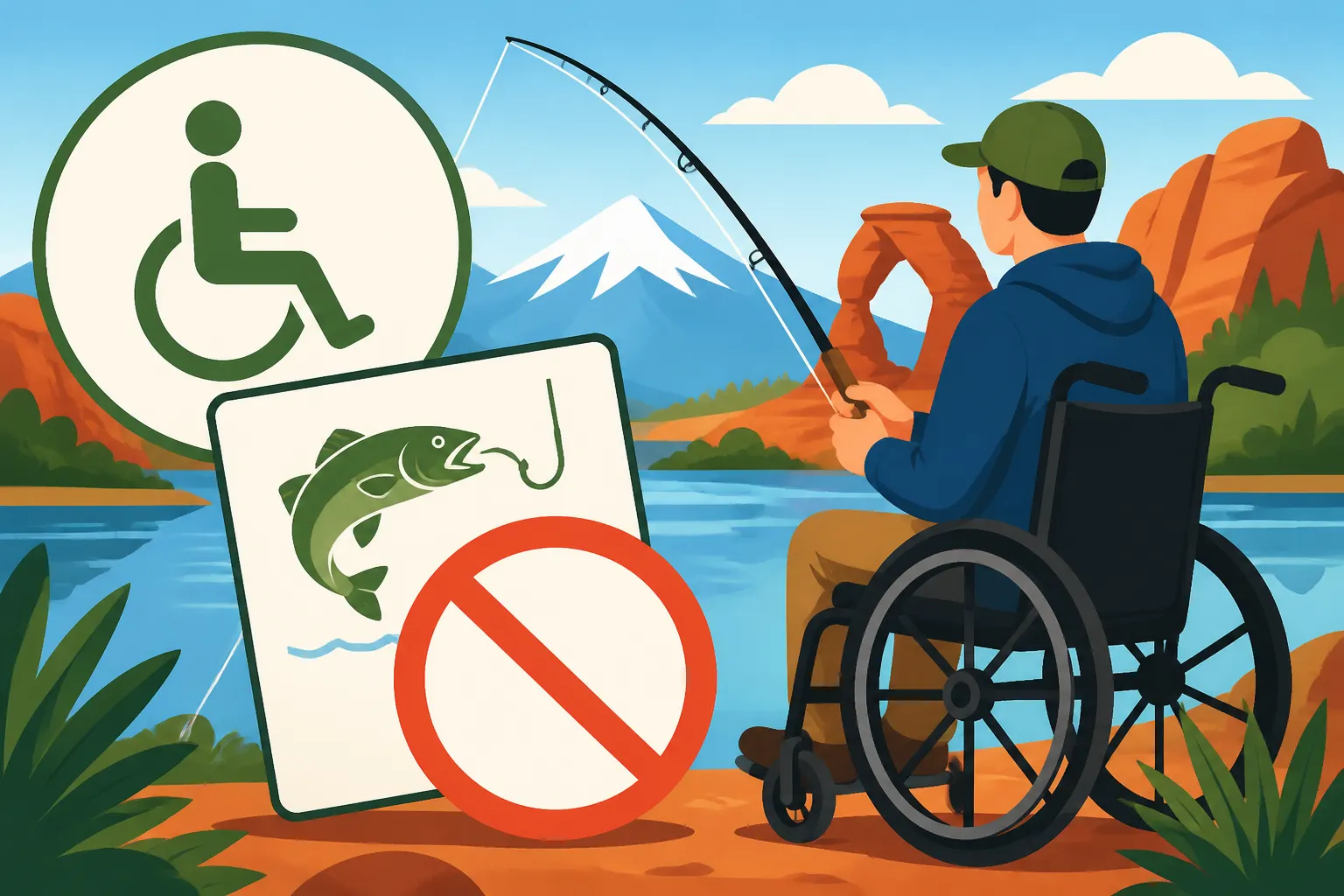
Utah is making commendable efforts to improve accessibility at many of its fishing destinations. This includes developing fishing piers that are wheelchair-accessible, paved pathways leading to shore fishing spots, and accessible restrooms at popular reservoirs and community ponds. Identifying these locations beforehand can significantly reduce frustration and enhance your fishing trip. Many state parks and DWR-managed waters now provide detailed information about their accessible features online or through visitor centers.
Some fantastic examples of accessible spots include various community ponds along the Wasatch Front, which are often stocked frequently and feature easy-to-access banks or piers. Larger reservoirs like Deer Creek Reservoir or Jordanelle Reservoir often have accessible boat ramps and designated fishing areas. For those seeking specific, easy-to-navigate spots, look up guides like the Best Handicap-Accessible Fishing Piers in Utah. These resources often highlight features like paved parking, gentle slopes, and robust railings, making them ideal for anglers with mobility challenges. Planning your trip around these accessible locations ensures that the focus remains on the fishing itself, rather than struggling with difficult terrain.
Adaptive Gear and Support for Anglers
Modern fishing gear has evolved significantly, and there's a growing market for adaptive equipment designed to assist anglers with various physical limitations. This gear can make a world of difference, turning a challenging task into an enjoyable one. For example, specialized rod holders can attach to wheelchairs or boat rails, allowing anglers with limited grip strength to keep a rod steady. Electric reels can assist those who have difficulty cranking, and ergonomic handles on rods and nets can provide a more comfortable grip. Even simple aids like larger knot-tying tools or magnifiers for tying small lures can make a significant impact.
Where can you find such gear? Many specialized outdoor retailers and online marketplaces like Amazon offer a wide array of adaptive fishing equipment. Searching for terms like "adaptive fishing gear," "disabled angler aids," or "electric fishing reels" can bring up a variety of options. Don't be afraid to explore solutions that cater to your specific needs. Additionally, organizations like "Hooked On Fishing International" or "Casting for Recovery" (though often focused on specific conditions) sometimes offer resources, workshops, or even grants for adaptive equipment. Finding the right gear, whether it's a simple wrist brace or a sophisticated electric reel, can empower you to enjoy fishing to its fullest, making the experience more comfortable and productive. If you're a beginner, checking out What Gear Does a First-Time Utah Angler Need? can also give you a baseline for essential items, which you can then adapt.
Disclaimer
The information provided in this guide is intended for general informational purposes only and does not constitute legal advice. While we strive to ensure accuracy, regulations can change. Always consult the official Utah Division of Wildlife Resources (DWR) publications, website, or contact them directly for the most current and authoritative information regarding fishing licenses, exemptions, and regulations. It is the angler's responsibility to understand and comply with all applicable laws.