How to Find Cold-Water Pockets in a Utah Reservoir in Summer
There are few things more frustrating than heading out to your favorite Utah reservoir on a scorching summer day, only to find the fish have vanished. You know they're there, but they've tucked themselves away in the cooler, deeper parts of the water, making them incredibly hard to locate. It’s like they're playing hide-and-seek, and they're always winning. This guide is here to equip you with the knowledge and techniques to effectively find those elusive cold-water pockets, ensuring your summer fishing trips are productive, not perplexing.
Understanding Thermal Stratification in Utah Reservoirs
Before you can find those coveted cold-water pockets, it’s crucial to understand why they form in the first place. Reservoirs, especially during the warmer months, don't just have one uniform temperature from top to bottom. Instead, they develop distinct layers of water based on temperature, a phenomenon known as thermal stratification. Think of it like a layered cake, but with water instead of batter and frosting.
The Basics of Reservoir Layers
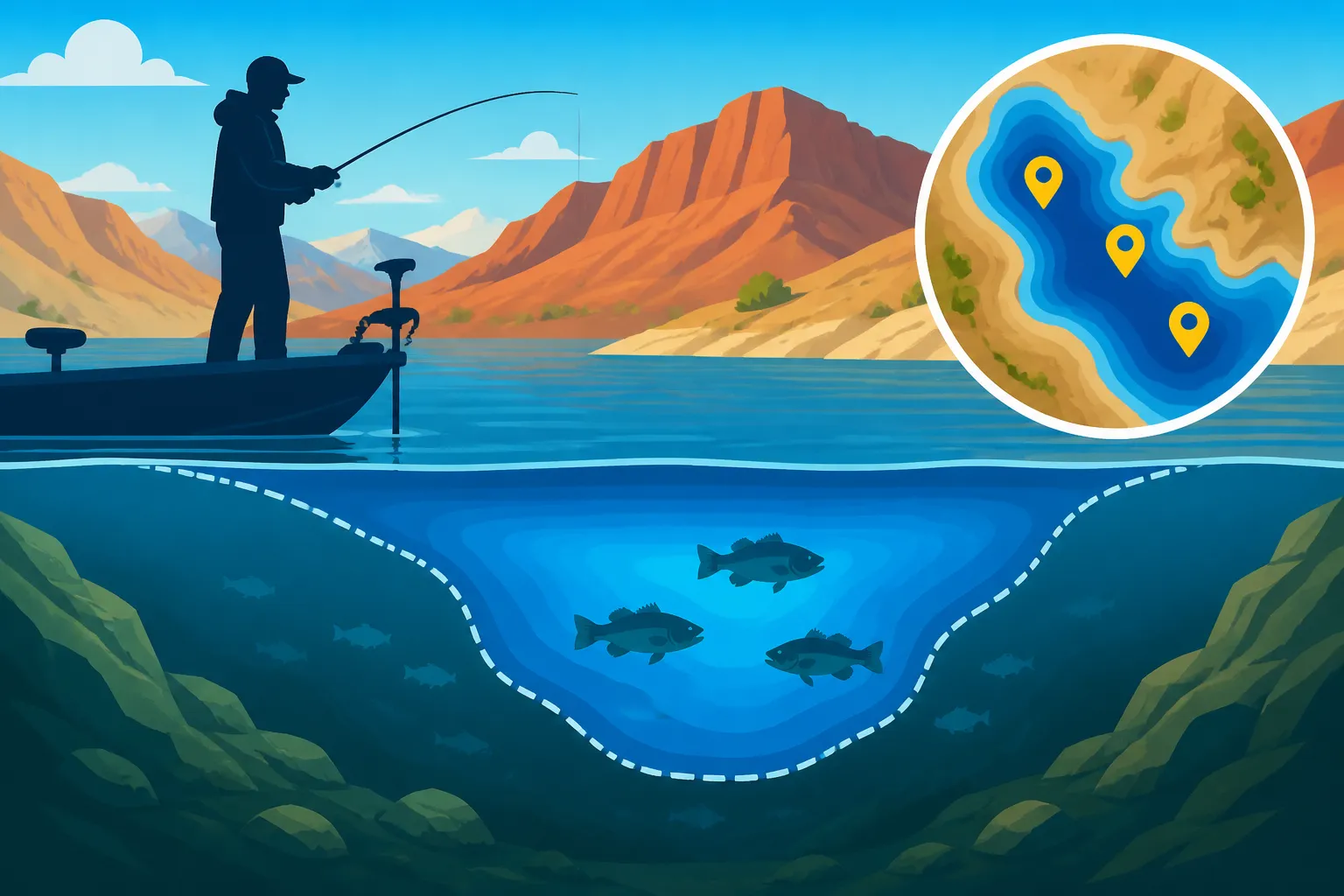
Most deep reservoirs in Utah, and really anywhere with distinct seasons, will stratify into three primary layers during summer. The top layer is called the epilimnion. This is the warmest layer, directly exposed to the sun and wind, and it's usually well-oxygenated because of surface mixing. It's also where you'll find a lot of the baitfish, but many of the desirable sport fish will avoid it during the hottest parts of the day due to the heat.
Below the epilimnion is the metalimnion, and within this layer, you'll find the thermocline. This is the most crucial layer for summer fishing. The thermocline is a relatively thin band of water where the temperature changes rapidly with depth. It acts like a thermal barrier, separating the warm surface water from the cold deep water. Fish often congregate just above, within, or just below the thermocline, seeking comfortable temperatures and access to oxygen. Different species will have different preferences; trout, for instance, often hug the cooler side, while bass might stick to the warmer edge if oxygen allows.
Finally, at the bottom is the hypolimnion, the coldest and often least oxygenated layer. While it’s cold, which many fish prefer, the lack of oxygen can make it uninhabitable for extended periods. Understanding where these layers sit, especially the thermocline, is your first step to finding fish. The depth of these layers can vary greatly depending on the size and depth of the reservoir. For example, a massive, deep body of water like Flaming Gorge Reservoir will have a much more pronounced and deeper thermocline than a shallower, warmer reservoir like Utah Lake, which might not stratify as distinctly or deeply. Knowing your specific body of water helps tremendously, which is why resources like the Strawberry Reservoir Fishing Guide or the Flaming Gorge Fishing Guide are so valuable.
How Summer Heat Affects Water Temperature
Summer heat in Utah is no joke, and it directly influences how pronounced and deep the thermal stratification becomes. As the sun beats down day after day, the surface water absorbs more heat, pushing the epilimnion deeper and making the temperature difference between the layers more extreme. This relentless warming drives cold-water fish even deeper in search of their preferred comfort zone.
Wind also plays a role, though often to a lesser extent in deep, stratified reservoirs. Strong winds can mix the upper layers, pushing the epilimnion deeper and potentially making the thermocline less distinct. However, this mixing rarely extends to the deep hypolimnion. Daily temperature fluctuations, especially between day and night, primarily affect the very top few feet of water. While the surface might cool slightly overnight, the overall stratification remains stable throughout the summer. Your goal as an angler is to understand that fish are constantly seeking stable, cooler water that also provides sufficient oxygen and food. They're not just looking for cold; they're looking for comfortable cold. This is an important consideration, as we explored in our article on How Water Temperature Affects Utah Trout Fishing.
Essential Gear for Locating Cold Water
You can't just guess where these cold-water pockets are; you need the right tools to pinpoint them. Fortunately, modern fishing technology and a few traditional methods make this much easier than it used to be. Investing in some key pieces of equipment will dramatically improve your success rate.
Using a Fish Finder with Temperature Readout
A good quality fish finder is arguably your most important ally in locating cold-water pockets. Most modern fish finders, even entry-level models, will provide a surface water temperature reading. This is a good starting point, but not sufficient for finding the thermocline. Higher-end units, however, can actually show you the thermocline directly on the sonar screen. This appears as a distinct, often fuzzy, line across your display, indicating where the density of the water changes due to temperature. Some advanced units even offer a temperature graph or a "water column temperature profile" feature, which uses multiple transducers or sophisticated algorithms to give you a more accurate picture of temperature at various depths.
When you're scanning with your fish finder, pay close attention not only to the thermocline's depth but also to any baitfish or larger fish arches appearing around that depth. Fish tend to stack up on these thermal breaks. Learning to interpret these readings takes practice, but it’s an invaluable skill for serious anglers. You can find a wide range of these devices, from basic models to high-tech options, on platforms like Amazon, offering different levels of temperature mapping capabilities. For a deeper dive, check out our guide on How to Read a Fish Finder for Utah Reservoirs.
Portable Thermometers and Temperature Probes
While a fish finder is great, sometimes you need to get a direct, undeniable temperature reading at specific depths. That’s where portable thermometers and temperature probes come in handy. These relatively inexpensive tools provide precise readings and can confirm what your fish finder is suggesting, or even help you map out temperature zones if you don't have an advanced sonar unit.
One common method is to use a simple weighted thermometer on a string. You lower it to a desired depth, let it sit for a few minutes to stabilize, and then retrieve it quickly to read the temperature. Repeat this process at various depths and locations to build a mental map of the thermocline. More sophisticated options include digital temperature probes that send real-time readings back to a display unit, or even probes integrated into a downrigger ball. When you’re trolling, having a temperature probe on your downrigger lets you know the exact temperature your lure is running in, which is incredibly useful for fine-tuning your depth. You can often pick up reliable models of these probes on Amazon, making them an accessible tool for any angler serious about finding those cold-water havens. This is particularly useful when targeting species that are sensitive to specific temperature ranges, such as when you’re learning How to Troll for Kokanee in Utah.
Interpreting Environmental Clues and Fish Behavior
Beyond relying solely on electronics, seasoned anglers learn to read the water and understand how natural features influence temperature and fish location. There are often subtle clues that can lead you to a hidden cold-water sanctuary, even without fancy gadgets.
Inflow Points and Submerged Springs
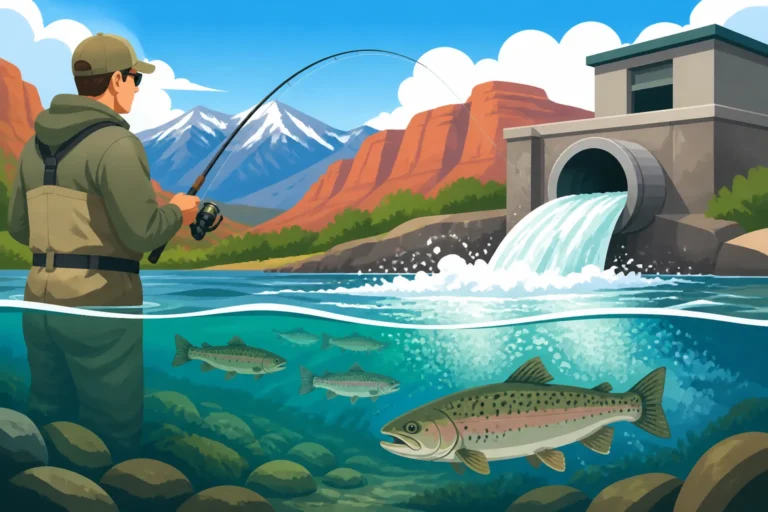
One of the most reliable places to find cold-water pockets, especially in the upper reaches of a reservoir or where tributaries enter, is near inflow points. Rivers and streams feeding into a larger reservoir, such as the Provo River flowing into Utah Lake or a high-mountain stream entering a reservoir in the Uinta Mountains, often carry significantly colder water than the main body of the reservoir, especially during summer. This colder, denser water sinks and creates a plume or pocket of cooler temperatures. Fish will absolutely congregate in these areas, particularly species like trout and bass, seeking refuge from the warmer main body.
Similarly, submerged springs, though harder to detect, can create localized cold-water upwellings. While you might not see them, your fish finder might show unusual thermocline disturbances or even denser baitfish schools in specific, otherwise featureless areas. Look for changes in current, distinct water clarity differences, or even subtle visual cues on the surface in calm conditions. When you're fishing near an inflow point, consider how the colder water might hug the bottom or a specific bank, and adjust your approach accordingly. We discuss these areas more in depth in our guide on How to Fish a Reservoir Inlet Where a Stream Feeds In.
Deep Structure and Shade as Cold-Water Refuges
Fish are like us; they appreciate a good shade tree when the sun is blazing. In a reservoir, that "shade tree" often comes in the form of deep underwater structure or literal shade from towering cliffs. Deep channels, submerged ledges, old riverbeds, rock piles, and standing timber all provide thermal cover. The sun's rays struggle to penetrate deep into the water, meaning these structures inherently exist in cooler environments. Fish will hug these features, not just for protection, but also for the stable, cooler temperatures they offer.
Consider the steep rock walls of Lake Powell or the deep points at Flaming Gorge. These areas, especially on the shaded side of cliffs during certain times of day, can offer surprisingly cool water pockets near the surface for a few hours. More commonly, the deep parts of these structures remain cool consistently. Think about how a large school of smallmouth bass might gather on a deep rock pile or how lake trout will suspend over a deep channel. They’re not just there for food; they’re there because it’s comfortable. Always factor in the sun's position and the depth of the water when scouting these structural elements. You might find a brief, accessible cold-water pocket in the shadow of a canyon wall that offers a short window of opportunity for success.
Strategic Fishing Techniques for Cold-Water Pockets
Once you've identified potential cold-water pockets using your gear and environmental clues, the next step is to employ the right fishing techniques to effectively target the fish holding within them. Merely knowing where they are isn't enough; you need to present your bait or lure in a way that entices a strike from these often lethargic, heat-stressed fish.
Trolling and Downrigging
For larger reservoirs and species that suspend in the water column like kokanee salmon or lake trout, trolling with downriggers is an incredibly effective method for targeting cold-water pockets, especially the thermocline. Downriggers allow you to precisely control the depth of your lure, ensuring it stays right in the strike zone, even as you move across varying underwater terrain.
The process involves setting your downrigger ball to the depth where you've identified the thermocline (or where fish are congregating via your fish finder) and then attaching your fishing line to a release clip. When a fish strikes, the line releases from the clip, and you fight the fish directly without the heavy downrigger ball. Experiment with different depths around the thermocline – sometimes fish are just above it, sometimes right in it, and sometimes just below. Using dodgers, flashers, and spoons is common with this technique to attract fish in the deeper, darker water. Pay attention to your boat speed and lure presentation; slow, consistent trolling is often key. You can learn more about how to get the most out of this method in our guide to Utah Trolling Techniques for Lake Trout.
Vertical Jigging and Bottom Bouncing
When fish are holding tight to deep structure within a cold-water pocket, such as a submerged point, a rock pile, or a drop-off, vertical jigging or bottom bouncing can be the most productive techniques. These methods allow you to present your lure directly to fish that might not be willing to chase a trolled bait. This is especially true for species like walleye, deep-dwelling smallmouth bass, or even some trout species that are hugging the bottom in cooler water.
To vertical jig, you position your boat directly over the target structure or fish marking on your sonar. Then, you drop a heavy jig, spoon, or even a live bait rig straight down, working it up and down with short, sharp movements. The idea is to trigger a reaction strike from fish that are conserving energy in the cold water. Bottom bouncing involves using a weighted rig to drag bait or lures along the reservoir floor, often over irregular terrain where fish are hiding. Both techniques require a good feel for the bottom and careful attention to your line for subtle bites. For those targeting specific species, exploring Utah Jigging Techniques for Walleye or even How to Fish Deep Structure for Smallmouth in Fall can provide invaluable insights into these colder, deeper presentations. And always remember to have a cooler ready with ice or cold packs, perhaps one of the Best Coolers for Keeping Utah Fish Fresh, to preserve your catch from the warmer surface temperatures once you bring it up.
Here's a quick comparison of methods for finding cold-water pockets:
| Method | Pros | Cons | Best For |
|---|---|---|---|
| Advanced Fish Finder | Direct thermocline visualization, fish identification, depth control. | Can be expensive, requires learning to interpret sonar. | Precise depth targeting, larger bodies of water, experienced anglers. |
| Portable Temperature Probe/Thermometer | Highly accurate temperature readings, relatively inexpensive. | Time-consuming to map, not real-time fish detection. | Verifying thermocline depth, small boats, budget-conscious anglers. |
| Identifying Inflow Points/Springs | Natural fish magnets, often consistent year after year. | Can be difficult to locate unseen springs, currents can be strong. | Rivers, streams, creeks entering reservoirs, targeting active fish. |
| Deep Structure/Shade | Provides both cover and cooler water, often holds larger fish. | Requires good mapping or prior knowledge of the reservoir. | Targeting specific species (e.g., lake trout, bass), still fishing. |
| Downrigging | Precise depth control for trolled lures, covers water efficiently. | Requires specialized equipment, can be cumbersome in tight areas. | Lake trout, kokanee salmon, suspended fish in large reservoirs. |
| Vertical Jigging/Bottom Bouncing | Direct presentation to lethargic fish, effective on structure. | Slower pace, requires accurate boat positioning, can snag easily. | Walleye, deep bass, fish holding tight to bottom structure. |
Disclaimer
This article is for general informational purposes only and does not constitute professional advice. Laws, prices and regulations vary by location and change over time. Consult a qualified professional for guidance on your specific situation.