Best Baitcasting Reels for Utah Bass Fishing
For many bass anglers here in Utah, there's a particular kind of frustration that hits hard when you're out on the water, trying to make that perfect cast: you know you need precision and power to pull a lunker out of heavy cover, or to really launch that crankbait across a wide expanse, but your gear just isn't cutting it. Whether you're battling the notorious Utah Lake wind or trying to pick apart rocky points at Lake Powell, having the right tools makes all the difference. This guide is all about helping you understand and choose the best baitcasting reels specifically for the unique demands of Utah bass fishing, so you can spend less time untangling lines and more time landing fish.
Understanding Baitcasting Reels: Why Bass Anglers Love Them (and Sometimes Hate Them)
Baitcasting reels are a cornerstone for serious bass anglers, and for good reason. They offer a level of control and power that spinning reels often can't match for certain applications. However, they also come with a reputation for a steep learning curve, affectionately (or not so affectionately) known as "bird's nests" or backlashes. Let's delve into why these reels are both revered and reviled, especially when you're tackling Utah's diverse bass fisheries.
The Distinct Advantage for Bass Anglers
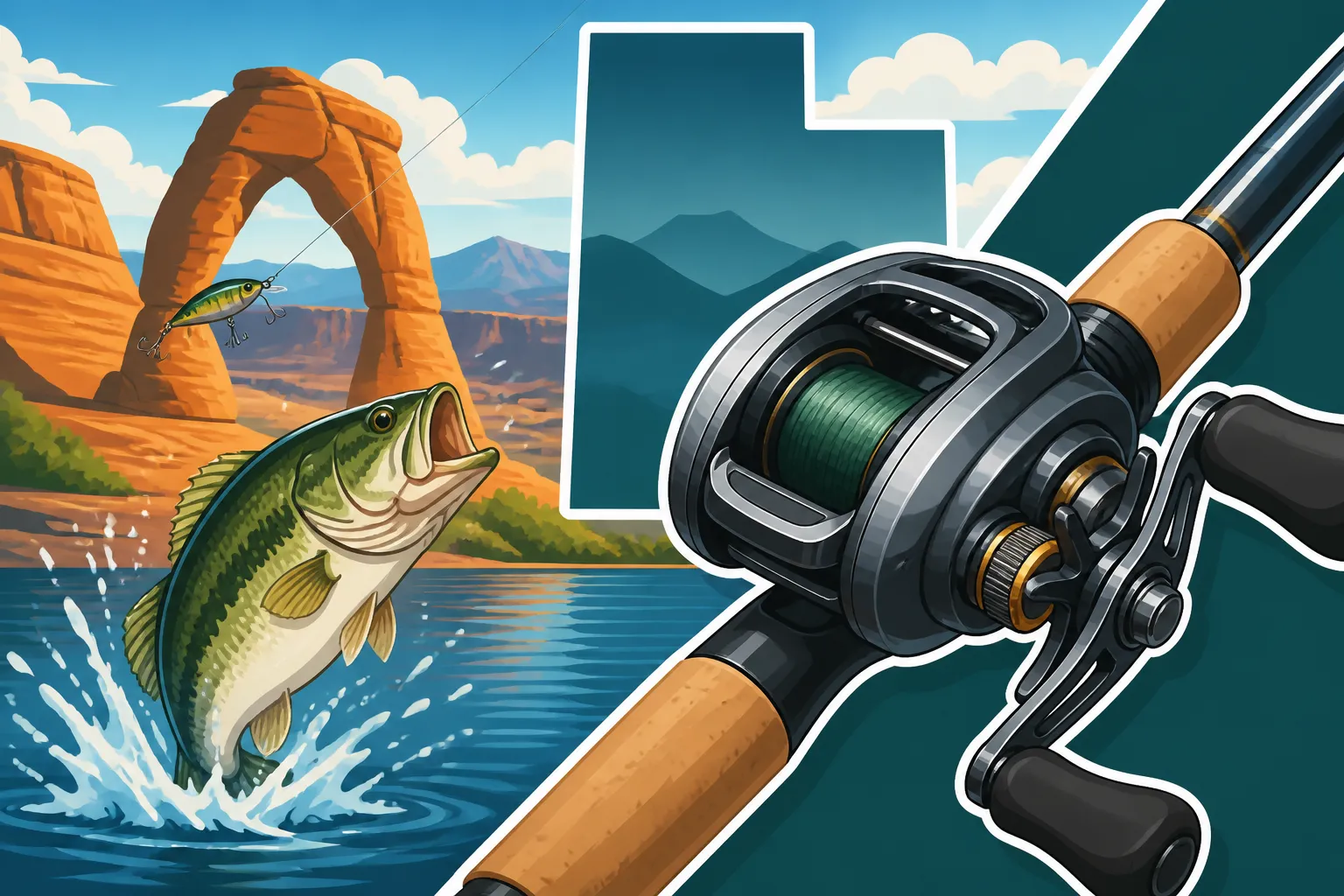
When it comes to bass fishing, baitcasters shine in situations requiring heavy lines, large lures, and pinpoint accuracy with significant stopping power. Think about it: you're trying to skip a jig under an overhanging bush on the Bear River, or you're launching a hefty swimbait out to a deep drop-off at Flaming Gorge. A baitcaster allows the spool to rotate freely with the outgoing line, meaning less friction and longer, more accurate casts with heavier presentations. This free-spool design also gives you incredible line control with your thumb during the cast, letting you feather the lure precisely where you want it to go and stop it dead on a dime.
Beyond casting, the direct retrieve offered by a baitcaster means more power when fighting a fish. The line comes off the top of the spool, directly in line with the rod guides, which translates into a stronger, more direct pull on a bass trying to dig into cover. This is especially crucial when you're wrestling a strong smallmouth out of rocky structure at Deer Creek Reservoir or dragging a chunky largemouth out of dense weeds on Utah Lake. The robust gear systems and drag capabilities often found in baitcasting reels provide the muscle needed to turn a big fish and bring it to the boat, making them indispensable for power fishing techniques. You'll find many anglers discussing the importance of a good baitcaster for Utah Bass Fishing Techniques.
The Learning Curve and "Bird's Nests"
Ah, the dreaded backlash. If you've ever tried a baitcaster without proper instruction or patience, you've likely experienced a spectacular mess of tangled line that can quickly deflate your fishing enthusiasm. This happens because the spool is designed to spin at the same speed as the line coming off it. If the lure slows down (e.g., when it hits the water or encounters a headwind) but the spool keeps spinning due to inertia, the line piles up on itself, creating that infamous "bird's nest."
The learning curve is real, and it involves mastering the delicate dance between your thumb pressure, the reel's braking system, and the spool tension. Utah's conditions don't always make it easy. A sudden gust of wind on a vast reservoir like Lake Powell can turn a perfect cast into a knot factory in an instant. The key is understanding how to adjust your reel's settings for different lure weights and wind conditions, and developing that intuitive thumb control. Many beginners feel discouraged, but with a little practice, these reels become an extension of your arm, unlocking a whole new level of precision and enjoyment in your bass fishing. Don't let the initial struggle deter you; the rewards are truly worth the effort.
When a Spinning Reel Still Makes Sense
While baitcasters are phenomenal for many bass fishing scenarios, they aren't a universal solution. There are certainly times when a spinning reel is the superior choice, even for bass. For instance, if you're throwing very light lures – anything under, say, 1/4 ounce – a baitcaster can struggle to get enough momentum to properly launch the lure without constant backlashing. Think about tiny finesse jigs, small shaky heads, or weightless worms; these are often best presented with a spinning setup.
Furthermore, for beginners who are just getting into bass fishing, or for those who simply want a less finicky experience, spinning reels offer ease of use and fewer opportunities for frustration. They excel at casting light baits, are generally more forgiving of casting errors, and require less fine-tuning throughout the day. If you're planning to focus on ultra-light presentations or introducing someone new to the sport at a community pond, don't hesitate to reach for a trusty spinning reel. It’s all about matching the tool to the task, and a smart angler always carries both. You can read more about Utah Fishing Gear for Beginners to get started.
Key Features to Look for in a Utah Bass Baitcaster
Choosing a baitcasting reel can feel a bit like decoding a secret language, especially with all the numbers and technical jargon involved. However, understanding a few core features will empower you to select a reel that perfectly suits your fishing style and the unique challenges of Utah's bass waters. From how fast your reel retrieves line to how effectively it prevents backlashes, each component plays a vital role.
Gear Ratio and Retrieve Speed
The gear ratio of a baitcasting reel is one of its most critical specifications. It tells you how many times the spool rotates with one full turn of the handle. This ratio directly dictates your retrieve speed, which is paramount for specific bass fishing techniques.
- Low Gear Ratios (e.g., 5.x:1 to 6.x:1): These reels are the workhorses, designed for power and slow, deliberate retrieves. If a reel has a 5.4:1 ratio, the spool turns 5.4 times for every crank of the handle. They're ideal for lures that demand a slower presentation, like deep-diving crankbaits, large swimbaits, or big spinnerbaits, which generate a lot of resistance in the water. These slower retrieves allow the lure to stay in the strike zone longer and give you more leverage against a struggling fish. When you're grinding a big crankbait along the bottom contour of Flaming Gorge, a lower gear ratio will save your arm and give you the power to pull it through any snags.
- Medium Gear Ratios (e.g., 6.x:1 to 7.x:1): This is the sweet spot for many anglers, offering a versatile balance between speed and power. A 7.1:1 reel, for example, is excellent for most Texas rigs, jigs, chatterbaits, and topwater lures. It allows for quick retrieves to cover water, but also enough power to work lures effectively. If you're only getting one baitcaster for varied Utah bass fishing, a medium ratio is a great starting point.
- High Gear Ratios (e.g., 7.x:1 to 8.x:1+): These reels are built for speed. An 8.1:1 ratio means lightning-fast line pickup, which is crucial for techniques where you need to quickly pick up slack line or rapidly move a lure. Think about flipping and pitching into heavy cover, punching mats, or quickly retrieving a topwater lure after a missed strike to cast again. The rapid retrieve minimizes slack, ensuring you can set the hook instantly the moment a bass inhales your bait. When fishing dense vegetation in Utah Lake, a high-speed reel can be a lifesaver.
Consider the primary techniques you'll be using in Utah. Many anglers opt for multiple baitcasters, each spooled with a different line type and possessing a gear ratio tailored to specific applications.
Braking and Tension Systems: Taming the Cast
These are the unsung heroes that prevent those dreaded backlashes. Understanding how they work together is key to smooth, controlled casting.
- Spool Tension Knob: This is the most basic adjustment and directly controls the resistance on the spool. When adjusted correctly, your lure should fall slowly to the ground when the reel is in free spool, with no overrun once it hits. Too loose, and you'll backlash; too tight, and you'll lose casting distance. It’s your first line of defense against tangles and needs to be adjusted for every different lure weight you use.
- Braking Systems: Modern baitcasters typically feature one of two main braking systems, or sometimes a hybrid:
- Centrifugal Brakes: These systems use small weights or pins inside the reel that move outwards due to centrifugal force during a cast. As they push against a braking ring, they create friction, slowing the spool. They offer strong initial braking and then gradually release as the cast progresses, making them great for consistent casts with similar lure weights. Many anglers appreciate their simplicity and reliability.
- Magnetic Brakes: These systems use magnets to create resistance on the spool. An external dial allows you to easily adjust the strength of the magnetic field, providing consistent braking throughout the entire cast. Magnetic brakes are fantastic for making quick adjustments, especially when dealing with changing wind conditions or switching between different lure weights. This external adjustment is particularly useful when fishing in the variable winds often found on Utah's larger reservoirs.
The right combination of spool tension and braking system, along with proper thumb control, allows you to "tune" your reel for maximum casting distance and minimal backlashes. It's a skill that develops with practice, and a good braking system can significantly shorten that learning curve.
Bearings, Spools, and Frame Durability
While gear ratio and braking systems impact performance, the quality of a reel's internal components and construction determines its longevity and smoothness.
- Bearings: More bearings generally translate to a smoother retrieve and more fluid casting. Look for reels with at least 5-7 high-quality, corrosion-resistant stainless steel bearings. Don't just count the number; consider the quality. A few excellent bearings are better than a dozen cheap ones. Quality bearings contribute to the overall feel and efficiency of the reel, especially when you're making hundreds of casts in a day.
- Spools: Lightweight, precision-machined aluminum spools are preferred. A lighter spool requires less energy to start and stop spinning, which translates to longer casts and fewer backlashes. Look for spools that are designed to handle various line types, including braided lines which are very popular for Utah bass fishing due to their strength and sensitivity.
- Frame Material: The frame is the backbone of the reel. Common materials include aluminum and graphite.
- Aluminum Frames: These are generally more rigid and durable, providing a solid platform for the gears and bearings. This rigidity is crucial when fighting large fish, as it prevents flex that can lead to gear misalignment and wear. Aluminum frames are often heavier but offer superior power and strength.
- Graphite Frames: Lighter than aluminum, graphite frames reduce the overall weight of the reel, which can be advantageous for reducing fatigue during long days of casting. However, they can be more prone to flex under extreme pressure.
For Utah bass fishing, where you might be pulling fish from heavy cover or battling trophy-sized smallmouth in open water, a durable frame, good bearings, and a robust spool are essential for consistent performance and longevity. Investing in a reel with quality components will pay dividends over many seasons of hard fishing. You might find great options for these at Bass Pro Shops or by checking reviews on Amazon.
Matching Your Baitcaster to Utah Bass Fishing Techniques
Utah offers a diverse range of bass fishing opportunities, from the vast, open waters of Lake Powell to the shallower, more structured environments of Utah Lake and other reservoirs. Each unique scenario and the techniques used to tackle them often call for a specific type of baitcasting reel setup. Understanding these pairings can significantly improve your effectiveness and enjoyment on the water.
Power Fishing for Aggressive Bass (Cranking, Jerkbaits)
Power fishing is all about covering water quickly and aggressively, often with reaction baits like crankbaits, spinnerbaits, or bladed jigs designed to elicit a strike. When you’re ripping a lipless crankbait through submerged grass or burning a spinnerbait over a flat at Willard Bay, you need a reel that can handle the retrieve resistance and has enough torque to keep the lure moving properly.
For these techniques, a lower to medium gear ratio reel (typically in the 5.x:1 to 6.x:1 range) is ideal. The slower retrieve helps the lure achieve its proper action and depth without over-working it, and the increased cranking power reduces fatigue when you're reeling in heavy, deep-diving crankbaits all day. Imagine a deep-diving crankbait digging into the structure at Flaming Gorge. A lower gear ratio provides the leverage to bring that lure back without your arm feeling like it's going to fall off. Pair this with a slightly heavier rod, and you've got a formidable setup for coaxing aggressive bites.
Finesse Presentations and Pitching into Cover
While baitcasters are often associated with power, they are also incredibly precise tools for targeting bass in tight quarters or with more subtle presentations. This category includes techniques like pitching jigs, weightless worms, or Texas-rigged plastics into specific pockets of cover, under docks, or around fallen trees. Accuracy and the ability to quickly pick up slack line are paramount here.
For these finesse-oriented (yet still baitcaster-appropriate) techniques, you'll want a medium to high gear ratio reel (typically 7.x:1 or even 8.x:1). The faster retrieve allows you to quickly reel in slack after a short pitch, ensuring you maintain constant contact with your lure and can detect subtle bites. When a bass picks up a jig pitched into a brush pile on the Provo River, that instantaneous line pickup means a quicker hookset. Furthermore, the control offered by a baitcaster's braking system and spool tension allows for the soft, controlled pitches and flips necessary to present your lure quietly and accurately into tight spaces without spooking fish. A Best Fly Rods for the Provo River would be for different techniques, but understanding location-specific gear is key.
Heavy Cover and Punching Rigs
Some of Utah's bass fisheries, particularly Utah Lake and some areas of Lake Powell, can have incredibly dense vegetation or thick timber that big bass love to hide in. To get your lure into these impenetrable spots, anglers often employ "punching" or "flipping" techniques, which involve heavy weights, stout hooks, and incredibly strong lines. This is where a robust baitcasting setup truly shines.
For heavy cover applications, a high gear ratio reel (7.x:1 to 8.x:1+) is almost essential. When you punch a heavy tungsten weight through a mat of weeds, you need to quickly pick up all the slack line the moment your bait hits the bottom or gets a strike. The faster retrieve helps you get the fish out of the cover as quickly as possible before it can dig in and break your line. Coupled with a strong, low-stretch braided line and a heavy-action rod, this combination gives you the power to pull even the biggest bass from the nastiest cover. Look for reels with durable, rigid frames (often aluminum) and strong drag systems to handle the stress of these encounters. When looking for Best Lures for Utah Smallmouth Bass, remember that some of these might require specific baitcasting setups.
| Technique Category | Ideal Gear Ratio Range | Common Lure Types | Key Benefit |
|---|---|---|---|
| Power Fishing | 5.x:1 to 6.x:1 | Deep-diving crankbaits, large swimbaits, spinnerbaits | High torque, less fatigue, proper lure action |
| Versatile/All-Around | 6.x:1 to 7.x:1 | Jigs, Texas rigs, chatterbaits, topwaters | Balance of speed and power, general purpose |
| Finesse/Pitching | 7.x:1 to 8.x:1 | Lighter jigs, weightless worms, small plastics | Fast slack pickup, quick hooksets, accuracy |
| Heavy Cover/Punching | 7.x:1 to 8.x:1+ | Heavy jigs, punching weights, stout plastics | Extreme power, rapid fish extraction from cover |
Top Considerations for Different Utah Bass Environments
Utah's landscape is incredibly diverse, and so are its bass fishing destinations. What works wonderfully at one reservoir might be completely inadequate at another. When choosing your baitcasting reel, it’s crucial to think about the specific conditions you'll encounter on the waters you plan to fish most often.
Large Reservoirs: Lake Powell and Flaming Gorge
These massive bodies of water present unique challenges and opportunities for bass anglers. Lake Powell is famous for its abundant smallmouth and striped bass (which often behave like bass), while Flaming Gorge boasts exceptional smallmouth bass and even trophy lake trout. The sheer size of these reservoirs means you'll often be making long casts, covering vast areas, and dealing with significant wind.
For these expansive waters, casting distance and durability are key. You'll want a baitcasting reel with a reliable braking system (magnetic brakes often provide easier on-the-fly adjustments for wind), a smooth retrieve, and a light spool to maximize how far you can launch your lures. When targeting smallmouth along rocky ledges at Lake Powell or long points at Flaming Gorge, you'll be throwing crankbaits, jerkbaits, and spinnerbaits, so a versatile gear ratio (around 6.x:1 to 7.x:1) is a great choice. Consider a reel with a robust aluminum frame for added strength and longevity, especially if you plan on targeting those powerful smallmouth that fight like crazy in open water. You'll often be using braided line for its strength and sensitivity over such long distances. For specific strategies, explore articles like Lake Powell Striped Bass Spots or Flaming Gorge Trophy Lake Trout Spots.
Shallow, Grassy Lakes: Utah Lake and Deer Creek
Contrast the deep, clear waters of Powell and Flaming Gorge with the shallower, often murkier, and weed-choked environments of Utah Lake and Deer Creek Reservoir. Utah Lake is renowned for its largemouth bass, and Deer Creek offers excellent smallmouth opportunities, both of which can be found relating to heavy cover. Fishing these waters requires a different approach and, consequently, a different reel emphasis.
In these environments, power and quick line pickup become paramount. You'll likely be flipping and pitching jigs, Texas-rigged plastics, or punching through thick vegetation. A high-speed baitcasting reel (7.x:1 or 8.x:1+) is invaluable here, allowing you to quickly pull a bass out of the cover before it can wrap you up and break off. A strong, rigid frame is crucial to handle the force needed to extract fish from dense weeds or submerged brush. The braking system should allow for pinpoint accuracy on short, targeted casts. Because visibility can be lower in these waters, sensitivity from a good reel and line choice helps detect subtle bites. Understanding Utah Lake Walleye Fishing Spots or Deer Creek Reservoir Fishing Spots might also shed light on shared habitat and challenges.
High-Altitude Lakes and Smaller Ponds
Utah has numerous high-altitude lakes in areas like the Uinta Mountains, and many smaller community ponds across the state, which can also hold bass, often smaller but still fun to catch. These environments typically involve lighter tackle, shorter casts, and less extreme conditions compared to the big reservoirs. You're less likely to be battling hurricane-force winds or pulling fish out of thick underwater forests.
For these settings, a lighter, more compact baitcasting reel with a medium gear ratio (6.x:1 to 7.x:1) is often a perfect fit. While you don't necessarily need extreme power or casting distance, the accuracy and smooth feel of a baitcaster can still be highly beneficial for pitching smaller lures around shorelines, rocks, or submerged logs. The emphasis here is on portability, comfortable ergonomics for extended use, and versatility for various lighter presentations. You might be targeting smaller bass with lighter jigs or topwater poppers, so a reel that handles lighter lines well and provides a smooth, easy casting experience will be highly appreciated. For information on smaller, local fishing, check out Utah Community Pond Fishing Spots. Many of these are great for introducing beginners to the sport.
Setting Up and Maintaining Your Baitcasting Reel for Peak Performance
Even the best baitcasting reel won't perform optimally if it's not set up correctly and given a little love and care. Think of it like a finely tuned instrument; a few simple steps in spooling, adjusting, and routine maintenance can make a world of difference in your casting prowess and the longevity of your investment. Especially with Utah's dusty or windy conditions, proper care is not just recommended, it's essential.
Spooling Your Line Correctly
This is arguably the most critical step after buying your reel. Improperly spooled line is a recipe for backlashes and frustration. Here’s a basic guide to getting it right:
- Choose the Right Line: For bass fishing in Utah, many anglers prefer braided line for its strength, sensitivity, and lack of stretch, especially when fishing heavy cover or making long casts. You might then tie a fluorocarbon or monofilament leader. The pound test you choose should match the lure weights you'll be using and the cover you'll be fishing.
- Attach the Line to the Spool: Thread your line through the line guide on the reel. Tie an arbor knot or a simple overhand knot around the spool. Trim the tag end. For braid, sometimes a small piece of electrical tape over the knot helps prevent slippage, or you can use a small amount of mono backing.
- Apply Proper Tension: This is key. The line needs to be spooled onto the reel under consistent, moderate tension. You can do this by having a friend hold the spool of line with a pencil through the center, applying pressure with their thumb and forefinger, or by placing the spool in a bucket of water. As you reel, keep the line taut.
- Fill the Spool: Fill the spool to about 1/8 inch from the edge. Overfilling will lead to backlashes and poor casting performance, as the line will peel off too freely. Underfilling will reduce casting distance.
- Wind Neatly: Try to ensure the line lays evenly across the spool. Engage the level-wind system if your reel has one, as this helps distribute the line smoothly. A neatly spooled reel casts better and reduces friction. For more specific advice on line, look for Best Fishing Line for Utah Bass.
Dialing in Your Braking and Tension
Once your line is spooled, it's time to fine-tune your reel for actual casting. This is where patience pays off, and it's a step you'll likely repeat whenever you change lures or encounter different conditions.
- Start with Spool Tension: With your lure tied on, hold the rod tip up (about 45 degrees). Engage the free spool (press the thumb bar). Your lure should fall slowly and steadily to the ground. When it hits, the spool should stop spinning almost immediately, with no overrun. If it falls too fast, tighten the spool tension knob. If it doesn't fall, loosen it. This is your initial, basic adjustment for lure weight.
- Adjust the Braking System:
- Centrifugal Brakes: Start with 2-4 weights engaged (if applicable). As you gain experience, you can experiment with fewer weights for longer casts, or more for windy conditions or heavier lures.
- Magnetic Brakes: Set the external dial to a higher setting (more braking) when you're starting out. As you get more comfortable and confident, gradually reduce the braking to increase casting distance.
- The "Sweet Spot" Test: Go to an open area, away from potential snags. Make some practice casts, starting with moderate power. If you backlash, increase either the spool tension or the brake setting. If you're not getting good distance, slowly decrease the braking (and potentially loosen the spool tension a tiny bit) until you find the balance of maximum distance without backlashing.
- Thumb Control is Final: No matter how perfectly tuned your reel is, your thumb is the ultimate braking system. Keep it lightly on the spool throughout the cast, ready to apply pressure to prevent overrun, especially as the lure nears its target or hits the water. This is especially crucial when fishing in Utah's often-gusty weather.
Routine Cleaning and Lubrication
Regular maintenance will extend the life of your reel and keep it performing smoothly, preventing annoying issues like a gritty retrieve or sticky drag.
- Wipe Down After Each Trip: Use a damp cloth to wipe down the exterior of your reel, removing any dirt, dust, or fish slime. Pay attention to the line guide, as debris here can abrade your line.
- Rinse (Carefully): If you've been fishing in saltwater (less common for bass in Utah, but some brackish water exists) or if your reel has been splashed heavily, a light rinse with fresh water can be beneficial. Never submerge your reel. Just a gentle spray and wipe dry immediately.
- Light Lubrication (Periodically): Every few trips, or if the reel starts to feel less smooth, apply a very small drop of reel oil to the worm gear (for the line guide), handle knobs, and the main shaft under the spool. Use reel grease on the main gears if you disassemble the reel, but for general maintenance, a drop of oil is often sufficient. Use only lubricants designed for fishing reels.
- Annual Deep Clean: At least once a year, consider a more thorough cleaning. This might involve carefully disassembling the reel (following the manufacturer's instructions), cleaning old grease and grime, and re-lubricating. If you're not comfortable doing this yourself, many local tackle shops offer reel cleaning services.
- Check Drag and Bearings: Periodically test your drag to ensure it's smooth and consistent. If it feels jerky, it might need cleaning or new drag washers. Listen for any grinding noises from the bearings; if they sound rough, they might need cleaning or replacement.
Taking these steps will ensure your baitcasting reel is always ready for action, whether you're targeting big smallmouth in the canyons of Lake Powell or chunky largemouth in the weeds of Utah Lake. It’s an investment, and like any investment, it performs best with care.
Addressing Common Baitcasting Challenges in Utah's Wind and Waters
Utah is a beautiful state, but its fishing conditions can sometimes be less than forgiving. High winds are a frequent companion on many of our larger reservoirs, and the diverse environments can present specific challenges for baitcasting anglers. Knowing how to anticipate and mitigate these common issues will keep you fishing effectively rather than struggling with your gear.
Minimizing Backlashes in Gusty Conditions
Wind is the archenemy of the baitcasting reel. A sudden gust can cause your lure to slow down mid-flight, and if your spool doesn't compensate, you're looking at a glorious bird's nest. Fishing places like Utah Lake or Willard Bay on a windy day can test the patience of a saint.
Here's how to tackle it:
- Increase Brake Settings: This is your primary defense. If you're encountering a strong headwind or crosswind, don't be afraid to crank up your magnetic brakes or engage more pins on your centrifugal system. It will sacrifice a bit of casting distance, but it's a small price to pay for a smooth, backlash-free cast. You can always dial it back when the wind dies down.
- Adjust Spool Tension: While brakes handle the mid-cast overruns, spool tension controls the initial launch. In windy conditions, tighten your spool tension just a touch more than usual. This prevents the initial surge of the spool from overpowering the line, especially right after you release your thumb.
- Cast with the Wind (or Across It): Whenever possible, try to position yourself so you're casting with the wind at your back, or at least across it. Casting directly into a strong headwind is a recipe for disaster. If you must cast into the wind, use a heavier lure that has more momentum.
- Sidearm Casts: A lower trajectory, sidearm cast can often penetrate the wind better than an overhead cast, which exposes more line to the wind's force. This helps keep your lure on track and reduces the likelihood of it "catching" the wind and slowing prematurely.
- Heavier Lures: When the wind is really howling, opt for heavier lures that are more aerodynamic. A heavy jig or a bullet-shaped soft plastic will cut through the wind better than a lightweight, bulky topwater bait.
- Braided Line: While all lines can backlash, braided line's thinner diameter can sometimes be less affected by wind resistance compared to monofilament, and it's less prone to memory issues that can exacerbate backlashes. It’s a popular choice for Best Fishing Line for Utah Bass.
Dealing with Sand, Dirt, and Debris
Utah's shorelines, especially on reservoirs with fluctuating water levels like Lake Powell or those with silty bottoms like Utah Lake, can expose your gear to sand, dirt, and various debris. Getting these elements into your reel's delicate mechanisms can quickly degrade its performance and lifespan.
- Be Mindful of Where You Set Your Rod: This seems obvious, but it's often overlooked. Avoid laying your rod and reel directly on sandy or dusty ground. Use a rod holder, lean it against a clean surface, or keep it in your boat.
- Keep Your Hands Clean: If you're handling bait, fish, or working with dirtied hands, try to clean them before touching your reel's gears or knobs. Small particles can easily transfer and work their way into critical components.
- Wipe Down Regularly: After a day of fishing, especially if it's been dusty or windy, take a moment to wipe down your reel with a damp cloth. Pay close attention to the line guide and any exposed gears or adjustment dials.
- Avoid Submerging: As mentioned in maintenance, never submerge your baitcasting reel. Even a brief dip can introduce abrasive particles into the bearings and gears. If it gets wet, wipe it dry immediately.
- Protective Covers: When transporting your rods and reels, especially if they're exposed in the bed of a truck, consider using reel covers to shield them from dust and road grime.
Practice, Patience, and Proper Technique
Ultimately, overcoming baitcasting challenges in Utah (or anywhere) boils down to these three things. No matter how advanced your reel, it's the angler's skill that truly brings it to life.
- Start Simple: If you're new to baitcasters, start with heavier, more aerodynamic lures (like a 1/2 oz jig or a lipless crankbait) in an open field or a calm body of water. Focus on smooth, controlled casts rather than trying to bomb it across the lake.
- The "Click and Pop": Many experienced anglers describe the sound of a perfectly tuned baitcaster during a cast as a satisfying "click and pop" – the click of the thumb bar releasing, and the pop of the line leaving the spool with minimal resistance. Strive for that feeling.
- Consistent Motion: A smooth, consistent casting stroke is far more effective than a jerky, powerful one. Let the rod do the work, and smoothly accelerate your cast.
- Learn to "Read" Your Reel: Pay attention to how your reel sounds and feels during a cast. A slight whirring might indicate too little braking, while a muted cast could mean too much. Over time, you'll develop an intuitive feel for when your reel is optimally tuned for the conditions.
- Don't Give Up: Backlashes happen to everyone, even pros. The key is not to get discouraged. Untangle it patiently, learn from the mistake, and make the necessary adjustments. With practice, baitcasting will become second nature, allowing you to enjoy the full potential of these powerful tools on Utah's fantastic bass waters. Consider checking out How to Cast a Spinning Rod for the First Time to get basic casting concepts down before graduating to a baitcaster.
Disclaimer
This article is for general informational purposes only and does not constitute professional advice. Laws, prices and regulations vary by location and change over time. Consult a qualified professional for guidance on your specific situation.