Best Rods for Ice Fishing in Utah
There's nothing quite like the crisp air and serene quiet of ice fishing on a frozen Utah lake, but that peaceful scene can quickly turn frustrating if you're battling the wrong equipment. Many anglers, especially those new to ice fishing, grab any old rod, only to find themselves struggling with sensitivity, hook sets, or even breaking delicate tips in the cold. This guide is here to help you navigate the specific characteristics that make an ice fishing rod perfect for Utah's diverse waters and target species, ensuring your next hardwater adventure is productive and enjoyable.
Understanding the Unique Demands of Utah Ice Fishing Rods
Ice fishing isn't just open-water fishing but colder. It's a completely different approach, and your gear needs to reflect that. You're typically fishing in a much more confined space, often directly over the fish, and trying to detect incredibly subtle bites. This environment puts unique pressures on your rod, demanding specialized designs that wouldn't make sense for casting from a boat or shore.
Why Regular Rods Just Don't Cut It on the Ice
Imagine trying to cast a 7-foot spinning rod inside a small ice fishing shelter or even just hovering over a tiny hole in the ice. It’s clunky, awkward, and completely unnecessary. Regular fishing rods are designed for casting distance and fighting fish in open water, which means they're longer, often heavier, and have different actions tailored for that purpose. Their length makes them impractical for the tight quarters of ice fishing, whether you're in a pop-up shelter or just sitting on a bucket. Furthermore, the sensitivity needed to detect light bites through thick ice and often deeper water is far greater than what most conventional rods offer. A slight tap from a finicky walleye or a delicate nibble from a perch can be missed entirely with a general-purpose rod.
The guides on open-water rods are also typically larger and spaced further apart, which can be an issue in freezing temperatures. Ice can quickly build up in larger guides, making line retrieval difficult or even impossible, and potentially damaging your line. Ice fishing rods, by contrast, feature smaller, more closely spaced guides that help prevent ice accumulation and distribute stress more evenly along the blank, crucial when battling a strong fish in cold conditions.
Key Characteristics of a Great Ice Fishing Rod
A truly great ice fishing rod excels in sensitivity, strength, and ergonomics for cold-weather use. Sensitivity is paramount; you need to feel every bump, tick, and subtle change in line pressure that signals a bite. This usually comes from a fast-action tip made of responsive materials, often fiberglass or carbon fiber blends, designed to transmit even the slightest vibration directly to your hand. These specialized tips are built to flex dramatically with minimal pressure, indicating a bite long before a conventional rod might.
Strength is also vital, despite the often smaller size of these rods. They need to handle the sudden, powerful runs of a hooked fish in a direct, vertical fight without breaking under pressure. The blank construction, combined with quality guides and a robust reel seat, ensures durability. Finally, ergonomics play a huge role. Handles are often shorter and designed for comfortable palming or holding close to the body, allowing for quick adjustments and better bite detection. Foam or cork handles provide better insulation against the cold, keeping your hands more comfortable during long hours on the ice.
Types of Ice Fishing Rods for Utah's Waters
Just like in open water, there isn't a single "best" ice fishing rod for every scenario. Different techniques and target species demand different rod types. Understanding the primary categories will help you select the right tool for the job, whether you're chasing aggressive predators or finicky panfish in Utah's frozen lakes. From the active angler jigging for bites to the patient angler setting up multiple deadsticks, the right rod makes all the difference.
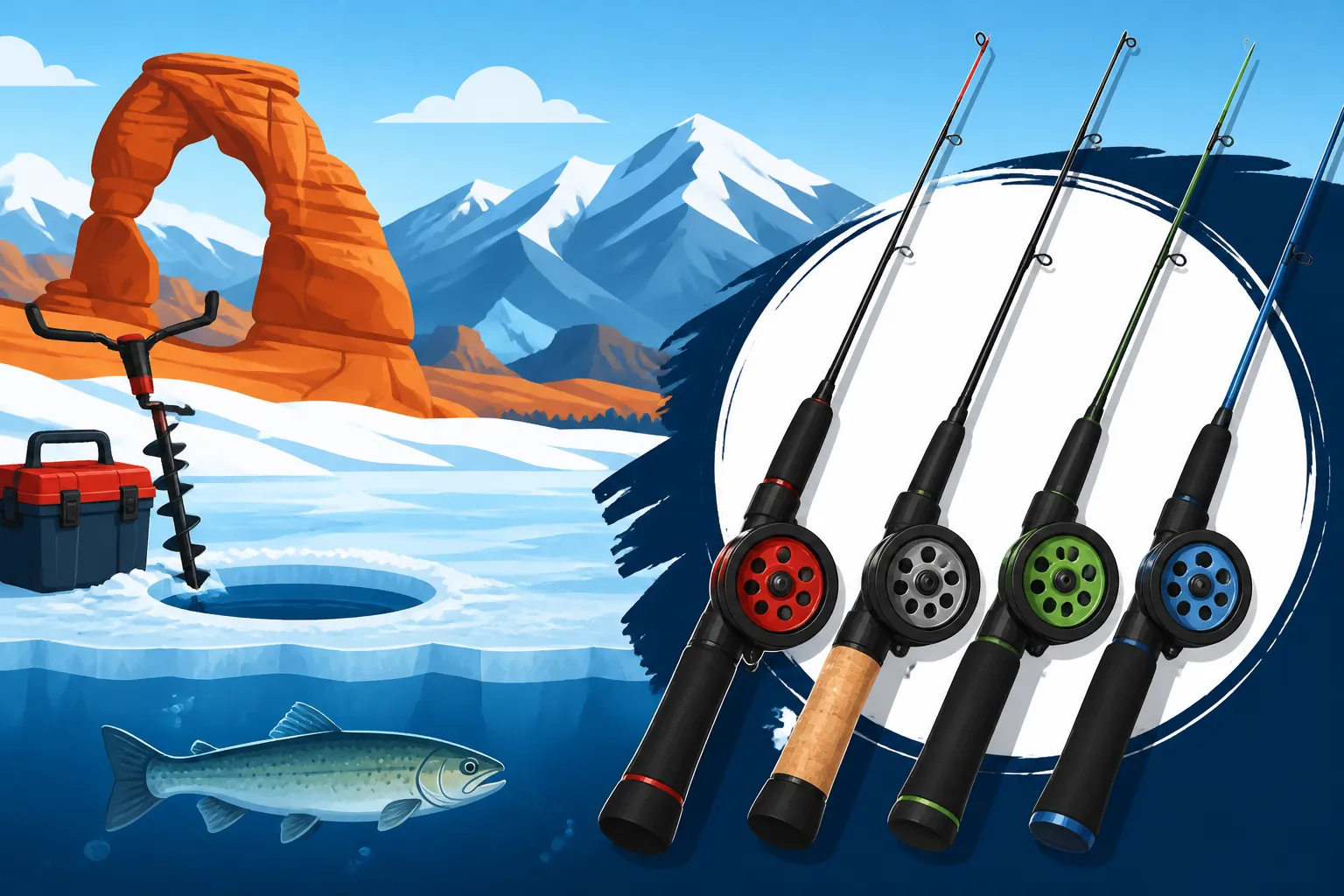
Jigging Rods for Active Presentations
Jigging rods are built for active fishing, where you're constantly working a lure to entice strikes. These rods are typically shorter, ranging from about 24 to 36 inches, allowing for precise control directly over the hole. Their primary characteristic is a sensitive tip that transitions quickly into a stronger backbone. This sensitive tip allows you to impart subtle action to small jigs and detect even the lightest "up-bites" (when a fish sucks in the lure, creating slack line). The stronger mid-section and butt provide the power needed for a solid hook set and to fight a fish quickly to the hole before it can get tangled.
When you're actively jigging for, say, trout at Strawberry Reservoir or walleye at Willard Bay, you need a rod that lets you feel the jig hitting the bottom, or a fish simply "mouthing" the bait. Many jigging rods feature a "spring bobber" or highly visible colored tip section to visually enhance bite detection. These rods are often paired with a lightweight spinning reel, allowing for smooth line payout and quick retrieval. Choosing the Best Rod Length for Ice Fishing in Utah really comes down to the depth you're fishing and the size of your shelter.
Deadstick Rods for Passive Bait Fishing
Deadsticking is a more passive approach, where you set up a rod with bait (like a minnow, wax worm, or PowerBait) and let it sit still, waiting for a fish to find it. The rod is often placed in a rod holder or propped up, with a visual indicator like a bobber or the rod tip itself signaling a bite. Deadstick rods tend to be a bit longer than jigging rods, usually 30-48 inches, giving them a softer, more parabolic action. This allows fish to take the bait without feeling too much resistance, increasing your chances of a solid hook set.
The softer action of a deadstick rod also acts as a shock absorber, protecting lighter lines from sudden jerks when a fish grabs the bait. You might be targeting anything from a cruising rainbow trout to a large lake trout with a deadstick setup. While you can use a spinning reel, many dedicated deadstick anglers opt for specialized ice fishing reels with a bait-runner feature or a simple direct-drive reel that allows for minimal resistance. If you're using multiple lines, which you can do in Utah as long as you follow How Many Ice Fishing Rods Can You Use at Once in Utah?, deadsticking is an excellent strategy to cover more water.
Combo Rods for Versatility
For anglers who want to carry fewer rods or aren't always sure what species they'll encounter, a versatile combo rod can be a great option. These rods aim to strike a balance between the sensitivity of a jigging rod and the forgiveness of a deadstick. They typically have a moderately fast action with a sensitive tip but a decent amount of backbone. A common length for a good combo rod might be around 30-34 inches, offering enough control for jigging while still being long enough to absorb some shock when a fish takes a deadsticked bait.
The downside of a combo rod is that it might not excel at either extreme. It won't be as ultra-sensitive as a dedicated panfish jigging rod, nor as soft and forgiving as a purpose-built deadstick for wary fish. However, for a beginner or an angler looking to cover multiple bases without a huge investment in gear, a medium-light or medium-action ice combo can be incredibly practical. You can often find decent versatile options at retailers like Bass Pro Shops or on Amazon, providing a good starting point for exploring various Utah ice fishing techniques.
| Rod Type | Primary Use | Action | Length (Typical) | Ideal For |
|---|---|---|---|---|
| Jigging Rod | Active lure presentation | Fast to Extra-Fast | 24-36 inches | Panfish, Trout, Walleye, Perch |
| Deadstick Rod | Passive bait soaking | Moderate to Slow | 30-48 inches | Trout, Walleye, Lake Trout, Catfish |
| Combo Rod | All-around versatility | Medium-Fast | 30-34 inches | General-purpose, mixed species fishing |
Matching Your Rod to Utah's Target Species
Utah's frozen waters offer an incredible variety of fishing opportunities, from small panfish to massive lake trout. Just as you wouldn't use a fly rod for deep-sea fishing, you shouldn't use a tiny panfish rod for a trophy lake trout. Selecting the right rod power and action for your target species is crucial for a successful day on the ice. It directly impacts your ability to detect bites, set the hook effectively, and ultimately land the fish without breaking your gear or losing your prize.
Trout and Panfish: Light and Ultra-Light Setups
When you're chasing finicky panfish like perch and bluegill, or stocked rainbow trout in community ponds and smaller reservoirs, sensitivity is your best friend. These species often have incredibly subtle bites, and an ultra-light or light power rod is essential. These rods typically range from 24 to 30 inches with a fast or extra-fast action tip that is extremely sensitive. This allows you to feel the slightest nudge on your tiny jigs or baits, which might only weigh a fraction of an ounce. Think delicate presentations and quick, twitchy movements.
A flexible, sensitive tip is also key for absorbing the headshakes of smaller trout, preventing the hook from tearing out of their soft mouths, especially when using light lines like 2-4 pound test. Many anglers use spring bobbers on these rods to visually detect faint bites, as the rod tip itself might not show enough movement. For places like Scofield Reservoir or various community ponds where you're targeting perch or smaller trout, this setup is perfect. To learn more about common targets, check out our Utah Trout Species Guide.
Walleye and Wiper: Medium and Medium-Heavy Power
Moving up in size and fighting power, walleye and wiper demand a rod with more backbone. While they can still be subtle biters, especially in cold water, they're much stronger fish that require a more substantial rod to handle their weight and fight. A medium or medium-heavy power rod, typically 28 to 36 inches in length with a fast action, is generally ideal. The sensitive tip still allows for good bite detection and jig control, but the stronger mid-section provides the necessary power for a solid hook set through tougher mouths and to muscle a larger fish up through the ice hole.
These rods are perfect for jigging larger spoons, lipless crankbaits, or even plastics for walleye at places like Utah Lake or wiper at Willard Bay. You'll often pair these with 6-8 pound test line, and a spinning reel with a smooth drag system is a must. The ability to quickly bring a fish to the surface is vital, especially when dealing with the aggressive runs of a wiper or the head shakes of a walleye. Understanding their habits, as covered in our Utah Walleye Fishing Guide, can further inform your rod choice.
Lake Trout and Tiger Muskie: Heavy-Duty Performance
When you're aiming for the behemoths of Utah's ice fishing scene—trophy lake trout at Flaming Gorge or powerful tiger muskie at Pineview Reservoir—you need a serious heavy-duty setup. These fish are not only large and strong, but they often fight deep and hard, demanding a rod that can withstand immense pressure. Heavy or even extra-heavy power rods, ranging from 36 to 48 inches, are the go-to choice. These rods feature a robust blank, often with a moderate-fast action that provides plenty of backbone for strong hook sets and lifting power, while still having enough tip to cushion powerful runs.
Line sizes typically jump to 10-20 pound test or even heavier, often braided line for sensitivity and strength, with a fluorocarbon leader. A sturdy spinning reel or a baitcasting reel designed for ice fishing, with a powerful drag and good line capacity, is essential. The longer length of these heavy rods helps with leverage and fighting big fish, keeping them from diving back down the hole. Landing a monster Mackinaw is a brutal fight, and your rod needs to be up to the challenge. For more insights into these formidable fish, check out our Utah Lake Trout Mackinaw Guide.
Important Rod Features for Utah Ice Anglers
Beyond the basic power and action, several other features can significantly impact your ice fishing experience in Utah. The specific design elements of an ice fishing rod are not just about aesthetics; they directly influence performance, comfort, and durability in freezing conditions. Paying attention to these details can elevate your success and enjoyment on the hardwater.
Rod Length and Its Impact on Technique
The length of your ice fishing rod is more critical than you might think, directly affecting both your technique and your comfort. Shorter rods, generally 24-28 inches, are fantastic for jigging in tight spaces like a small pop-up shelter or when fishing directly over a hole while kneeling. They offer maximum control for subtle jigging motions and quick hook sets, making them perfect for panfish or actively working small lures. The downside is that they offer less leverage for fighting larger fish and can be less forgiving of angler mistakes.
Medium-length rods, around 30-36 inches, offer a great balance. They're still manageable in most shelters but provide better leverage and a slightly smoother fight for larger trout or walleye. They also cast a bit further if you're shore fishing open water near the ice edge, which can happen in early or late season. Longer rods, from 38 to 48 inches or even longer, are primarily used for deadsticking, particularly for species like lake trout or where you need to give fish more slack to take the bait. Their length allows for a softer bend and helps absorb powerful runs. They are also often preferred by anglers who fish outside a shelter, as they can set the rod up further from the hole. You can find a good selection of various lengths suitable for your needs on platforms like Amazon or in local shops.
Action and Power: Understanding the Bend
When we talk about rod "action," we're referring to where along the blank the rod bends. "Power" describes how much force it takes to make the rod bend. These two terms are often confused but are distinct and crucial for ice fishing.
-
Action:
- Extra-Fast: The rod bends only at the very tip. This offers extreme sensitivity and allows for quick, precise jigging motions and fast hook sets. Ideal for detecting light bites from panfish or finicky trout.
- Fast: The top 25-30% of the rod bends. Still very sensitive, but provides a bit more forgiveness and backbone than extra-fast. A great all-around choice for many jigging scenarios.
- Moderate/Slow: The rod bends through the middle or even into the butt section. Less sensitive, but provides a softer presentation and allows fish to take the bait without feeling much resistance. Excellent for deadsticking or when fish are extremely wary.
-
Power:
- Ultra-Light (UL): Designed for tiny baits and light lines (e.g., 1-4 lb test). Perfect for panfish and small trout.
- Light (L): Handles slightly larger jigs and lines (e.g., 2-6 lb test). Good for trout, crappie, and perch.
- Medium-Light (ML): A versatile power, suitable for small to medium-sized trout, walleye, and larger panfish (e.g., 4-8 lb test).
- Medium (M): Good for average-sized walleye, larger trout, and small bass (e.g., 6-12 lb test).
- Medium-Heavy (MH): For larger walleye, pike, and smaller lake trout (e.g., 8-15 lb test).
- Heavy (H) & Extra-Heavy (XH): The big guns, for large lake trout, tiger muskie, and other powerful fish (e.g., 10-20+ lb test).
A well-chosen combination of action and power ensures your rod performs optimally for the species and technique you're using. For example, a "fast action, medium-light power" rod is a common favorite for jigging trout in Utah.
Handle Materials and Reel Seats
The handle and reel seat might seem like minor details, but they greatly affect comfort and feel, especially when your hands are cold.
-
Handle Materials:
- Cork: Offers a classic feel, good grip, and decent insulation. It's lightweight and transmits vibrations well.
- EVA Foam: Extremely durable, lightweight, and offers excellent grip even when wet. It also insulates well against the cold. Many modern ice rods feature EVA foam.
- Split Grip: Some rods have a split grip design, reducing weight and exposing more of the rod blank, which can enhance sensitivity by allowing you to feel vibrations directly through the blank.
- Straight Grips: More traditional, offering a solid grip surface for those who prefer it.
-
Reel Seats:
- Fixed Reel Seats: These securely fasten your reel to the rod, often with locking rings, providing a solid connection. They're common on most quality ice rods.
- Tape/Band Style: Some ultra-light rods for panfish use simple tape or rubber bands to hold a tiny fly reel or specialized ice reel. This minimizes weight and can enhance sensitivity.
When choosing, consider how you hold the rod – do you palm the reel, or hold the handle? A handle that fits comfortably in your hand, even with gloves, will reduce fatigue and improve your ability to detect subtle bites. This is a critical consideration for those long days on the ice trying to coax a bite.
Care and Maintenance for Your Ice Fishing Rods
Ice fishing rods, despite their robust appearance, require diligent care and maintenance to ensure their longevity and optimal performance. The harsh conditions of winter fishing – freezing temperatures, snow, ice, and slush – can take a toll on any gear. Proper handling, cleaning, and storage aren't just about making your rods last longer; they're about ensuring your rod performs flawlessly when that trophy fish finally bites. Overlooking these steps can lead to brittle blanks, corroded guides, or a general breakdown of your valuable equipment.
Protecting Your Rods During Transport
Transporting ice fishing rods can be a challenge. Their shorter lengths often make them seem less vulnerable than longer open-water rods, but their sensitive tips are quite fragile. Simply tossing them into the back of your truck or sled with other gear is a recipe for disaster. Rod tips can snap, guides can bend or break, and reel seats can be damaged. Investing in a good rod case or a rod tube is highly recommended, especially if you have multiple setups or delicate panfish rods. These cases protect against impacts and prevent tangles with other equipment.
If a dedicated case isn't feasible, consider using rod sleeves for individual rods. These soft, protective covers prevent guide damage and scratches to the blank. When packing, always ensure reel handles are folded down and reels are protected. If you're transporting rods in a bucket or sled, try to bundle them carefully, securing them so they don't shift or bang into each other. Even something as simple as a few bungee cords can make a huge difference in safeguarding your gear. Preventing damage during transport means your rod is ready to fish when you hit the ice, rather than discovering a broken tip when it's too late.
Post-Trip Cleaning and Storage Tips
After a successful (or even unsuccessful) day on the ice, your rods will inevitably be exposed to moisture, slush, and possibly fish slime. Proper post-trip care is essential to prevent corrosion and maintain performance. Start by wiping down your rods with a clean, damp cloth to remove any visible dirt or residue. Pay special attention to the guides and reel seat, where ice and water can linger. For stubborn grime, a mild soap solution can be used, but always rinse thoroughly.
Once clean, it's crucial to allow your rods to air dry completely before storing them. Never store a wet rod, as this can lead to mold, mildew, and corrosion, especially on metal components like reel seats and guide frames. Hang them upright or lay them flat in a dry, well-ventilated area for at least 24 hours. Once dry, store your rods in a cool, dry place away from direct sunlight and extreme temperature fluctuations. Keeping them in a rod locker, case, or even hung on a wall rack helps prevent warping and protects them from accidental damage during the off-season. Regularly inspecting your guides for cracks or damage, and lubricating your reel (following the manufacturer's instructions), will ensure your entire setup is ready for your next Utah Ice Fishing Guide adventure.
Conclusion
Choosing the right rod for ice fishing in Utah doesn't have to be a confusing ordeal. By understanding the specific demands of hardwater angling and matching your rod's power, action, and length to your target species and preferred technique, you can dramatically improve your success and enjoyment. From delicate ultra-light setups for finicky panfish to heavy-duty rods for battling massive lake trout, there's a specialized tool for every scenario. Invest a little time in selecting the right gear, take good care of it, and you'll be well on your way to making lasting memories on Utah's frozen lakes and reservoirs. So next time you're heading out to those crystal-clear ice fishing spots, remember that the right rod can make all the difference between a frustrating day and a truly epic catch.
Disclaimer
This article is for general informational purposes only and does not constitute professional advice. Laws, prices and regulations vary by location and change over time. Consult a qualified professional for guidance on your specific situation.