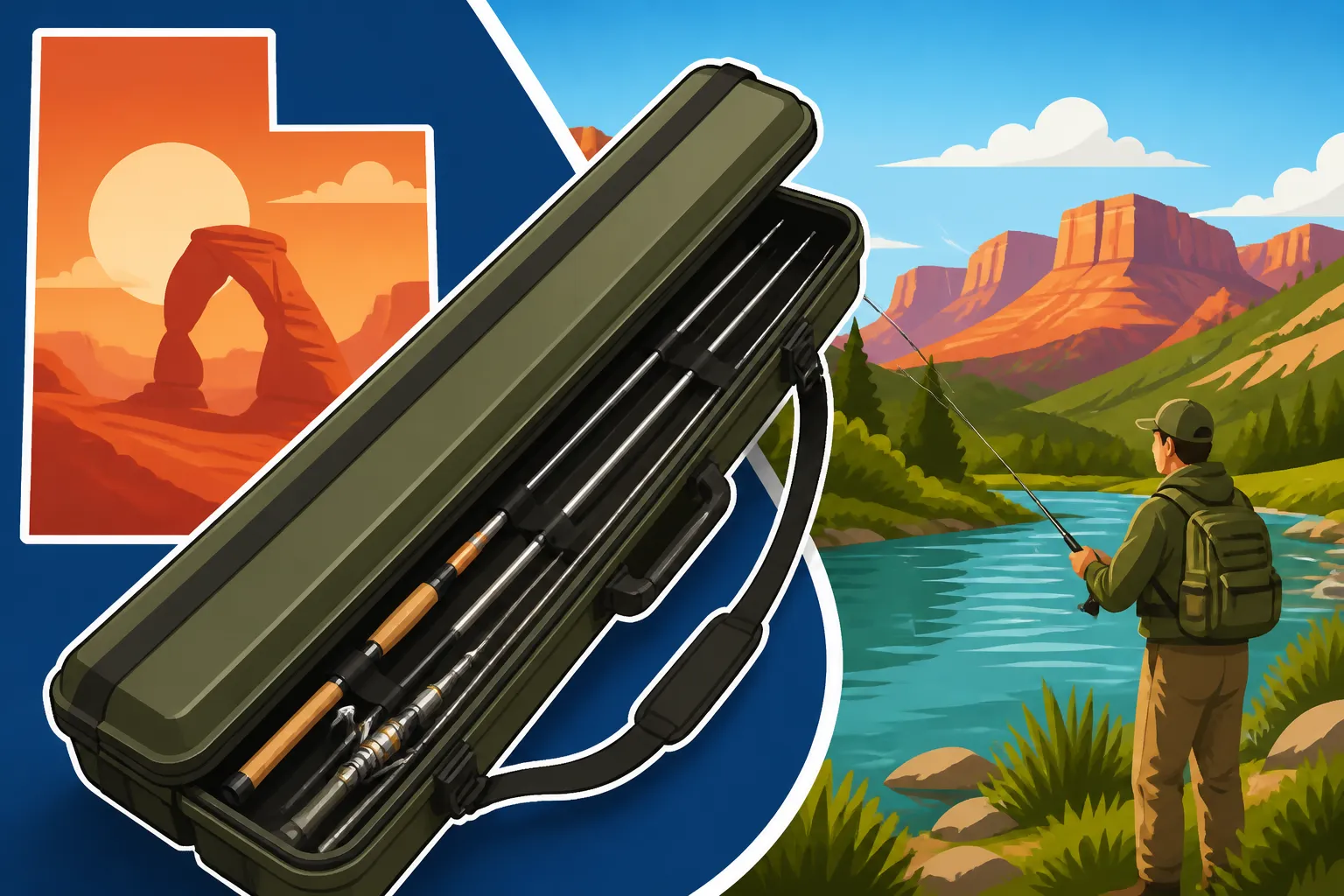
Best Rod Case for Traveling to Utah Fishing Spots
Picture this: you've spent months planning your dream fishing trip to Utah, maybe for the famed Strawberry Reservoir Fishing Guide or a shot at trophy lake trout at Flaming Gorge. You arrive at your destination, eager to hit the water, only to discover your prized fishing rod has been bent, snapped, or even worse, completely lost in transit. It's a gut-wrenching moment that far too many anglers have experienced. This guide is here to help you prevent that nightmare by walking you through everything you need to know about choosing the absolute best rod case for traveling to Utah's incredible fishing spots, ensuring your gear arrives safely and ready for action.
The Unsung Hero: Why a Quality Rod Case is Non-Negotiable for Utah Anglers
When you're packing for a fishing trip to Utah, whether it's a quick weekend jaunt to a community pond near Salt Lake City or an epic week-long expedition into the high Uintas, your fishing rods are often the most fragile and valuable pieces of gear you're bringing. It's easy to throw them in the back of the truck or bundle them with your luggage, but that's a recipe for disaster. A quality rod case isn't just an accessory; it's an investment in the longevity of your gear and the success of your trip.
Protecting Your Investment from the Rigors of Travel
Think about all the ways your rods can get dinged, crushed, or broken on a typical journey. If you're flying into Salt Lake City International Airport, your rod case will be jostled by baggage handlers, stacked with other heavy luggage, and potentially dropped. If you're driving across the state to a remote stream, your rods might slide around in the truck bed, get pinched by other gear, or be exposed to changing weather conditions like rain, snow, or excessive heat. Even a short drive on a bumpy dirt road to a Uinta Mountains High Lakes Fishing spot can lead to unexpected damage if your rods aren't securely protected.
A sturdy rod case provides a hard shell or padded barrier that absorbs impacts, prevents bending, and keeps your delicate rod tips from snapping. It's the armor for your angling tools, ensuring that when you finally reach the shimmering waters of Utah, your rods are in pristine condition, ready for the first cast. This peace of mind alone is worth its weight in gold, allowing you to focus on the fishing, not on whether your gear survived the journey.
Organization and Convenience on the Go
Beyond sheer protection, a good rod case brings a level of organization and convenience that makes traveling with fishing gear much smoother. Instead of having multiple rods rattling loosely in your vehicle or requiring individual wraps and ties, a single case can consolidate several rods, often along with reels or other small accessories. This not only streamlines your packing process but also makes it easier to transport your gear from the car to the boat, kayak, or campsite.
Imagine loading up for a day on Utah Lake Fishing Guide. Having all your rods neatly tucked away in one accessible case means less time fumbling around and more time actually fishing. For those who frequently travel, especially to different types of waters that require varying rod setups, a well-organized case saves precious minutes and reduces the chances of forgetting a crucial piece of equipment. It turns chaotic gear management into an efficient system, leaving you more energy to enjoy the breathtaking scenery and incredible angling opportunities Utah offers.
Meeting Airline and Transportation Regulations
This is often an overlooked aspect, but it's incredibly important, especially if your Utah fishing adventure involves air travel. Airlines have specific rules regarding fishing equipment, often requiring rods to be transported in hard, purpose-built cases to be checked as oversized luggage. Attempting to check a rod that's improperly packaged can lead to delays, additional fees, or even refusal by the airline to transport it.
Even if you're not flying, a dedicated rod case ensures your gear is contained and secure, preventing it from becoming a hazard during vehicle transport. It also helps you stay compliant with state and local regulations in Utah, especially concerning the transport of aquatic invasive species, as a contained case helps prevent inadvertent spread of non-native plants or organisms. Proper containment not only protects your rods but also demonstrates responsible angling practices, a point of pride for many of us who love Utah's outdoors.
Navigating the Options: Different Types of Rod Cases for Your Travel Style
Just like there are many ways to fish in Utah, from fly fishing the Provo River Fishing Guide to trolling for lake trout at Flaming Gorge, there are various types of rod cases designed for different travel needs and preferences. Understanding the distinctions between hard cases, soft cases, and hybrid options will help you pinpoint the best fit for your angling adventures.
Hard Cases: The Ultimate in Protection
Hard rod cases are the undisputed champions when it comes to maximum protection. These cases are typically constructed from rugged plastics, fiberglass, or aluminum, forming a rigid shell that can withstand significant impacts, crushing forces, and even harsh weather. They often feature internal padding, foam inserts, or rod tubes to cradle individual rods, preventing them from shifting or clanking against each other. Many also include locking mechanisms, adding an extra layer of security, which is a huge plus when your valuable gear is out of your sight.
The primary advantage of a hard case is its sheer durability. If you're frequently flying, especially on commercial airlines where baggage can endure a rough journey, a hard case is almost a necessity. They also excel for long road trips where gear might be stacked high or for remote backcountry travel where heavy items could shift against your rods. However, this robust protection comes with a trade-off: hard cases are generally heavier, bulkier, and can be more expensive than their softer counterparts. They might not be the most practical choice for a quick, casual trip to a local pond, but for serious travel to trophy waters like Flaming Gorge Fishing Guide, they are an absolute must. Brands like Plano and Pelican offer excellent hard case options, often found on platforms like Amazon or at specialty retailers like Bass Pro Shops.
Soft Cases: Lightweight and Convenient
Soft rod cases, often made from heavy-duty canvas, nylon, or cordura, offer a more lightweight and flexible alternative to hard cases. While they don't provide the same level of crush protection, they are excellent for preventing scratches, dings, and tangles, especially during car travel or when carrying rods short distances. Many soft cases feature multiple compartments or individual sleeves to keep rods organized, and some even have external pockets for reels, tackle, or other accessories.
These cases are fantastic for day trips, local outings, or situations where your rods will remain under your direct control, such as transporting them in the cabin of your truck or SUV. They are much easier to store when not in use, often folding down or taking up minimal space, which is great for anglers with limited storage at home. Soft cases are also typically more affordable. However, they are not suitable for air travel unless placed inside a larger, rigid piece of luggage. If your primary mode of transport within Utah is by car or truck, and you're not overly concerned about extreme impacts, a soft case can be a highly practical and convenient choice for your Utah Fishing Gear Guide.
Hybrid and Combo Cases: The Best of Both Worlds
Sitting somewhere between the hard and soft cases are hybrid or combo options. These often incorporate features of both, such as a semi-rigid internal structure combined with a padded, durable fabric exterior. Some "travel cases" are designed to hold rods broken down into shorter sections, making them more compact for fitting into standard luggage or overhead compartments on smaller planes, if rules allow. Others might integrate internal hard tubes within a soft shell, providing excellent protection for rods while maintaining a lighter, more flexible overall package.
Another popular "combo" is a rod and reel case, which provides dedicated compartments for both, ensuring your reels don't get damaged or cause damage to your rods. This is especially useful for baitcasting or spinning setups where reels are often left attached to the rod. These hybrid options try to balance protection, portability, and convenience, offering a versatile solution for anglers who face a variety of travel scenarios, from flying to a multi-day Best Camping Spots Near Utah Fishing Lakes trip. When browsing for options on Amazon or at Bass Pro Shops, you'll find a wide range of these adaptable cases, perfect for anglers who need flexible protection without the full bulk of a hard-sided trunk.
| Case Type | Protection Level | Portability | Ideal Use Case | Pros | Cons |
|---|---|---|---|---|---|
| Hard Case | Maximum | Low | Air travel, long road trips, shipping, extreme conditions | Crush-proof, weather-resistant, secure, highly durable | Bulky, heavy, can be expensive, less storage flexibility |
| Soft Case | Moderate | High | Car travel, short trips, local outings, keeping rods organized and scratch-free | Lightweight, flexible, often more affordable, easy storage | Minimal impact protection, not suitable for air travel |
| Hybrid/Combo | High (rods) | Medium | Versatile travel, combined rod/reel storage, backpacking | Balances protection and portability, organized | Can still be bulky, protection varies by design |
What Really Matters: Essential Features of a Top-Notch Travel Rod Case
Once you've decided on the general type of rod case, it's time to dive into the specific features that separate a mediocre case from one that will truly serve your Utah fishing adventures well. These details can make all the difference in protecting your precious gear.
Durable Construction and Materials
The foundation of any good rod case is its construction. For hard cases, look for high-impact resistant plastics (like polypropylene or ABS), reinforced corners, and robust latches, ideally with metal components rather than just plastic. Some premium cases even feature pressure equalization valves, which are crucial for air travel to prevent vacuum sealing that can make opening difficult. For soft or hybrid cases, seek out heavy-duty, abrasion-resistant fabrics like 600D or 1000D nylon or cordura. Reinforced stitching, heavy-duty zippers (preferably self-healing or corrosion-resistant), and a strong handle are all indicators of quality.
Consider the environment you'll be exposing the case to. If you're heading to Lake Powell, where sun and water exposure are constant, look for UV-resistant materials and water-repellent coatings. If you plan to hike into remote Uinta Lakes, a lightweight yet durable construction is key. How to Pack Fishing Gear for a Backpacking Trip to Uinta Lakes emphasizes the importance of durable, light gear. Remember, this case is going to take a beating so your rods don't have to, so don't compromise on material quality.
Appropriate Length and Capacity
This might seem obvious, but selecting the correct length and capacity is crucial. Measure your longest assembled rod, or if you break them down, measure the longest section. Many modern rods are 2-piece or 4-piece designs, which makes them much more travel-friendly. Ensure the case is long enough to accommodate your longest rod section with a little extra room for padding at the ends. A case that's too short is useless, and one that's excessively long can be cumbersome.
Capacity refers to how many rods the case can hold. Some cases are designed for a single rod, while others can comfortably hold 4, 6, or even 8 rods. Think about your typical fishing trip. Do you usually take just one or two spinning rods for stocked trout, or do you bring a full arsenal of fly rods, bass rods, and trolling setups? A case that's too small will force you to leave rods behind or pack them insecurely, while an overly large case is just extra bulk and weight you don't need. If you're a multi-species angler traveling to diverse locations like Fish Species in Strawberry Reservoir and Fish Species in Utah Lake, you might need a larger capacity. For a beginner, a case that holds a Best Rod and Reel Combo for Beginners and perhaps one backup is often sufficient.
Internal Organization and Padding
The inside of the rod case is just as important as the outside. Good internal organization means individual sleeves, straps, or foam cutouts that prevent rods from rubbing against each other or rattling around during transit. For hard cases, dense foam inserts that can be customized to your specific rods are ideal. Some cases feature soft cloth dividers or individual rod tubes built into the interior.
Ample padding is essential, especially at the tips and butts of the rods, which are the most vulnerable points. Look for cases that offer continuous padding throughout the interior, not just at the ends. Some cases have dedicated compartments for reels, offering them protection while keeping them attached to the rods, which can save setup time. For anglers who like to keep everything together, a case with additional pockets for leaders, tools, or even a small fly box can be incredibly convenient. This helps prevent damage and keeps your Best Tackle for Utah Trout and other essentials organized.
Security and Portability Features
Security is paramount, especially if you're checking your rod case or leaving it unattended. Many hard cases come with integrated locking points for padlocks (TSA-approved locks are a good idea for air travel). Some have key locks or combination locks built right into the latches. While soft cases offer less inherent security, some feature lockable zippers.
Portability features enhance ease of transport. Look for sturdy, comfortable carrying handles, and if the case is long or heavy, wheels can be a game-changer for navigating airports or long walks. Adjustable shoulder straps are excellent for hands-free carrying, particularly when you're lugging other gear like a Best Backpack for a Multi-Day Uinta Lakes Trip or a cooler. When selecting a case, consider how you'll primarily be moving it around, and choose features that match your typical travel methods to Utah's beautiful waters.
Making the Call: Choosing the Perfect Rod Case for Your Next Utah Fishing Adventure
With so many options and features, making the final decision can feel a bit overwhelming. But by considering your personal angling style, the type of travel you do most often, and your budget, you can narrow down the choices and find the rod case that's just right for you.
Matching the Case to Your Travel Style and Destination
Your primary mode of transport to and around Utah is perhaps the most significant factor in your decision.
- Air Travel: If you frequently fly to Utah's fishing destinations like Lake Powell or Flaming Gorge, a hard case is almost non-negotiable. It provides the necessary crush protection and typically meets airline requirements for checked oversized luggage. Opt for one with strong latches and integrated lock points.
- Road Trips (Car/Truck/RV): For road warriors exploring the state from the high Uintas to Southern Utah, both hard cases and robust soft cases can work well. A hard case offers superior protection if your gear might be piled high or exposed to the elements in an open truck bed. A soft case is lighter and more flexible if your rods will be safely stowed within the cab or a secure trunk space. Consider if you need a Best Rod Holder Setup for Trolling Multiple Lines for your vehicle, which might influence the type of case you need to protect them before installation.
- Backpacking/Hiking: For adventurous souls who hike into remote high-mountain lakes, a lightweight hybrid case or a durable soft case designed to carry breakdown rods (e.g., 4-piece fly rods) is ideal. Weight and bulk are critical here, so prioritize compactness and ease of carry, often with a shoulder strap or ability to attach to a backpack.
- Boat/Kayak/Canoe: If your primary travel within Utah involves getting on the water, consider how you'll store rods before you launch. A waterproof or highly water-resistant case can be a big advantage, particularly for smaller craft where splashing is common. For Best Kayaks for Utah Lake Fishing, a compact soft case or individual rod sleeves might be best for transporting to the launch point, then securing them on the kayak itself.
Think about the kind of fishing you'll be doing as well. Will you be primarily using delicate fly rods on the Green River, where precision and quick setup are key? Or heavy-duty trolling rods for monster lake trout at Flaming Gorge? The fragility and value of your rods should weigh heavily in your choice of case.
Considering Your Rod Collection and Budget
The number and type of rods you own, as well as your budget, will naturally influence your decision.
- Minimalist Angler (1-2 rods): If you typically only bring one or two spinning or casting rods, a single-rod hard tube or a compact soft case might be all you need. These are often the most affordable options, allowing you to get good protection without breaking the bank.
- Versatile Angler (3-5 rods): For those who like to have options, perhaps a trout rod, a bass rod, and a multi-purpose setup, a medium-capacity hard case or a larger soft case with multiple compartments is appropriate. These cases strike a good balance between capacity and portability, and you can find excellent options in a mid-range price point on Amazon or at Bass Pro Shops.
- Serious Angler/Guide (6+ rods): If you're traveling with a full array of specialized rods, perhaps as a guide or just a highly dedicated enthusiast, a large multi-rod hard case is likely necessary. These can be a significant investment but offer the best protection for your entire quiver of rods. Remember that for commercial purposes, you may also need to consider Utah Fishing Guide License Requirements Explained.
It's tempting to go for the cheapest option, but remember the value of the rods you're protecting. A broken rod can cost far more to replace than a quality case. That said, there's no need to overspend if your travel is minimal and your rods aren't exceptionally delicate or expensive. Balance the cost of the case against the value of your gear and the peace of mind it provides.
Ultimately, the "best" rod case isn't a one-size-fits-all solution; it's the one that best meets your specific needs for protection, convenience, and portability on your unique Utah fishing adventures. By carefully considering these factors, you can ensure your rods are ready for every cast, every bite, and every memory you make on Utah's stunning waters.
Disclaimer
This article is for general informational purposes only and does not constitute professional advice. Laws, prices and regulations vary by location and change over time. Consult a qualified professional for guidance on your specific situation.