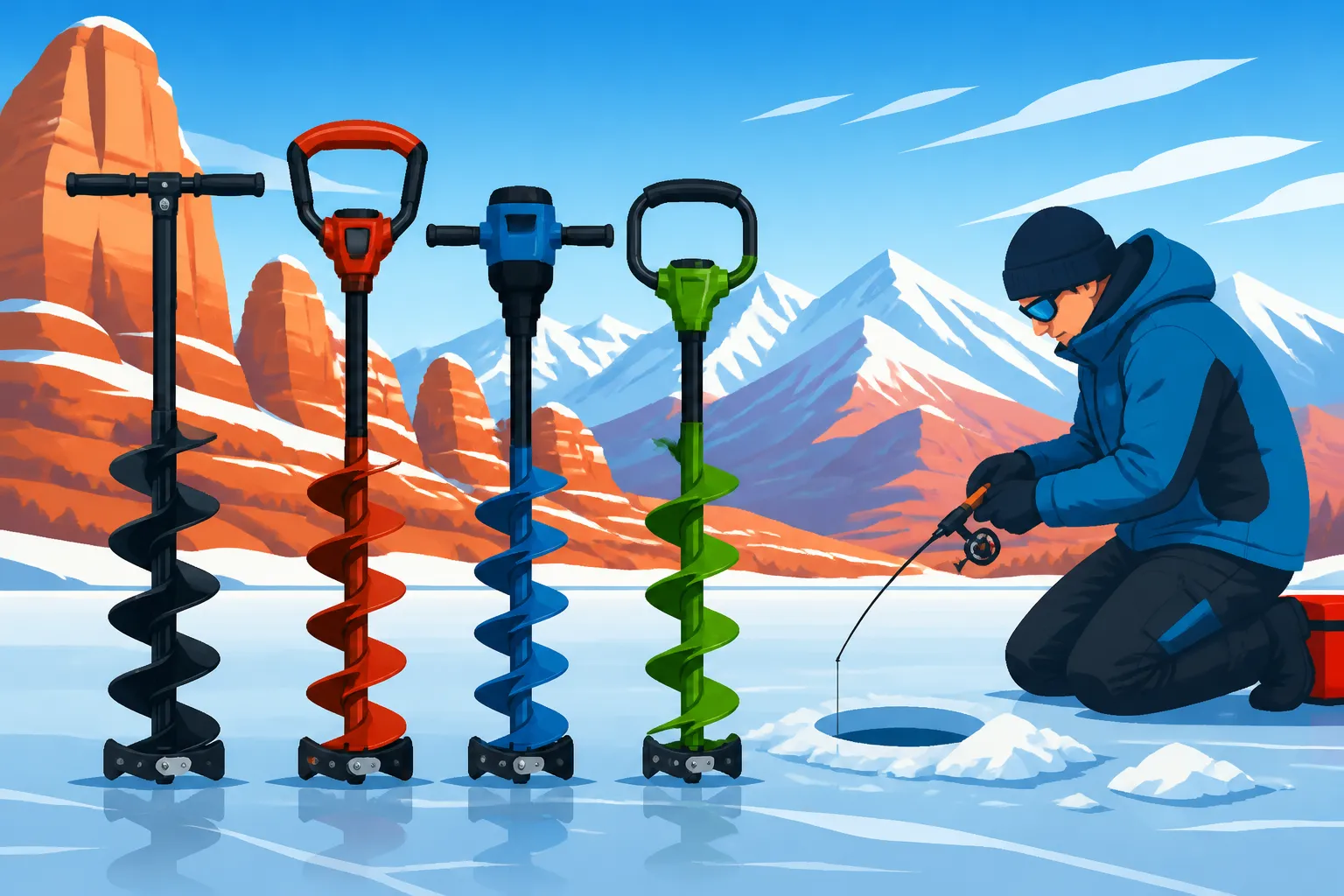
Best Ice Augers for Utah Ice Fishing
There's nothing quite like the crisp air and serene quiet of a Utah winter day spent ice fishing, but that peace can quickly turn to frustration when your auger struggles against thick ice. Many anglers have faced the dilemma of choosing the right tool to punch through the frozen surface, whether it's battling a stubborn hand auger on a thick day or wrestling with a gas-powered beast that just won't start in the cold. This guide is here to cut through the confusion, helping you understand the best ice augers for Utah's diverse and often challenging ice fishing conditions, so you can spend less time drilling and more time reeling.
Understanding the Types of Ice Augers for Utah Conditions
When you're out on a frozen lake in Utah, the type of ice auger you bring can make or break your day. It’s not just about punching a hole; it’s about efficiency, effort, and enjoying the experience. Let's dig into the main categories you'll encounter and where each one truly shines, especially with Utah's varied ice conditions.
Manual Augers: The Budget-Friendly and Reliable Choice
Manual augers, often simply called hand augers, are the old faithfuls of the ice fishing world. These are essentially big, sharp drills that you operate with your own two hands and a good dose of elbow grease. They're incredibly simple in design – usually just a handle, a shaft, and a set of sharp blades at the bottom. The beauty of a manual auger lies in its straightforward nature. There are no engines to fuss with, no batteries to charge, and no fuel to spill. You just twist, push, and let the blades do the work.
For a solo angler venturing out onto a smaller community pond or a mountain lake with moderate ice thickness, a hand auger is often all you need. Think of those serene mornings at a spot like Tibble Fork Reservoir or a local urban pond, where the ice might be a foot or less deep. You can quickly drill a few holes, move around, and enjoy the quiet without the roar of an engine. They're also wonderfully lightweight and easy to transport, making them ideal for those who hike into their fishing spots. However, the downside is undeniable: when you hit thick, hard ice, say two feet or more, drilling multiple holes becomes a serious workout, potentially exhausting you before you even cast a line. For heavy-duty use or if you plan to drill dozens of holes in a session, you might quickly find yourself wishing for more power.
Propane/Gas-Powered Augers: Power and Speed for Serious Anglers
Stepping up from manual augers, we find the workhorses of ice fishing: the propane and gas-powered augers. These machines are built for serious drilling, capable of churning through feet of ice in mere seconds. If you've ever watched an ice fishing tournament or seen a seasoned angler on a vast reservoir, chances are they're wielding one of these. Gas augers typically run on a two-stroke or four-stroke engine, while propane models offer a slightly cleaner and often easier-starting alternative with a fuel source that doesn't smell as strong.
The primary advantage here is raw power and speed. If you're targeting trophy lake trout at Flaming Gorge or chasing walleye at Utah Lake, where you might need to punch through two to three feet of ice in short order, a gas or propane auger is invaluable. They excel when fishing with a group, allowing everyone to get their lines in the water quickly, or when you're exploring a large area and drilling many holes to find active fish. These augers are incredibly reliable in extreme cold, as long as they're properly maintained and fueled. However, this power comes with trade-offs. They are significantly heavier than manual or electric options, making them less ideal for long hikes. The noise can be considerable, potentially spooking fish and certainly disturbing the peaceful ambiance for you and nearby anglers. Plus, there's the ongoing maintenance, fuel mixing (for two-stroke), and the ever-present exhaust fumes to contend with.
Electric/Battery-Powered Augers: The Modern, Eco-Friendly Solution
Electric augers represent the cutting edge of ice fishing technology, combining many of the benefits of both manual and gas augers. These units are powered by rechargeable lithium-ion batteries, driving a powerful electric motor that spins the blades. Brands like ION and Eskimo have really pushed the envelope here, creating augers that are surprisingly robust and efficient.
The allure of electric augers is strong, especially for the Utah angler. They are remarkably quiet, often only making a whirring sound as they chew through the ice. This lack of noise is a huge plus, not just for your ears but also for not disturbing the fish or other anglers. No fumes mean a cleaner experience, particularly if you're drilling inside an ice shelter. They're typically lighter than gas augers, making them more portable, and they start instantly with the push of a button, no tricky pull-starts in freezing temperatures. This makes them fantastic for a "run and gun" style of fishing on waters like Scofield Reservoir or Fish Lake, where quick, quiet moves can be key to success. The main consideration with electric augers is battery life, especially in Utah's colder climates. While modern batteries are impressive, carrying a spare is often a smart move for a full day on the ice, and checking current battery technology for cold weather performance is key. Utah Ice Fishing Guide
Key Factors to Consider When Choosing Your Ice Auger in Utah
Choosing the right ice auger for your adventures in Utah isn't a one-size-fits-all decision. It truly depends on where you plan to fish, how often you go, and your personal preferences. Let’s break down the critical factors that should guide your selection.
Ice Thickness and Your Drilling Needs
Utah's ice conditions can vary dramatically, not just from year to year but from lake to lake. A small, shallow pond near Salt Lake City might only have six to ten inches of ice, while a deep, high-altitude reservoir like Strawberry Reservoir or a massive body of water like Flaming Gorge could easily develop two to three feet of ice, or even more, in a cold winter. This variability is a primary driver in your auger choice. If you're primarily fishing those thinner-ice ponds for stocked trout, a manual auger might suffice, especially if you're just drilling a few holes. However, if your sights are set on the robust ice of Strawberry or chasing trophy lake trout through a couple of feet of ice at Flaming Gorge, a powered auger becomes almost essential.
Beyond just thickness, consider your drilling frequency. Are you the type of angler who finds a spot and stays put, perhaps drilling three or four holes all day? Or do you embrace the "run and gun" approach, constantly moving and drilling new holes—sometimes dozens—to locate active fish? If you're a mobile angler covering a large area, such as targeting walleye at Utah Lake, the speed and ease of a gas or electric auger will save you immense time and energy. A manual auger will quickly exhaust you, turning a fun day into a chore. The more holes you plan to drill and the thicker the ice, the more powerful your auger needs to be to maintain efficiency and enjoyment. Strawberry Reservoir Ice Fishing Spots
Weight, Portability, and Ease of Use
Ice fishing in Utah isn't always about driving right onto the ice from a plowed access point. Sometimes, the best spots require a hike, a snowmobile ride, or pulling a sled across a snowy landscape. The weight and portability of your auger are crucial considerations in these scenarios. A manual auger is undoubtedly the lightest and most packable option, making it a favorite for those who venture into the Uinta Mountains for high-altitude lake fishing. You can easily strap it to a backpack or pull it in a small sled.
Gas augers, while powerful, are the heaviest of the bunch. Lugging one a mile or two across deep snow can be a real challenge, even with a sturdy sled. Electric augers typically fall in the middle – heavier than manual, but often noticeably lighter than their gas-powered counterparts, especially without the need for fuel cans. The ease of breaking down and setting up your auger also plays a role. Many manual augers have two-piece shafts for easier transport. Gas and electric models usually have a solid powerhead, but some feature a detachable bit, which can make them slightly more compact for transport. Consider your own physical strength, how you plan to travel to your fishing spots, and how much gear you’re willing to manage.
Blade Type, Diameter, and Maintenance
The blades are where the rubber meets the ice, literally. The efficiency of your auger largely depends on the sharpness and design of its cutting blades. Most augers come with either flat chipper blades or curved shaver blades, each designed for slightly different ice conditions. Steel blades are common, with some higher-end options featuring special coatings or composite materials for durability and reduced friction. Regardless of the type, sharp blades are paramount. Dull blades will turn even a powerful auger into a frustrating experience, requiring more effort and making slower, ragged holes. Regularly checking your blades for nicks and dullness, and replacing them when necessary, is essential maintenance that will extend the life and efficiency of your auger.
The diameter of your auger bit is another critical choice. Generally, diameters range from 4 inches up to 10 inches. For typical trout and panfish fishing in Utah, a 6-inch auger is a popular and versatile choice. It cuts quickly, requires less effort, and is perfectly adequate for landing most fish species you'll encounter. However, if you're specifically targeting larger species like walleye, northern pike, or big lake trout, an 8-inch or even 10-inch auger might be preferred to ensure you have enough clearance to pull those big fish through the hole. Keep in mind that a larger diameter hole requires significantly more power to drill, so an 8-inch or 10-inch bit almost always necessitates a powered auger. Utah Walleye Harvest Rules What Depth Do Lake Trout Hold at in Winter? Finally, always use a blade cover when transporting and storing your auger – not just for safety, but to protect those crucial cutting edges from damage.
Performance in Utah's Diverse Ice Fishing Environments
Utah offers an incredible variety of ice fishing experiences, from easily accessible urban ponds to remote, high-altitude lakes. Your auger's performance will be tested differently in each unique environment, making it vital to match your gear to your destination.
Augers for High-Altitude Lakes and Deep Reservoirs
Imagine bundling up for a trip to a pristine Uinta Mountains lake like those accessible from Mirror Lake Highway or tackling the vast expanse of Flaming Gorge. These locations present some of Utah's most demanding ice fishing conditions. First, the ice often grows incredibly thick here, reaching two or three feet consistently throughout the winter. Second, the high elevation can sometimes affect the performance of gas-powered engines, requiring slight carburetor adjustments or simply meaning they won't run at peak efficiency compared to sea level. Third, the extreme cold found at these elevations can be brutal on battery life for electric augers.
For these challenging environments, a powerful auger is a must-have. Many anglers swear by robust gas augers from brands like Jiffy or Eskimo, relying on their brute force to cut through thick ice quickly. They might take a bit more effort to start in sub-zero temperatures, but once running, they're typically unstoppable. Modern electric augers, particularly those with high-capacity lithium batteries designed for cold weather, have also become strong contenders. Brands like ION and Strikemaster Lithium have models that perform admirably, but carrying a spare battery is practically a necessity for a full day of fishing in the bitter cold. Manual augers are generally only recommended for these locations if you know the ice is relatively thin, or if you're only planning to drill one or two holes and the hike in is so arduous that weight is your absolute top priority. Uinta Mountains High Lakes Fishing
Augers for Community Ponds and Smaller Lakes
On the flip side, Utah has a fantastic network of community ponds and smaller state park lakes, often stocked with rainbow trout, that provide excellent, accessible ice fishing opportunities. Places like Decker Lake in West Valley City, Canyon Glen Park Pond in Provo, or smaller sections of East Canyon Reservoir typically don't develop the same extreme ice thickness as their high-country counterparts. The ice might be a comfortable 8 to 18 inches, and the fishing trips are often shorter, perhaps a few hours with the family.
In these less demanding scenarios, you have more flexibility. A good quality manual auger, such as those made by Eskimo or Strikemaster Mora, can be perfectly adequate. They're inexpensive, easy to use, and require minimal upkeep. They're also wonderfully quiet, which is great if you're fishing close to other families or just want to enjoy the tranquility. Electric augers are also a fantastic choice for these ponds. Their light weight, instant start, and silent operation make them ideal for quick trips, and battery life is less of a concern when you're only drilling a handful of holes over a shorter period. Gas augers can feel a bit like overkill for these waters, though they'll certainly get the job done quickly. The choice here often comes down to budget and personal preference for quiet versus raw power. Utah Community Pond Fishing Spots
Considering Noise and Fumes on the Ice
The atmosphere on the ice is a big part of the ice fishing experience for many. One of the most common complaints you'll hear from anglers is the noise and fumes generated by gas-powered augers. While many seasoned anglers are used to it, and some even find the roar reassuring, it can certainly detract from the peacefulness that draws so many to ice fishing in the first place. Imagine a quiet morning at Rockport Reservoir, and suddenly a gas auger fires up right next to you, spewing exhaust and noise. It can be quite disruptive.
This is where electric augers truly shine. They are incredibly quiet, producing little more than a gentle whir as they slice through the ice. This benefit extends beyond just human comfort; while definitive scientific proof is hard to come by, many anglers believe that quieter drilling is less likely to spook fish, especially in shallower waters or on highly pressured lakes. The complete absence of exhaust fumes is another major advantage, particularly if you're using an ice fishing shelter. No more headaches from carbon monoxide, and you're doing your part for cleaner air on the lake. For these reasons, many anglers, myself included, are leaning towards electric options when noise and environmental impact are a concern.
Budgeting for Your Ice Auger and Accessories
An ice auger is an investment, and like any good investment, you want to ensure you're getting the best value for your money. Beyond the initial sticker price, there are ongoing costs and essential accessories to factor into your budget.
Initial Cost vs. Long-Term Value
When you start looking at ice augers, you'll notice a significant price range. Manual augers are, by far, the most budget-friendly option upfront. You can often find a reliable hand auger for a fraction of the cost of a powered model. Their long-term value is excellent because they have minimal moving parts, no fuel or battery costs, and essentially last indefinitely with proper blade care. If you're a casual angler or just starting out, a manual auger is a smart entry point into the sport, allowing you to get on the ice without breaking the bank.
Gas-powered augers represent a mid-range investment. Their initial cost is higher than manual, but they offer unmatched power and speed. The long-term costs include fuel (and oil mix for two-stroke engines), spark plugs, air filters, and occasional maintenance. For serious anglers who spend many days on the ice and need to drill countless holes in thick ice, the efficiency and power of a gas auger often justify the investment over time, as it saves physical effort and maximizes fishing time.
Electric augers typically have the highest initial cost, especially if you opt for high-capacity batteries or purchase spare batteries right away. However, their long-term operating costs are generally lower than gas augers. You're paying for electricity to charge batteries, which is usually cheaper than gasoline. They also require less engine maintenance. For many, the convenience, quiet operation, and lighter weight provide significant long-term value, even with the higher upfront price tag. Consider your anticipated use over several seasons: a pricier, robust electric or gas auger might be a better long-term value if you're fishing heavily, while a manual auger offers great value for lighter use. How Much a Beginner Should Budget for Utah Fishing Gear
Essential Accessories and Maintenance
An auger alone isn't always enough to hit the ice. There are several accessories that are either crucial for safety and performance or will significantly enhance your ice fishing experience. Every auger, regardless of type, needs a blade cover. This is non-negotiable for safety (those blades are razor-sharp!) and to protect the cutting edges from damage during transport. For powered augers, consider an extension shaft if you anticipate exceptionally thick ice, or if you're a taller angler who prefers not to bend over as much.
For electric augers, at least one spare battery is highly recommended, especially for colder Utah mornings or longer fishing trips. Nothing saps a battery's life faster than freezing temperatures. For gas augers, a reliable fuel can (properly mixed if it's a 2-stroke) is a must. Many anglers also appreciate an auger carrying bag, which protects the auger during transport and prevents ice shavings or fuel residue from getting into your vehicle.
Maintenance is key to longevity. Keep those blades sharp – either by sharpening them yourself, taking them to a professional, or simply replacing them when needed. For gas augers, winterizing at the end of the season (draining fuel, fogging the engine) is important. For electric augers, properly storing batteries (partially charged, in a moderate temperature) will extend their lifespan. You can often find these essential accessories at outdoor retailers like Bass Pro Shops, or conveniently browse options on Amazon.
Where to Buy and What to Look For
When you're ready to make your purchase, you have a few good avenues. Specialty fishing shops and larger sporting goods retailers are excellent places to start. They often have knowledgeable staff who can answer specific questions about different models and might even let you handle the augers to get a feel for their weight and balance. Buying in person also makes it easier if you ever need service or warranty support.
Online retailers like Amazon offer a huge selection, competitive pricing, and the convenience of home delivery. You can often find a wider variety of brands and models online than in a physical store. When buying online, pay close attention to customer reviews, especially those that mention performance in cold weather or durability. Look for detailed specifications about weight, engine size (for gas), battery capacity (for electric), and blade diameter. Always check the warranty information and the retailer's return policy. Whichever route you choose, consider reputable brands known for quality and reliability in ice fishing gear, such as Eskimo, Strikemaster, Jiffy, and ION. Local Utah knowledge from fellow anglers or bait shop owners can also be invaluable in guiding your decision based on specific regional conditions.
Safety and Best Practices with Your Ice Auger
Ice augers are powerful tools designed to cut through ice, and like any tool, they require careful handling. Safety should always be your top priority on the ice, both for yourself and for those around you.
Operating Your Auger Safely
Before you even think about firing up your powered auger or cranking your hand auger, ensure you have a clear area around you. Look for other anglers, especially children, and make sure they are a safe distance away. Always wear appropriate winter clothing, including sturdy boots that provide good traction on the ice. When drilling, brace yourself and maintain a firm grip on the handles. For gas augers, be mindful of the exhaust – especially if you're drilling multiple holes or in a confined space like an ice shelter. Never operate a gas auger inside a closed shelter without proper ventilation; carbon monoxide poisoning is a serious risk. Electric augers eliminate the exhaust concern, making them a safer choice for enclosed spaces.
Perhaps the most critical safety rule for any auger is to always use a blade guard. No matter how quickly you're moving from hole to hole or how short the distance, those blades are sharp enough to cause severe injury. Keeping the guard on protects you from accidental cuts and also protects the blades from hitting rocks or other hard objects that could dull or damage them. If you’re using a powered auger, get into the habit of engaging the safety switch or setting the brake when you're not actively drilling. Never leave a running auger unattended. Furthermore, before venturing onto any ice, always verify its thickness. How to Check Ice Thickness Safely Before Ice Fishing
Transport and Storage Tips
Proper transport and storage are essential for prolonging the life of your auger and maintaining safety off the ice. When moving your auger in your vehicle, whether it's a truck, car, or UTV, always ensure it is securely fastened. A rolling auger can cause damage to your vehicle or, worse, injure passengers in an accident. Many anglers use bungee cords, cargo straps, or custom mounts to keep their auger in place. The blade guard should always be on during transport, protecting both the blades and any gear or people in the vehicle.
For longer-term storage, especially during the off-season, a little preparation goes a long way. For gas augers, it's crucial to drain the fuel or use a fuel stabilizer to prevent gumming up the carburetor. Running the engine dry can also help. Store gas augers in a well-ventilated area, away from living spaces, and keep them upright. For electric augers, follow the manufacturer's recommendations for battery storage. Typically, this means storing batteries at a partial charge (around 50-70%) in a cool, dry place, not fully charged or fully depleted. Avoid storing batteries in extremely cold or hot conditions, as this can degrade their performance and lifespan. Proper storage ensures your auger is ready to go when the ice returns next winter.
Troubleshooting Common Auger Issues on the Ice
Even the best augers can have an off day, and knowing how to troubleshoot common issues can save a trip. For gas augers, the most frequent complaint is difficulty starting, especially in very cold weather. First, check your fuel – is it fresh, and is the oil mix correct if it's a 2-stroke? A fouled spark plug is another common culprit; carrying a spare spark plug and a wrench is a smart move. Sometimes, a quick check of the choke and primer bulb can solve it. Carburetor icing can also occur in extreme cold, which might require moving the auger into a warmer area (like inside your ice shelter) for a few minutes.
Electric augers usually start instantly, but their main vulnerability is battery life. If your auger seems weak or stops cutting, check your battery charge. Extreme cold reduces battery efficiency, so always try to keep spare batteries warm (in an insulated bag or inside your coat) until you need them. If the blades aren't cutting efficiently, regardless of auger type, it's almost always due to dull or damaged blades. A quick inspection can confirm this. Carrying a basic tool kit with screwdrivers, wrenches, and a spare spark plug (for gas) can be a lifesaver for minor field repairs. Remember, prevention is often the best medicine: proper maintenance and charging can prevent most issues from occurring in the first place.
Here’s a quick comparison of the auger types:
| Feature | Manual Auger | Gas-Powered Auger | Electric/Battery Auger |
|---|---|---|---|
| Initial Cost | Low | Moderate | High (especially with spare batteries) |
| Power/Speed | Low (requires physical effort) | High (very fast, powerful) | High (fast, smooth) |
| Noise Level | Silent | Loud | Quiet |
| Fumes | None | Strong exhaust fumes | None |
| Weight | Lightest | Heaviest | Moderate (lighter than gas) |
| Portability | Excellent (easy to hike with) | Good (challenging for long hikes) | Excellent (easy to hike with) |
| Maintenance | Low (blade care) | Moderate (fuel, spark plugs, filters, winterize) | Low (battery care, blade care) |
| Fuel Source | None | Gasoline/Oil Mix or Propane | Rechargeable Lithium-Ion Battery |
| Best For Utah | Thin ice, short trips, solo, budget | Thick ice, many holes, groups, larger species | Varied ice, quiet, portability, "run & gun" |
| Pros | Cheap, quiet, lightweight, reliable | Powerful, fast, consistent in cold | Quiet, no fumes, easy start, lighter than gas |
| Cons | Hard work on thick/many holes, slow | Heavy, noisy, fumes, maintenance | Higher upfront cost, battery life in extreme cold |
Disclaimer
This article is for general informational purposes only and does not constitute professional advice. Laws, prices and regulations vary by location and change over time. Consult a qualified professional for guidance on your specific situation.