Lures Every Beginner’s Tackle Box Needs
Oh, the joy and utter bewilderment of standing in the fishing aisle for the very first time! If you've ever felt a pang of panic seeing hundreds of lures, each promising to be "the one," only to walk away with a random assortment and a lighter wallet, you are absolutely not alone. It's a rite of passage for every new angler. This guide is here to cut through the noise and help you stock a beginner's tackle box with a few essential, proven lures that will set you up for success on Utah's diverse waters, without needing a second mortgage.
The "Why" Behind Starting Simple: Avoiding Tackle Box Overwhelm
It's tempting to think that the more lures you have, the more fish you'll catch. And while a seasoned angler might carry a vast array for every conceivable situation, for a beginner, this approach can quickly lead to frustration and confusion. You end up spending more time rummaging through your tackle box than actually fishing, and that's no fun at all.
The Beginner's Dilemma: Too Many Choices, Too Little Time
Imagine heading out to one of Utah's beautiful community ponds or a stream, filled with enthusiasm. You open your tackle box, and it's a kaleidoscope of colors, shapes, and sizes. Should you use the shiny gold spoon, the green worm, or that peculiar-looking crankbait? Without a clear understanding of what each lure does and when it's effective, you're essentially guessing. This often results in a lack of confidence in your presentation, constantly changing lures, and ultimately, fewer bites. The goal here isn't just to buy lures; it's to build confidence in using a select few effectively.
This constant second-guessing can really dampen the experience. Fishing is meant to be relaxing, an escape, not another source of stress! By simplifying your initial lure selection, you remove a huge variable and allow yourself to focus on the basics of casting, retrieving, and learning how fish react. It's about getting comfortable with your gear and understanding the fundamentals before you add layers of complexity.
Focusing on Versatility and Proven Success
The key to a beginner's tackle box is versatility. We're looking for lures that work in a variety of conditions, target multiple common species, and are relatively easy to use. Think of them as your utility players – they might not be specialized for every single niche situation, but they consistently perform well across the board. These are the workhorses that have caught countless fish for generations of anglers, and they'll do the same for you.
When you're first learning Utah Fishing Techniques for Beginners, having lures that provide immediate feedback is invaluable. Watching a spinner flash through the water, or feeling the distinct wobble of a spoon, helps you understand what the lure is doing. This sensory feedback is crucial for developing intuition and confidence, which are far more important than owning every lure on the shelf. You'll quickly learn that a well-presented basic lure often out-fishes a fancy, complicated one used without confidence.
Essential Lure Categories for Utah Trout and Panfish
When you're starting out in Utah, chances are you'll be targeting abundant and readily available species like rainbow trout, splake, tiger trout, perch, and bluegill. These fish are often found in community ponds, smaller reservoirs, and many of our state's excellent rivers. The lures we're going to talk about are perfect for these species and are incredibly beginner-friendly. If you're looking for more general guidance, check out our Utah Trout Fishing Tips article.
Spinners: Flash and Vibration for Active Fish
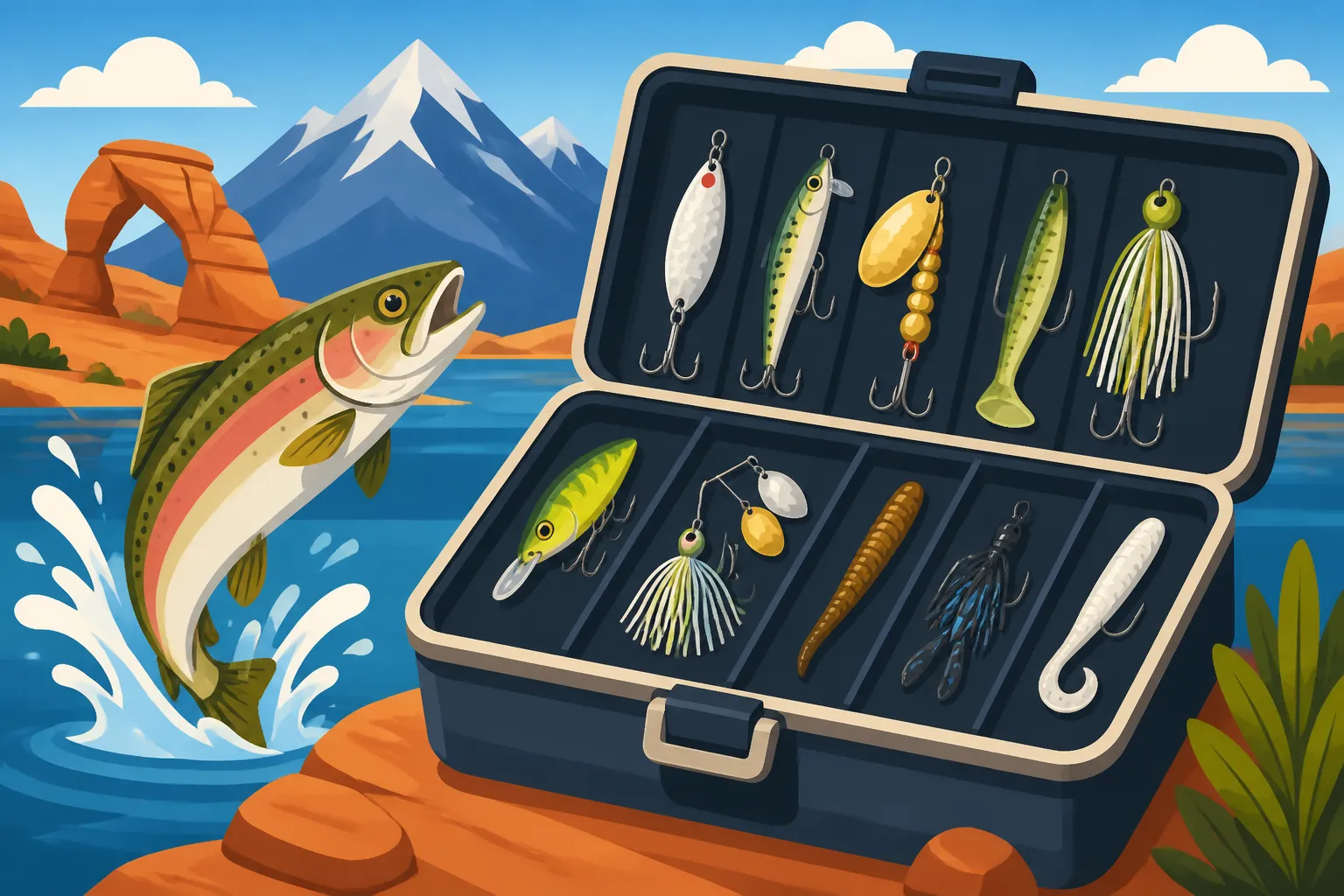
Spinners are arguably one of the most classic and effective lures for trout and panfish, especially for beginners. They consist of a blade that rotates around a central shaft, creating flash and vibration in the water. This mimics small baitfish or insects, triggering a predatory response from fish. They’re super easy to use – just cast them out and reel them in!
Different sizes and colors work well in different conditions. For smaller trout and panfish in clear water, try smaller spinners with silver or gold blades. If the water is a bit murky, or you're trying to stand out, brighter colors like chartreuse or orange can be very effective. Brands like Rooster Tail and Mepps are legendary for a reason; they just work. The vibration they produce can be felt through your rod, giving you immediate feedback that the lure is working correctly. This is incredibly satisfying for a new angler and helps build confidence in your retrieve. You'll want a few in your Best Tackle Boxes for Utah Anglers.
Spoons: The Wobble That Attracts
Fishing spoons are another time-tested staple that every beginner should have. These metal lures are shaped to wobble and flash as they're retrieved, mimicking an injured baitfish. Their erratic action makes them irresistible to many predatory species, especially trout. They're also quite versatile, working well for both casting and trolling.
Spoons come in various weights and sizes. Lighter spoons are great for shallower water or casting long distances, while heavier ones can get down deeper quickly. Silver, gold, copper, and bright colors with patterns are all popular. You can use a steady retrieve, or experiment with a "stop-and-go" retrieve, allowing the spoon to flutter down like a wounded fish. This pause-and-fall action often triggers strikes, as fish perceive it as an easy meal. For trout in particular, a small, flashy spoon can be absolutely deadly in Utah's reservoirs.
Jigs: Small but Mighty, Especially Under the Ice
Jigs are incredibly versatile and often overlooked by beginners, but they shouldn't be! A jig is essentially a weighted hook with a molded head, often dressed with hair, feathers, or soft plastic. They're fantastic for presenting a smaller profile that mimics insects, small baitfish, or even crustaceans. While many think of them for ice fishing, jigs are also incredibly effective for open-water fishing, especially for panfish and trout.
For beginners, small marabou jigs or tube jigs in white, black, or chartreuse can be absolute game-changers for targeting bluegill, perch, and trout in ponds and slower rivers. The beauty of a jig is its subtle action; you impart the movement yourself with small twitches of the rod tip. This can be a bit more nuanced than a spinner, but once you get the hang of it, you'll appreciate their effectiveness. During winter, knowing How to Rig a Jig for Utah Trout for ice fishing can be extremely productive.
Soft Plastics: Versatility in a Small Package (PowerBait, Gulp!)
While not traditional "lures" in the sense of having internal action, soft plastics like PowerBait and Gulp! are absolutely essential for any beginner targeting stocked trout in Utah. These are scented, moldable baits designed to float off the bottom, presenting a natural-looking meal to trout. They are incredibly effective and widely used in Utah's community ponds and reservoirs.
PowerBait comes in various forms – dough, nuggets, and even pre-formed shapes – and a rainbow of colors. Chartreuse, rainbow, and orange are perennial favorites. The key is to mold it around your hook, making sure the hook point is covered, and then use a small weight a foot or two above your hook to get it to the bottom. The bait then floats up, suspending appetizingly. Gulp! offers a similar concept but with a more natural texture and a potent scent trail that disperses in the water. For an in-depth look, check out How to Fish PowerBait for Stocked Trout. These baits are often the first thing a new angler tries, and for good reason: they catch fish!
| Lure Type | Target Species (Utah) | Best Use Cases | Beginner Friendly |
|---|---|---|---|
| Spinners | Trout, Perch, Bluegill, Bass | Casting/Retrieving in streams, ponds, reservoirs | High |
| Spoons | Trout, Walleye, Pike | Casting, trolling, jigging in deeper waters | High |
| Jigs | Trout, Perch, Bluegill, Bass | Vertical jigging (ice), slow retrieve, bottom bumping | Medium-High |
| Soft Baits | Trout (PowerBait), Bass (Worms) | Still fishing (PowerBait), casting/retrieving (worms) | High |
| Crankbaits | Bass, Walleye, Trout | Trolling, casting to structure, depth control | Medium |
Expanding Your Horizons: Lures for Utah's Warmer Water Species
Once you've gained confidence with the basics, you might feel the pull to explore other species that thrive in Utah's warmer waters, like bass and walleye. These fish often require slightly different presentations and a bit more specialized tackle, but the learning curve is rewarding. Utah Bass Fishing Techniques is a great resource if you're venturing into bass fishing.
Crankbaits: Diving for Bass and Walleye
Crankbaits are hard-bodied lures with a lip (or bill) that causes them to dive to a specific depth when retrieved. They come in countless shapes, sizes, and colors, designed to mimic baitfish. The beauty of a crankbait is its ability to cover water efficiently and consistently reach fish at different depths. For targeting species like smallmouth bass in Flaming Gorge or walleye in Utah Lake, crankbaits are absolutely essential.
For a beginner, a medium-diving crankbait in natural baitfish colors (silver, perch patterns) or brighter colors (chartreuse, orange) can be a great starting point. The action is built into the lure; you simply cast it out and retrieve it at a steady pace. You'll feel the lure "wobbling" or "wiggling" as it works through the water. Experiment with retrieve speeds and occasional pauses to see what triggers bites. These lures are particularly effective when fish are active and chasing prey. For understanding your target, check out the Utah Walleye Fishing Guide.
Worms and Soft Baits: The Classic Bass Attack
While PowerBait is for trout, soft plastic worms and creature baits are the undisputed champions for bass fishing. These lures are incredibly versatile, mimicking a wide range of natural forage like worms, crawfish, or even small fish. The options are endless, but for a beginner, starting with a classic plastic worm is a no-brainer.
A simple Texas rig or a wacky rig with a 4-inch or 6-inch plastic worm can be incredibly effective for both largemouth and smallmouth bass. Colors like green pumpkin, junebug, or black and blue are consistent producers. The key to fishing these soft plastics is to retrieve them slowly, allowing them to fall naturally, and watching for subtle bites. It often feels like a slight "tick" or just added weight on your line. This style of fishing teaches patience and a keen sense of feel, which are invaluable skills for any angler. Many anglers consider soft plastics a must-have for catching bass in deeper structure.
Building Your Tackle Box: Practical Advice and Next Steps
So, you've got a good idea of what lures to start with. Now let's talk about putting it all together, what else you might need, and where to actually go about getting these goodies. Remember, fishing should be fun, not a chore, so keep it manageable and enjoyable.
Don't Forget the Essentials Beyond Lures
A tackle box isn't just for lures! There are several other crucial items you'll want to include right from the start. These are the tools that make your fishing trip smoother and more successful. Think of them as the supporting cast that makes your star lures shine.
First, extra hooks are a must. You'll lose them to snags, or they might get bent. A variety of hook sizes (e.g., #8 to #4 for trout/panfish, larger for bass) will cover most situations. Next, sinkers/weights are vital for getting your bait down to where the fish are. Split-shot weights are easy to attach and remove, while egg sinkers or worm weights are great for bottom fishing or working soft plastics. Don't forget swivels and snaps; swivels prevent line twist, and snaps make changing lures much quicker. A small pair of pliers or forceps is invaluable for removing hooks safely from fish and for cutting line. Finally, a line cutter (small scissors or clippers) is far better than trying to bite through fishing line. You might also want to include a small first-aid kit for minor cuts or scrapes, because hooks are sharp! For a more complete list, consult What Gear Does a First-Time Utah Angler Need?.
Where to Find Your First Lures
You don't need to break the bank to get started. There are plenty of accessible options for purchasing your initial lure collection. Local sporting goods stores are fantastic because you can talk to staff who often have local knowledge about what's biting.
Big box outdoor retailers like Bass Pro Shops are an excellent resource. They have vast selections, often organized clearly, and their staff can help guide you to specific lures popular for Utah waters. They also have helpful display boards that show how different lures are rigged. Online retailers like Amazon also offer a huge selection, often at competitive prices, and can be convenient for having gear delivered right to your door. Just make sure you're reading reviews and focusing on those versatile, beginner-friendly options we discussed. You'll find that many of the classic brands like Mepps, Rooster Tail, Kastmaster, and PowerBait are readily available through these channels.
Learning to Use Your Lures
Having the right lures is only half the battle; knowing how to use them is the other. Don't be afraid to experiment! Fishing is a constant learning process. Start by practicing your casting and retrieve in an open area, away from snags. Get a feel for how your lure moves in the water.
Watch videos, read articles, and most importantly, get out on the water. Pay attention to what other successful anglers are doing. Ask questions – most anglers are happy to share their knowledge. The Utah Division of Wildlife Resources (DWR) website often has great resources and stocking reports that can point you to active fishing spots. Remember that patience is a virtue in fishing. Not every cast will result in a bite, and that's okay. Focus on enjoying the process, learning from each outing, and celebrating every fish you catch, no matter the size. Practice makes perfect, and the more time you spend with a rod in your hand, the more intuitive it will all become. Learning How to Cast a Spinning Rod for the First Time is a great place to begin.
Disclaimer
This article is for general informational purposes only and does not constitute professional advice. Laws, prices and regulations vary by location and change over time. Consult a qualified professional for guidance on your specific situation.