Best Crankbait for Smallmouth Bass at Flaming Gorge
For anglers targeting smallmouth bass at Flaming Gorge, the sheer variety of crankbaits on the market can feel overwhelming. You’re standing there, looking at a wall of options, wondering which one will actually tempt those feisty smallmouth in the massive, clear waters of the Gorge. This guide cuts through the noise, offering insights into the best crankbaits and techniques to help you consistently put smallmouth in your boat or from shore.
Understanding Smallmouth Bass Behavior at Flaming Gorge
To truly pick the best crankbait, we first need to get inside the head of a Flaming Gorge smallmouth. These aren't just any smallmouth; they're residents of one of Utah's most iconic and unique fisheries. Their behavior is heavily influenced by the reservoir's immense size, its incredibly clear water, and the abundant, diverse forage available. If you just throw any old crankbait out there, you might get lucky, but understanding their habits will make you a much more consistent angler.
Seasonal Movements and Depths
Smallmouth bass in Flaming Gorge are creatures of habit, but their habits shift dramatically with the seasons. In the spring, as water temperatures begin to climb into the 50s and low 60s Fahrenheit, smallmouth move shallower, often holding on rocky points, ledges, and transition areas near spawning grounds. This is when they're actively feeding and preparing to spawn. You'll find them in depths from just a few feet down to about 20 feet. Once the spawn is over and summer truly sets in, they'll retreat to deeper, cooler water, often suspending over structure or relating to main lake points and steep drop-offs. Don't be surprised to find them 25 to 40 feet deep, sometimes even deeper during the midday sun. Come fall, as the water cools, they'll often move back shallower for a final feeding frenzy before winter, holding in similar areas to spring but perhaps a bit deeper as the season progresses. Best Month for Smallmouth Bass Fishing in Utah can vary, but understanding these seasonal shifts is crucial for crankbait selection.
Forage Base and Preferences
The diet of Flaming Gorge smallmouth is incredibly varied, and knowing what they're munching on helps you "match the hatch" with your crankbaits. Their primary forage includes crayfish, various baitfish like juvenile trout (especially rainbow trout), shiners, and sometimes even smaller perch. Crayfish are a huge part of their diet, especially in rocky areas, which is why crankbaits mimicking these crustaceans are so effective. Baitfish patterns are also key, particularly during open water feeding binges. The clear water of Flaming Gorge means smallmouth rely heavily on sight, so accurate imitations in color and profile can make a big difference. Think about what a crayfish looks like scurrying across the bottom, or how a juvenile trout might flash in the water – your crankbaits should aim to replicate these appearances and actions.
Water Clarity and Structure
Flaming Gorge is renowned for its incredibly clear water, which often means smallmouth can be very wary of presentations. This clarity influences everything from line choice to lure color. On bright, sunny days, fish might shy away from bold, unnatural colors, preferring more subtle or natural patterns. Conversely, in low light or stained areas (which are rare but can happen after heavy rain), brighter colors might stand out more. The structure here is predominantly rock: steep canyon walls, rocky points, ledges, submerged humps, and rubble fields. Smallmouth love to ambush prey from structure, so your crankbaits need to be able to navigate these rocky environments without constant snagging. How to Catch Smallmouth Bass in Rocky Coves often involves carefully working lures around these features. Targeting areas with a mix of rock and cover like submerged timber or brush piles can be particularly productive.
Key Crankbait Characteristics for Flaming Gorge Smallmouth
When you're sifting through the options, it’s not just about picking a pretty lure. The best crankbaits for Flaming Gorge smallmouth have specific features that make them stand out in this unique environment. It’s a balance of diving depth, color, and action that triggers those aggressive bites.
Diving Depths and Lip Designs
The diving depth of a crankbait is paramount, largely dictated by its lip design and body shape. You want your crankbait to reach the depth where the smallmouth are holding, or better yet, to occasionally "tick" or "deflect" off the bottom or structure at that depth.
- Shallow Divers: These typically have small, stubby lips and run from 1 to 8 feet deep. They're excellent for targeting smallmouth early in the season, during low-light conditions, or when fish are cruising shallow flats or near shore. Think about those beautiful morning or evening bites when the smallmouth push baitfish against the banks.
- Medium Divers: With longer, wider lips, these crankbaits generally hit depths of 8 to 15 feet. This is a versatile category, effective for targeting submerged points, ledges, and areas where smallmouth might be slightly deeper but still accessible from casting. They're a workhorse for many smallmouth anglers throughout the year.
- Deep Divers: Characterized by long, often angled lips, deep diving crankbaits can plunge to 15 feet or more, with some models reaching 25+ feet. These are your go-to when smallmouth have retreated to their deeper summer haunts, or when you're fishing vertical structures like canyon walls and deep rocky humps. The ability to grind along the bottom in deeper water can be incredibly effective, stirring up sediment and mimicking a fleeing crayfish.
Knowing the typical depths where smallmouth are found seasonally (as discussed above) will guide your choice here. You don't want a crankbait that's swimming 5 feet above the fish!
Colors and Patterns
Given Flaming Gorge's gin-clear waters, color choice matters immensely. Smallmouth are highly visual predators.
- Natural Patterns: In clear water, natural baitfish patterns are often king. Think greens, browns, silvers, and subtle blues. Patterns that mimic rainbow trout, shiners, or perch are consistently effective. Crayfish patterns (greens, browns, oranges, reds) are non-negotiable, especially when fishing rocky bottom where crayfish abound. These colors blend in, offering a realistic profile that doesn't alarm wary fish.
- Flash and Contrast: Sometimes, a bit of flash can grab attention. Chrome, silver, or gold sides can simulate a baitfish's scales reflecting light. Contrast, even with natural colors, can also be important. A baitfish pattern with a dark back and lighter belly, or a crayfish with subtle mottling, can provide that visual pop.
- Bright "Trigger" Colors (Use with Caution): While natural is generally best, there are times when a pop of chartreuse, orange, or firetiger can provoke a reaction strike, especially on overcast days, in slightly stained water (if you find any), or during specific feeding windows. However, in Flaming Gorge's typical clarity, use these sparingly as an experiment, rather than a primary go-to.
When shopping, check out the selection at your local Bass Pro Shops or explore the extensive options available online through retailers like Amazon. They'll have a huge variety of colors and patterns to choose from.
Rattle and Action Types
Beyond looks, how a crankbait moves and sounds underwater can be a major fish attractor or deterrent.
- Tight Wobble vs. Wide Wobble:
- Tight Wobble: These lures have a subtler, more compact side-to-side movement. They're often preferred in colder water or when fish are less aggressive and a more natural, less exaggerated presentation is desired. Many natural baitfish imitators have a tighter wobble.
- Wide Wobble: These crankbaits have a more pronounced, slower side-to-side roll. They displace more water and create a stronger vibration. Often effective in warmer water when fish are more active and aggressive, or in situations where you need to attract fish from a distance.
- Rattles (or lack thereof):
- Silent Crankbaits: No internal rattles, just the sound of the lure moving through the water. Excellent in very clear water or when fish are heavily pressured and sensitive to noise. The lack of artificial sound can make them seem more natural.
- Subtle Rattles: A few small internal BBs that create a soft clicking sound. This can add just enough acoustic appeal to attract curious fish without being overly aggressive.
- Loud Rattles: Multiple, larger internal bearings that create a distinct, loud commotion. These are designed to call fish from a distance, particularly in stained water or when smallmouth are very aggressive and reacting to sound. In Flaming Gorge's clear water, sometimes a loud rattle can be too much, but it can also be a game-changer on certain days. Experimentation is key!
Top Crankbait Styles and When to Use Them
Now, let's talk about specific types of crankbaits that consistently produce smallmouth bass at Flaming Gorge. It's not about having just one "best" crankbait, but rather a selection that covers different depths and situations.
Shallow Diving Crankbaits
These are your workhorses for the spring and fall migrations, or for early morning/late evening bites when smallmouth move into the skinny water.
- Squarebills: Named for their square lip, these are fantastic for ripping through shallow cover like submerged rocks, brush, and even bouncing off steep banks. Their design helps them deflect off obstructions rather than snagging, which is huge in rocky environments like Flaming Gorge. The erratic action created by deflections often triggers vicious reaction strikes. Look for natural crayfish patterns or shad imitations in sizes around 1.5 to 2.5 inches.
- Scenario: Cruising a rocky point in a sunny spring morning, casting parallel to the bank, letting the crankbait bounce off the rocks. The sudden change in direction as it hits a submerged boulder can be irresistible.
- Flat-Sided Crankbaits: These lures have a flatter profile, often mimicking smaller baitfish. They typically have a tighter, more subtle wobble and are excellent in colder water or when fish are finicky.
- Scenario: A cool, overcast day in late fall, smallmouth are holding tight to secondary points. A slow, steady retrieve with a flat-sided crankbait might be the ticket to coaxing a bite from less aggressive fish.
Medium Diving Crankbaits
This category is probably the most versatile for Flaming Gorge, covering a wide range of depths and conditions.
- Medium-lipped models (e.g., Rapala DT series or similar): These are fantastic for probing those transitional depths, from 8 to 15 feet. They excel when smallmouth are positioned on the breaks of main lake points, submerged humps, or the upper sections of steep drop-offs. Their consistent dive and action make them excellent for covering water.
- Scenario: Targeting a long, tapering point that drops from 10 to 25 feet. Casting a medium diver, allowing it to dig into the bottom as it passes over the shallower section, then letting it suspend or slowly rise as it crosses the deeper water. The change in action can often draw a strike.
- Natural Baitfish Patterns: Given the clear water, medium divers in realistic shad, perch, or rainbow trout colors are incredibly effective here. Consider something that has a subtle flash, like a chrome side with a blue or green back.
Deep Diving Crankbaits
When the summer sun beats down and smallmouth retreat to their cooler, deeper havens, these lures become indispensable.
- Long-lipped Deep Divers: Think of crankbaits designed to dive 15 to 25+ feet, like some of the larger Rapala or Strike King models. These are built to get down quickly and stay there, allowing you to effectively target fish holding on deep ledges, submerged roadbeds, or the base of steep canyon walls.
- Scenario: Mid-summer, midday, smallmouth are suspended over a deep underwater hump or relating to a sheer rock wall dropping into 50+ feet of water. Long casts and a steady retrieve with a deep diver allow you to cover that critical depth range. Often, bumping the lure off the deep structure is key.
- Crawfish and Perch Imitations: In these deeper rocky environments, crayfish are still a major food source. Also, at greater depths, smallmouth might be targeting larger forage, so a crankbait mimicking a good-sized perch or even a juvenile trout can be very effective.
Lipless Crankbaits
While not traditional "crankbaits" in the sense of having a lip, lipless crankbaits are a crucial tool for smallmouth, especially in specific situations.
- Vibration and Sound: These lures sink, and their appeal comes from their internal rattles and a distinct, tight vibration on the retrieve. They are excellent for covering open water, finding active fish, or working vertically over submerged cover.
- Scenario: Casting over vast flats or areas with scattered rock rubble in 10-20 feet of water. A fast, erratic retrieve with a lipless crankbait can draw reaction strikes from cruising smallmouth. They are also effective for "yo-yoing" (lifting and dropping) vertically when fish are spotted on a fish finder directly below the boat.
- Colors and Presentation: Again, natural baitfish colors like chrome/blue or shad are great here. Because they sink, you can let them fall to the desired depth before starting your retrieve. They're particularly good when smallmouth are schooled up and actively chasing bait.
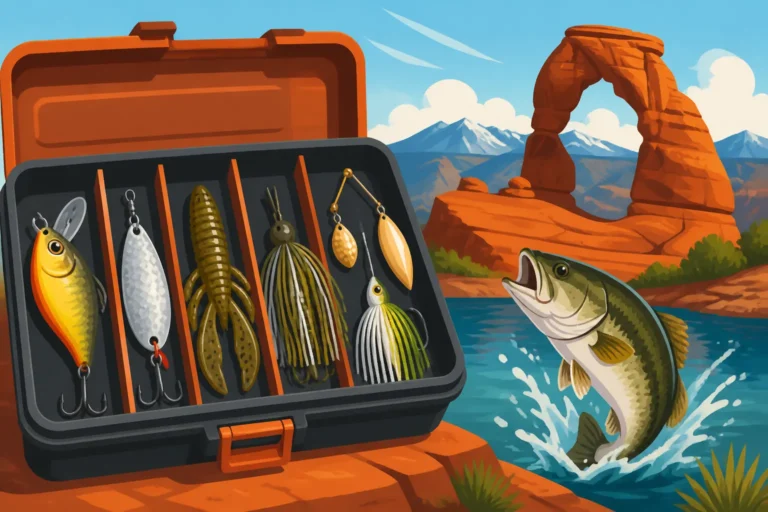
| Crankbait Type | Key Characteristics | Diving Depth (Approx.) | Ideal Conditions/Season | Retrieval Style | Common Patterns for Flaming Gorge |
|---|---|---|---|---|---|
| Squarebill | Square lip, buoyant, deflects off cover | 1-8 feet | Spring/Fall, shallow rocky areas, brush, docks | Fast retrieve, contact cover, erratic pauses | Crayfish (greens, browns, oranges), Shad, Bluegill |
| Flat-Sided | Flat body, tight wobble, subtle action | 3-12 feet | Colder water, finicky fish, clear water | Slow to medium retrieve, steady | Shad, Perch, Natural Chrome, Ghost patterns |
| Medium Diver | Moderate lip, versatile, good wobble | 8-15 feet | All seasons, points, ledges, humps, transitions | Steady retrieve, occasional pauses, bump structure | Shad, Perch, Rainbow Trout, Natural Crayfish |
| Deep Diver | Long lip, reaches deep quickly, strong wobble | 15-30+ feet | Summer, deep structure, canyon walls, main lake | Steady retrieve, grind bottom, "power reeling" | Shad, Perch, Rainbow Trout, Larger Crayfish, Darker Natural tones |
| Lipless Crankbait | No lip, internal rattles, sinks, strong vibration | Any depth (by count) | Open water, active fish, vertical jigging | Fast retrieve, rip/fall, yo-yo, burning through schools | Chrome/Blue, Shad, Perch, Gold/Black, sometimes brighter for reaction |
Techniques for Fishing Crankbaits Effectively
Having the right crankbait is only half the battle. Knowing how to present it effectively can dramatically increase your success rate at Flaming Gorge. These techniques will help you maximize your crankbait's potential.
Retrieval Speeds and Pauses
Smallmouth bass are opportunistic predators, but they can also be finicky. Varying your retrieve is key.
- Steady Retrieve: A consistent, moderate retrieve is often a great starting point, especially for covering water and locating active fish. It allows the crankbait to perform its natural wobble and dive.
- Stop-and-Go: This can be incredibly effective. Retrieve for a few cranks, then pause briefly, allowing the crankbait to float up (if it's a suspending model) or slowly sink. Many strikes occur on the pause or just as the lure starts moving again. This mimics a wounded baitfish or a crayfish trying to escape.
- Rip-and-Pause: For lipless crankbaits, or even squarebills in heavy cover, a hard "rip" of the rod tip followed by a pause can be deadly. This aggressive action often triggers reaction strikes from fish that might not commit to a steady retrieve.
- Speed Changes: Don't be afraid to occasionally speed up or slow down your retrieve within a single cast. Sometimes a sudden burst of speed is all it takes to make a following smallmouth commit. Experiment until you find what the fish are responding to on a given day. How Wind Affects Fishing on Utah Reservoirs can sometimes necessitate faster retrieves to maintain lure depth or feel.
Targeting Structure and Cover
Flaming Gorge smallmouth are structure-oriented. They live there, they hunt there, they hide there. Your goal with crankbaits is to make contact with that structure.
- Bumping and Deflecting: This is paramount. The best crankbait retrieves involve making your lure collide with rocks, ledges, or submerged timber. When a crankbait hits an object, it momentarily changes direction, often "kicking out" erratically. This sudden, unpredictable movement often triggers a predatory instinct in smallmouth. For squarebills in shallow rock gardens or deep divers grinding along a ledge, this contact is key.
- Casting Angles: Think about casting parallel to shorelines, ledges, or along the edges of points. This allows your crankbait to stay in the strike zone longer. Casting directly to structure and retrieving away from it can also be effective.
- Reading Your Electronics: A good fish finder is invaluable at Flaming Gorge. It helps you identify submerged humps, ledges, and schools of baitfish. Knowing where the structure is allows you to cast your crankbait precisely to those areas where smallmouth are likely to be ambushing prey. How to Read a Fish Finder for Utah Reservoirs is a skill worth developing for crankbait fishing here.
Gear Setup for Crankbait Fishing
The right rod, reel, and line can significantly enhance your crankbait presentation and your ability to land those aggressive smallmouth.
- Rod Selection:
- Medium-Heavy Casting Rod: For most crankbait fishing, a medium-heavy power casting rod is ideal. It has enough backbone to make long casts with heavier lures and to handle strong smallmouth, but enough tip flexibility to allow the crankbait to work properly and absorb those jarring strikes.
- Moderate Fast Action: A moderate-fast action rod is generally preferred for crankbaits. The softer tip allows the lure to achieve its natural wobble and gives the fish a split second longer to take the bait before you pull it away. It also helps prevent tearing hooks out of a fish's mouth during the fight.
- Reel Choice:
- Baitcasting Reel: A baitcasting reel is almost always the choice for crankbait fishing due to its casting distance, power, and precise control.
- Gear Ratio: A gear ratio in the 5.1:1 to 6.4:1 range is often best for crankbaits. This slower retrieve allows you to keep the lure in the strike zone longer and maintain a consistent speed, especially with deep-diving models that create a lot of drag.
- Line:
- Fluorocarbon: This is a fantastic choice for crankbaits in clear water like Flaming Gorge. Fluorocarbon is nearly invisible underwater, extremely sensitive, and has minimal stretch, allowing for excellent feel and hooksets. It also sinks, which can help your crankbait achieve maximum diving depth. Choose a pound test from 10-15 lb for most smallmouth crankbait applications.
- Monofilament (less common but has uses): Mono has more stretch, which some anglers prefer with treble hooks to prevent fish from tearing off. It also floats, which can be useful for shallow crankbaits that you want to keep higher in the water column. However, its visibility makes it less ideal for the Gorge's clear water.
- Braided Line (with fluorocarbon leader): Braid offers incredible sensitivity and casting distance. If you use braid, always tie on a fluorocarbon leader (5-10 feet) to maintain stealth in the clear water. Best Fishing Line for Utah Bass often includes these options. You can find all these gear components at stores like Bass Pro Shops or through online retailers like Amazon, ensuring you're ready for your next trip to Flaming Gorge.
Disclaimer
This article is for general informational purposes only and does not constitute professional advice. Laws, prices and regulations vary by location and change over time. Consult a qualified professional for guidance on your specific situation.