How Wind Affects Fishing on Utah Reservoirs
There's nothing quite like a beautiful, calm morning on a Utah reservoir, watching the sunrise paint the mountains as you cast a line. But let's be honest, those serene moments are often fleeting, especially in Utah. More often than not, you'll feel that familiar breeze pick up, quickly turning into a blustery, line-tangling, boat-rocking wind that can either make you want to pack it in or push you to rethink your entire approach. This guide is all about tackling that wind head-on, understanding how it impacts our beloved Utah fisheries, and equipping you with the knowledge to make the most of even the gustiest days.
Understanding Wind's Impact on Utah Reservoir Fisheries
Wind isn't just an annoyance; it's a powerful force that profoundly shapes the environment beneath the water's surface in our vast reservoirs like Strawberry, Deer Creek, or Flaming Gorge. From stirring up the depths to shifting baitfish schools, every gust creates a ripple effect that anglers need to understand. Ignoring the wind means ignoring a major piece of the puzzle.
Surface Action and Water Currents
When the wind starts to blow across a large expanse of water, it doesn't just create waves that splash against your boat or the shoreline. It initiates complex movements throughout the water column. The friction between the air and the water's surface literally drags the top layer of water, creating surface currents that push water, and everything in it, in the direction of the wind. Think about it: a sustained breeze pushing across Willard Bay isn't just affecting the surface; it's driving water towards one end of the reservoir.
These currents are incredibly important. They can stir up sediment from the bottom, especially in shallower areas or where the reservoir floor is soft and silty, like parts of Utah Lake. This can reduce water clarity, which, while sometimes a challenge, can also be a blessing. Murkier water often makes fish feel more secure and less wary, especially larger, older fish that are usually more cautious in clear conditions. On the flip side, strong winds can also create "turbidity plumes" that push baitfish and zooplankton towards a particular bank or structure, essentially concentrating the food chain for opportunistic predators. Understanding this dynamic helps you pinpoint where the buffet might be setting up.
Oxygenation and Water Temperature
Wind plays a crucial, often overlooked, role in the health and productivity of a reservoir, especially concerning oxygen levels and temperature regulation. In the warmer months, when surface waters can heat up and stratification occurs (where distinct layers of warm and cold water form), wind can be a lifesaver. It helps to break up these layers, mixing oxygen-rich surface water with deeper, sometimes oxygen-depleted zones. This process, known as aeration, is vital for fish health, particularly species that thrive in well-oxygenated environments. Imagine a hot summer day at Lake Powell; without some wind mixing, certain coves could become stagnant and uncomfortable for fish.
Conversely, wind can also influence surface temperatures. A strong, cold wind blowing across a reservoir in spring can rapidly cool down the upper layers of water, pushing warm-water species like bass into deeper, more stable thermal zones. In contrast, a warm wind might help raise surface temperatures, activating fish that prefer warmer conditions. During the fall, wind is a key player in "turnover," where the entire water column mixes as surface temperatures cool to match the deeper water. This full mixing redistributes nutrients and oxygen, resetting the system for winter and often triggering a period of increased fish activity. Knowing when this might happen, and how wind facilitates it, can give you a significant advantage.
Fish Behavior and Feeding Patterns
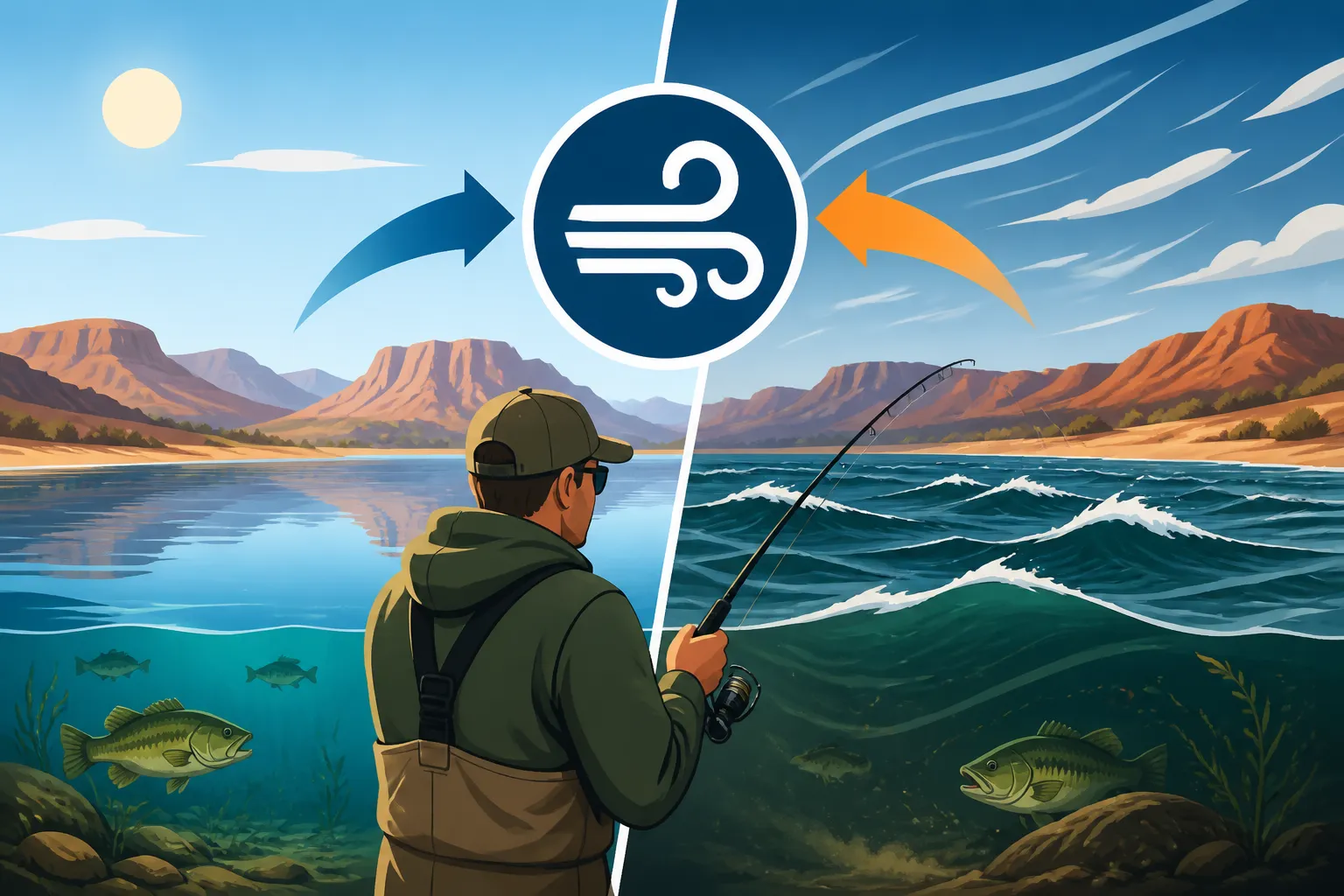
Perhaps the most direct impact of wind on your fishing day is how it alters fish behavior and, consequently, their feeding patterns. Fish are naturally opportunistic, and they quickly learn to take advantage of changes in their environment. Choppy water, created by wind, provides a natural cover for fish. It breaks up the light penetration, reduces visibility for predators (both aerial and human!), and makes it harder for prey to spot an approaching threat. This often makes fish bolder and more willing to move into shallower, wind-swept areas where they might otherwise be wary. Many anglers swear by a "wind-blown bank" for this very reason.
Furthermore, wind can disorient baitfish and push them into specific areas, creating easy targets for larger predators. A strong gust might push schools of minnows or shad against a rocky point or into a calm eddy, making them vulnerable. Walleye, for instance, are notorious for moving into wind-blown shallows to feed, using the chop as cover and capitalizing on the disoriented prey. However, too much wind can have the opposite effect, driving fish deeper to escape the turbulence, especially smaller baitfish. Understanding these nuances – when fish are using the wind to their advantage versus when they're retreating from it – is key to successful fishing on Utah's reservoirs.
Practical Strategies for Fishing in Windy Conditions
Facing a blustery day on a Utah reservoir can be daunting, but with the right mindset and a few clever adjustments, it can turn into one of your most productive trips. It's all about adapting your approach to work with the wind, not against it.
Adjusting Your Location and Approach
One of the first and most critical decisions on a windy day is where to fish. Instinct might tell you to head to the calmest coves, but often, the most productive spots are those that are at least somewhat exposed to the wind. The classic strategy is to target the "windward" side – the bank or area where the wind is directly blowing into. This is where those currents are pushing baitfish and nutrients, concentrating them for predators. At a place like Jordanelle Reservoir, a wind-swept point could be holding some aggressive smallmouth bass that are actively feeding.
However, don't dismiss the "leeward" side entirely. While the wind isn't directly hitting it, the backwash or eddy currents created as the wind-driven water circulates can also create feeding opportunities. These areas might be slightly calmer but still benefit from the nutrient and baitfish concentration. Another smart move is to look for structure that breaks the wind or creates current breaks. A submerged rock pile, a large point, or even a man-made structure like a bridge abutment can create a relatively calm "pocket" on its downstream side where fish can rest out of the main current but still ambush passing prey. When the wind is really howling, sometimes the only viable option is to find a deep, protected cove, but be aware that fish there might be less active, simply hunkering down. To learn more about navigating these conditions, check out our guide on How to Anchor a Boat in Wind on a Utah Reservoir.
Gear and Technique Adaptations
Wind impacts everything from casting accuracy to bait presentation, so your gear and techniques need to be adjusted. First, let's talk line. Monofilament, while versatile, can be a sail in the wind, making it hard to feel subtle bites. Switching to a heavier fluorocarbon line or even braided line with a fluorocarbon leader can make a huge difference. Fluorocarbon sinks faster and has less stretch, improving sensitivity, while braid has almost no stretch and cuts through the wind better. You can find a great selection of these specialized lines on Amazon, which can ship them right to your door before your next trip.
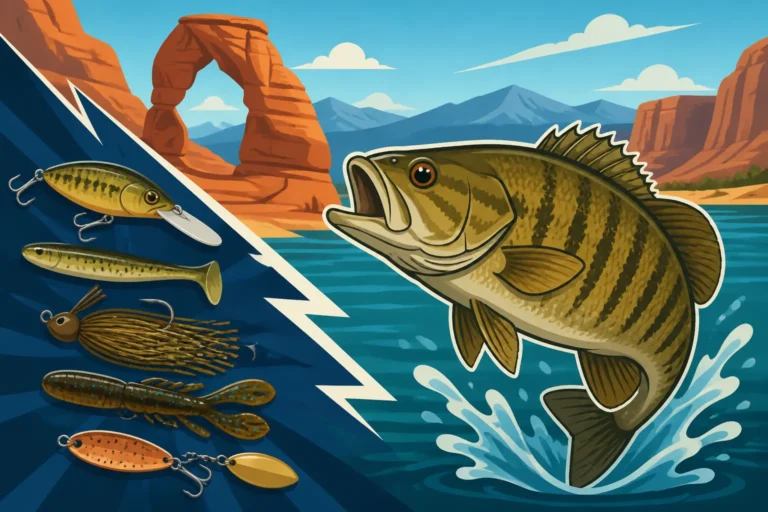
When it comes to lures, lightweight presentations are often a nightmare in the wind. Opt for heavier baits that cast further and sink faster. Jigs, heavier spoons, and weighted soft plastics are your friends. For trout fishing in open reservoirs, a Kastmaster or a heavier Daredevil spoon can be cast a mile even in a decent breeze. If you're targeting bass, heavier spinnerbaits or crankbaits that dive quickly will help you stay in the strike zone. Casting technique also matters: a low, sidearm cast reduces the amount of time your line is exposed to the wind, increasing accuracy and distance. Furthermore, managing your boat effectively with a good anchor or a powerful trolling motor is critical to holding your position and presenting your bait correctly. For more options, take a look at our Best Tackle for Utah Trout article.
Boat Handling and Safety Precautions
Fishing from a boat in windy conditions on a large Utah reservoir like Bear Lake requires extra caution and a solid strategy. Your number one priority should always be safety. Before you even launch, check the weather forecast meticulously. High winds can quickly turn calm waters into dangerous, white-capped seas that can swamp smaller vessels or make navigation incredibly difficult. Don't be afraid to postpone or choose a more sheltered location if conditions look too rough.
Once on the water, having the right equipment is paramount. A reliable, heavy anchor with plenty of rode is essential for holding your position on a wind-swept flat or point. Even better, a bow-mounted, GPS-enabled trolling motor (like those from Minn Kota or Garmin) can be a game-changer. These allow you to "spot-lock," holding your boat in place even against strong currents and gusts, freeing you up to focus on fishing. Without such technology, you'll be constantly correcting your position, losing valuable fishing time. Consider investing in one of the Best Boats for Utah Reservoir Fishing that can handle choppy waters. Additionally, if you're drifting, a drift sock or sea anchor can help slow your boat down and orient it correctly, giving you a more controlled presentation. Always ensure all your safety gear – life jackets, throwable flotation devices, and a fully charged cell phone – is easily accessible.
When the Wind is Your Friend (and When It's Not)
It's easy to see wind as the enemy, but experienced Utah anglers know that the right amount of breeze can be your best friend. However, there's a fine line between a productive chop and conditions that are simply too dangerous or unfishable.
The Good Wind: Benefits for Anglers
Let's start with the positives! A moderate, consistent breeze (think 5-15 mph) often creates ideal fishing conditions. As we discussed, the chop on the surface disorients baitfish, pushes them into predictable areas, and provides excellent cover for predatory fish like walleye or largemouth bass at places like Utah Lake or Deer Creek Reservoir. This low-light effect makes fish feel more secure, encouraging them to move into shallower water and feed more aggressively. For instance, the fishing often really picks up for kokanee salmon when there's a slight ripple on the surface, as it seems to encourage them to chase trolled lures.
Furthermore, this "good wind" introduces more oxygen into the water, which can invigorate fish, especially in warmer months. It can also create subtle currents that help distribute food sources, drawing fish out of their hiding spots. Many of the best fishing days I've had on Utah's larger reservoirs, targeting species like rainbow trout or even the elusive lake trout, have been on days with a consistent, moderate chop. It's enough to create movement and cover without being so strong that it makes boat control or casting impossible. For more insights on how fish react, check out our general guide on How to Catch More Fish in Utah.
The Bad Wind: Challenges and When to Stay Home
On the flip side, there absolutely comes a point when the wind shifts from an advantage to a serious detriment. High winds, typically anything consistently over 20 mph, or even sustained gusts higher than that, present significant safety hazards. Large waves can swamp small boats, make standing difficult, and create dangerous conditions for retrieval of fish or gear. At reservoirs like Flaming Gorge, winds can whip up massive waves that make even large vessels uncomfortable and unsafe.
Beyond safety, extremely strong winds make fishing nearly impossible. Casting is a struggle, your line becomes a giant sail, and feeling subtle bites is a distant dream. Maintaining boat control, even with a powerful trolling motor, becomes an exhausting battle. Moreover, severe wind can churn up so much sediment that the water becomes overly turbid, making it difficult for fish to see your bait and for you to understand what's happening beneath the surface. For delicate techniques like fly fishing on a small lake or even some types of Utah Trout Fishing Tips, strong wind renders them completely ineffective. If the wind is relentlessly pushing against your every effort, and especially if it's impacting your safety, it's always best to call it a day, regroup, and come back when conditions are more favorable. Sometimes, the best fishing decision is to not go fishing at all.
Choosing the Right Gear to Combat Wind
Just as a carpenter needs the right tools for a challenging job, an angler facing windy Utah reservoir conditions needs specific gear that can stand up to the challenge. Equipping yourself properly can make the difference between a frustrating day and a successful one.
Rods, Reels, and Line
When the wind is blowing, your rod and reel setup become critical. For rods, consider something with a bit more backbone and a slightly faster action. A stiffer rod will give you more leverage and control when casting into or across the wind, allowing for more accurate presentations. Shorter rods (under 7 feet) can sometimes be easier to manage in tight quarters or when casting from a boat, as there's less rod tip exposed to catch the wind. You might find a good selection of these on Amazon, often with detailed descriptions to help you choose.
For reels, smooth and reliable drag is always important, but it's especially noticeable when wind puts extra pressure on your line. A reel that can handle long casts smoothly and retrieve line efficiently is a huge asset. As for line, this is arguably your most important choice for windy conditions. Forget about light mono. Instead, embrace braided line, which has a smaller diameter for its strength, allowing it to cut through the wind with less resistance. Pair it with a fluorocarbon leader for abrasion resistance and invisibility. Fluorocarbon also sinks faster than mono, helping your bait get down quicker and stay there, even when the surface is turbulent. To delve deeper into specific setups, check out our Utah Fishing Gear for Beginners guide, which covers foundational gear that you can then upgrade for specific challenges like wind.
Anchoring and Boat Control Tools
Effective boat control is non-negotiable in windy conditions. Without it, you'll spend more time fighting your boat than fishing. For serious reservoir anglers, investing in advanced anchoring and boat control tools can be a game-changer. Shallow water anchors, like those from Power-Pole or Talon, are fantastic for holding position in depths up to 15 feet. They silently deploy a spike into the lakebed, keeping your boat locked down.
For deeper water, you need a robust conventional anchoring system. This means a heavy anchor (appropriate for your boat size and the lakebed type), plenty of chain (at least as much as the boat's length to help the anchor dig in), and a long rode (rope or anchor line) with a scope ratio of at least 7:1 (meaning for every 10 feet of depth, you need 70 feet of line deployed). This ensures your anchor has enough angle to hold securely.
However, the gold standard for boat control in wind is often a GPS-enabled trolling motor. Brands like Minn Kota's Terrova or Ultrex, or Garmin's Force, offer "spot-lock" technology that uses GPS to automatically hold your boat's position, even in strong winds and currents. This frees you up to concentrate on fishing, casting, and fighting fish without constantly adjusting your course. These motors are powerful and quiet, making them indispensable for many serious anglers on our big Utah reservoirs. Remember, for those interested in paddle craft, our Utah Kayak Fishing Gear Guide also touches on anchoring tactics for smaller vessels.
Essential Accessories for Windy Days
Beyond your primary rod, reel, and boat setup, a few key accessories can significantly improve your comfort and success on a windy day. First, polarized sunglasses are crucial. Wind-driven chop often creates intense glare on the water, making it incredibly difficult to see subtle line movements or structure. Quality polarized lenses cut through this glare, improving visibility and reducing eye strain. Many top brands are readily available on Amazon.
Next, dressing in layers with wind-resistant outerwear is essential for comfort. Even on a seemingly warm day, sustained wind can rapidly chill you to the bone. A good quality windbreaker or shell jacket can make a huge difference in staying warm and focused. Finally, a pair of multi-tool pliers is indispensable. Wind can cause tangles, knots, and snarls, and having a tool for cutting line, crimping sleeves, or removing stubborn hooks efficiently will save you a lot of frustration. Keep a good pair tethered to your vest or belt, so they don't blow away! These thoughtful additions to your gear bag will ensure you're well-prepared for whatever the Utah winds decide to throw your way.
Disclaimer
This article is for general informational purposes only and does not constitute professional advice. Laws, prices and regulations vary by location and change over time. Consult a qualified professional for guidance on your specific situation.