Utah Trolling Techniques for Lake Trout
There's nothing quite like the thrill of a big lake trout hitting your line in the deep, cold waters of Utah. But let's be honest, successfully targeting these magnificent fish through trolling can feel like an art form, often leaving anglers frustrated and empty-handed if they don't know the nuances. This comprehensive guide is designed to demystify the process, walking you through everything from understanding lake trout behavior to choosing the right gear, mastering trolling techniques, and adapting to seasonal changes, so you can increase your chances of landing that trophy fish.
Understanding Lake Trout and Their Habits in Utah
Before you can even think about dropping a line, it's crucial to understand the fish you're after. Lake trout, often called Mackinaw in Utah, are a truly fascinating species, and their habits dictate how and where we effectively troll for them. They're not like your typical stocked rainbow trout; these are apex predators of the deep.
Life Cycle and Preferred Habitat
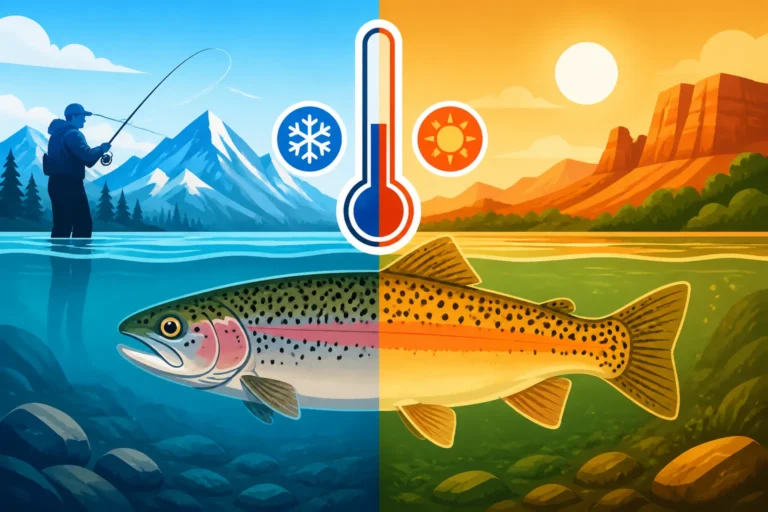
Lake trout are long-lived, slow-growing fish, which is one of the reasons they can reach such immense sizes in waters like Flaming Gorge Reservoir. They prefer cold, oxygen-rich water, typically staying in temperatures ranging from 45 to 55 degrees Fahrenheit. This preference for cold water means that as surface temperatures warm, lake trout retreat to deeper sections of reservoirs and lakes where these conditions persist. You'll rarely find them cruising the warm shallows in the middle of summer, unless it's very early in the morning or late in the evening in specific, deep-water structure-rich areas. Their habitat is largely defined by depth, structure, and the availability of their primary food sources, often smaller fish like kokanee salmon, Utah chub, or even smaller lake trout. Understanding their need for thermal refuge is paramount to locating them. They spawn in the fall, typically over rocky shoals or gravel beds in deep water, often migrating from their summer haunts to these specific locations.
Seasonal Movements and Feeding Patterns
Lake trout exhibit distinct seasonal movements that every troller needs to recognize. In early spring, shortly after ice-off, they might be found in shallower waters, sometimes even cruising near the surface or along shorelines as they shake off the winter doldrums and feed on anything available. This is a fantastic time for more accessible trolling without needing extreme depths. As summer progresses, and the sun bakes the surface, they move into the deeper, cooler parts of the lake. This is when the term "deep-water trolling" truly applies. They'll hold near thermoclines, which are layers in the water column where temperature changes rapidly, or hug the bottom near ledges, submerged islands, and old river channels. During the fall, as water temperatures begin to drop again, they can become incredibly active, feeding aggressively in preparation for spawning and the colder winter months. They might move shallower again, chasing baitfish that are also moving towards their own spawning grounds or wintering areas. Winter, if you're brave enough for ice fishing, sees them holding in specific deep structures, but for trolling, you're mostly concerned with the open-water seasons. Each season demands a different approach, both in terms of depth and lure presentation, making adaptability a key trait for successful lake trout anglers.
Key Utah Lake Trout Fisheries
When it comes to prime lake trout trolling, Utah offers a few standout destinations that every angler should know. Far and away, Flaming Gorge Reservoir is the reigning champion for trophy lake trout. This massive, deep reservoir on the Utah-Wyoming border is famous for producing truly enormous Mackinaw, including the state record. Its vast depths and abundant forage create the perfect environment for these fish to grow to incredible sizes. Anglers here often target them at depths well over 100 feet. Another significant fishery is Bear Lake, though it's known more for its unique Bear Lake Cutthroat Trout and Bonneville Cisco, it also holds good populations of lake trout. While not typically producing the giants seen in Flaming Gorge, Bear Lake's lake trout provide excellent sport. Finally, Strawberry Reservoir is renowned for its productive trout fishing, primarily for cutthroat and rainbow trout, but it also holds a healthy population of tiger trout and some lake trout, though they are not the primary target species for most trollers here. For detailed information on these incredible fishing destinations, check out our in-depth guides like the Flaming Gorge Fishing Guide, Bear Lake Fishing Guide, and Strawberry Reservoir Fishing Guide. Each lake presents unique challenges and rewards, but Flaming Gorge remains the premier destination for serious lake trout trolling.
Essential Trolling Gear for Utah Lake Trout
Trolling for lake trout, especially the giants of Flaming Gorge, isn't something you can do effectively with a basic panfish setup. These fish are big, powerful, and live in deep water, demanding specialized gear that can handle the stress and deliver your lures to the right depth. Investing in the right equipment will save you a lot of heartache and increase your chances of success.
Rod and Reel Combinations
For serious lake trout trolling, you'll want a rod and reel combo that prioritizes strength and durability. When you're pulling heavy weights or large lures at depths of 100+ feet, and then fighting a fish that could be 20, 30, or even 50 pounds, your gear needs to be up to the task.
- Rods: Look for trolling rods in the 7 to 9-foot range, with a medium-heavy to heavy action and a strong backbone. Fiberglass or composite rods are often preferred for their durability and parabolic bend, which helps absorb the shock of a strike and the strain of heavy weights. A good downrigger rod will have a softer tip to absorb the pressure from the downrigger release clip, but enough power to handle the fight. You can find excellent options on Amazon from brands like Okuma, Daiwa, or Shimano that are specifically designed for downrigging. For more general advice on choosing the right stick, you might find our guide on Best Fishing Rods for Utah Anglers helpful.
- Reels: A sturdy, level-wind conventional reel is the standard for lake trout trolling. These reels are built for cranking power and line capacity. A good quality reel with a smooth, reliable drag system is non-negotiable. You'll want a reel that can comfortably hold at least 300 yards of 20-30 lb test monofilament or braided line. Models like the Daiwa Sealine, Shimano Tekota, or Penn Warfare are popular choices for their robust construction and proven performance in deep-water applications. Line counters are a huge bonus, if not a necessity, helping you precisely manage your line out, which is critical for replicating successful depths.
Trolling Lines and Leaders
The type of line you use can significantly impact your trolling success, influencing everything from depth control to sensitivity and strength.
- Main Line: For downrigger fishing, a high-quality braided line in the 30-50 lb test range is often preferred as your main line. Braid has almost no stretch, which gives you incredible sensitivity to feel light bites and allows for instant hooksets, even at extreme depths. Its thin diameter also cuts through the water better than mono, reducing blowback (the angle of your line behind the boat). If you're using lead core line, which is designed to sink without additional weight, you'll spool it directly onto your reel. Lead core line is color-coded, with each color typically representing 10 yards, helping you gauge depth based on how many "colors" you have out.
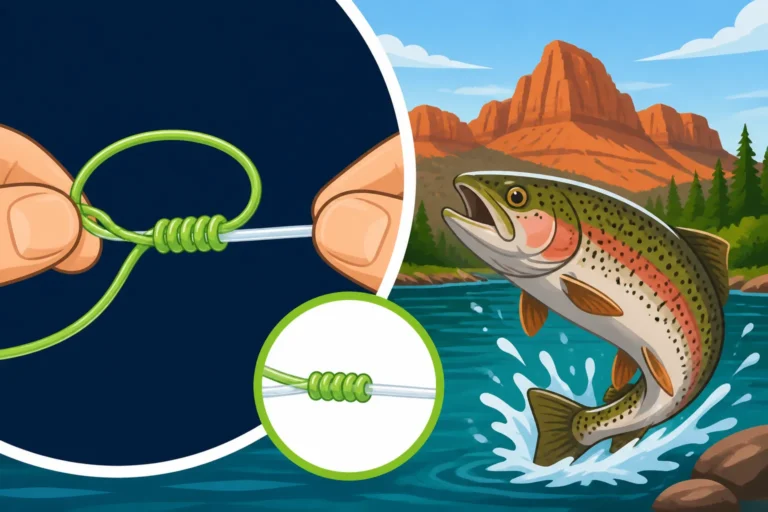
- Leaders: A fluorocarbon leader is highly recommended. Fluorocarbon is nearly invisible underwater, which can be a huge advantage with line-shy lake trout. It also offers good abrasion resistance, essential when fishing around rocky structure. A 20-30 lb test fluorocarbon leader, typically 10-20 feet long, is a good starting point. You can attach it to your main braided line using a strong knot like an Albright or a uni-to-uni knot, or use a high-quality swivel. The length of your leader can be adjusted; longer leaders can provide more natural lure action, while shorter leaders offer more direct control.
Downriggers and Planer Boards
These specialized tools are indispensable for getting your lures to precise depths and spreading your lines, especially when targeting deep-dwelling lake trout.
- Downriggers: A downrigger is essentially a small winch system that uses a heavy ball (typically 8-15 lbs) to carry your fishing line, with an attached lure, down to a specific depth. Your line is held by a release clip on the downrigger cable. When a fish strikes, the line pops free from the clip, and you fight the fish directly on your rod and reel. This allows you to fish much lighter line than if you were using lead core or heavy divers, which means a better fight and a more natural lure presentation. Manual downriggers are more affordable and perfectly functional for many anglers, but electric downriggers offer push-button ease, making adjustments quick and effortless, especially when solo fishing or rapidly changing depths. Brands like Scotty, Cannon, and Walker often top the list. For more specific advice on using these tools, check out our detailed guide on How to Downrig for Lake Trout. You can find various models and accessories, like spare release clips or additional weights, on Amazon to enhance your setup.
- Planer Boards: While downriggers are for depth, planer boards are for width. They are essentially floats designed to pull your line away from the boat, allowing you to cover a wider swath of water. This is particularly useful for presenting lures to fish that might be spooked by the boat's shadow or engine noise. They're typically used for shallower trolling but can be combined with lead core or diving devices to get lures down while still achieving spread. While less common for the deepest lake trout trolling, they are incredibly effective for targeting shallower-holding fish, or when used to run lines in conjunction with downriggers to maximize your spread.
Mastering Trolling Lures and Baits
Once you have your gear dialed in, the next crucial step is selecting the right lures and baits that will entice those big lake trout. These fish can be picky, so having a diverse arsenal and knowing when to deploy each option is vital.
Best Lures for Lake Trout
Lake trout are opportunistic predators, but they often key in on specific forage. Matching your lure to the prevalent baitfish in the waters you're fishing is often the most effective strategy.
- Spoons: Large trolling spoons are classic lake trout producers. Their erratic wobbling action imitates injured baitfish, making them irresistible. Popular colors often include silver, gold, brass, blue/silver, green/silver, and watermelon patterns. Sizes typically range from 3 to 6 inches, with some anglers using even larger spoons for trophy fish. Brands like Dodger, Stingray, and Dardevle are timeless, but modern spoons from Northern King, ProKing, and Michigan Stinger also excel. The key is to find a spoon with a good flutter at your chosen trolling speed.
- Plugs and Stickbaits: These lures are designed to imitate larger baitfish, often with a tighter wobble than spoons. Deep-diving crankbaits and stickbaits that reach substantial depths on their own can be very effective, especially when paired with downriggers or lead core line for extra depth. Jointed models can offer an even more realistic swimming action. Rapala, Storm, and Bomber make excellent trolling plugs. Look for natural baitfish patterns like perch, shad, or trout, as well as brighter colors like firetiger or hot pink, especially in stained water or during low light conditions.
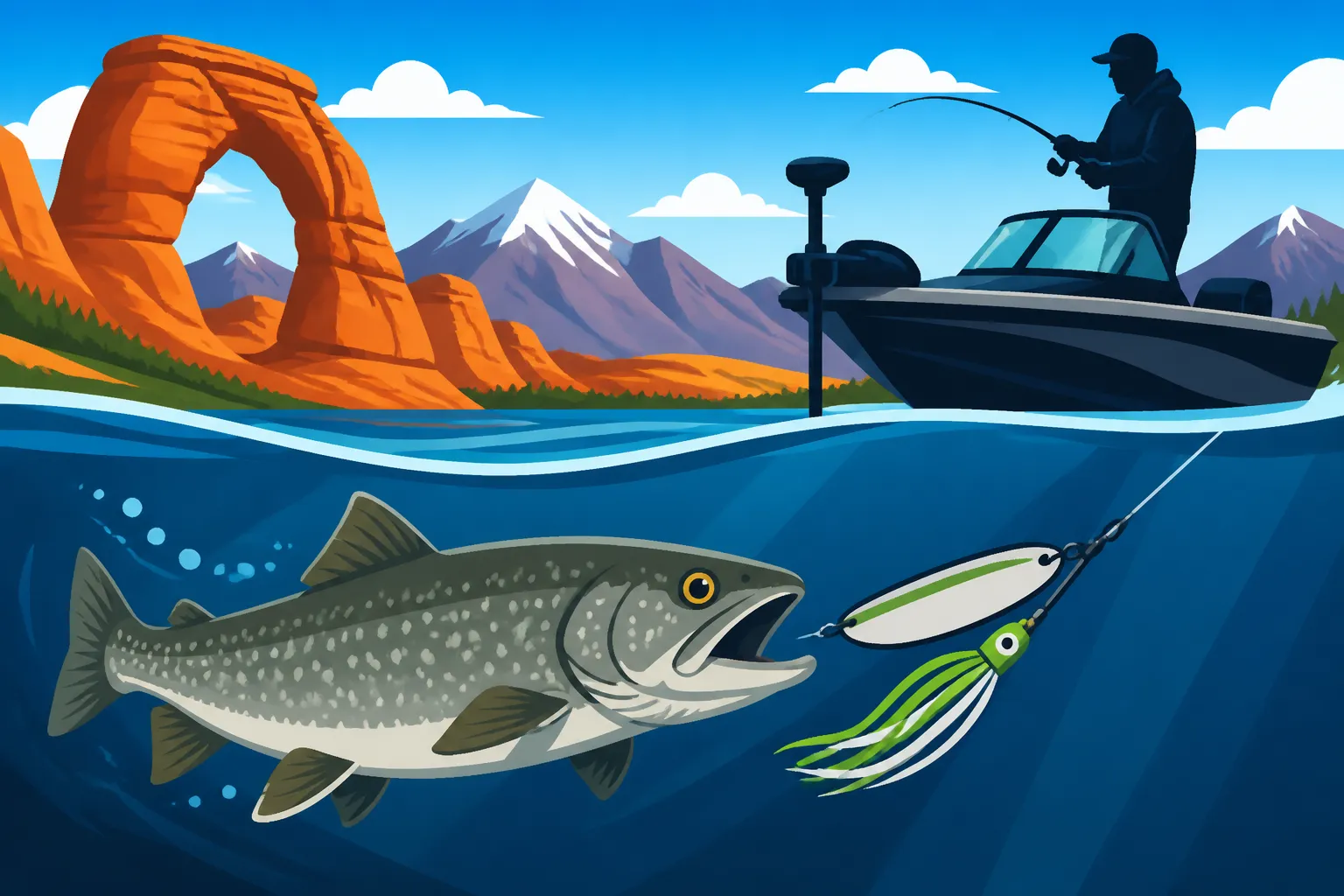
- Squid and Tube Lures: For lake trout, especially at Flaming Gorge, these are absolute killers, particularly when tipped with a piece of bait. A hootchie (octopus-skirted lure) or a specialized trolling tube, often paired with a dodger or flasher, creates a tremendous amount of attraction and a convincing baitfish profile. Colors like white, green, chartreuse, and blue are popular. The action of the dodger or flasher in front of the squid/tube adds to the illusion, mimicking a school of baitfish or an injured fish struggling. This combination is particularly effective for tempting larger, less aggressive fish.
Scent and Attractants
Lake trout have a keen sense of smell, and incorporating scent into your presentation can often make the difference between a follow and a strike, especially on tough days.
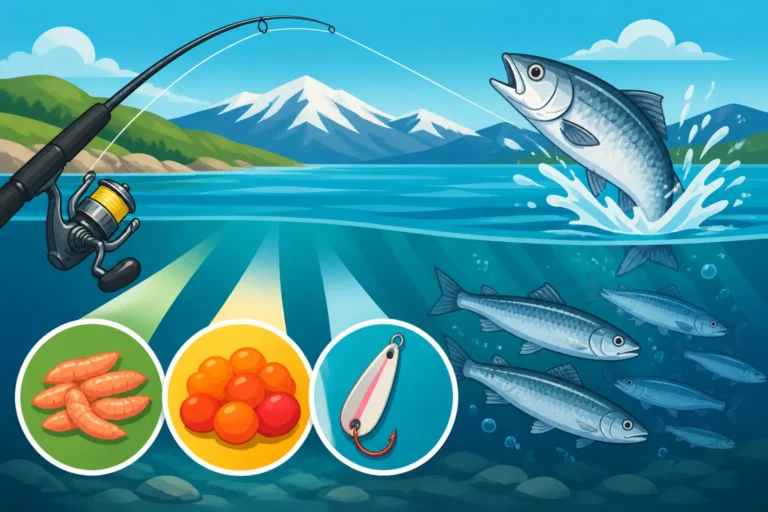
- Scent Gels and Sprays: Many anglers swear by scent attractants. These come in various formulas designed to mimic natural baitfish, crawfish, or even fish eggs. You can apply gels directly to your lures or spray them on. Pro-Cure, Smelly Jelly, and Atlas Mike's are popular brands. Reapply frequently, as the scent washes off over time.
- Cut Bait Tipping: This is probably the most common and effective use of scent for lake trout. Tipping your spoons, plugs, or especially squid/tube lures with a small piece of baitfish (such as sucker meat, anchovy, or even a piece of an existing catch like a chub or kokanee) adds natural scent, texture, and flavor. A small, thin strip of meat, maybe 1/2 to 1 inch long, is usually enough. The scent trail it leaves can draw in fish from a distance and encourage them to commit to the bite. Just be mindful of local regulations regarding bait use; some waters have restrictions on live bait or certain baitfish species.
Live and Cut Bait Strategies
While lures are great, sometimes nothing beats natural bait, especially for big, wary lake trout.
- Live Bait: If permitted, live bait can be incredibly effective. Small kokanee, chub, or other baitfish, rigged to swim naturally behind a flasher or dodger, are often irresistible. This usually involves specialized rigging, like a quick-strike rig with two treble hooks, designed to hold the baitfish horizontally and trigger strikes. Ensure your baitfish are lively and well-presented. Check the Utah Bait Fish Rules for Live Bait before you head out, as regulations can vary by waterbody.
- Cut Bait: As mentioned before, cut bait is a powerful attractant. Beyond just tipping lures, you can also use larger pieces of cut bait, or even whole dead baitfish, rigged to spin or wobble. A popular technique involves rigging a whole or half baitfish on a snelled hook or a harness designed to impart a natural swimming or dying action when trolled. The scent and realistic profile of cut bait can be particularly good for those slow, challenging days or when targeting the biggest, most cautious fish. Keep your cut bait fresh and change it frequently for maximum effectiveness.
Optimal Trolling Speeds and Depths
Trolling isn't just about pulling a lure through the water; it's about doing it at the right speed and, crucially, at the right depth. These two factors are interconnected and often determine your success.
Matching Speed to Lure Action
Every lure has an optimal trolling speed at which it exhibits its best action. Too fast, and a spoon might blow out (spin uncontrollably); too slow, and a plug might just drag lifelessly.
- Spoons: Generally, spoons work best at slower to moderate speeds, typically between 1.5 to 2.5 miles per hour (mph). Watch your rod tip or your fish finder's transducer for vibrations; you want to see a consistent, rhythmic wobble. The specific speed will depend on the size and design of the spoon.
- Plugs and Stickbaits: These often perform well at slightly higher speeds, from 2.0 to 3.5 mph, though some can be effective at slower speeds too. You're looking for that tight, wiggling action that mimics a swimming baitfish. If your plug is diving erratically or not tracking straight, adjust your speed or check for fouling.
- Squid and Tube Rigs: When paired with flashers or dodgers, these typically require slower speeds, often 1.0 to 2.0 mph. The dodger or flasher is designed to have a strong, rocking action at these slower speeds, which in turn imparts action to the trailing squid or tube. Going too fast will make the dodger spin rather than rock, and the lure will look unnatural.
It's always a good idea to periodically pull your lures up near the surface and observe their action at your current trolling speed. If they don't look good to you, they won't look good to the fish. Also, keep an eye on your boat's speed via GPS, as current or wind can affect your actual speed over ground.
Reading Water Temperature and Thermoclines
Lake trout are extremely sensitive to water temperature. Finding the ideal temperature zone is often the key to locating them, especially during the warmer months.
- Thermocline Importance: In stratified lakes (which most deep Utah reservoirs become in summer), a thermocline forms a distinct layer where the water temperature changes rapidly. Lake trout often suspend in or just below the thermocline, as this zone provides their preferred cold, oxygenated water while also being close to baitfish that might be holding in warmer layers. A good fish finder can help you identify these temperature layers, often appearing as a distinct line on your sonar screen.
- Using a Temperature Gauge: A portable water temperature gauge, or one integrated into your fish finder's transducer, can be invaluable. Don't just check surface temperature; if possible, get a temperature probe that can read temps at different depths. This allows you to pinpoint the exact depth of the cooler water that lake trout prefer. Remember, their optimal range is generally 45-55°F (7-13°C). If you find this temperature zone, that's where you should start presenting your lures.
Adjusting Depth with Downriggers and Lead Core
Delivering your lure to the correct depth is non-negotiable for lake trout trolling. There are several tools and techniques to achieve this precision.
- Downriggers: These are the gold standard for depth control. As covered in How Deep Should You Set a Downrigger for Flaming Gorge Lake Trout?, downriggers allow you to precisely dial in your lure's depth. You simply set the downrigger ball to the desired depth on its counter, clip your line in, and let it down. This direct control means your lure is consistently at the fish's level. Regularly check your downrigger's counter calibration and ensure your release clips are working properly. If you're marking fish at 80 feet, set your downrigger to 80 feet. It's that simple, but incredibly effective.
- Lead Core Line: This specialized line has a lead core encased in a braided sheath, designed to sink at a predictable rate without additional weight. Each "color" (typically 10 yards) of lead core generally sinks a certain amount, usually around 5 feet, depending on line diameter and trolling speed. For example, if you have 10 colors out, your lure might be around 50 feet deep. It requires a bit more trial and error to determine precise depth, but it's a very effective way to get lures down, especially in the 20-70 foot range, or for running additional lines shallower than your downriggers.
- Diving Planers and Discs: These devices, like Dipsy Divers or Jet Divers, are attached directly to your main line and use hydrodynamics to pull your lure down to a predetermined depth. They come in various sizes and can be adjusted to dive deeper or run to the side. While not as precise as downriggers, they are simpler to deploy and can be very useful for getting lures down without heavy weights or specialized rods. They're often used for mid-range depths or to spread lines horizontally.
Using a combination of these methods allows you to present lures at multiple depths and cover more of the water column, increasing your chances of intercepting actively feeding fish. Remember to always cross-reference your depth settings with your fish finder to confirm where your lures are in relation to any marked fish or structure.
Advanced Trolling Strategies and Tactics
Once you've mastered the basics of gear and depth, it's time to refine your approach with more advanced strategies. Lake trout are cunning, and sometimes it takes a bit of extra finesse to convince them to bite.
Contour Trolling and Structure Fishing
Lake trout are inherently structure-oriented fish, even in vast reservoirs. They relate to underwater features just like terrestrial animals relate to terrain.
- Following the Structure: Instead of just trolling in straight lines across open water, focus on contour trolling. This means using your GPS and fish finder to follow specific depth contours, ledges, drop-offs, or submerged points. Lake trout will often patrol these breaks, waiting to ambush baitfish. For example, if you're marking fish along a 70-foot depth contour, try to keep your boat, and therefore your lures, consistently along that 70-foot line.
- Targeting Key Features: Look for underwater islands, humps, old river channels, and sudden depth changes. These "bottlenecks" and feeding stations are prime areas where lake trout will congregate. When you find a promising piece of structure, make multiple passes over and around it, varying your approach slightly each time. Don't be afraid to make turns and changes in speed when you hit these areas, as often a change in lure action can trigger a strike.
- GPS Mapping: Modern fish finders with detailed GPS mapping are invaluable here. They allow you to see the underwater topography in detail, mark waypoints where you get bites, and precisely navigate those productive contours. Reviewing maps before you go out can help you identify these potential hotspots, like the renowned Flaming Gorge Trophy Lake Trout Spots.
Trolling Patterns and Turns
Straight-line trolling can be effective, but incorporating deliberate turns and speed changes can often trigger strikes from otherwise hesitant fish.
- S-Turns and Zig-Zags: Instead of maintaining a perfectly straight course, introduce gentle S-turns or zig-zag patterns. As your boat turns, the lures on the inside of the turn will slow down and drop slightly, while the lures on the outside will speed up and rise. This change in speed and depth can create an erratic action that often triggers a predatory response. Experiment with the tightness of your turns; sometimes a wide, sweeping turn is best, other times a sharper turn can be more effective.
- Speed Bursts and Pauses: Just like turns, brief changes in trolling speed can be highly effective. Try speeding up for 30-60 seconds, then slowing back down, or even pausing for a few seconds if using a highly buoyant lure that will rise during the pause. These sudden changes in presentation mimic an injured or fleeing baitfish, which can trigger an aggressive strike. Observe how the fish react to different speed changes and adjust accordingly.
- Prop Wash Advantage: Sometimes, trolling your lures directly in the turbulent prop wash behind your boat can be productive. The disturbance and aeration can attract fish, and the prop wash itself can hide your line and present the lure more naturally. Experiment with how far back your lures are to see what the fish prefer on any given day.
Using Electronics for Trolling Success
Your fish finder and GPS are far more than just navigation tools; they are vital for effective lake trout trolling. Learning to interpret the information they provide will significantly boost your catch rate.
- Interpreting Sonar Readings: Look for more than just arching fish symbols. Pay attention to baitfish schools, often appearing as dense clouds. Where there's bait, there are often predators. Also, watch for the thermocline as discussed earlier. Understand the bottom composition (rocky, soft, etc.) from the sonar return, as lake trout relate differently to various substrates. A good quality unit, like those from Humminbird or Lowrance, offers incredible detail. Our guide on How to Read a Fish Finder for Utah Reservoirs can provide even more insight into maximizing this crucial tool.
- Marking Waypoints: Whenever you get a strike, mark a waypoint on your GPS immediately. This allows you to return to that exact spot later. If you catch multiple fish in a small area, it indicates a productive "patch" or piece of structure that you can target repeatedly. Over time, your saved waypoints will create a valuable map of your personal honey holes.
- Charting and Mapping: Use your GPS charting capabilities to your advantage. Study the contour maps to identify promising structure before you even leave the dock. As you fish, you can mark productive trolling paths, depth contours, and even identify subtle changes in the bottom that hold fish. Some advanced units allow you to create your own custom maps of the bottom, giving you an unparalleled view of the underwater world.
Seasonal Considerations for Lake Trout Trolling
Lake trout, like most fish, adapt their behavior to the changing seasons. What works in spring won't necessarily work in the dog days of summer, and vice-versa. Being adaptable and understanding these seasonal shifts is a cornerstone of consistent success.
Spring and Early Summer Tactics
As the ice retreats and water temperatures begin their gradual ascent, lake trout emerge from their deep winter haunts and often become more accessible. This is a fantastic time for active trolling.
- Post-Ice-Off Aggression: In early spring, shortly after ice-off, lake trout can be surprisingly shallow and aggressive. They're often hungry and willing to chase lures that imitate baitfish moving into warmer areas. You might find them in the top 30-50 feet of the water column, cruising points, flats, and even near creek mouths where warmer water or runoff is entering the lake. Trolling spoons and stickbaits that cover this mid-range depth can be very effective.
- Shallow Water Opportunities: Don't be afraid to try some shallower trolling runs, perhaps with lead core or even just long-lining deeper diving crankbaits without a downrigger, particularly in the mornings or evenings. The fish haven't fully committed to the deep summer patterns yet, and baitfish might still be abundant in more accessible areas. Pay close attention to any areas that warm up faster, like sun-exposed bays or rocky banks.
- Transition Period: As spring transitions into early summer, the lake trout will slowly begin their migration deeper as surface waters warm. This is a transitional period, and you might find fish at a wider range of depths. Start shallow and work your way deeper until you find the productive zone. This is a great time to run multiple lines at different depths to "probe" the water column, using downriggers for the deeper lines and lead core or diving planes for mid-depths.
Mid-Summer Deep Water Trolling
Once summer hits full swing and the sun has warmed the upper layers of the water, lake trout retreat to the coldest, deepest parts of the reservoir. This is when deep-water trolling truly shines.
- Targeting the Thermocline and Bottom: During mid-summer, the thermocline becomes your best friend. Lake trout will often suspend in or just below it, or hug tight to the bottom in deep areas where temperatures remain stable and cold. Depths of 60 to 150+ feet are common at Flaming Gorge during this time. Downriggers are absolutely essential to consistently place your lures in these deep zones. Don't be afraid to fish just a few feet off the bottom or directly in the densest part of the thermocline.
- Large Lures and Baits: Bigger fish often prefer bigger meals. Mid-summer is a prime time to use larger spoons, plugs, and especially dodger/squid or dodger/tube combinations tipped with generous pieces of cut bait. These presentations create a larger profile and scent trail that can attract the attention of a lethargic trophy lake trout.
- Slow and Steady: Sometimes, a slower trolling speed can be more effective in deep summer waters, especially for those monster Mackinaw. The fish might be less active and prefer an easier target. Focus on meticulous depth control and subtle lure action. Early mornings and late evenings can still offer slightly better bite windows as light penetration lessens, but mid-day deep trolling is often productive as long as you find the fish.
Fall Feeding Frenzy Strategies
As autumn approaches and water temperatures begin to drop, lake trout often enter a pre-spawn feeding frenzy, becoming incredibly active and aggressive. This is arguably one of the best times of year to target them.
- Aggressive Foraging: In the fall, lake trout are packing on calories for the upcoming spawn and winter. They become less depth-sensitive than in summer and will actively chase down baitfish. You might find them shallower than in summer, but still relating to deep structure where they'll eventually spawn. Their increased activity means you can often troll at slightly faster speeds and use more aggressive lure presentations.
- Shallow to Mid-Depth Movement: As the entire water column cools down, the lake trout might spread out more. You might find them anywhere from 30 to 100 feet, depending on the specific lake and conditions. Focus on trolling areas with rocky points, humps, and shoals where they will eventually spawn, as they start to stage in these areas.
- Diverse Lure Selection: Fall is a great time to experiment with a variety of lures. Large spoons, diving crankbaits, and dodger/squid combos all have their place. Don't forget to tip your lures with cut bait, as the added scent can be irresistible to actively feeding fish. The fish are often more willing to travel to strike a lure, so covering water efficiently is key. Keep an eye on the calendar for spawning closures or special regulations, as outlined in the Utah Fishing Season Dates and Limits.
Common Challenges and Troubleshooting
Even with the best gear and knowledge, trolling for lake trout can present its fair share of challenges. Being able to quickly diagnose and adapt to problems on the water is a hallmark of an experienced angler.
Dealing with Finicky Biters
We've all been there: you're marking fish, everything looks perfect, but they just won't commit. This often means you're dealing with finicky biters.
- Size Down, or Size Up: Counterintuitively, if fish are being finicky with your standard presentation, sometimes going to a smaller lure can trigger bites, mimicking a less threatening snack. Other times, a larger lure with a strong profile can annoy them into striking out of aggression. Experimentation is key.
- Slow Down or Speed Up: Just a slight adjustment in trolling speed, as little as 0.1 or 0.2 mph, can make a huge difference in how your lure swims and whether a fish decides to strike. Try varying your speed in subtle increments. Also, remember those S-turns and speed bursts.
- Change Colors and Patterns: Fish can get "conditioned" to certain colors, or simply prefer different shades on different days based on light penetration, water clarity, and their mood. If a pattern isn't working, try a completely different color scheme or lure style. If natural colors aren't working, try something bright and flashy.
- Add Scent: This is where scent attractants and cut bait really shine. A subtle scent trail can be just enough to convince a hesitant lake trout to take a closer look and commit to the strike. Ensure your cut bait is fresh and frequently replaced.
Avoiding Snags and Fouls
Trolling deep, especially around structure, inevitably leads to snags and fouled lines. Minimizing these frustrating occurrences saves you time, money, and prevents missed opportunities.
- Watch Your Fish Finder Religiously: Your fish finder is your eyes underwater. Always know the depth you are fishing relative to the bottom. If you see the bottom rising rapidly, either lift your downrigger ball immediately or steer away from the hazard. Learn to differentiate between fish arches, bait balls, and solid structure.
- Know Your Lure's Running Depth: If you're using lead core or diving planes, understand their approximate running depth at your trolling speed. This helps you avoid putting them too close to the bottom.
- Leader Checks: Regularly check your leaders for nicks, abrasions, or twists, especially after fighting a fish or having a snag. A weakened leader is a recipe for a lost trophy.
- Maintain Your Downriggers: Ensure your downrigger cables are in good condition, and your release clips are functioning properly. A clip that doesn't release easily can feel like a snag.
Weather and Water Conditions
Weather and water conditions play a huge role in lake trout behavior and your ability to effectively troll.
- Wind and Waves: Wind can make trolling a nightmare, pushing your boat off course, making it hard to maintain consistent speed, and creating chop that can make it difficult to see fish finder readings. Troll with the wind or into it if possible to maintain better control. Heavy chop also makes downrigger balls swing more, affecting depth consistency. On extremely windy days, it might be safer and more effective to seek out sheltered coves or points.
- Water Clarity: Stained or murky water might call for brighter, more flashy lures that create a strong visual presence. In clear water, natural colors and long fluorocarbon leaders become even more important. After a heavy rain, runoff can muddy the water, especially near inlets. Lake trout can sometimes still be found, but your presentation might need to be bolder to get noticed.
- Barometric Pressure: Many anglers believe that falling or rapidly changing barometric pressure can make fish less active. While not always a hard rule, it's something to consider. On tough days with a falling barometer, slow down your presentation, add more scent, and focus on those prime structural holding areas. Conversely, stable or rising pressure often signals good fishing.
Responsible Lake Trout Angling Practices
As passionate anglers, it's our responsibility to ensure the health of Utah's fisheries for generations to come. Practicing responsible angling is not just about following rules, it's about good stewardship.
Catch and Release Best Practices
Lake trout, especially the larger ones, are often slow-growing and can be quite old. If you're not planning to keep a fish for the table, releasing it properly is crucial for its survival.
- Minimize Fight Time: Use appropriate tackle that allows you to land the fish as quickly as possible without over-stressing it. A long, drawn-out fight, especially in warm surface waters, can exhaust a deep-water fish.
- Handle with Care: Keep the fish in the water as much as possible. If you must bring it aboard, use a rubberized, knotless landing net to protect its slime coat and fins. Avoid touching its gills or eyes. Wet your hands before handling the fish.
- Quick Release: Have your camera ready (if taking a photo) and your hook-removal tools easily accessible. Use long-nosed pliers or a de-hooker to quickly remove the hook. If the fish is deeply hooked, especially in the gills, it might be best to cut the line as close to the hook as possible.
- Revive If Necessary: For larger fish or those that seem stressed, hold them gently in the water, facing into any current or propeller wash, until they regain strength and can swim off on their own. Look for strong tail kicks. Our guide on How to Release a Fish Without Hurting It in Utah offers more specific advice.
Understanding Bag and Size Limits
Utah has specific regulations for lake trout, particularly at Flaming Gorge, designed to manage the population and promote trophy growth. It's your responsibility to know and follow these rules.
- Check the Current Regulations: Always consult the most recent Utah Fishing Guidebook before heading out. Regulations, especially for specific species like lake trout and at specific water bodies like Flaming Gorge, can change annually. Pay close attention to daily bag limits and possession limits.
- Flaming Gorge Specifics: Flaming Gorge has historically had unique regulations regarding lake trout, often encouraging the harvest of smaller lake trout to reduce competition for forage, while also protecting the largest trophy fish through specific slot limits or harvest restrictions. This helps to maintain the health of the entire ecosystem. For instance, there might be a limit on how many fish over a certain size you can keep, or even mandatory harvest rules for certain invasive species. For detailed information, see Utah Daily Bag and Possession Limits and the Flaming Gorge Fishing Guide.
- Accurate Measurement: If there's a size limit, carry a reliable measuring tape or board. Measure fish from the tip of the snout to the end of the tail, with the tail pinched to get the maximum length.
Aquatic Invasive Species Prevention
Preventing the spread of aquatic invasive species (AIS) like quagga and zebra mussels is a critical concern for Utah's fisheries. As a boater and angler, you play a vital role.
- Clean, Drain, Dry: This mantra is paramount. Before leaving the launch area of any water body, especially one known to have AIS (like Lake Powell or some sections of the Colorado River), thoroughly clean your boat, trailer, and all fishing gear of any mud, weeds, or debris. Drain all water from the bilge, live wells, ballast tanks, and engine. Then, dry your boat and gear completely before launching in another water body. If you're moving between different water bodies, especially high-risk ones, mandatory inspections are often required.
- Inspection Stations: Be aware of and comply with all mandatory Utah Aquatic Invasive Species Inspection Stations. If you've been to a suspected water body, your boat may require decontamination.
- Never Transport Live Fish: Unless specifically permitted (which is rare), never transport live fish from one water body to another. This is a common way invasive species are introduced. Adhering to these rules helps protect not only the lake trout fishery but all of Utah's aquatic environments.
Remember, every time we head out on the water, we have a chance to not only enjoy the incredible fishing opportunities Utah offers but also to contribute to their long-term health. Happy trolling, and tight lines!
Disclaimer
The information provided in this guide is for general informational purposes only and is not a substitute for official regulations. Fishing rules and regulations, including license requirements, bag limits, and specific water body restrictions, can change frequently. Always consult the most current Utah Fishing Guidebook published by the Utah Division of Wildlife Resources (DWR) before engaging in any fishing activities. Compliance with all state and local laws is the angler's responsibility.