How to Fish a Utah Reservoir After Turnover
There's a moment every angler dreads in the fall: when your favorite Utah reservoir, which was just producing fish consistently, suddenly goes quiet. You might feel like the fish have vanished into thin air, and your usual tactics just aren't cutting it. This frustrating period, often marked by erratic fish behavior and tough bites, is typically caused by "fall turnover." But don't despair! This guide is all about understanding exactly what's happening beneath the surface during and after this crucial seasonal event, and more importantly, how you can adapt your approach to keep catching fish in a Utah reservoir after turnover.
Understanding Reservoir Turnover and Its Impact
Reservoir turnover is one of those natural phenomena that can really throw a wrench into your fishing plans if you don't understand it. It’s not just a subtle change; it’s a complete upheaval of the lake's thermal structure, and it dramatically impacts where fish will be and how they'll behave.
The Science Behind Seasonal Turnover
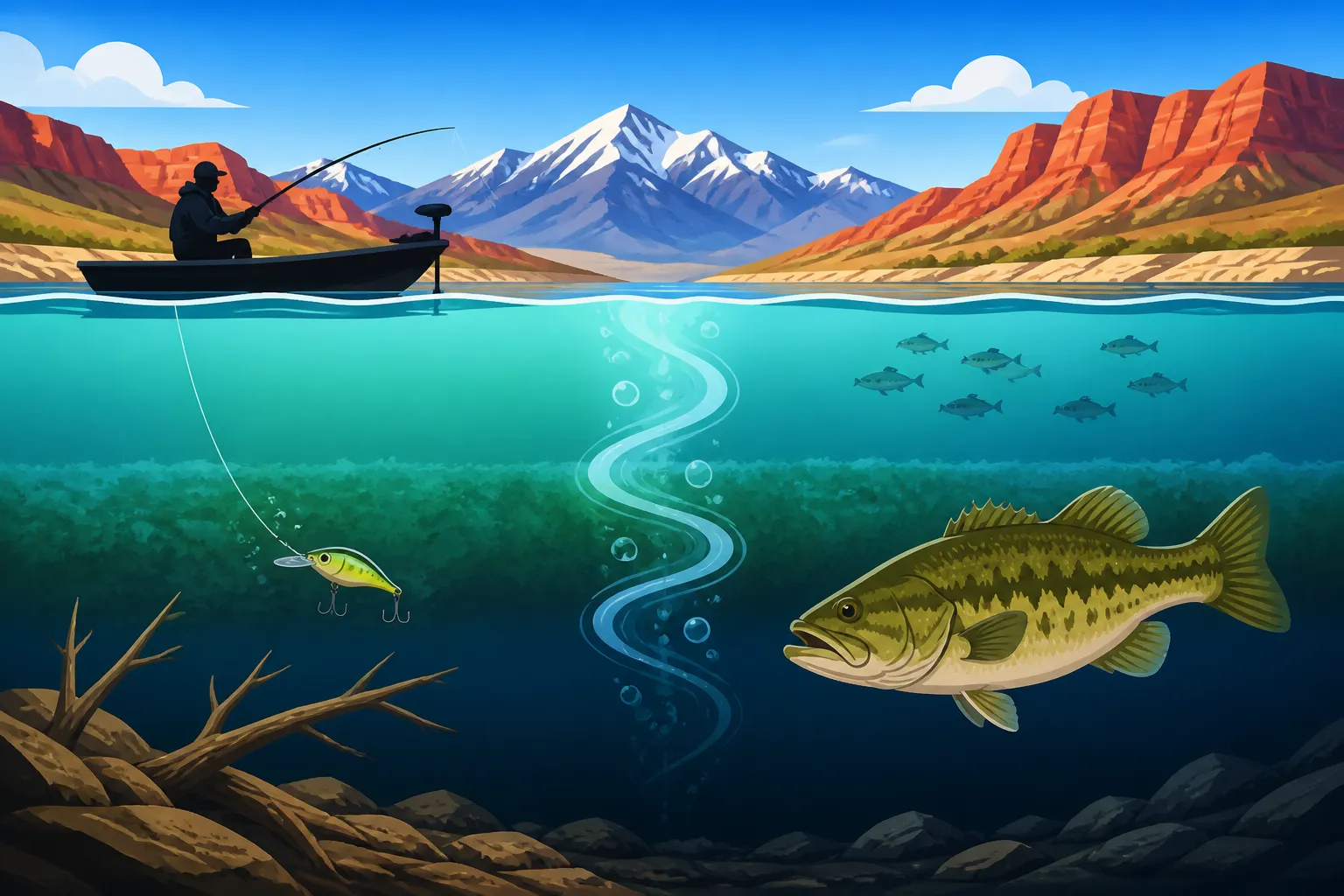
Imagine your favorite reservoir as a giant layered cake, especially during the summer months. The top layer, or epilimnion, is warm and oxygen-rich from constant interaction with the air. Below that is the thermocline, a relatively thin layer where the water temperature drops rapidly. Then, at the bottom, you have the hypolimnion, which is cold and often low in oxygen, especially in deeper, stagnant areas. Fish generally hang out in or around the thermocline because it offers the perfect balance of comfortable temperature and sufficient oxygen.
Now, as autumn arrives in Utah, the air temperatures begin to cool significantly. The surface water of the reservoir loses heat and starts to become denser. As it cools, it sinks. This cooler, denser surface water displaces the warmer, less dense water below it. This process continues until the entire water column reaches a uniform temperature – usually around 39 degrees Fahrenheit (4 degrees Celsius), which is the temperature at which water is densest. Once the whole lake is one temperature, even a light breeze can cause the water to mix from top to bottom. This complete mixing is what we call "turnover."
If you've ever wondered, "What Is Fall Turnover and How Does It Affect Fishing?", this is it in a nutshell. It's a fundamental shift, and it completely resets the conditions in the reservoir, bringing oxygen-poor water from the bottom to the surface and sending oxygen-rich water down.
Immediate Effects on Water Quality and Clarity
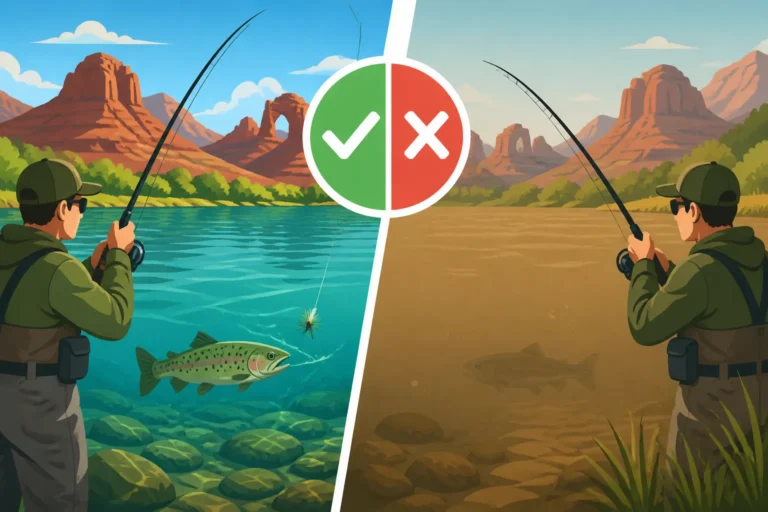
During the actual turnover event, and immediately afterward, things can get a bit messy. The mixing of the entire water column often stirs up sediment, detritus, and decaying organic matter from the bottom. This can lead to a noticeable decrease in water clarity. Your normally clear reservoir might take on a cloudy, murky, or even brownish tint. This stirred-up water can also carry a distinct "rotten egg" smell – hydrogen sulfide – which is produced by anaerobic decomposition on the lakebed. It’s not pleasant for us, and it definitely impacts the fish.
This change in clarity can make sight-fishing impossible and reduce the visibility of your lures. More importantly, the sudden mixing of oxygen-depleted bottom water with the rest of the lake can temporarily lower overall oxygen levels in certain areas. While the long-term effect of turnover is to reoxygenate the deeper parts of the lake, the immediate period can be quite disruptive. Fish that were comfortably holding in specific thermal bands or oxygen zones are suddenly disoriented, and their preferred habitats might be temporarily compromised. This is why fishing can become so challenging during this transition period; the fish are just trying to figure out where to go!
Understanding Fish Behavior During and After Turnover
Fish are creatures of habit and comfort, much like us. When their entire world literally turns upside down during turnover, their behavior shifts dramatically. Knowing these shifts is the first step toward successful post-turnover angling.
Disorientation During the Turnover Event
During the active phase of turnover, when the lake is fully mixing, fish often become disoriented and scattered. The stable thermal layers they've relied on all summer disappear, and the uniform temperature means they can move anywhere in the water column without hitting a thermal barrier. However, the rapidly changing oxygen levels and stirred-up sediment can make them lethargic and less inclined to feed.
Think of it like someone suddenly turning on all the lights and shaking up your house. You're probably not going to be focused on eating or doing much of anything other than figuring out what's going on. Fish react similarly. They might be found suspended aimlessly in the middle of the water column, or they might hug cover extremely tightly, trying to find some sense of stability. This is often the toughest time to catch them, as their feeding patterns become highly unpredictable. They're simply not in a "chasing prey" mood. This period of disruption usually lasts a few days to a week, depending on the size and depth of the reservoir and the intensity of the fall weather.
Finding New Comfort Zones Post-Turnover
Once the turnover process has completed and the water column has stabilized at a uniform temperature and consistent oxygen levels, fish will begin to re-establish their patterns. However, these patterns will be very different from their summer habits. The key difference is that with uniform temperature and oxygen from top to bottom, fish are no longer confined to the thermocline. They can now roam freely throughout the entire water column, which can be both a blessing and a curse for anglers.
They'll still seek out comfortable areas, but now those areas are dictated more by factors like baitfish presence, structure, and available cover, rather than just temperature and oxygen. For instance, fish that spent the summer in deep, cold water might now be found much shallower, or vice versa, as the entire lake becomes viable habitat. This means you can find trout, bass, and walleye in unexpected places. Understanding How Water Temperature Affects Utah Trout Fishing]/techniques-seasons/how-water-temperature-affects-utah-trout-fishing) is especially critical here, as the uniformly cold water post-turnover will dictate how active they are.
Essential Techniques for Post-Turnover Reservoir Fishing
With fish potentially anywhere in the water column and often less active, your approach needs to be methodical and adaptable. This isn't the time for one-trick ponies; it's time to explore and adjust.
Employing Search Baits and Covering Water
Since fish can be scattered and their exact locations unpredictable, the first strategy is to cover a lot of water and use "search baits." These are lures designed to be cast far, retrieved quickly, and elicit a reaction strike from fish, even if they're not actively feeding.
Think about using lures like crankbaits, spinnerbaits, or even swimbaits that can be retrieved at various depths. Cast them out, experiment with different retrieve speeds, and cover as much area as possible. You're essentially trying to "bump into" fish that might be loosely schooled or holding near subtle structure. If you’re fishing for trout in a reservoir like Jordanelle or Deer Creek, a casting spoon or a shallow-diving Rapala can be incredibly effective for covering water and mimicking fleeing baitfish. These lures, often found on Amazon, allow you to quickly identify areas where fish might be holding before slowing down your presentation.
For deeper waters or when targeting larger species like lake trout (mackinaw) or walleye, trolling can be an excellent search method. Trolling with downriggers or weighted lines allows you to present lures at precise depths across wide areas. This strategy can help you locate those elusive schools that are no longer confined to specific thermal layers. Check out How to Read a Fish Finder for Utah Reservoirs]/techniques-seasons/how-to-read-a-fish-finder-for-utah-reservoirs) to make the most of this approach.
Targeting Structure and Transition Zones
Even though fish are no longer bound by thermal layers, they still gravitate towards structure and transition zones. These areas offer cover, ambush points, and often hold baitfish, making them prime real estate for predatory species.
Look for points, submerged humps, rock piles, ledges, and creek channels. These areas provide vertical relief and breaks in the bottom contour, giving fish something to orient to. For example, a sharp drop-off along a main lake point could hold schools of smallmouth bass or walleye, even in the middle of the lake. In reservoirs with fluctuating water levels, How Reservoir Drawdown Affects Where Fish Hold]/techniques-seasons/how-reservoir-drawdown-affects-where-fish-hold) becomes another critical piece of the puzzle, as newly exposed or submerged structure will impact fish locations.
Transition zones are also key. This could be where a hard bottom meets a soft bottom, where sparse weeds meet dense weeds, or where deep water suddenly becomes shallow. These edges are natural highways and ambush points for fish. Pay close attention to these areas, fishing them thoroughly with slower, more deliberate presentations once you've covered the broader area with your search baits. A jig-and-plastic combo or a slowly worked retrieve with a tube bait can often coax bites from lethargic fish holding tight to these structures.
Gear and Tactics for Success After Turnover
Once you’ve covered water and identified potential holding areas, it’s time to fine-tune your presentation. Post-turnover fishing often demands a more subtle and precise approach, catering to fish that might be less aggressive.
Slowing Down Your Presentation
This is probably the most crucial adjustment you can make after turnover. Fish are generally less active in the colder, uniformly mixed water. Their metabolism slows down, and they're less likely to chase a fast-moving bait.
Instead, think "slow and steady wins the race." Use techniques that allow your bait or lure to stay in the strike zone for an extended period. Drop shot rigs, Texas rigs, Carolina rigs, and jigging spoons are all excellent choices. For trout, a simple PowerBait setup on the bottom or under a slip bobber can be very effective, especially in areas with known trout populations from the Utah Trout Species Guide]/fish-species/utah-trout-species-guide). The goal is to make it easy for the fish to grab your offering without expending much energy.
For species like walleye, often found in reservoirs like Utah Lake, a slow troll with a crawler harness or a jig tipped with a minnow can be deadly. For smallmouth bass, particularly when trying How to Fish Deep Structure for Smallmouth in Fall]/techniques-seasons/how-to-fish-deep-structure-for-smallmouth-in-fall), a small football jig or a ned rig meticulously worked along the bottom can produce bites when nothing else will. These presentations mimic injured or easy prey, triggering strikes from less aggressive fish.
Live Bait and Scent Attractants
When fish are finicky, live bait often outperforms artificial lures. The natural smell, movement, and texture of live bait can be irresistible to even the most lethargic fish. Minnows, nightcrawlers, and even mealworms can be game-changers after turnover.
Consider using a slip bobber rig to present a minnow at a precise depth over structure, or simply bottom-fish with a nightcrawler near a drop-off. For species like catfish or larger trout, a chunk of cut bait can also be effective. The key is to present the bait naturally, allowing it to waft enticingly in the water.
In situations where live bait isn't feasible or allowed, scent attractants can significantly boost your success with artificial lures. Products like Berkley Gulp! or various liquid scents applied to soft plastics or jigs can add that extra appeal. The added scent can encourage a fish to hold onto your lure longer, giving you more time to set the hook, especially when they're just "nipping" at the bait. For example, applying a strong aniseseed or garlic scent to your plastics when targeting Utah Walleye Fishing Guide]/fish-species/utah-walleye-fishing-guide) can make all the difference on a tough day.
Using Electronics to Your Advantage
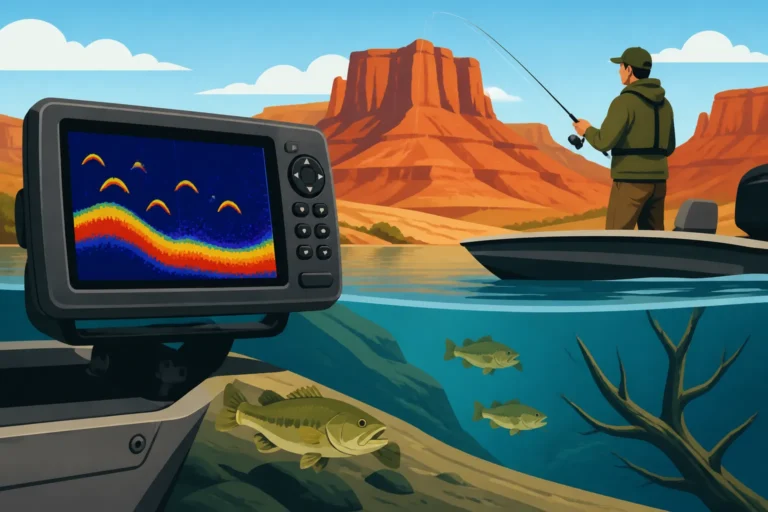
Modern fish finders are invaluable tools for post-turnover fishing. They help you locate baitfish, identify schools of game fish, and pinpoint subtle structure that might be holding fish. This is especially true after turnover, when fish are no longer predictable.
Use your sonar to scan for schools of baitfish, which will often be suspended in the water column. Where there's bait, there are usually predatory fish. Pay attention to any arches or marks you see, and note their depth. If you see fish holding near a particular depth or piece of structure, focus your efforts there. Side imaging or down imaging can help you identify submerged timber, rock piles, or ledges that aren't visible above water. Brands like Lowrance, Humminbird, and Garmin offer excellent units, many of which are available for purchase on Amazon and come with detailed guides that can help you understand How to Fish Structure With a Fish Finder in Utah]/techniques-seasons/how-to-fish-structure-with-a-fish-finder-in-utah).
Once you locate fish, mark their position on your GPS. This allows you to return to productive spots later or make precise casts to where the fish are holding. This combination of covering water and then focusing on specific, fish-holding structures is often the Best Fall Technique for Utah Trout]/techniques-seasons/best-fall-technique-for-utah-trout) and other species.
Post-Turnover Gear Considerations
The right gear can make a substantial difference when faced with the challenges of post-turnover fishing. Subtle presentations often require more sensitive equipment.
Rod and Reel Sensitivity
Since fish bites can be incredibly light and subtle after turnover, especially with the colder water slowing down fish metabolism, rod sensitivity becomes paramount. A medium-light to medium power spinning rod with a fast action tip will allow you to feel those faint taps and bumps that an aggressive fish might normally turn into a solid strike.
Pair this with a sensitive braided line, perhaps with a fluorocarbon leader. Braid offers superior sensitivity and minimal stretch, transmitting even the slightest vibration directly to your hand. Fluorocarbon leaders are nearly invisible underwater, which can be critical when fish are wary in clearer post-turnover waters. Consider line in the 4-8 pound test range for trout and panfish, and 8-12 pound test for bass and walleye, depending on the cover you're fishing. Many anglers find the extra sensitivity of high-quality graphite rods available on Amazon to be a game-changer.
Lure and Bait Choices for Colder Water
Your tackle box should reflect the changing conditions. While search baits are great for finding fish, you'll need smaller, more subtle presentations once you've located them.
Table: Recommended Lures & Baits for Post-Turnover Utah Reservoirs
| Target Species | Lure/Bait Type | Key Characteristics | Example Brands/Styles |
|---|---|---|---|
| Trout | Small Jigs & Plastics | Slow fall, subtle action, scent-infused | Marabou jigs, Gulp! Minnows, PowerBait |
| Spoons (Jigging/Casting) | Mimics injured baitfish, flash, vertical presentation | Kastmaster, Krocodile, Daredevle | |
| Live Bait (Worms, Minnows) | Natural scent & action, irresistible to finicky fish | Nightcrawlers, small shiners | |
| Smallmouth Bass | Jigs & Soft Plastics | Slow, bottom-oriented, realistic crawfish/minnow profiles | Ned Rigs, Football Jigs, Tube Baits |
| Drop Shot Rigs | Suspends bait at fish eye level, subtle presentation | Roboworms, Z-Man Finesse ShadZ | |
| Small Crankbaits | Slow retrieve, tight wobble, dives to specific depths | Rapala Shad Rap, Strike King KVD 1.5 | |
| Walleye | Jigging Spoons | Vertical jigging, flash, effective on suspended fish | Rapala Jigging Rap, Northland Forage Minnow Spoon |
| Crawler Harnesses | Slow troll with live nightcrawler, scent trail | Lindy Rigs, Tru-Turn Worm Harness | |
| Finesse Jigs & Plastics | Tipped with minnow or soft plastic, slow bottom bounce | Northland Fire-Ball Jig, Gulp! Minnow | |
| Lake Trout (Mackinaw) | Large Tube Jigs | Mimics bottom-dwelling prey, heavy for deep water | Strike King Coffee Tube, Venom Lures Big Mama Tube |
| Flutter Spoons | Slow erratic fall, flash, attracts deep-water predators | Thomas Lures Buoyant Spoon, Acme Kastmaster | |
| Dead Bait Rig | Large suckers/chubs on bottom rig, appeals to large mackinaw | Heavy jig head, quick-strike rig |
Remember that smaller profiles and more natural colors often work better in colder, clearer post-turnover water. Subtle blues, greens, whites, and natural baitfish patterns are typically excellent choices. Having a good variety of Best Lures for a Utah Tackle Box]/gear-boats/best-lures-for-a-utah-tackle-box) means you're prepared for whatever the fish are keying in on.
Experimentation is key after turnover. Don't be afraid to try different depths, retrieve speeds, and lure colors until you find what the fish are reacting to. The fish are there; it's just a matter of figuring out their new preference.
Disclaimer
Fishing conditions and regulations in Utah can change frequently. Always consult the latest Utah Division of Wildlife Resources (UDWR) regulations before heading out to fish. This guide provides general information and recommendations and should not be considered a substitute for official UDWR publications. Be aware of local conditions, weather, and ice safety if applicable.