Utah Kayak Fishing Gear Guide
Navigating Utah's incredible diversity of fishing waters – from the vast, open expanses of Lake Powell and Flaming Gorge to the serene, high-alpine lakes in the Uintas and the winding flows of the Green River – can be a real challenge for anglers. Traditional power boats often limit access to quieter coves or shallow river sections, while shore fishing has its own limitations. This comprehensive guide is designed to help you cut through the confusion of choosing and rigging the perfect kayak fishing setup so you can confidently tackle any of Utah's angling opportunities.
Why Kayak Fishing in Utah is So Appealing
There's something uniquely special about being on the water in a kayak, feeling that direct connection to your surroundings. In Utah, where the landscapes range from red rock canyons to towering mountains, kayak fishing offers an unparalleled experience that larger boats simply can't match. It's an intimate way to explore, allowing you to blend into the environment and access spots that hold incredible fish.
The Freedom and Access Kayaks Offer
One of the biggest frustrations for many anglers is limited access. Boat ramps can be crowded, fuel is expensive, and many prime fishing spots are simply too shallow or too overgrown for traditional motorboats. Kayaks completely flip this script. They're incredibly nimble, drawing very little water, which means you can glide into those secret coves, navigate through lily pads, and explore the skinny water up a river that's inaccessible to others. Imagine slipping silently into a remote section of the Green River or paddling into a quiet bay on Strawberry Reservoir, far from the roar of outboard motors. This freedom to explore truly opens up new possibilities and can lead to some incredible catches.
Beyond just physical access, there's a certain mental freedom that comes with kayak fishing. It's a simpler, more minimalist approach that allows you to focus purely on the fishing and the natural beauty around you. You don't have to worry about complex maintenance, trailer issues, or finding parking for a large rig. Just load up your kayak, drive to a convenient launch point, and you're on the water, ready to chase trout, bass, or walleye. This ease of use makes spontaneous trips possible, turning a quick evening outing into a memorable adventure.
Stealth and Connection to Nature
Fish, especially larger, smarter ones, are highly sensitive to vibrations and noise. A gasoline engine or even the clatter of gear in a metal boat can send them scattering. Kayaks, by their very nature, are incredibly stealthy. You glide through the water almost silently, allowing you to approach fish without spooking them. This quiet approach is particularly effective in clear waters, like many of Utah's pristine reservoirs and rivers, where fish have excellent visibility. Being able to get closer to your target without alerting them gives you a distinct advantage, whether you're sight fishing for trout in a mountain stream or casting to bass holding tight to structure.
This stealth also deepens your connection to nature. Instead of just passing through, you become an integrated part of the environment. You hear the birds, feel the subtle shifts in the wind, and see wildlife that might otherwise be scared away. It’s not just about catching fish; it’s about experiencing the wild heart of Utah in a profound way. For many, this quiet immersion is as rewarding as the fishing itself, offering a therapeutic escape from the hustle and bustle of everyday life. The peace and tranquility found on the water in a kayak are truly unmatched.
Cost-Effectiveness Compared to Power Boats
Let's be honest, boating can be an expensive hobby. Between the initial purchase price, insurance, maintenance, fuel, and storage, a power boat can quickly drain your wallet. Kayak fishing presents a much more budget-friendly alternative without sacrificing the thrill of getting on the water. The initial investment for a quality fishing kayak is significantly lower than that of even a modest power boat, making it accessible to a wider range of anglers.
Beyond the upfront cost, the operational expenses are minimal. There's no fuel to buy (unless you opt for a trolling motor setup), no expensive engine maintenance, and often, you can transport and store your kayak right at home, saving on marina fees or storage units. This cost-effectiveness means you can allocate more of your budget to quality fishing gear, bait, and those essential supplies that truly make a difference on the water. It also means you can get out fishing more often, without constantly worrying about the impact on your bank account.
Choosing the Right Fishing Kayak for Utah's Waters
Selecting the perfect fishing kayak is a pivotal decision, and with so many options available, it can feel overwhelming. What works well on a calm, small pond near Salt Lake City might be entirely unsuitable for the vast, choppy waters of Lake Powell. Understanding the different types and features will help you narrow down your choices and find a vessel that matches your angling style and the Utah waters you plan to explore.
Sit-On-Top vs. Sit-Inside Kayaks for Anglers
When it comes to fishing kayaks, the primary distinction is between sit-on-top (SOT) and sit-inside (SINK) models. Both have their advantages and disadvantages, especially in Utah's varied climate and water conditions.
Sit-On-Top (SOT) Kayaks:
These are by far the most popular choice for kayak fishing, and for good reason. SOT kayaks offer incredible stability, making it easier to cast, reel in fish, and even stand up to fish in some models. You sit on top of the kayak's hull, which makes getting in and out much simpler, especially when launching from shore or trying to re-board after a swim. They are self-bailing, meaning water that splashes onto the deck drains out through scupper holes, a huge plus on rougher waters like Deer Creek Reservoir or if you take a wave over the bow. The open deck also provides ample room for rigging accessories, mounting rod holders, and storing gear like tackle crates, which you can easily access. If you're planning on fishing in warmer weather or on larger, choppier lakes, a SOT is often the preferred choice. For larger anglers or those who prioritize stability and ease of movement, SOTs are hard to beat.
Sit-Inside (SINK) Kayaks:
While less common for dedicated fishing, SINK kayaks still have their place, particularly for river fishing or in colder conditions. You sit inside the cockpit, which offers more protection from the elements, keeping you warmer and drier. This can be a significant advantage when fishing Utah's cold rivers like the Provo or Weber, especially in spring or fall. SINK kayaks are often faster and track straighter due to their narrower design and lower profile, making them excellent for covering long distances on rivers with a current. However, they typically offer less storage space on deck, can be harder to re-enter if you capsize (though self-rescue techniques can be learned), and don't offer the same stability for standing. For minimalist anglers focusing on speed and protection from cold water, particularly on moving water, a SINK might be a good fit.
Here's a quick comparison:
| Feature | Sit-On-Top (SOT) Kayak | Sit-Inside (SINK) Kayak |
|---|---|---|
| Stability | Generally higher, easier to stand (some models) | Generally lower, designed for speed |
| Access/Egress | Very easy to get on/off, self-rescue simpler | Can be challenging, especially after capsize |
| Comfort | Open, allows stretching, often has better seats | Cockpit offers weather protection, can feel confined |
| Storage | Ample deck space, easy access to tackle crates | More limited deck space, gear often stowed inside |
| Weather | Wet ride possible, good for warm weather | Drier, warmer ride, good for cold weather/rivers |
| Ideal For | Lakes, reservoirs, bays, warmer climates, stand-up fishing | Rivers, colder climates, speed, paddling efficiency |
Kayak Length, Width, and Stability Considerations
The physical dimensions of a kayak – its length and width – directly impact its performance on the water. Longer kayaks typically track straighter and are faster, making them suitable for covering greater distances on large bodies of water like Flaming Gorge or Lake Powell. Shorter kayaks are more maneuverable, ideal for winding rivers or tight coves where quick turns are necessary. For example, a shorter kayak would be perfect for navigating the snags and bends of a smaller river like the Logan River.
Width is directly correlated with stability. Wider kayaks are more stable, which is crucial for fishing activities like casting, retrieving, and landing fish. If you plan to stand up and cast, a wider, more stable platform is absolutely essential. However, wider kayaks are also slower and require more effort to paddle. It’s a trade-off: do you prioritize speed and efficiency, or rock-solid stability? Most dedicated fishing kayaks strike a balance, offering good stability without being overly sluggish. Think about the conditions you'll encounter. Choppy water on Jordanelle Reservoir demands more stability than a glassy morning on a small community pond. This is why knowing your primary fishing grounds in Utah is key to making the right choice. Consider checking out specific recommendations like Best Kayak Length for Utah Lake if you plan to target certain waters.
Pedal Drive vs. Paddle Kayaks: What's Right for You?
This is perhaps the biggest innovation in kayak fishing in recent years. Traditional kayaks are propelled by paddles, requiring your hands and arms to constantly be in motion. Pedal drive kayaks, on the other hand, use a system similar to a bicycle, allowing you to use your legs to propel the kayak, freeing up your hands for fishing.
Paddle Kayaks:
These are the classic choice, and they are generally lighter, less expensive, and simpler in design. They are excellent for those who enjoy the physical exercise of paddling and for accessing very shallow water or areas with dense vegetation where a pedal drive might get fouled. Paddle kayaks are also easier to maintain with fewer moving parts. However, constantly paddling can be tiring, especially when fighting wind or current, and it means you can't actively fish while moving. For many, the simplicity and lower cost are major draws, especially if they are just starting out or primarily fish smaller, calmer waters.
Pedal Drive Kayaks:
The game-changer. Pedal drives allow for hands-free propulsion, meaning you can troll lures, cast to targets, or fight a fish while still maintaining control and position of your kayak. This significantly increases your fishing efficiency and enjoyment. Imagine slowly pedaling along a shoreline at Pineview Reservoir, casting to structure, or maintaining your position against the current on a river while actively fly fishing. Pedal drives come in various forms, including propeller-driven systems and fin-driven systems (like those from Hobie, often seen at a Bass Pro Shops store), each with their own pros and cons regarding shallow water performance and maneuverability. They are generally more expensive and heavier than paddle kayaks, and the drive unit can be an obstacle in very shallow water. However, for serious anglers who spend a lot of time on the water, especially larger reservoirs, the benefits often outweigh the added cost and weight.
Essential Kayak Fishing Safety Gear for Utah
Safety should always be your top priority on the water, regardless of how experienced you are or how calm the conditions appear. Utah's waters can be unpredictable, with sudden weather changes, cold water temperatures, and diverse environments. Having the right safety gear isn't just a recommendation; it's a critical investment in your well-being. Understanding Utah Boating and Fishing Rules will also help ensure you're compliant with regulations.
Personal Flotation Devices PFDs Are Non-Negotiable
This cannot be stressed enough: a properly fitted Personal Flotation Device (PFD), or life jacket, is absolutely essential. It’s not just a legal requirement in many situations (especially for younger passengers, though adults should wear them too, as detailed in Life Jacket Requirements on a Utah Boat), but your primary defense against drowning if you unexpectedly enter the water. Even if you're a strong swimmer, cold water shock, injury, or exhaustion can quickly incapacitate you.
Choose a PFD specifically designed for paddling or fishing. These are typically less bulky than traditional boating PFDs, offering better range of motion for casting and paddling. Look for features like multiple pockets for small tackle or safety items, and a comfortable fit that doesn't ride up. Always wear your PFD, don't just store it in your kayak. An accidental capsize can happen in an instant, and scrambling to put on a PFD in the water is nearly impossible. Consider the water temperature as well; even on a warm summer day, Utah's deep reservoirs can have surprisingly cold water just a few feet down, making a PFD vital for survival in an immersion event.
Visibility and Signaling Devices
Being seen on the water is crucial, especially on larger lakes shared with powerboaters. A visibility flag or light mounted on a tall pole is highly recommended for kayaks, making you more noticeable to other vessels, particularly in low light conditions or choppy water. Many fishing kayaks come with mounts for these, or you can easily add one. Brightly colored clothing and kayaks also contribute to your visibility.
Beyond being seen, having the means to signal for help is paramount. A whistle is a simple, effective, and mandatory signaling device. Carry it attached to your PFD or securely within reach. A marine-band VHF radio (handheld models are available) is an excellent investment for communicating with emergency services or other boaters, especially on large, remote waters like Lake Powell where cell service can be spotty. Flares, a signal mirror, or a bright flashlight can also be invaluable for attracting attention if you're stranded. Never assume someone will automatically see you or know you're in distress; proactively carry signaling devices.
Emergency Preparedness Kit for Your Kayak
Beyond your PFD and signaling devices, a well-stocked emergency kit can turn a potentially dangerous situation into a manageable inconvenience. This kit should be stored in a dry bag and securely attached to your kayak. Essential items include:
- First Aid Kit: For minor cuts, scrapes, or more serious injuries. Include pain relievers, bandages, antiseptic wipes, and any personal medications.
- Repair Kit: Duct tape, marine-grade epoxy putty, zip ties, and a multi-tool can patch up small leaks or fix minor gear failures.
- Sun Protection: Sunscreen, a wide-brimmed hat, and sunglasses are vital for preventing sunburn and eye strain, especially with Utah's intense sun reflecting off the water.
- Hydration and Snacks: Always carry more water than you think you'll need, along with energy bars or other non-perishable snacks. Dehydration can set in quickly.
- Knife/Line Cutter: Essential for cutting tangled fishing line, ropes, or even for self-rescue if you get snagged.
- Headlamp/Flashlight: Even if you plan to be off the water before dark, delays can happen, and a light source is critical.
- Bailing Sponge/Pump: While SOTs are self-bailing, a sponge can help dry out the deck or cockpit. For SINKs, a small hand pump is essential.
- Warm Layers: Even on warm days, weather can change rapidly in Utah. Pack a waterproof and windproof jacket or an extra layer of synthetic clothing in a dry bag to guard against hypothermia.
Taking the time to assemble and maintain this kit is a small effort that can make a huge difference in an emergency situation.
Rigging Your Kayak for Utah Fishing Adventures
Once you have your kayak and essential safety gear, the fun begins: rigging it out for fishing! A well-rigged kayak will make your fishing trips more efficient, comfortable, and productive. The key is to customize it to your specific needs and the type of fishing you'll be doing in Utah, ensuring everything is secure and easily accessible.
Rod Holders: Placement and Types
Rod holders are fundamental for kayak fishing, allowing you to paddle hands-free, troll lures, or keep spare rods organized and out of the way. There are several types, and their placement is crucial for optimal fishing.
- Flush Mount Rod Holders: These are molded directly into the kayak's hull, typically behind the seat. They are great for rod storage while paddling or for trolling, keeping your rods low and stable. However, they aren't adjustable, so they may not be ideal for actively setting the hook or diverse trolling spreads.
- Deck Mount Rod Holders (Adjustable): These mount on the deck or a track system and are highly adjustable. Brands like Scotty or Ram Mounts offer various styles that can be rotated, angled, and elevated. These are perfect for actively fishing, allowing you to position your rod for different techniques, whether you're jigging for walleye on Utah Lake or trolling for kokanee at Rockport Reservoir. Many anglers like to have one on each side of the kayak, just forward of the cockpit, for easy access.
- Crate Rod Holders: If you use a fishing crate (more on that below), you can often add PVC rod holders directly to the crate itself. This provides quick, easy access to multiple rods and keeps them vertical, minimizing tangles.
Consider how many rods you typically carry and how you fish. If you troll, you'll want sturdy, adjustable holders. If you mainly cast, you might prioritize quick-access storage for your primary rod and flush mounts for spares. Experiment with placement to find what feels most natural and efficient for your casting and fish-fighting style.
Storage Solutions: Crates, Bags, and Hatches
Kayak fishing means organizing your gear efficiently in a limited space. Clutter can quickly become a tangled mess, especially when a fish is on!
- Fishing Crates: A common and highly effective storage solution is a milk crate or a purpose-built fishing crate. These fit neatly behind your seat in most SOT kayaks. You can customize them with PVC pipe rod holders, tool holders, and attach a small tackle box or dry bag inside. They keep your essential tackle, bait, and tools organized and easily accessible. Many anglers use soft tackle bags designed to fit inside the crate, making it easy to swap out tackle for different species or waters. For instance, a dedicated walleye setup for Willard Bay might be organized differently than a trout setup for the Provo River.
- Dry Bags and Boxes: Protecting electronics, keys, wallet, and extra clothing from water is critical. Dry bags come in various sizes and are essential for keeping sensitive items safe. Hard-sided, waterproof cases (like Pelican cases) are great for cameras, phones, or delicate electronics. Always secure these to your kayak so they don't float away if you capsize.
- Internal Hatches: Many fishing kayaks feature internal storage hatches in the bow or stern. These are excellent for larger, less frequently accessed items like extra layers of clothing, a small camping stove, or emergency supplies. While they keep things out of the way, accessing them often requires some effort, so reserve them for items you won't need in a hurry. Always use a dry bag even inside hatches, as they are not always perfectly watertight.
When choosing storage, think about the specific items you'll bring for a typical trip, and ensure everything has a secure, designated spot. You want to be able to grab a net, pliers, or a different lure without fumbling around.
Anchor Systems for Kayak Anglers
Being able to hold your position is vital for effective kayak fishing, especially in windy conditions or when fishing specific structure. Relying solely on paddling can be exhausting and unproductive.
- Anchor Types:
- Grapple Anchors: These small, folding anchors are perfect for rocky or weedy bottoms, as their tines can grab onto irregularities. They are lightweight and stow compactly.
- Stake-Out Poles: Ideal for shallow water (typically under 8-10 feet), these poles are pushed into the mud or sand to hold your position. They are silent and don't require an anchor line, perfect for sneaking up on fish in the shallows of Utah Lake or community ponds.
- Drift Chutes/Sea Anchors: These are not anchors in the traditional sense, but rather devices that slow your drift. They are invaluable for slowing down your speed when drifting over structure or fishing a wide flat in windy conditions, allowing you to present your lure more effectively.
- Anchor Trolley System: This is arguably the most important accessory for a kayak anchor. An anchor trolley is a simple rope and pulley system that runs along the side of your kayak, allowing you to deploy your anchor from either the bow or the stern without leaving your seated position. This ability to adjust your anchor point is critical for maintaining your heading in wind or current. For example, anchoring from the stern in a river allows your kayak to face downstream, presenting your bait or lure naturally.
Always use a quick-release system for your anchor line, allowing you to instantly detach if you get snagged or need to make a quick escape from an oncoming hazard. Carrying enough anchor line (usually 50-100 feet for general use, more for deep lakes) is also important to ensure you can reach the bottom in various depths, applying the 3:1 or 5:1 scope rule for effective holding power.
Electronics and Navigation for Kayak Fishing in Utah
Modern fishing electronics have revolutionized how we find and catch fish, and kayaks are no exception. Integrating these tools into your setup can dramatically increase your success, particularly on Utah's larger, deeper reservoirs and complex river systems.
Portable Fish Finders: Features and Benefits
A fish finder is essentially your underwater eyes, showing you depth, bottom structure, and of course, fish. For kayak anglers, portable and compact units are often preferred.
- Key Features: Look for units with clear, high-resolution screens that are easy to read in direct sunlight. CHIRP sonar technology offers better target separation and clarity. Down Imaging (or DownScan) provides photographic-like views of structure directly beneath your kayak, while Side Imaging (or SideScan) expands your view to either side, helping you locate hidden channels, rock piles, or brush piles where fish might be hiding. Many top brands, available through retailers like Bass Pro Shops or online at Amazon, offer these features in kayak-friendly sizes.
- Mounting and Power: Kayak fish finders typically use a transducer that mounts either through a scupper hole, on a suction cup to the hull, or on a specialized transducer arm over the side. Power usually comes from a small 12V sealed lead-acid (SLA) or lithium-ion battery (LiFePO4) stored in a waterproof box. Efficient battery management is crucial, as you won't have the luxury of a large boat's charging system. Understanding how to interpret what you see on the screen can take time, but the ability to identify baitfish schools or submerged timber is invaluable for finding prime fishing spots, whether you're chasing lake trout at Flaming Gorge or bass in the shallow structure of Deer Creek. Consider a unit designed for smaller boats but with robust features, as detailed in guides like Best Fish Finders for Utah Reservoirs.
GPS and Mapping for Spot On Spot Fishing
Beyond just finding fish, knowing where you are and being able to return to productive spots is equally important. This is where GPS and mapping come into play.
- Integrated GPS/Chartplotters: Many modern fish finders come with integrated GPS and detailed mapping capabilities. This allows you to view your position on a topographical map of the lake or river, mark waypoints for hotspots, structure, or launch points, and track your routes. This is incredibly useful for navigating large, intricate bodies of water like Lake Powell, where countless coves and canyons can quickly disorient you. You can save your "honey holes" and return to them with precision on future trips, even if conditions change.
- Dedicated Handheld GPS Units: While integrated units are convenient, a separate handheld GPS can serve as a valuable backup, especially if your primary unit's battery dies or it malfunctions. These rugged, waterproof devices are often pre-loaded with detailed maps and are easy to operate. They are particularly useful for exploring new areas or when venturing into remote sections where reliable navigation is essential.
- Smartphone Apps: Several excellent fishing and navigation apps are available for smartphones, offering detailed maps, satellite imagery, and the ability to mark waypoints. While convenient, rely on them cautiously; phone batteries can die quickly, and waterproofing might not be as robust as dedicated units. Always have a physical map or a fully charged backup power bank if using your phone as a primary navigation tool.
Being able to precisely navigate and mark your fishing spots means you can spend more time fishing and less time searching, making your trips more efficient and rewarding.
Battery Management for Kayak Electronics
Powering multiple electronics on a kayak requires careful planning and management to ensure your devices last through a full day of fishing. This often means running a fish finder, GPS, and potentially a trolling motor, all from a compact power source.
- Battery Selection: Small, lightweight 12V batteries are the standard. Sealed Lead-Acid (SLA) batteries are affordable and reliable but heavy. Lithium-ion (LiFePO4) batteries are significantly lighter, last longer, and have a more consistent power output, but they come at a higher cost. Decide based on your budget, weight tolerance, and power needs. If you're running a powerful fish finder and a trolling motor, a LiFePO4 battery might be worth the investment for its efficiency and endurance.
- Waterproof Protection: All batteries and wiring connections must be housed in a waterproof box. Marine-grade connectors and heat-shrink tubing are crucial to prevent corrosion and short circuits from water exposure. Even minor splashes can wreak havoc on unprotected electronics over time.
- Charging and Monitoring: Always fully charge your batteries before each trip. Consider carrying a small, portable power bank to recharge phones or smaller devices. For your main fishing electronics, keep an eye on battery life indicators. Some fish finders have this built-in, or you can purchase inexpensive battery voltage meters. Running out of power mid-trip is a huge frustration, so err on the side of caution and always start with a full charge, especially on long outings. Planning your power consumption for a full day of fishing on a large water body like Lake Powell is paramount.
Proper battery management ensures your valuable electronics stay powered, helping you find fish and navigate safely throughout your Utah fishing adventures.
Paddles, Propulsion, and Portability
Getting to and from your fishing spots, and moving around once you're there, is a core part of kayak fishing. While pedal drives offer hands-free propulsion, even they need a paddle for launching, shallow water, or as a backup. How you choose to propel your kayak and how easily you can transport it directly impacts your overall experience.
Selecting the Right Paddle Length and Blade Type
Don't underestimate the importance of your paddle! A good paddle makes a huge difference in comfort and efficiency on the water, especially if you have a paddle kayak or are using it as a backup for a pedal drive.
- Length: Paddle length is determined by your height and the width of your kayak. A general rule of thumb is that a wider kayak requires a longer paddle to prevent you from constantly hitting the sides. If your kayak is 30-32 inches wide, you might use a 230 cm paddle; for wider fishing kayaks (34+ inches), you might need a 240-260 cm paddle. Using a paddle that's too short will make you work harder and become less efficient, while one that's too long will feel unwieldy.
- Blade Type:
- Asymmetrical, Spooned Blades: These are the most common and efficient, designed to cup the water for maximum propulsion with each stroke. They are ideal for covering distance and maintaining speed.
- Feathering: Many paddles allow you to "feather" the blades, meaning one blade is rotated at an angle to the other. This reduces wind resistance on the blade that's out of the water, making paddling more comfortable in windy conditions.
- Material: Paddles come in various materials. Aluminum is affordable but heavy. Fiberglass offers a good balance of weight and durability. Carbon fiber is the lightest and stiffest, providing the most efficient stroke, but it's also the most expensive. Investing in a lighter paddle can significantly reduce fatigue on long days, especially when battling wind on large reservoirs.
Trolling Motors and Battery Considerations for Kayaks
For anglers wanting to cover more water, fight strong currents, or simplify long paddles, a trolling motor can be a game-changer. These electric motors provide hands-free propulsion, similar to pedal drives, but with different advantages.
- Thrust and Control: Trolling motors are rated by thrust (e.g., 30 lbs, 55 lbs), which indicates their pushing power. The size of your kayak and the waters you fish will dictate the thrust you need. For larger fishing kayaks or windy conditions on a big lake like Willard Bay, more thrust is beneficial. Motors can be controlled by a hand-held remote, a foot pedal, or tiller handle, allowing you to steer and adjust speed. Some advanced models even have GPS spot-lock features, which automatically hold your position against wind or current – an incredible advantage for fishing specific structure.
- Battery Power: Trolling motors require substantial battery power. A dedicated 12V deep-cycle marine battery (SLA or LiFePO4) is essential. Battery life will depend on the motor's thrust, how aggressively you use it, and the battery's amp-hour (Ah) rating. For longer trips or if you anticipate heavy use, a larger capacity battery or even two batteries wired in parallel might be necessary. Always calculate your expected run time and carry a fully charged battery. Remember to select a battery that can handle the current draw of your motor without quickly draining.
- Mounting: Trolling motors can be mounted to the stern, side, or bow of a kayak. Stern mounts are common and relatively easy to install. Side mounts can offer more control in some situations, while bow mounts (often requiring specialized kayak designs) provide the best steering and control, particularly for spot-lock features. Carefully consider the mounting position for balance and accessibility.
While adding a trolling motor increases weight and complexity, the ability to cover vast distances, fight currents, or effortlessly hold your position against the wind can transform your kayak fishing experience on Utah's expansive waters. Do You Need a Trolling Motor for Kayak Fishing on Utah Lake? is a great resource if you're wondering about adding one for its unique challenges.
Transporting and Launching Your Fishing Kayak
One of the great advantages of kayaks is their relative portability, but fishing kayaks, especially larger SOT models with pedal drives, can be heavy. Having a plan for transport and launch is crucial.
- Roof Racks and Trailers: For transport by vehicle, a sturdy roof rack system is essential. J-cradles, saddle systems, or stackers securely hold your kayak. Make sure your vehicle's roof rack has enough capacity for your kayak's weight. For heavier kayaks or multiple kayaks, a small utility trailer or a dedicated kayak trailer is often the easiest solution, reducing lifting and speeding up loading/unloading.
- Kayak Carts: Once you're at the launch, a kayak cart (also known as a trolley or dolly) is invaluable. These simple devices allow you to wheel your kayak from your vehicle to the water's edge, saving your back and making solo launches much easier. They come in various designs, some with heavy-duty wheels for rough terrain, others designed to collapse for storage in your kayak.
- Launch Techniques:
- Shore Launch: Find a clear, sandy, or rocky bank. If possible, put your kayak in the water shallowly, then step in. If you have a SOT, you can often straddle it, then lower yourself into the seat.
- Dock/Ramp Launch: Slide the kayak into the water, then carefully step in. Use the dock to stabilize yourself. For heavier kayaks, you might need to launch from a boat ramp, but be mindful of powerboat traffic.
- High-Altitude Lakes: If you're hiking into a high-alpine lake in the Uintas, portability becomes paramount. Smaller, lighter kayaks, or even inflatable models designed for fishing, might be your only option. Consider a strategy for carrying minimal How to Pack Fishing Gear for a Backpacking Trip to Uinta Lakes.
Practicing your launching and landing techniques a few times will build confidence and make your trips smoother. Proper transport and easy launching mean you'll spend less time wrestling with gear and more time fishing.
Specialized Gear for Different Utah Fisheries
Utah's diverse fishing environments—from pristine mountain streams to vast desert reservoirs—mean that a one-size-fits-all kayak fishing setup isn't always optimal. Tailoring your gear to the specific challenges and opportunities of different fisheries will significantly enhance your experience and success.
High Lakes and River Kayak Fishing Considerations
Fishing Utah's high-altitude lakes and rivers from a kayak presents unique challenges and demands specific gear choices.
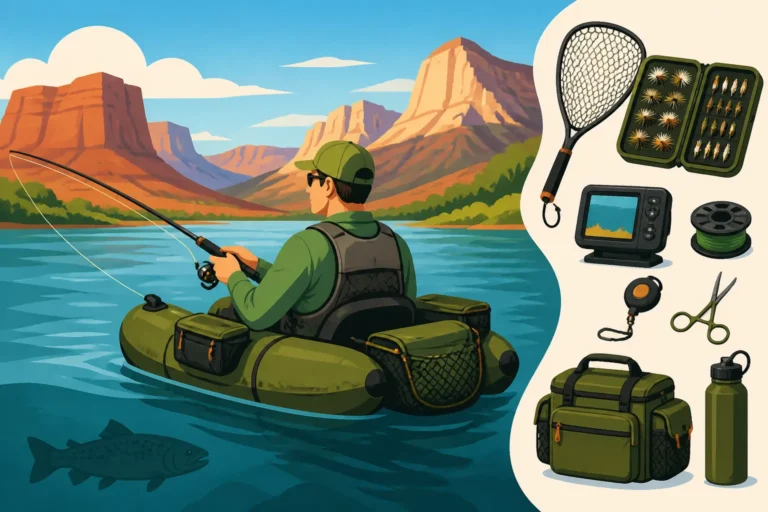
- High Lakes (e.g., Uinta Mountains): Accessing these remote, beautiful lakes often involves hiking, so lightweight and easily transportable kayaks are paramount. Inflatable fishing kayaks or even packrafts are excellent choices here, as they can be deflated and carried in a backpack. Traditional hard-shell kayaks are often too heavy and cumbersome for long portages. For these waters, focus on minimalist gear, a small tackle box with trout-specific lures and flies, and a lightweight paddle. Cold water temperatures are common, so appropriate layering of clothing and a reliable PFD are non-negotiable. The serene environment often calls for stealth, making a paddle kayak an ideal choice.
- Rivers (e.g., Green River, Provo River): River fishing from a kayak is a dynamic experience. Maneuverability is key, so shorter kayaks (often 10-12 feet) are generally preferred over long, fast touring kayaks. You'll need a good anchor system, preferably an anchor trolley, to position yourself effectively in current. A sturdy paddle is essential for navigating rapids or quickly changing direction. Footpegs or a solid brace point for your feet will give you better control and leverage against the current. Fly fishing from a kayak on rivers like the Green River below Flaming Gorge Dam requires careful rigging to keep lines clear and an awareness of water levels and currents. Safety is paramount on rivers, so understanding how to read the water, identify hazards, and perform self-rescue techniques is critical.
Reservoir and Lake Powell Kayak Setup
Utah's large reservoirs and the immense Lake Powell demand different kayak fishing strategies and gear. These waters are often vast, deep, and can experience unpredictable weather.
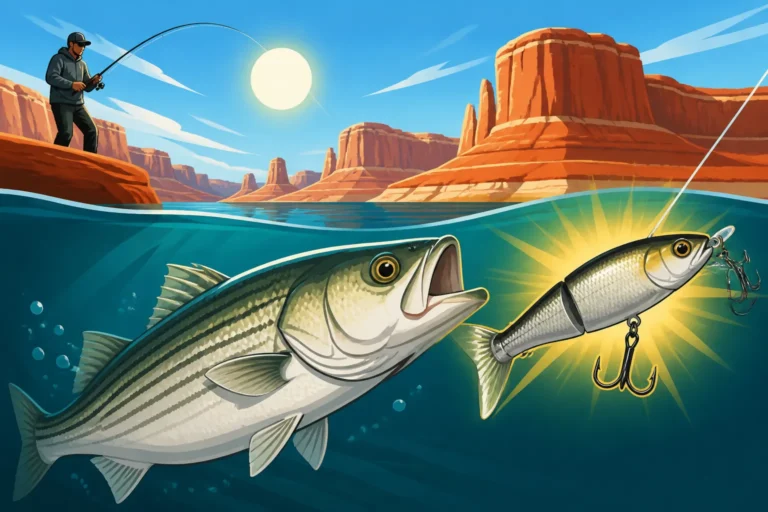
- Vast Open Waters (e.g., Flaming Gorge, Lake Powell, Bear Lake): On these immense bodies of water, covering distance efficiently is crucial. Longer kayaks (12-14+ feet) that track well and maintain speed are preferred. Pedal drive kayaks truly shine here, allowing you to troll vast areas or quickly move between distant fishing spots while keeping your hands free. A reliable fish finder with GPS and mapping capabilities is essential for navigating, marking waypoints, and finding deep-water structure where species like lake trout and striped bass often lurk. Due to the potential for strong winds and choppy conditions, stability is a high priority, so wider SOT kayaks are recommended. Always carry extra water, warm clothing, and robust safety gear, as help can be a long way off.
- Wind and Waves: Utah's reservoirs can get incredibly windy, turning calm water into whitecaps in minutes. A stable kayak, a strong paddle, and potentially a trolling motor will help you battle these conditions. An anchor with sufficient scope (the ratio of anchor line to depth) is vital for holding your position in the wind. Always check the weather forecast before heading out, especially on large lakes, and be prepared to head for shore if conditions deteriorate. Fishing for trophy fish in these waters, like the famous Lake Trout at Flaming Gorge, often requires specialized trolling or jigging gear that can be effectively managed from a stable kayak platform.
- Warm Water Species (e.g., Utah Lake Bass and Walleye): For targeting species like walleye and bass, especially in waters that warm up like Utah Lake or Willard Bay, versatility in rigging is key. You'll want easily accessible rod holders for various casting techniques, ample storage for tackle boxes filled with crankbaits, jigs, and soft plastics, and perhaps a shallow water anchor like a stake-out pole for precise positioning in coves and weed beds. Stability is still important for sight fishing or standing casts.
Dealing with Aquatic Invasive Species (AIS)
This is a critical consideration for any boater in Utah, including kayak anglers. The spread of aquatic invasive species (AIS), particularly quagga and zebra mussels, poses a serious threat to Utah's waterways. Kayaks, while smaller, are not exempt from the rules.
- Clean, Drain, Dry: The mantra for preventing AIS spread is "Clean, Drain, Dry."
- Clean: Before leaving the launch, remove all visible mud, plants, and organisms from your kayak, paddle, PFD, and all fishing gear. Pay special attention to scupper holes, crevices, and the inside of your kayak.
- Drain: Pull your drain plug and drain all water from your kayak, live wells, and bait buckets. For pedal drive units, ensure all water is drained from the cassette.
- Dry: This is often the most critical step. Allow your kayak and all gear to thoroughly dry before launching in another body of water. The recommended dry time varies depending on the water body (especially Lake Powell) and air temperature, but generally ranges from a few days to several weeks. Warm, dry conditions speed up the process. This helps kill any microscopic organisms that might be clinging to your boat. You can find detailed regulations and dry times, as well as locations for mandatory inspections, by searching for Utah Aquatic Invasive Species Inspection Stations.
- Mandatory Inspections: For certain waters, like Lake Powell, mandatory AIS inspections and decontamination may be required before launching or after exiting. Even kayaks, paddleboards, and float tubes may be subject to inspection. Always be aware of the current regulations and be prepared for these checks. Failure to comply can result in significant fines. This is not just a rule; it's a vital effort to protect Utah's precious fisheries, and every angler must do their part. You can also find information on How to Dry a Boat Properly to Meet Utah's AIS Rules.
By understanding and adhering to these guidelines, you're not only protecting yourself but also the future of Utah's incredible fishing opportunities.
Maintaining Your Kayak Fishing Gear
Just like any other outdoor equipment, your kayak fishing gear requires regular maintenance to ensure its longevity, performance, and reliability. Proper care will protect your investment and ensure your gear is always ready for your next Utah fishing adventure.
Post-Trip Cleaning and Storage
Taking a few minutes after each trip to clean and properly store your kayak and gear will make a huge difference in their lifespan.
- Kayak Cleaning: After every outing, especially if you've been in murky or salty water (like the Great Salt Lake or some warm community ponds), rinse your kayak thoroughly with fresh water. Use a mild soap and brush to remove any mud, algae, or fish slime. Pay attention to scupper holes, hull crevices, and the rudder/pedal drive system to prevent buildup and corrosion. Inspect your hull for any new scratches or dings that might need attention later. For preventing AIS, this cleaning is also part of the "Clean, Drain, Dry" protocol mentioned earlier.
- Gear Care:
- Rods and Reels: Rinse your rods and reels with fresh water, especially if they've been exposed to splashes. Pay attention to guides and reel components. Dry them thoroughly. Lightly lubricate moving parts on your reels according to the manufacturer's recommendations.
- PFD: Rinse your PFD and hang it to air dry in a well-ventilated area, out of direct sunlight. Never store a damp PFD, as it can mildew.
- Tackle and Lures: Remove any wet lures from your tackle box to prevent rust. Let them air dry before returning them to storage. Wipe down tackle boxes if they get wet or slimy.
- Storage: Store your kayak in a cool, dry place, out of direct sunlight, which can degrade plastic over time. You can hang it from the ceiling, use specialized wall racks, or simply store it on its side or upside down on sawhorses. Ensure it's not resting on anything that could deform the hull over time. Store all your gear in an organized manner, ensuring it's dry and protected from pests or extreme temperatures. This not only keeps your garage tidy but also makes it easy to grab your essentials for the next spontaneous trip.
Repairing and Upgrading Your Kayak
Kayaks are durable, but bumps, scrapes, and wear are inevitable. Knowing how to perform basic repairs and when to consider upgrades can extend the life of your vessel.
- Minor Repairs: Small scratches and gouges are generally superficial and don't require immediate attention. Deeper gouges that penetrate the hull material may need a plastic welding kit or marine epoxy, especially if they are below the waterline. Consult your kayak manufacturer's recommendations for specific repair materials and techniques. Always repair damage promptly to prevent it from worsening or compromising the integrity of your hull. Hardware like screws and rivets can loosen over time; check them periodically and tighten or replace as needed.
- Upgrades: As you gain experience, you might find certain features of your kayak could be improved.
- Seating: An aftermarket seat with better padding and back support can dramatically increase comfort on long trips.
- Rod Holders: Adding more adjustable rod holders or track systems can enhance your fishing efficiency.
- Electronics Mounts: Dedicated mounts for fish finders, transducers, or cameras can streamline your setup.
- Storage: Adding bungee cords, deck rigging, or a custom crate can improve organization.
- Rudder/Skeg: If your kayak struggles with tracking in windy conditions, adding a rudder or skeg system can greatly improve its performance.
- Trolling Motors/Pedal Drives: As discussed earlier, these can transform a paddle kayak into a more efficient fishing machine.
Before making significant modifications, research compatibility and consider consulting with experienced kayak anglers or your kayak dealer. Many upgrades can be found at outdoor retailers like Bass Pro Shops or through online stores like Amazon.
Winterizing Your Kayak for the Off-Season
If you live in an area of Utah that experiences a cold winter, putting your kayak away properly for the off-season is important.
- Thorough Cleaning and Drying: Give your kayak a final, deep clean, removing all dirt, grime, and especially any moisture. This is crucial to prevent mold and mildew growth during storage. Remove all plugs and ensure every drop of water is drained. Pay extra attention to pedal drive systems and trolling motors, following manufacturer instructions for winterization to prevent freezing damage.
- Battery Care: For any batteries used with electronics or trolling motors, follow the manufacturer's instructions for winter storage. This usually involves fully charging them, then storing them in a cool, dry place, and potentially performing a maintenance charge periodically. Never leave batteries in a cold garage or unheated shed without proper care, as extreme cold can damage them.
- Gear Inspection: Take this time to inspect all your gear for wear and tear. Sharpen hooks, replace frayed lines, check your PFD for damage, and repair any issues before spring. This way, you're ready to hit the water as soon as the ice thaws and the fishing seasons open again.
- Optimal Storage: Store your kayak indoors if possible, away from freezing temperatures and direct sunlight. If outdoor storage is unavoidable, cover your kayak with a breathable tarp or cover to protect it from snow and ice, but allow for air circulation to prevent moisture buildup. Ensure the kayak is supported properly to prevent hull warping. By taking these steps, you'll ensure your kayak and all its gear emerge from winter ready for another season of memorable Utah fishing adventures.
Disclaimer
This article is for general informational purposes only and does not constitute professional advice. Laws, prices and regulations vary by location and change over time. Consult a qualified professional for guidance on your specific situation.