Best Boats for Utah Reservoir Fishing
Choosing the perfect boat for fishing Utah's incredible reservoirs can feel like a real puzzle. You've got everything from vast, deep lakes that can churn up ocean-like waves to smaller, high-mountain impoundments, each demanding something a little different from your vessel. This guide is here to help you navigate the myriad of options, from nimble kayaks to robust deep-Vs, so you can confidently pick the ideal boat that will elevate your Utah fishing adventures.
Understanding Utah's Reservoir Landscape
Utah's reservoirs are as diverse as the fish species that inhabit them, and understanding their unique characteristics is the first step in choosing the right boat. You wouldn't bring a butter knife to a steak dinner, and you certainly wouldn't bring a tiny jon boat to tackle the vast expanses of Lake Powell on a windy day. Knowing what you're up against, water-wise, will save you a lot of headaches and keep you safe and productive on the water.
Varying Sizes and Conditions
Think about the sheer scale of some of Utah's fishing destinations. Flaming Gorge Reservoir, for example, stretches for miles, with deep canyons and open water that can turn treacherous with a sudden afternoon squall. Lake Powell is even larger, a maze of red rock canyons where navigating can feel like an expedition in itself. These waters demand a stable, capable vessel that can handle chop, cover long distances, and carry enough gear for extended trips. A stiff breeze across such an expanse can kick up serious waves, making a smaller, lower-profile boat feel like a roller coaster, if not outright dangerous.
On the other hand, you have countless medium-sized reservoirs like Strawberry, Deer Creek, or Jordanelle, which are popular for a wide variety of angling. While still capable of developing significant chop, they might be more forgiving than the truly massive lakes. Then there are the smaller, often higher-elevation reservoirs, which might only be accessible via dirt roads or even short hikes. For these, portability and ease of launch become paramount. A heavy, trailer-bound boat might be overkill, or even impossible to launch, at some of these spots. Considering the specific conditions of your most frequented waters—wind exposure, typical wave height, and the general ruggedness of the boat launches—is absolutely critical to making an informed decision.
Species-Specific Needs
The fish you're targeting also plays a huge role in boat selection. If your passion is trolling for monster lake trout or kokanee salmon in deep, open water, you'll need a boat equipped for that. This often means ample deck space for downriggers, a stable platform for fighting big fish, and the ability to run multiple lines efficiently. A deeper V-hull will cut through waves smoothly, making long trolling passes more comfortable.
Conversely, if you're a hardcore bass angler, particularly targeting smallmouth bass in rocky coves or largemouth in weed beds, a different kind of boat shines. Bass boats, with their low profiles, powerful engines for quick runs between spots, and expansive casting decks, are designed for this style of fishing. They allow anglers to stand and cast with ease, providing excellent visibility into shallow water. However, their lower freeboard can be a disadvantage on really rough, open water. For river fishing, or very specific stillwater fly fishing scenarios, something like a drift boat or a personal pontoon boat might be more appropriate, offering silent drifts and access to shallower areas that powered boats can't reach. Think about how you fish most often, not just where.
Key Factors When Choosing a Fishing Boat for Utah
Once you have a handle on Utah's diverse waters and your primary fishing interests, it's time to drill down into the practical aspects of boat choice. This isn't just about what looks good; it's about what performs, keeps you safe, and fits your angling lifestyle. Over the years, I've seen countless anglers either regret a hasty purchase or sing the praises of a well-considered one, and it almost always comes down to these fundamental factors.
Stability and Safety
This is paramount, especially on Utah's larger, wind-prone reservoirs. A sudden change in weather can turn a calm morning into a white-knuckle ride very quickly. You want a boat that feels solid underfoot, both when stationary and when cutting through waves. A wider beam (the width of the boat) generally contributes to greater stability, as does a deeper V-hull design, which helps the boat track straight and absorb impacts from waves rather than just bouncing over them.
Consider the "freeboard," which is the height of the boat's side above the waterline. A higher freeboard provides more protection from splashing waves and can be a huge comfort when fishing with kids or in choppier conditions. For larger lakes like Flaming Gorge or Bear Lake, a boat with good stability and adequate freeboard is non-negotiable for safety and comfort. Don't underestimate the fatigue that comes from constantly bracing yourself in an unstable boat. It can turn a fun day into a miserable one faster than you think. You'll also want to be sure your boat carries all the Life Jacket Requirements on a Utah Boat and other safety gear to be compliant with state regulations.
Portability and Launch Access
Many of Utah's most pristine fishing spots, especially in the higher elevations or more remote regions, don't have paved boat ramps. Some might just have a dirt track leading down to the water, or perhaps a small, unimproved shoreline. If your fishing adventures regularly take you off the beaten path, the weight and size of your boat, as well as the ease of launching and retrieving, become critical.
A heavy fiberglass bass boat, while fantastic on big water, might be a nightmare to launch at a rocky, unmaintained ramp. Smaller aluminum boats, often called jon boats or utility boats, are much lighter and more maneuverable, making them ideal for these situations. Kayaks and canoes take portability to another level, often capable of being launched by hand even in the absence of a ramp. Think about your vehicle's towing capacity and the types of launches you'll most frequently encounter. A lighter boat also means less fuel consumption for towing, which is a nice bonus on those long hauls to your favorite remote lake.
Storage and Deck Space
Let's be honest, anglers accumulate stuff. Rods, tackle boxes, coolers, rain gear, safety equipment, extra layers, snacks, drinks… the list goes on. Adequate storage is crucial for keeping your boat organized, clutter-free, and safe. You don't want tripping hazards or gear flying around in rough water. Look for boats with built-in storage compartments, rod lockers, and enough open deck space to move around comfortably, especially if you often fish with multiple people.
For serious anglers, a dedicated livewell is often a must-have for keeping bait lively or your catch fresh for the table, or even for holding fish during a tournament before release. If you're planning multi-day trips to places like Lake Powell, the amount of storage becomes even more important for food, camping gear, and extra fuel. The layout of the deck, how easy it is to navigate from bow to stern, and the placement of seats or casting platforms will directly impact your comfort and effectiveness on the water.
Draft and Shallow Water Access
The "draft" of a boat refers to how much of its hull is submerged in the water. Boats with a shallow draft can operate in very shallow water, which is incredibly useful for accessing back coves, navigating fluctuating water levels, or getting into areas where fish might be holding away from deeper channels. Many of Utah's reservoirs experience significant water level fluctuations throughout the year, especially Lake Powell. A boat with a deep V-hull might struggle in these areas, potentially running aground or making access impossible.
Flat-bottomed jon boats or certain aluminum skiffs have very shallow drafts and can float in just a few inches of water. Kayaks and canoes excel here. If you frequently find yourself exploring skinny water, targeting bass in weed beds, or simply dealing with low water conditions at your favorite launch, prioritize a boat with a shallower draft. This can open up new fishing opportunities that deeper-keeled boats can't touch, allowing you to chase fish into their most secluded hiding spots.
Popular Boat Types for Utah Reservoir Fishing
Now that we've covered the fundamental considerations, let's dive into the actual types of boats you'll most commonly see (and perhaps consider) on Utah's waters. Each has its strengths and weaknesses, designed with specific fishing styles and conditions in mind.
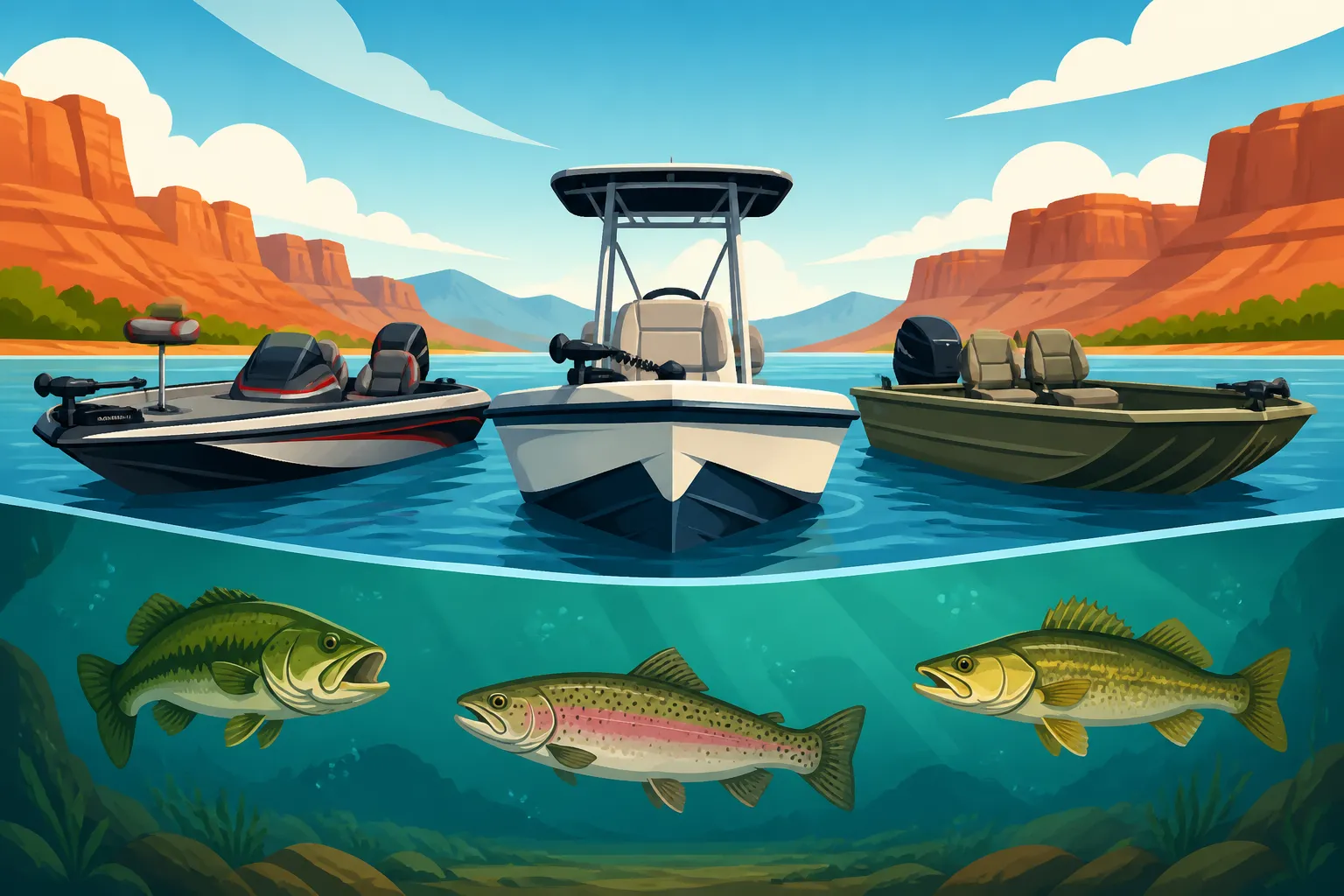
Aluminum V-Hull Boats
These are often the workhorses of Utah's fishing scene, especially for anglers who need versatility and durability without breaking the bank. Aluminum V-hulls come in a wide range of sizes, from small, basic utility boats that you can car-top to larger, more sophisticated models with consoles, livewells, and comfortable seating.
Pros:
- Durability: Aluminum is tough. It can handle bumps against rocks or stumps much better than fiberglass, making it great for rougher shorelines or unknown waters.
- Lighter Weight: Generally lighter than equivalent fiberglass boats, making them easier to tow, launch, and retrieve, especially at less-developed ramps. This also means smaller vehicles can often tow them.
- Versatility: Capable of handling both open water (especially the larger V-hulls) and shallower coves. Many are designed for multi-species fishing, from trout and kokanee to bass and walleye.
- Affordability: Typically more budget-friendly than fiberglass boats, both in initial purchase and often in maintenance.
Cons:
- Ride Quality: While larger V-hulls can handle chop, they often don't provide as smooth or quiet a ride as a heavier fiberglass boat in rough conditions. They can "pound" more.
- Speed: Generally not as fast as dedicated bass boats or high-performance fiberglass hulls, though modern outboards on larger aluminum boats can be surprisingly quick.
- Deck Space/Features: While some higher-end models offer excellent layouts, smaller or more basic aluminum boats might lack the expansive casting decks or built-in amenities of specialty boats.
Ideal Use in Utah: Aluminum V-hulls are fantastic general-purpose boats for places like Deer Creek Reservoir, Jordanelle, Scofield, or even the main body of Strawberry. They're great for trolling for trout, jigging for kokanee, or casting for bass in moderate conditions. You'll find a huge selection of appropriate gear at retailers like Bass Pro Shops, from rod holders to anchors, that pair perfectly with these versatile boats.
Fiberglass Bass Boats
If you've spent any time watching fishing shows or attending bass tournaments, you're familiar with these sleek, powerful machines. Bass boats are purpose-built for bass fishing, prioritizing speed, shallow water access, and large, unobstructed casting platforms.
Pros:
- Casting Platforms: Massive, flat decks at the bow and stern provide unparalleled space for multiple anglers to cast simultaneously.
- Speed: Designed to get you to your fishing spot quickly, often powered by large, high-horsepower outboards. This is invaluable in tournaments where time is money.
- Shallow Water Capability: Many modern bass boats can operate in surprisingly shallow water, especially when on plane, to access prime bass habitat.
- Storage: Abundant, well-organized storage for dozens of rods, tackle boxes, and specialized gear. Integrated livewells are standard.
Cons:
- Rough Water Ride: While they can handle some chop, their low freeboard and flatter bottom designs can make for a wet and uncomfortable ride in truly rough, open water. They aren't built for big waves.
- Cost: Generally more expensive than aluminum boats, both to purchase and to operate (fueling those big engines!).
- Limited Versatility: While you can fish for other species, they are specialized for bass. Trolling for lake trout, for example, isn't their strong suit without significant modifications.
Ideal Use in Utah: For hardcore bass anglers hitting reservoirs like Utah Lake, Willard Bay, or the bassier coves of Flaming Gorge, a bass boat is king. They excel at quickly covering water and precisely presenting lures to fish in structure. For things like Utah Bass Fishing Regulations and specific spots, these boats offer a huge advantage.
Deep-V Walleye Boats
Often considered a hybrid between a traditional aluminum V-hull and a more robust fiberglass boat, deep-V walleye boats are designed to tackle large, rough bodies of water while providing excellent fishing functionality. They typically have a deeper V-hull than many aluminum bass boats, offering a much smoother ride in choppy conditions.
Pros:
- Rough Water Performance: Their deep V-hulls cut through waves, providing a drier, more comfortable ride in windy conditions on large lakes.
- Versatility: Excellent for multi-species fishing, equally adept at trolling for walleye, kokanee, or lake trout, and casting for bass or other predators.
- Stability: Often wider and heavier than comparable aluminum boats, offering great stability while fishing.
- Amenities: Usually come equipped with multiple livewells, expansive rod storage, and comfortable seating.
Cons:
- Cost: Can be more expensive than many aluminum boats, though generally less than high-end fiberglass bass boats.
- Weight: Heavier than most aluminum boats, requiring a more capable tow vehicle and potentially more effort at launching.
- Shallow Water Limitations: While versatile, their deeper V-hulls mean they won't access as shallow water as a dedicated bass boat or jon boat.
Ideal Use in Utah: These boats are perfectly suited for Utah's large, often windy reservoirs where walleye, lake trout, or kokanee are the primary targets. Think Flaming Gorge, Bear Lake, or even Strawberry Reservoir on a windy day. They are truly the kings of big-water trolling and jigging. If you're looking into Utah Walleye Harvest Rules at places like Utah Lake, a boat like this will get you to the action comfortably.
Pontoon Boats
While not traditionally thought of as "fishing boats" by some, modern pontoon boats have come a long way and can be incredibly effective, especially for families or groups. Many manufacturers now offer dedicated "fishing pontoon" models with angler-friendly features.
Pros:
- Space and Comfort: Unbeatable deck space for moving around, accommodating multiple anglers, and bringing along all the comforts of home. Great for family outings.
- Stability: Very stable platforms, thanks to their dual (or triple) pontoons, making them excellent for calm water and gentle waves.
- Social Aspect: Perfect for combining fishing with other activities like swimming, sunbathing, or just cruising.
- Customization: Easy to add aftermarket rod holders, fish finders, and even portable livewells.
Cons:
- Rough Water Performance: While stable in calm water, pontoon boats can struggle in strong winds and chop. They tend to "slap" waves rather than cut through them, making for a bouncy and wet ride.
- Speed: Generally slower than V-hull boats, though modern pontoons with larger engines can achieve respectable speeds.
- Maneuverability: Can be more cumbersome to maneuver in tight spots or around docks due to their size and shape.
- Wind Resistance: High profile makes them very susceptible to wind, making boat control challenging on breezy days, even with a strong trolling motor.
Ideal Use in Utah: Pontoon boats shine on medium to large reservoirs during calmer conditions. They're excellent for taking the whole family out to places like Deer Creek, Jordanelle, or the calmer days on Pineview Reservoir, offering a comfortable base for a day of fishing, swimming, and relaxation.
| Boat Type | Pros | Cons | Ideal Utah Reservoirs | Primary Species |
|---|---|---|---|---|
| Aluminum V-Hull | Durable, versatile, lighter, often more affordable, good general purpose | Can have a rougher ride in chop, generally slower, less dedicated features | Deer Creek, Jordanelle, Scofield, Strawberry (moderate) | Trout, Bass, Kokanee, Perch |
| Fiberglass Bass Boat | Fast, large casting decks, excellent storage, shallow water access | Poor in rough open water, expensive, specialized for bass, low freeboard | Utah Lake, Willard Bay, Flaming Gorge (coves) | Bass (Smallmouth/Largemouth), Wiper |
| Deep-V Walleye Boat | Excellent rough water ride, very versatile, stable, good amenities | Heavier, more expensive than aluminum, less shallow water access | Flaming Gorge, Bear Lake, Strawberry (open water) | Walleye, Lake Trout, Kokanee, Trout |
| Pontoon Boat | Spacious, very stable (calm water), comfortable for groups, family-friendly | Poor in rough water, slower, less maneuverable in tight spots, high wind profile | Deer Creek, Jordanelle, Pineview (calm days) | Panfish, Trout (stillwater), Bass |
| Kayak/Canoe | Ultra-portable, silent, excellent shallow water access, affordable | Limited capacity, slower, exposed to elements, not for rough open water | Uinta High Lakes, Community Ponds, calm sections of rivers | Trout, Panfish, Smallmouth Bass (rivers/coves) |
| Float Tube | Extremely portable, affordable, silent, ultimate stealth | Very limited range, slow, exposed to elements, not for large open water | Smaller ponds, high mountain lakes, stillwater fly fishing | Trout, Panfish (especially fly fishing) |
Specialty Vessels for Unique Utah Fishing Experiences
While the general categories cover most scenarios, Utah's diverse fishing opportunities sometimes call for something a little more specialized. These vessels cater to specific niches, offering unique advantages that can unlock incredible fishing adventures.
Kayaks and Canoes
For the angler who craves stealth, simplicity, and access to pristine, quiet waters, kayaks and canoes are unparalleled. These are not just for paddling; modern fishing kayaks, in particular, are tricked out with features for serious angling.
Pros:
- Stealth: They move silently through the water, allowing you to approach wary fish without spooking them. This is a huge advantage in clear, shallow waters or when targeting highly sensitive species.
- Access: Kayaks and canoes can get into incredibly tight spots, shallow backwaters, and narrow channels that larger boats simply cannot reach. They can be hand-launched from almost any shoreline, making remote lakes much more accessible.
- Portability & Affordability: Many kayaks are light enough to car-top or transport in a truck bed, eliminating the need for a trailer. They are also significantly more affordable than motorized boats, making fishing more accessible.
- Exercise & Connection: Paddling offers a great workout and a profound sense of connection to the water and nature, making the fishing experience even more rewarding.
Cons:
- Limited Capacity: Storage space and carrying capacity are much more restricted compared to powerboats.
- Speed & Range: They are slower and have a more limited range, dependent on your paddling endurance.
- Exposure: You are fully exposed to the elements, meaning wind, sun, and cold can be more challenging.
- Rough Water Limitations: While some specialized kayaks can handle moderate chop, they are generally not suitable for large, open, rough waters where safety can quickly become an issue.
Ideal Use in Utah: Kayaks are phenomenal for exploring the myriad of smaller reservoirs, community ponds, or the calm coves of larger lakes. They are also perfect for a quiet morning on the Provo River or wading out to specific spots on the Green River. Check out our guide on Utah Kayak Fishing Gear Guide for what you'll need.
Float Tubes and Pontoon Boats (Individual)
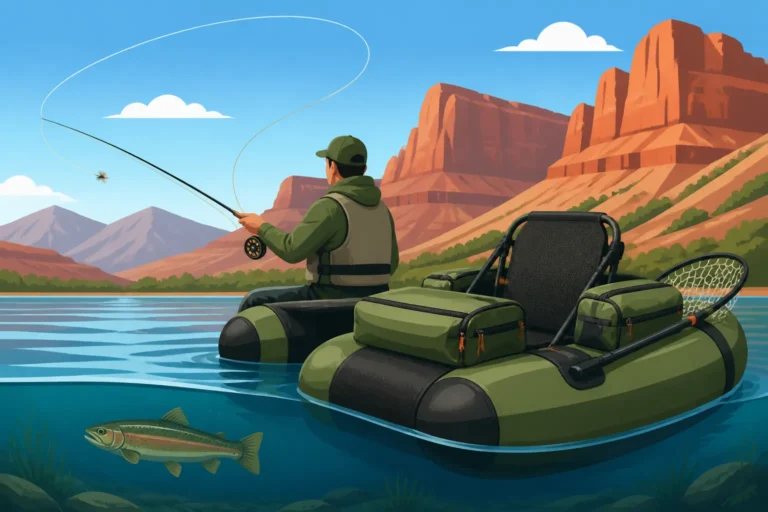
If you're a stillwater fly angler or just someone who loves the ultimate in personal, intimate fishing, a float tube or a personal pontoon boat might be your ideal vessel. These are often propelled by fins on your feet, allowing for hands-free casting and exceptional maneuverability.
Pros:
- Stealth & Immersiveness: You are literally in the water, moving silently and becoming part of the environment. This is fantastic for sight fishing and approaching spooky fish.
- Portability & Affordability: Extremely light and easy to transport, often fitting in the trunk of a car. They are also very budget-friendly.
- Maneuverability: You can spin 360 degrees with ease, allowing precise casting angles and line control.
- Hands-Free Operation: With fins propelling you, both hands are free for casting, retrieving, and fighting fish.
Cons:
- Limited Range & Speed: Very slow and limited in how much water you can cover. Best for smaller bodies of water or defined areas.
- Exposure: Full exposure to cold water and weather elements is a given. Waders are essential, and cold weather can be a real challenge.
- Safety in Wind: Can be difficult to control in strong winds, and large waves can easily swamp them.
- Limited Storage: Very minimal storage, usually just a few pockets for tackle and essentials.
Ideal Use in Utah: These are absolutely brilliant for high-altitude Uinta Mountain lakes, smaller community ponds, or any calm stillwater where you want to target trout or panfish with flies or light tackle. They offer incredible access to fish in shallow weed lines or along rocky drop-offs. For more details on what you need, see our Best Float Tubes for Utah Stillwater Fly Fishing guide.
Drift Boats/Rafts
While primarily associated with river fishing, particularly on famed tailwaters like the Green River below Flaming Gorge, drift boats and rafts can have niche applications in reservoir fishing, particularly in large inlets or slowly moving areas.
Pros:
- River Mastery: Unmatched control and quiet drifts on rivers, allowing precise presentations.
- Durability: Inflatable rafts are incredibly tough and can bounce off rocks without damage.
- Capacity: Can carry multiple anglers and a good amount of gear for a day trip.
- Shallow Water: Can float in very shallow water, accessing areas where prop boats cannot go.
Cons:
- No Motorization (Typically): Designed for manual propulsion (oars), limiting their use to moving water or very calm, short distances on reservoirs.
- Not for Open Water: Not built for open, choppy reservoir conditions. High wind can make them very difficult to control.
- Trailering/Transport: Requires a trailer and specific launch/take-out points, similar to a powerboat.
Ideal Use in Utah: On the Green River, a drift boat or fishing raft is king. While less common on reservoirs, they could be used for exploring large, calm riverine arms of reservoirs, or in areas where a stream feeds into a lake, offering a unique, quiet approach to fish holding in those transition zones.
Essential Boat Features and Accessories for Utah Anglers
Having the right boat is just the beginning. Equipping it with the proper features and accessories can dramatically enhance your fishing experience, making you more efficient, comfortable, and successful on Utah's diverse waters. Think of these as the tools that turn a basic boat into a finely tuned fishing machine.
Motorization: Outboards, Trolling Motors
Power is key, and it often comes in two main forms: the primary outboard engine and the auxiliary trolling motor.
Outboard Engines: Your main outboard engine determines your speed, range, and ability to get to and from your fishing spots efficiently and safely. For large reservoirs, a reliable, adequately powerful outboard is crucial. Consider factors like horsepower (matching your boat's rating), fuel efficiency for long runs, and the reputation for reliability, especially if you're venturing far from shore. Four-stroke engines are generally more fuel-efficient and quieter than older two-strokes. You also need to consider service availability in Utah for your chosen brand.
Trolling Motors: These are game-changers for precise boat control while fishing. They allow you to hold position, sneak along shorelines, or execute slow, controlled drifts without constantly starting your main engine.
- Bow-Mount Trolling Motors: These are mounted on the front of the boat and are highly recommended for serious anglers. They "pull" the boat, offering superior control and maneuverability, especially in wind. Many come with advanced features like GPS anchoring (spot-lock), auto-pilot, and integration with fish finders. Brands like Minn Kota and MotorGuide are popular choices. You can find a great selection and detailed reviews in our guide on Best Trolling Motors for Utah Reservoirs.
- Transom-Mount Trolling Motors: Simpler, often less powerful, and mounted on the back of the boat. They "push" the boat, which offers less precise control, but they are more affordable and easier to install, making them good for smaller boats or as a backup.
Electronics: Fish Finders, GPS, Mapping
In today's angling world, electronics are almost as essential as rods and reels. They provide vital information about what's below the surface and where you are on the water.
- Fish Finders (Sonar): These devices use sonar waves to paint a picture of the underwater world, showing depths, contours, structure (like submerged trees or rock piles), and, of course, fish. Modern units offer a bewildering array of technologies:
- 2D Sonar: The traditional view, showing fish arches and bottom composition.
- Down Imaging/Side Imaging: Provides photographic-like views of what's directly below or to the sides of your boat, incredibly useful for finding subtle structure.
- Live Sonar: Cutting-edge technology that shows real-time movement of fish and your lure, allowing you to react instantly.
For selecting the right unit, our Best Fish Finders for Utah Reservoirs guide offers excellent insights. When buying, check retailers like Amazon or Bass Pro Shops for competitive pricing and installation accessories.
- GPS (Global Positioning System): Integrated into most modern fish finders, GPS allows you to mark waypoints (your favorite fishing spots, submerged hazards, launch ramps), create routes, and navigate safely, especially on vast lakes like Powell or Flaming Gorge.
- Mapping: Detailed lake maps (often pre-loaded or downloadable to your fish finder/GPS) show contours, depths, navigation markers, and points of interest. These are invaluable for understanding the underwater topography and finding potential fish-holding structure.
Livewells and Storage
As discussed earlier, dedicated storage and livewells are crucial for an organized and productive fishing trip.
- Livewells: Essential for keeping bait fish alive and healthy, or for holding your catch during a tournament or before processing for the dinner table. Look for aerated, insulated livewells with good circulation systems. Size matters; if you plan to keep larger fish or a full limit, ensure your livewell is big enough.
- Storage Compartments: From rod lockers that protect your valuable rods to tackle trays, dry storage for electronics, and insulated compartments for food and drinks, well-designed storage keeps your boat tidy and your gear safe. Many modern boats feature lockable compartments, adding security for your equipment.
Anchoring Systems
Being able to stay put over a specific spot is vital, especially when jigging, bait fishing, or casting to a particular piece of structure.
- Traditional Anchors: Still the most common method. The type and weight of anchor depend on your boat size and the bottom composition (e.g., grapnel for rocks, fluke for mud/sand). Always carry enough anchor rope!
- Shallow Water Anchors (e.g., Power-Pole, Talon): These deploy poles into the bottom, quickly and silently securing your boat in shallow water (typically up to 12-15 feet). They are fantastic for bass fishing or targeting fish in specific spots along a shoreline.
- Trolling Motor Spot-Lock: For deeper water, a GPS-enabled trolling motor's "spot-lock" feature is like a digital anchor, holding your boat precisely over a waypoint using GPS and the motor's thrust. This is incredibly useful and allows for hands-free fishing. You can learn more about different anchoring solutions in our Best Anchors for Utah Reservoir Fishing guide.
Rod Holders and Mounts
Customizing your boat with the right rod holders allows you to troll multiple lines, keep spare rods at the ready, and secure your rods while moving between spots.
- Flush Mounts: Integrated into the boat's gunwales, offering a clean look.
- Adjustable Holders: Clamp-on or track-mounted holders that can be angled for trolling or stored when not in use. Brands like Scotty and Cabela's offer robust options.
- Rod Storage: Beyond holders, dedicated rod lockers or vertical rod racks keep your rods safe from damage during transit or when not in use.
Navigating Boat Ownership: Costs and Regulations in Utah
Owning a boat in Utah is a fantastic way to access our incredible waters, but it comes with responsibilities and associated costs. It's not just about the purchase price; there's a whole world of regulations, maintenance, and fees to consider. Being informed upfront will save you from unwelcome surprises down the road.
Initial Purchase and Ongoing Maintenance
The sticker price of a boat is often just the beginning. The total cost of ownership can add up quickly.
- Initial Purchase: Boats range from a few hundred dollars for a basic jon boat or kayak to well over six figures for a fully rigged fiberglass deep-V. Factor in the cost of the trailer, outboard motor, and initial electronics and safety gear. New boats offer warranties and the latest features, while used boats can be a great value but might come with unseen issues.
- Fuel: Especially with larger outboards and long runs across big reservoirs, fuel costs can be significant. Keep an eye on fuel prices and always carry extra, especially in remote areas like Lake Powell where gas docks can be sparse and expensive.
- Maintenance: Like any vehicle, boats require regular maintenance. This includes oil changes for the outboard, winterization before freezing temperatures set in (a crucial step in Utah!), battery checks, trailer bearing maintenance, and general cleaning. Neglecting maintenance can lead to costly repairs down the line.
- Storage: If you don't have space at home, you'll need to factor in the cost of off-season storage, either at a marina or a dedicated storage facility.
Utah Boat Registration Requirements
Before you even think about launching, your boat needs to be properly registered with the Utah Division of Outdoor Recreation. This isn't just a formality; it's a legal requirement, and fines for non-compliance are real.
- What Needs Registration: Generally, any motorized vessel operating on Utah's waters needs to be registered. This includes fishing boats, jet skis, and even electric trolling motor-equipped kayaks if they meet certain criteria. Non-motorized vessels like canoes, kayaks, and paddleboards typically do not need to be registered, but always double-check the latest regulations.
- Process: You'll need to submit an application, proof of ownership (like a title or bill of sale), and pay the registration fees. These fees often support state boating programs and aquatic invasive species efforts.
- Displaying Numbers: Once registered, you'll receive a registration card and decals with your unique registration number, which must be clearly displayed on both sides of your boat's bow.
- Renewal: Registrations are typically valid for a set period and need to be renewed regularly. Keep an eye on the expiration date to avoid issues. For a comprehensive guide, check out Utah Boat Registration Requirements.
Aquatic Invasive Species (AIS) Inspections
This is one of the most critical aspects of boating in Utah, and it's something every angler needs to take seriously. Utah is on the front lines of preventing the spread of destructive aquatic invasive species like quagga mussels.
- Mandatory Inspections: All boats entering or leaving many Utah waters (especially Lake Powell) are subject to mandatory inspections. You are legally required to stop at designated inspection stations. Skipping an inspection can result in hefty fines.
- "Clean, Drain, Dry": The mantra for preventing AIS.
- Clean: Remove all visible mud, plants, and organisms from your boat, motor, trailer, and fishing gear.
- Drain: Drain all water from the boat, including the bilge, livewells, and motor. Pull drain plugs when traveling.
- Dry: Allow the boat to dry completely for a specified period (which varies by water body and season). Some waters, particularly Lake Powell, have specific "dry time" requirements before launching in another water body.
- Decontamination: If your boat is found with mussels or has been in infested waters and hasn't met dry time requirements, it will need to undergo a professional decontamination, which can be costly and time-consuming. You can find locations and learn more in our articles like Utah Aquatic Invasive Species Inspection Stations and Utah Quagga Mussel Decontamination Cost. It's a non-negotiable part of responsible boating here.
Insurance and Safety Gear
Protecting your investment and ensuring the safety of everyone on board is paramount.
- Boat Insurance: While not always legally required for smaller boats, boat insurance is highly recommended. It can protect you from financial loss due to accidents, theft, damage, or liability if someone is injured. Policies vary widely, so shop around.
- Safety Gear: Utah boating regulations mandate certain safety equipment on board. This typically includes:
- Life Jackets: Enough Coast Guard-approved life jackets for every person on board, correctly sized. Children often have specific requirements for wearing them at all times. Our guide on How Many Life Jackets You Need on a Utah Boat provides all the details.
- Throwable Flotation Device: A buoyant cushion or ring buoy.
- Sound-Producing Device: A whistle or horn.
- Fire Extinguisher: For boats with enclosed compartments or fuel tanks.
- Visual Distress Signals: Flares or flags for night operation.
Always check the latest regulations, as they can change. Having a well-stocked first-aid kit is also a smart move, even if not legally required.
Matching Your Boat to Specific Utah Reservoirs
Now that you're armed with all this knowledge, let's tie it all together by looking at some specific Utah reservoirs and the boat types that tend to excel there. While general-purpose boats can work almost anywhere, certain vessels truly shine on particular bodies of water.
Large, Open Waters (Flaming Gorge, Lake Powell, Bear Lake)
These are Utah's "big water" destinations, vast reservoirs that can easily churn up ocean-like conditions with even moderate winds. They demand capable, stable boats for safety and comfort, especially if you plan to cover long distances or fish far from the launch.
- Flaming Gorge Reservoir: Known for its massive lake trout, kokanee salmon, and smallmouth bass. The main channel and canyon areas can get very rough.
- Best Boats: Deep-V walleye boats, larger aluminum V-hulls (18+ feet), or robust fiberglass multi-species boats are ideal. They provide the stability and seaworthiness needed to handle the chop and the space for multiple anglers and trolling gear like downriggers. A powerful, reliable outboard is crucial for navigating its vastness.
- Considerations: Strong trolling motors (bow-mount with GPS spot-lock) are excellent for holding over structure for lake trout. Good electronics with detailed mapping are invaluable.
- Lake Powell: An immense, intricate reservoir known for its striped bass boils, largemouth and smallmouth bass, and walleye. Distances are huge, and high winds are common.
- Best Boats: Similar to Flaming Gorge, larger deep-V boats or multi-species fiberglass boats are excellent. Many anglers also use larger pontoon boats for comfortable, multi-day family trips, often houseboating. For specific advice on sizing, check out Best Boat Size for Fishing Lake Powell.
- Considerations: Fuel capacity is a big deal here; plan your fills carefully. A good GPS with detailed mapping is non-negotiable. Don't forget the mandatory AIS inspections and decontamination if you plan to launch in other waters.
- Bear Lake: Famous for its unique Bonneville cisco, trophy cutthroat trout, and lake trout. It's an open, shallow bowl that can get incredibly rough and cold very quickly.
- Best Boats: A deep-V hull is highly recommended for Bear Lake due to its propensity for whitecaps. Larger aluminum V-hulls can work, but a fiberglass deep-V will provide a much more comfortable and safer ride. You might want to read our article, Do You Need a Deep-V Hull for Bear Lake?, to fully understand the challenges of this water.
- Considerations: Winter fishing for cisco often involves smaller boats or ice fishing. Trolling for cutthroat and lake trout requires robust rod holders and sometimes downriggers.
Medium-Sized Reservoirs (Strawberry, Deer Creek, Jordanelle)
These are arguably the most popular fishing waters for many Utah anglers, offering a diverse range of species and easier access than the mega-lakes. They can still get windy, but typically don't see the same extreme conditions as Flaming Gorge or Powell.
- Strawberry Reservoir: A renowned trout and kokanee salmon fishery. It's large enough to develop significant chop but small enough that most well-equipped fishing boats can handle it.
- Best Boats: Aluminum V-hulls (16-20 feet), smaller deep-V walleye boats, or even smaller fiberglass bass boats can work well here. The key is enough stability for trolling and enough deck space for gear.
- Considerations: A good trolling motor for precise boat control is a huge asset, especially for chasing kokanee schools. Electronics are very helpful for finding depth contours and fish.
- Deer Creek Reservoir & Jordanelle Reservoir: Popular for trout, bass, and some kokanee. These are scenic, mid-sized lakes close to population centers.
- Best Boats: Aluminum V-hulls, smaller fiberglass bass boats, or even pontoon boats (especially for family outings) are common. The choice often comes down to your primary target species and whether you prioritize comfort or specialized fishing.
- Considerations: These lakes can get busy, so good navigation and awareness are important. Kayaks and canoes also thrive in the calmer coves.
Smaller Lakes and Community Ponds
These are the intimate settings where you might be teaching a kid to fish, enjoying a quiet evening, or trying to escape the crowds. Portability and simplicity are often key here.
- High-Altitude Uinta Lakes: Accessible by hiking, horseback, or sometimes by rugged dirt roads.
- Best Boats: Kayaks, canoes, float tubes, or personal pontoon boats are ideal. The ability to carry your vessel in or on your vehicle, or even pack it in, is paramount.
- Considerations: Focus on lightweight, durable gear. Stealth is a major advantage in these clear, often shallow waters.
- Community Ponds & Smaller Impoundments: Often stocked with trout and panfish, perfect for a quick trip or introducing new anglers to the sport.
- Best Boats: Small jon boats, kayaks, canoes, or float tubes are perfect. Many can be launched without a trailer, making access incredibly easy.
- Considerations: Simplicity is key. A basic spinning rod, a bucket of bait, and a small, easily manageable boat are all you need for a fun outing.
By carefully considering the type of water you fish most, the species you target, and your personal preferences for comfort and convenience, you can make an informed decision that will lead to countless successful and enjoyable days on Utah's incredible reservoirs.
Disclaimer
This article is for general informational purposes only and does not constitute professional advice. Laws, prices and regulations vary by location and change over time. Consult a qualified professional for guidance on your specific situation.