Best Fish Finders for Ice Fishing in Utah
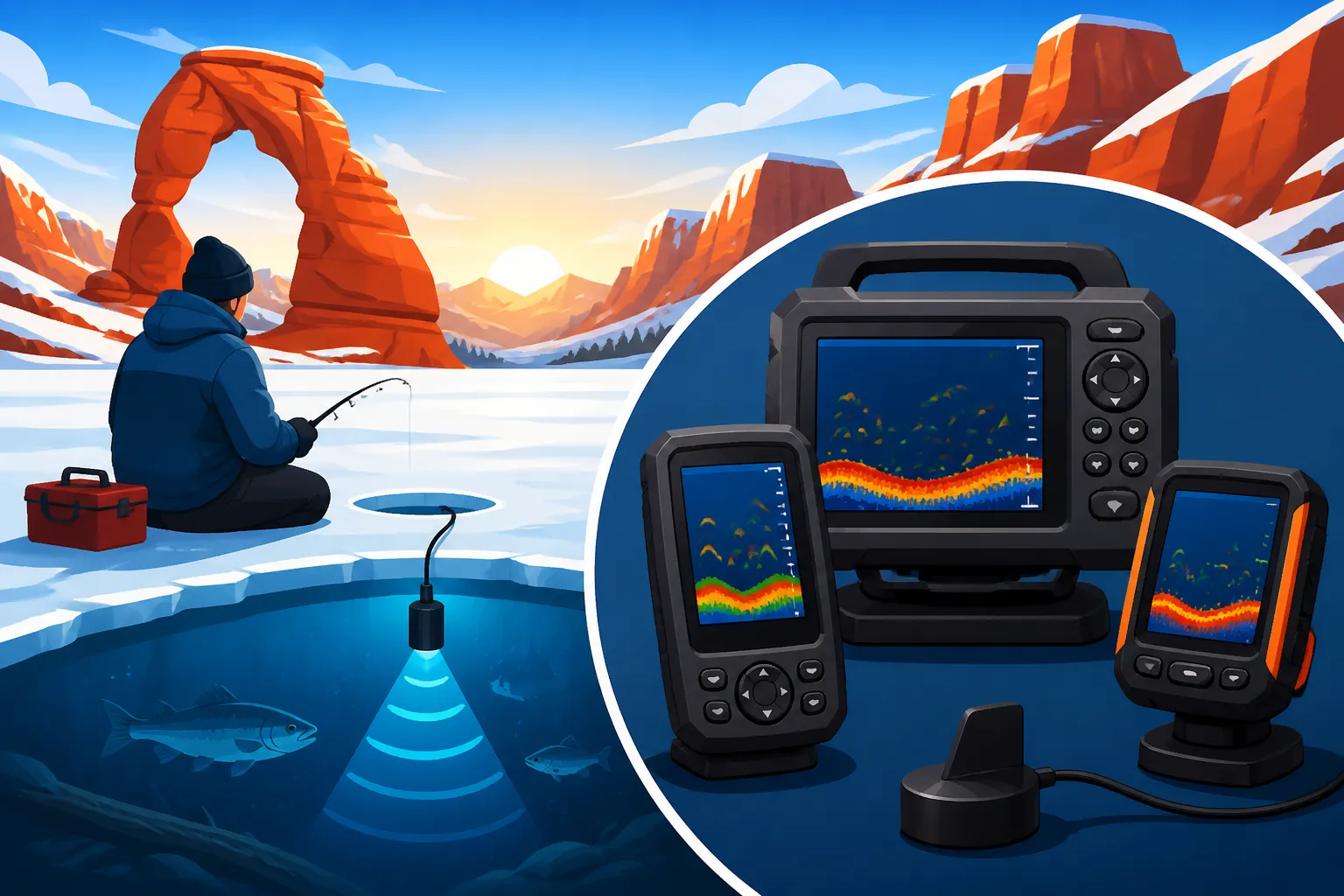
You drill six holes at Strawberry Reservoir on a January morning, drop a jig in each, and sit there for two hours without a bite. Meanwhile, the group fifty yards away is pulling up cutthroat after cutthroat, every one of them hunched over a glowing screen. The difference is not luck. It is electronics. This guide explains which types of fish finders work best for ice fishing in Utah, what features actually matter on our lakes, and how to choose one that fits the way you fish.
Why a Fish Finder Changes Ice Fishing in Utah
Ice fishing without electronics is a guessing game. You cannot see where fish are, how deep they sit, or whether they are even looking at your bait. A good fish finder turns that guessing into a conversation with the fish.
Utah Waters Reward Electronics
Utah’s popular ice fishing lakes are varied. Strawberry Reservoir offers broad flats and channels where cutthroat and rainbow trout roam. Fish Lake has deep water and big lake trout along with perch and splake. Scofield, Rockport, Jordanelle, Panguitch and Bear Lake each have their own depths, species and quirks. Bear Lake’s famous cisco run brings dipnetters and jiggers in winter, and its lake trout hold in deep water.
On every one of these waters, fish move. Trout cruise. Perch school and roam over soft bottoms. Lake trout suspend or hug the bottom at depths where you cannot guess their location. A fish finder shows you whether fish are under your hole, at what depth, and how they react to your jig. For a full species overview at one popular water, see Fish Species in Strawberry Reservoir.
Seeing How Fish React
The biggest benefit is not just finding fish. It is watching them react. When a trout rises toward your jig on the screen and then drops away, you know it saw your bait and rejected it. That tells you to change color, size or cadence. When a perch sits just below your lure, you can raise the bait slowly and trigger a strike. Over time, reading those reactions makes you a much better angler.
Saving Time on Short Winter Days
Winter days are short, cold and often windy. Hopping between holes until something bites burns daylight and energy. A fish finder lets you check a hole in seconds. If nothing shows, you move. If fish appear, you stay and fish. That efficiency matters, especially when wind and cold limit how long you want to be out. For the bigger picture of planning a winter trip, see Utah Ice Fishing Guide.
Types of Fish Finders for Ice Fishing
Ice fishing electronics come in several types, each with strengths and weaknesses. Most serious Utah ice anglers end up owning more than one over time.
Flashers
Flashers are the traditional ice fishing sonar. They display sonar returns on a circular dial in real time, with colored bands showing the bottom, your lure and fish. Because they update instantly, you can watch your jig move and see fish rise to meet it.
Flashers are simple, rugged and fast. They work well in extreme cold and are easy to read once you get used to them. Their main drawback is that they do not keep a history. When a fish leaves the cone, its mark disappears.
LCD Sonar Units
LCD sonar units show sonar returns on a screen, often scrolling across from right to left. Many ice-specific LCD units offer a flasher mode that mimics a dial, along with a traditional graph mode. Some include GPS and lake maps that help you return to specific spots.
LCD units are versatile. Many anglers use the same unit on a boat in summer and on the ice in winter with an ice transducer kit. The trade-off is that some screens can be harder to read in bright sun or extreme cold, and battery management matters more.
Live Sonar
Live sonar, sometimes called forward-facing sonar, shows a real-time image of fish and structure around the transducer in a cone that can be pointed in different directions. On the ice, you can see fish approaching from the side, watch them swim toward your jig, and decide whether to move.
Live sonar is the most advanced option and the most expensive. It requires more setup, more power and more practice. For anglers targeting roaming lake trout at Fish Lake or Flaming Gorge, or chasing suspended trout across big flats, it can be a game changer.
Underwater Cameras
Underwater cameras are not sonar, but many ice anglers use them alongside fish finders. They let you see fish species, size and behavior, and they are fun for kids. In clear water, a camera can reveal exactly how fish react to your lure. They are less useful in murky water or at great depths.
| Type | How It Shows Fish | Best For | Main Drawback |
|---|---|---|---|
| Flasher | Real-time dial | Watching lure and fish interaction | No history once fish leave the cone |
| LCD sonar | Scrolling graph and flasher mode | Versatility, boat and ice use | Screens can be harder to read in sun |
| Live sonar | Real-time image around the transducer | Roaming fish, big water | Cost, power needs, learning curve |
| Underwater camera | Live video | Species identification, clear water | Limited in murky or deep water |
Features That Matter Most on Utah Ice
Not every feature on the box matters in the field. These are the ones that make a real difference on Utah lakes.
Cone Angle and Frequency
The transducer’s cone angle determines how much water it covers. A wider cone shows more area but less detail. A narrower cone shows less area but more precision, which is useful in deep water.
Utah lakes range from shallow perch flats to deep lake trout water. A transducer with selectable cone angles or dual-frequency options gives you flexibility. Lower frequencies typically penetrate deeper water better, while higher frequencies offer more detail in shallower water. Best Fish Finder Frequency for Deep Utah Reservoirs explains how to choose for deeper lakes.
Target Separation
Target separation is the unit’s ability to show two objects close together as separate marks. When a perch sits just above the bottom or a trout hovers inches below your jig, good separation lets you see both. Flashers and modern LCD units vary widely in how well they handle this. Look for units with fine resolution and adjustable zoom, which let you focus on the bottom few feet or the depth where your jig sits.
Interference Rejection
On busy Utah lakes, dozens of anglers may be running sonar within a few yards of each other. That creates interference, which shows up as noise on your screen. Good interference rejection settings help filter out other anglers’ signals. This matters a lot on crowded weekends at Strawberry or Scofield.
Cold Weather Performance
Utah winters can be brutally cold, especially at higher elevations like Strawberry and Fish Lake. Batteries lose capacity in cold weather, screens can lag, and cables can stiffen. Look for units rated for cold weather, and use insulated cases or shelters to protect electronics.
Battery Life and Charging
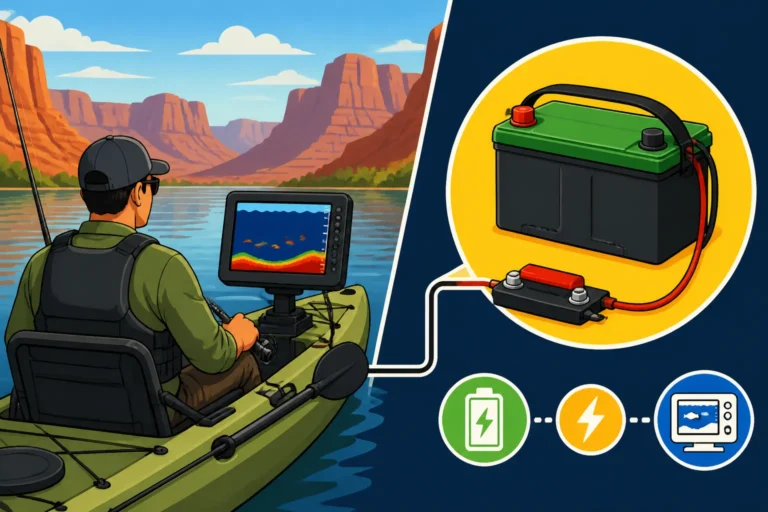
Battery life varies by unit type. Flashers are often efficient, while live sonar systems need much more power. Lithium batteries are lighter and hold up better in cold weather than older lead acid batteries, though they cost more upfront. Always carry a backup charge on long days. A small battery voltage meter helps you know how much power is left before it fails mid-bite.
Portability
You will carry your fish finder across the ice, sometimes long distances. Look for an integrated ice pack that combines the unit, battery, transducer and carrying case. A good pack keeps everything organized and protects the unit from bumps and cold.
GPS and Mapping
GPS and lake mapping help you mark productive holes, navigate to structure and return to spots on future trips. They are especially useful on big lakes like Strawberry and Bear Lake, where finding a specific channel edge or drop-off can be hard without coordinates.
| Feature | Why It Matters in Utah | Who Needs It Most |
|---|---|---|
| Selectable cone angles | Handles shallow perch and deep lake trout water | Anglers who fish several lakes |
| Dual frequency | Better performance in deep reservoirs | Lake trout and deep trout anglers |
| Target separation | Shows fish near bottom or near your jig | Perch and trout anglers |
| Interference rejection | Reduces noise on crowded lakes | Weekend anglers at popular waters |
| Cold weather performance | Keeps unit working in subzero mornings | High-elevation anglers |
| Long battery life | Supports long days and live sonar | Serious anglers |
| GPS and mapping | Marks spots and structure | Big-lake anglers |
Matching a Fish Finder to Your Utah Ice Fishing Style
The best fish finder for you depends on where you fish, what you target and how much you want to spend.
Casual Anglers and Families
If you fish a few times a winter with kids or friends, a simple flasher or entry-level LCD unit with an ice kit is plenty. You want something easy to read and set up. An underwater camera can be a fun addition, since kids love watching fish come to the bait.
Focus on reliability, battery life and ease of use. Do not overspend on features you will not use. Many families find good options through Amazon or at Bass Pro Shops, where you can compare entry-level units side by side.
Trout Anglers at Strawberry, Scofield and Rockport
Trout anglers often fish moderate depths over flats, channels and points. A flasher or LCD unit with good target separation is ideal. Being able to see your jig and watch trout rise to it helps you fine-tune presentations. GPS can help you return to productive channel edges.
For technique tips, read How to Ice Fish for Trout in Utah. Pair your fish finder with the right jig weight; Best Jig Weight for Ice Fishing Utah Trout covers that balance.
Perch Anglers
Perch anglers need good bottom resolution and target separation, because perch often hold just above the bottom. A flasher or LCD unit with zoom features works well. Being able to see when a school moves under your hole helps you stay on fish. When the school moves off, drill a new hole nearby rather than waiting for it to return.
Lake Trout Anglers at Fish Lake, Flaming Gorge and Bear Lake
Lake trout anglers often fish deep water, where precise sonar matters. A unit with lower frequency options, narrow cone settings and good target separation is valuable. Live sonar can help you see roaming lake trout before they reach your hole. How to Vertical Jig for Lake Trout Through the Ice covers presentation.
Anglers Who Fish Boats and Ice
If you fish from a boat in summer, consider an LCD unit that can move between your boat and an ice kit. This gives you year-round use from one investment. Best Fish Finders for Utah Reservoirs covers boat-focused options.
| Angler Type | Recommended Unit Type | Key Features |
|---|---|---|
| Casual and family | Entry flasher or LCD with ice kit, optional camera | Ease of use, reliability |
| Trout angler | Flasher or LCD | Target separation, GPS |
| Perch angler | Flasher or LCD | Zoom, bottom resolution |
| Lake trout angler | LCD or live sonar | Low frequency, narrow cone, separation |
| Boat and ice angler | LCD with ice kit | Dual-use transducer, mapping |
Using Your Fish Finder on Popular Utah Ice Fishing Lakes
Each Utah lake has its own personality under the ice. Here is how electronics help on some of the state’s most popular hardwater destinations.
Strawberry Reservoir
Strawberry is big, high and often windy, with broad flats, old creek channels and rocky points. Cutthroat and rainbow trout roam widely, and kokanee add another target. A fish finder helps you find the depth where trout are cruising on a given day, which often changes from morning to afternoon. Many anglers start shallow near points in the morning and move deeper as the day goes on, checking each hole for a few minutes before moving.
Watch for marks that come in high and drop toward your jig. Trout often swim through quickly, so a flasher or LCD unit with a fast refresh rate lets you see them in time to react. Remember that Strawberry has special rules on cutthroat harvest, so read the current slot and limit rules before keeping fish. For hole locations, see Strawberry Reservoir Ice Fishing Spots.
Fish Lake
Fish Lake sits high in central Utah and holds lake trout, splake, rainbow trout and yellow perch. Perch often school near weed beds and soft bottoms in moderate depths, while lake trout roam deeper water. A unit with good bottom resolution and zoom makes perch fishing far easier, because you can see a school slide in under your hole and hold your jig just above them.
For lake trout, deeper holes and lower frequency settings help. Many Fish Lake anglers watch for a large mark rising off the bottom and then work a jig or tube aggressively to trigger a strike. Where to Ice Fish at Fish Lake covers areas worth exploring.
Scofield Reservoir
Scofield is a favorite for trout anglers from the Wasatch Front and Carbon County. Fish often hold in moderate depths, and the lake can get crowded on weekends. Interference rejection becomes important here, since many anglers may be running sonar close together. If your screen fills with noise, try changing frequency or adjusting interference settings before assuming your unit is faulty.
Trout at Scofield often respond to small jigs tipped with bait. Watching how fish react on the screen helps you decide whether to jig harder, hold still or switch colors.
Bear Lake
Bear Lake is unique. Its clear water, deep basin and native fish make it a different experience from typical reservoirs. In winter, the Bonneville cisco run draws anglers to rocky shorelines, while lake trout and cutthroat roam deeper water. Depths can be significant, so a fish finder with good deep-water performance and lower frequency options is valuable for lake trout and cutthroat.
During the cisco run, schools move quickly near the rocks, and electronics help you find the depth where they are holding. Cisco are small, so higher sensitivity and zoom help you pick out the tight schools.
Rockport and Jordanelle
Rockport and Jordanelle are close to Park City and the Wasatch Front, making them popular for quick winter trips. Both hold trout and perch, and Jordanelle also has smallmouth bass that are less active in winter. Structure such as submerged points and channel edges concentrates fish. GPS mapping helps you find these features, and a fish finder lets you confirm whether fish are present before settling in.
| Lake | Main Ice Targets | Fish Finder Priority |
|---|---|---|
| Strawberry Reservoir | Cutthroat, rainbow trout, kokanee | Fast refresh, mobility |
| Fish Lake | Yellow perch, lake trout, splake | Bottom resolution, deep-water performance |
| Scofield Reservoir | Trout | Interference rejection |
| Bear Lake | Cisco, lake trout, cutthroat | Deep-water performance, low frequency |
| Rockport and Jordanelle | Trout, perch | GPS mapping, structure reading |
Buying, Setting Up and Using Your Fish Finder
Choosing the right unit is only half the job. Setting it up and using it well makes the difference.
Thinking About Budget
Ice fishing electronics range from simple, affordable units to complete live sonar systems that cost as much as a used snowmobile. Rather than focusing on a number, think about cost in layers. The base layer is the sonar unit itself. The next layer is the ice kit, which includes the transducer, a float or arm, a battery, a charger and a carrying case. Some units come bundled with all of it, while others require separate purchases. The top layer is extras, such as GPS mapping cards, a second transducer or an underwater camera.
A practical approach is to buy the best basic sonar you can comfortably afford, make sure it comes with or can accept a good ice kit, and add extras later as your fishing grows. Plenty of Utah anglers have caught limits for years with a simple flasher. Upgrading to live sonar makes the most sense once you fish often enough to use it fully.
Pairing Your Fish Finder With the Right Rod
Electronics and tackle work together. When you can see a trout rise to your jig, you want a rod sensitive enough to feel a light bite and responsive enough to set the hook quickly. A short ice rod with a sensitive tip helps you detect the subtle takes that often come when fish are sluggish in cold water. For perch, a light rod with a soft tip lets you see small taps, and for lake trout, a stiffer rod handles heavier jigs and big fish in deep water.
Watching the screen also teaches you how your jig moves. If the mark jumps wildly every time you lift, you may be jigging too hard. If it barely moves, you might need more action to attract attention. Matching rod action to what you see on the screen is one of the fastest ways to improve. Best Rods for Ice Fishing in Utah explores rod choices in more detail.
Where to Buy
Fish finders are sold at large outdoor retailers, specialty shops and online. Bass Pro Shops lets you see units in person, compare screens, and ask staff questions. Amazon offers wide selection and customer reviews that can reveal common problems, such as battery issues or cold weather performance. Check each retailer’s own page for current prices and return policies, since ice fishing electronics can be a significant investment.
Setting Up on the Ice
A simple setup process works for most units:
- Charge your battery fully before leaving home.
- Drill your hole and clear slush and ice chips.
- Lower the transducer into the hole and level it so it points straight down.
- Set the depth range so the bottom shows clearly.
- Adjust sensitivity until you see your jig without excessive noise.
- Use zoom to focus on the bottom few feet or your jig’s depth.
- Turn on interference rejection if others are fishing nearby.
Reading the Screen
Learning to read sonar takes time. Start by watching your own jig. Lift and drop it to see how it appears. Then watch for marks that rise toward it. Over time, you will learn to tell fish from weeds, bottom and your lure. How to Read a Fish Finder for Utah Reservoirs goes deeper into interpretation.
Running a Hole Grid With Electronics
One of the most effective ways to use a fish finder on Utah ice is to drill a grid of holes and check each one quickly. Drill several holes across a range of depths, for example along a drop-off from a shallow flat into deeper water. Then move from hole to hole, dropping the transducer and watching for a minute or two. If you see fish, drop a jig. If not, move on.
Marking productive holes on a GPS unit, or simply noting their depth, helps you find patterns. If fish keep showing up at the same depth, drill more holes along that contour. This approach is especially useful at Strawberry and Fish Lake, where fish roam large areas.
Using a Fish Finder Inside a Shelter
Many Utah ice anglers fish from portable shelters to escape the wind. Shelters make electronics easier to read, since screens are less affected by glare, and they keep batteries a little warmer. Position your unit where you can see it easily without bumping it, and route cables so they do not get tangled with rods or tip-ups.
If you use a heater inside a shelter, keep electronics a safe distance away and follow the heater’s ventilation guidelines. Carbon monoxide is a real risk in a closed shelter, so ventilation and a detector are worth the effort. Condensation can form on cold electronics when warm air hits them, so wipe screens and connectors dry before packing up.
Common Mistakes New Users Make
New fish finder owners often run into the same problems:
- Sensitivity set too high or too low. Too high fills the screen with clutter. Too low hides fish and your jig. Adjust until your jig shows clearly with minimal noise.
- Transducer not level. A tilted transducer gives misleading readings. Use a leveling float or arm to keep it pointed straight down.
- Ignoring interference. On crowded lakes, noise from other anglers can look like fish. Use interference rejection settings.
- Staying too long on empty holes. If nothing shows after a few minutes, move.
- Neglecting the battery. Cold drains batteries quickly. Charge fully before every trip and carry a backup if possible.
- Watching the screen instead of the rod. Fish finders are great, but bites can be subtle. Keep an eye on your rod tip and feel for strikes.
Avoiding these mistakes makes a new unit far more useful in its first season.
Taking Care of Your Unit
Cold, moisture and rough handling can damage electronics. Keep your unit in a case, avoid dropping it on the ice, and dry it after each trip. Store batteries properly when not in use, and check cables and connectors for wear before each season.
Safety Comes First
Electronics never replace good judgment on the ice. Always check ice thickness, carry ice picks, and fish with a partner when possible. A fish finder can show you depth, but it cannot tell you whether ice is safe. How to Check Ice Thickness Safely Before Ice Fishing covers essential safety steps.
Disclaimer
This article is for general informational purposes only and does not constitute professional advice. Laws, prices and regulations vary by location and change over time. Consult a qualified professional for guidance on your specific situation.