Throwable Flotation Device Requirements on a Utah Boat
So, you're getting your boat ready for a glorious day out on one of Utah's stunning reservoirs, maybe Jordanelle or Pineview, and you're ticking off your safety checklist. Life jackets? Check. Fire extinguisher? Check. But then you hit "throwable flotation device," and a little voice in your head goes, "Wait, what exactly is that, and do I really need one?" You're not alone! Many of us feel a bit lost in the sea of regulations, but thankfully, understanding the requirements for throwable flotation devices on a Utah boat is pretty straightforward once you break it down. This guide will cut through the confusion and explain exactly what you need to know to stay safe and compliant on Utah's beautiful waters.
What Exactly is a Throwable Flotation Device in Utah?
Let's clear up some common confusion right off the bat. When the Utah Division of Wildlife Resources (DWR) talks about a "throwable flotation device," they're specifically referring to a Type IV Personal Flotation Device (PFD). This isn't the kind of life jacket you wear, but rather something designed to be thrown to someone in the water who needs immediate assistance. It's a critical piece of safety equipment, often overlooked, but potentially life-saving in a sudden emergency.
Defining the Type IV PFD and Its Purpose
A Type IV PFD is distinct from the more familiar wearable life jackets (Types I, II, III, and V). Unlike those, which are meant to be worn for continuous support, a Type IV is designed for quick deployment in a "man overboard" situation. Think of it as an emergency aid – something you can rapidly toss to a person who has unexpectedly fallen into the water. It provides buoyancy for them to hold onto until they can be pulled back aboard, or until a rescue boat arrives.
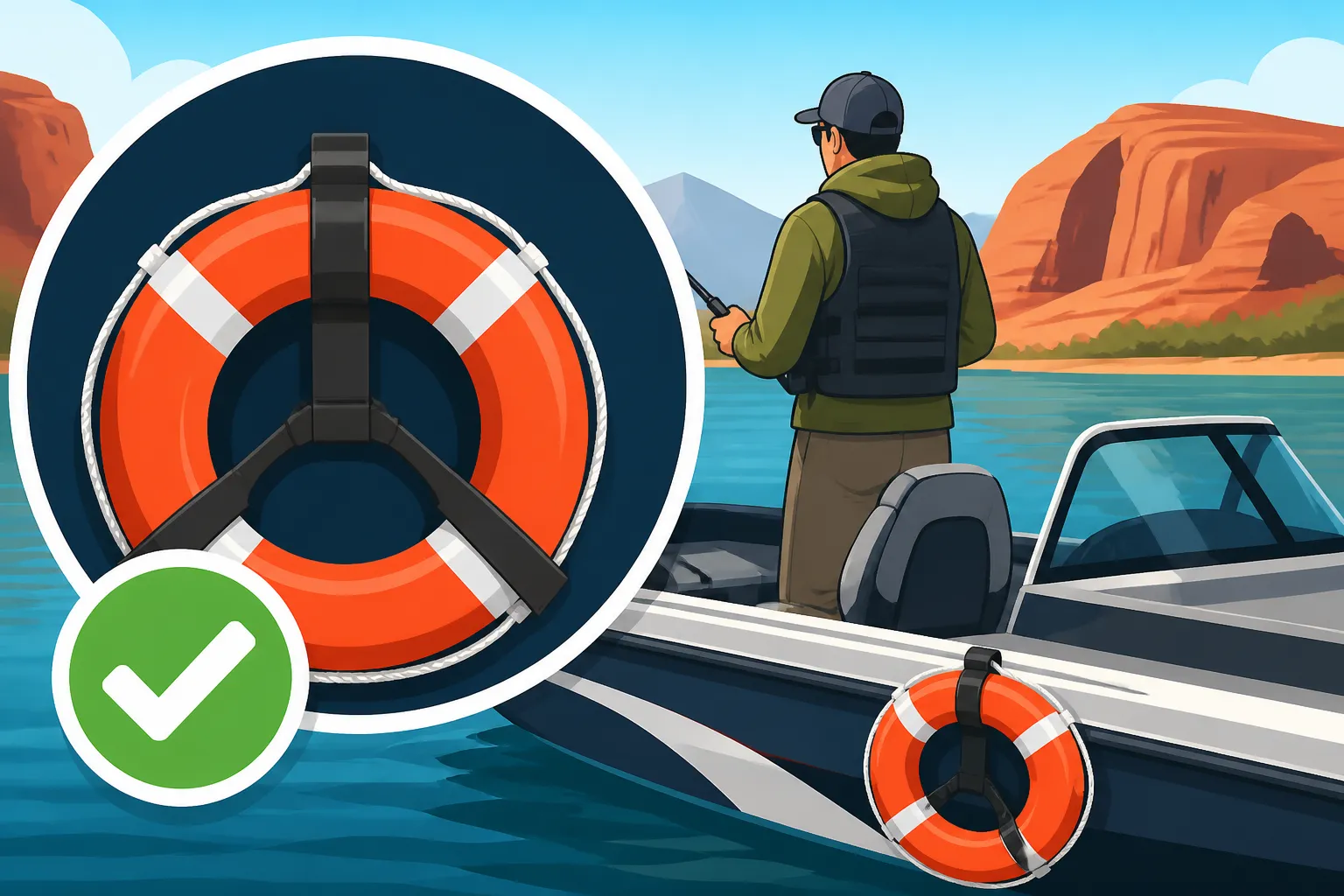
These devices are typically either a buoyant cushion, often square or rectangular, or a ring buoy (sometimes called a life ring). Both are specifically constructed to float and withstand being thrown. They're usually brightly colored, like orange or yellow, to enhance visibility in the water, which is incredibly important when every second counts. The key here is that they are not designed to be worn, nor are they a substitute for everyone on board having their own Coast Guard-approved wearable PFD. They serve a very specific, secondary role in your overall boat safety plan. You can learn more about general boating rules in our comprehensive guide to Utah Boating and Fishing Rules.
Why the Utah DWR Requires It: Safety in an Instant
The requirement for a throwable PFD isn't just bureaucratic red tape; it's a fundamental aspect of water safety. Imagine this scenario: you're out on Lake Powell, cruising along, when a rogue wave hits, or someone simply loses their balance and tumbles overboard. If they're wearing their life jacket, great! But what if they're not? Or what if they're injured or disoriented? Having a throwable device ready means you can immediately provide them with something to cling to, even if you can't reach them with your hand or a boat hook right away.
This quick-response capability can prevent a minor incident from escalating into a serious tragedy. It gives the person in the water immediate support, conserves their energy, and allows the boat operator precious moments to maneuver back to them safely. It also provides a visual marker for other boaters in a busy area, signaling that someone is in the water. The DWR, along with the U.S. Coast Guard (which sets many of these federal standards that states adopt), recognizes that accidents happen, and having readily accessible flotation can be the difference between a close call and a devastating outcome. It's a crucial layer of protection, complementing the primary requirement of wearable life jackets for everyone on board.
Who Needs One and Where: Specific Requirements by Boat Type and Size
Understanding which boats specifically need a throwable flotation device in Utah is where the details really matter. It's not a blanket requirement for every single watercraft out there, but rather hinges on the size and type of your vessel. Misinterpreting these rules can lead to fines, but more importantly, it can put lives at risk.
Boats 16 Feet and Over: The Golden Rule
For most recreational boaters in Utah, the primary rule is this: any boat 16 feet in length or longer must carry at least one Coast Guard-approved Type IV throwable flotation device. This rule applies across the board, whether you're fishing for trophy lake trout on Flaming Gorge, water skiing on Pineview, or just enjoying a leisurely cruise on Utah Lake. It doesn't matter how many wearable life jackets you have on board; if your boat measures 16 feet or more from bow to stern, that throwable cushion or ring buoy needs to be there.
Think about it: larger boats often carry more people, cover more open water, and can be harder to maneuver quickly to pick up someone who's fallen overboard. A throwable device provides that immediate, crucial aid. It needs to be readily accessible, meaning it shouldn't be stowed away in a locked compartment under a pile of gear. It should be on deck, perhaps lashed down but easily cut free, or placed in an open storage area where anyone can grab it and toss it quickly. The intent is for it to be deployed in seconds, not minutes. This requirement is a cornerstone of Utah Boat Registration and Safety Gear.
Exceptions and Misconceptions for Smaller Craft
Now, here's where smaller boats get a bit of a break, but it comes with a very important caveat. Boats less than 16 feet in length, as well as canoes, kayaks, rafts, and stand-up paddleboards, are not generally required to carry a throwable Type IV PFD.
- The Big Caveat: This exemption for smaller crafts only holds true if they are properly equipped with enough wearable PFDs (Type I, II, III, or V) for every single person on board. In fact, for these smaller, often open, vessels, the emphasis is even more on wearing your life jacket at all times, especially in rapidly changing conditions. A quick capsize in a kayak on Deer Creek Reservoir can happen in an instant, and you won't have time to retrieve a stowed throwable device, let alone put on a life jacket.
Many people misunderstand this, thinking that if they have enough wearable PFDs, they're good for any size boat. That's not the case. The 16-foot rule is firm for larger vessels. For personal watercraft (PWCs) like Jet Skis, the requirement is similar to smaller boats: each person must wear an approved PFD, and a throwable device isn't specifically mandated.
It's also worth noting that while federal law often serves as a baseline, state laws in Utah might have additional nuances. Always check the latest DWR regulations or a current copy of the Utah Boating and Fishing Rules to ensure full compliance. The general philosophy is clear: everyone on the water needs flotation, and the type of flotation device required changes based on the size and nature of your vessel.
Choosing the Right Throwable Device: Features and Maintenance
When it comes to selecting a throwable flotation device, it's not just about grabbing the first thing you see. There are different types, and considering factors like durability, visibility, and ease of deployment can make a real difference in an emergency. And once you have one, proper maintenance ensures it will work when you need it most.
Common Types and Materials
There are primarily two types of Type IV PFDs you'll encounter:
- Buoyant Cushions: These are arguably the most common and often the most convenient for recreational boaters. They look like seat cushions but are specifically designed to float. Many anglers and pleasure boaters appreciate them because they can double as actual seat cushions or kneeling pads when not needed for safety. However, never rely on a regular cushion that isn't specifically Coast Guard-approved as a Type IV PFD. Look for the label! They're typically made with a foam core covered in durable, often vinyl or nylon, fabric. Their rectangular or square shape makes them easy to throw accurately.
- Ring Buoys (Life Rings): These are the classic "Baywatch" style flotation devices. Ring buoys are highly visible, usually bright orange or white, and designed to be thrown from a distance. They are often equipped with a grab line around the perimeter to make it easier for a person in the water to hold onto, and sometimes even a heaving line attached to the boat for retrieval. While effective, they can be a bit bulkier and might not be as versatile for everyday use on a smaller pleasure craft as a buoyant cushion. They are made from durable foam or plastic.
When choosing, prioritize visibility. Bright colors like international orange or vivid yellow are best for standing out against water or boat decks. Also, consider the material – it should be tough enough to withstand sun, water, and being tossed around. You can find a wide array of options at reputable marine suppliers like Bass Pro Shops, or even online through retailers like Amazon, offering different styles and price points to fit your boat and budget.
Where to Buy and How to Maintain
Acquiring a throwable PFD is relatively simple. Most marine supply stores, outdoor recreation shops, and even big box retailers with a boating section will carry them. Online, you'll find plenty of options on Bass Pro Shops' website or a vast selection on Amazon, often with customer reviews that can help you choose. Just make sure whatever you buy explicitly states it is a "U.S. Coast Guard Approved Type IV PFD." Don't skimp on this; a non-approved device won't protect you or count towards your legal requirements.
Once you have your throwable PFD, maintenance is key. These devices are exposed to the elements, and over time, they can degrade if not cared for. Here's a quick checklist:
- Regular Inspection: Before each boating season, and periodically throughout, inspect your throwable device. Look for rips, tears, or punctures in the outer fabric. Check for mildew or excessive fading, which can indicate material breakdown.
- Check for Waterlogging: A common issue with older or poorly maintained buoyant cushions is waterlogging. If it feels heavy or squishy, it might have absorbed water, significantly reducing its buoyancy. If this happens, it needs to be replaced immediately.
- Keep it Clean and Dry: After each trip, especially if it got wet, allow it to air dry thoroughly before storing it away. Store it in a cool, dry place out of direct sunlight when not in use to prolong its life.
- Accessibility: Most importantly, ensure it's always "readily accessible." This means it shouldn't be stuffed under seats, buried beneath fishing gear, or tied down so securely it takes effort to release. It needs to be where anyone can grab it and deploy it instantly. If you need to spend more than a few seconds retrieving it, it's not accessible enough.
By taking these simple steps, you ensure that your throwable flotation device is not just a regulatory checkbox, but a functional, life-saving tool ready for any unexpected event on the water.
Beyond the Throwable: Other Essential Safety Gear in Utah
While a throwable flotation device is a crucial piece of your boating safety puzzle in Utah, it's really just one part of a larger, comprehensive safety strategy. To truly ensure safety for yourself and your passengers, you need to think about the full range of equipment and practices that contribute to a secure and enjoyable day on the water.
Comprehensive PFD Strategy: Wearable Life Jackets First
Let's reiterate one of the most vital points: a throwable PFD is a secondary safety device. The primary requirement for flotation on any Utah boat, regardless of size, is that there must be a U.S. Coast Guard-approved wearable PFD (Type I, II, III, or V) for every single person on board. This is non-negotiable. Furthermore, children 12 years of age and younger are required to wear a life jacket at all times when a vessel is underway. Some personal watercraft (PWC) users, water skiers, and those in towable tubes also have specific wearing requirements.
The best strategy, no matter your age or the size of your boat, is for everyone to wear their life jacket whenever the boat is moving, especially in rough water, cold water, or when conditions are unpredictable. Falling overboard unexpectedly, particularly into Utah's often frigid waters, can induce shock and incapacitation almost instantly, making it incredibly difficult to don a life jacket, let alone grab a throwable device. Having your PFD on means you're protected the moment you hit the water. It's truly a no-brainer. If you're curious about specific numbers, check out our guide on How Many Life Jackets You Need on a Utah Boat.
Broader Boat Safety Checklist and Considerations
Beyond PFDs, Utah has other mandatory safety equipment that every boater needs to be aware of. This isn't just about avoiding a ticket; it's about being prepared for common boating emergencies. You can find a full breakdown in our article on Boat Safety Equipment Required in Utah, but here's a quick overview of some other items:
- Sound-Producing Devices: Every boat needs some way to make an efficient sound signal. For boats 16 feet or longer, this typically means a horn or whistle. Smaller boats can get by with just a whistle. This is vital for signaling intentions, alerting other boaters to hazards, or calling for help. You might be surprised to learn the specific rules, so definitely look up Do You Need a Whistle or Horn on a Utah Boat?.
- Fire Extinguishers: Any vessel with an enclosed engine compartment, a permanently installed fuel tank, or other conditions that could lead to a fire needs a marine-type fire extinguisher. This is a critical piece of equipment, especially with fuel, oil, and electrical systems on board. For detailed requirements, refer to Do You Need a Fire Extinguisher on a Utah Fishing Boat?.
- Navigation Lights: If you plan on operating your boat between sunset and sunrise, or during periods of restricted visibility (like fog), you are legally required to have proper navigation lights displayed. This ensures other boats can see you and understand your direction of travel, preventing collisions.
- Visual Distress Signals (VDS): While primarily a Coast Guard requirement for coastal waters, certain non-coastal vessels may also need them. For Utah's inland waters, VDS signals (like flares or flags) are not universally mandated for all recreational boats but are certainly recommended for emergencies, especially on larger, more remote lakes like Lake Powell.
- First Aid Kit: Although not always strictly mandated by law for all vessels, a well-stocked first aid kit is common sense. Minor cuts, scrapes, or even a sudden illness can occur on the water, and being able to treat them promptly is essential. Consider what First Aid Items for a Utah Boat's Kit you'd need for your typical outing.
- Anchor and Line: Having an appropriate anchor for your boat's size and the waters you frequent is crucial for holding position, but also as a safety device in case of engine failure or needing to avoid obstacles.
Staying on top of these requirements and making sure all your gear is in good working order is part of being a responsible boater. Regular checks, proper storage, and replacing worn-out items are all part of the routine. It's not just about compliance; it's about creating a safe environment for everyone enjoying Utah's beautiful waterways.
Disclaimer
This article is for general informational purposes only and does not constitute professional advice. Laws, prices and regulations vary by location and change over time. Consult a qualified professional for guidance on your specific situation.