Best Life Jackets for Utah Boaters
Navigating Utah's incredible lakes, reservoirs, and rivers is an absolute joy, but it also comes with inherent risks. We've all been there: a perfect day on the water can turn in an instant, whether it's an unexpected gust of wind, a sudden cold front, or just an accidental slip on a wet deck. That's why having the right life jacket isn't just about following the rules; it's about giving yourself and your loved ones the best chance of staying safe. This guide will walk you through everything you need to know about choosing the perfect life jacket for your Utah boating adventures.
Why the Right Life Jacket Matters on Utah's Waters
When you're out on the water, whether you're chasing trophy trout on Flaming Gorge or just enjoying a calm evening paddle on a local community pond, your safety net is often quite literally on your person. A life jacket isn't just a bulky piece of equipment; it's a vital piece of safety gear that can make all the difference when the unexpected happens. Many folks view them as a burden, something required by law rather than a personal safety device, but that perspective really undersells their importance, especially in Utah's diverse and often unpredictable aquatic environments.
More Than Just a Legal Requirement
Let's be honest, we've all seen those signs and read the rulebooks – Utah Boating and Fishing Rules lay out the requirements clearly. But thinking of a life jacket solely as a legal checkbox misses the bigger picture. Imagine you're out on Strawberry Reservoir, the wind picks up suddenly, or maybe you slip on some slick algae near the shore and fall into the water. Utah's waters, even in the height of summer, can be surprisingly cold, leading to cold water shock that can quickly incapacitate you. That sudden gasp reflex, the disorientation, the rapid loss of muscle control – these are real dangers. A properly fitted life jacket keeps your head above water, allowing you to catch your breath, regain composure, and signal for help, even if you're injured or unconscious. It’s not just about preventing drowning; it’s about buying you precious time and preserving your ability to react.
The peace of mind that comes with knowing you and your passengers are protected is invaluable. This is especially true when you're exploring more remote areas of Lake Powell or the vastness of Flaming Gorge, where help might not be minutes away. For families, seeing your children happily and safely wearing their PFDs (Personal Flotation Devices) means you can truly relax and enjoy the experience, rather than constantly worrying. It transforms a day of potential stress into one of pure enjoyment, knowing everyone is equipped for whatever the water throws at them.
Understanding Utah's Unique Challenges
Utah's aquatic landscapes are incredibly varied, presenting a range of challenges that influence your choice of life jacket. From the tranquil, high-altitude lakes of the Uintas that remain chilly even in July, to the wide-open, often choppy waters of Willard Bay, and the swift currents of rivers like the Green River below Flaming Gorge, each environment demands a bit of thought. A life jacket perfectly suited for calm paddleboarding might be wholly inadequate for white-water rafting, and vice-versa. The key is to match your PFD to the specific type of boating and fishing you'll be doing.
For many anglers, the biggest concern is wearability. Nobody wants a bulky, restrictive vest hindering their cast or making them overheat on a long summer day. If a life jacket isn't comfortable, the likelihood of actually wearing it drops dramatically. This is a critical point, because a life jacket stored under a seat does absolutely no good in an emergency. We'll explore options that offer maximum comfort and maneuverability while still providing crucial buoyancy, ensuring that you're not just compliant with the law, but genuinely safe and happy on the water.
Types of Life Jackets and Their Best Uses in Utah
Understanding the different types of Personal Flotation Devices (PFDs) is the first step in making an informed decision. The U.S. Coast Guard (USCG) classifies life jackets based on their design and intended use, and while these classifications are a national standard, their practical application truly shines when we consider Utah's specific waters and activities. It's not a one-size-fits-all situation; what works for a relaxed pontoon boat ride might not be ideal for wading a swift river section of the Provo River.
Inherent Buoyancy PFDs (Type I, II, III)
These are the traditional life jackets that get their flotation from buoyant materials, typically foam, built into the garment. They require no action from the wearer to provide flotation, making them reliable and simple.
- Type I (Offshore PFD): Designed for rough, open, or remote waters where rescue may be delayed. They offer the most buoyancy (usually over 22 lbs for adults) and are designed to turn an unconscious person face-up in the water. While incredibly safe, they are bulky and less comfortable for active wear. In Utah, you might see these on large commercial tour boats on Lake Powell, but for most recreational anglers, they are overkill and hinder movement too much.
- Type II (Near-shore Buoyant Vest): Best for calm, inland waters where there is a good chance of quick rescue. They offer less buoyancy than Type I (typically 15.5 lbs for adults) and may not turn an unconscious person face-up in all situations. These are a good general-purpose PFD, often found as the standard "orange horse collar" vests on many rental boats. They are more comfortable than Type I but still relatively bulky, which can interfere with casting or paddling.
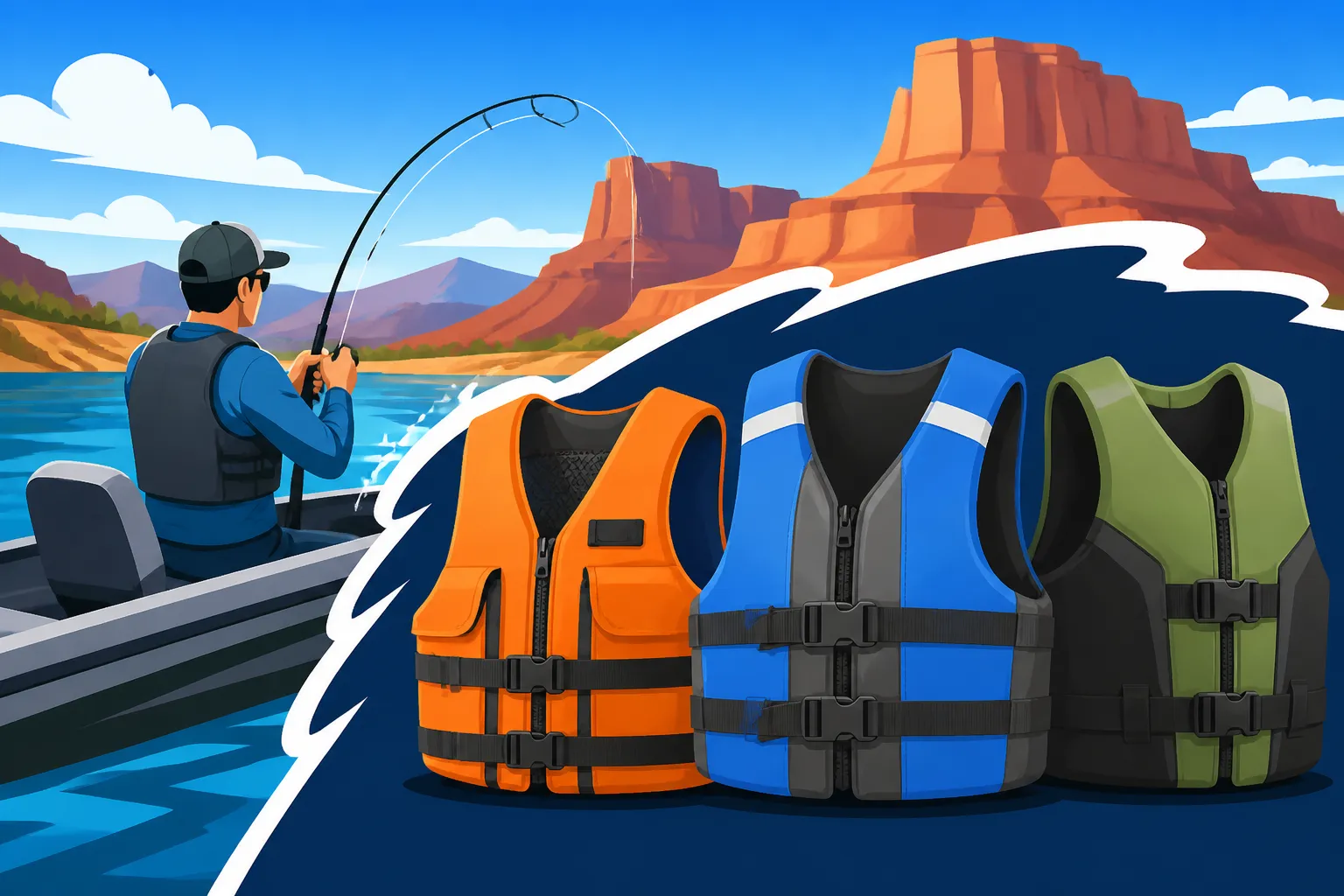
- Type III (Flotation Aid): This is by far the most common type for recreational boating and fishing in Utah. They are designed for continuous wear, offering comfort and freedom of movement, and typically provide similar buoyancy to a Type II (15.5 lbs for adults). However, they are not designed to turn an unconscious person face-up. You have to actively keep your face out of the water. Type III PFDs come in many forms, including vests specifically designed for watersports, kayaking, or fishing, often with pockets and other convenient features. For most days on Deer Creek Reservoir, Jordanelle Reservoir, or even bigger waters like Bear Lake, a Type III PFD is your go-to. If you're looking for gear, places like Bass Pro Shops often have a wide selection of Type III vests, including those tailored for specific fishing activities.
Inflatable PFDs (Type V)
Inflatable PFDs offer a fantastic solution for active anglers and boaters who prioritize comfort and minimal bulk. They are worn like a small vest or belt pack and only inflate when needed. They are classified under Type V (Special Use) when worn, but typically provide the performance of a Type II or Type III when inflated.
- How they work: Inflatable PFDs can be either manual (requiring you to pull a cord to deploy a CO2 cartridge) or automatic (inflating upon immersion in water). They typically offer 22-35 lbs of buoyancy, often more than foam vests. The beauty is their slim profile; when deflated, they're barely noticeable, making them incredibly popular for activities like fly fishing on the Provo River, or kayak fishing on Utah Lake where unrestricted movement is key. When activated, they inflate into a full life vest, often with a neck pillow to help keep your head clear of the water.
- Important Considerations: These are not suitable for non-swimmers, children under a certain weight, or high-impact watersports (where you might hit the water hard before inflation). They also require regular maintenance, including checking the CO2 cartridge and ensuring the inflation mechanism is ready. If you choose an inflatable, make sure you understand how to inspect and re-arm it. Many brands offer re-arming kits. While they offer superior comfort for continuous wear, remember that they must be worn to count as a legal PFD on board for certain situations. It's a great option for adults who are comfortable in the water but want that extra layer of protection without the bulk.
Special Purpose PFDs (Type V specifically for certain activities)
Beyond the standard classifications, Type V also encompasses a variety of PFDs designed for specific activities, combining the buoyancy of a Type I, II, or III with specialized features.
- Examples of Type V PFDs: This category includes paddling vests that are cut higher on the chest and back to accommodate kayak seats, fishing vests with numerous pockets and tool attachment points (often looking more like traditional fishing vests with added flotation), or even deck suits with built-in flotation for cold weather boating. When choosing a Type V PFD, it's crucial that it is approved for your specific activity. If you're a serious kayaker, a PFD designed with ample armholes and a short torso for paddling comfort will make your day on the water much more enjoyable than a standard boat vest.
- Choosing for Your Activity: If your passion is Kayak Fishing Gear Guide or fishing from a float tube, seeking out a Type V vest specifically designed for those sports will significantly enhance your experience. These often feature mesh backs for ventilation, strategically placed pockets for fly boxes or small tackle, and even hydration sleeves. Prioritizing a PFD designed for your primary activity ensures not only safety but also comfort and utility, making it a natural extension of your gear rather than an afterthought.
| PFD Type | Buoyancy (Adults) | Best Use Cases in Utah | Pros | Cons |
|---|---|---|---|---|
| Type I | Highest (22+ lbs) | Extremely rare for recreational fishing. Maybe for very remote, offshore charter operations on Lake Powell where rescue is hours away. | Highest buoyancy, designed to turn unconscious wearer face-up. | Very bulky, uncomfortable for active wear. |
| Type II | Moderate (15.5 lbs) | Good for general recreational boating on calm inland waters like smaller reservoirs (e.g., Mantua Reservoir, Willard Bay) if you expect quick rescue. Often found on rental boats. | Basic flotation, turns some unconscious wearers face-up. Less bulky than Type I. | Still somewhat bulky, may not turn everyone face-up, can hinder movement for fishing. |
| Type III | Moderate (15.5 lbs) | Most common for Utah anglers and recreational boaters. Ideal for reservoirs (Strawberry, Flaming Gorge, Bear Lake), larger lakes (Utah Lake), and slower rivers. Available in fishing-specific vests, kayak vests. | Comfortable for continuous wear, wide variety of styles/features, good for active use. | Wearer must be conscious to maintain face-up position. |
| Type V | Varies (15.5-35 lbs) | Inflatables: Excellent for adults who want minimal bulk while fishing, kayaking, or stand-up paddleboarding (e.g., Best Paddleboards for Utah Flatwater Fishing). Must be worn. Special Use: Activity-specific vests (e.g., high-cut kayak PFDs for the Green River, cold-weather flotation suits). |
Inflatables are low-profile and comfortable. Special use vests are optimized for specific activities. | Inflatables require maintenance (CO2 cartridge, re-arming) and are not for non-swimmers/children. Must be worn to count. |
Key Features to Look for in a Utah Life Jacket
Choosing a life jacket isn't just about picking a type; it's about delving into the details that truly enhance safety and enjoyment. A well-chosen PFD will feel like a natural extension of your fishing or boating gear, rather than an annoying necessity. When you're spending hours on the water, whether it's trolling for kokanee salmon or casting flies into the Provo River, these nuanced features become incredibly important.
Comfort and Fit are Paramount
This is perhaps the most critical factor. An uncomfortable life jacket is one that will end up stowed away, doing no good at all. If you're going to spend money on one, make sure it's one you'll actually wear.
- Try it On: Seriously, don't buy a life jacket without trying it on. What feels good in a store aisle might feel restrictive in a boat. Look for adjustable straps at the shoulders, sides, and waist, allowing you to customize the fit. It should feel snug but not constricting, allowing a full range of motion for casting, paddling, or operating your boat. Pay attention to how it feels under your arms and around your neck – these are common chafing points during long days. If you're shopping online, say on Amazon, make sure to check their sizing charts meticulously and be prepared to exchange if the fit isn't perfect.
- Specific Considerations: Women's life jackets are often designed with bust darts or contoured panels for a more comfortable and secure fit. Children's life jackets are sized by weight, not age, and must have a crotch strap to prevent them from riding up over their ears in the water – this is non-negotiable for their safety. When you try one on, have someone pull up on the shoulders; if it slides up past your ears, it's too big. A proper fit ensures the PFD will perform as intended, keeping your airway clear and providing maximum flotation without hindering your ability to move or breathe.
Buoyancy and Material Considerations
While all USCG-approved PFDs provide sufficient buoyancy for their intended use, understanding the materials can help you choose one that lasts and performs well in Utah's conditions.
- Buoyancy Ratings: Most recreational PFDs offer 15.5 to 22 pounds of buoyancy. For an average adult, it takes only about 7-12 pounds of buoyancy to stay afloat. The extra flotation is there to account for clothing, air trapped in clothes, and to provide greater stability. Don't assume more buoyancy means more safety if it makes the PFD too bulky to wear comfortably.
- Material Durability: Life jackets are exposed to harsh elements: sun (UV degradation), water (fresh and sometimes saline on certain Utah waters like the Great Salt Lake or some geothermal springs, though most fishing is freshwater), fish guts, hooks, and general wear. Look for durable outer fabrics like nylon or polyester that resist tearing and fading. Closed-cell foam is most common for inherent buoyancy and won't absorb water, which is good. Check the stitching – reinforced seams mean a longer-lasting vest. Think about where you'll be using it; a PFD for fishing in rocky riverbeds needs to be more robust than one for a calm pontoon boat.
Practical Features for Anglers and Boaters
For those of us who spend a lot of time fishing, the right life jacket can actually make our lives easier, not harder. Modern PFDs come with a host of angler-friendly features.
- Storage and Attachments: Pockets are a godsend! Look for vests with well-placed, zippered pockets for small tackle boxes, leader material, sunscreen, or a phone in a dry bag. D-rings and lash tabs are invaluable for attaching retractors for nippers, hemostats, or a small fishing net. A knife tab allows you to keep a safety knife readily accessible – crucial for cutting tangled line or ropes in an emergency. Best Tackle Boxes for Utah Anglers might influence what size pockets you need.
- Visibility and Other Details: High-visibility colors like bright orange or yellow are excellent for safety, especially when boating in areas with a lot of boat traffic or during low-light conditions. Reflective tape can be a lifesaver if you're out night fishing on Utah Lake. Some PFDs even include hydration sleeves, integrated whistles for signaling, or removable chest packs that convert into fanny packs, offering flexibility. Consider a PFD with a mesh lower back if you often sit in a kayak or boat seat, as this prevents uncomfortable bunching.
Sizing, Care, and Legal Requirements in Utah
Getting the right fit for your life jacket is non-negotiable, and understanding how to care for it will ensure it lasts for years. Beyond personal safety, knowing Utah's specific laws regarding life jackets is crucial to avoid fines and ensure everyone on board is compliant. These regulations are designed to keep everyone safe on our beautiful, but sometimes challenging, waterways.
Sizing for Adults, Children, and Infants
Proper sizing is perhaps the most important aspect of choosing a life jacket. A PFD that doesn't fit correctly can be just as dangerous as not wearing one at all, as it might ride up, come off, or fail to keep the wearer's head above water.
- Adult Sizing: For adults, life jackets are primarily sized by chest measurement. It's not about your general clothing size; you need to measure around the fullest part of your chest. Manufacturers provide sizing charts, and it’s always best to check these carefully. When you try one on, make sure all zippers and buckles are fastened, then adjust all straps until it's snug. You should be able to breathe comfortably, but the PFD shouldn't be loose enough to ride up when you lift your arms. If you're a larger individual, don't shy away from looking for "oversize" or "super-size" PFDs, as they are designed to accommodate a wider range of body types comfortably.
- Children and Infant Sizing: This is where precision is absolutely paramount. Child and infant life jackets are sized strictly by weight. You’ll see categories like "Infant" (up to 30 lbs), "Child" (30-50 lbs), and "Youth" (50-90 lbs). Never buy a life jacket for a child to "grow into." It must fit them now. A life jacket that is too large will ride up around their ears and face, pushing their head down into the water instead of keeping it above. A crucial feature for all children's PFDs is a crotch strap or grab handle – the crotch strap prevents the PFD from riding up, and the grab handle allows you to easily retrieve a child from the water. Before hitting the water, always perform a "lift test": lift the child by the shoulders of the PFD; if it slips up past their chin, it's too big. For little ones, it truly makes a difference.
Maintaining Your Life Jacket's Lifespan
Just like any other piece of critical gear, life jackets need proper care to ensure they remain effective and safe for years to come. Neglecting maintenance can lead to degradation of materials, reduced buoyancy, and even failure in an emergency.
- Cleaning and Storage: After each use, especially if it's been in the water, rinse your life jacket with fresh water to remove any salt, dirt, or contaminants. Hang it to air dry completely in a well-ventilated area, out of direct sunlight. Never store a damp life jacket, as this encourages mold and mildew, which can significantly damage the fabric and foam. Store them in a cool, dry place, away from extreme temperatures and harsh chemicals. If your life jacket gets particularly dirty, gentle soap and water can be used, but avoid harsh detergents or bleach.
- Regular Inspections: Periodically inspect your PFD for any signs of wear and tear. Look for rips, tears, frayed straps, broken buckles or zippers, and any signs of mildew. For inherent buoyancy PFDs, squeeze the foam to check for saturation or compression – if it feels squishy or less buoyant, it might be time for a replacement. For inflatable PFDs, this is even more critical: check the CO2 cylinder to ensure it's not corroded or used, and make sure the inflation indicator shows "green" or "ready." Test the oral inflation tube to ensure it works, and periodically inflate the vest orally to check for leaks. If an inflatable PFD has been deployed, it must be re-armed with a new CO2 cartridge before its next use.
Utah's Legal Requirements for PFDs
Knowing and adhering to Utah's specific boating regulations regarding PFDs is not just about avoiding a ticket; it's fundamental to safe boating and fishing practices. These rules are in place to save lives, and understanding them helps everyone.
- Basic Requirements: In Utah, all vessels are required to have at least one readily accessible, USCG-approved wearable PFD for each person on board. "Readily accessible" means it must be easy to grab and put on quickly in an emergency, not buried under a pile of gear. Additionally, any vessel 16 feet or longer (except canoes and kayaks) must also carry one throwable PFD (Type IV) on board, which is useful for tossing to someone who has unexpectedly fallen overboard. You can find more details on this in Boat Safety Equipment Required in Utah.
- Children's Wear Requirements: This is a big one for families: all children 12 years of age and younger are required to wear a USCG-approved PFD at all times when on board a moving vessel in Utah waters. This rule applies regardless of whether the child is an excellent swimmer or the water is perfectly calm. This also applies to kayaks, canoes, and stand-up paddleboards, even though those types of vessels have slightly different overall PFD requirements. So if you've got the grandkids out fishing at a community pond in a little Jon boat, make sure those PFDs are securely fastened! For detailed information, check out Life Jacket Requirements on a Utah Boat. While not always legally required for adults to wear them, especially on smaller craft like kayaks or paddleboards, it is always highly recommended to wear your PFD whenever you are on the water. A good example of this is when you are fishing in a float tube. While Gear You Need to Fish From a Float Tube in Utah will specify the necessary items, wearing your PFD is just common sense.
Where to Buy and What to Spend
Deciding on a life jacket often comes down to balancing quality, comfort, and budget. With so many options out there, it can feel overwhelming. Thinking about where you shop and what you're willing to invest can help you narrow down the choices and find the perfect fit for your Utah adventures. Whether you prefer the hands-on experience of a brick-and-mortar store or the convenience of online shopping, there are pros and cons to each approach.
Shopping In-Store vs. Online
Both in-person and online retailers offer a vast selection of life jackets, but the experience and benefits differ significantly.
- In-Store Experience: Shopping at a physical store like Bass Pro Shops or a local outdoor retailer allows you to physically try on different models, feel the materials, and assess the fit. This is incredibly valuable, as comfort is subjective, and what looks good on a mannequin might not feel right on you. Store associates can also offer expert advice, helping you navigate the different types and features, and ensuring you understand sizing, especially for children. They might even have a fitting pool where you can experience how the PFD feels in water. The main downside is that the selection might be more limited than online, and prices can sometimes be a bit higher. However, for critical safety gear like a life jacket, the ability to ensure a proper, comfortable fit often outweighs other considerations.
- Online Convenience: Retailers like Amazon offer an enormous selection of life jackets from countless brands, often with competitive pricing and detailed customer reviews. You can easily compare features, read feedback from other users, and have the product delivered right to your door. This is great for those who know exactly what they want or are replacing an existing PFD. The biggest drawback, of course, is the inability to try it on. This means you have to rely heavily on sizing charts and be prepared for the possibility of needing to return items if the fit isn't quite right. Always double-check return policies when buying PFDs online, especially for specialized items.
Budgeting for Safety and Quality
Life jackets range widely in price, from very basic foam vests to high-tech, automatically inflating models. It’s natural to want to save money, but with safety equipment, there’s a strong argument for investing in quality.
- Investing in Comfort and Durability: While you don't need to break the bank, a higher-quality life jacket generally offers superior comfort, better materials, and more durable construction. A comfortable life jacket is one you'll actually wear, and one made with robust materials will withstand the rigors of Utah's elements and last for many seasons. Think about it: a few extra dollars for a PFD that doesn't chafe or restrict your movement means you'll spend more time enjoying fishing for Utah Trout Species Guide and less time adjusting uncomfortable straps. Consider it an investment in your well-being and peace of mind on the water.
- What to Expect: Basic Type II or III foam vests might be very affordable. However, if you're looking for activity-specific Type III vests (like those with fishing pockets or designed for paddling), or especially an inflatable PFD, the price will naturally go up. Inflatables require a larger initial investment, plus the occasional cost of re-arming kits. While avoiding the absolute cheapest options is generally wise for safety gear, the most expensive model isn't always necessary. Focus on finding a USCG-approved PFD that fits well, is comfortable for your intended activity, and is made by a reputable brand. Your safety on the water is priceless, and a reliable life jacket is a small but critical part of that equation.
Disclaimer
This article is for general informational purposes only and does not constitute professional advice. Laws, prices and regulations vary by location and change over time. Consult a qualified professional for guidance on your specific situation.