How to Catch Tiger Muskie in Utah
If you've ever cast a line in Utah, you know the thrill of a hard fight, but nothing quite compares to the heart-pounding anticipation and explosive strike of a tiger muskie. These formidable predators are known for their sheer power and elusive nature, leading to countless frustrating trips for even seasoned anglers. This comprehensive guide is here to unravel the mysteries of these toothy titans, providing you with the knowledge, gear, and techniques you need to successfully land a Utah tiger muskie.
Understanding the Elusive Tiger Muskie in Utah
Catching a tiger muskie in Utah isn't just about throwing a lure; it's about understanding the beast itself. These fish are unique, powerful, and demand a certain respect and strategy. Many anglers spend years chasing them, and sometimes come up empty-handed, which is why delving into their biology and behavior is the first step to success.
What a Tiger Muskie Is
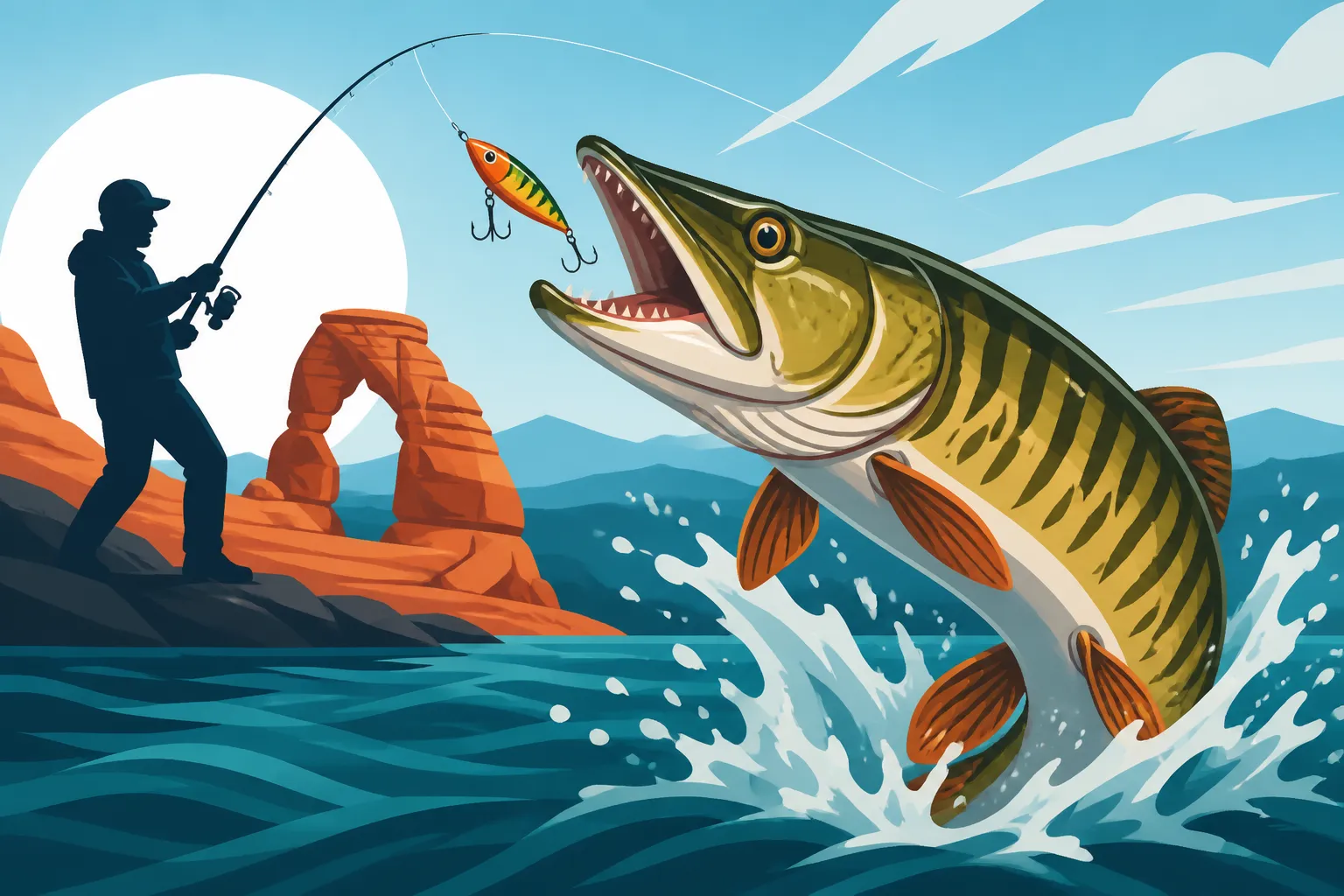
A tiger muskie, or Esox masquinongy x lucius, isn't a naturally occurring species in most waters. It's actually a sterile hybrid cross between a true muskellunge and a northern pike. This genetic mash-up gives them some of the best traits of both parents: the muskie's massive size potential and aggressive feeding habits, combined with the northern pike's hardiness and faster growth rate. You can typically identify a tiger muskie by its distinct, irregular dark vertical bars or spots over a lighter background, often described as a "tiger stripe" pattern, differentiating it from the more regular spots of a true muskie or the bean-shaped spots of a northern pike.
Here in Utah, tiger muskies were introduced by the Utah Division of Wildlife Resources (UDWR) into specific waters as a biological control to help manage undesirable or overpopulated fish species, as well as to provide a unique trophy fishing opportunity. They are voracious predators, and their presence helps keep other fish populations in check, creating a healthier ecosystem in certain reservoirs. Understanding their predatory nature is key to selecting the right lures and presentation, mimicking the prey they naturally hunt. For more insight into these fascinating fish, check out our guide on what a tiger muskie is.
Identifying Utah's Tiger Muskie
While the general tiger stripe pattern is a good indicator, it's helpful to know the nuances, especially when distinguishing them from northern pike, which can sometimes co-exist in the same waters or be confused by inexperienced anglers. Northern pike tend to have more uniform, lighter spots on a darker body and often a more elongated, 'duck-billed' snout. Tiger muskies, on the other hand, typically have a broader head, more pronounced "tiger" markings, and a generally stockier build, hinting at their muskie parentage.
The average size of a tiger muskie in Utah can range significantly, but it's not uncommon to encounter fish well over 30 inches, with some reaching truly impressive lengths into the 40-inch range or more. The current state record for Tiger Muskie Size in Utah stands at an astounding 33 lbs, 9 oz and 49 inches, caught at Pineview Reservoir. These are substantial fish that require appropriate gear and handling to ensure both angler safety and the fish's survival post-catch. Always be prepared with a proper landing net and release tools, as their razor-sharp teeth are no joke.
Where to Hunt for Tiger Muskie in Utah
When it comes to tiger muskie fishing in Utah, there's one location that consistently stands out as the premier destination. However, a little local knowledge about structure and their preferred haunts within that water can make all the difference between a memorable catch and a quiet day.
Pineview Reservoir: The Prime Spot
Without a doubt, Pineview Reservoir, nestled in the Ogden Valley, is the undisputed king of Utah's tiger muskie fisheries. It's the most reliable and productive water for these elusive predators in the entire state. The UDWR actively manages this fishery for tiger muskies, having stocked them for decades to help control the abundant carp and perch populations while offering a trophy experience. Anglers from across the region flock here, drawn by the real possibility of tangling with a true monster. The success stories from Pineview are legendary, and for many, it's the only place they'll even consider chasing muskies in Utah. You can learn more about why these fish were introduced by exploring Why Tiger Muskie Were Introduced to Pineview Reservoir.
Within Pineview itself, tiger muskies are ambush predators and will often relate to specific structures. Look for areas with dense weed beds, especially points or deeper edges of flats where weeds transition into open water. Submerged timber, rock piles, and old creek channels are also prime targets. The northern and eastern arms of the reservoir, particularly near tributaries entering the lake, can be hotspots, as these areas often have abundant baitfish and structure. Pay close attention to current reports and local fishing forums to pinpoint current patterns and concentrations, as these can shift throughout the seasons. Access points like Pineview Reservoir Fishing Spots offer a great starting point for planning your trip.
Other Potential Waters
While Pineview is the main event, the UDWR has historically explored or implemented tiger muskie stockings in other waters, though often on a more limited or experimental basis, or for shorter durations. These alternative locations are typically less consistent for trophy muskie but might offer opportunities for anglers looking for a different experience.
One such location is Joes Valley Reservoir in central Utah. While known more for its splake and cutthroat trout, tiger muskies have been present here in the past, primarily targeting chubs. However, information on their current population and angling success can be harder to come by compared to Pineview. Similarly, some community ponds or smaller reservoirs might receive very limited stockings, but these are often quickly fished out or don't support the large, trophy-sized fish found in Pineview. Always consult the most current Utah Fishing Guidebook published by the UDWR to verify any specific regulations or stocking information for alternative waters before you go. The rule of thumb for serious muskie hunters in Utah remains: if you want the best chance at a tiger muskie, Pineview is your destination.
Essential Gear for Utah Tiger Muskie Anglers
Chasing tiger muskie isn't like fishing for trout or bass. These are big, powerful fish with nasty teeth, and they demand specialized gear designed to handle their brute strength and sharp weaponry. Skimping on tackle will lead to disappointment, lost fish, and potentially damaged equipment.
Rods, Reels, and Line
Forget your standard trout setup; you'll need heavy-duty equipment for tiger muskie. A good muskie rod will be between 8 and 9 feet long, with a heavy or extra-heavy power rating and a fast action. This length helps cast large lures, control the fish during the fight, and provide leverage for hook sets. Brands like St. Croix, Shimano, and Abu Garcia offer excellent muskie-specific rods designed for the abuse these fish dish out. When looking for a rod on Amazon, ensure it clearly states "muskie" or "heavy swimbait" specific ratings.
For reels, a baitcasting reel is almost universally preferred due to its power, line capacity, and ability to handle heavy lures. You'll want a low-profile or round baitcaster with a strong drag system and a high retrieve ratio for quick lure pickup. Look for models from companies like Daiwa or Penn. Spool your reel with braided line, typically in the 80 to 100-pound test range. Braided line offers superior strength, sensitivity, and resistance to abrasion. While Best Pound Test Line for Utah Stocked Trout is much lighter, muskie fishing demands heavy braid to withstand the fish's power and sudden runs. Crucially, you must use a steel or heavy fluorocarbon leader (at least 80-150 lb test) to prevent their sharp teeth from cutting your main line. This isn't optional; it's absolutely essential to prevent heartbreak.
Lures That Trigger Bites
Tiger muskies are notorious for their preference for large, attention-grabbing lures. Think big swimbaits, jerkbaits, bucktails, and gliders. These lures are designed to imitate the large baitfish that muskies feed on, such as carp, perch, and trout.
- Bucktails: These are classic muskie lures, featuring a spinning blade and a skirt of deer hair. They create flash and vibration that can trigger aggressive strikes. Sizes typically range from 7 to 12 inches.
- Jerkbaits: Large, hard-bodied lures that are retrieved with a stop-and-go or twitching motion, mimicking an injured baitfish. Sinking or suspending models work well to cover different depths.
- Swimbaits: Realistic soft plastic or hard-bodied lures that swim with a lifelike action. These can be incredibly effective, especially for larger, more wary fish.
- Topwater Lures: During low-light conditions or when fish are active near the surface, large topwater baits like walk-the-dog style lures or prop baits can generate explosive, unforgettable strikes.
When shopping for lures, consider brands like Musky Innovations, Livingston Lures, or Drifter Tackle. While a general guide like Best Lures for a Utah Tackle Box might cover some basics, muskie require specialized, oversized versions. Have a variety of colors, from natural baitfish patterns to bright, high-contrast options for different water clarities and light conditions.
Essential Accessories
Beyond the core rod and reel setup, several accessories are non-negotiable for safe and successful tiger muskie fishing. First and foremost, a large, rubberized landing net is paramount. This isn't just for convenience; it's critical for the fish's survival. A net with a deep, wide hoop and rubber-coated mesh protects the fish's slime coat and fins, minimizing injury during the landing process. While you might consult Best Landing Net for a Trophy Lake Trout, ensure your net is even larger and more robust for muskie.
Next, a long-nosed pair of jaw spreaders and heavy-duty, long-handled pliers are crucial for hook removal. Their mouths are full of sharp teeth, making direct hand contact extremely dangerous for both you and the fish. A bolt cutter might even be necessary to quickly snip hooks if they're deeply embedded, prioritizing the fish's well-being. Additionally, a measuring tape is essential for confirming legal length requirements (if any) and for bragging rights! A bump board can help measure accurately without unnecessary handling. Finally, heavy-duty fishing gloves are a good idea for handling these fish, protecting your hands from both teeth and gill plates. Having these items readily accessible on your boat or in your tackle bag is not just a recommendation; it's standard practice for responsible muskie anglers.
Top Techniques for Enticing a Tiger Muskie Strike
Tiger muskies are often called "the fish of 10,000 casts" for a reason. They can be incredibly finicky, following a lure right to the boat without committing. Mastering various techniques and understanding their behavior is crucial to converting those follows into strikes.
Casting and Retrieving
The most common and often most effective way to target tiger muskies is through casting and retrieving. This technique allows you to systematically cover water, especially around known structures where muskies lie in ambush. Start by casting your chosen lure (bucktails, jerkbaits, or large swimbaits work wonders) close to weed lines, submerged timber, or rocky points. The key is to vary your retrieve speed and incorporate pauses or twitches.
Muskies are ambush predators, so they often prefer a lure that behaves erratically, mimicking an injured or fleeing baitfish. A common strategy is to retrieve steadily, then give a sudden jerk or pause, letting the lure flutter or dive, before resuming the retrieve. Pay close attention to any "follows" – when a muskie trails your lure right up to the boat. This is where the figure-eight maneuver comes in. As your lure reaches the boat, plunge your rod tip into the water and draw a large figure-eight pattern with the lure. Many muskies, reluctant to strike in open water, will commit when they feel cornered at the boat. This sudden change of direction and speed often triggers an aggressive reaction strike. This is a critical skill for How to Land a Tiger Muskie Without Losing It.
Trolling for Muskies
Trolling can be a highly effective method, especially on larger bodies of water like Pineview Reservoir, for covering expansive areas and reaching muskies that might be holding deeper or in open water. This technique is particularly useful during times when muskies are less active and spread out, or when targeting suspended fish. You'll typically use large crankbaits, swimbaits, or even oversized bucktails trolled behind the boat at speeds ranging from 2.5 to 5 miles per hour, depending on the lure's action and the fish's mood.
When trolling, pay close attention to your depth and use a reliable fish finder to identify contours, submerged structures, or schools of baitfish. Best Fish Finders for Utah Reservoirs can greatly enhance your trolling success. Using planer boards can help spread out your lines, covering a wider swath and avoiding tangles, especially if you're running multiple rods. Varying lure depths with different diving crankbaits or by using lead-core line can help you present baits at various levels in the water column. The goal is to present a lure that looks like an easy meal cruising through their territory, provoking a strike from an otherwise lethargic predator.
Dealing with the Fight and Release
Once a tiger muskie strikes, hold on tight! Their initial runs are powerful, and they often incorporate head shakes and aerial acrobatics. Keep constant pressure on the fish, and never give it slack. Maintain a strong bend in your rod and let your drag do its job. When the fish gets close to the boat, be ready with that large net. Guide the fish headfirst into the net to prevent it from thrashing and getting tangled or escaping.
Proper handling and release are paramount for these often catch-and-release fish. Tiger muskies are resilient, but they are also sensitive to poor handling. Once in the net, keep the fish in the water as much as possible. Use your jaw spreaders and long-nosed pliers to quickly and carefully remove the hooks. If a hook is deeply embedded and cannot be removed quickly without causing extensive damage, don't hesitate to use bolt cutters to snip the hook. The hook will eventually dissolve, and the fish's survival is more important. Avoid touching the fish's body with bare hands if possible, especially its gills or eyes. Support the fish horizontally and allow it to recover in the water before releasing it. A thorough guide like How to Release a Fish Without Hurting It in Utah can provide more detailed steps for maximizing survival rates.
Timing Your Utah Tiger Muskie Hunt
Just like with any predatory fish, timing is a huge factor in tiger muskie fishing success. Knowing when and under what conditions these fish are most active can drastically improve your odds, turning a slow day into a memorable one.
Best Seasons for Tiger Muskie
While you can technically catch tiger muskies year-round in Utah, certain seasons offer distinct advantages. For many anglers, late spring (May-June) and fall (September-October) are considered prime time. In late spring, after ice-off, water temperatures begin to rise, and muskies become more active, feeding heavily as they shake off winter lethargy. Baitfish are also becoming more abundant, making it a natural feeding period.
Fall is arguably the best season for trophy hunting. As water temperatures cool down, muskies enter a "fall feed" mode, gorging themselves in preparation for winter. This is when they are often at their heaviest and most aggressive, making them more susceptible to larger lures. This period also tends to see fewer recreational boaters on the water, offering a more tranquil fishing experience. While Best Time of Year to Fish in Utah provides a general overview, understand that muskie have specific peak feeding windows within these seasons. Summer can also be productive, but often requires fishing deeper or during low-light conditions due to warmer surface temperatures. Ice fishing for muskies is rare and not a primary focus for most anglers, though it's not impossible to incidentally catch one through the ice.
Ideal Conditions and Times of Day
Beyond the season, daily conditions play a significant role. Overcast days with a light chop on the water are often ideal. The broken surface from the chop can make it harder for the fish to detect your line or boat, giving you a stealth advantage. Overcast skies also diffuse light, making muskies feel more comfortable venturing out of deeper cover. Bright, sunny days can make muskies retreat to deeper, shadier areas, requiring different tactics.
As for the time of day, muskies often have distinct feeding windows. Early morning, right around sunrise, and late evening, leading up to sunset, are historically very productive. These low-light periods provide muskies with an advantage over their prey and are when they are most likely to be actively hunting. However, don't discount midday entirely, especially on overcast days or during cooler seasons. After a cold front, fish might be lethargic, but a stable weather pattern for a few days can get them actively feeding again. Keep an eye on barometric pressure; a steady or rising barometer often indicates more active fish.
Conservation and Responsible Angling
The thrill of catching a tiger muskie is undeniable, but with great power comes great responsibility. These magnificent fish are a valuable resource, and their long-term health depends on responsible angling practices. Utah's fisheries managers work hard to maintain these populations, and anglers play a crucial role in that effort.
Handling and Releasing Tiger Muskie
As mentioned earlier, proper handling of tiger muskies is not just good practice; it's essential for their survival. Their delicate slime coat, fins, and internal organs can be easily damaged if mishandled. Always keep the fish in the net and in the water as much as possible while you prepare for hook removal. Use those long-nosed pliers and jaw spreaders to quickly and safely dislodge hooks. If the fish is deeply hooked and removal would cause excessive damage, consider cutting the line as close to the hook as possible. How to Release a Fish Without Hurting It in Utah offers more general guidelines that are absolutely critical for muskie.
When lifting the fish for a quick photo, always support its entire body horizontally. Never hold a large muskie vertically by its head or gills, as this can severely damage its spine and internal organs. Get your photo quickly, then gently lower the fish back into the water, holding it upright until it swims away under its own power. Sometimes, this means cradling it in the net by the boat for a few minutes, allowing fresh water to flow over its gills until it regains its strength. Investing in a quick-release camera system can help minimize the time the fish is out of the water.
Understanding Regulations and Limits
Fishing regulations are in place for a reason: to protect fish populations and ensure sustainable angling opportunities for future generations. For tiger muskies in Utah, specific rules regarding harvest, size limits, and gear restrictions are often in effect. For example, Pineview Reservoir has specific limits on tiger muskie. Currently, the regulation allows for two tiger muskie over 40 inches, with a zero bag limit for fish between 24 and 40 inches. This slot limit is designed to protect the breeding-sized fish and allow them to grow to trophy potential while providing a harvest opportunity for truly large specimens.
It is absolutely imperative that you check the most current Utah Fishing Regulations Explained before every fishing trip, as rules can change seasonally or annually. Always carry a copy of the Utah Fishing Guidebook (available online or from license vendors) and understand the specific regulations for the water you are fishing. Ignorance of the law is not an excuse, and violations can result in significant fines and penalties. By adhering to these regulations and practicing responsible catch-and-release, especially for fish within the protected slot limit, you contribute directly to the health and longevity of Utah's exceptional tiger muskie fishery.
Here's a quick reference table for common muskie lure types:
| Lure Type | Best Conditions | Key Characteristics | Average Size (inches) | Pros | Cons |
|---|---|---|---|---|---|
| Bucktails | Active fish, clear to stained water | Spinning blade, deer hair skirt, creates vibration | 7-12 | High attraction, versatile | Can be exhausting to cast repeatedly |
| Jerkbaits | Erratic retrieves, various depths | Hard-bodied, mimics injured baitfish, pauses | 6-10 | Effective for wary fish, deep running | Requires specific rod action |
| Swimbaits | Realistic presentation, slower retrieve | Soft or hard, lifelike swimming action | 8-15+ | Highly realistic, large profile | Can be expensive, sometimes delicate |
| Topwater Lures | Low light, calm water, shallow areas | Surface disturbance (props, walks), noisy | 7-12 | Exciting strikes, covers shallow water | Limited to surface activity, not for deep fish |
| Crankbaits | Trolling, covering open water | Diving lip, wobbling action, various depths | 6-10 | Efficient for covering water, trolling | Less erratic than jerkbaits, can snag deep |
Remember, variety is key! Have a selection of these lure types in different sizes and colors to adapt to changing conditions and muskie moods.
Disclaimer
The information provided in this guide is for general informational purposes only and is subject to change. Fishing regulations, season dates, and specific water conditions in Utah can vary. Always consult the official Utah Division of Wildlife Resources (UDWR) Proclamation or Guidebook for the most current and accurate regulations before engaging in any fishing activities. Adherence to all local, state, and federal laws is the responsibility of the angler.