How to Choose a Fly Reel for Utah Trout Streams
One of the most common headaches for any fly angler, especially here in Utah with our incredible diversity of trout streams, is figuring out which fly reel is actually right for their fishing. It's easy to get bogged down in technical jargon and feel overwhelmed when you just want to get out on the water. This guide is here to cut through the noise and help you confidently choose a fly reel that perfectly complements your rod, your budget, and the specific Utah trout streams you love to fish.
Understanding the Role of a Fly Reel on Utah Trout Streams
It's tempting to think of a fly reel in the same way you might a spinning reel – as the primary tool for battling a fish. But when you're talking about fly fishing for trout, especially in our beautiful Utah rivers and creeks, the role of the reel is often quite different. Understanding this fundamental difference is the first step toward making a smart choice.
More Than Just Line Storage
For many trout fishing scenarios, particularly when you're targeting smaller to medium-sized fish on typical weight rods (like a 3-weight or 5-weight), your fly reel is, first and foremost, a place to store your fly line. Think about it: when you hook a 12-inch brown trout on the Provo River, you're usually fighting that fish by hand-lining, stripping line in with your off-hand, rather than relying heavily on the reel's drag. The rod itself does most of the work, absorbing the shock and guiding the fish. The reel keeps your expensive fly line neat, tangle-free, and ready for the next cast, which is a blessing when you're wading through tricky currents.
When you're actively casting and retrieving, your line isn't spooling off and on the reel with every strip. Instead, you're pulling line off the reel and holding it in coils in your non-casting hand, then releasing those coils as you cast. Once you hook a fish, if it's small, you simply gather the line back in. It's only when a truly large, powerful trout makes a run that your line will peel off those hand-coils and force you to engage the reel's drag system.
Balancing Your Setup
While line storage is critical, the fly reel plays another incredibly important, often overlooked, role: balancing your rod. A perfectly balanced fly fishing setup feels like an extension of your arm. When you hold your rod with the reel attached, it should feel light and comfortable in your hand, with the balance point typically just above the cork handle. If your reel is too heavy or too light for your rod, you'll feel it in your casting arm almost immediately. An unbalanced setup can lead to fatigue, affect your casting stroke, and make delicate presentations much harder.
Imagine trying to cast tiny dry flies on a glass-calm section of the Weber River with a rod that feels tip-heavy. Your wrist will ache, and your loops will suffer. The right reel weight makes your entire setup feel harmonious, allowing the rod to load and unload efficiently and delivering those precise casts that are so crucial for fooling wary trout. This synergy between rod and reel is what truly unlocks an enjoyable and effective fly fishing experience. If you're looking for a new rod to pair your reel with, check out our guide on Best Fly Rods for the Provo River.
Protecting Your Investment
Let's be honest, quality fly lines aren't cheap. They're precision tools, engineered for specific casting characteristics and durability. A good fly reel acts as a safe, secure home for that investment. A poorly designed or flimsy reel can damage your fly line through improper spooling, sharp edges, or inadequate protection from the elements.
A reel with a smooth, well-designed arbor prevents kinks and memory in your line, ensuring it lies flat and casts smoothly every time. Furthermore, a sturdy reel protects your line from dirt, sand, and accidental nicks that can occur when you're out on the water. Think of those unexpected slips and tumbles on slick riverbanks – a robust reel enclosure can save your precious line from significant damage. Keeping your line in top condition means it will perform better and last longer, saving you money in the long run.
Key Factors When Selecting a Fly Reel for Utah's Diverse Waters
Now that we understand the reel's fundamental purpose, let's dive into the practical considerations for choosing one that will perform well across Utah's incredible array of trout streams, from tiny mountain rivulets to mighty tailwaters.
Weight and Balance with Your Rod
This is arguably the most critical factor when selecting a fly reel. The goal is to achieve a balanced system where the rod, reel, and line work together seamlessly. Your rod will have a "weight" rating (e.g., 3-weight, 5-weight, 8-weight), which corresponds to the weight of fly line it's designed to cast. Your reel should be sized to match that rod weight.
For instance, if you're fishing a delicate 3-weight rod on a small, brushy creek targeting eager cutthroat, you'll want a very light reel that doesn't overpower the rod. Conversely, if you're using a versatile 5-weight rod for a mix of nymphing and dry fly fishing on the Middle Provo River, a slightly heavier, more robust reel might be appropriate to handle potential larger fish and the extra backing. A 7-weight rod used for streamer fishing larger waters or for windy conditions would demand an even heavier reel to maintain that crucial balance point. Many reel manufacturers will specify a "line weight range" for their reels, making it easier to pair them correctly. When you hold your assembled rod and reel, the point of balance should ideally be just above the top of the cork handle, making the entire setup feel comfortable and effortless to cast. This balance is what makes a day on the water enjoyable, reducing wrist strain and improving casting accuracy. For more on matching, consider reading Best Fly Rod Weight for the Provo River.
Drag System Considerations
The drag system is what applies resistance when a fish pulls line from your reel, protecting your tippet from breaking and tiring out the fish. Fly reels typically come with two main types of drag:
-
Click-and-Pawl Drag: This is a simpler, older style of drag. It uses a pawl (a small lever) that clicks against a toothed gear as the spool turns. It provides minimal resistance, often just enough to prevent the spool from free-spooling. You won't be "fighting" a big fish with this drag; instead, you rely on palming the rim of the spool with your hand to add extra resistance when needed. Many traditionalists love the classic sound and simplicity of click-and-pawl reels. They are often lighter and perfectly sufficient for smaller trout in intimate settings, like those in high-altitude Uinta Mountains lakes. If you're targeting small brook trout on light tackle, the charm of a click-and-pawl reel is undeniable.
-
Disc Drag: This is a more modern and powerful drag system, similar to what you'd find on spinning reels. It uses a series of friction plates (discs) that are compressed together to create smooth, consistent resistance. Disc drags are highly adjustable, allowing you to fine-tune the tension precisely. For larger trout, especially those hard-fighting brown trout in the Green River below Flaming Gorge Dam or the substantial rainbows and cutthroats in bigger reservoirs, a smooth, reliable disc drag is a huge advantage. It provides the stopping power and consistency needed to protect light tippets against strong runs, giving you more control during the fight. Many anglers prefer disc drag for its versatility, even on smaller waters, for that "just in case" moment.
| Drag Type | Pros | Cons | Ideal for Utah Waters |
|---|---|---|---|
| Click-and-Pawl | Lightweight, simple, classic sound, often less expensive | Minimal resistance, requires palming spool for bigger fish | Small creeks, high-mountain lakes, delicate dry fly fishing for smaller trout |
| Disc Drag | Smooth, consistent, highly adjustable, powerful stopping power | Can be heavier, typically more expensive, more complex parts | Larger rivers (Green, Provo), reservoirs, targeting trophy trout, windy conditions, streamer fishing |
Arbor Size – Large vs. Standard
The arbor refers to the diameter of the spool's core where the fly line and backing are wound. You'll primarily encounter two types:
-
Standard Arbor: These reels have a smaller diameter core. This means the line is wound in tighter coils. The main advantage is that standard arbor reels can be more compact and often less expensive. However, retrieving line can feel slower, and the tighter coils can sometimes lead to more "line memory" – where the line retains the shape of the spool, causing it to coil and tangle when cast.
-
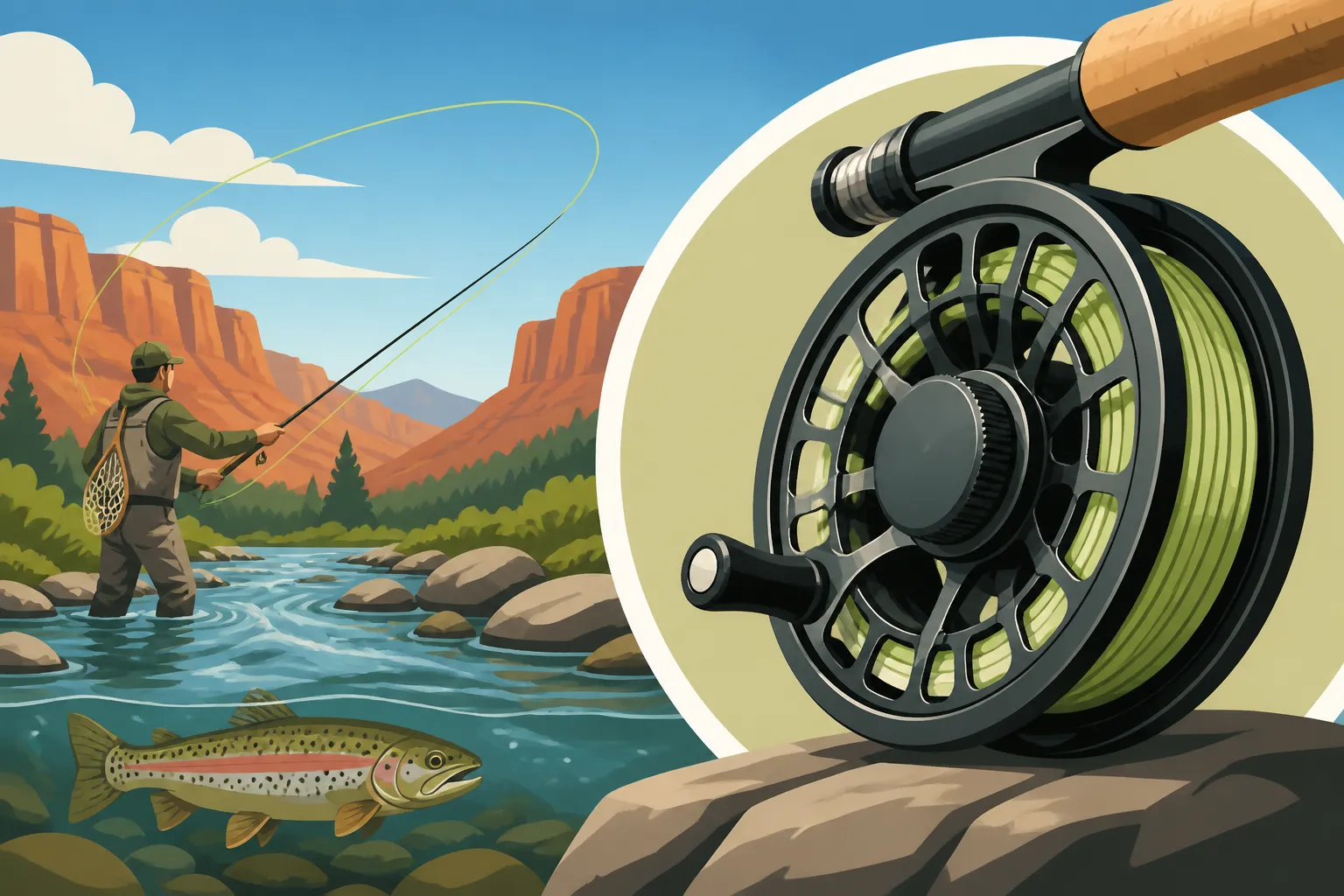
Large Arbor: These reels have a significantly larger diameter core. This translates to several benefits. Firstly, you can retrieve line much faster with fewer turns of the handle, which is a huge plus when a strong fish decides to run straight back at you. Secondly, the larger diameter means the line is stored in wider, looser coils, dramatically reducing line memory and making for smoother, longer casts. Most modern fly anglers, especially those targeting active fish or needing quick retrieves, gravitate towards large arbor reels. The downside is they tend to be slightly bulkier and can be more expensive.
For general trout fishing in Utah, a large arbor reel is often the preferred choice due to its quicker retrieve and reduced line memory, which makes for a more pleasant and efficient fishing experience.
Materials and Durability
The material your fly reel is made from directly impacts its weight, durability, and cost. Here are the common options:
-
Machined Aluminum: These reels are precision-machined from a solid block of aircraft-grade aluminum. This process results in a reel that is incredibly strong, lightweight, and durable, with tight tolerances and smooth operation. They are highly resistant to corrosion and dings, making them a long-lasting investment. Machined aluminum reels are typically at the higher end of the price spectrum but offer superior performance and reliability. They are an excellent choice for anglers who fish frequently and demand the best, especially on waters where you might encounter larger fish or need maximum reliability.
-
Cast Aluminum: These reels are made by pouring molten aluminum into a mold. While still durable, they are generally not as strong or precise as machined reels. They can be a bit heavier for their size and are more prone to bending or cracking if dropped hard. However, cast aluminum reels offer a fantastic balance of performance and affordability, making them a very popular choice for many anglers. They are an excellent entry into quality fly fishing gear without breaking the bank. Many reputable brands offer excellent cast aluminum reels that will serve you well for years.
-
Composite/Graphite: These reels are made from lightweight plastic or graphite composites. They are the most affordable option and are incredibly light. However, they are also the least durable and are more susceptible to breaking or flexing under stress. These reels are often found in beginner fly fishing kits and are perfectly adequate for casual fishing for small trout, or as a backup reel. They might not hold up to the rigors of frequent, aggressive angling or protect your line as well as metal reels.
Considering Utah's varied conditions, from rugged canyon rivers to expansive reservoirs, a machined or high-quality cast aluminum reel will offer the best blend of durability and performance for most serious trout anglers. Corrosion resistance is key, especially if you occasionally venture to waters like the Great Salt Lake tributaries, though most dedicated trout streams are freshwater.
Capacity and Backing
Reel capacity refers to how much fly line and backing the spool can hold. While most trout in Utah won't spool you, having sufficient capacity is crucial for two reasons:
- For Large Fish: If you hook into a truly big brown trout on the Green River or a hefty rainbow in Strawberry Reservoir, it might make a long, powerful run, taking not just your fly line but also a good portion of your backing. Having ample backing means you won't get "spooled" (run out of line) and can continue to fight the fish effectively.
- To Fill the Spool: Even if you don't anticipate huge runs, having your spool properly filled with backing (typically 20-pound dacron or gel-spun) ensures that your fly line comes off the reel smoothly and without excessive memory. A nearly empty spool can cause the fly line to coil too tightly, leading to frustrating tangles and shorter casts.
Most trout reels (for 3-weight to 6-weight lines) will easily hold a standard 90-100 feet of fly line plus 50 to 100 yards of 20-pound backing. For heavier setups (7-weight and up) or when targeting truly large fish, you might opt for reels that hold 150-200 yards of backing. Always check the manufacturer's recommendations for line and backing capacity when pairing your reel. This is especially important if you anticipate needing Best Fly Lines for Utah Stillwater Fishing.
Matching Your Reel to Specific Utah Trout Stream Scenarios
Utah offers such a diverse tapestry of fishing experiences, and your ideal fly reel might shift slightly depending on where and how you plan to chase trout. Let's break down some common scenarios.
Small Creek and High-Mountain Lake Adventures
Picture yourself hiking into a pristine Uinta Mountains high lake, or carefully sneaking along a tiny, brush-choked creek tucked away in a canyon. Here, stealth and delicate presentation are paramount. The trout might not be giants, but they are often eager and beautiful. For these scenarios, you want a reel that is lightweight, simple, and unobtrusive.
Often, a classic click-and-pawl reel, or a very light disc drag reel, is perfect. These reels are typically smaller, lighter, and pair beautifully with shorter, lighter rods (2-weight to 4-weight). Since you're likely casting short distances and fighting fish primarily by hand-lining, heavy drag isn't a major concern. The minimalist nature of these reels complements the serene, backcountry experience. They are also often less expensive, which is a bonus if this is a specialized setup. Think about the ease of packing a lightweight setup on a long hike to those remote, crystal-clear waters where native cutthroat or brook trout eagerly sip your dry fly. This is where simplicity often reigns supreme. Our guide on Uinta Mountains High Lakes Fishing can give you some inspiration for these types of trips.
Blue Ribbon Rivers and Trophy Trout
Now, let's talk about the big leagues: Utah's blue ribbon rivers like the Green River below Flaming Gorge or the lower and middle sections of the Provo River. These waters are renowned for their abundant and often trophy-sized brown, rainbow, and cutthroat trout. When you hook into a 20-inch brown here, you'll want a reel that can handle serious business.
For these situations, a modern, large arbor reel with a smooth, powerful disc drag system is almost a necessity. These fish can make blistering runs, and a consistent drag will protect your tippet, tire the fish efficiently, and prevent break-offs. The large arbor also allows for quick line retrieve, which is crucial when a powerful fish changes direction rapidly. Durability is also a major factor; a machined aluminum reel will withstand the wear and tear of frequent use and the occasional bump or scrape that comes with fishing in rugged conditions. You'll likely be fishing a 5-weight or 6-weight rod, sometimes even a 7-weight for larger streamers or battling strong winds, so ensure your reel matches that rod weight for optimal balance and casting performance. For tips on how to fish these rivers effectively, check out How to Fly Fish the Provo River and Green River Below Flaming Gorge Dam.
All-Around Versatility for the Utah Angler
Let's be realistic – most of us don't have a dozen fly rod setups. We need one or two versatile rigs that can handle a variety of Utah's fishing opportunities. If you're looking for that do-it-all reel that can go from nymphing on the Provo to stripping streamers on a local reservoir or throwing dry flies on a mountain stream, here's what to look for.
A high-quality, mid-priced large arbor reel with an adjustable disc drag is usually the sweet spot. A reel designed for a 5-weight or 6-weight rod is incredibly versatile for most trout fishing scenarios. Look for one made from cast or machined aluminum for a good balance of durability and weight. This kind of reel will offer enough drag power for unexpected large fish, sufficient line capacity for typical trout runs, and the durability to handle diverse conditions. It might not be the absolute lightest for tiny creeks or the most powerful for huge lake trout, but it will perform admirably in almost every situation you're likely to encounter in Utah's trout streams. It's the dependable workhorse you can rely on, day in and day out. Remember that learning Utah Fly Fishing Guide techniques across these waters means your gear needs to be up to the task.
Budgeting for Your Utah Fly Reel Investment
Let's talk money, because while fly fishing is a passion, it's also a gear-intensive hobby! The good news is that there are fantastic fly reels available at almost every price point, and you don't always need to spend a fortune to get a quality piece of equipment.
Entry-Level Options
For those just starting out, or for casual anglers who fish only a few times a year, entry-level fly reels are a great starting point. These typically feature cast aluminum or composite construction and simpler drag systems (sometimes a basic disc drag, sometimes click-and-pawl). They are designed to be affordable and functional, getting you out on the water without a huge financial commitment.
You can expect these reels to store your line, offer a basic level of drag, and hold up reasonably well to light use. They might be a bit heavier, or the drag might not be as smooth and precise as higher-end models, but for learning the ropes and catching smaller stocked trout in community ponds or small creeks, they are perfectly adequate. Brands like Orvis, Redington, and even some options found on Amazon offer solid starter reels. Don't feel pressured to buy the most expensive reel right away; a good entry-level reel will give you plenty of opportunity to learn and grow your skills. You might find some excellent deals at Bass Pro Shops as well.
Mid-Range Workhorses
This is often the sweet spot for many dedicated Utah anglers. Mid-range reels typically cost a bit more, but they offer a significant jump in performance and durability compared to entry-level models. You'll find a lot of high-quality cast aluminum reels, and sometimes even entry-level machined aluminum reels, in this category.
Mid-range reels usually feature robust, smooth disc drag systems that offer precise adjustments and reliable stopping power. They often come with large arbor designs for faster retrieve and less line memory. These reels are built to withstand regular use on a variety of waters, from the Provo River to Strawberry Reservoir, and can confidently handle larger trout. They strike an excellent balance between performance, durability, and cost, providing tremendous value for the money. Many anglers find that a mid-range reel will be the last reel they need to buy for a very long time, as it delivers consistent, reliable performance for years of enjoyable fishing.
High-End Performance
If you're a serious fly angler who spends countless hours on the water, targets trophy fish, or simply appreciates the finest craftsmanship and engineering, then a high-end fly reel might be for you. These reels are almost exclusively made from precision-machined aluminum, featuring incredibly smooth, sealed drag systems, often made with exotic materials, and impeccable fit and finish.
High-end reels are designed for extreme durability, flawless performance, and often come with extended warranties. They are lightweight yet incredibly strong, capable of withstanding harsh conditions and the demands of battling the largest, most powerful fish. While the price tag is significant, you're paying for cutting-edge technology, superior materials, and a level of refinement that can enhance your fishing experience, particularly when battling that fish of a lifetime. For most trout stream fishing in Utah, a high-end reel is more of a luxury than a necessity, but for those who demand the absolute best, the investment is often worth it.
Where to Find Your Next Reel
When you're ready to make your purchase, you have a few excellent options. Local fly shops in Utah are invaluable resources. They offer expert advice, allow you to physically handle and compare different reels, and often have staff who fish the local waters and can provide personalized recommendations. Supporting these local businesses also strengthens the fly fishing community.
For a wider selection and competitive pricing, online retailers like Amazon are fantastic. Just be sure to read reviews and confirm the reel's specifications match your needs. Larger outdoor retailers such as Bass Pro Shops also carry a broad range of fly fishing gear, where you can often find good sales and sometimes speak with knowledgeable staff. No matter where you decide to buy, doing your research and understanding the factors discussed here will ensure you make a smart, informed decision that will lead to many happy hours on Utah's trout streams.
Disclaimer
This article is for general informational purposes only and does not constitute professional advice. Laws, prices and regulations vary by location and change over time. Consult a qualified professional for guidance on your specific situation.