How Many Life Jackets You Need on a Utah Boat
There's nothing quite like the feeling of heading out onto Utah's incredible lakes and reservoirs, whether you're chasing trophy trout on Flaming Gorge or just enjoying a calm paddle on Deer Creek. But before you cast off, there's one piece of safety equipment that often causes confusion: life jackets. Navigating the specific regulations can feel a bit like trying to read a topo map in the dark. Nobody wants to face a fine, or worse, an unsafe situation on the water, simply because they weren't clear on the rules. This guide is here to untangle the requirements for life jackets on any Utah boat, ensuring you're compliant, prepared, and ready for a safe and enjoyable adventure.
Navigating Utah's Waters: The Core Life Jacket Law
Understanding the fundamental rules for life jackets, or Personal Flotation Devices (PFDs) as they're officially called, is your first step to a worry-free day on the water. Utah's laws are designed to protect everyone on board, from seasoned anglers to excited youngsters. These aren't just suggestions; they are critical safety mandates.
The Non-Negotiable "One for Every Person" Rule
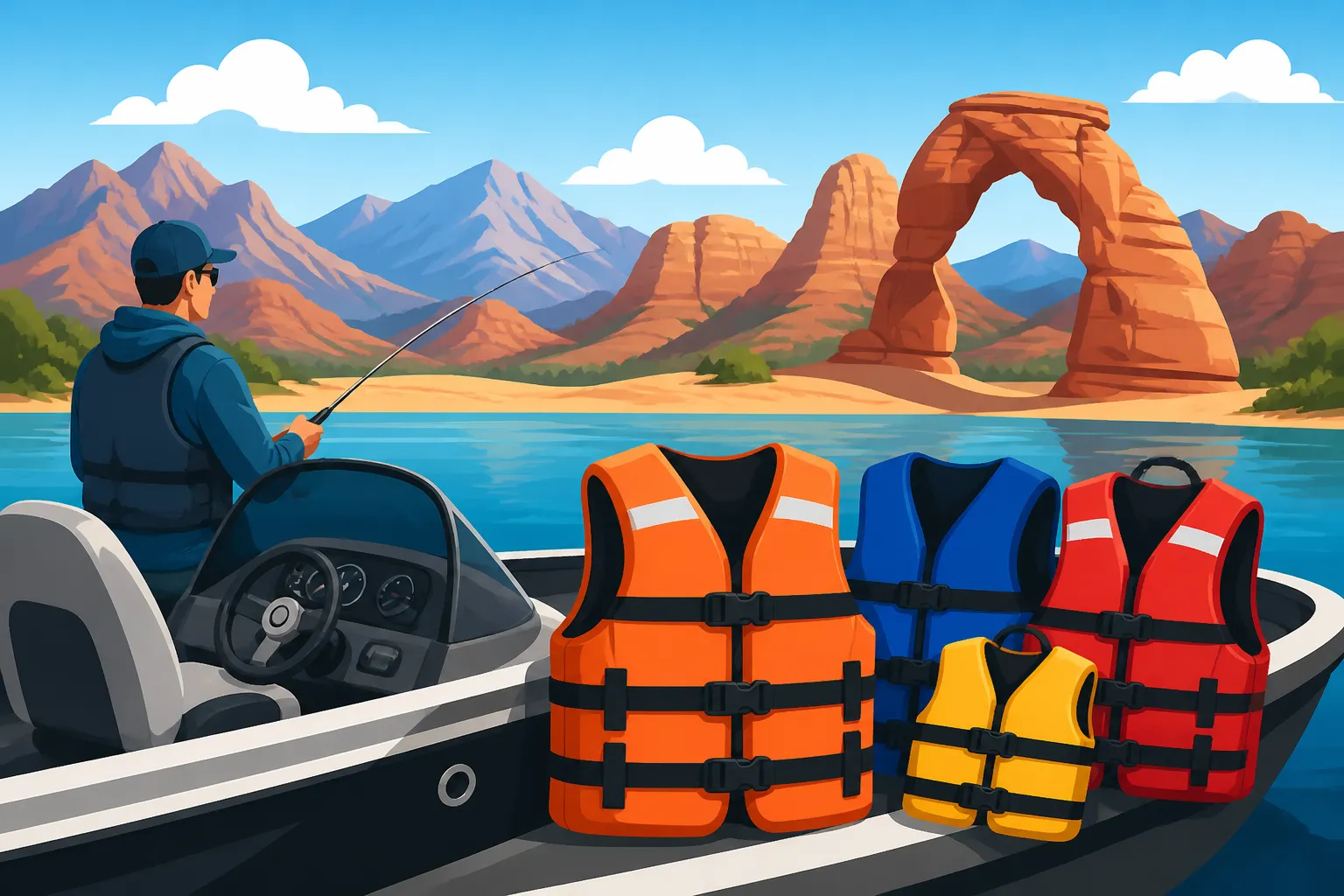
The bedrock of Utah's life jacket law is simple and straightforward: every single person on board your vessel, regardless of their age or swimming ability, must have access to a U.S. Coast Guard (USCG) approved life jacket. This isn't a suggestion; it's an absolute requirement. Even if you're just planning a quick trip across the lake or a short jaunt to a new fishing spot, this rule applies. It means if you have four people in your boat, you need four approved life jackets. No exceptions, no shortcuts. This fundamental rule is paramount to ensuring everyone's safety should an unexpected event occur on the water.
The term "readily accessible" is crucial here, and it's where many boaters can inadvertently fall short. It means that the life jacket must be in a place where it can be quickly and easily retrieved in an emergency. It cannot be stowed away in a locked compartment that requires a key, buried under a pile of gear that would take minutes to uncover, or in a package that needs to be opened. Imagine a sudden wave, a quick turn, or an unexpected capsize – you need that life jacket now, not after a frantic search. Keep them on deck, under a seat, or in an easily opened storage locker so they can be grabbed in a matter of seconds.
When we talk about USCG-approved life jackets, it's important to know that there are different types (Type I, II, III, and V) that all count towards this "one per person" wearable requirement. Type I PFDs are designed for offshore use, offering the most buoyancy and the best chance of turning an unconscious person face-up. Type II PFDs are good for inland waters, providing moderate buoyancy. Type III PFDs are often the most comfortable for continuous wear, popular among anglers and recreational boaters, though they may not turn an unconscious person face-up. Type V PFDs are special-use devices, often activity-specific (like kayaking vests) that are approved for specific conditions. As long as they carry that USCG approval, they meet the basic requirement.
The Critical Requirement for Young Anglers and Passengers
While the "one for every person" rule applies to all, Utah has a special, and very important, additional requirement for its youngest boaters. If you have children under the age of 13 on board, they must wear a USCG-approved life jacket whenever your vessel is underway. This isn't just about having one readily available; it's about having it securely fastened on their person at all times when the boat is in motion. This law recognizes that young children may not have the strength, swimming skills, or presence of mind to grab and put on a life jacket quickly in an emergency.
Defining "underway" is important for this rule. A vessel is considered underway when it is not anchored, moored, or aground. So, if your boat is moving under its own power, is being sailed, or even just drifting with the current, a child under 13 needs that PFD securely in place. If you drop anchor for a swim break or tie up to a dock, children can take their life jackets off, but as soon as you're ready to move again, they need to be back on. This rule is designed to give parents and guardians peace of mind, knowing their children have continuous protection during the most vulnerable times on the water.
The absolute importance of proper fit for children cannot be overstated. A life jacket that is too big can easily slip off, offering no protection, while one that is too small might not provide adequate flotation. When selecting a PFD for a child, always check the label for the specific weight and chest size recommendations. Have the child try it on: it should fit snugly but comfortably, without riding up around their ears when you lift them by the shoulder straps. Consider visiting a local outdoor retailer like Bass Pro Shops to have a staff member help ensure a perfect fit, or read customer reviews on Amazon to help guide your size selection. Their safety isn't just about legal compliance; it's about providing effective, real-world protection.
Always make sure the life jacket is securely buckled or zipped, and any leg straps are used if available. These straps prevent the PFD from riding up and coming off when a child enters the water. Taking the time to ensure a proper fit before you leave the shore is a small effort that could make an enormous difference in an emergency. You want that PFD to perform exactly as designed, which it can only do if it fits like a glove.
Understanding USCG Approval and Its Importance
When you're outfitting your boat with life jackets, seeing that "USCG Approved" label isn't just a formality; it's a certification that the device meets rigorous safety standards set by the United States Coast Guard. This approval means the PFD has been tested and proven to provide the stated level of buoyancy and performance under specific conditions. Without this label, what you have might be a flotation device, but it is not a legal life jacket in the eyes of Utah law, and it likely won't provide the same reliable safety.
Identifying the USCG approval is usually quite easy. Look for a tag or label, typically sewn into the fabric of the life jacket, that explicitly states "USCG Approved" or "U.S. Coast Guard Approved." This tag will also provide a wealth of other important information, including the type of PFD (Type I, II, III, V), its intended use, buoyancy rating, and the approved size or weight range for wearers. Always take a moment to read this label when purchasing a new PFD to ensure it's appropriate for your needs and meets the legal requirements. Reputable outdoor gear suppliers, whether you're browsing the aisles at Bass Pro Shops or clicking through listings on Amazon, will always prominently display this information.
The temptation to use non-approved flotation can be strong, especially with the wide array of colorful pool noodles, inflatable rings, and fun water toys available. While these might be great for splashing around at the beach, they offer no legal compliance or reliable safety in a boating emergency. These items are not designed to keep a person afloat for an extended period, nor do they often provide the necessary support to keep a person's head above water, especially if they are unconscious. Fines for not having compliant PFDs on board can certainly add a sour note to an otherwise perfect day on the water, but more importantly, relying on non-approved devices puts lives at risk. Utah Boating and Fishing Rules delves into the full spectrum of regulations designed to keep you safe.
Going Above and Beyond: Enhancing Safety on Utah's Diverse Waters
While meeting the legal minimums is essential, true boater safety often means thinking a step further. Utah's waters can be unpredictable, from placid mornings to sudden afternoon squalls, and having a comprehensive approach to life jacket safety can make all the difference.
Throwable Flotation: Your Immediate Rescue Tool
For any boat that is 16 feet or longer, Utah law adds another critical safety requirement: you must carry at least one Type IV throwable flotation device. This isn't a life jacket for wearing, but rather a dedicated tool for immediate rescue. Imagine someone unexpectedly going overboard – whether they slipped, lost their balance, or were knocked off by a wave. A throwable device allows you to quickly get flotation to them without having to jump in yourself or spend precious seconds trying to put on a wearable PFD.
Like wearable PFDs, the placement of your throwable device is key. It must be "readily accessible" and "immediately available," meaning it needs to be on deck, near the helm, or in an open compartment where anyone can grab it quickly. It shouldn't be stowed deep in a locker, under a tangle of ropes, or tied down where it can't be deployed instantly. The whole point of a throwable is speed – getting it to the person in the water as fast as humanly possible.
Examples of Type IV throwable devices commonly include ring buoys, buoyant cushions, or horseshoe buoys. While these devices do not count towards the "one for every person" wearable PFD requirement, they are an absolutely critical piece of Boat Safety Equipment Required in Utah for quick response in an emergency. On some larger vessels, having more than one throwable can be a smart move, especially if your boat has multiple deck areas or if you frequently boat with a larger crew. The few dollars spent on an extra cushion is a small price for enhanced peace of mind.
The Art of a Proper Fit and Regular Inspection
A life jacket is only effective if it fits correctly. For adults, this means it should feel snug but comfortable, allowing for a full range of motion. When you try it on, lift your arms straight up – the PFD should not ride up past your chin or ears. If it does, it's too big and could potentially slip off in the water. Some boating safety courses even encourage practicing by jumping into shallow water with your PFD on to truly understand how it feels and confirm its fit and buoyancy. This hands-on test can instill confidence and highlight any fit issues before a real emergency.
Regular inspections are not just good practice; they're vital for ensuring your life jackets remain effective. UV rays from the sun, exposure to saltwater or harsh freshwater chemicals, and general wear and tear can degrade a PFD's buoyancy material and the integrity of its straps and buckles. Make it a habit to check all PFDs at least once a season, or more frequently if they're used often. Look for rips, tears, frayed straps, broken buckles, or faded fabric, which can be an indicator of material degradation. Give the foam a good squeeze – if it feels brittle, compressed, or waterlogged, it's a strong sign that the PFD has lost its effectiveness and needs to be replaced.
It's also a smart idea to mark your PFDs with your boat name or owner's name, especially if you carry a variety of sizes or share them with others. Proper care also includes cleaning them after use, especially if they've been in saltwater, and allowing them to air dry completely before storing them in a cool, dry place out of direct sunlight. Never use a PFD as a seat cushion unless it is specifically designed and approved for dual-purpose use (typically a Type IV throwable). Sitting on them compresses the foam, reducing its buoyancy over time. Following these maintenance tips will extend the lifespan of your PFDs and ensure they are ready when you need them most. For more general advice on maintaining your gear, check out How to Store Fishing Gear Over a Utah Winter.
Smart Choices: Carrying Extra Life Jackets
While the law specifies minimums, being truly prepared on the water means often thinking a step beyond. If you frequently have guests, especially children or new boaters who might not own their own PFDs, having a few extra life jackets in various sizes on board can prevent a lot of scrambling and ensure everyone is compliant and safe. You never know when an unexpected friend might join your excursion or when you might pick up someone at the marina who isn't prepared.
Consider the specific activities you'll be doing. If you're fishing from a kayak in Utah or using a float tube, wearing your PFD is almost always the safest and smartest choice, regardless of your age or swimming ability. These smaller, less stable crafts present a higher risk of unexpected immersion. Similarly, for colder waters, faster boats, or activities like waterskiing, higher buoyancy PFDs or those specifically designed for high-impact situations might be a wise upgrade, even if a basic Type III is legally sufficient.
Sometimes, despite all precautions, a PFD can get damaged mid-trip, or someone might genuinely feel more secure with a different type. Having an extra one or two, perhaps a universal adult size and a child size, stored away can genuinely save the day. It provides flexibility and an additional layer of safety, turning a potential non-compliance issue or an unsafe situation into a minor inconvenience. Investing in good quality PFDs that are comfortable and durable is always a sound decision for any boater.
Life Jackets for Specific Utah Boating Activities
Utah offers an incredible variety of boating experiences, from serene paddleboarding on calm lakes to exhilarating fishing on vast reservoirs. The core life jacket rules apply across the board, but some activities and vessel types have specific nuances worth understanding.
Kayaks, Canoes, and Stand-Up Paddleboards
The "one life jacket for every person on board" rule absolutely extends to these smaller, often self-propelled vessels. Whether you're exploring the quiet coves of Pineview Reservoir Fishing Spots in a kayak, paddling a canoe down a gentle river, or enjoying a serene morning on a stand-up paddleboard (SUP) at a community pond, each individual needs to have a USCG-approved PFD. This requirement acknowledges that even in seemingly calm waters, an unexpected capsize can happen, and having immediate access to flotation is critical.
A common point of discussion for these types of vessels is the debate of wearing versus having the PFD on board. For adults, on kayaks, canoes, and SUPs, Utah law generally allows you to have the PFD on board (e.g., strapped to the deck of a kayak or SUP, or within easy reach in a canoe) rather than wearing it, unless you are on a personal watercraft. However, wearing it is highly recommended for all paddle sports. You are much more likely to be able to use your PFD if you're already wearing it, especially if you find yourself unexpectedly in the water. For children under 13, remember the absolute rule: they must wear their USCG-approved life jacket whenever the vessel is underway.
Inflatable PFDs have become a popular choice for adult paddlers because they offer excellent comfort and mobility when not deployed. These are often suspender-style devices that you wear like a small pack, and they inflate either manually (by pulling a cord) or automatically upon water immersion. If you opt for an inflatable PFD, ensure it is USCG-approved, you understand its activation mechanism, and you check its readiness regularly. These are readily available from major retailers like Bass Pro Shops and can also be found with a wide array of options and reviews on Amazon. For specific guidance on other paddle-powered crafts, you might find Do Kayaks Need to Be Registered in Utah? and Do Paddleboards Need to Be Registered in Utah? helpful, as they cover other important distinctions for these versatile watercraft.
Personal Watercraft (PWCs) and Watersports
When it comes to personal watercraft (PWCs), like jet skis, and watersports activities such as tubing, water skiing, or wakeboarding, the life jacket rules are even more stringent for everyone involved. For anyone riding or being towed by a PWC, the rule is crystal clear: you must wear a USCG-approved life jacket whenever the PWC is underway or when you are being towed. There are no exceptions for simply having it "on board" in these scenarios.
The high-speed nature of PWCs and the dynamic movements involved in watersports mean that the risk of being suddenly thrown from the vessel is significantly higher than in many other boating situations. A properly fitting, high-impact PFD (often a Type III) is ideal for these activities, as it's designed to stay securely on your body during a fall and provide ample flotation quickly. It's not just about meeting the legal minimum; it's about providing the best possible protection in a fast-paced environment.
Even if your primary vessel is a traditional fishing boat or a pontoon, any passengers participating in towed watersports activities must be wearing an appropriately fitted life jacket. This applies whether they are on a tube, skis, or a wakeboard. Safety here is paramount, as the forces involved can be substantial, and having immediate flotation is absolutely critical if someone enters the water unexpectedly. Make sure to check out Boat Safety Equipment Required in Utah for a full list of safety items you should always have on board when enjoying Utah's waters.
Fishing Boats and Charters
Whether you're embarking on a serious angling expedition on Flaming Gorge Fishing Guide for trophy lake trout, or simply taking the grandkids out to one of Utah's excellent community fishing ponds, the baseline "one for every person" rule for USCG-approved life jackets remains firmly in place. Larger fishing boats and charter vessels often have dedicated, easily accessible storage for a variety of PFD sizes, making it convenient to accommodate different passengers.
For anglers, comfort is a key consideration when choosing a life jacket, especially if you plan to wear it for extended periods while casting or moving around the boat. Many serious fishermen opt for suspender-style inflatable PFDs. These are often lighter and less bulky than traditional foam vests, offering greater freedom of movement for casting and reeling. They are also designed to be worn continuously, providing peace of mind without hindering the fishing experience.
If you decide to hire a licensed fishing guide or participate in a fishing charter in Utah, the guide is professionally responsible for ensuring that all necessary safety equipment, including USCG-approved PFDs, is on board and compliant with regulations. However, it never hurts to confirm this beforehand, and some anglers prefer to bring their own preferred PFD if they have specific needs or a particular style they find more comfortable. Always ask about the safety equipment provided when booking a charter.
Beyond the Law: Practical Advice for Life Jacket Selection and Care
While understanding the legal requirements is paramount, choosing and maintaining your life jackets effectively can significantly enhance your safety and enjoyment on Utah's diverse waterways. It's about more than just checking a box; it's about making informed decisions.
Choosing the Right Life Jacket for Your Needs
It's a common misconception that all USCG-approved life jackets are interchangeable. In reality, different types are designed for different conditions and activities, each with varying levels of buoyancy and performance. Type I PFDs, often called offshore vests, offer the most buoyancy (22 lbs for adults) and are designed to turn most unconscious wearers face-up in the water, even in rough conditions. Type II (near-shore buoyant vests) provide at least 15.5 lbs of buoyancy and will turn some unconscious wearers face-up. Type III (flotation aids) offer the same buoyancy as Type II but are designed for comfort and continuous wear, though they typically will not turn an unconscious person face-up. Type V PFDs are special-use devices, approved for specific activities like kayaking or work vests, and must be worn to be counted.
Considering the environment where you'll be boating is crucial. If you're fishing in Utah's cold mountain lakes early in the season or late in the fall, a PFD with additional insulation or worn over a dry suit might be a critical consideration for hypothermia protection. Conversely, for warm weather boating on Lake Powell Fishing Guide, a lighter, more breathable PFD will be far more comfortable and therefore more likely to be worn. Comfort is a huge factor; if a life jacket is uncomfortable or restrictive, people are less likely to wear it, which completely defeats its purpose. Trying on different styles and types can help you find one that suits your activity and body type best.
Crucially, never overlook the size and weight limits printed on the USCG approval label. These are not arbitrary numbers. A life jacket designed for a 100-pound person will simply not provide adequate flotation for a 200-pound adult, and vice-versa. Ensure that each PFD on your boat is appropriate for the weight and chest size of the person who will be wearing it. This is particularly important for children, where an ill-fitting PFD can be more dangerous than none at all. Take the time to measure and try on, or consult the sizing guides provided by retailers. Whether you're purchasing from a physical store like Bass Pro Shops or browsing the extensive options and detailed product information on Amazon, always prioritize proper sizing.
Storage, Maintenance, and When to Replace
Proper storage is key to extending the life and effectiveness of your USCG-approved PFDs. When not in use, life jackets should be kept clean, dry, and out of direct sunlight. Sunlight's ultraviolet (UV) rays are the enemy of PFD materials, causing fabric to fade, straps to weaken, and the foam flotation material to degrade over time, reducing its buoyancy. Instead of tossing them in a damp pile, hang them up to allow them to air dry completely after each use, especially if they've gotten wet. A cool, well-ventilated storage area is ideal.
Make a habit of inspecting all your PFDs annually, or even more frequently if they see heavy use. Look carefully for any signs of wear and tear: tears, punctures, mildew growth, excessive fading, or compromised straps and buckles. Pay close attention to the foam itself; give it a good squeeze. If the foam feels stiff, brittle, or significantly compressed, or if the PFD has lost its "loft" and feels much thinner than it once did, these are all strong indicators that its buoyancy has been compromised. At this point, the PFD is no longer reliably safe and needs to be replaced.
A damaged or degraded PFD isn't just a legal non-compliance; it provides a dangerous false sense of security. If a PFD fails when it's needed most, the consequences can be tragic. Don't risk it. When in doubt about a life jacket's condition, the safest course of action is always to replace it. Think of it as a small investment in safety. You can find replacement PFDs at a range of price points and styles from trusted outdoor retailers. How to Winterize a Boat After the Utah Fishing Season provides good general tips for equipment care that can also be applied to your PFDs.
Disclaimer
This article is for general informational purposes only and does not constitute professional advice. Laws, prices and regulations vary by location and change over time. Consult a qualified professional for guidance on your specific situation.