Where to Ice Fish at Strawberry Reservoir
Finding the perfect spot to drop a line and pull a trophy trout through the ice at a massive, renowned fishery like Strawberry Reservoir can feel like searching for a needle in a frozen haystack. Many anglers arrive eager but quickly get frustrated by the sheer size of the place, wondering where to even begin to drill their first hole. This comprehensive guide is designed to cut through that confusion, helping you pinpoint the prime ice fishing locations at Strawberry Reservoir and equip you with the knowledge for a truly successful and rewarding winter angling experience.
Understanding Strawberry Reservoir's Ice Fishing Dynamics
Strawberry Reservoir isn't just another big lake; it's a designated Blue Ribbon Fishery, famed for its massive cutthroat trout, healthy populations of rainbow trout, and elusive kokanee salmon. When the ice caps this vast expanse of water, it transforms into an ice angler's paradise, drawing enthusiasts from all corners of Utah and beyond. But its size, combined with the often-unpredictable Utah winter weather, means understanding its unique dynamics is crucial for success.
Why Strawberry Reservoir is an Ice Fishing Magnet
Strawberry's allure isn't just hype; it's built on consistently producing incredible fishing opportunities, even through the hardwater season. The Utah Division of Wildlife Resources (DWR) manages this fishery meticulously, ensuring a robust population of game fish. Anglers flock here primarily for the chance to hook into one of Strawberry's famed enormous cutthroat trout, which often push into the double-digit pound range. Rainbow trout are also abundant, offering consistent action, while kokanee salmon, though sometimes harder to entice, provide an exciting challenge. The reservoir's fertile waters and abundant forage base mean the fish grow big and are generally healthy. It's truly a bucket-list destination for many ice fishing aficionados, providing an experience that few other waters in the state can match. The sheer size of the fish, coupled with the breathtaking winter scenery of the Uinta National Forest, makes every trip a memorable adventure.
Reading the Ice and Weather Conditions
Before you even think about drilling a hole, prioritizing safety is paramount. Ice fishing, especially on a large body of water like Strawberry, demands respect for the elements. The ice formation can vary significantly across the reservoir, often being thicker in sheltered bays and thinner over moving water or areas with underlying springs. Always check local ice reports, which are frequently updated by the DWR or local bait shops. The general rule of thumb is to look for at least four inches of clear, solid ice for safe foot travel, and even more for ATVs or snowmobiles. Don't just rely on what someone else tells you; test the ice thickness yourself as you venture out using an auger or spud bar.
Weather conditions also play a huge role in both safety and fishing success. Strong winds can create drifts that obscure dangerous cracks or thin spots, while heavy snow can insulate the ice, slowing further thickening, or even lead to slushy conditions. A sudden warm spell can rapidly degrade ice quality. Beyond safety, weather patterns influence fish behavior. Barometric pressure changes, approaching storms, or even just cloud cover versus bright sunshine can dictate when and where fish are actively feeding. Always dress in layers, have a survival plan, and inform someone of your whereabouts and expected return time. Knowing when to call it a day, even if the fish are biting, is a mark of a responsible angler. For more detailed information on staying safe, consult a Utah Ice Fishing Guide.
Prime Ice Fishing Hotspots at Strawberry Reservoir
Now, let's get down to the brass tacks: where exactly should you set up your ice fishing operation at Strawberry? While fish can be found throughout the reservoir, certain areas consistently produce better results due to their accessibility, underwater structure, and fish congregation patterns. Keep in mind that pressure can shift fish, so being mobile and observant is always a good strategy.
Strawberry Bay and the Ladders
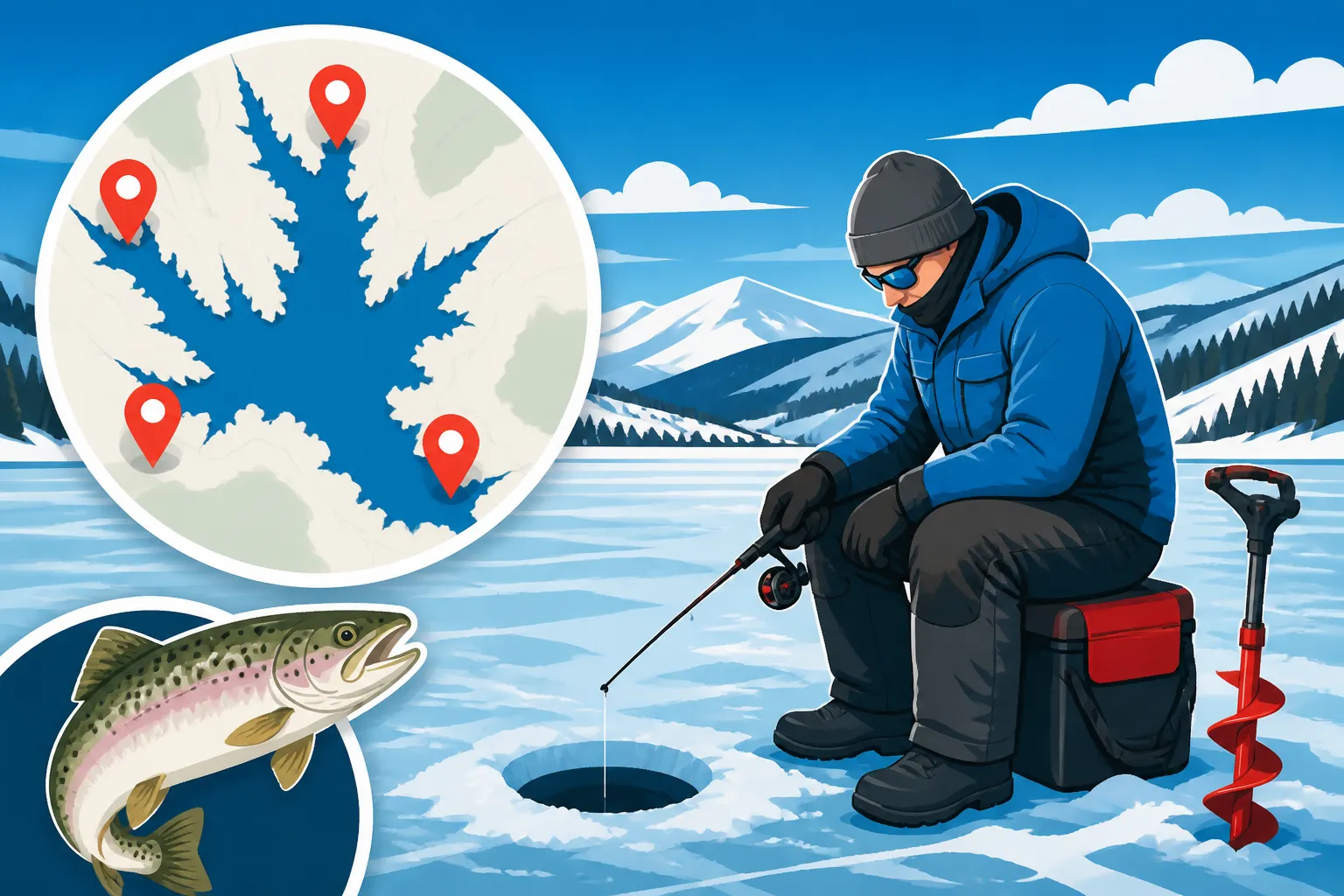
Strawberry Bay is arguably the most popular and accessible ice fishing spot on the reservoir. Its popularity stems from its easy access, ample parking, and generally safer ice conditions due to its more sheltered nature. As you head out from the boat ramp area, you'll find a vast expanse to explore. Many anglers gravitate towards "The Ladders," an area known for its submerged timber and brush piles that offer excellent cover for trout and kokanee. These structures are essentially underwater fish magnets, concentrating baitfish and, consequently, the predators.
When fishing Strawberry Bay, expect to find a mix of cutthroat and rainbow trout. Kokanee salmon can also be present, particularly as you move into slightly deeper water. Typical depths here range from 15 to 40 feet, but don't be afraid to explore shallower or deeper zones based on fish finder readings. For cutthroat and rainbows, jigging spoons like a Daredevle or a Kastmaster, often tipped with a piece of PowerBait or a mealworm, works wonders. For kokanee, smaller, brightly colored jigs or specialized kokanee spoons, often fished with corn, are more effective. It's a great spot for both beginners and experienced anglers due to its reliable action. While it's primarily a boat launch in warmer months, the general vicinity of the Strawberry Bay Boat Ramp Fishing Access remains a popular staging point for ice anglers.
Soldier Creek Area
On the opposite side of the reservoir from Strawberry Bay lies the Soldier Creek area, offering a slightly different ice fishing experience. This side can sometimes be less crowded than Strawberry Bay, especially on weekdays, providing a bit more solitude. Access points near Soldier Creek Marina provide a good starting point, leading to broad flats and points that extend into deeper water. The topography here often includes gradual slopes and channels, which can be fantastic for targeting cruising trout.
Soldier Creek is another excellent location for both cutthroat and rainbow trout. Anglers often find success here by drilling a series of holes along contours or searching for schools of fish with a portable fish finder. Depths can vary widely, from 10 feet in the shallower flats to 60+ feet along the main channel edges. For techniques, vertical jigging with tube jigs or Gulp! minnows can be very effective, especially when searching for more aggressive fish. Don't overlook dead-sticking a second rod with a worm or PowerBait under a bobber while actively jigging. The key here is often mobility and willingness to explore different depths and structures. For a deeper dive into specific areas within this zone, you might want to look at more detailed local reports or specific Strawberry Reservoir Ice Fishing Spots guides.
Haws Point and Points Beyond
For the more adventurous ice angler willing to trek further onto the ice, or for those with an ATV or snowmobile, Haws Point and the other prominent points that jut into the reservoir offer access to deeper water and potentially larger, less pressured fish. These areas are characterized by steep drop-offs, underwater humps, and intricate contours that provide excellent habitat for trophy lake trout and deeper-holding kokanee. However, venturing out here requires a keen eye on ice conditions and excellent navigational skills, especially in whiteout conditions or fresh snowfall.
Haws Point, and other similar structures, provide access to depths of 50 to over 100 feet. This is prime territory for those pursuing larger cutthroat and the challenging kokanee salmon. When fishing these deeper points, a reliable fish finder is absolutely indispensable to locate suspended fish or bottom structure. Heavily weighted spoons, tube jigs, and even specialized vertical jigs designed for lake trout are the baits of choice. Pay close attention to your electronics for "arcs" of fish moving through the water column, as kokanee often suspend at various depths. Fishing these deeper spots also requires heavier line and a more robust setup. Remember that venturing far from shore means you need to be self-sufficient and prepared for rapidly changing weather.
Preferred Gear and Techniques for Strawberry Ice
Having the right gear is non-negotiable for a successful and comfortable ice fishing trip at Strawberry. A quality ice auger, whether hand, gas, or electric, is your first essential tool for quickly cutting through thick ice. An ice shelter, portable or permanent, offers crucial protection from the biting winds and cold, making your time on the ice much more enjoyable. And when it comes to finding fish, a portable fish finder (like those from Garmin, Humminbird, or Vexilar) is a game-changer, allowing you to locate fish, observe their reaction to your lure, and understand the underwater topography.
For trout, traditional jigging spoons in silver, gold, or glow colors work consistently. Tipping them with a small piece of nightcrawler, a mealworm, or a Berkley Gulp! Maggot can significantly increase your strike rate. Soft plastic tubes and swimbaits, jigged aggressively or slowly twitched, are also excellent choices. For still fishing, a simple slip bobber rig with a small jig or hook baited with PowerBait or a live minnow (check regulations for live bait restrictions!) is often deadly, especially for cautious trout. Kokanee salmon typically respond best to smaller, brighter jigs or specialized kokanee spoons, often tipped with a piece of white Shoepeg corn soaked in an attractant. Experimentation with color, depth, and jigging cadence is key to unlocking Strawberry's potential. For more insights on equipment, be sure to check out our Utah Ice Fishing Gear Guide.
| Prime Ice Fishing Spot | Accessibility | Target Species (Primary) | Typical Depth Range (Feet) | Recommended Techniques |
|---|---|---|---|---|
| Strawberry Bay | Easy, popular | Cutthroat, Rainbow, Kokanee | 15-40 | Jigging spoons, still fishing PowerBait/worms |
| Soldier Creek Area | Good, less crowded | Cutthroat, Rainbow | 10-60+ | Vertical jigging, tube jigs, dead-sticking |
| Haws Point & Deeper Points | Moderate to Difficult | Large Cutthroat, Kokanee | 50-100+ | Heavy jigs, specialized kokanee spoons, electronics |
Strategies for a Successful Strawberry Reservoir Ice Fishing Trip
Beyond knowing where to go, understanding how to approach your ice fishing adventure at Strawberry Reservoir will greatly increase your chances of success. It's a blend of timing, technique, and leveraging available resources.
Timing Your Visit and Understanding Fish Behavior
Fish behavior, even under the ice, is heavily influenced by factors like time of day, seasonal changes in ice conditions, and even barometric pressure. Generally, the early morning hours just after sunrise and the late afternoon/early evening leading up to sunset are considered prime feeding times for trout and kokanee. During these low-light periods, fish are often more active and willing to chase down lures. Midday can sometimes be slower, but don't count it out entirely, especially if you're targeting deeper-holding fish or if weather conditions are overcast.
Strawberry Reservoir offers excellent fishing throughout the entire ice season, but each phase has its nuances. "Early ice" (typically December-January) often sees fish relatively shallow and aggressive, making for some hot action. "Mid-season" (January-February) might require searching deeper water, as fish can become more spread out or patterned to specific structures. "Late ice" (March) can be fantastic as fish become very active before the spring thaw, but ice conditions can rapidly deteriorate, demanding extreme caution. Understanding these seasonal shifts, detailed in articles like Best Season for Ice Fishing in Utah, will help you tailor your approach.
Utilizing Technology and Local Knowledge
In today's ice fishing world, technology can be your best friend. As mentioned, a portable fish finder or flasher is almost essential for quickly locating fish, identifying structure, and understanding how fish react to your presentation. These devices allow you to fish smarter, not just harder. GPS units, whether standalone or integrated into your fish finder, are also invaluable for marking productive holes and navigating safely, especially in low visibility or on vast, featureless ice.
Beyond personal gear, tapping into local knowledge is a goldmine. Check the Utah DWR's weekly fishing reports for updates on ice conditions and recent catches. Many local tackle shops near Strawberry Reservoir, like those in Heber City or Kamas, are fantastic resources for up-to-the-minute information on what's biting and where. For those new to the area or looking to quickly learn the ropes, consider hiring a local guide. Services like FishingBooker can help you connect with experienced guides who know Strawberry Reservoir inside and out, offering invaluable insights into current fish patterns, bait choices, and prime locations. Booking a guide through FishingBooker, for instance, can drastically shorten your learning curve and increase your chances of a trophy catch on your first few visits. This can be especially helpful for understanding the specific nuances of a Utah Trout Fishing Tips approach at Strawberry.
Respecting Regulations and Conservation
As stewards of our natural resources, it's crucial to always adhere to Utah's fishing regulations. Strawberry Reservoir, being such a prized fishery, often has specific rules regarding daily bag and possession limits, especially for its renowned cutthroat trout. These regulations are designed to protect the fishery and ensure its health for future generations. Always carry a valid Utah Fishing License Guide and be familiar with the current Utah Fishing Regulations Explained, as they can change season to season. You'll want to pay particular attention to the Utah Daily Bag and Possession Limits for Strawberry, as they can sometimes differ from general statewide rules.
Beyond legal requirements, practicing good conservation habits is vital. If you plan to release fish, handle them gently and return them to the water as quickly as possible. Consider using single, barbless hooks to minimize harm. Additionally, be mindful of Aquatic Invasive Species (AIS) prevention. Even with ice fishing gear, it's important to clean, drain, and dry your equipment to prevent the spread of harmful species like quagga mussels. This means ensuring your auger blades, sleds, and portable shelters are free of weeds and thoroughly dried before moving to another body of water. Following Utah Aquatic Invasive Species Rules for Anglers is not just a recommendation; it's a critical part of protecting our cherished fisheries.
Disclaimer
The information provided in this guide is for general informational purposes only and should not be considered legal advice or a substitute for current official regulations. Fishing conditions, regulations, and ice safety can change rapidly. Always consult the most recent Utah Division of Wildlife Resources (DWR) official regulations and local ice reports before planning any fishing trip. Anglers are responsible for their own safety and for knowing and abiding by all applicable laws and regulations.